
Reviewed · VATICAN TOURS
Rome: Vatican Pass plus Top Attractions and Transport
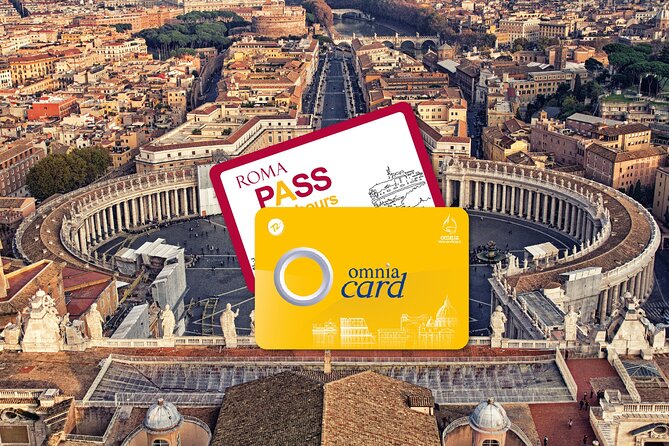
Rome’s great advantage is also its biggest trap: there is far too much to see in a short visit. This 72-hour OMNIA Vatican Card and Roma Pass tries to bring the Vatican, major ancient sites, museums, buses, and metro into one package. Used with a plan, it can save time and simplify a busy weekend.
I like the two included Rome attractions, especially if you choose the Colosseum area or Borghese Gallery. I also like having both public transport and a sightseeing bus available. The main concern is the price, $179.24 per person, and the amount of planning required before the pass becomes useful.
In This Review
- Key points to know before buying
- What the $179.24 price really buys you
- Redeeming the cards without losing half a morning
- Vatican Museums and Sistine Chapel: the package’s strongest feature
- St. Peter’s Basilica and the Vatican area
- Colosseum, Roman Forum, and Palatine Hill
- Borghese Gallery: superb art, strict planning
- Castel Sant’Angelo and the Capitoline Museums
- San Giovanni in Laterano and the quieter church stops
- Smaller museums and archaeological sites
- The hop-on hop-off bus: useful overview, imperfect timetable
- Public transport and walking in Rome
- How I would plan the three days
- Who should buy this pass?
- Should you book it?
- FAQ
- How long are the OMNIA Vatican Card and Roma Pass valid?
- What is included with the pass?
- Which Vatican sights are included?
- Does the pass include the Colosseum?
- Do I need to reserve the Vatican Museums?
- Do I need to reserve the Borghese Gallery?
- Does the pass include public transport?
- Are child passes the same as adult passes?
- Is food included?
Key points to know before buying
- Two cards begin their 72 hours on first use, so do not activate them casually on arrival.
- The Vatican Museums and Sistine Chapel require a reservation, even though admission is included.
- The Roma Pass covers two selected attractions, not every major sight in Rome.
- The Colosseum, Roman Forum, and Palatine Hill count as one attraction, which makes that choice especially valuable.
- The hop-on hop-off bus is useful for orientation, but schedules, stops, and operating hours may not suit a tight sightseeing plan.
- The redemption office matters: finding it and exchanging the voucher can cost valuable time.
What the $179.24 price really buys you
This is not one guided tour with a guide leading you from monument to monument. It is a package of admissions, transport, and discounts. You receive the OMNIA Vatican Card, the Roma Pass, a Rome travelcard, a guidebook and map, and a three-day hop-on hop-off bus ticket.
The price can work if you visit the Vatican Museums, choose two expensive Rome attractions, use public transport, and take several rides on the sightseeing bus. It is a weaker deal if you mainly walk, visit free churches and piazzas, or fail to secure reservations.
The strongest Roma Pass choice is usually the Colosseum, Roman Forum, and Palatine Hill together. These are treated as one attraction, so you get a large and important visit from one admission choice. The Capitoline Museums, Castel Sant’Angelo, Borghese Gallery, and Museum of Rome are other possible selections listed with the pass.
Do your arithmetic before buying. Add the normal admission prices for the Vatican, your two chosen Rome attractions, likely public transport, and any bus ticket you would buy anyway. The pass is not automatically cheaper. Its value comes from combining convenience with several paid visits in a short period.
More ways to visit the Vatican:
- Skip the Line: Vatican & Sistine Chapel Ticket with Audio Guide
★ 4.0 · 3,271 reviews - Skip-the-Line Ticket with Host – Vatican Museums & Sistine Chapel
★ 5.0 · 1,267 reviews - Skip The Line ticket to the Vatican Museums & the Sistine Chapel
★ 3.0 · 1,160 reviews
Redeeming the cards without losing half a morning
You first exchange your voucher at a redemption center for the physical cards. This step sounds simple, but it is one of the package’s weak points. The redemption locations and instructions can be confusing, and the Vatican-area office is not always convenient for the rest of Rome.
Check the current redemption details before you leave home. Confirm the opening hours, bring the booking information and QR code, and allow time to find the office. The stated opening window is 9:00 a.m. to 6:00 p.m., Monday through Sunday, for the listed operating period.
The two cards have different jobs, which adds another layer of confusion. The OMNIA card handles Vatican benefits and the sightseeing bus. The Roma Pass covers two Rome attractions, discounted admission elsewhere, and public transport.
Do not assume that the first QR code you receive is itself the entry ticket. The voucher must be exchanged, and some attractions require another reservation or code. Save every confirmation on your phone, but keep the guidebook and printed information handy as a backup.
Vatican Museums and Sistine Chapel: the package’s strongest feature
The Vatican portion is the clearest reason to consider this pass. Admission to the Vatican Museums and Sistine Chapel is included, with fast-track access described as a way to avoid the general ticket queue.
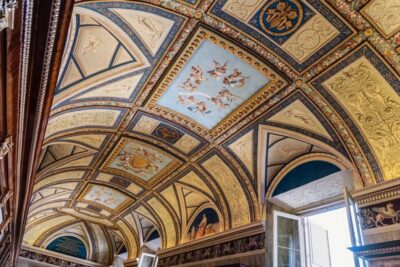
You will enter a huge museum complex filled with paintings, sculpture, ancient objects, papal rooms, and long decorated corridors. The Sistine Chapel is the grand finish for many people, with Michelangelo’s ceiling and Last Judgment providing the famous moment.
Plan roughly three hours for the Vatican Museums and two hours for the Sistine Chapel portion listed in the program. In real use, the experience may take longer once you include security, movement through crowded rooms, and the reservation time.
Here is the important distinction: fast-track does not mean you can simply arrive at any time and walk straight in. A reservation is required for the Vatican Museums and Sistine Chapel. Some pass holders have reported waiting despite expecting a full skip-the-line service, so treat the pass as a reservation-based entry benefit, not a magic wand for Rome’s queues.
Reserve as early as possible. This is especially important if your visit falls during a busy period or your dates are fixed. The pass cannot help if the available entry times are gone.
Dress properly for the Vatican. Shoulders and knees need to be covered, and a casual clothing choice that works elsewhere in Rome may not meet the basilica’s rules. Build this into your morning rather than discovering it at the door.
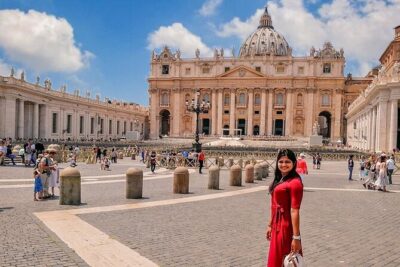
St. Peter’s Basilica and the Vatican area
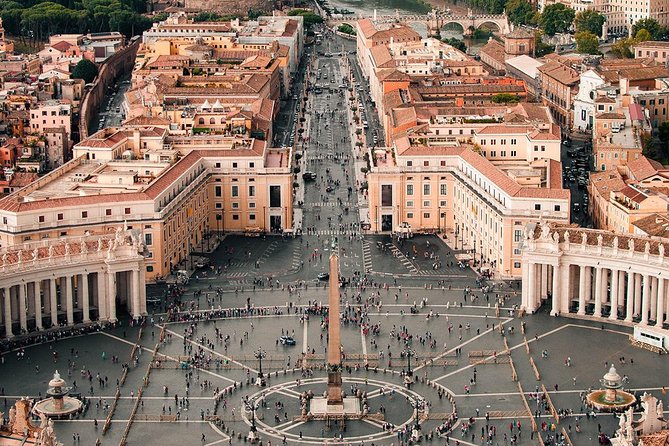
St. Peter’s Basilica is included through the OMNIA benefits, and the sightseeing bus also connects the Vatican with other major parts of Rome. The basilica is free in ordinary circumstances, but the practical value here is the organized access arrangement rather than the basic admission itself.
Do not confuse entry to St. Peter’s Basilica with entry to the Vatican Museums. They are separate places with separate procedures. The Vatican Museums contain the Sistine Chapel, while St. Peter’s is the great church across the Vatican area.
The package information lists St. Peter’s Basilica as requiring a reservation. Follow the instructions tied to your voucher and allow time for security. A pass may reduce one part of the process, but it does not remove every check or delay.
A completely different way to spend the day in Vatican City:
- Vatican, Sistine Chapel & St. Peter’s Skip-the-Line Tour
★ 4.1 · 1,070 reviews - Vatican Museums & Sistine Chapel Guided Tour
★ 4.5 · 763 reviews - Rome: Guided Tour of St. Peter’s Basilica, Grottoes & Square
★ 4.4 · 732 reviews - Rome: Skip-the-Line Vatican Museums and Sistine Chapel Tour
★ 4.3 · 719 reviews
Colosseum, Roman Forum, and Palatine Hill
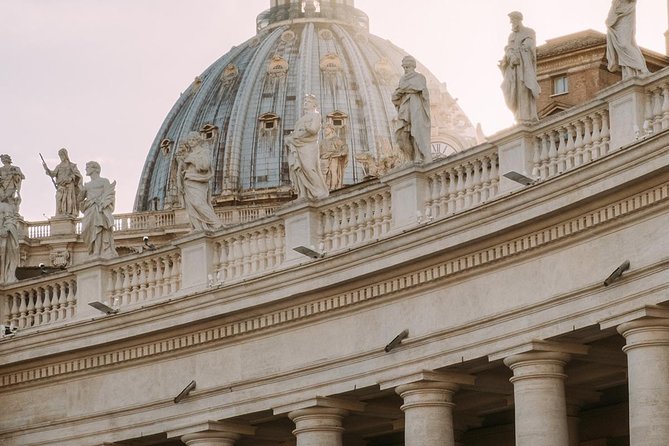
This is the best use of one Roma Pass admission for many visitors. The Colosseum gives you the famous arena, while the Forum and Palatine Hill spread across a broad archaeological area nearby.
The Forum is not a single building. It is a field of temples, arches, roads, basilicas, and fragments that once formed the center of Roman public life. Palatine Hill adds wide views over the ruins and connects the ancient center with the stories of Rome’s emperors and founding myths.
Set aside about two hours for the Forum and two hours for Palatine Hill in the supplied program, then add the Colosseum visit. Wear practical shoes. The ancient area involves uneven ground, exposed paths, and plenty of walking.
The key warning is the reservation. The Colosseum, Roman Forum, and Palatine Hill require a booked time, and popular slots can sell out. Without a reservation, you may face a long wait or need to buy another ticket. The Roma Pass gives admission rights, but it does not guarantee an available time slot.
Reserve immediately after purchasing the pass, following the instructions on your voucher. Do not wait until you are already in Rome.
Borghese Gallery: superb art, strict planning
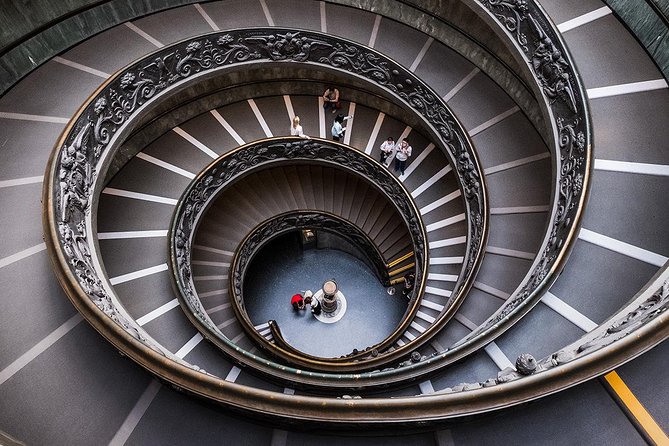
The Galleria Borghese is another excellent choice for one of the two Roma Pass admissions. It is a more focused visit than the Vatican, with famous sculpture and painting in an elegant setting.
The visit is listed at about two hours. That makes it a good fit for a morning or afternoon paired with nearby Villa Borghese and the historic center. The catch is firm: pre-reservation is mandatory, and booking at least 10 days ahead is strongly advised.
You can reserve before collecting the physical Roma Pass by using the name of the pass holder, according to the supplied instructions. This is useful, but it also means you must decide early. A pass is poor value if your preferred Borghese time is already full.
Castel Sant’Angelo and the Capitoline Museums
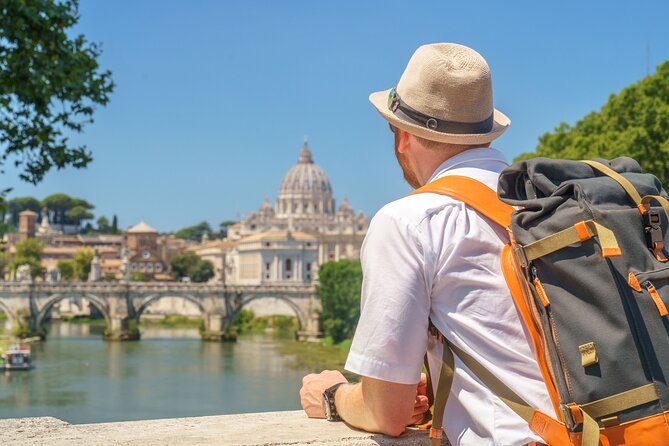
Castel Sant’Angelo gives you a different view of Rome. This ancient mausoleum and fortress sits beside the Tiber, and the Hall of Urns is associated with the ashes of Emperor Hadrian. Its rooms connect imperial Rome, papal power, and military defense.
It requires a reservation under the stated rules. If you do not choose it as one of your two free Roma Pass attractions, the card gives discounted admission instead.
The Capitoline Museums occupy three historic buildings on Capitoline Hill around a piazza designed by Michelangelo. Inside, you find ancient Roman objects, sculpture, paintings, the Capitoline She-wolf, a Hall of Tapestries, a chapel, and a courtyard.
I would choose the Capitoline Museums if you prefer a compact museum visit in the city center. Choose Castel Sant’Angelo if you want architecture, fortress rooms, and views along the Tiber. Both are more manageable than the Vatican, but neither should be treated as a spare, last-minute stop if a reservation is needed.
San Giovanni in Laterano and the quieter church stops
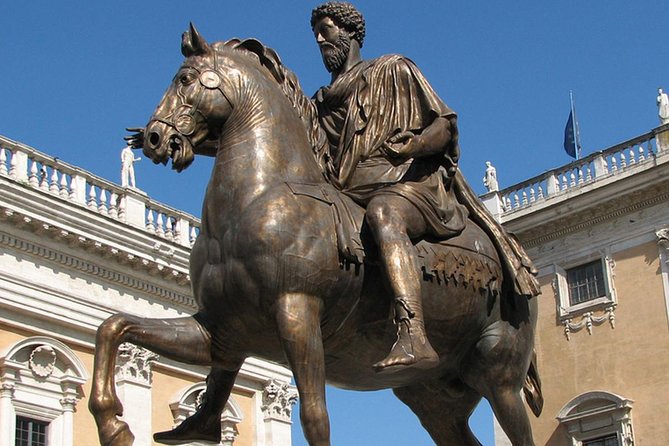
The Basilica of San Giovanni in Laterano is the oldest and most important church in Rome by ecclesiastical rank, even though St. Peter’s receives most of the attention. Its construction dates to 324 AD, and the interior combines a Baroque setting with twelve large apostle sculptures.
The adjacent cloister offers a calmer pause. The Scala Sancta, or Holy Steps, adds another layer of religious meaning. OMNIA holders can redeem a complimentary audio guide valued at €10 by showing the pass at the entrance.
This is one of the package’s better less-obvious inclusions. It takes you beyond the standard Vatican and Colosseum circuit and gives you a chance to see an important Roman church without the same level of pressure.
The audio guide is a useful bonus here, but do not assume every attraction includes an audio guide. In particular, the Vatican admission does not automatically include one.
Smaller museums and archaeological sites
The pass offers discounted admission to more than 30 additional sights, though discounts are not the same as free entry. These options make the package more useful for repeat visits or for anyone with a strong interest in Roman art and archaeology.
The Museum of Rome at Palazzo Braschi covers medieval and modern Rome through paintings, furniture, ceramics, mosaics, costumes, fabrics, and carriages. Its Baroque palace location near Piazza Navona makes it easy to pair with a walk through central Rome.
The Capitoline Museums are included among the major choices, while the Museum of Rome may be selected as one of the two attractions. Check your exact selection before activating the card.
Other listed options include the Museum of Roman Civilization, the Etruscan Museum at Villa Giulia, Pietro Canonica Museum, Palazzo Venezia, Centrale Montemartini, the Museum of the Roman Republic and Garibaldian Memory, the National Museum of Oriental Art, the National Gallery of Modern and Contemporary Art, the Napoleon Museum, and Ostia Antica.
These are not all practical additions to a three-day visit. Ostia Antica and the Appian Way take you away from the central sightseeing circuit, while Villa Giulia and the modern art gallery suit particular interests. Use the discounts selectively instead of chasing every listed name.
Carcer Tullianum, the ancient prison associated with the Roman period, also requires a reservation. Its inclusion is useful for someone who wants a more specialized archaeological stop, but it should not replace the core Vatican or Colosseum bookings.
The hop-on hop-off bus: useful overview, imperfect timetable
The three-day open bus ticket is appealing when you first look at a Rome map. It gives you an easy way to see the relationship between the Vatican, Colosseum, central Rome, and other major stops without learning the city on your first hour.
I especially like it for a first orientation ride or for anyone who finds long walks difficult. One reported use found the bus helpful for a family member with mobility issues, and the elevated seats can give you a broad look at the city.
Do not build a tight schedule around the bus. Operating times may start later and end earlier than you expect. Buses may not arrive as often as the advertised interval, and stops can be hard to identify. Some routes do not take you directly to every sight, so you still need to walk or use the metro.
The recorded commentary may also have long silent stretches. Treat the bus as transport with an overview, not as a full guided tour. For fixed Vatican, Borghese, or Colosseum reservations, use the metro or ordinary bus when timing matters.
Public transport and walking in Rome
The Roma Pass includes unlimited travel on Rome’s public buses and metro trains for its active period. This is useful because the city’s sights are spread across several districts, even though many central stops can be reached on foot.
Rome’s metro is often the faster choice when the route fits. The sightseeing bus is more scenic, but it is slower and more exposed to traffic. Use the included travelcard for appointments and save the open bus for relaxed sightseeing.
Remember that the transport benefit begins with card activation. If you collect the cards early but spend the first day walking, you may use part of the 72-hour period without receiving much value.
How I would plan the three days
On day one, I would activate the cards for the Vatican reservation, then visit the Vatican Museums and Sistine Chapel. Add St. Peter’s Basilica only if your reservation times allow enough breathing room.
On day two, I would use the Roma Pass for the Colosseum, Roman Forum, and Palatine Hill. Take the metro rather than relying on the sightseeing bus for the booked entry time.
On day three, I would choose either Borghese Gallery, Capitoline Museums, or Castel Sant’Angelo as the second included attraction. Use the bus for orientation and the travelcard for any longer connection.
San Giovanni in Laterano fits well as a quieter stop between major sights. The smaller museums work best when you already know your interests. Leave some open time. Rome rewards wandering, and a schedule packed with timed entries can make the pass feel like work.
Who should buy this pass?
I would consider it for a first visit of three full days, especially if you want the Vatican and Colosseum, plan to add two substantial Rome attractions, and expect to use public transport. It also suits someone who values having one package rather than buying every ticket separately.
It is less suitable if you walk most places, prefer free churches and outdoor sights, or have only a day and a half. Families must read the child rules carefully: ages 6 to 17 do not receive the Roma Pass or travelcard through the child pass. Most Rome museums are free for children under 18, and children under 10 travel free on Rome’s public transport.
The experience is offered in English. The activity itself is self-directed, with the guidebook, map, cards, reservations, and bus doing most of the work. The listed maximum group size is 15, but you should not expect a small guided group throughout the city.
Should you book it?
Book this pass only after confirming the reservation process and checking the math. Its best use is simple: Vatican Museums and Sistine Chapel, Colosseum area, one carefully chosen second attraction, several public transport rides, and perhaps the sightseeing bus for orientation.
If you can reserve the popular sites early, the package may save time and reduce ticket juggling. If you cannot secure the Colosseum or Vatican time slots, the price becomes hard to defend.
For a well-organized three-day visit, I would rate it as potentially good value, but not an automatic bargain. Buy it for the combination of admissions and transport, not for the promise of skipping every line.
FAQ
How long are the OMNIA Vatican Card and Roma Pass valid?
Both cards are valid for 72 hours from the time you first use them.
What is included with the pass?
You receive the OMNIA Vatican Card and Roma Pass, unlimited public transport in Rome, a guidebook and map, a three-day hop-on hop-off bus ticket, and admission to two selected attractions.
Which Vatican sights are included?
The pass includes admission to the Vatican Museums and Sistine Chapel, along with access benefits for St. Peter’s Basilica.
Does the pass include the Colosseum?
The Roma Pass can provide free admission to the Colosseum, Roman Forum, and Palatine Hill as one attraction choice. A reservation is required.
Do I need to reserve the Vatican Museums?
Yes. The Vatican Museums and Sistine Chapel require a reservation. Follow the instructions supplied with your voucher.
Do I need to reserve the Borghese Gallery?
Yes. Pre-reservation is mandatory, and booking at least 10 days ahead is strongly advised.
Does the pass include public transport?
Yes. The Roma Pass includes unlimited travel on Rome’s public buses and metro trains during its validity period.
Are child passes the same as adult passes?
No. Child passes for ages 6 to 17 do not include the Roma Pass or travelcard. Most Rome museums are free for people under 18, and children under 10 travel free on public transport.
Is food included?
No. Food and drinks are not included.
Newest reviews from Vatican City
- Skip the Line: Vatican and Sistine Chapel with Guided Tour★ 4.0 · 149 reviews
- Just Ticket – Vatican Museum and Sistine Chapel Fast track★ 3.0 · 167 reviews
- Skip-the-line Private: Vatican Museums, Sistine Chapel&St Peter’s★ 5.0 · 177 reviews
- Vatican Museums and Sistine Chapel Skip-the-Line Entry Ticket★ 4.5 · 189 reviews
- Shore Excursion to Rome from Civitavecchia Port★ 4.5 · 191 reviews
- Skip the line Tickets to the Vatican Museums and Sistine Chapel★ 4.0 · 229 reviews
- St. Peter’s Dome Climb, Basilica and Vatacombs Tour★ 4.7 · 230 reviews
- Vatican Museums & Sistine Chapel Skip-the-Line Guided Tour★ 4.6 · 254 reviews
Vatican Tours, compared.
Vatican Museums & Sistine Chapel Tour with Optional Basilica
Read our review →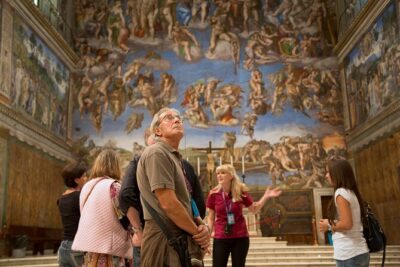
Vatican Museums, Sistine Chapel & St Peter’s Basilica Guided Tour
Read our review →
Vatican Museums, Sistine Chapel & Basilica Tour
Read our review →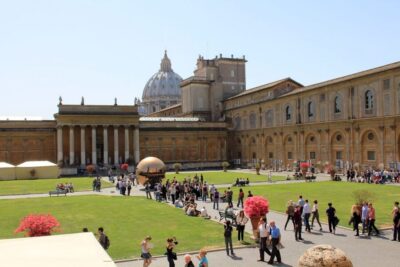
Vatican Museums & Sistine Chapel Skip-the-Line Entry Ticket
Read our review →Vatican Museums, Sistine Chapel & Basilica Tour
Read our review →
Skip-the-Line Group Tour of the Vatican, Sistine Chapel & St. Peter’s Basilica
Read our review →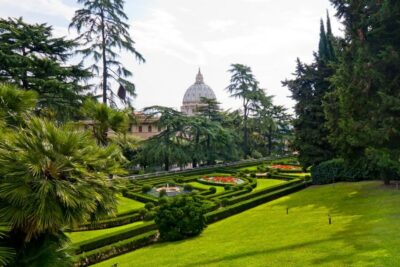
Vatican Museums & Sistine Chapel Guided Tour
Read our review →Browse the lists this tour appears in