
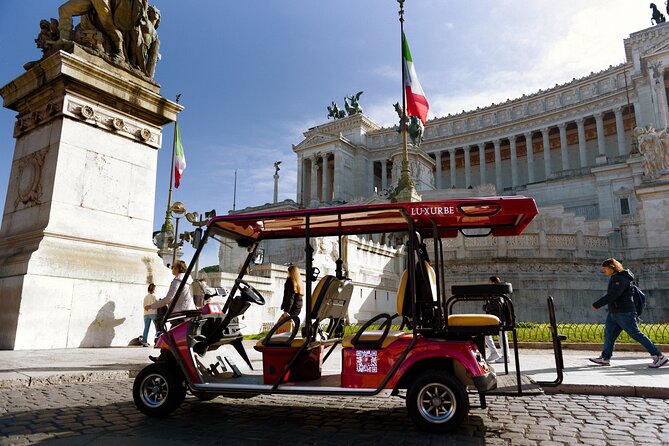
Reviewed · ROME GOLF CART TOURS
Ancient Rome Tour in a Golf Cart
Rome is easiest to understand when you see its major ruins in relation to one another, and this three-hour golf cart tour gives you that big picture without asking you to march across the city. You roll through narrow streets, stop near major ancient sites, and get time to step out for photos and explanations.
I like the efficient route and the chance to cover far more ground than you could on foot. I also like the personal touch: guides such as Matteo, Daniel, Elena, and Roberto are praised for answering questions, adjusting the route, and adding modern Roman details. The main drawback is the ride itself. Roman roads can make the golf cart shake, and the meeting point has no tour sign, so you need to be alert at pickup.
In This Review
- Key points at a glance
- Why a golf cart works well in central Rome
- Starting on Via dei Condotti
- Largo di Torre Argentina and the layers beneath modern Rome
- Piazza Venezia and the city’s grand crossroads
- Theatre of Marcellus, an early model for the Colosseum
- Forum Piscarium and ordinary Roman commerce
- Temple of Venus and Rome near the Colosseum
- Domus Aurea and Nero’s extravagant palace
- The Colosseum, seen without the admission line
- Imperial Forums and the shape of imperial power
- Circus Maximus and Rome’s enormous public arena
- What the guide adds to the ride
- Price, timing, and comfort
- Who should book this Rome golf cart tour?
- My final take: a useful first look at Rome
- FAQ
- How long does the Ancient Rome Golf Cart Tour last?
- What language is the tour offered in?
- Where does the tour begin?
- Where does the tour finish?
- Is hotel pickup available?
- Do I enter the Colosseum or Roman Forum?
- How many people can join the tour?
- Are headsets provided?
- What is included in the price?
- Can I cancel for a full refund?
Key points at a glance

- See Rome’s ancient core in one loop: The route links the Colosseum, Imperial Forums, Circus Maximus, Domus Aurea, and less familiar sites.
- Expect exterior visits only: You stop at each monument for commentary and photos, but admission inside is not part of this experience.
- A guide drives and teaches: Your licensed guide handles both the road and the commentary, with headsets available if needed.
- Small groups make questions easier: The vehicle holds no more than 15 people, and some departures are much smaller.
- Useful for a first day: The route helps you map Rome before choosing which sites deserve a longer visit.
- Comfort comes with some bumps: You walk less, but the open golf cart is not as smooth as a car on Rome’s uneven streets.
Why a golf cart works well in central Rome
Rome’s famous sights are not arranged in a tidy museum district. The Colosseum, Pantheon area, Circus Maximus, Capitoline Hill, and Spanish Steps are close enough to connect, yet spread out enough to make a walking day tiring. A golf cart gives you a practical middle ground between walking and a full vehicle tour.
You sit above street level, move through roads that larger vehicles cannot always use, and get closer to the city’s everyday rhythm. The ride also saves your legs for the places you plan to enter later, especially if Rome is only one stop on a longer Italian trip.
The format is best viewed as a moving introduction, not a substitute for visiting Rome’s major monuments. You see the sites from outside, hear the story behind them, and stop for pictures. If you want to walk through the Colosseum or enter the Roman Forum, you’ll need separate admission and time.
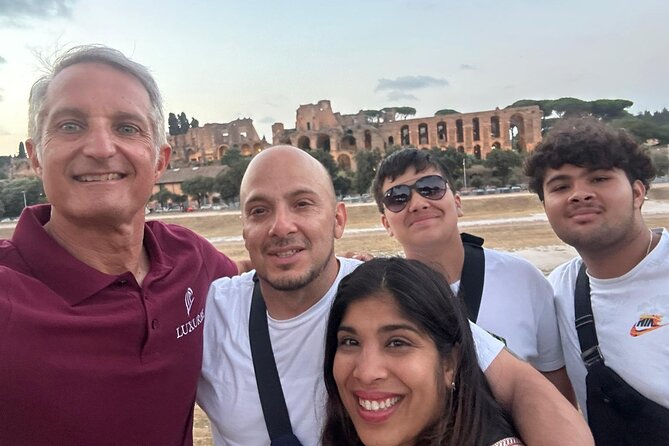
The vehicle can carry up to 15 people, though the experience may feel more personal when the group is smaller. One departure had only three participants, which allowed frequent stops and easy conversation. The guide is also the driver, so commentary may pause during tricky traffic or narrow turns.
More golf cart tours of Rome:
- Rome by Golf Cart Private Tour: Beyond the Landmarks
★ 5.0 · 4,361 reviews - Rome on a Golf Cart Semi-Private Tour Max 6 with Private Option
★ 5.0 · 2,502 reviews - Rome Highlights by Golf Cart Private Tour
★ 5.0 · 2,379 reviews
Starting on Via dei Condotti
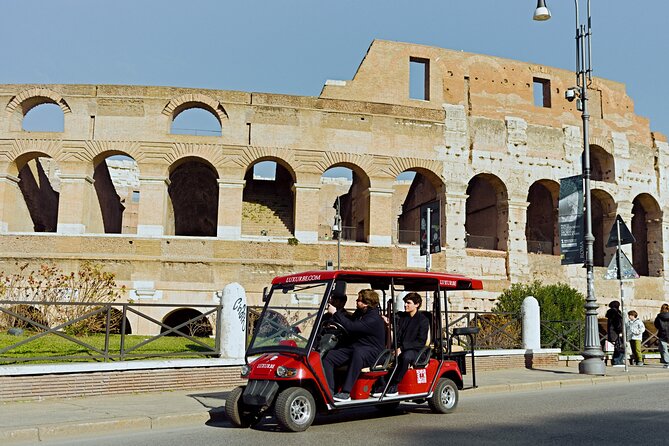
The meeting point is Via dei Condotti 61, directly in front of the building entrance. This is the luxury shopping street running between Piazza di Spagna and Via del Corso, so it is an easy place to pair with the Spanish Steps before or after the tour.
There is no Luxurbe sign or shop at the meeting point. You should wait outside the entrance and look for the golf cart and driver. That detail matters because two poor experiences came from confusion at pickup, including one case where the group waited and could not find the vehicle.
Arrive early, but stay at the exact address. Do not assume the driver will be standing under a large sign. If you arranged a custom pickup, the driver should contact you shortly before arrival. Pickup times can shift slightly because of Rome traffic.
Via dei Condotti returns at the end, so you finish where you began. The street is also part of the visual appeal of the route. Its elegant buildings and designer stores provide a sharp contrast with the stone ruins you’ll see later.
Largo di Torre Argentina and the layers beneath modern Rome
The first major historical stop is Largo di Torre Argentina, a square filled with exposed Republican-era ruins. Four ancient temples and the Curia of Pompey occupy a space surrounded by modern streets, making this a good example of Rome’s habit of placing present-day life directly beside ancient stone.
The Curia of Pompey is especially interesting because it belonged to the complex where the Roman Senate met. The square is also known for its cat sanctuary, where stray cats are cared for among the ruins.
You’ll spend about 20 minutes here. That is enough time for a clear explanation and photos, though not for a long archaeological visit. The value is visual: you can see how much of Rome’s ancient past remains below the level of today’s streets.
Piazza Venezia and the city’s grand crossroads
Piazza Venezia changes the scale of the tour. The square is dominated by the Altare della Patria, the huge white monument dedicated to Victor Emmanuel II. Its broad stairways and bright marble make it one of the most recognizable city views in Rome.
This is also a key traffic junction, connecting routes toward the Roman Forum and Capitoline Hill. From the golf cart, you get a sense of how Rome’s modern roads follow old lines through the center.
The stop lasts about 20 minutes, giving you time to look up at the monument and place the surrounding landmarks on your mental map. The square can feel busy, so listen closely when the guide explains where to stand for photos and how the nearby ancient areas connect.
A completely different way to spend the day in Rome:
- Vatican: Museums & Sistine Chapel Entrance Ticket
★ 4.5 · 144,003 reviews - Vatican Museums & Sistine Chapel Tour with Optional Basilica
★ 4.3 · 67,413 reviews - Vatican Museums, Sistine Chapel & St Peter’s Basilica Guided Tour
★ 4.5 · 39,149 reviews - Rome: Colosseum, Palatine Hill and Roman Forum Guided Tour
★ 4.8 · 32,814 reviews
Theatre of Marcellus, an early model for the Colosseum
The Theatre of Marcellus is one of the most rewarding stops for understanding Roman building design. Finished under Augustus in the late first century BC, it was commissioned in the time of Julius Caesar and could hold about 20,000 spectators.
Its surviving curved outer structure shows the pattern later used on a much larger scale at the Colosseum. Unlike the Colosseum, the theatre is woven into the modern city, with later buildings incorporated into its upper levels.
You get around 20 minutes here. The stop is particularly useful if you want context before reaching the Colosseum. Instead of seeing the famous amphitheater as an isolated wonder, you begin to recognize a wider tradition of Roman public entertainment buildings.
Forum Piscarium and ordinary Roman commerce
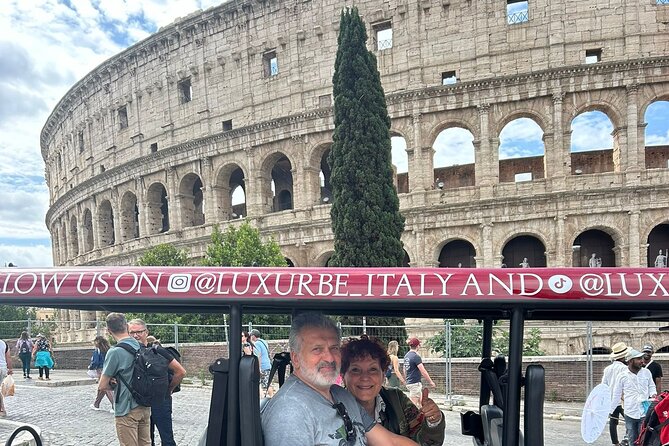
The Forum Piscarium is a less familiar name on the route. It was an ancient fish market near the Roman Forum and Theatre of Marcellus, dating to the early Roman Republic.
This stop adds a welcome everyday note to a tour otherwise filled with emperors, temples, and monuments. Markets reveal how a city functioned at street level, and the site helps you think about trade and food rather than only politics and war.
The planned visit is about 10 minutes, so expect a short explanation rather than a lengthy archaeological presentation. It works as a quick historical pause between the larger monuments.
Temple of Venus and Rome near the Colosseum
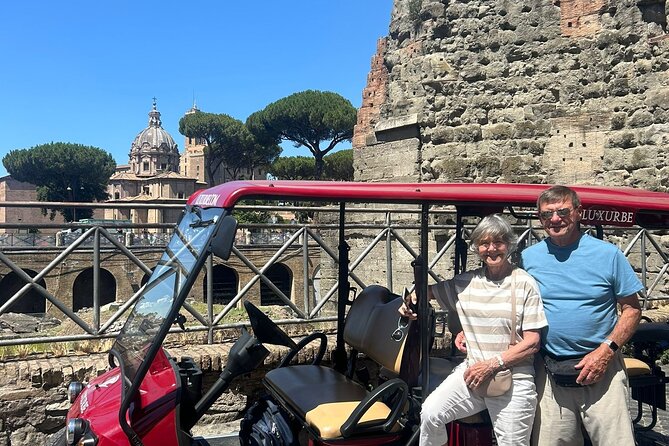
The Temple of Venus and Rome was designed under Emperor Hadrian and completed in AD 135. It honored Venus Felix and Roma Aeterna and was the largest temple in ancient Rome.
You will see the remains from outside and have time for commentary and photographs. The scale of the surviving foundations gives you a better sense of how grand the area around the Colosseum once was.
This stop receives about 20 minutes. It is also a useful reminder that the Colosseum did not operate alone. Temples, forums, roads, and public spaces surrounded it, forming a large civic and religious center.
Domus Aurea and Nero’s extravagant palace
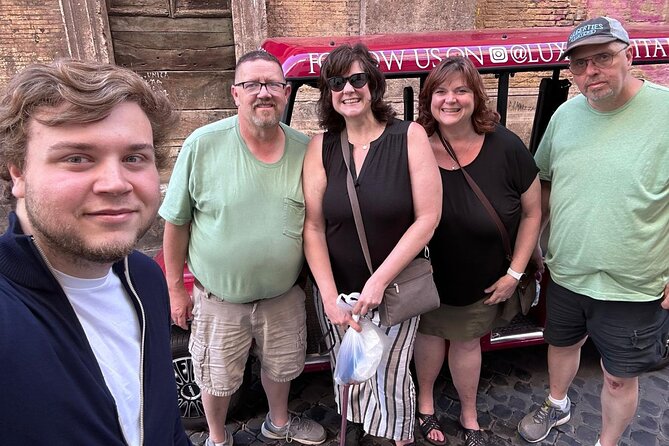
The Domus Aurea was Emperor Nero’s enormous palace complex, built after the fire of AD 64. Ancient accounts and surviving remains describe gold-plated walls, mosaics, and elaborate frescoes.
Much of the palace lies underground, so this is a site where the visible exterior does not tell the whole story. You’ll hear about Nero’s ambition and the way later rulers covered over parts of the complex.
The tour allows about 20 minutes here, but it does not include an underground visit. If Nero’s palace interests you, mark it for a separate booking. On this route, the stop works as a concise introduction to a complicated chapter in Roman history.
The Colosseum, seen without the admission line
The Colosseum is the headline stop, and you get about 20 minutes near it for explanations and photos. Built in AD 80 under Emperor Vespasian, the amphitheater held up to 50,000 spectators for gladiatorial contests and public spectacles.
The golf cart format is useful here because you can arrive with enough energy to appreciate the exterior. You do not enter the amphitheater on this tour, so make sure your expectations are clear before booking.
I see this stop as a planning advantage. You can study the exterior, listen to the guide’s overview, and decide if you want to return for a full visit. If the Colosseum is your main reason for coming to Rome, book a separate entry experience rather than relying on this short stop alone.
The surrounding roads can be crowded, and the cart may pause or approach from a less obvious angle. That is normal for a city tour, but it means the exact view and timing can depend on traffic.
Imperial Forums and the shape of imperial power
The Imperial Forums stretch along the avenue beside the Colosseum and include monumental spaces built between 46 BC and AD 113. Julius Caesar, Augustus, Nerva, and Trajan were among the rulers who added forums for political, commercial, religious, and civic use.
From outside, you can see columns, temple remains, foundations, and broad archaeological areas. The guide’s explanation helps separate the different forums, which can otherwise look like one long field of ruins.
The scheduled stop is about 20 minutes. That is enough to identify the main areas, but not enough for a slow walk through every section. If you enjoy archaeology, return later with a map or admission ticket and allow several hours.
Circus Maximus and Rome’s enormous public arena
The Circus Maximus is a vast open space between the Aventine and Palatine hills. It was used for chariot racing and other mass spectacles and could hold more than 150,000 spectators.
Today, the long shape of the site is easier to grasp from a vehicle than on foot. The golf cart gives you a broad view of the former racing ground while the guide explains how it fit into public life.
You spend about 20 minutes here. Do not expect the same dramatic walls you see at the Colosseum. The appeal is scale. Once you see the length of the Circus Maximus, the size of Roman public entertainment becomes easier to imagine.
What the guide adds to the ride
The guide is a licensed professional who also drives. Commentary is offered in English, with interactive reading material and headsets if needed.
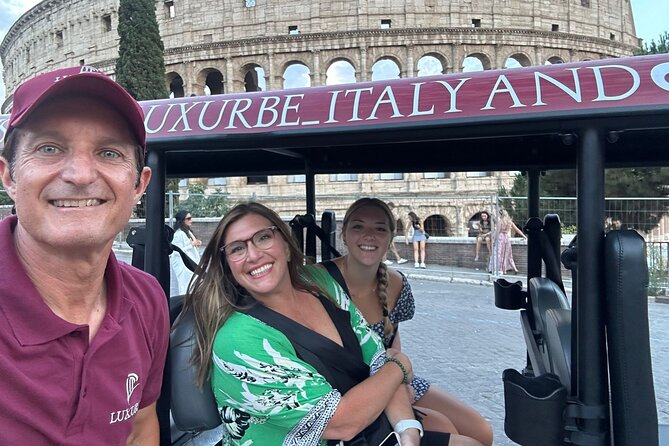
The strongest part of the experience depends on the person in the front seat. Matteo is praised for safe driving, a relaxed manner, and adapting the route after learning what had already been seen. Daniel is noted for clear historical explanations and for shaping the ride around personal interests. Elena brings strong enthusiasm for Italy and history, while Roberto is praised for clear English and useful answers to questions.
Those names do not guarantee who will lead your departure, but they show the kind of guide this format can provide. You should expect conversation, short explanations at each stop, and suggestions about what to see next. The guide may also add modern details about Rome that are not found in a standard textbook.
The material and headsets help when traffic noise rises. Still, an open cart is not a quiet classroom. If you have trouble hearing, sit close to the guide and ask for a repeat.
Price, timing, and comfort
At $84.46 per person, this is not the cheapest way to look around Rome. You are paying for a private-feeling vehicle, a licensed guide, driving, route planning, and the time saved between distant sites. Bottled water is not included, so bring your own.
The three-hour duration includes travel between stops. The listed stop times add up to more than the total tour length, so treat those figures as approximate rather than a promise of exact minutes at every location.
The cart is a good fit if you want to reduce walking, are traveling with adult children, or prefer a city overview before tackling museums and ruins. It also works well on your first full day, when a broad orientation can help you plan the rest of your stay.
The ride is not ideal for anyone who needs a very smooth vehicle. Roman paving can be rough, and the cart may feel like a small open vehicle with extra seats. One poor experience also involved a late arrival and a rushed route, so traffic can affect the pace.
You receive confirmation when booking, and the tour is near public transportation. Most people can participate, but the provided information does not promise step-free access or describe a specific accommodation for mobility devices. Ask the operator before booking if that matters to you.
Who should book this Rome golf cart tour?
I would choose this tour if you want a fast orientation with real historical context, not a full interior visit to every monument. It suits first-time visitors who want to understand the city’s layout, repeat visitors who want to refresh their memory, and anyone who finds a full day of walking too demanding.
It is also a smart choice for families or mixed-age groups. The cart keeps everyone together, and you can see several major areas without using taxis between them. The frequent photo stops keep the outing from feeling like three hours of continuous driving.
I would skip it if you want extensive time inside the Colosseum, Roman Forum, Domus Aurea, or temples. I would also think twice if you dislike open vehicles, road vibration, or uncertain traffic timing.
The meeting point deserves special attention. Stand at Via dei Condotti 61, directly outside the entrance, and watch for the driver rather than a sign. Free cancellation is available if you cancel at least 24 hours before the start time. Changes or cancellations inside that window are not refundable.
My final take: a useful first look at Rome
Book this tour when your goal is to see the city’s ancient center efficiently and decide where to return for longer visits. The route has strong variety, from the fashionable Via dei Condotti to a fish market, imperial forums, Nero’s palace, and the immense Circus Maximus.
The best value comes from the guide’s ability to connect those places. You are not just checking off monuments. You are learning how Rome’s political, religious, commercial, and entertainment districts fit together.
Just remember the limits: exterior views only, approximate timing, no bottled water, and a bumpy ride on old streets. If you arrive prepared for an overview rather than a deep site visit, the golf cart can give you a comfortable and entertaining start to Rome.
FAQ
How long does the Ancient Rome Golf Cart Tour last?
The experience lasts approximately three hours, including travel time between stops.
What language is the tour offered in?
The tour is offered in English.
Where does the tour begin?
It begins at Via dei Condotti 61, 00187 Rome, directly in front of the building entrance.
Where does the tour finish?
The activity ends back at the meeting point on Via dei Condotti.
Is hotel pickup available?
Pickup is offered, and custom pickup can be arranged. If you book a custom pickup, the driver will contact you shortly before arrival.
Do I enter the Colosseum or Roman Forum?
No. The monuments are viewed from outside, with time for explanations and photographs. Admission inside is not included.
How many people can join the tour?
The maximum group size is 15 participants.
Are headsets provided?
Headsets are provided if required. Interactive reading material is also included.
What is included in the price?
The price includes golf cart transportation, a licensed guide who also drives, interactive reading material, and headsets if required. Bottled water is not included.
Can I cancel for a full refund?
Yes. You can cancel at least 24 hours before the experience start time for a full refund. Cancellations made less than 24 hours in advance are not refundable.
Newest reviews from Rome
- ROME:Colosseum & Ancient Rome – private/small group TOUR★ 5.0 · 24 reviews
- Off the Beaten Track in Rome: Rione VI Parione Private Tour★ 5.0 · 24 reviews
- Cinematic Photoshoot in Rome★ 5.0 · 24 reviews
- Rome: Best of Colosseum and Roman Forum Small Group Guided Tour★ 4.5 · 24 reviews
- The Labyrinth of Rome between catacombs and ancient quarries★ 4.5 · 24 reviews
- Vatican and Trionfale Market Tour with Wine and Food Tasting★ 5.0 · 24 reviews
- private tour: Vatican Museums, Sistine Chapel, St. Peter’s Basilica★ 4.5 · 24 reviews
- Colosseum guided tour with Virtual Reality★ 5.0 · 24 reviews
Rome Golf Cart Tours, compared.
Rome by Golf Cart Private Tour: Beyond the Landmarks
Read our review →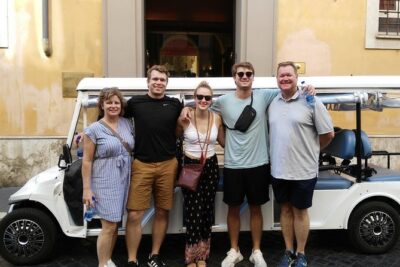
Rome on a Golf Cart Semi-Private Tour Max 6 with Private Option
Read our review →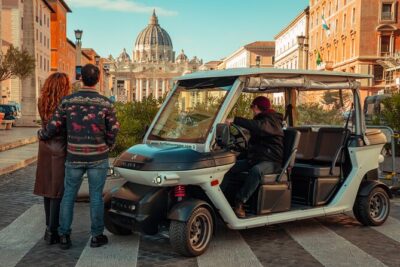
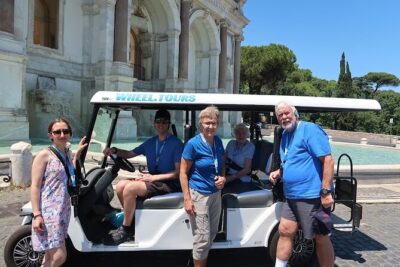
Rome Highlights City Tour by Golf Cart with Gelato
Read our review →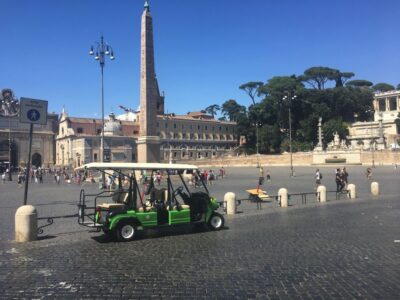
Imperial City Tour by Golf Cart with Optional Transfer
Read our review →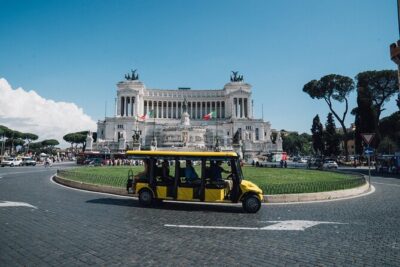
Golf Cart Small-Group Guided Tour: Rome City Highlights
Read our review →
Private/Group 4 Hours Golf Cart SightseeingTour
Read our review →Browse the lists this tour appears in