
Reviewed · CATACOMBS & CRYPTS
The Labyrinth of Rome between catacombs and ancient quarries
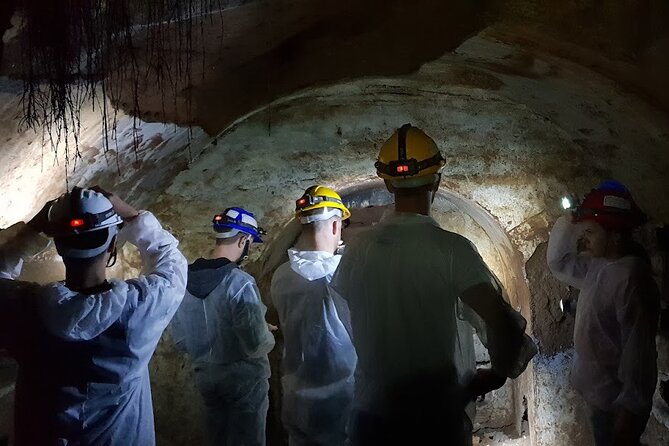
The most unusual thing about this Rome tour happens below ground. After a walk through Caffarella Park, you enter tunnels cut by Roman laborers, later used as catacombs, mushroom farms, and a place of worship. It is a shadowy, physical look at Rome that the Colosseum cannot provide.
I like the small maximum group of 10, which gives guides such as Riccardo, Giuseppe, Daniela, and Maurizio room to explain the site properly. I also like the Roman lamp ritual and the taste of mulsum, an ancient-style wine made with honey and spices. The main drawback is the long walk to the entrance and the fact that this is a quarry and catacomb complex, not a tunnel running beneath Rome’s historic center.
In This Review
- Key points to know before booking
- What the Labyrinth of Rome really is
- Crossing Caffarella Park before going underground
- Ancient quarries with marks from Roman labor
- Catacombs, darkness, and Roman burial customs
- The World War II mushroom farm
- The Mithraeum and the change from pagan Rome to Christian Rome
- The guides make the difference
- Price, timing, and practical value
- Who will enjoy this underground Rome experience
- Cancellation and weather details
- Should you book the Labyrinth of Rome?
- FAQ
- Where does the tour begin?
- Where does the tour end?
- How long does the experience last?
- Is the tour offered in English?
- How many people can join the tour?
- Is admission included?
- How far do you walk before entering the tunnels?
- Should I bring a jacket?
- Are service animals allowed?
- Can I cancel for a full refund?
Key points to know before booking
- Ancient quarry walls: Look for chisel marks, niches, small seats, and inspection wells cut into the stone.
- A 1-kilometer park walk: The route begins through Caffarella Park, so plan for outdoor walking before entering the tunnels.
- Catacombs and a Mithraeum: The underground visit connects Roman quarrying, Christian burial customs, and pagan worship.
- Cold, damp conditions: The tunnels can feel chilly even on a hot Roman day. Bring a light jacket.
- A very small group: The tour accepts no more than 10 people, a useful advantage in narrow underground spaces.
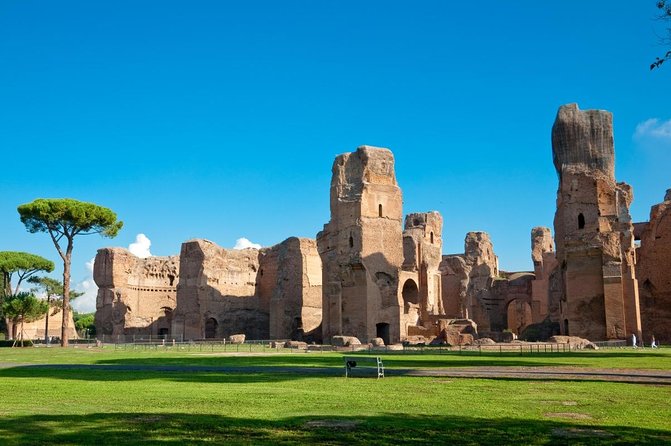
- A slightly different Rome: You will not see the famous monuments from below. You will see the working, burial, and religious spaces that helped shape the ancient city.
What the Labyrinth of Rome really is
Rome is famous for what rises above its streets, but some of its most striking remains are underground. This experience takes you into a system of tunnels excavated to obtain building material for the imperial city. The walls still show the marks of hand tools, reminders that this work was done by enslaved people under harsh conditions.
The name Labyrinth is fitting, but you should set your expectations carefully. This is not a secret passage beneath the Colosseum or a route extending through the city center. It is an underground archaeological complex near Caffarella Park, with ancient quarries, catacombs, a Mithraeum, and later reuse as a mushroom farm.
That mix is the point. You are not looking at one perfectly preserved monument. You are following the changing life of a place over many centuries. Stone was taken from the ground, bodies were buried in the tunnels, religious practices took place there, and the space was reused during the 20th century.
The experience lasts about two and a half hours, although the underground admission portion is described as about two hours. The pace depends on the group, the guide, and the walking time to the entrance.
More catacomb and crypt visits from Rome:
- Rome: Crypts and Catacombs Underground Tour with Transfers
★ 4.6 · 5,341 reviews - The Original Roman Crypts and Catacombs Tour with Transfers
★ 4.5 · 4,896 reviews - Rome: Catacombs of St. Callixtus Entry Ticket & Guided Tour
★ 4.6 · 3,037 reviews
Crossing Caffarella Park before going underground
The tour starts at Via Amedeo Crivellucci, 8, in Rome’s 00179 postal area. From there, you cross about 1 kilometer of Caffarella Park. That walk takes you away from traffic and apartment blocks and gives the outing a useful change of pace before the darker section begins.
I like this opening because it makes the underground visit feel connected to Rome’s wider archaeological setting. You get a moment of open air and greenery before entering a place with little natural light. The park walk is also a chance to hear the first explanation of the area without trying to talk over traffic or crowds.
Still, this walk matters when planning your day. If you have already spent hours on foot around the Colosseum, Vatican, or Roman Forum, the approach may feel longer than expected. One especially useful piece of advice is to reach the meeting point by taxi or Metro rather than adding a long walk from central Rome.
The meeting point itself may not feel grand. It is described as being near a coffee shop and behind dumpsters, so check the exact location closely and arrive with the guide’s contact details available. This is not the sort of meeting point where a large tour bus or obvious ticket booth will help you get oriented.
Ancient quarries with marks from Roman labor
Once underground, the first major subject is the quarry itself. Roman workers cut tunnels into the ground to obtain materials used in building the imperial city. You can still see tool marks on the walls, along with small seats and inspection wells created as part of the quarrying process.
These details are easy to miss if you walk through quickly. Look at the walls rather than only at the floor. The irregular cuts, narrow passages, and changes in the stone make the place feel like a worksite rather than a polished museum.
The guide’s interpretation is essential here. A plain chamber can look repetitive without context. Guides including Joseph, Riccardo, Giuseppe, and Daniela have been praised for explaining how the tunnels were made and for helping you picture the people who worked there.
That said, the repeated stone walls are a real part of the experience. One person found the underground route monotonous because many sections look alike. If you need a new statue, mosaic, or grand view every few minutes, this may not be your best Rome outing.
You may also see signs of collapse in the walls and ceilings. That makes the site feel genuine, but it is another reason to follow instructions and stay with the group. This is an active archaeological setting, not a brightly lit attraction designed for quick independent wandering.
Catacombs, darkness, and Roman burial customs
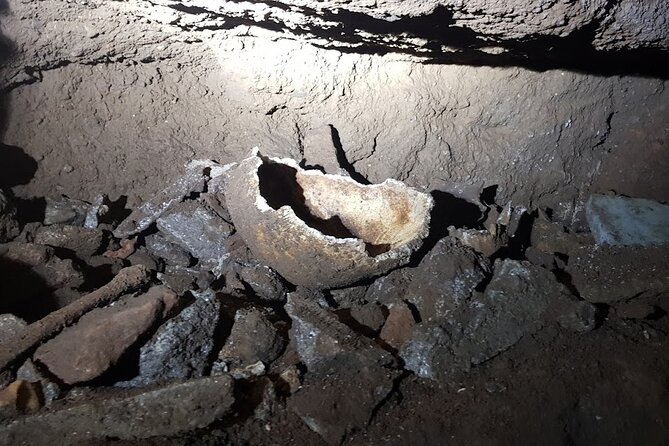
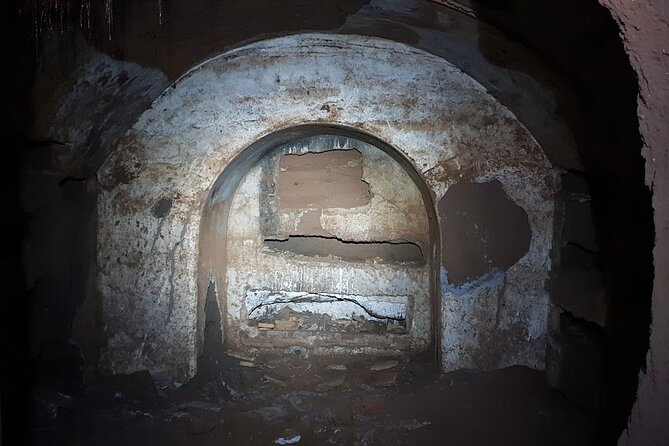
The route then reaches the catacomb area, where early Christians buried their dead in tunnels extending for many kilometers. Here the mood changes. The quarry tells you about labor and construction, while the catacombs bring you close to Roman ideas about death, family, and religious identity.
The guide explains burial traditions before the group turns off its electric lights. Standing in complete darkness is a simple but effective part of the visit. It gives you a physical sense of how little light these passages once offered.
You then continue with a small ancient-style oil lamp. This is one of the most memorable features because it changes the way you see the space. A narrow pool of light catches a wall, a niche, or a rough cut in the stone, while the rest of the tunnel disappears.
I would not treat this as a dramatic haunted-house experience. The effect is quiet and serious. It works best if you are interested in archaeology and willing to slow down while the guide explains what the tunnels meant to the people who used them.
The air quality deserves attention. One account found the underground air poor, and the site is described as cold and damp. Most people can participate, but if enclosed spaces or stale air make you uncomfortable, consider that before paying for the tour.
A completely different way to spend the day in Rome:
- Vatican: Museums & Sistine Chapel Entrance Ticket
★ 4.5 · 144,003 reviews - Vatican Museums & Sistine Chapel Tour with Optional Basilica
★ 4.3 · 67,413 reviews - Vatican Museums, Sistine Chapel & St Peter’s Basilica Guided Tour
★ 4.5 · 39,149 reviews - Rome: Colosseum, Palatine Hill and Roman Forum Guided Tour
★ 4.8 · 32,814 reviews
The World War II mushroom farm
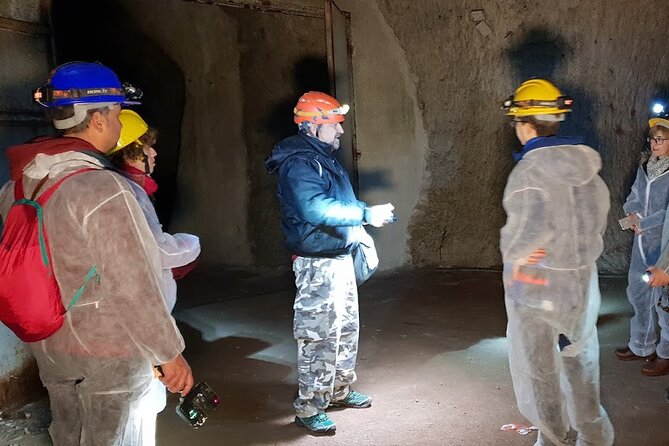
The tunnels were not used only in antiquity. You also see what remains of a mushroom farm dating from World War II. This later chapter can seem surprising beside the Roman quarries and Christian burials, but it is a good reminder that underground spaces keep finding new uses.
The mushroom farm may be less visually impressive than the ancient features. It is not a grand monument. Its value is in showing how people adapted an old excavation to practical needs during a very different period.
This is also where the tour’s broad time span becomes clear. You are moving from Roman construction to Christian burial, from pagan worship to wartime food production. The site is valuable because these layers occupy the same physical space.
If you expected a continuous Roman tunnel network under the city, you may feel disappointed. The tour description can sound broader than the actual setting. You are visiting a real Roman quarry system and underground archaeological area, but not traveling beneath Rome’s famous central monuments.
The Mithraeum and the change from pagan Rome to Christian Rome
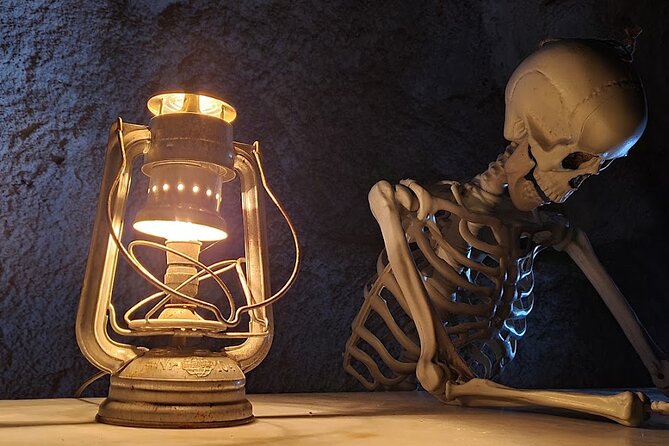
Near the end, you visit a Mithraeum, a pagan temple dedicated to the cult of Mithras. It was cut into the ground, and the guide explains its role in the religious life of ancient Rome.
This is an important part of the experience because it gives you more than a Christian story. Rome’s religious world was not fixed. Pagan cults, traditional Roman beliefs, and Christianity existed within the same changing society, and the underground setting makes that shift feel tangible.
The temple is not presented as a vast hall. Expect a low, enclosed archaeological space rather than a sweeping monument. The guide’s storytelling matters here, especially when explaining how Christianity spread and how underground religious sites fit into Roman life.
The experience may also include mulsum, a Roman wine prepared with honey and spices according to recipes associated with Apicius. It is a small tasting, not a full meal, but it adds a sensory finish to a tour that otherwise relies heavily on stone, darkness, and spoken explanation.
The guides make the difference
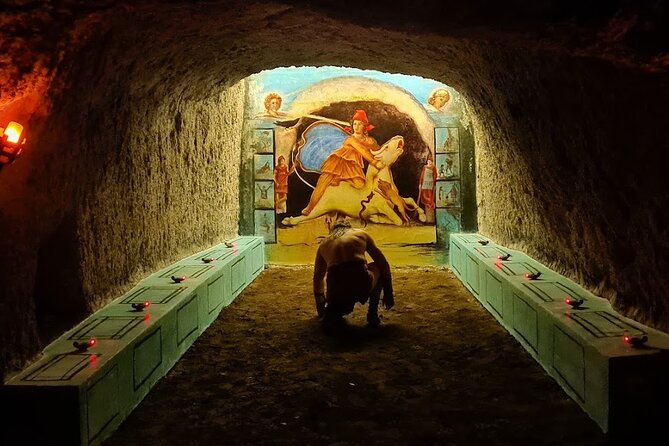
This tour depends more on the guide than many standard Rome attractions do. The tunnels can be fascinating, but much of their meaning comes from explanation. The strongest guide reports highlight Joseph, Riccardo, Giuseppe, Daniela, Roberto, and Maurizio, with Maurizio noted for guiding in English, Spanish, and Italian.
I would book this only if you enjoy asking questions and listening closely. A guide who can explain tool marks, burial practice, the Mithraeum, and the mushroom farm turns a dark series of chambers into a connected story. Without that interpretation, the route could feel like a long walk through similar spaces.
The small group helps. With no more than 10 people, you should have a better chance of hearing the guide and seeing the demonstrations with the Roman lamp. It also keeps the visit more personal than a large bus tour.
There is one practical warning. Two separate accounts describe a guide failing to arrive. In one case, the booking was made at the last minute and the operator explained that an email notification problem caused the failure. Those incidents appear to be exceptions, but they are serious enough that I would confirm the meeting details and booking shortly before the start time.
Price, timing, and practical value
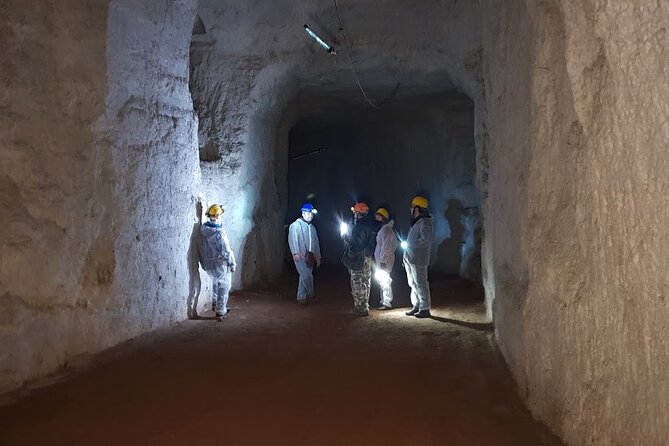
At $114.14 per person, this is not a cheap underground walk. You are paying for a small group, an approximately two-and-a-half-hour experience, a specialist setting, admission, and guided interpretation.
The price makes the most sense if you have already seen Rome’s headline sights and want something less standard. The tour covers several distinct chapters of Roman and modern history in one outing, and the maximum group size is much lower than on typical city tours.
The value is weaker if you want a large number of visible artifacts or dramatic architecture. Much of the tour consists of rough walls, narrow passages, darkness, and explanation. You are paying for access and context, not a parade of famous objects.
The underground temperature is another factor. On a hot day, the cool air can be a relief. One person needed a jacket halfway through, so bring a jumper or light sweater even in summer. Wear shoes suitable for a kilometer of park walking and uneven underground surfaces.
The tour is offered in English and uses a mobile ticket. Confirmation is provided at booking. Service animals are allowed, and most people can take part, but the supplied information does not promise full step-free access or describe the exact surface conditions. If mobility is a concern, ask the operator before booking.
Who will enjoy this underground Rome experience
I would recommend it to you if you like archaeology, religious history, unusual sites, and places that still feel partly unexplained. It is also a good choice for repeat visitors who have already spent time at the Forum and want a different view of how Rome worked.
Families with older children may enjoy the lamps and darkness, provided everyone is comfortable underground. The small group can also suit relatives of different ages because the guide can adjust the pace and answer questions.
This is less suitable for you if you dislike enclosed spaces, have difficulty with walking, or want a polished attraction with clear displays at every turn. The route starts with a park walk, the air underground may feel poor, and several passages can look alike.
The tour also requires an open mind about what counts as a major sight. A quarry is not as instantly impressive as the Pantheon. Its importance comes from the human labor, later reuse, and layers of belief connected to it.
Cancellation and weather details
You can cancel at least 24 hours before the start for a full refund. Changes or cancellations made less than 24 hours before the start are not accepted for a refund.
The experience requires suitable weather and a minimum number of participants. If poor weather or low enrollment causes cancellation, you are offered another date, another experience, or a full refund.
Should you book the Labyrinth of Rome?
Book it if you want a small, serious, unusual outing and you are happy to let the guide bring plain-looking spaces to life. The best parts are the Roman quarry marks, the lamp-lit catacombs, the Mithraeum, and the way the site links ancient labor with Christian burial and 20th-century reuse.
Skip it if you expect tunnels beneath the Colosseum, a polished museum, or constant visual spectacle. Confirm the meeting point, allow time for the Caffarella Park walk, bring a jacket, and arrive ready for a damp underground setting. For the right person, this is one of Rome’s more memorable archaeology experiences. For the wrong person, it may feel like an expensive visit to a dark quarry.
FAQ
Where does the tour begin?
The tour begins at Via Amedeo Crivellucci, 8, 00179 Rome, Italy.
Where does the tour end?
The activity ends back at the meeting point.
How long does the experience last?
The full experience lasts approximately 2 hours and 30 minutes. The underground admission portion is listed as about 2 hours.
Is the tour offered in English?
Yes. The experience is offered in English.
How many people can join the tour?
The maximum group size is 10 participants.
Is admission included?
Yes. The underground admission ticket is included.
How far do you walk before entering the tunnels?
You walk about 1 kilometer, or just over half a mile, through Caffarella Park before reaching the underground entrance.
Should I bring a jacket?
Yes. The underground area can be cold and damp, even when Rome is hot. A light jacket or jumper is recommended.
Are service animals allowed?
Yes. Service animals are allowed.
Can I cancel for a full refund?
Yes, if you cancel at least 24 hours before the experience start time. Cancellations made less than 24 hours before the start are not refunded.
Newest reviews from Rome
- ROME:Colosseum & Ancient Rome – private/small group TOUR★ 5.0 · 24 reviews
- Off the Beaten Track in Rome: Rione VI Parione Private Tour★ 5.0 · 24 reviews
- Cinematic Photoshoot in Rome★ 5.0 · 24 reviews
- Rome: Best of Colosseum and Roman Forum Small Group Guided Tour★ 4.5 · 24 reviews
- Vatican and Trionfale Market Tour with Wine and Food Tasting★ 5.0 · 24 reviews
- private tour: Vatican Museums, Sistine Chapel, St. Peter’s Basilica★ 4.5 · 24 reviews
- Colosseum guided tour with Virtual Reality★ 5.0 · 24 reviews
- 3 Hours Mosaic Workshop in Trastevere★ 5.0 · 24 reviews
Catacombs & Crypts, compared.

Crypts and Catacombs Underground Tour with Transfers
Read our review →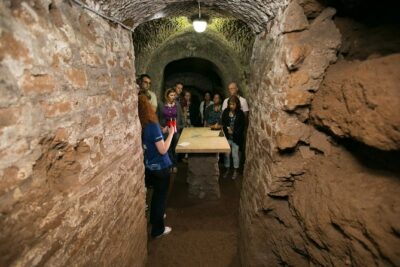
The Original Roman Crypts and Catacombs Tour with Transfers
Read our review →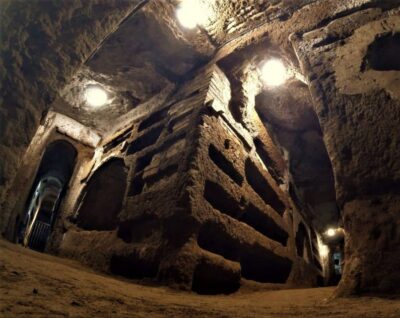
Catacombs of St. Callixtus Entry Ticket & Guided Tour
Read our review →


Rome EBike Tour: Appian Way, Catacombs & Roman Aqueducts
Read our review →
Catacombs and Capuchin Crypt Guided Tour with Transfer
Read our review →
St. Peter’s Basilica Priority Access Tour with Dome & Crypt
Read our review →Browse the lists this tour appears in