
Reviewed · BORGHESE GALLERY TOURS
Borghese Gallery Max 6 People Tour: Baroque & Renaissance in Rome
The real draw here is the chance to see Rome’s Borghese Gallery with an art expert beside you, not from behind a crowded group. In two hours, you’ll meet Bernini’s marble figures at close range, face Caravaggio’s dark drama, and see why this compact museum can be one of Rome’s most rewarding stops.
I like the maximum group of six, which makes it easier to hear, ask questions, and keep a sensible pace. I also like that your admission ticket is included, a useful safeguard at a museum where entry times are limited and reservations are mandatory.
The main catch is timing. The tour lasts about two hours, and the gallery controls visits tightly, so arriving late can shorten or even cost you the guided portion. Allow extra time to reach the meeting point in Villa Borghese Gardens.
In This Review
- Key points to know before booking
- Why the Borghese Gallery deserves two hours
- Starting at Piazza Scipione Borghese
- Bernini’s marble turns into theater
- Caravaggio brings a darker mood
- Raphael, Titian, and Canova widen the picture
- What the guide adds to the experience
- The six-person format and the pace inside
- Price and the question of value
- Practical timing, tickets, and cancellation
- Who will enjoy this visit most
- Should you book the Borghese Gallery tour?
- FAQ
- How long does the Borghese Gallery tour last?
- How many people can join the tour?
- Is the Borghese Gallery admission ticket included?
- What language is the tour offered in?
- Where does the tour start and end?
- Which artworks are included?
- Can I cancel for a full refund?
Key points to know before booking
- Six people maximum: A small group gives the guide room to explain details and answer questions without shouting across a crowd.
- Reserved admission included: You do not need to arrange a separate Borghese Gallery ticket.
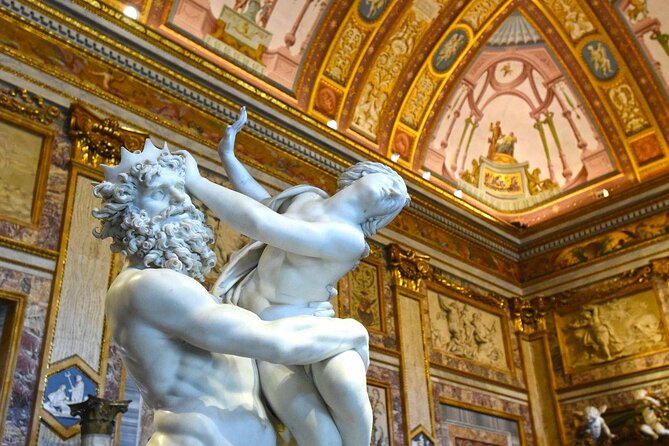
- Bernini is the star: Apollo and Daphne, The Rape of Proserpina, and other sculptures receive close attention.
- Caravaggio and Raphael add balance: The visit is not limited to Baroque sculpture, with major paintings from several periods.
- English tours run at several times: You can fit the gallery around other Rome plans, subject to availability.
- Arrive early: A missed start can mean losing the tour, even if you later manage to enter the museum on your own.
Why the Borghese Gallery deserves two hours
The Borghese Gallery is not an enormous museum that demands an all-day march. That is part of its appeal. You can see a focused set of major works without the fatigue that often comes with Rome’s biggest museums.
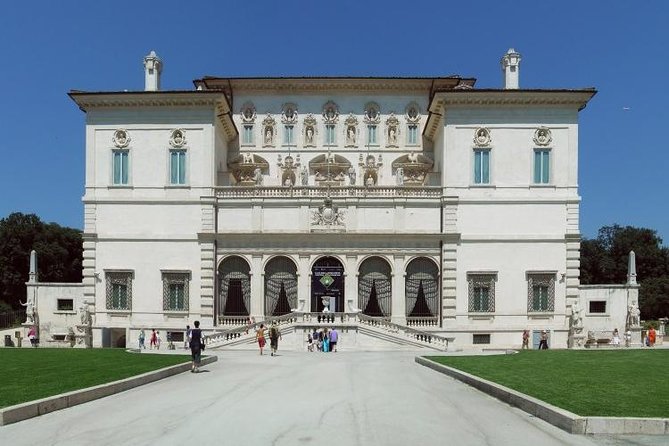
The collection fills a grand villa in Villa Borghese Gardens. The rooms themselves matter. Painted ceilings, patterned floors, ornate decoration, and large sculptures create a setting where the art is not displayed in plain white boxes. You are looking at a collection built to impress.
That setting also explains why a guide helps. A small information panel can tell you the name of a sculpture and its date. It may not explain why Bernini’s marble looks soft, how a patron used art to display power, or what to watch for in the twist of a body. The guide’s job is to turn those details into a story you can follow.
The tour is especially strong for first-time visitors. You do not need a background in art history to enjoy it. A good guide can point out the movement, facial expression, texture, and symbolism that make the works memorable.
More Borghese Gallery entries:
- Rome: Borghese Gallery Guided Tour with Skip-the-Line Entry
★ 4.8 · 2,649 reviews - Rome: Borghese Gallery Skip-the-Line Tickets with Audioguide
★ 4.6 · 2,562 reviews - Rome: Borghese Gallery Entry Ticket & Optional Guided Tour
★ 4.5 · 2,237 reviews
Starting at Piazza Scipione Borghese
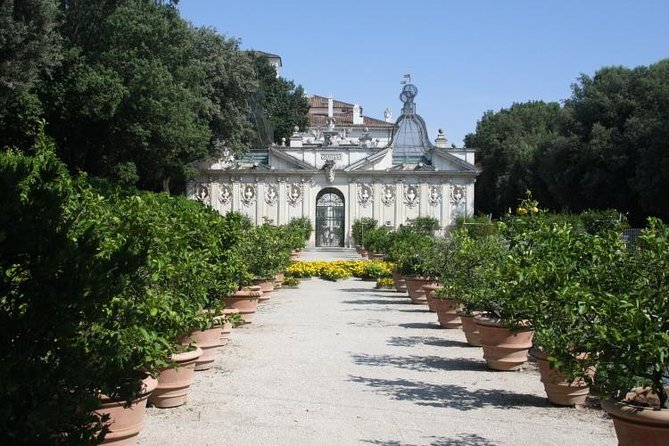
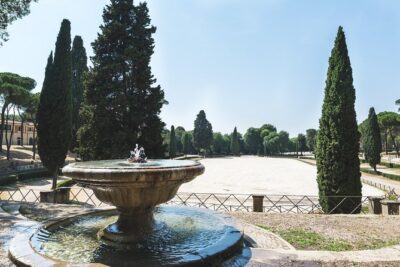
The meeting point is in the Villa Borghese Gardens, at Molto alla Galleria Borghese near Piazzale del Museo Borghese. You meet the guide outside or near the gallery area, then begin with some context about the park and the Borghese setting.
Do not treat the gardens as a minor detail. Villa Borghese is one of Rome’s most pleasant places for a walk, and the guide explains how the park developed and the activities, festivals, and games held there. If your schedule permits, I would arrive early and use the gardens to get your bearings before the museum appointment.
This is also where you need to be strict with your watch. One late arrival affected an entire tour because the guide had to begin after waiting for missing participants. Another visitor missed the guided start because of poor transport timing, although a final museum ticket happened to be available later.
That is a warning worth taking seriously. The gallery uses limited entry slots, and this tour has a scheduled start. Aim to reach the meeting point at least 15 minutes early. The meeting location is near public transportation, but the final approach through the park can take longer than expected if you are unfamiliar with the grounds.
Bernini’s marble turns into theater
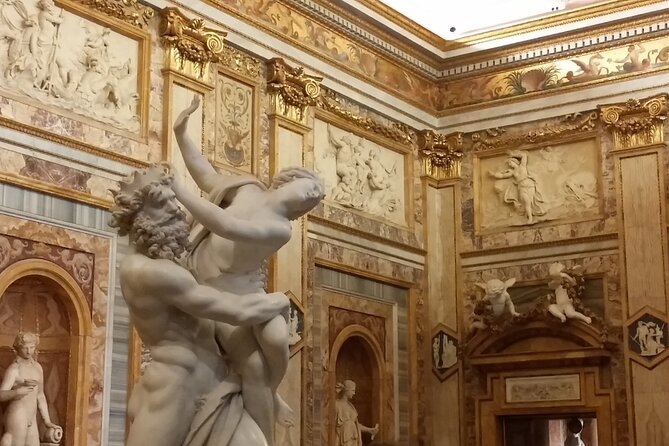
Bernini is the reason many people book this visit, and the tour gives him the attention he deserves. His sculptures do not sit quietly. Bodies twist, fingers press into flesh, hair flies, and fabric seems to ripple across stone.
The Rape of Proserpina is a perfect example. Look closely at Pluto’s hand gripping Proserpina’s thigh. The marble suggests pressure and softness at once. That small detail helps explain why Bernini’s work feels almost physical, even though you are looking at stone.
Apollo and Daphne offers a different kind of drama. Bernini captures the instant when Daphne transforms into a laurel tree while Apollo reaches for her. The sculpture rewards a careful look from more than one angle, and a guide can help you understand how movement continues around the piece.
The tour also includes Bernini’s other major works in the collection. You will hear about the artist, his patrons, and the stories tied to each sculpture. Guides such as Caterina, Marco, Francesco, and others have been praised for explaining how Bernini suggested motion, emotion, and fabric with extraordinary control.
You should still expect to stand in front of the works for a while. One useful point made by a past participant is that there is quite a bit of standing in one place. Wear sensible shoes, especially if this visit follows a morning at the Colosseum or the Vatican.
Caravaggio brings a darker mood
The paintings provide a strong counterpoint to Bernini’s theatrical marble. Caravaggio’s works use sharp light, ordinary-looking faces, and intense moments to pull you into the scene.
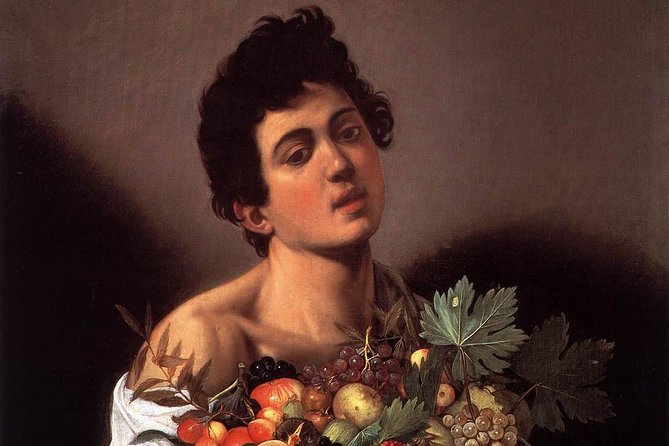
The tour includes David with Goliath’s Head, Head of Goliath, and Boy with a Basket of Fruit. These paintings are not just famous names on a checklist. They give you a chance to see how Caravaggio built drama through light and direct human presence.
David with Goliath’s Head is particularly unsettling. The severed head is often understood as a self-portrait of Caravaggio, which gives the scene an added personal edge. Your guide can explain the story and help you look at the painting beyond its shock value.
Boy with a Basket of Fruit is quieter, but it rewards close attention. The fruit, leaves, skin, and basket show Caravaggio’s interest in texture and ordinary life. A guide can connect that simple subject to the larger change in European painting toward direct, human scenes.
The best part of having a guide here is the comparison between the paintings and sculptures. Bernini creates a moment through motion. Caravaggio creates one through light, posture, and psychological tension. Seeing both in the same visit makes the artistic shift easier to grasp.
More museums and galleries in Rome:
- Vatican: Museums & Sistine Chapel Entrance Ticket
★ 4.5 · 144,003 reviews - Vatican Museums & Sistine Chapel Tour with Optional Basilica
★ 4.3 · 67,413 reviews - Vatican Museums, Sistine Chapel & St Peter’s Basilica Guided Tour
★ 4.5 · 39,149 reviews - Rome: Vatican Museums, Sistine Chapel & Basilica Tour
★ 4.3 · 13,872 reviews
Raphael, Titian, and Canova widen the picture
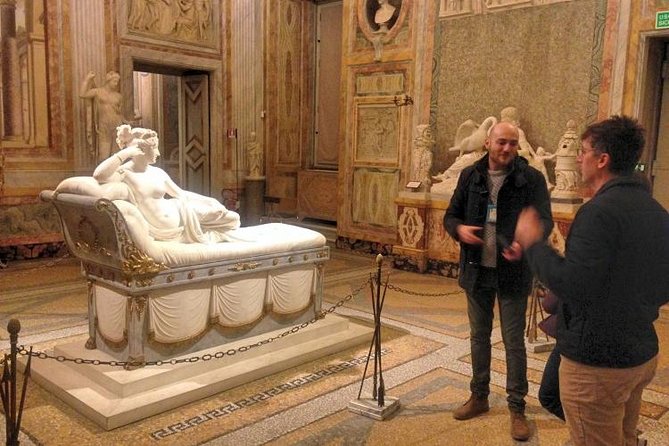
The gallery is not only a Bernini and Caravaggio stop. Raphael’s Young Woman with Unicorn and The Deposition bring an earlier Renaissance style into the visit.
Raphael’s figures are more composed and balanced than Bernini’s twisting bodies. The Young Woman with Unicorn is also a good reminder that portraits can carry symbols and unanswered questions. The guide can help you notice the details that give the painting its meaning without turning the explanation into a lecture.
Titian’s Sacred and Profane Love adds another layer. Its title and interpretation have prompted long discussion, and the work gives the guide room to explain how Renaissance paintings can hold several possible meanings. You may not leave with one simple answer, but you will have more to look for in the color, figures, and setting.
Then there is Canova’s Paolina Borghese Bonaparte. The sculpture shows Paolina reclining as Venus Victorious, blending portraiture with classical mythology. It is an excellent example of how the Borghese family used art to shape its public image.
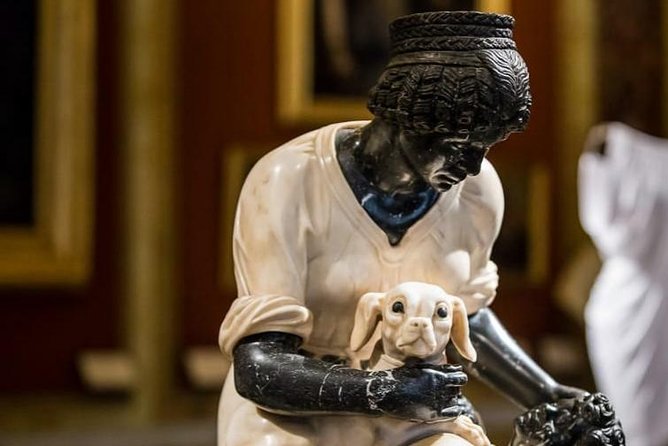
The ancient sculpture collection fills out the story. The Borghese family did not build its reputation only through new Baroque commissions. Ancient Roman works and classical subjects helped create the cultured, powerful image the family wanted to project.
What the guide adds to the experience
The gallery can be visited without a guide, but you will likely get more from it with one. The best guides do not simply repeat dates. They connect the art to the people who commissioned it, the artists who made it, and the visual choices you can still see.
Names associated with especially strong guiding include Francesco, Caterina, Marco, Giovanna, Manny, Martha, Eva, Elisa, Laura, Sylvia, and Francesca. The guide assigned to your tour may be different, but the experience depends heavily on that person’s delivery.
The strongest guiding style here is lively but controlled. Several guides have been praised for telling clear stories, pacing the visit well, and allowing time to look. That last point matters. A tour that races from room to room can leave you with a list of famous names but little sense of what you actually saw.
A guide also helps with the practical problem of crowd flow. The gallery’s two-hour entry period is short for the number of major pieces inside. A well-run tour can spend longer on Bernini and Caravaggio while moving more quickly through less important sections.
That means you may not study every painting equally. I see this as a strength for most visitors, particularly if this is your first visit. If you are a specialist or want extended time with one lesser-known work, an independent visit may give you more control.
The six-person format and the pace inside
A group of no more than six is small enough to feel personal. You can ask why a work matters, request clarification, or admit that you do not understand something without competing with a large tour group.
The size also helps when the guide points to a small detail. You are more likely to hear the explanation and see the spot being discussed. This matters in a museum where the visual effects can be subtle, such as a hand pressing into skin or a painted shadow that changes the mood of an entire scene.
The tradeoff is that two hours goes quickly. The Borghese has a great deal to see, and the gallery’s fixed visit period means you cannot simply linger until closing. One past visitor felt that the available time barely allowed enough attention for Bernini and Caravaggio.
I would treat the tour as a carefully chosen introduction, not a complete study of every room. Pay attention to the highlighted works, then use any remaining time to return to the piece that stayed with you most.
Price and the question of value
At $180.27 per person, this is not a bargain museum ticket. You are paying for the reserved entrance, the small group, and the guide’s interpretation, not just access to the building.
The price makes the most sense if you value structure and expert explanation. Buying a Borghese ticket can be difficult because reservations are required and spaces are limited. Here, the admission is included, which removes one important uncertainty.
The small group also has real value compared with a large guided visit. You are not paying for a crowd of 20 or more people. You get a better chance to hear the guide and keep close to the works.
Still, I would compare the cost with your own interests. If you love Bernini, Caravaggio, Renaissance painting, or decorative interiors, the visit can justify a premium. If you mainly want to walk through the gallery quickly and read labels, the added expense may not suit you.
The tour is recommended by 98 percent of participants and carries a 4.9 rating from 185 reviews. Those figures suggest a reliable experience, though the guide remains the key variable. The repeated praise centers on clear explanations, passion, humor, and good pacing.
Practical timing, tickets, and cancellation
Several tour times are offered, so you can place the visit around other Rome plans. A morning visit may leave the rest of the day open, while an afternoon appointment can work after another sight. One schedule pairing that worked well was the Colosseum in the morning and Borghese Gallery in the afternoon.
Your mobile ticket is confirmed at booking unless you book within seven days of the visit. In that case, confirmation can take up to 48 hours and remains subject to availability.
Free cancellation is available up to 24 hours before the start time. Changes or cancellations inside that 24-hour window are not refunded or accepted, based on local time.
The tour is offered in English. Food and drinks are not included, and the activity ends back at the meeting point.
A dated museum note is important: from March 29 through June 30, 2024, the second floor was closed for restoration. If you are checking an old booking description, confirm the current floor access before you go, since that restoration period is past but museum closures can change.
Who will enjoy this visit most
I would recommend this tour to:
- First-time Borghese Gallery visitors who want help choosing what to see
- Art lovers focused on Bernini, Caravaggio, Raphael, Titian, and Canova
- Couples or families who prefer a small, conversational group
- Visitors who want guaranteed admission arranged with the tour
- Anyone who enjoyed the Vatican but wants a smaller, more focused museum
- People who like stories about patrons, artists, and the meaning behind famous works
Children can enjoy it too if they respond well to stories and visual details. One guide was praised for keeping two children engaged, which suggests the right presentation can make the art accessible to younger visitors.
You may prefer an independent visit if you need complete control over your pace, dislike standing for explanations, or want to spend most of your time on works not included among the main stops.
Should you book the Borghese Gallery tour?
Book it if Bernini and Caravaggio are high on your Rome list, or if you want a compact museum visit with an expert guiding your eye. The six-person limit, included admission, and strong record of guide quality make the price easier to defend than a basic entry ticket alone.
Plan carefully. Get to the Villa Borghese meeting point early, wear comfortable shoes, and accept that two hours will give you a focused route rather than unlimited time. If that sounds like the right balance, this is one of Rome’s better choices for turning great art into something you can actually understand.
FAQ
How long does the Borghese Gallery tour last?
The guided visit lasts approximately two hours.
How many people can join the tour?
The group has a maximum of six participants.
Is the Borghese Gallery admission ticket included?
Yes. Prereserved entrance tickets are included in the tour cost.
What language is the tour offered in?
The tour is offered in English.
Where does the tour start and end?
It starts near Molto alla Galleria Borghese at Piazzale del Museo Borghese in Villa Borghese Gardens. The activity ends back at the meeting point.
Which artworks are included?
The tour includes works such as Bernini’s Apollo and Daphne and The Rape of Proserpina, Canova’s Paolina Borghese Bonaparte, Raphael’s Young Woman with Unicorn and The Deposition, Titian’s Sacred and Profane Love, Caravaggio’s David with Goliath’s Head, Head of Goliath, and Boy with a Basket of Fruit, along with ancient sculpture.
Can I cancel for a full refund?
Yes, if you cancel at least 24 hours before the experience start time. Cancellations made less than 24 hours in advance are not refunded.
Newest reviews from Rome
- Rome: Vatican Museums & Sistine Chapel Skip-the-Line Ticket★ 4.4 · 148 reviews
- Shared Shuttle Transfer from Rome to Civitavecchia Port★ 5.0 · 148 reviews
- Rome: Crypts & Catacombs After Hours Tour with Bone Chapel★ 4.6 · 149 reviews
- Ghosts Legends and Mysteries of Rome Walking Tour★ 5.0 · 149 reviews
- Skip the Line: Vatican and Sistine Chapel with Guided Tour★ 4.0 · 149 reviews
- Pizza and Tiramisu Cooking Class in Rome, Piazza Navona★ 5.0 · 150 reviews
- Tivoli: Villa Gregoriana Entrance Ticket★ 4.7 · 150 reviews
- Rome: Borghese Gallery Skip-the-Line Entry and Guided Tour★ 4.7 · 150 reviews
Borghese Gallery Tours, compared.
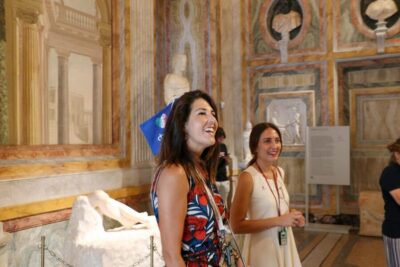
Borghese Gallery Guided Tour with Skip-the-Line Entry
Read our review →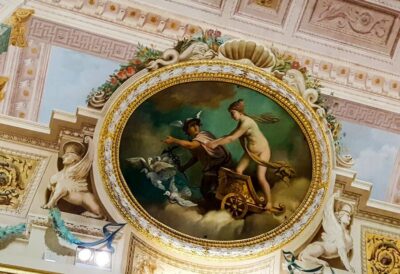
Borghese Gallery Skip-the-Line Tickets with Audioguide
Read our review →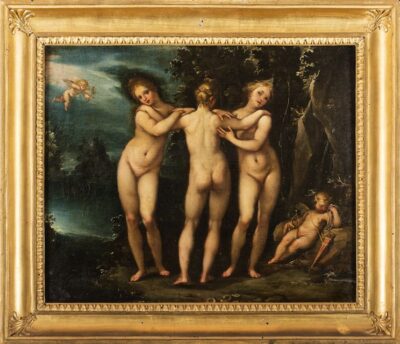
Borghese Gallery Entry Ticket & Optional Guided Tour
Read our review →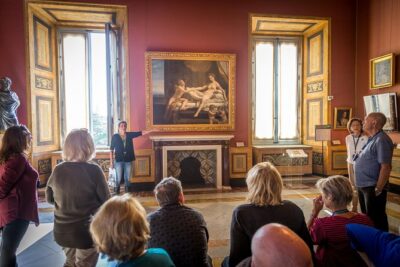
Borghese Gallery & Gardens Small Group Guided Tour
Read our review →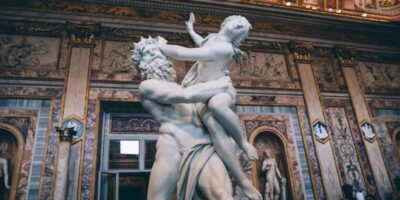
Borghese Gallery, Canova’s Masterpieces Skip-the-Line Guided Tour
Read our review →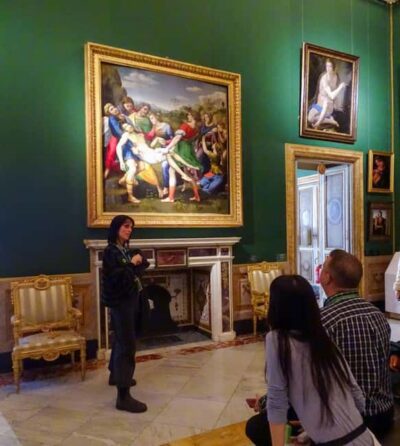
Borghese Gallery Guided Tour with Skip-the-Line Entry
Read our review →Browse the lists this tour appears in