
Reviewed · PRIVATE DRIVERS
Christian Rome with English Speaking driver
Rome’s Christian story is spread across the city, and this private six-hour tour connects the major pieces without making you battle Rome’s traffic, parking, or long walks. You move from imperial basilicas to the Appian Way and underground burial galleries, ending at the vast Basilica of St. Paul Outside the Walls.
I like the private car and flexible schedule. You can spend longer inside a church that catches your attention, shorten a stop, or request a change such as the Pantheon or St. Peter’s Square. I also like the easy access for families and anyone who cannot manage a full day of walking. The driver drops you close to each site and recommends local places for lunch.
The main catch is important: your driver is not a licensed guide and cannot give detailed commentary inside the churches. You will receive explanations in the car, then visit most places on your own. At $509.07 for up to three people, this is a useful transport service with local insight, but not a traditional guided tour.
In This Review
- Key points to know before booking
- Why this route works for Christian Rome
- Santa Maria Maggiore and Rome’s Marian heart
- St. John Lateran, Rome’s cathedral
- The Holy Stairs and a quiet act of devotion
- Santa Croce in Gerusalemme and the Passion relics
- Domine Quo Vadis and the Old Appian Way
- St. Callixtus Catacombs, Rome underground
- St. Paul Outside the Walls, a grand finale
- What your driver can and cannot do
- Price, timing, and the real value
- Who should book this private Christian Rome tour?
- Should you book it?
- FAQ
- How long does the Christian Rome tour last?
- Is hotel pickup included?
- Is the tour private?
- Is a licensed guide included inside the churches?
- What does admission to the Catacombs of St. Callixtus cost?
- Can the itinerary change?
Key points to know before booking
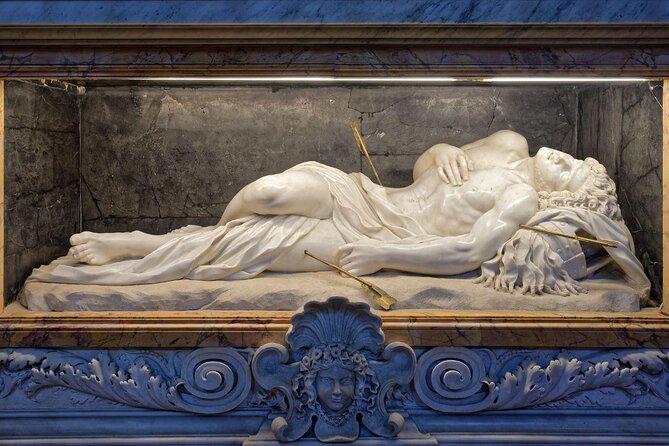
- Seven major Christian sites in about six hours: See four important basilicas, the Holy Stairs, Domine Quo Vadis, the catacombs, and St. Paul Outside the Walls.
- Private transport saves time: Hotel pickup and close drop-offs make this practical for a wide route that would be awkward by public transport.
- You explore independently: The driver explains sites from the vehicle, but there is no inside guide included.
- The Catacombs of St. Callixtus cost extra: Admission is about €8 per person and includes a local guided visit.
- The route can change: Drivers such as David, Daniele, Matteo, Damiano, Max, Marco Tabola, Alessandro, and Manuel have tailored visits to personal interests and family needs.
- Sunday needs extra care: Church services can limit access to certain areas.
Why this route works for Christian Rome
Rome’s most famous sights often pull you toward the Colosseum, Trevi Fountain, and Vatican Museums. Those places deserve their fame, but they do not tell the whole story of the city. This route takes you to churches and sacred sites tied to Constantine, the early popes, the apostles Peter and Paul, and the first Christian communities.
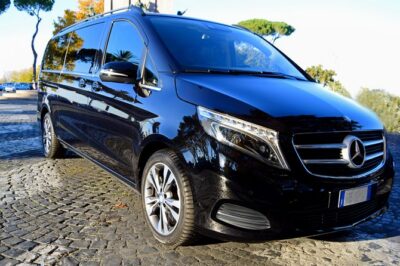
The geography is the real challenge. Santa Maria Maggiore sits on the Esquiline Hill, St. John Lateran is farther southeast, Santa Croce is nearby, and the Appian Way and catacombs lie beyond the old center. St. Paul Outside the Walls is across the city, south of the historic core. A private sedan or minivan turns a scattered day into a manageable one.
You are not locked into a large group or a fixed pace. That matters in churches, where you may want ten quiet minutes with a mosaic while another member of your party wants to move on. Families have also used the flexibility to keep children and older relatives comfortable.
The six-hour limit still requires discipline. The listed stop times add up to more than four hours, leaving only a modest cushion for traffic, parking, hotel pickup, and transfers. You will see a lot, but you should not expect long, scholarly visits at every stop.
More Rome tours worth comparing
- Rome Private Arrival Transfer: Fiumicino Airport to Hotel in Rome
★ 4.5 · 2,492 reviews - Rome: Catacombs Guided Tour with Transfer
★ 4.2 · 1,808 reviews - Rome: Catacombs and Capuchin Crypt Guided Tour with Transfer
★ 4.6 · 1,606 reviews
Santa Maria Maggiore and Rome’s Marian heart
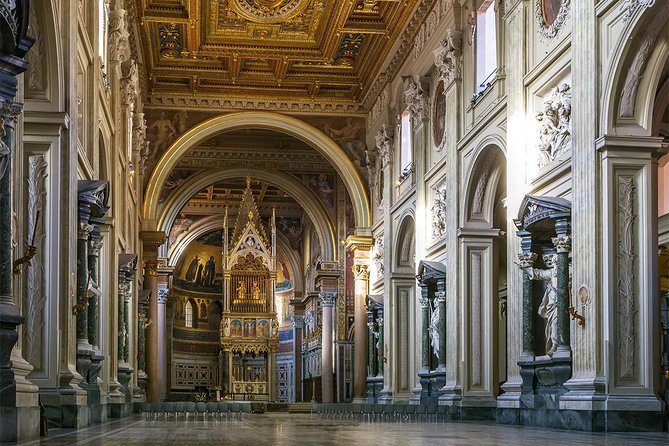
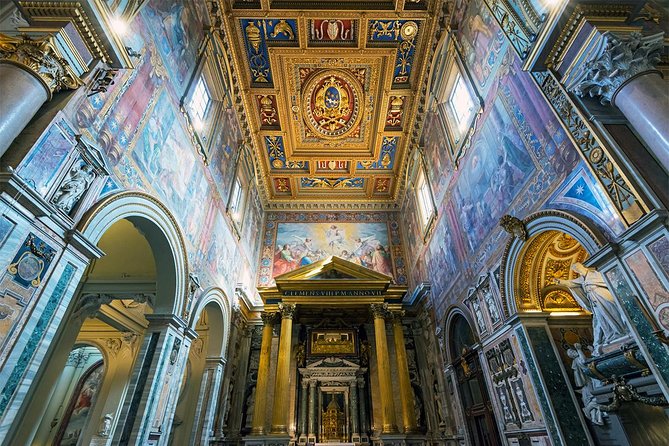
Begin at Basilica di Santa Maria Maggiore, one of Rome’s four major basilicas. The church was founded in the fourth century and is especially important as a Marian shrine, dedicated to Mary. Its original structure has survived despite later additions and restorations.
Inside, look up at the fifth-century mosaics along the central nave. They are among the church’s most important early Christian artworks. The Cosmatesque marble pavement gives the floor a patterned sparkle, while the fifteenth-century gilded coffered ceiling adds a later layer of grandeur.
The basilica also contains chapels built and funded by popes, cardinals, and religious groups. The high altar, later refined by Valadier, is another major focal point. A relic associated with the Holy Crib adds special meaning for Catholic pilgrims.
You have about 40 minutes here. That is enough to see the main features, but not enough to inspect every chapel or pause at length. If Santa Maria Maggiore is particularly important to you, tell your driver at the start so the schedule can be adjusted.
St. John Lateran, Rome’s cathedral
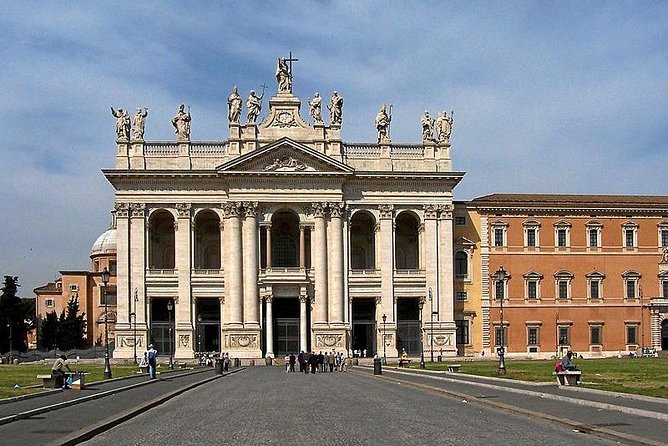
The route continues to the Archbasilica of San Giovanni in Laterano, commonly called St. John Lateran. It is the oldest and highest-ranking of Rome’s four major basilicas, and it serves as the cathedral of Rome.
Constantine established the original church, and it served as the pope’s residence until 1307. The building you see today reflects many centuries of change, including a major seventeenth-century interior redesign by Borromini. The result is grand but different from the older, more restrained feel of some early Christian churches.
Look for the imposing statues and the chapels along the sides. The site is also associated with relics connected to the Last Supper. Nearby, the Lateran Baptistery is described as the oldest in the city, and the area includes one of Rome’s ancient Egyptian obelisks.
The visit also brings you to the Holy Stairs, so the exact order can change. Allow about 40 minutes for the basilica itself, with another 20 minutes for the sanctuary. St. John Lateran is a place where a little advance reading helps, since your driver cannot provide a full inside explanation.
The Holy Stairs and a quiet act of devotion
The Pontifical Sanctuary of the Holy Stairs contains 28 white marble steps traditionally associated with Christ’s Passion. According to Catholic tradition, the steps were brought from Jerusalem and connected with Pontius Pilate’s palace.
The stairs are protected by wooden coverings, which preserve the marble beneath. At the top is the Sancta Sanctorum, once the private chapel of the early popes. The setting is less about grand architecture than personal devotion, and you may see people approaching the steps in prayer.
The stop is brief, around 20 minutes. That makes it a focused visit rather than a long architectural tour. If you are not Catholic, the site still offers a direct look at how relics, pilgrimage, and memory have shaped Rome.
A completely different way to spend the day in Rome:
- Vatican: Museums & Sistine Chapel Entrance Ticket
★ 4.5 · 144,003 reviews - Vatican Museums & Sistine Chapel Tour with Optional Basilica
★ 4.3 · 67,413 reviews - Vatican Museums, Sistine Chapel & St Peter’s Basilica Guided Tour
★ 4.5 · 39,149 reviews - Rome: Colosseum, Palatine Hill and Roman Forum Guided Tour
★ 4.8 · 32,814 reviews
Santa Croce in Gerusalemme and the Passion relics
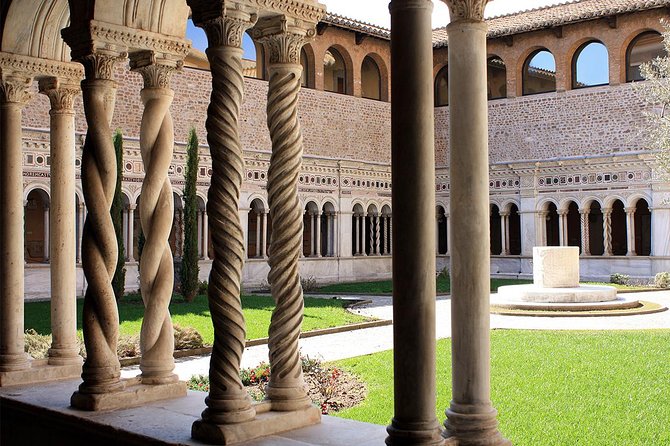
Basilica di Santa Croce in Gerusalemme is one of Rome’s Seven Pilgrim Churches. Its name means Holy Cross in Jerusalem, but the phrase refers to the soil of Jerusalem traditionally placed beneath the church, not to a claim that this building is physically in Jerusalem.
The basilica was linked to St. Helena, the mother of Constantine, who is said to have brought relics of Christ’s Passion to Rome from the Holy Land. That tradition gives the church a special place among Rome’s pilgrimage sites.
You have about 30 minutes here. Focus on the relic displays, the overall church interior, and the sense of connection between Rome and the Holy Land. As with the other churches, access to some areas may be limited on Sundays because of services.
This is one of the stops where independent exploration can work well. You can take in the major features at your own speed, but you should not expect the driver to walk through the church explaining every object.
Domine Quo Vadis and the Old Appian Way
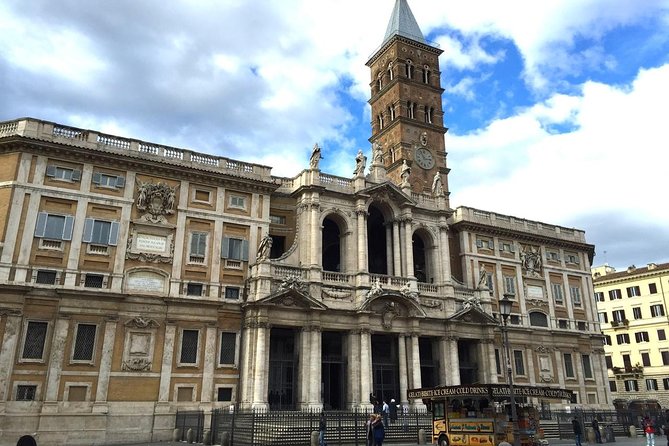
From the basilicas, the car heads toward the Old Appian Way, passing through Porta San Sebastiano and stopping at the small Church of Domine Quo Vadis. The church marks the traditional place where Peter, fleeing Nero’s persecution, encountered a vision of Christ.
Peter asked, in Latin, Lord, where are you going? Christ replied that he was going to Rome to be crucified again. Peter then turned back toward the city. The story links the church to courage, sacrifice, and the beginning of Rome’s Christian tradition.
The present building dates mainly from a seventeenth-century rebuilding, although the site is associated with a much older tradition. You have about 15 minutes, so this is a quick stop. Its value lies in the setting and story rather than a long visit inside a large basilica.
The Old Appian Way also gives the route a welcome change of pace. After several urban churches, you reach an area tied to ancient roads, burial grounds, and Rome’s outskirts. Your driver can explain the area while taking you there.
St. Callixtus Catacombs, Rome underground
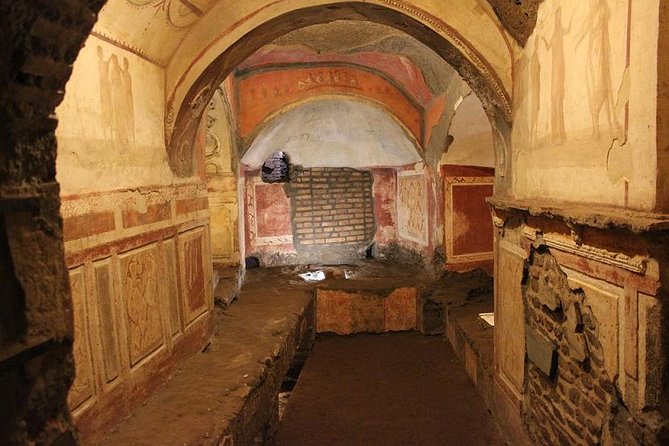
The Catacombs of St. Callixtus are the only stop with a separate admission charge. Expect to pay about €8 per person, and that fee includes a guided visit with a local catacomb guide. Your driver does not lead the underground tour.
These galleries and burial chambers were used by early Christians for burials, prayer, and worship. Many martyrs and saints were later moved into churches within the city after Constantine legalized Christianity. The catacombs eventually suffered damage and were abandoned before being rediscovered in the modern era.
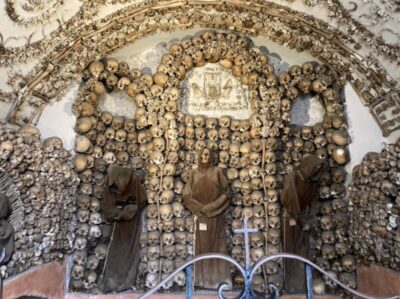
Keep expectations realistic. You will not necessarily see piles of bones or dramatic skull displays. The visit is about narrow underground passages, burial chambers, and the way early Christians cared for their dead outside the city walls.
The scheduled visit lasts about an hour. The local guide may not use a microphone, so stay close enough to hear. This is a practical tip, especially if your group includes anyone with hearing difficulty.
The catacombs can be inspiring, but the experience is less visually lavish than the basilicas. If you prefer architecture and mosaics, you may find the churches more rewarding. If you want to understand early Christian burial customs, this is one of the day’s most useful stops.
St. Paul Outside the Walls, a grand finale
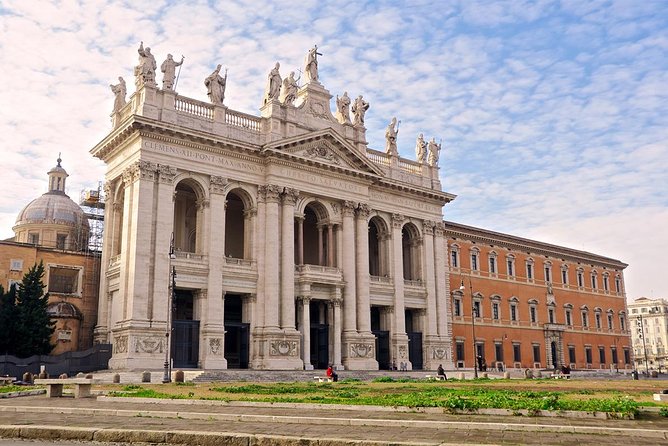
The final listed stop is Basilica Papale di San Paolo Fuori le Mura, or St. Paul Outside the Walls. It is Rome’s second-largest church and traditionally marks the burial place of the Apostle Paul.
Constantine first established a basilica here, and the church was consecrated in 394. A devastating fire in 1823 destroyed most of the building, but it was rebuilt using surviving elements and following the earlier design.
The scale is immediately different from the smaller churches earlier in the day. A portico with 150 columns welcomes you, and mosaics add color and solemnity inside. The basilica also contains a memorial area connected with Paul’s tomb, where pilgrims can pause in prayer.
Plan on about an hour. This is the place where the tour’s large route pays off. You reach a major Christian monument outside the ordinary central Rome circuit, without having to arrange a separate taxi or navigate the city yourself.
What your driver can and cannot do
Your driver is the person who makes this route practical. The car handles hotel pickup, transfers, and return transportation, while the driver shares background information during the journey. Drivers named in the service, including David, Daniele, Matteo, Damiano, Max, Marco Tabola, Alessandro, and Manuel, have been praised for clear English, courtesy, careful driving, and helpful local suggestions.
Several drivers have adjusted the order to suit the group. David moved the catacombs earlier for a party traveling with someone who used a cane. Alessandro arranged a stop at St. Peter’s Square and changed the end point to the Pantheon at the group’s request. Max replaced a planned St. Peter’s visit with the Pantheon when the pope’s appearance changed the timing.
That flexibility is a major benefit, but know the legal limit. The driver is not a licensed guide. He can explain attractions from inside the vehicle, but cannot provide detailed commentary inside the churches or catacombs. If you want a formal art and architecture lesson at every stop, hire a licensed guide separately or choose a guided walking tour.
The strongest practical advantage is the drop-off service. You avoid searching for parking and reduce the long walks between sites. That can make this a good choice for older relatives, children, or anyone who wants to conserve energy for the churches themselves.
Price, timing, and the real value
The price is $509.07 per group of up to three people. Shared among three, that is roughly $170 per person before the €8 catacomb fee and lunch. For one person or a couple, it is a serious expense.
I would judge the value by what you need. If your main goal is transportation across a difficult route, the price can make sense. A private air-conditioned sedan or minivan, hotel pickup and drop-off, flexible timing, and an English-speaking driver remove much of the day’s friction.
The value is weaker if you expect a full guided tour inside every church. That service is not included. You are paying for private transport and driver commentary, not a licensed art historian at your side.
The tour lasts approximately six hours. Be ready at the assigned pickup time, because a late departure may mean losing stops rather than extending the tour. The order can change, and lunch is not included. Drivers have recommended local restaurants, but the meal is your responsibility.
This is not the cheapest way to see Christian Rome. It can be one of the easiest, especially when three people share the cost and want to cover sites scattered across the city.
Who should book this private Christian Rome tour?
I would choose it for Catholic pilgrims who want the major basilicas and relic sites in one day. It also suits people who have already visited the Colosseum and Vatican Museums and want a different side of Rome.
Families can benefit from the private format. You can adjust the pace, stop for lunch, and change the plan when children or older relatives need a break. The air-conditioned vehicle is also welcome during Rome’s hotter months.
It is a good fit for repeat visitors, too. The route reaches places that often fall outside a first-time Rome schedule, including Santa Croce, the Appian Way, St. Callixtus, and St. Paul Outside the Walls.
I would hesitate if you want extensive commentary inside each site, dislike a tight schedule, or are mainly interested in secular ancient Rome. In that case, a private licensed guide or a smaller walking tour may give you more depth.
Book at least a day ahead if possible. The service is often reserved well in advance, with an average booking lead time of about 67 days. Free cancellation is available until 24 hours before the start time, but changes or cancellations inside that window are not refunded.
Should you book it?
Book this tour if convenient transport and personal control matter more to you than formal guiding. The route covers a remarkable amount of Christian Rome, and the private car makes the scattered sites realistic in half a day.
Do not book it expecting the driver to lead every interior visit. Go in prepared to explore the churches independently, read a little beforehand, and stay close to the local guide in the catacombs.
For three people, families, pilgrims, and visitors with limited walking stamina, I think the price can be justified. For solo visitors or anyone seeking detailed art commentary, the cost is harder to defend. The best reason to choose it is simple: you can see Rome’s major Christian landmarks on your own schedule, without wasting the day getting from one side of the city to another.
FAQ
How long does the Christian Rome tour last?
The experience lasts approximately six hours. You should be ready at the assigned pickup time because a late departure may prevent the full itinerary from being completed.
Is hotel pickup included?
Yes. Pickup and drop-off are included for centrally located Rome hotels. You need to provide your hotel address when booking.
Is the tour private?
Yes. Only your group participates, with a maximum of three people per booking.
Is a licensed guide included inside the churches?
No. The English-speaking driver can provide commentary from the vehicle, but Italian regulations prevent the driver from giving detailed explanations inside the attractions. You visit most sites independently.
What does admission to the Catacombs of St. Callixtus cost?
Admission is approximately €8 per person. The fee includes a guided visit with a local catacomb guide.
Can the itinerary change?
Yes. The order of stops may vary, and the private format allows some customization. Church access can also be restricted on Sundays because of services.
Newest reviews from Rome
- ROME:Colosseum & Ancient Rome – private/small group TOUR★ 5.0 · 24 reviews
- Off the Beaten Track in Rome: Rione VI Parione Private Tour★ 5.0 · 24 reviews
- Cinematic Photoshoot in Rome★ 5.0 · 24 reviews
- Rome: Best of Colosseum and Roman Forum Small Group Guided Tour★ 4.5 · 24 reviews
- The Labyrinth of Rome between catacombs and ancient quarries★ 4.5 · 24 reviews
- Vatican and Trionfale Market Tour with Wine and Food Tasting★ 5.0 · 24 reviews
- private tour: Vatican Museums, Sistine Chapel, St. Peter’s Basilica★ 4.5 · 24 reviews
- Skip the Line: Vatican Wheelchair Accessible Private Tour★ 5.0 · 24 reviews
Private Drivers, compared.
Rome Private Arrival Transfer: Fiumicino Airport to Hotel in Rome
Read our review →
Catacombs and Capuchin Crypt Guided Tour with Transfer
Read our review →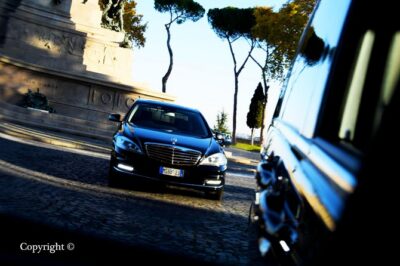
Private Departure Transfer: Hotel to Rome Fiumicino Airport
Read our review →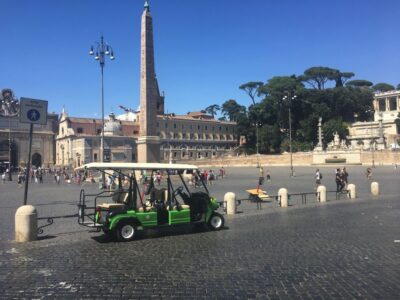
Imperial City Tour by Golf Cart with Optional Transfer
Read our review →
Catacombs Tour with Transfer – Optional Capuchin Crypt or Trevi
Read our review →
Civitavecchia Private Transfer: Rome to Civitavecchia Cruise Port
Read our review →
Shared Transfer from Civitavecchia Pier to Rome Hotel or Airport
Read our review →Browse the lists this tour appears in