Reviewed · TICKETS
Circo Maximo entrance ticket + virtual experience
The most striking thing about this Circus Maximus experience is the way it fills in a place that can otherwise feel like a broad, grassy hollow with scattered ruins. Using virtual and augmented reality, you can picture the stadium packed with spectators, chariots thundering around the track, and shops lining the edges. I like the clear eight-stop structure and the fact that the whole visit takes about 40 minutes, leaving room for the Palatine Hill, Aventine Hill, or nearby Baths of Caracalla.
I also like that admission, the Zeiss headset, and the multimedia guide are included. The main caution is the technology itself: some scenes have limited viewing angles, and the image quality may feel dated beside newer VR attractions. You should also check the weather, bring an original passport or ID card for the deposit, and expect a higher price than the basic site admission.
In This Review
- Key points to know before you go
- Why virtual reality helps at Circus Maximus
- The eight stops, from valley to racing day
- What the chariot-race scenes add
- Image quality and the limits of the headset
- Forty minutes, and a smart place in your Rome schedule
- Price, ticket value, and a troubling comparison
- Weather, heat, and other practical cautions
- Who will get the most from this experience
- Should you book the Circus Maximus VR experience?
- FAQ
- How long does the Circus Maximus virtual experience last?
- What does the ticket include?
- How many stops are included?
- Can children use the headset?
- What must I leave as a deposit for the headset?
- Can I use the virtual reality feature while walking?
- What happens if bad weather cancels the activity?
Key points to know before you go
- Eight stops cover the site across centuries, from the archaic valley floor to the Middle Ages and modern times.
- A chariot race and daily Roman life become visible, including the seating tiers, shops, arches, and stadium decoration.
- The visit lasts about 40 minutes, making it easy to fit into a busy day in Rome.
- A Zeiss VR headset and multimedia guide are included, but the visual quality may not meet modern gaming standards.
- The headset must be used carefully, with the final virtual reality section experienced while seated.
- Weather matters, since rain and extreme heat can stop the experience from operating.
Why virtual reality helps at Circus Maximus
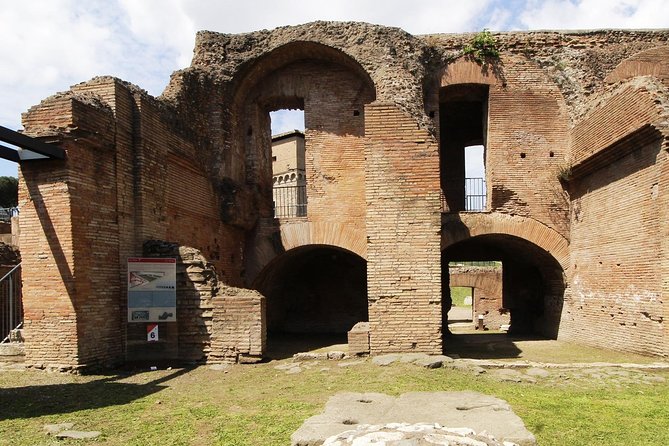
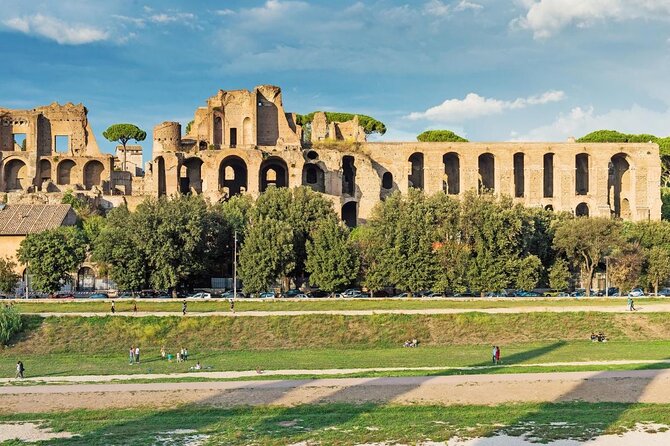
Circus Maximus is enormous. It once occupied the long valley between the Aventine and Palatine hills, but the surviving remains do not immediately show you the full stadium. If you arrive expecting another Colosseum, you may be puzzled by how little of the original structure is visible above ground.
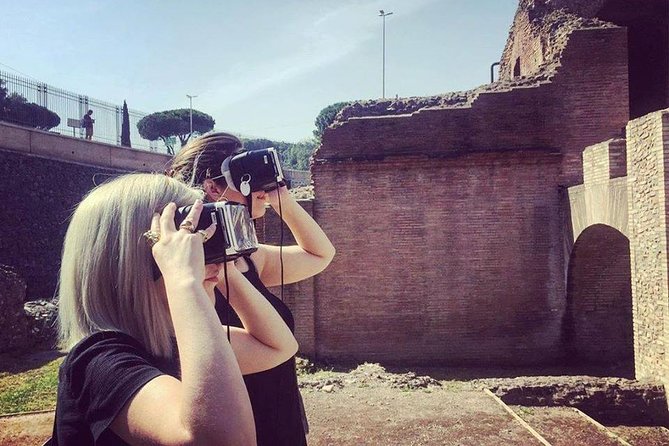
That is where the headset earns its place. The experience gives you a sense of the Circus as a working public arena rather than just an archaeological site. You can see how the valley changed over time, how the grand seating tiers enclosed the track, and how the buildings around the stadium served the crowds.
I find this especially useful for first-time visitors who struggle to read ruins in three dimensions. A stone fragment can be hard to interpret. A reconstructed stadium, even an imperfect digital one, shows you what the fragment belonged to.
The presentation is not a full theatrical production, and it is not a live guided tour with a historian walking beside you. It is a short, self-contained sequence that uses a headset and multimedia narration at fixed points around the site. That keeps the visit simple, but it also means you need to pay attention to where each scene directs your view.
More Rome tours worth comparing
- Vatican: Museums & Sistine Chapel Entrance Ticket
★ 4.5 · 144,003 reviews - Rome:Hop-On Hop-Off Panoramic Open Bus Ticket 3 Circuits x 1
★ 4.0 · 15,405 reviews - Vatican Museums & Sistine Chapel Skip-the-Line Entry Ticket
★ 4.4 · 13,838 reviews
The eight stops, from valley to racing day
The route begins with the valley floor in the archaic period. This is an important starting point because it takes you before the Circus became one of Rome’s largest public venues. You see the area as an earlier part of the city’s development, rather than jumping straight into imperial spectacle.
The next stage covers the Circus from the 1st century BC to the 1st century AD. This is when the site took on a more organized and monumental form. The virtual reconstruction helps show how the track, seating, and public facilities developed as Rome grew more powerful.
The third stop presents the Circus in the imperial period. This is the section most people are waiting for, since the stadium reached its greatest scale and importance under the emperors. The point is not simply to show a pretty reconstruction. You get a clearer idea of how architecture, politics, public entertainment, and crowd control worked together.
You then move to the cavea, the seating tiers. This is a useful stop because the word itself can sound abstract in an archaeological description. The headset gives you a better sense of the steep banks of seats and the enormous number of people who could gather there. Depending on the scene, you may need to look in a particular direction to catch the full reconstruction. Do not wander your gaze too far if the image seems empty.
The Arch of Titus receives its own stop. This gives the experience a specific monument to focus on, rather than treating the Circus as one uninterrupted oval. The arch helps connect the arena to imperial ceremony and the visual language of Roman power.
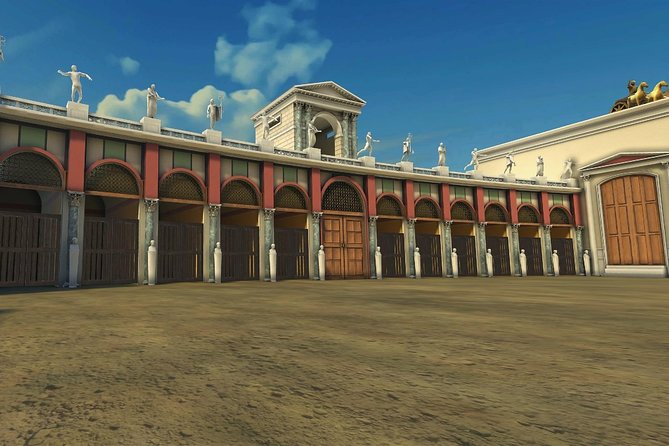
Next come the tabernae, or shops. This is one of the more human-scale parts of the visit. Instead of seeing the Circus only as a place for emperors and races, you get a glimpse of the commercial activity that supported a huge public gathering. The shops help you imagine the edges of the stadium as active spaces, not blank walls.
The seventh section follows the Circus into the Middle Ages and modern times. The site did not freeze when the Roman games ended. Its use and appearance changed, and this time span explains why the present-day remains look so different from the ancient reconstruction.
The final stop is called A Day at the Circus. It brings the earlier pieces together through a typical visit, with the stadium, crowd, shops, architecture, and racing spectacle working as one scene. This is also the point where the virtual reality function must be used while seated. Follow that instruction carefully, since looking around through a headset can affect your balance.
What the chariot-race scenes add
The chariot racing is the obvious crowd-pleaser, and it serves a real purpose. A silent ruin cannot easily communicate speed, noise, danger, or the size of the crowd. A virtual race gives you a quick sense of why Circus Maximus mattered so much to Roman public life.
You should keep your expectations measured. This is a 40-minute historical site experience, not a modern amusement ride. The visual presentation has been criticized as basic, and some scenes limit you to one viewing position. If you turn away from the intended direction, you may miss the action or see little more than an unfinished digital setting.
Still, the racing sequence can be valuable for families and for anyone who learns better through movement than through labels. Children under 14 may use the headset, but an adult must accompany them and sign the required disclaimer at the ticket office. That makes this a reasonable short activity for a family, provided the children can follow instructions and tolerate a headset.
Image quality and the limits of the headset
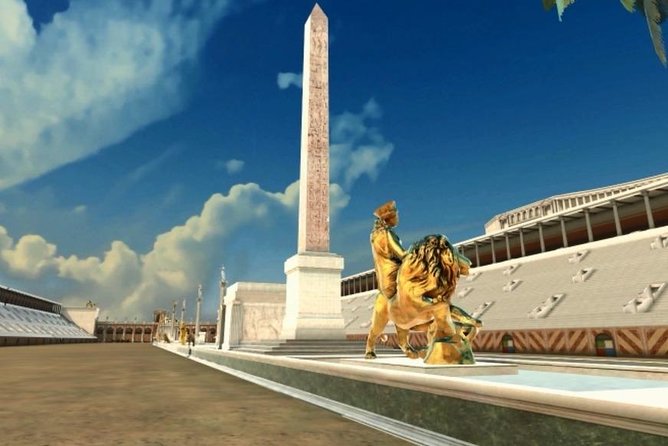
The biggest question is whether the virtual reality is worth the price. The technology has drawn sharply mixed reactions. Some visitors found the three-dimensional work poor and dated, while others felt the reconstruction made the ancient site suddenly understandable. Both responses make sense.
The headset does not appear to offer the polished graphics or free movement you may expect from current VR entertainment. Certain scenes are designed around a fixed viewpoint. Look the wrong way and you may find that there is nothing useful to see.
For me, the value lies less in visual sharpness and more in the historical sequence. The experience shows the Circus changing from an early valley to a monumental Roman arena, then continuing through later periods. If you want cutting-edge graphics, this may disappoint. If you want help reading a difficult ruin, it can do useful work.
The equipment also requires care. You leave an original ID card or passport as a deposit to rent the headset. Do not arrive with only a photocopy unless the ticket office confirms that another arrangement is accepted. Anyone who experiences dizziness, nausea, motion sickness, impaired vision, disorientation, neck pain, or other unusual symptoms should stop and consult a doctor before using the headset again.
A completely different way to spend the day in Rome:
- Vatican Museums & Sistine Chapel Tour with Optional Basilica
★ 4.3 · 67,413 reviews - Vatican Museums, Sistine Chapel & St Peter’s Basilica Guided Tour
★ 4.5 · 39,149 reviews - Rome: Colosseum, Palatine Hill and Roman Forum Guided Tour
★ 4.8 · 32,814 reviews - Rome: Guided Tour of Colosseum, Roman Forum & Palatine Hill
★ 4.7 · 27,897 reviews
Forty minutes, and a smart place in your Rome schedule
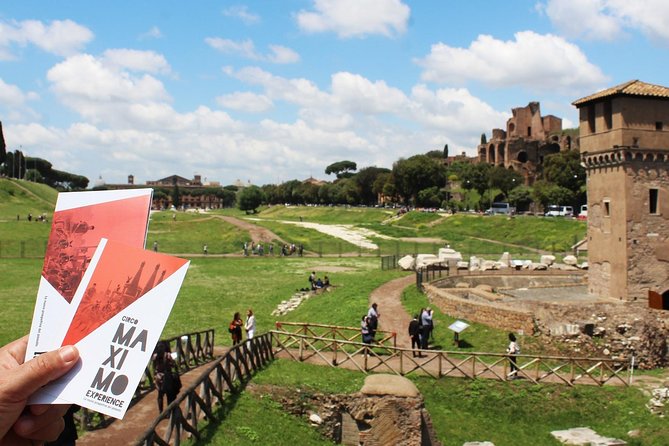
The short duration is one of the strongest practical features. Rome rewards long visits, but your feet and attention have limits. A 40-minute appointment can fit before lunch, between the Colosseum area and the Aventine, or alongside a walk through the southern part of the historic center.
The meeting point is at Aventino-Circo Massimo, near public transportation. The activity begins and ends at the same place, so you do not need to arrange a second pickup point or find your way across town afterward.
Because the visit is short, I would not travel across Rome for this alone unless you have a particular interest in ancient entertainment or digital reconstructions. It works best when paired with nearby sightseeing. You can see the Circus itself, then use the headset to understand what the open space once contained.
Give yourself enough time to locate the entrance and ticket office. One serious practical problem has occurred when the site was closed behind barriers and the access point was not clear. Conditions at an archaeological site can change, so confirm the operating situation close to your visit, especially if construction is visible.
Price, ticket value, and a troubling comparison
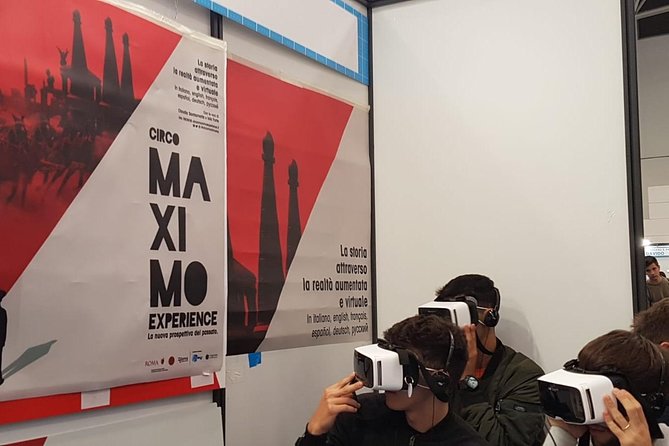
The listed price is $46.07 per person. That is a substantial amount for a 40-minute activity, particularly because basic access to archaeological sites in Rome can cost far less. The price is easier to justify if you place real value on the headset, the digital reconstruction, and the convenience of a short scheduled visit.
It is harder to justify if you mainly want to walk across Circus Maximus and look at the ruins. The physical site is an important part of Rome’s history, but the headset is the product you are paying extra for. If you already enjoy interpreting ruins through signs and guidebooks, the added cost may not feel worthwhile.
Check the exact fare for every member of your group before paying. A serious pricing complaint involved a family whose online total was much higher than the admission prices printed on the tickets. The difference between the advertised package price and the apparent site admission created understandable frustration. I would save the booking confirmation and compare the ticket categories, especially for children and reduced-price admissions.
Anyone using a reduced fare must carry proof of eligibility. The activity is private, meaning only your own group participates, which can make the experience more comfortable than sharing equipment and timing with a large crowd. But private does not necessarily mean personally guided, so do not book it expecting a dedicated archaeologist.
Weather, heat, and other practical cautions
The experience requires suitable weather. Rain can cancel it, and excessive heat can also make it impossible to operate. Circus Maximus is an open site with little protection from the sun, so a hot afternoon is not a minor inconvenience even if the activity goes ahead.
Wear comfortable shoes, since you walk between the eight stops. Bring water in hot weather, and plan the visit for a cooler part of the day when possible. The headset is an important part of the activity, so conditions that make outdoor walking unpleasant also affect the digital portion.
Most people can participate, but the equipment is not ideal for everyone. If you are prone to motion sickness or have difficulty with balance, consider whether a fixed-viewing headset is sensible for you. Follow the instruction to remain seated during the final virtual reality section rather than trying to walk while looking through the headset.
The activity is near public transportation, and it ends back at the meeting point. Confirmation is provided at booking. The ticket is non-refundable and cannot normally be changed, so check your date, time, weather forecast, and group details before committing. If poor weather cancels the experience, you should be offered another date or a full refund. If the minimum number is not reached, the alternatives are another date, another experience, or a full refund.
Who will get the most from this experience
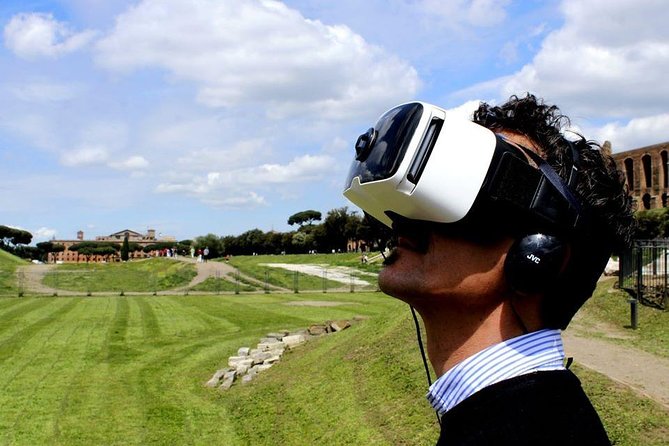
I would recommend it most strongly to families with older children, first-time Rome visitors, and people who find ancient ruins hard to visualize. The racing scenes give children a clear story, while the timeline from the archaic period through modern times adds more substance than a simple animated attraction.
It also suits you if your Rome schedule is tight. The short format gives you a useful introduction without taking half a day. You can leave with a better mental picture of the Circus and then decide how much time you want to spend examining the actual remains.
I would be more cautious if you are a serious VR enthusiast. The image quality may seem behind current standards, and the limited viewpoints reduce the sense of freedom. I would also think twice if you are paying for a large family group and are primarily interested in ordinary admission, since the package price can be much higher than the printed ticket values.
The best approach is to treat this as an interpretive aid, not as a substitute for the physical site. Look at the surviving ground, arches, and valley first. Then let the reconstruction explain what is missing.
Should you book the Circus Maximus VR experience?
Book it if you want a quick, visual explanation of how Rome’s greatest racing venue developed and you are comfortable with older VR technology. The historical timeline and chariot-race scenes are the strongest reasons to go, and the 40-minute length is genuinely convenient.
Skip it if you expect sharp, modern graphics, free movement, or a long guided tour. Also check the final price carefully, carry your original ID for the headset deposit, and avoid booking a non-refundable visit during doubtful weather.
At around $46.07 per person, I see it as a specialized add-on rather than an essential Rome ticket. For the right visitor, it can turn a difficult ruin into a place you can picture. For everyone else, the open Circus Maximus and a good guidebook may be enough.
FAQ
How long does the Circus Maximus virtual experience last?
The experience lasts approximately 40 minutes.
What does the ticket include?
The ticket includes admission to Circus Maximus, a Zeiss VR headset, and a multimedia guide.
How many stops are included?
There are eight stops, covering the archaic valley floor, the Roman Circus from the 1st century BC through the 1st century AD, the imperial period, the seating tiers, the Arch of Titus, the shops, the Middle Ages and modern times, and A Day at the Circus.
Can children use the headset?
Children under 14 can use the headset only when accompanied by an adult. The adult must sign a disclaimer at the ticket office.
What must I leave as a deposit for the headset?
You must leave an original ID card or passport as a deposit. A copy is not specified as acceptable.
Can I use the virtual reality feature while walking?
No. The virtual reality function in the final section must be used while seated.
What happens if bad weather cancels the activity?
If rain or extreme heat prevents the experience from operating, you should be offered a different date or a full refund.
Newest reviews from Rome
- Rome: Capitoline Museums Private Guided Tour★ 4.9 · 20 reviews
- Vatican private tour –Museums and Sistine Chapel with Raphael rooms★ 4.5 · 20 reviews
- Rome Semi-Private Tour from Civitavecchia★ 4.0 · 20 reviews
- The Pasta Factory Class★ 4.5 · 21 reviews
- Much More Than Just a Cooking Class in Rome★ 5.0 · 21 reviews
- 2 Hour Tasting of Overlooked Wines of Rome and Lazio★ 5.0 · 21 reviews
- Sistine Chapel and Vatican Museum Guided Tour★ 3.5 · 21 reviews
- Italian Gelato Making Experience in Rome★ 5.0 · 21 reviews
Tickets, compared.


Vatican Museums & Sistine Chapel Skip-the-Line Entry Ticket
Read our review →
Vatican Museums & Sistine Chapel Skip-The-Line Ticket
Read our review →
Vatican Museums & Sistine Chapel Skip-the-Ticket-Line Tour
Read our review →
St. Peter’s Basilica & Dome Entry Ticket & Audio Tour
Read our review →
Vatican Museums Sistine Chapel Skip-the-Line Ticket
Read our review →
Vatican & Sistine Chapel Ticket with Optional Audio Guide
Read our review →