
Reviewed · ROME
German Verstecktes Rom im Zentrum
Beneath busy Piazza Navona lies Domitian’s Stadium, an underground Roman site that explains why ancient sporting contests were held there and why athletes competed naked. That is the hook of this three-hour German-language walk: you see famous Rome above ground, then learn what survives below your feet.
I like the smart mix of major sights and lesser-known stops, especially the water tunnels beneath the Trevi Fountain and the curious lower level of Rinascente. I also like the small maximum group of 16 and the lively, question-friendly guiding style associated with guides such as Mira, Janina, Annett, Jutta, Donato, and Giancarlo. The main consideration is the price, $115.12 per person, plus some confusion in the published ticket details that you should clarify before booking.
In This Review
- Key points at a glance
- Why this walk feels different from a standard Rome tour
- Piazza Navona and the stadium beneath it
- Walking toward the Pantheon
- The Pantheon, with church stories instead of only architecture
- Sant’Ignazio and Rome’s painted illusion
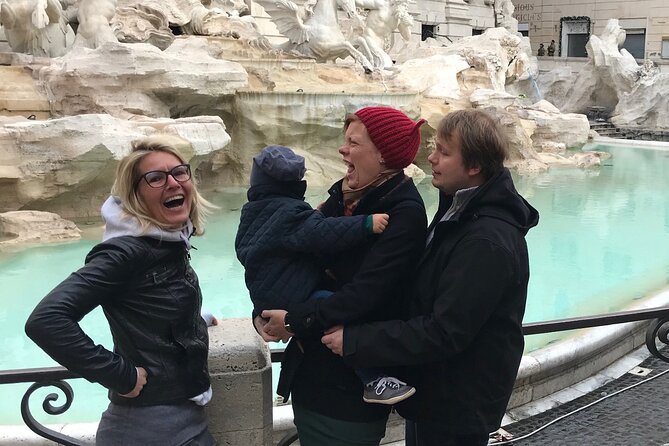
- Trevi Fountain and the water beneath Rome
- Rinascente’s lower level and modern Rome
- The guides and the feel of the group
- Is $115.12 a fair price?
- Rain, transport, and planning your day
- Who should book this Rome experience?
- Should you book it?
- FAQ
- Where does the tour start?
- Where does the tour end?
- How long does the tour last?
- What language is the tour conducted in?
- What is the maximum group size?
- Are headsets used during the tour?
- Is the Pantheon admission included?
- Is admission to the underground sites included?
- Does the tour operate in rainy weather?
- Can I cancel for a full refund?
Key points at a glance
- Domitian’s Stadium beneath Piazza Navona: See the remains of an ancient sports venue hidden beneath one of Rome’s grandest squares.
- Three famous Rome sights in one walk: Visit the Pantheon, toss a coin at the Trevi Fountain, and finish near the Spanish Steps.
- Vicus Caprarius underground: Learn how Rome’s water system reaches the Trevi Fountain inside a buried archaeological complex.
- Sant’Ignazio’s painted ceiling: Look up at a remarkable illusion that makes a flat ceiling appear three-dimensional.
- German-language guiding: Expect historical context, anecdotes, and time for questions rather than a simple checklist of sights.
- Small group format: The maximum of 16 people keeps the experience more manageable than a large city tour.
Why this walk feels different from a standard Rome tour
Rome can feel like a greatest-hits museum. You pass the Trevi Fountain, Pantheon, and Piazza Navona, take a few photographs, and move on. This tour uses those familiar places as doorways into less obvious stories.
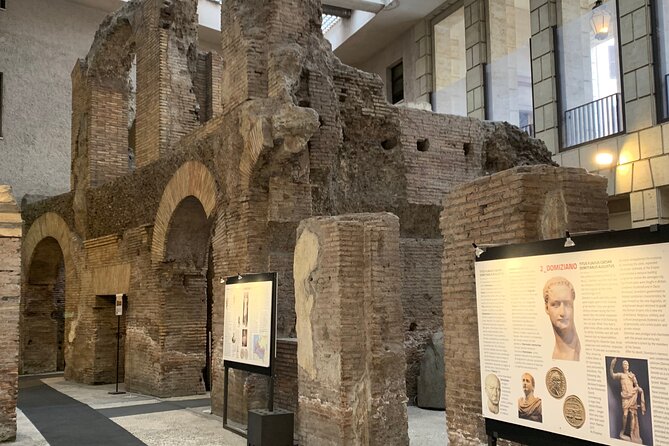
At Piazza Navona, the guide does not simply point out Bernini’s Fountain of the Four Rivers. The visit begins with an introduction to Rome, the square, and the plan for the walk, then moves underground to the remains of Domitian’s Stadium. The change in scale is the fun part. Above ground, you see an elegant Baroque piazza. Below ground, you encounter the earlier Roman structure that shaped the site.
The tour also connects Rome’s past with its present. You move from an imperial sports venue to a temple turned church, then to a Baroque illusion, an ancient water channel, and a modern department store built over archaeological remains. I like that sense of layers. Rome’s story is not stored in one isolated monument. It is under streets, inside churches, and even below a shopping center.
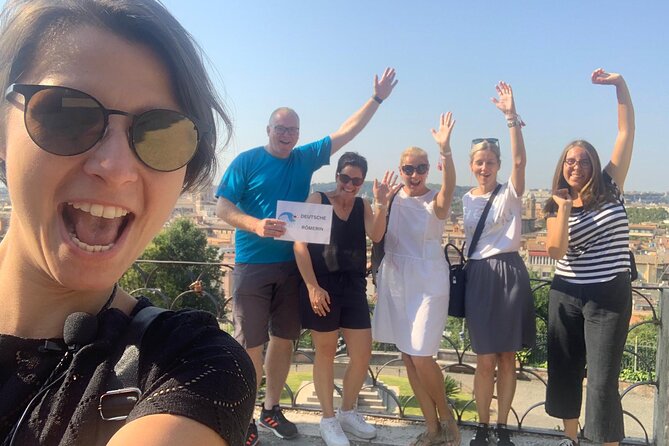
The tour is conducted in German, making it a good choice if you prefer complex historical explanations in your first language. The supplied information does not identify one fixed guide for every departure, so your guide may vary. Names connected with the company include Mira, Janina, Annett, Jutta, Donato, and Giancarlo. The strongest descriptions of the guiding style point to clear explanations, friendly communication, lively storytelling, and an ability to answer questions from both children and adults.
Tours travellers often pair with this one in Rome:
- Vatican: Museums & Sistine Chapel Entrance Ticket
★ 4.5 · 144,003 reviews - Vatican Museums & Sistine Chapel Tour with Optional Basilica
★ 4.3 · 67,413 reviews - Vatican Museums, Sistine Chapel & St Peter’s Basilica Guided Tour
★ 4.5 · 39,149 reviews
Piazza Navona and the stadium beneath it
The tour starts at the Fountain of the Four Rivers, at Piazza Navona 90. This is a practical meeting point, but it can be busy, so arrive with enough time to locate the fountain and your guide.
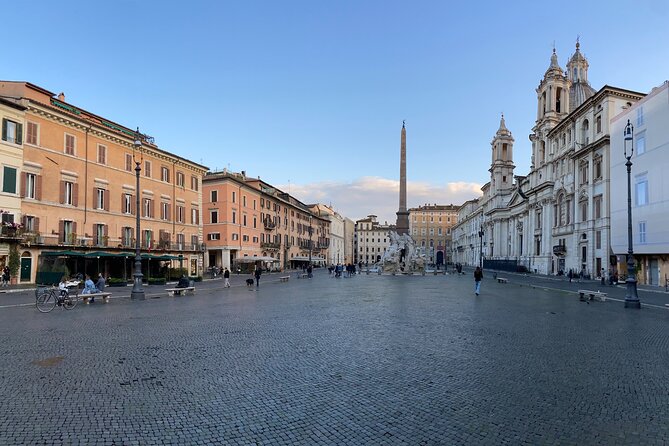
Piazza Navona is one of Rome’s most theatrical squares. Its long, narrow shape follows the outline of the ancient stadium beneath it. That connection gives the opening talk real purpose. You are not just learning about a pretty plaza. You are seeing how an ancient building influenced the shape of modern Rome.
The underground visit focuses on Stadium of Domitian, the remains of the venue built for athletic contests. The guide explains why the contests took place, why competitors appeared naked, and how the site functioned. These odd details are useful because they make the ancient world easier to picture. You remember a strange human detail longer than a list of dates.
About 50 minutes are allocated to this first stop, making it the longest section of the tour. That is sensible. The archaeological site needs time, and the opening explanation helps you understand the rest of the walk.
There is one practical point to check. The itinerary says admission to this underground site is not included, while the general inclusions say entrance tickets are included in the tour price. Since the two statements conflict, confirm the ticket arrangement when you book. You do not want a surprise charge at the first stop.
Walking toward the Pantheon
From Piazza Navona, the route passes the Senate building and continues toward the Pantheon. This section is not presented as a separate timed stop, but it is part of the value of a walking tour.
The short walks between monuments give the guide a chance to connect the sights. You can ask questions, look at the streets around you, and get a better sense of central Rome than you would from moving directly by taxi or bus.
The route also makes practical sense. It stays in central Rome and finishes near Rinascente on Via del Tritone, not far from the Spanish Steps. You can continue sightseeing, shop, or use the end point as a base for another part of the city.
The Pantheon, with church stories instead of only architecture
The Pantheon stop lasts about 20 minutes. Admission is listed as free. The visit focuses on the extraordinary temple and its later life as a church.
Many short tours explain the Pantheon’s dome, columns, and age, then hurry on. Here, the emphasis includes curious stories about its present use as a church. That helps explain how a Roman building survived while so many other ancient structures disappeared or were dismantled.
Twenty minutes is enough for an introduction and a close look, but it is not enough for a long interior study. If you want a quiet architectural visit, you will need to return on your own. This tour gives you context, not an exhaustive examination.
That limitation is worth keeping in mind. The walk covers several sites in three hours, so each one receives a focused explanation rather than a full museum-style treatment. I see that as a fair trade for the range of places included.
A completely different way to spend the day in Rome:
- Rome: Colosseum, Palatine Hill and Roman Forum Guided Tour
★ 4.8 · 32,814 reviews - Rome: Guided Tour of Colosseum, Roman Forum & Palatine Hill
★ 4.7 · 27,897 reviews - Rome: Colosseum & Forum with Audio Guide App -Optional Arena
★ 4.2 · 24,770 reviews - Rome: Colosseum, Roman Forum and Palatine Hill Guided Tour
★ 4.5 · 23,903 reviews
Sant’Ignazio and Rome’s painted illusion
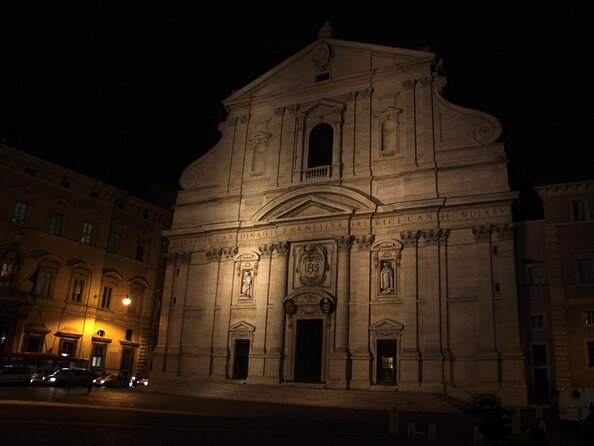
The next major stop is the Church of Sant’Ignazio di Loyola, with about 20 minutes inside. The highlight is its remarkable ceiling painting, designed to look three-dimensional.
This is one of the tour’s best choices because it gives you a completely different experience from the underground ruins. At Piazza Navona and Vicus Caprarius, the guide takes you below the modern city. At Sant’Ignazio, you look upward and question what your eyes are seeing.
The church is especially useful for visitors who enjoy architecture and visual tricks but may not know where to find them. A guide can point out the illusion and explain how it works. Without that help, you might simply look up, take a photograph, and miss the clever construction.
The 20-minute stop should be enough to appreciate the ceiling and hear the main story. As with the Pantheon, it is a concentrated visit. The tour does not promise a long art lecture or time to sit quietly in the church.
Trevi Fountain and the water beneath Rome
The route then reaches the Trevi Fountain, where you can toss a coin into Rome’s most famous fountain. This is the tour’s most familiar moment, but it leads into something far less familiar.
The underground visit is to Vicus Caprarius, known as the City of Water. About 30 minutes are planned here. The point is not just to see an archaeological space beneath the Trevi area, but to understand how water reaches the fountain.
That question gives the stop its strength. The Trevi Fountain is usually treated as a grand Baroque work, a place for photographs and the traditional coin toss. This visit adds the infrastructure behind the spectacle. You learn about the water source and the buried remains beneath the modern streets.
I particularly like this stop for repeat visitors to Rome. You may have seen the fountain before, but the underground water city changes how you look at it. The fountain becomes part of a much older system rather than an isolated monument.
The itinerary lists admission to Vicus Caprarius as not included, while the general inclusions say tickets are included. Again, confirm this before paying. The site is underground, so expect a different setting from the open piazzas and churches. The information provided does not give specific accessibility details, so anyone concerned about stairs or uneven surfaces should ask the operator directly.
Rinascente’s lower level and modern Rome
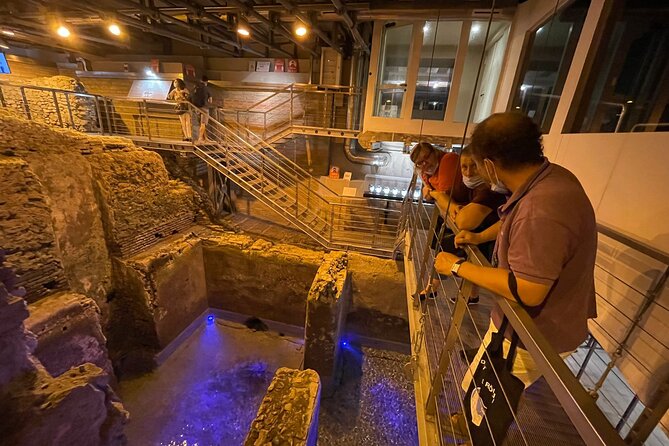
The final stop is Rinascente Roma Tritone, a well-known department store on Via del Tritone. The tour explores what lies in the building’s basement, with about 30 minutes allocated.
This may sound like an odd ending after Roman ruins and churches. That is exactly why it works. Rome’s archaeological layers do not stop at official monuments. A modern commercial building can also contain traces of the city’s past.
The visit shows how old remains and modern life share the same few feet of ground. You finish not in a museum courtyard but in a functioning department store, where shopping and archaeology exist side by side.
The entrance is listed as included at this stop. The tour ends at Rinascente, near the Spanish Steps, so you are well placed to continue sightseeing in the historic center. You are not returned to Piazza Navona, so plan your onward route from the final location.
The guides and the feel of the group
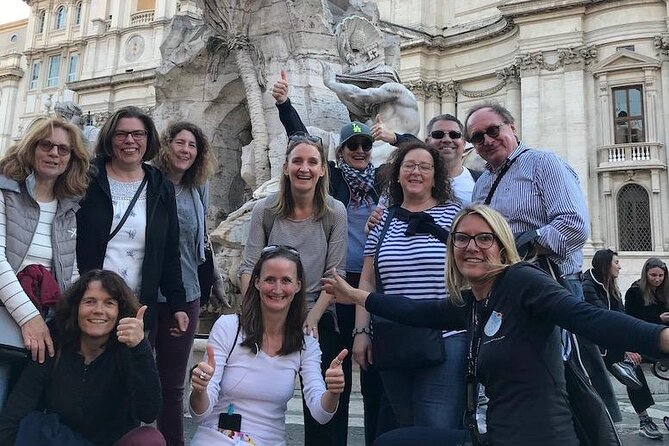
The company’s guides are described with unusual consistency: friendly, energetic, patient, and able to explain difficult historical connections in an entertaining way. Mira is associated with a warm, engaging presentation style. Janina is described as calm and open to questions. Annett is praised for involving both children and adults, while Giancarlo is known for explaining complex connections clearly and with empathy.
Those qualities matter on a history walk. Rome can overwhelm you with names, emperors, dates, architectural styles, and religious changes. A good guide decides what to leave out and finds a memorable detail to make the rest stick.
The group limit is 16 people. That is not a private tour, but it is far more comfortable than a large crowd. If more than four people attend, headsets are required, according to the tour details. Headsets can make a big difference in busy squares, where traffic and conversation can otherwise swallow the explanation.
The tone appears suitable for families as well as adults who already know Rome. The material includes unusual facts and legends, and the guide is expected to welcome questions. Still, the tour is three hours on foot, so it suits people who are comfortable walking between stops and spending time in archaeological and religious sites.
Is $115.12 a fair price?
At $115.12 per person, this is not a budget walking tour. The value depends on what you want from your time in Rome.
You are paying for a German-language guide, a three-hour route, several central sights, underground archaeology, and a group capped at 16. The tour also avoids the usual pattern of spending all three hours around one famous monument. You see a range of places and get an explanation of how they connect.
The price is easier to justify if you care about interpretation. If you only want to photograph Piazza Navona, the Pantheon, and the Trevi Fountain, you can visit those locations without a tour. The added value comes from the stadium below the square, the water system beneath Trevi, the church ceiling, and the historical links between them.
Because the ticket information is inconsistent, I would make admission costs part of your booking check. The general inclusion says tickets are included, but individual itinerary entries mark some underground admissions as excluded. Ask specifically about Stadium of Domitian and Vicus Caprarius.
Food and drinks are not included. That is not a major issue, since the route passes through central Rome, but budget separately for anything you buy along the way.
Rain, transport, and planning your day
The tour operates in rainy weather. Wear suitable shoes and bring rain protection, since the route includes outdoor walking between indoor and underground stops.
The meeting point is near public transportation, and most people can participate. The information does not provide a precise walking distance, step count, or accessibility assessment, so ask before booking if you need a fully step-free route.
I would schedule this tour early in your Rome visit. It introduces the city’s basic layers and gives you useful context for later sightseeing. After hearing how water reaches the Trevi Fountain, for example, you may look at the city’s fountains differently. After seeing the stadium beneath Piazza Navona, the square’s shape becomes easier to understand.
Free cancellation is available up to 24 hours before the start time. Cancellations or changes made less than 24 hours in advance are not accepted for a refund. Confirmation is normally issued at booking, though reservations made within 12 hours of departure are subject to availability.
Who should book this Rome experience?
I would recommend it most strongly to German-speaking visitors who have already seen the main squares or want more than a basic introduction. Repeat visitors will appreciate the underground sites, while first-time visitors will get a useful overview without spending the entire morning inside one monument.
It also suits families who enjoy stories, unusual facts, and visual surprises. The ancient sporting customs, underground water channels, and painted ceiling offer plenty of subjects for children and adults alike.
You may want a different tour if you prefer a slow, specialized visit to one site, a private itinerary, or a tour focused only on ancient Rome. This experience moves at a steady pace and covers several subjects. Its strength is variety, not depth at a single monument.
Should you book it?
Book this tour if you want famous Rome with a layer of archaeology and odd, memorable details underneath. The Stadium of Domitian and Vicus Caprarius give the walk a purpose beyond sightseeing, while Sant’Ignazio and Rinascente show how Rome’s past continues inside modern spaces.
I would book it after confirming the admission policy and checking that three hours of walking suits you. At $115.12, it is a premium choice, but the small group, German-language explanations, and unusual underground stops can make it worthwhile for anyone who wants to understand central Rome rather than simply pass through it.
FAQ
Where does the tour start?
The tour starts at the Fountain of the Four Rivers, Piazza Navona 90, 00186 Rome.
Where does the tour end?
It ends at Rinascente Roma Tritone, Via del Tritone 61, near the Spanish Steps.
How long does the tour last?
The tour lasts approximately three hours.
What language is the tour conducted in?
The tour is conducted in German.
What is the maximum group size?
The maximum group size is 16 participants.
Are headsets used during the tour?
Headsets are required when more than four participants are taking part.
Is the Pantheon admission included?
The Pantheon stop is listed with free admission.
Is admission to the underground sites included?
The general inclusions state that entrance tickets are included, but the individual entries for Stadium of Domitian and Vicus Caprarius say admission is not included. Confirm this point before booking.
Does the tour operate in rainy weather?
Yes. The tour operates even when it rains.
Can I cancel for a full refund?
Yes, if you cancel at least 24 hours before the experience start time. Cancellations made less than 24 hours in advance are not refunded.
Newest reviews from Rome
- Appia Antica & Aqueducts e-Bike Tour – Official Provider★ 4.8 · 21 reviews
- Rome cooking: Gelato & Tiramisu with savoiardi Baking class★ 4.9 · 21 reviews
- Colosseum, Vatican Museum, and Sistine Chapel Experience★ 4.5 · 21 reviews
- The Truffle Experience in Rome★ 4.9 · 21 reviews
- Rome Walking Tour of Holy Sites: Basilica of the Holy Cross in Jerusalem, San Giovanni in Laterano and Scala Santa★ 5.0 · 21 reviews
- Roman Forum and Palatine Hill Access★ 3.5 · 21 reviews
- Private Double Wine Tasting Tour in Frascati – Exclusive★ 5.0 · 21 reviews
- Rome By Night Private Tour with Pick Up★ 5.0 · 21 reviews