
Reviewed · ROME GOLF CART TOURS
Golf Cart Around Imperial Rome
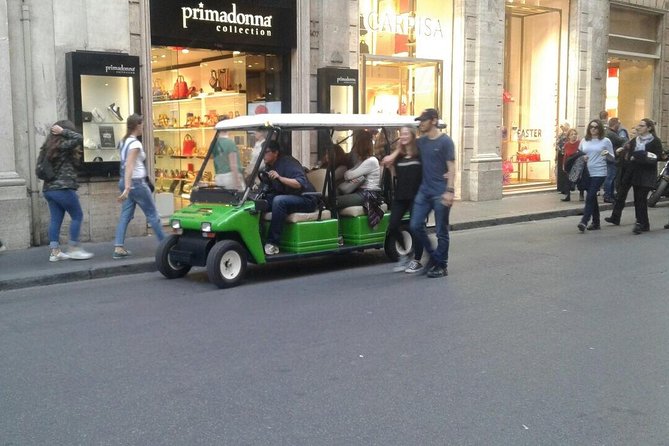
Rome is a city best seen both on foot and from the road. This small-group golf cart tour gives you a quick look at the Colosseum, Pantheon, Trevi Fountain, Spanish Steps, and other major sights without asking you to march across Rome all afternoon.
I like two things here: the cart can slip through narrow streets that buses cannot, and the guides often add personal touches, from restaurant tips to family photos. The main caution is the ride itself. Rome’s cobblestones can make the open-air cart bumpy, and some rear-facing seats may be hard for hearing the guide or seeing the road ahead.
In This Review
- Key points to know before booking
- Why a golf cart works well in Rome
- The route: a fast look at Rome’s greatest hits
- Piazza Navona and the old stadium
- Trevi Fountain and the coin tradition
- Circus Maximus and the Palatine Hill view
- The Colosseum from the outside
- The Pantheon and the temple of all gods
- Spanish Steps and the Barcaccia Fountain
- Villa Borghese, Rome’s green center
- The guides can shape the whole experience
- Comfort, seating, and the real ride
- Is $150.18 a fair price?
- Pickup, timing, and planning advice
- Who should book this tour?
- Should you book Golf Cart Around Imperial Rome?
- FAQ
- How long is the Golf Cart Around Imperial Rome tour?
- How much does the tour cost?
- What sights does the tour visit?
- Is admission to the monuments included?
- Is food included?
- Where does the tour start?
- Where does the tour end?
- Is hotel pickup available?
- How many people can join the tour?
- Is the tour offered in English?
Key points to know before booking
- Seven major stops in about three hours: You visit Piazza Navona, Trevi Fountain, Circus Maximus, the Colosseum, Pantheon, Spanish Steps, and Villa Borghese.
- A useful introduction to Rome: The route covers a lot of ground, making it a good first activity on a short visit.
- Small group, maximum 10 people: This is more personal than a large sightseeing bus and leaves room for questions.
- Little walking, but not no walking: You get out at each stop for roughly 10 to 20 minutes.
- Open-air views: You feel the Roman air and see streets at close range, but you are also exposed to traffic, weather, and rough paving.
- Guide quality matters: Alessandro, Leonardo, Giovanni, Damiano, Louisa, and Alex are among the guides praised for clear explanations, flexibility, and care with older passengers.
Why a golf cart works well in Rome
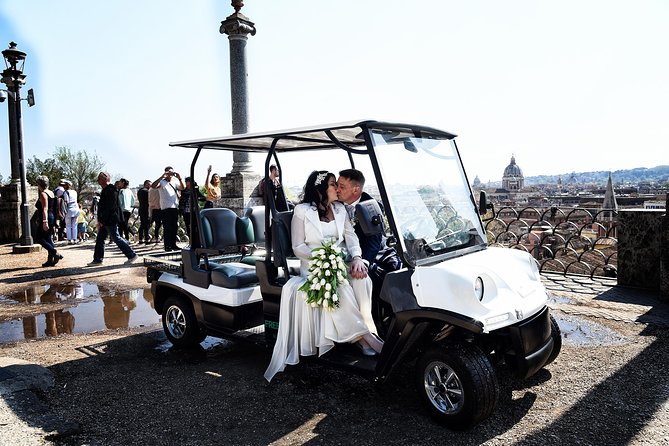
Rome is not difficult because its sights are far apart on a map. It is difficult because the streets twist, the sidewalks are uneven, the traffic is lively, and one ancient monument often sits several blocks beyond the last one. A golf cart solves part of that problem.
The cart is small enough to use narrow lanes and pedestrian-access streets that larger vehicles cannot reach. You can move from the historic center toward the Colosseum and Circus Maximus without spending the whole morning walking between them.
This matters most if you have young children, an older family member, or limited energy for long urban walks. Families with children as young as three and six found the format easier than a standard walking tour. Passengers with mobility concerns also found it helpful, although you still need to get in and out of the cart at every stop.
The experience is not a private car tour by default. The maximum group size is 10, so you may share the cart with other people. That is still small enough for questions and conversation, but the exact level of personal attention depends on the group and guide.
More golf cart tours of Rome:
- Rome by Golf Cart Private Tour: Beyond the Landmarks
★ 5.0 · 4,361 reviews - Rome on a Golf Cart Semi-Private Tour Max 6 with Private Option
★ 5.0 · 2,502 reviews - Rome Highlights by Golf Cart Private Tour
★ 5.0 · 2,379 reviews
The route: a fast look at Rome’s greatest hits
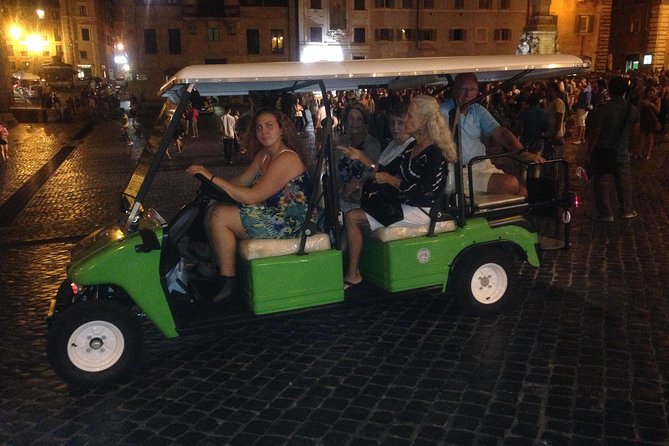
The stops are designed for orientation rather than full visits inside the monuments. Admission tickets are not included, and the listed stops do not include museum entry. Think of this as a moving overview with short walks and photo time, not a substitute for a Colosseum or Pantheon interior tour.
Piazza Navona and the old stadium
The tour begins its sightseeing at Piazza Navona, one of Rome’s most beautiful public spaces. The long oval shape follows the footprint of the ancient Stadium of Domitian, where athletic contests once took place.
You have about 20 minutes to walk around the square, look at the Fountain of the Four Rivers, and see the Church of Sant’Agnese in Agone. The fountain gives you a useful lesson in Baroque Rome, while the church creates the dramatic backdrop that makes the piazza feel like a stage.
This is a good opening stop because you can take in art, architecture, and ancient city planning in one place. It is also a manageable walk, though the square’s paving can be uneven.
Trevi Fountain and the coin tradition
At Trevi Fountain, the stop lasts about 15 minutes. You can admire the huge sculpted fountain, take photographs, and toss in a coin if you want to follow the familiar Rome tradition.
The short timing is sensible for a first look, but do not expect a long, quiet visit. The fountain is one of the city’s busiest sights, and the experience is more about seeing it up close than studying every figure in the sculpture.
Your guide can help you understand what you are looking at, but the cart does not provide an entrance or reserved access. You simply visit the public space around the fountain.
A completely different way to spend the day in Rome:
- Vatican: Museums & Sistine Chapel Entrance Ticket
★ 4.5 · 144,003 reviews - Vatican Museums & Sistine Chapel Tour with Optional Basilica
★ 4.3 · 67,413 reviews - Vatican Museums, Sistine Chapel & St Peter’s Basilica Guided Tour
★ 4.5 · 39,149 reviews - Rome: Colosseum, Palatine Hill and Roman Forum Guided Tour
★ 4.8 · 32,814 reviews
Circus Maximus and the Palatine Hill view
Circus Maximus receives about 10 minutes, making it the briefest stop on the route. From here, you can look across the long former chariot-racing ground toward the Palatine Hill.
The site can be hard to picture if you only see a broad grassy expanse. A good guide makes the difference by explaining its scale and role in ancient Rome. This is a viewpoint and orientation stop, not a full archaeological visit.
If you want to walk the entire Circus Maximus area or explore the Palatine, you will need separate time and tickets. The cart tour gives you the setting and the photo opportunity, then keeps moving.
The Colosseum from the outside
The Colosseum gets around 20 minutes. You can admire Rome’s most recognizable monument, take photographs, and hear about its place in ancient Roman life.
This is an important distinction: the tour does not include entry to the Colosseum. If you want to walk through the arena, underground areas, or upper levels, book a separate ticket or guided visit.
Still, seeing the Colosseum from outside is valuable. The cart allows you to reach the area without the long approach on foot, and the guide can point out details that are easy to miss during a quick photograph. Use this stop to decide if you want to return for a longer visit.
The Pantheon and the temple of all gods
The Pantheon stop lasts about 20 minutes. This ancient temple is one of Rome’s most impressive buildings, and its massive exterior gives you a sense of how well Roman construction has endured.
The stop is again an exterior visit unless you arrange separate admission. The tour price does not cover museums or monument entrance fees, so plan your budget accordingly.
This is one place where a guide’s explanation adds real value. The Pantheon can look simple from the outside, but its purpose, design, and later use make it much more than another pretty building in the historic center.
Spanish Steps and the Barcaccia Fountain
You get about 15 minutes at the Spanish Steps. The broad stairway rises from Piazza di Spagna, with the Barcaccia Fountain at the base.
This stop works well for photographs and a quick look at one of Rome’s most famous public spaces. The steps themselves are not a place for lingering or sitting in a large group, but the surrounding square gives you a feel for the area.
The cart is useful here because reaching the Spanish Steps by a larger vehicle is less practical. You will still walk around the square, so consider the pavement and stairs if anyone in your group has mobility limits.
Villa Borghese, Rome’s green center
The final listed stop is Villa Borghese, described as the heart of Rome. The tour allows about 20 minutes here.
The park provides a change of pace after the traffic, fountains, and dense historic streets. You can take in the open space and see another side of the city without committing to a long park walk.
The stop is not the same as a visit to the Borghese Gallery. Museum entrance is not included, and no gallery visit is listed. If the gallery is a priority, arrange it separately because its timed admission requires planning.
The guides can shape the whole experience
The strongest part of this tour is often the person driving the cart. Alessandro, also called Sa, is praised for humor, clear history explanations, city driving skills, and care with older passengers. He is also known for offering suggestions for cappuccino, food, and shopping.
Leonardo is another guide associated with highly personal tours. He has adjusted routes for people who had already seen certain sights, helped passengers with mobility needs, and described monuments in detail for a blind passenger. He has also offered hotel pickup or restaurant drop-off in some arrangements, but you should confirm exactly what pickup and return service applies to your booking.
Giovanni is praised for explaining ancient Rome in an entertaining way and for showing extra points beyond the standard route. Damiano has been noted for clear commentary and for making the tour comfortable for families. Louisa and Alex are also described as friendly and well prepared.
These names are useful, but a guide assignment can change. I would not book solely to get one specific person unless the operator confirms it. The broader pattern is clear: the tour works best when your guide explains what you are seeing rather than simply driving past it.
Some guides may tailor the route to your interests, especially on a private or flexible arrangement. That is not guaranteed for every departure, so treat customization as a possibility, not part of the basic promise.
Comfort, seating, and the real ride
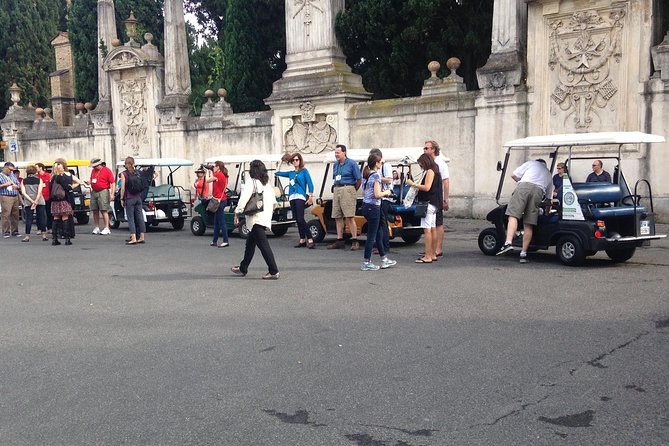
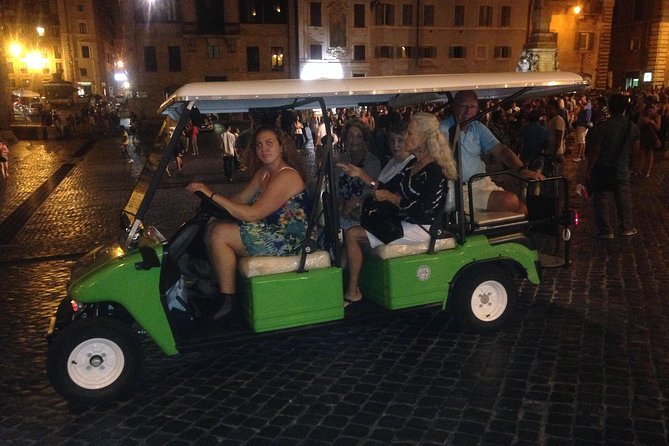
The cart is open-air, which gives you a close view of Roman streets. You are not looking through a bus window, and the small size lets you notice side streets, fountains, façades, and corners that disappear from a larger vehicle.
The tradeoff is comfort. Rome’s cobblestones can make the ride rough, and one passenger found the lack of suspension tiring. Rear-facing seats can also make it difficult to follow the guide or see landmarks before the cart passes them.
One useful detail is that only one front-facing seat with a seatbelt was specifically described. A rear bench may not have the same restraint, and passengers may need to hold on when the cart uses busy roads. If secure seating is important to you, ask about the arrangement before booking.
You should also expect some traffic noise. An open cart is pleasant on quieter streets but less ideal when cars, scooters, and city sounds compete with the guide’s voice. Sit where you can hear clearly, and ask the guide to repeat anything you miss.
Is $150.18 a fair price?
At $150.18 per person, this is not a cheap way to get from one monument to the next. You are paying for the vehicle, the driver-guide, the short group size, and the convenience of covering a wide section of Rome in about three hours.
The price makes more sense if you have only one day in Rome, want a first look before choosing which sites deserve longer visits, or need to limit walking. A family may also find the cost worthwhile if it prevents tired children from ending the day in tears.
The value is weaker if you enjoy walking, already know Rome well, or want detailed time inside each monument. You could see several of these areas independently by walking and public transportation, then spend the saved money on admission to the Colosseum, Pantheon, or Borghese Gallery.
I see this as a time-saving orientation tour, not a full historical tour of Imperial Rome. It covers a lot, but each stop is short. You should budget separately for food, drinks, and any museum or monument tickets.
Pickup, timing, and planning advice
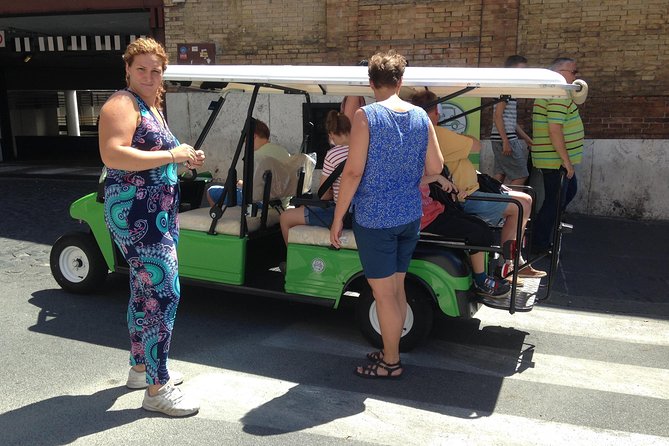
The stated meeting point is on Via Ludovisi in postal code 00187, near public transportation. The activity ends back at the meeting point. Some individual arrangements have included pickup at a hotel or restaurant and a drop-off elsewhere, but confirm this directly rather than assuming it is included.
The activity is offered in English, and confirmation is received when you book. It is normally reserved well in advance, with an average booking lead time of about 70 days. That suggests you should plan early if the tour is important to your schedule.
Allow a little flexibility around the start and finish. Rome traffic can affect any road-based sightseeing, and the route includes several busy central areas. Do not schedule a nonrefundable train, airport transfer, or timed museum entry immediately after the three-hour estimate.
The tour requires a minimum number of participants. If that minimum is not met, you are offered another date or activity, or a full refund. You can cancel for a full refund up to 24 hours before the local start time. Changes or cancellations inside that window are not accepted for a refund.
Who should book this tour?
I would consider it for:
- Families with young children who cannot manage a long walking route
- Older passengers who need a break from Rome’s uneven streets
- First-time visitors with only a day or two in the city
- People who want photos and orientation before choosing longer site visits
- Anyone who enjoys hearing local suggestions from a personable guide
- Visitors who prefer a small vehicle to a large sightseeing bus
I would be more cautious if you need a smooth ride, a guaranteed front-facing seat, or an extensive explanation at every monument. It is also not the right choice if your main goal is to enter the Colosseum, Pantheon, or Borghese Gallery.
Should you book Golf Cart Around Imperial Rome?
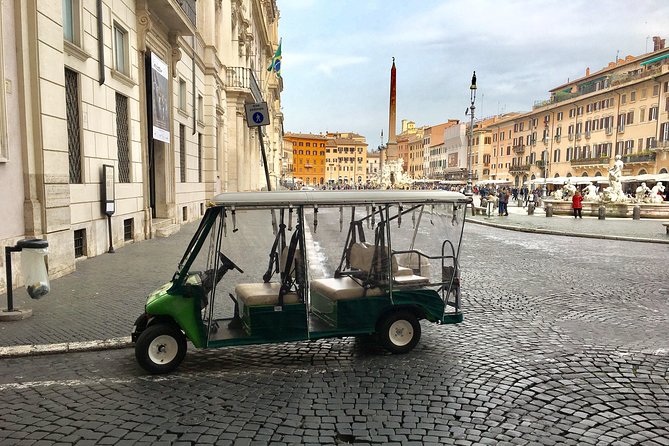
Book it if you want to see Rome without walking every connecting street. The route is broad, the stops cover the city’s essential first sights, and a good guide can turn a quick circuit into a lively introduction. The format is especially useful for families, older people, and visitors with limited time.
Skip it if you want slow, detailed sightseeing or if the $150.18 price would be better spent on admission tickets. Go in with realistic expectations: you will see the monuments, hear their stories, and take short walks, but you will not tour their interiors.
Before paying, confirm the meeting point, pickup details, seating arrangement, and whether the guide assigned to your departure can tailor the route. With those points clear, this can be one of the least tiring ways to get your bearings in Rome.
FAQ
How long is the Golf Cart Around Imperial Rome tour?
The tour lasts approximately three hours.
How much does the tour cost?
The listed price is $150.18 per person.
What sights does the tour visit?
The route includes Piazza Navona, Trevi Fountain, Circus Maximus, the Colosseum, the Pantheon, the Spanish Steps, and Villa Borghese.
Is admission to the monuments included?
No. Entrance fees for museums and other admission sites are not included.
Is food included?
No. Food and drinks are not included in the tour price.
Where does the tour start?
The stated meeting point is Via Ludovisi, 00187 Roma RM, Italy.
Where does the tour end?
The activity ends back at the meeting point.
Is hotel pickup available?
Pickup is offered, but the stated meeting point is Via Ludovisi. Confirm the exact pickup arrangement when booking.
How many people can join the tour?
The maximum group size is 10 travelers.
Is the tour offered in English?
Yes. The activity is offered in English.
Newest reviews from Rome
- ROME:Colosseum & Ancient Rome – private/small group TOUR★ 5.0 · 24 reviews
- Off the Beaten Track in Rome: Rione VI Parione Private Tour★ 5.0 · 24 reviews
- Cinematic Photoshoot in Rome★ 5.0 · 24 reviews
- Rome: Best of Colosseum and Roman Forum Small Group Guided Tour★ 4.5 · 24 reviews
- The Labyrinth of Rome between catacombs and ancient quarries★ 4.5 · 24 reviews
- Vatican and Trionfale Market Tour with Wine and Food Tasting★ 5.0 · 24 reviews
- private tour: Vatican Museums, Sistine Chapel, St. Peter’s Basilica★ 4.5 · 24 reviews
- Colosseum guided tour with Virtual Reality★ 5.0 · 24 reviews
Rome Golf Cart Tours, compared.
Rome by Golf Cart Private Tour: Beyond the Landmarks
Read our review →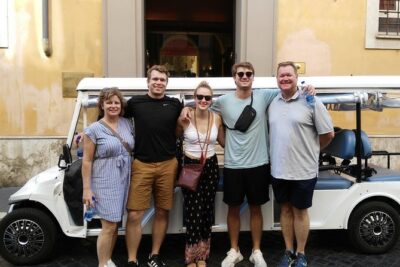
Rome on a Golf Cart Semi-Private Tour Max 6 with Private Option
Read our review →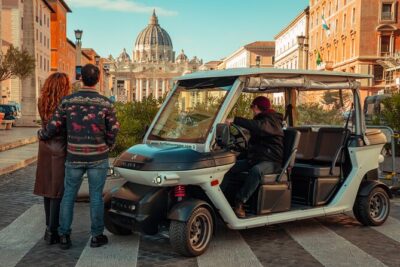
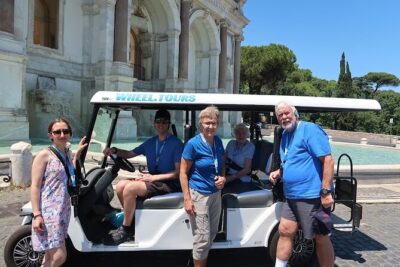
Rome Highlights City Tour by Golf Cart with Gelato
Read our review →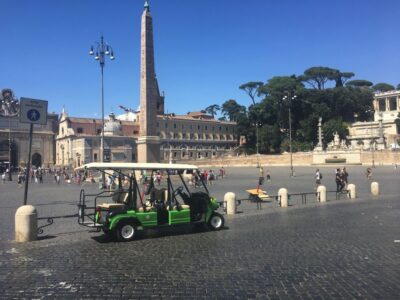
Imperial City Tour by Golf Cart with Optional Transfer
Read our review →
Golf Cart Small-Group Guided Tour: Rome City Highlights
Read our review →
Private/Group 4 Hours Golf Cart SightseeingTour
Read our review →Browse the lists this tour appears in