
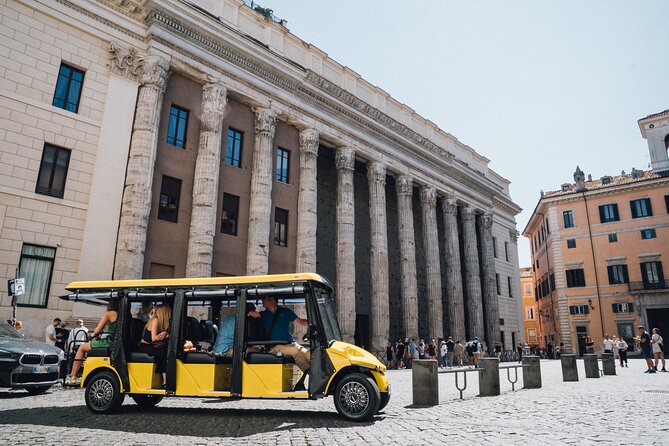
Reviewed · ROME GOLF CART TOURS
Golf Cart Driving Tour: Rome Express in 1.5 hrs
Rome is easier to understand when you can see its famous monuments in one sweeping ride. This 90-minute electric golf cart tour links the Pantheon, Trevi Fountain, Piazza Venezia, Circus Maximus, and several lesser-known corners without asking you to march across the city in the heat.
I like the small vehicle and headset system, which let you hear the guide while the cart moves through Rome’s noisy streets. I also like the useful first-day format: guides such as Amber, Francesco, Fabio, Jason, and Dennis have made the ride lively with local stories, humor, and historical context. The main drawback is pace. Stops are short, and you may need to choose between listening and taking photographs.
In This Review
- Key points to know before booking
- Why this 90-minute Rome ride works
- The Pantheon and Rome’s historic center
- Trevi Fountain, with time for the coin toss
- Piazza Venezia and the Altar of the Fatherland
- Circus Maximus and the Palatine view
- Campidoglio and Largo Argentina
- Finishing in Piazza Navona
- Guides, carts, and comfort
- What $69 means in real value
- Timing, meeting point, and practical planning
- Who should book this Rome express tour?
- Should you book the Rome Express?
- FAQ
- How long is the Golf Cart Driving Tour: Rome Express?
- Where does the tour begin?
- Where does the tour end?
- Is the Colosseum included?
- How many people fit in each golf cart?
- Is the tour offered in English?
- What happens if I cancel?
Key points to know before booking
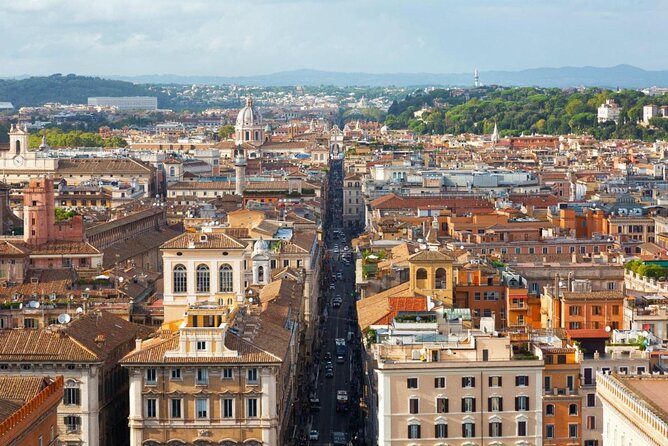
- Seven seats per cart: The tour can use two vehicles, with up to 14 people traveling together.
- A quick Roman overview: You see major monuments and several extra sights in only 90 minutes.
- English commentary by headset: You can hear the guide even when traffic and city noise rise.
- No Colosseum admission: The cart passes the Arch of Constantine, but you do not enter the Colosseum.
- Good in hot weather or after a long day: The ride saves your feet, with short walks at the main stops.
- Ends at Piazza Navona: You finish near the starting point, in an excellent area for continuing your evening.
Why this 90-minute Rome ride works
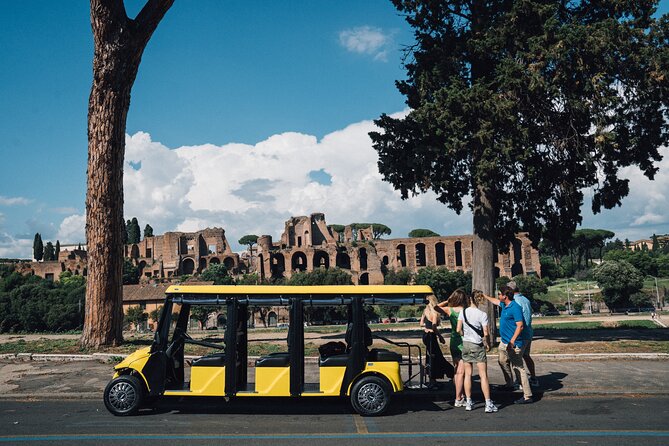
This is not a monument-by-monument tour. It is a moving introduction to Rome, designed to help you see how the city fits together.
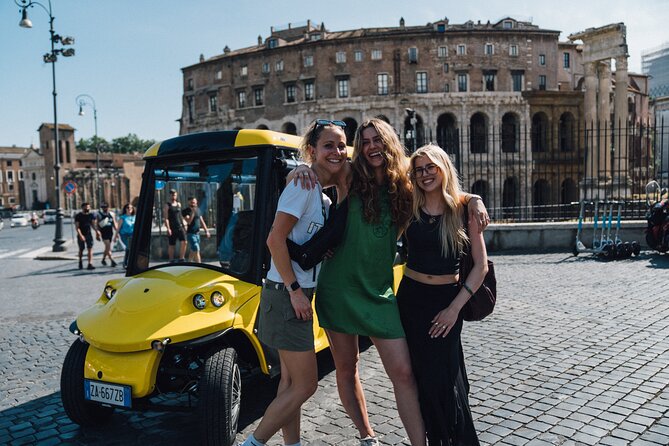
From the central meeting point on Via Monterone, you climb into a seven-seat electric cart. The vehicle is compact enough for Rome’s narrow streets, and the driver-guide gives commentary through headsets. That setup matters. Without it, you would spend much of the ride trying to catch a few words over engines, horns, and the general Roman soundtrack.
The company may run two carts, with both vehicles moving together and listening to the same guide. If you book as a larger group, you may be split between carts, and people who book together may occasionally be placed in separate vehicles. The maximum group size is 14.
I would use this tour early in your stay. It gives you a map in your head before you tackle Rome on foot. You may also find it useful after a long museum day, during very hot weather, or if someone in your party has limited stamina. One family even had a mobility scooter stored at the office during the tour, though you should confirm your own needs in advance.
More golf cart tours of Rome:
- Rome by Golf Cart Private Tour: Beyond the Landmarks
★ 5.0 · 4,361 reviews - Rome on a Golf Cart Semi-Private Tour Max 6 with Private Option
★ 5.0 · 2,502 reviews - Rome Highlights by Golf Cart Private Tour
★ 5.0 · 2,379 reviews
The Pantheon and Rome’s historic center
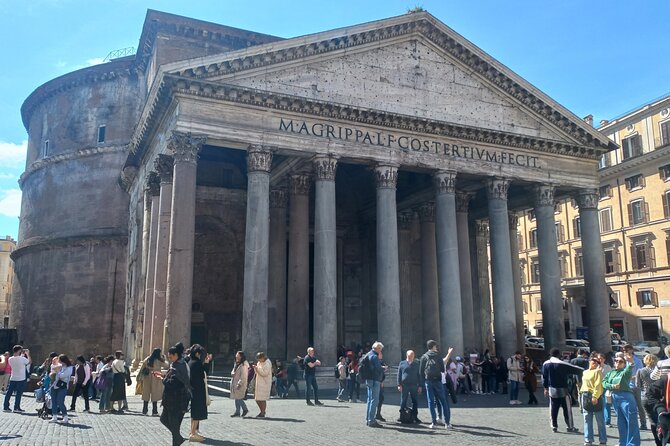
The first major stop is the Pantheon, where the cart pauses for about five minutes. The building is one of Rome’s great survivors, with a vast concrete dome and the famous opening at its center. Five minutes is enough to admire the exterior and hear the basic story, but not enough for a proper interior visit.
That short stop sets the tone. You are getting orientation, not a full guided visit. If the Pantheon is high on your list, plan to return on your own when you can give it more time.
The ride then passes through the historic center toward Piazza Colonna. Look for the Column of Marcus Aurelius, a tall carved monument that tells stories in stone through scenes winding around its shaft. This is one of the details you could easily miss while walking quickly between larger sights.
A guide adds value here by connecting the monuments to the streets around them. The best guides on this experience, including Jason and Francesco according to the details provided, use drawings or reconstructions to help you picture how ancient sites once looked. That kind of explanation is especially useful when you are seeing ruins beside modern traffic.
Trevi Fountain, with time for the coin toss
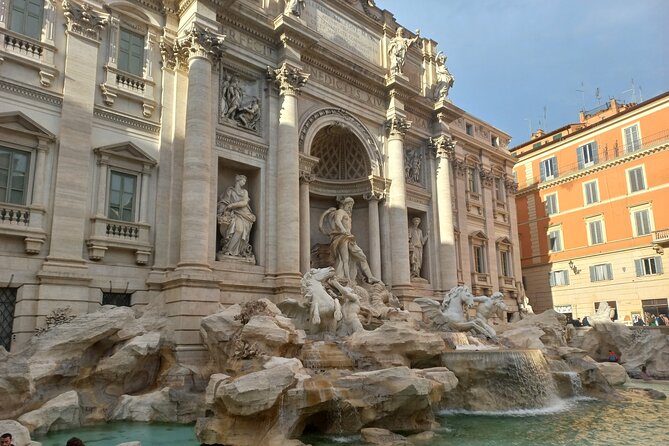
The Trevi Fountain gets roughly 10 minutes, making it one of the longer stops. You can walk up for photographs and take part in Rome’s famous coin tradition.
The fountain is usually one of the most crowded places on any central Rome route. A short scheduled stop keeps the visit moving, but it also means you need to be ready when the guide calls the group back. Your best photos may require patience, and the tour does not promise a quiet or private view.
Still, arriving by cart has a practical advantage. You get close to the action without spending energy navigating the streets on foot. The ride down Via del Corso follows, giving you a look at Rome’s major shopping street and a sense of how the old city connects to its modern retail center.
If you book an evening departure, the fountains and streets may look quite different under artificial light. Several people who took evening rides found the city especially appealing after dark. Just remember that lower light can make quick photography harder.
Piazza Venezia and the Altar of the Fatherland
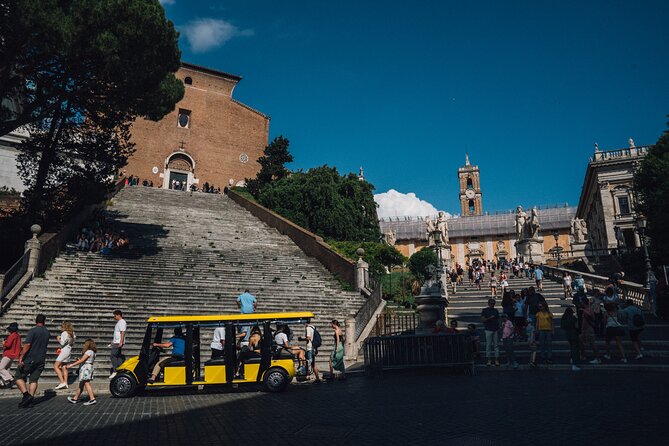
At Piazza Venezia, the cart pauses for about five minutes near the massive monument to Victor Emmanuel II. Its bright white marble and huge stairways make it hard to miss. Italians sometimes call it the Altar of the Fatherland, and its scale can feel almost oversized beside the older buildings nearby.
This is a good place to learn how Rome layers different periods in a very small area. Ancient streets, Renaissance buildings, modern Italian national history, and busy traffic all meet here.
You will not get a long climb up the monument during this tour. Think of the stop as a photo and orientation break. If you want the upper views or a close look at the museum areas, plan a separate visit.
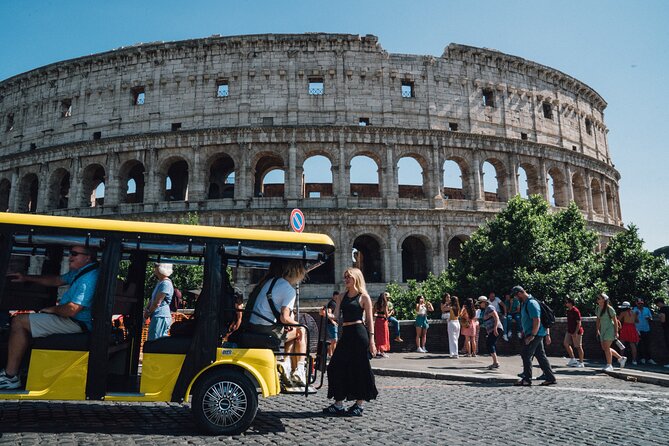
The route continues past the Arch of Constantine. This is your closest look at the Colosseum area on the express tour, but the Colosseum is not included. You do not enter it, and you need to purchase a separate ticket if you want to visit inside.
The timing advice is important. If you have Colosseum tickets on the same day, choose an entry time at least two and a half hours after the tour begins. An earlier ticket may force you to leave the cart ride before it ends.
A completely different way to spend the day in Rome:
- Vatican: Museums & Sistine Chapel Entrance Ticket
★ 4.5 · 144,003 reviews - Vatican Museums & Sistine Chapel Tour with Optional Basilica
★ 4.3 · 67,413 reviews - Vatican Museums, Sistine Chapel & St Peter’s Basilica Guided Tour
★ 4.5 · 39,149 reviews - Rome: Colosseum, Palatine Hill and Roman Forum Guided Tour
★ 4.8 · 32,814 reviews
Circus Maximus and the Palatine view
The stop at Circus Maximus offers a viewpoint over the old chariot-racing ground and toward Palatine Hill. You get about five minutes here.
Circus Maximus is easy to underestimate because so little of the ancient structure remains above ground. From the viewpoint, the scale becomes clearer. This was a vast public venue, and the open space helps you imagine the crowds and races that once filled it.
The Palatine Hill is nearby, but this tour does not take you into the archaeological area. You are seeing it from outside, with a guide explaining what you are looking at. That is enough to help you decide if you want to return for a longer visit.
The cart also makes a quick photo stop at the Bocca della Verità, or Mouth of Truth. You may recognize the stone face from films and popular photographs. This stop is brief, so have your camera ready and expect a quick visit rather than a long look inside the church area.
Next comes Teatro di Marcello. The guide points out how this ancient theater differs from the Colosseum. It is a useful comparison because the two buildings can blur together for first-time visitors. Teatro di Marcello has a more integrated, city-street setting, while the Colosseum is the giant amphitheater most people picture when they think of ancient Rome.
Campidoglio and Largo Argentina
The cart pauses at Piazza del Campidoglio for about five minutes. Michelangelo designed the square on Capitoline Hill, and its balanced layout is one of the finest urban spaces in Rome. From here, you are close to the city’s political and archaeological core.
Again, the value is not a full visit. You get a quick look, a few photographs, and enough explanation to place the square in Rome’s story. If you want to study Michelangelo’s design, the Capitoline Museums, or the views from the hill, return later with more time.
Largo Argentina follows with another brief stop. This archaeological area preserves the remains of ancient temples and is also famous as the place associated with Julius Caesar’s assassination. The site is not included as an admission visit, so you see it from the public area rather than touring the ruins in depth.
It is one of the route’s more useful lesser-known stops. Rome’s famous sights draw your attention, but places like Largo Argentina show how ancient remains appear in ordinary city blocks. A guide can help you notice what you might otherwise pass without a second glance.
Finishing in Piazza Navona
The tour ends at Piazza Navona after about 90 minutes. This is a strong finish because the square is one of central Rome’s best places to continue exploring.
Piazza Navona is built over the shape of an ancient stadium and is known for its fountains, open space, and Baroque architecture. You can stop for a drink, find a meal, or continue on foot toward the Pantheon and other central sights.
The end point is close to the starting office on Via Monterone, so you are not deposited far from where you began. That makes the tour easy to pair with dinner or another central Rome plan.
The route gives you a useful spread of ancient, Renaissance, Baroque, and modern landmarks. It also includes streets and views that are more interesting when explained as part of a larger story. The tradeoff is that nearly every visit is a taste rather than a full course.
Guides, carts, and comfort
The guide is the heart of this experience. Names associated with particularly strong tours include Amber, Francesco, Fabio, Jason, Dennis, Marco, Clianda, and Frederico. You cannot count on a specific person unless the company confirms it, but the tour depends on having a guide who can drive safely, speak clearly, and keep the history moving.
The best guide style for this route is energetic but controlled. Several guides have been praised for humor, local perspective, care with children, and the ability to take photographs for the group. One guide was also noted for waiting while the group caught up after taking pictures.
The carts are clean electric vehicles with seven seats. Some seats may face backward, especially the jump seats, and that arrangement will not suit everyone. If you are particular about facing forward, ask before boarding.
The carts offer relief from Rome’s heat and long walking distances. They are not sealed tour buses, so weather still matters. One ride continued through heavy rain, though the cart offered more cover than people walking in the street. Bring sensible clothing and do not treat the vehicle as a guarantee of dry weather.
Headsets are provided, and I consider them essential rather than decorative. You can listen while looking at the buildings instead of trying to stay beside the guide. The office also has a bathroom and may offer water, small comforts that matter when you are arriving from a hot or tiring day.
What $69 means in real value
At $69 per person, this is not the cheapest way to move through Rome. You can walk many of these streets for free, and public transport costs far less.
The value comes from combining transport, a local guide, a fixed route, and historical explanation in a short window. If your time in Rome is limited to one day, or you are visiting between cruise plans, the tour can save a great deal of effort. It also helps you avoid the problem of fitting several distant sights into a single walking route.
You should not book it expecting admission to major monuments. The ticket covers the electric cart, English-speaking driver-guide, and headset. Food, drinks, gratuity, hotel pickup, hotel drop-off, and entry fees are extra.
For families, the price may make sense because the ride breaks up sightseeing and reduces complaints about tired feet. It can also suit older relatives or anyone who finds Rome’s uneven walking routes difficult. For a visitor who already knows the city and wants detailed interior tours, the value is weaker.
Timing, meeting point, and practical planning
The meeting point is at V. Monterone, 19, in central Rome. Use a map and leave extra time. Rome can be confusing, and finding a taxi for a group of five or more may be difficult.
The company cannot hold the tour for late arrivals. Arrive early, especially if you are unfamiliar with the streets or carrying luggage. The tour ends in Piazza Navona, close to the starting area.
You can select from several departure times, including evening options. A daytime ride helps you see architectural detail, while an evening ride gives fountains and major streets a different mood. The itinerary itself remains fast, so choose the time that fits your wider plans rather than expecting one departure to be universally better.
Free cancellation is available if you cancel at least 24 hours before the start time. Within 24 hours, the payment is not refunded, and changes are not accepted.
Who should book this Rome express tour?
I would recommend it most strongly for:
- First-time visitors who want to get their bearings quickly
- Families with children or teenagers
- People visiting Rome for only a few hours or one day
- Cruise passengers with a tight schedule
- Anyone visiting during intense heat
- People who want an overview before choosing which sites deserve a longer visit
I would be more cautious if you dislike group activities, need long quiet periods for photography, or want to enter the Pantheon, Colosseum, Capitoline Museums, or archaeological sites during the same outing.
The tour is conducted in English, and most people can participate. Since vehicles have seven seats and the full group can reach 14, it is small compared with a large bus but not necessarily private. A family of five may share a cart with other people.
Should you book the Rome Express?
Book this if you want a fast, friendly introduction to central Rome, especially on your first day or during a short visit. You will see a surprising number of major sights, hear useful context, and save your feet for the places you later want to explore on foot.
Skip it if your main goal is entering monuments or spending 30 minutes at each photo stop. This is a moving overview, not a substitute for the Colosseum, Pantheon, or Capitoline Museums.
For most first-time visitors with limited time, the $69 price is reasonable because it buys both movement and orientation. Arrive early, keep your camera ready, and treat the ride as a smart first look at Rome rather than the whole city.
FAQ
How long is the Golf Cart Driving Tour: Rome Express?
The tour lasts approximately 1 hour and 30 minutes.
Where does the tour begin?
It begins at V. Monterone, 19, 00186 Roma RM, Italy, at the company’s central Rome office.
Where does the tour end?
The tour ends at Piazza Navona, which is close to the starting point.
Is the Colosseum included?
No. The tour drives past the Arch of Constantine but does not enter the Colosseum. You need to buy a separate Colosseum ticket.
How many people fit in each golf cart?
Each electric golf cart has seven seats. The tour may use up to two vehicles, with a maximum of 14 participants.
Is the tour offered in English?
Yes. The tour information is provided in English, and an English-speaking local guide and driver leads the experience.
What happens if I cancel?
You receive a full refund if you cancel at least 24 hours before the experience begins. Cancellations or changes made within 24 hours are not accepted and are not refunded.
Newest reviews from Rome
- ROME:Colosseum & Ancient Rome – private/small group TOUR★ 5.0 · 24 reviews
- Off the Beaten Track in Rome: Rione VI Parione Private Tour★ 5.0 · 24 reviews
- Cinematic Photoshoot in Rome★ 5.0 · 24 reviews
- Rome: Best of Colosseum and Roman Forum Small Group Guided Tour★ 4.5 · 24 reviews
- Vatican and Trionfale Market Tour with Wine and Food Tasting★ 5.0 · 24 reviews
- private tour: Vatican Museums, Sistine Chapel, St. Peter’s Basilica★ 4.5 · 24 reviews
- The Labyrinth of Rome between catacombs and ancient quarries★ 4.5 · 24 reviews
- Colosseum guided tour with Virtual Reality★ 5.0 · 24 reviews
Rome Golf Cart Tours, compared.
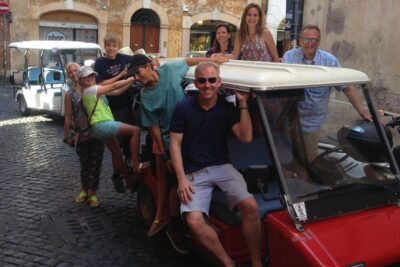
Rome by Golf Cart Private Tour: Beyond the Landmarks
Read our review →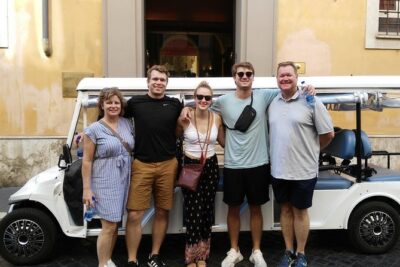
Rome on a Golf Cart Semi-Private Tour Max 6 with Private Option
Read our review →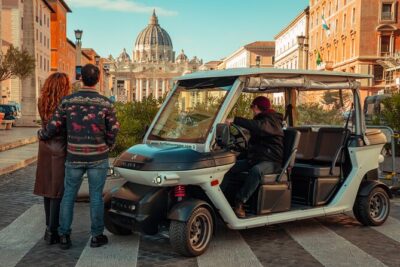
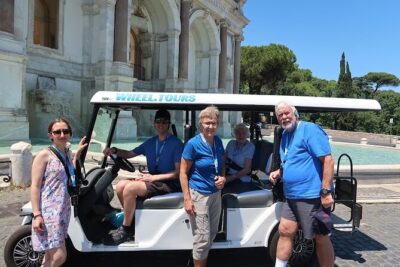
Rome Highlights City Tour by Golf Cart with Gelato
Read our review →
Imperial City Tour by Golf Cart with Optional Transfer
Read our review →
Golf Cart Small-Group Guided Tour: Rome City Highlights
Read our review →
Private/Group 4 Hours Golf Cart SightseeingTour
Read our review →Browse the lists this tour appears in