Reviewed · MUSEUMS
Leonardo da Vinci Experience Museum Admission
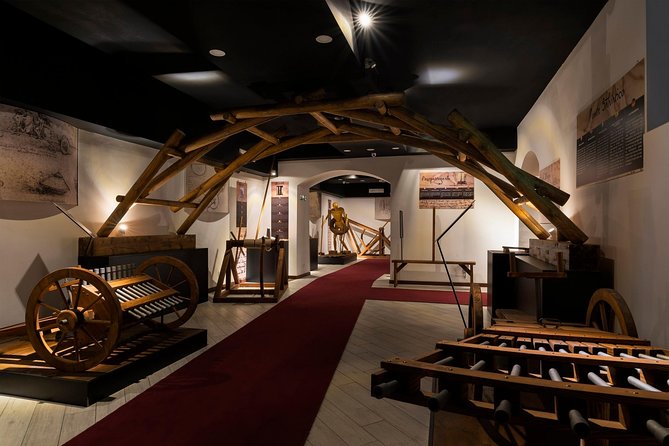
Leonardo da Vinci’s genius comes alive here through working models rather than dusty labels. In five compact rooms near St. Peter’s Basilica, you can test ideas for flying machines, artillery, optics, bicycles, and more, then finish with reproductions of his best-known paintings. The hands-on displays make this especially useful for families and curious adults.
I like the flexible timing, since you can fit this stop around the Vatican without committing to a fixed tour. I also like the audio guide, available in eight languages, which gives the paintings and machines more context than a quick walk past a model. The main catch is scale: this is a small exhibition, not a major art museum, and every artwork and machine is a reproduction.
In This Review
- Key points
- Five rooms that turn sketches into machines
- The audio guide adds useful context
- A short stop near St. Peter’s Basilica
- How long should you plan?
- What the hands-on displays do well
- Paintings, reproductions, and reasonable expectations
- Who will get the most from this visit?
- Practical tips for a smoother visit
- Should you book the Leonardo da Vinci Experience?
- FAQ
- Where is the Leonardo da Vinci Experience Museum?
- How long does the visit take?
- What are the museum’s opening hours?
- Is the visit guided?
- Are the paintings and machines original?
- Can I visit at a flexible time?
- Is the museum near public transportation?
- What happens if I need to cancel?
Key points
- Five themed rooms: Move from flying machines and The Last Supper to war devices, optics, everyday inventions, and paintings.
- Close to St. Peter’s Basilica: The museum at Via della Conciliazione 19 is easy to pair with Vatican sights.
- Hands-on models: Several inventions are designed for you to operate or examine up close.
- Flexible visit: Enter during opening hours and set your own pace, with many people spending 30 to 60 minutes.
- Multilingual audio guide: Commentary is offered in English, Italian, French, Spanish, German, Russian, Chinese, and Portuguese.
- Small and focused: A good short break, but a poor choice if you expect original Leonardo works or a large museum.
Five rooms that turn sketches into machines
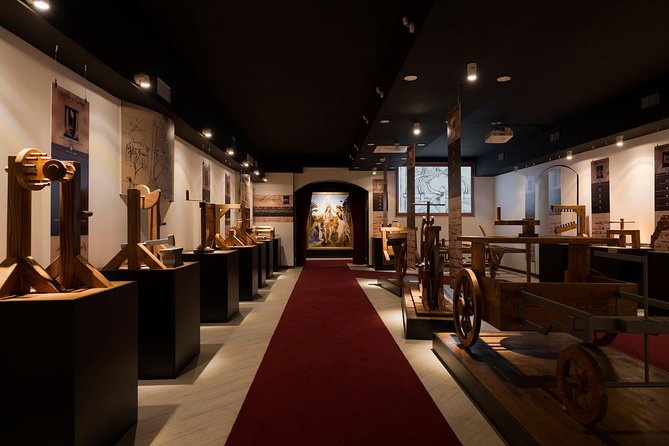
The exhibition is organized around the wide range of Leonardo’s work. It does not try to recreate a Renaissance palace or present a scholarly collection. Instead, it gathers models, reproductions, and explanations in a compact setting where you can see how an idea on paper might function in the real world.
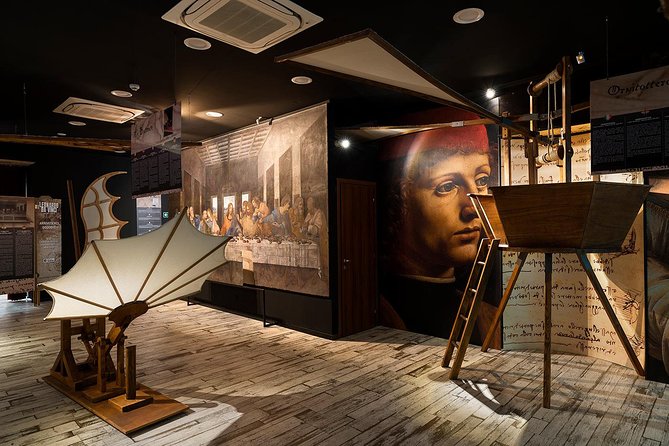
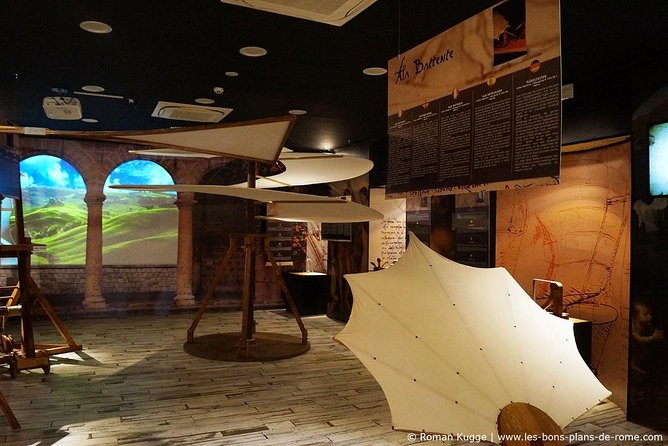
The first room starts with flight. You will see models based on Leonardo’s studies of flying machines, including a prototype of a hang glider. The display gives you a clear sense of his interest in wings, air, and the mechanics of movement.
Room I also includes a life-size reproduction of The Last Supper. This is not the original mural in Milan, of course, but it gives the exhibition a useful link between Leonardo the engineer and Leonardo the painter. That combination is the central idea of the museum: the same mind that studied gears and air also planned complex compositions and human gestures.
Room II shifts to military design. Here you will find drawings and models connected to artillery, war machines, a catapult, and a multi-directional gun machine with twelve barrels. Some models are especially good for showing how Leonardo approached a problem mechanically. You can look at the structure, consider how force would move through it, and then compare the finished model with the original concept.
The war room may not suit everyone. The subject is practical rather than peaceful, and the machines are reconstructions based on Leonardo’s drawings. Still, it shows that his work was not limited to painting or isolated scientific sketches. He also designed devices for defense, attack, transport, and construction.
Room III covers perspective, music, and optics. You might find this room more abstract than the flying and war machines, but it helps explain how Leonardo studied the way people see and hear. Displays include a projector, a perspectograph, and a Room of Mirrors.
The perspective section is worth taking slowly. Leonardo was interested in how lines, distance, reflection, and proportion shape what the eye understands. The models make these ideas easier to grasp than a page of theory. If you are visiting with children, the optical devices can provide a welcome change from looking at static paintings.
Room IV focuses on principles and everyday objects. The displays connect Leonardo’s studies to ideas behind the bicycle, the spring, and the life preserver. This section can be fun, but it also needs a little caution. Leonardo’s notebooks contained many designs and observations, yet a modern object may not be a direct invention in the simple sense.
That distinction matters. The exhibition is best understood as an interpretation of Leonardo’s ideas, not a room full of objects he personally built and used. If you want original Renaissance instruments, this is not the right stop. If you want to see how his drawings inspired physical models, it makes a clearer case.
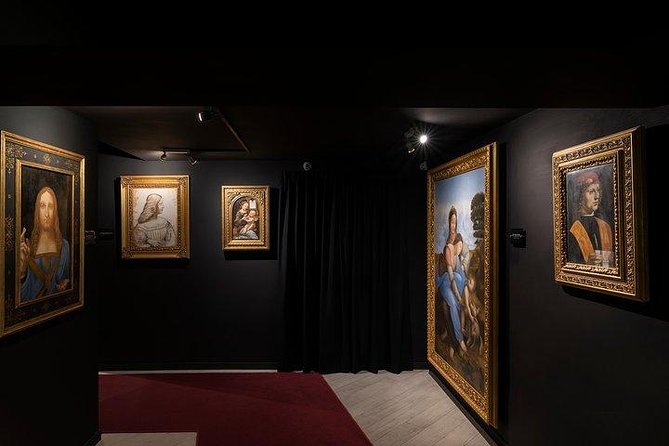
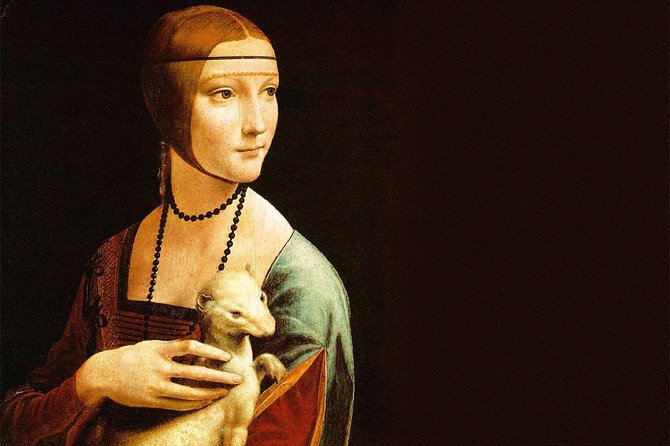
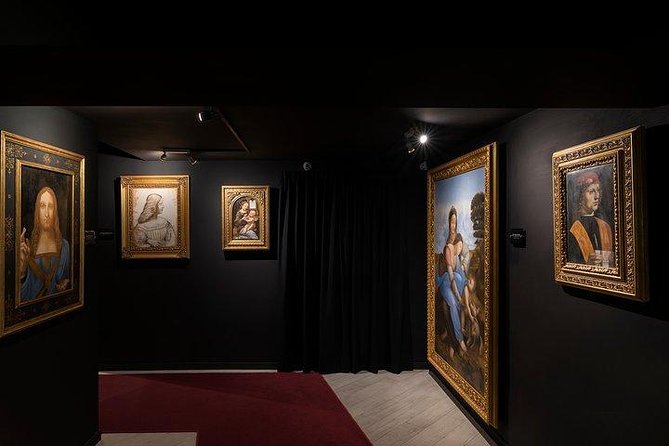
Room V ends with 20 works of art. You will see reproductions of some of Leonardo’s most famous paintings, supported by audio commentary and written explanations. This final room gives the visit a calmer finish after the machinery and interactive devices.
More museums and galleries in Rome:
- Vatican: Museums & Sistine Chapel Entrance Ticket
★ 4.5 · 144,003 reviews - Vatican Museums & Sistine Chapel Tour with Optional Basilica
★ 4.3 · 67,413 reviews - Vatican Museums, Sistine Chapel & St Peter’s Basilica Guided Tour
★ 4.5 · 39,149 reviews
The audio guide adds useful context
Your admission includes an audio guide in English and seven other languages. The system lets you select information for individual exhibits, so you can spend more time on the ideas that interest you and move quickly past others.
I would use the audio guide selectively rather than trying to listen to every item. The machines are easiest to understand when you first look at the model, try its interactive feature if available, and then listen to the explanation. The commentary is particularly useful in the painting room, where it gives background on the work, its creation, and its setting.
Sound quality and presentation may not be perfect. One weak point is that the audio can feel plain, and the equipment may not always be easy to hear in a cramped room. Printed descriptions are also fairly basic, including some laminated information sheets. You will get the most from the guide if you approach it as a helpful layer, not as a polished museum lecture.
No live guide accompanies you. That is both a benefit and a limitation. You are free to set your own pace, but there is no expert beside you to answer a question or explain why a model is historically uncertain.
A short stop near St. Peter’s Basilica
The museum is at Via della Conciliazione 19, just a short distance from St. Peter’s Basilica in Vatican City. This location makes the experience easy to add to a day built around the Vatican.
You can place it before or after other sights in the area, depending on your schedule. The flexible admission is more useful than it may sound. You do not need to rush from a fixed meeting point or plan an entire morning around the exhibition. The stated opening period is daily from 9:00 a.m. to 6:00 p.m. for the dates provided, while another description gives 10:00 a.m. to 6:00 p.m. Because those hours conflict, check the current opening time before setting out.
The museum is near public transportation, and most people can take part. Hotel pickup and drop-off are not included, so you make your own way there. Your prepaid voucher provides admission at the redemption point.
The setting can be busy because of its position near St. Peter’s, but the exhibition itself may feel quieter than the square outside. Air-conditioning has been a welcome feature, especially after walking around Rome. Space inside is limited, and the rooms can feel cramped when several families arrive together.
How long should you plan?
The official estimate is one to two hours, but your actual visit may be shorter. Some people finish in about 30 minutes, while a careful visit with the audio guide can take closer to an hour or more.
I would allow about 60 minutes if you want to operate the machines, listen to selected commentary, and examine the paintings. Add time only if Leonardo is a special interest or you are visiting with children who want to try every interactive feature.
This is a useful point in the museum’s favor. After a long morning at the Vatican Museums, you may not want another vast collection. A small, self-guided exhibition can give your feet a rest while keeping your mind engaged.
The short length can also feel like a drawback. At about $19.22 per person, the price is reasonable if you value the location, the audio guide, and the interactive models. It feels less convincing if you expect a full museum visit with original works. The ticket covers admission, but not transportation, a personal guide, or anything else beyond the listed audio guide.
A completely different way to spend the day in Rome:
- Rome: Colosseum, Palatine Hill and Roman Forum Guided Tour
★ 4.8 · 32,814 reviews - Rome: Guided Tour of Colosseum, Roman Forum & Palatine Hill
★ 4.7 · 27,897 reviews - Rome: Colosseum & Forum with Audio Guide App -Optional Arena
★ 4.2 · 24,770 reviews - Rome: Colosseum, Roman Forum and Palatine Hill Guided Tour
★ 4.5 · 23,903 reviews
What the hands-on displays do well
The strongest part of the experience is the chance to see mechanisms as physical objects. Leonardo’s drawings can look impressive on a page, but a model lets you think about balance, motion, pressure, and structure.
Children often respond well to this format. They can engage with the machines rather than simply look at framed art, and the visit offers a break from the more formal atmosphere of Rome’s major museums. The bicycle, spring, life preserver, and optical devices provide simple entry points for younger visitors.
Adults can enjoy the same displays, especially if you approach them as demonstrations of problem-solving. Leonardo’s fame can make him seem like a distant superhuman figure. These models bring him back to the practical level of a person asking how a device might work.
Still, interactive does not mean fully experiential. The museum is built around models and reproductions, and the amount of information beside them is limited. If you already know a great deal about Leonardo, you may find the explanations too basic.
The exhibition is also not ideal for everyone seeking quiet. One account describes young children treating the space like a playground. That is not a problem for families, but adults wanting a calm art visit should choose their timing carefully.
Paintings, reproductions, and reasonable expectations
The final collection of 20 works gives the exhibition visual appeal, but you need to know what you are seeing. These are reproductions, not original Leonardo paintings. The same applies to the life-size Last Supper reproduction and the reconstructed machines.
That fact does not make the visit pointless. A reproduction can still help you compare Leonardo’s artistic work with his technical studies, and the audio guide can point out details you might miss in a quick image. It is also a practical way to introduce children and teens to paintings they may later encounter in a larger museum.
But the distinction should be clear before you buy. If your main goal is to see authentic Renaissance art, spend your museum budget elsewhere. This exhibition is about presentation and interpretation. It shows the range of Leonardo’s interests in one place, but it cannot provide the original surface, age, or setting of his works.
The art room may also leave you wanting more information about Leonardo’s life. The main emphasis is on what he designed and painted, not on a full biography. You will learn about his ideas through the objects, but this is not a detailed life story with a film or an extended historical display.
Who will get the most from this visit?
I would recommend the Leonardo da Vinci Experience to several kinds of visitors:
- Families looking for an educational activity with moving and interactive models
- Adults who want a short cultural stop near St. Peter’s Basilica
- Anyone interested in the connection between art, engineering, optics, and design
- Visitors who prefer setting their own pace rather than joining a group
- People with tired feet who want a lighter activity after a day of walking
- Teens who enjoy machines more than long blocks of text
I would be more cautious if you are an art specialist, a Leonardo expert, or someone expecting authentic objects. You may find the display too small, the labels too simple, and the reconstructions too tourist-oriented.
The museum also makes a better filler activity than a main reason to cross Rome. Its location gives it value. If you are already near the Vatican, the visit is easy to fit in. If you are far away and need to make a special trip, the modest size becomes more important.
Practical tips for a smoother visit
Check the address carefully before booking. The museum is in Rome at Via della Conciliazione 19, next to St. Peter’s Basilica. It is not the Leonardo exhibition in Florence, and confusing the two would lead to a very frustrating day.
Keep your admission voucher ready at the redemption point. Since timing is flexible during opening hours, you can build the visit around the rest of your Vatican plans instead of waiting for a specific tour departure.
Use the audio guide in the language that suits you best. English, Italian, French, Spanish, German, Russian, Chinese, and Portuguese are listed. If the room is crowded or the sound is hard to follow, focus on a few selected machines and paintings rather than trying to hear everything.
Allow extra patience in the smaller rooms. The compact layout helps you see the displays up close, but it also means that families and groups can make movement awkward. A visit earlier in the day may feel more comfortable, though the available information does not promise a particular crowd level.
The gift shop is another small plus. It offers prints, books, and STEM-style projects, making it a useful stop if you want something connected to Leonardo rather than a generic Rome souvenir.
Cancellation is free up to 24 hours before the experience’s start time for a full refund. Changes or cancellations inside that 24-hour window are not refunded, and the cutoff follows local Rome time.
Should you book the Leonardo da Vinci Experience?
Book it if you want a compact, hands-on introduction to Leonardo’s inventions and you are already visiting the Vatican area. The flexible entry, multilingual audio guide, and interactive models make it an easy family stop and a pleasant change from Rome’s larger, more demanding museums.
Skip it if you want original Leonardo works, a large collection, or a detailed biography. At about $19.22, the value depends on your expectations. Think of it as a focused exhibition with clever reconstructions, not a grand museum. For the right visitor, that is exactly why it works.
FAQ
Where is the Leonardo da Vinci Experience Museum?
The museum is at Via della Conciliazione 19, 00193 Rome, next to St. Peter’s Basilica in Vatican City.
How long does the visit take?
The estimated duration is one to two hours. Some visits may take about 30 minutes, while using the audio guide and studying the displays can make the visit longer.
What are the museum’s opening hours?
The provided information lists daily opening from 9:00 a.m. to 6:00 p.m. for April 11, 2025 through December 31, 2026. Another description gives 10:00 a.m. to 6:00 p.m., so check the current hours before visiting.
Is the visit guided?
There is no personal tour guide. Admission includes a self-guided audio guide in English, Italian, French, Spanish, German, Russian, Chinese, and Portuguese.
Are the paintings and machines original?
The exhibition includes reproductions of Leonardo’s paintings and reconstructions of his machines. It does not present original Leonardo artworks or inventions.
Can I visit at a flexible time?
Yes. The admission is designed for flexible timing during the museum’s opening hours, allowing you to create your own schedule.
Is the museum near public transportation?
Yes. The museum is near public transportation and is located close to St. Peter’s Basilica.
What happens if I need to cancel?
You can receive a full refund if you cancel at least 24 hours before the experience’s start time. Cancellations or changes made less than 24 hours in advance are not refunded.
Newest reviews from Rome
- ROME:Colosseum & Ancient Rome – private/small group TOUR★ 5.0 · 24 reviews
- Off the Beaten Track in Rome: Rione VI Parione Private Tour★ 5.0 · 24 reviews
- Cinematic Photoshoot in Rome★ 5.0 · 24 reviews
- Rome: Best of Colosseum and Roman Forum Small Group Guided Tour★ 4.5 · 24 reviews
- The Labyrinth of Rome between catacombs and ancient quarries★ 4.5 · 24 reviews
- Vatican and Trionfale Market Tour with Wine and Food Tasting★ 5.0 · 24 reviews
- private tour: Vatican Museums, Sistine Chapel, St. Peter’s Basilica★ 4.5 · 24 reviews
- Colosseum guided tour with Virtual Reality★ 5.0 · 24 reviews
Museums, compared.
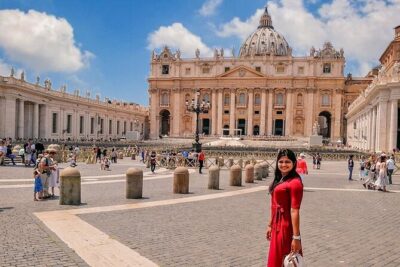
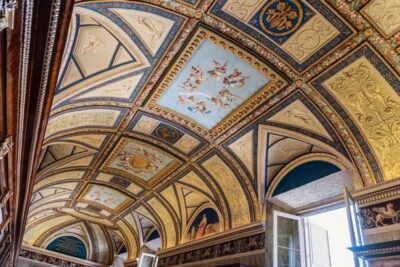
Vatican Museums & Sistine Chapel Tour with Optional Basilica
Read our review →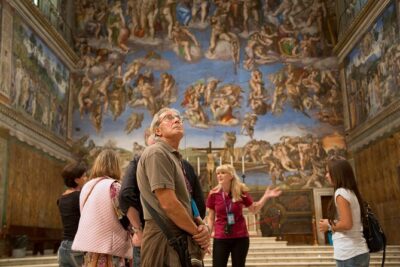
Vatican Museums, Sistine Chapel & St Peter’s Basilica Guided Tour
Read our review →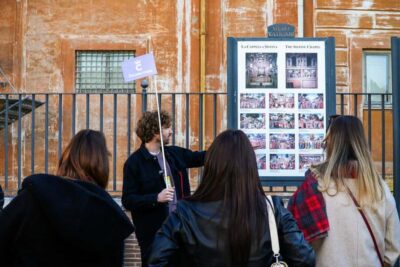
Vatican Museums, Sistine Chapel & Basilica Tour
Read our review →
Vatican Museums & Sistine Chapel Skip-the-Line Entry Ticket
Read our review →Vatican Museums, Sistine Chapel & Basilica Tour
Read our review →
Vatican Museums & Sistine Chapel Guided Tour
Read our review →