
Reviewed · TRASTEVERE TOURS
Mosaic-Making Workshop in Rome’s Trastevere
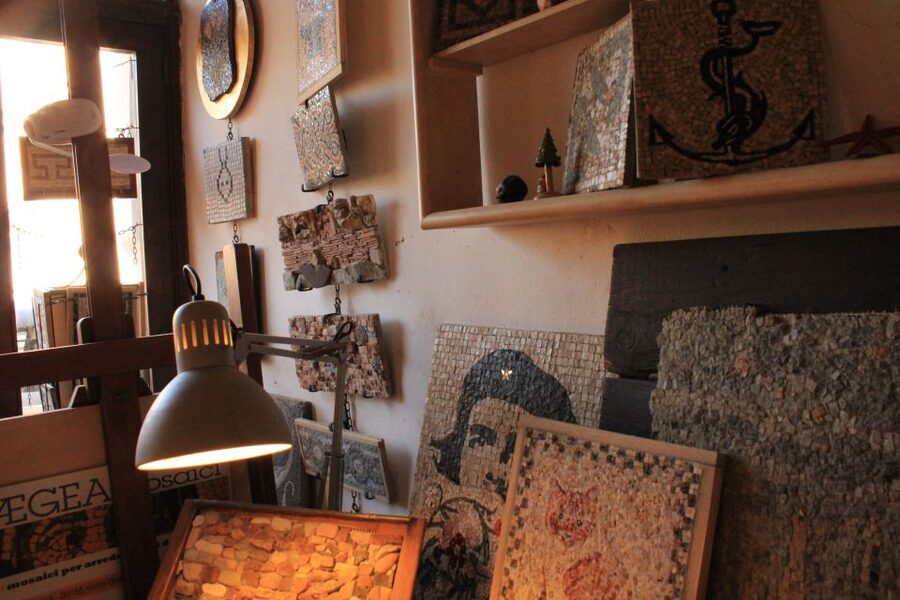
The best part of this Trastevere workshop is that you do not simply buy a Roman souvenir, you make one. At a working mosaic studio near the Botanical Garden, an artist guides you through choosing a design, cutting small tiles, fitting the pieces, and preparing your finished work to go home. The process is slower and more exacting than it first appears, which makes the result feel earned.
I like the small group of up to eight, since the instructor can come to your station and help with tricky cuts. I also like the calm change of pace after Rome’s crowded sights, plus the fact that you leave with a real object rather than another shop-bought trinket. The main consideration is communication: Nadia teaches in English and Italian, but her English is limited, so demonstrations carry much of the instruction.
In This Review
- Key points to know before booking
- Making a Roman keepsake instead of buying one
- What happens when you arrive in Trastevere
- Choosing a design and learning the basic process
- Cutting tiles is harder than it looks
- A relaxed pace inside a working studio
- Finishing the mosaic and taking it home
- How the class connects with Rome’s mosaic tradition
- Who will enjoy this three-hour workshop
- Who may want to choose another activity
- Is $147.27 a fair price?
- Practical advice for a better class
- Should you book this Trastevere mosaic class?
- FAQ
- How long does the mosaic workshop last?
- Where does the workshop take place?
- How many people can join the class?
- Can I take my mosaic home?
- Is the workshop taught in English?
- Can children participate?
Key points to know before booking
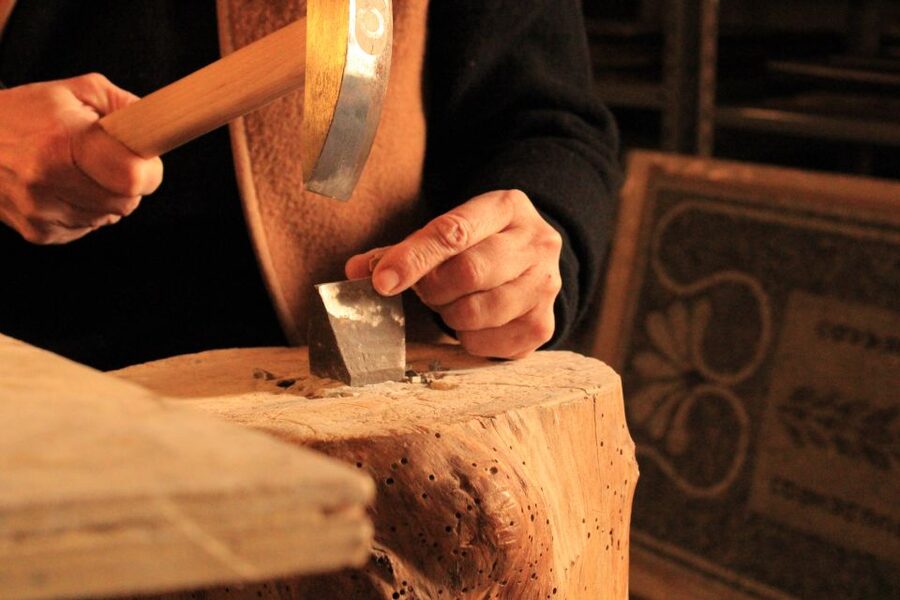
- Make your own Roman souvenir: You cut, arrange, and glue the tiles yourself, then take the finished mosaic home.
- Work with an artist in Trastevere: The studio is near Rome’s Botanical Garden, in one of the city’s most pleasant areas for a walk and a coffee.
- Plan on three hours: Cutting tiles to fit small angles takes patience. This is a proper workshop, not a quick craft stop.
- Expect close guidance: The group is limited to eight, and the instructor stays available throughout the work.
- Communication relies partly on demonstration: The class is offered in English and Italian, but the artist is not fluent in English.
- A useful family activity: Children can take part, but they must be accompanied by at least one adult.
Making a Roman keepsake instead of buying one
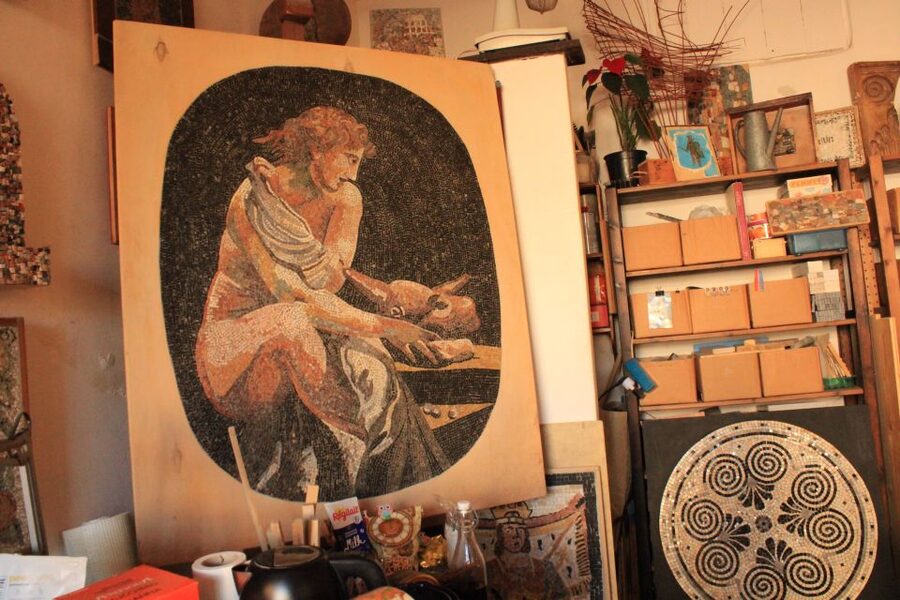
Rome is full of souvenirs, from miniature Colosseums to mass-produced magnets. A mosaic gives you something more personal. You choose the design, handle the tools, and see how many small decisions are needed to create a clean pattern.
That personal effort is the real value of the class. Even a simple design takes care. You may begin by thinking of a mosaic as a matter of sticking colored pieces onto a surface. Once you start cutting tiles to fit corners and narrow spaces, you see why Roman mosaics demand such patience.
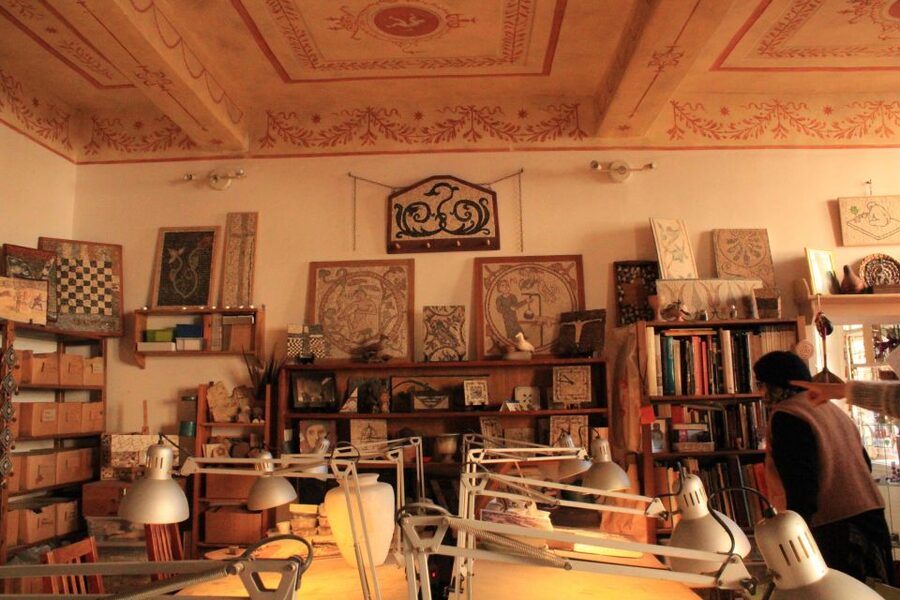
The workshop is held in a fully equipped studio in Trastevere. The setting matters. This is not a large tourist attraction with a rushed demonstration and a gift shop at the end. You sit at a designated workstation, work with actual materials, and receive help as your piece develops.
The price is $147.27 per person, so this is not a cheap activity. I would compare it with the cost of a special meal or another half-day experience in Rome. Its value depends on what you want from your time in the city. If you want a fast introduction to local sights, this is the wrong choice. If you want to learn a craft and bring home something you made, the price is easier to justify.
More Trastevere tours and tastings:
- Winner 2025 Rome Twilight Trastevere Food Tour by Eating Europe
★ 5.0 · 5,157 reviews - Rome: Trastevere or Jewish Quarter Street Food Tour
★ 4.8 · 3,839 reviews - Rome: Trastevere Food tour with Free-Flowing Fine Wine
★ 5.0 · 2,853 reviews
What happens when you arrive in Trastevere
The studio is in Trastevere, near the Botanical Garden. You arrange your own way there, since hotel pickup and drop-off are not included. That gives you a simple plan: allow time to reach the studio, then consider pairing the workshop with a walk through the neighborhood before or after class.
Trastevere is a good match for this activity because the area encourages a slower pace. You can have breakfast or a cappuccino nearby before a morning session, or take a walk after an afternoon class. The workshop itself gives you a break from Rome’s usual routine of museums, churches, ruins, and crowded streets.
At the studio, you meet the mosaic artist who leads the class. The supplied details identify Nadia as the instructor, while some class experiences refer to Micaela or Michaela, so the specific artist may depend on the date. The teaching style is practical. You receive a demonstration, then work at your own station while the instructor checks your progress.
The class is limited to eight participants. That number is small enough for personal help but large enough that you may see different designs and approaches around the room. Some sessions may feel especially intimate if only a few people book.
Choosing a design and learning the basic process
You are given a choice of design, then begin transferring or tracing the pattern onto your working surface. One parent described the process as including tracing a design, cutting tiles, gluing them into place, and later handling the cementing and cleaning stages.
Do not expect an unlimited catalog of patterns. One person found the choice of designs a little narrow, which is worth knowing if you arrive with a very specific image in mind. The limited selection may also help the class stay manageable within three hours. A complicated design can quickly become too much for a first attempt.
The instructor introduces the tools and materials, then shows you how to handle each step. Since the artist may explain some points with limited English, you should pay attention to the demonstrations and feel comfortable asking for a repeat. The technique is visual, so this language gap does not prevent you from following along, but it can make the class less conversational than a typical English-language workshop.
The class works well for people who enjoy learning by doing. You are not expected to arrive with art training. The process is broken into small tasks, and the instructor helps you correct mistakes or decide how to fit pieces into tight spaces.
Cutting tiles is harder than it looks
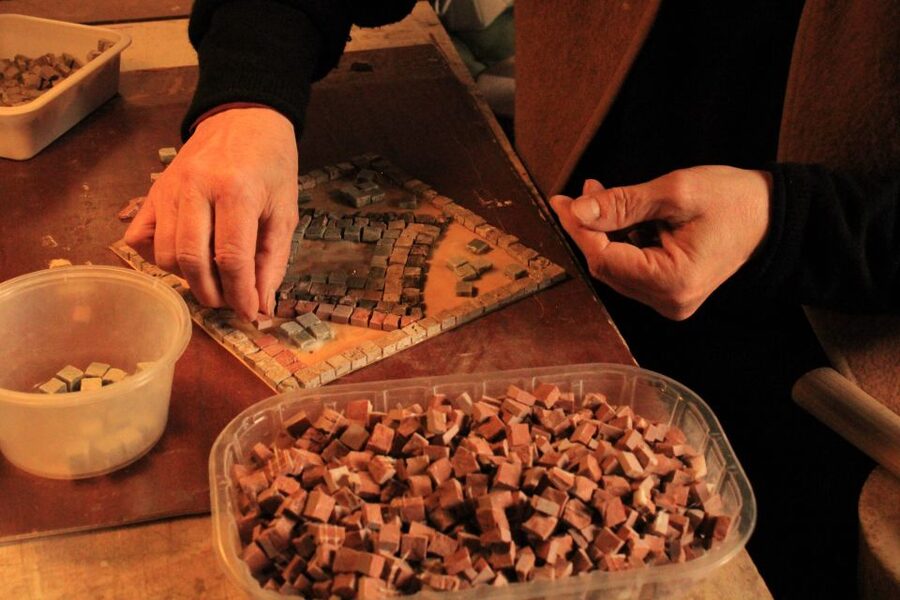
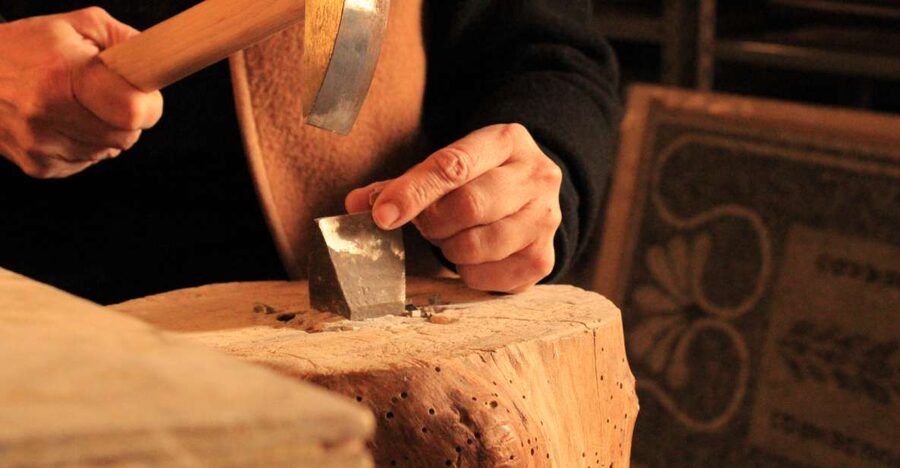
The most revealing part of the activity is cutting the tiles. You use mosaic tools to shape small pieces so they fit the design. Straight lines are fairly easy. Small angles and narrow gaps take more time, and you may need several attempts before a piece sits correctly.
This is where the three-hour duration makes sense. You are not rushing through a ten-minute demonstration. You are spending real time on the craft. One person described the cutting as tedious in places, but also said it made clear why the workshop takes as long as it does.
I see that as a strength, provided you like careful work. If you prefer activities with constant movement and quick results, the detailed cutting may test your patience. If you enjoy puzzles, drawing, or small-scale craft, you will probably find the work absorbing.
The instructor remains available throughout. You can expect help when a cut goes wrong, when a piece does not fit, or when you are unsure how to continue. Patience is a repeated theme in the teaching. The artist does not simply hand you materials and disappear.
More Rome tours worth comparing
- 3 in 1 Cooking Class near Navona: Fettuccine, Ravioli & Tiramisu
★ 5.0 · 7,376 reviews - Rome: Pasta & Tiramisu Class with Fine Wine by the Vatican
★ 4.9 · 4,852 reviews - Rome: Pasta Making Class with Wine, Limoncello, and Dessert
★ 4.9 · 3,177 reviews - Rome: 3-in-1 Fettuccine, Ravioli, and Tiramisu Cooking Class
★ 4.9 · 2,704 reviews
A relaxed pace inside a working studio
The atmosphere is casual rather than formal. You may work alongside people who are already handling their own projects, which gives the studio the feel of an active artist’s workplace. The instruction is brief and practical, leaving you time to try the techniques yourself.
That balance is important. Too much explanation would leave you watching instead of making. Too little help would turn the class into guesswork. Here, the instructor demonstrates a step, then checks in as you work.
Some sessions include small touches that make the three hours pleasant, such as music and espresso prepared in the studio. These details are not the main reason to book, but they fit the relaxed setting. You are spending part of the day making something with your hands, not hurrying from one appointment to the next.
The workshop can also work well for couples. You can each create a separate piece, compare your designs, and help one another with the fiddly parts. A group of five has also completed the workshop successfully, with the instructor allowing extra time when needed.
Finishing the mosaic and taking it home
Once the pieces are arranged and glued, the project moves into its finishing stages. The work is cemented and cleaned so the surface becomes a proper finished mosaic rather than a collection of loose tiles.
Your piece is then placed in a box so it can set. The setting process may take up to six hours. You can take it with you, but do not treat it as ready-to-handle luggage the moment class ends. Keep the box level and give the mosaic time to settle before putting it through a busy travel day.
The final piece is likely to be small enough to bring home, though the exact size is not specified. The important point is that you make it yourself and leave with a lasting reminder of Rome. It may not have the polish of a professional artist’s work, but that is part of its appeal. The uneven spots show that you made it during your stay.
For children, this final result can be especially satisfying. A nine-year-old participant completed a mosaic with guidance and learned the steps from tracing through cleaning. The activity also gave the child a better sense of the labor behind the mosaics seen in Rome’s major churches and monuments.
How the class connects with Rome’s mosaic tradition
The workshop does not include a guided visit to a basilica or an ancient site. You should not book it expecting a history lecture or a tour of famous mosaics. Its Roman connection comes through the craft itself and the setting in Trastevere.
Still, making even a small mosaic changes how you look at the city afterward. When you see tiled decoration in churches or historic buildings, you have a clearer sense of the labor involved. You notice the fit of the pieces, the pattern, and the patience required to cover a surface with small fragments.
That is a worthwhile kind of cultural experience. You are not only hearing about an old craft. You are trying to perform a modest version of it. The lesson stays with you because your hands were involved.
Who will enjoy this three-hour workshop
I would recommend this class most strongly to:
- Couples who want a shared activity beyond sightseeing and restaurants
- Families with children who like practical, creative projects
- Solo visitors looking for a quiet, social experience
- Art lovers who want a small introduction to mosaic technique
- Anyone searching for a personal souvenir rather than a standard purchase
- Repeat visitors who have already seen Rome’s main sights
The class is also a good fit for a busy itinerary if you deliberately use it as a rest period. You are still doing something, but the pace is calmer than a major museum or archaeological site.
Children must be accompanied by at least one adult. The activity is wheelchair accessible, according to the supplied details. Since the tools involve cutting small tiles, adults should stay involved with younger children rather than treating the workshop as drop-off childcare.
Who may want to choose another activity
This workshop may not suit you if you want a polished finished object with no effort. You need to cut, test, adjust, and sometimes redo pieces. The work can be fiddly, especially around small angles.
It may also disappoint if you expect a fully fluent English lecture. The instructor can communicate with participants, and the demonstrations show what to do, but the class relies heavily on visual teaching. If detailed verbal instruction is important to you, keep that limitation in mind.
The design selection may feel restricted for visitors who have a firm idea of what they want to create. Ask about the available patterns when booking if that choice matters to you. The supplied information does not promise a custom design or a large range of options.
Finally, the class takes three hours, and the piece may need up to six hours to set. Schedule it with enough room around the activity. A rushed departure could make it harder to carry your work safely.
Is $147.27 a fair price?
At $147.27 per person, the workshop costs more than a casual craft class. You are paying for a small group, a fully equipped studio, an artist’s time, the materials, and guidance from start to finish.
The best way to judge the price is to ask what you value. If you only want a souvenir, you can spend far less in Rome. If you want a private or highly customized art lesson, you might pay more elsewhere. This class sits between those two options.
The strongest value comes from the full experience: a working studio in Trastevere, several hours of instruction, practical work with tools, and a finished object to take home. I would book it for a meaningful occasion, a honeymoon, a family afternoon, or a trip where you want one activity that feels different from sightseeing.
Free cancellation up to 24 hours before the start gives you some protection if your plans change. You can also reserve now and pay later, which helps when you are still arranging a Rome itinerary.
Practical advice for a better class
Arrive ready to concentrate. Mosaic-making is not physically demanding, but your eyes and hands do steady work for several hours. Wear something comfortable and avoid packing the rest of the day too tightly.
Listen closely to the first demonstrations, especially if you are not confident with the tools. The artist’s English may be limited, but her visual instructions show the process clearly. Watch how she holds the cutters and how she checks the fit of each tile.
Do not judge your piece too early. A half-finished mosaic can look rough, with gaps and loose-looking sections. The cementing and cleaning stages help bring the pattern together.
Allow time after class for the mosaic to set. Keep the box secure during the rest of your trip, and be careful when packing it for the journey home.
Should you book this Trastevere mosaic class?
Book it if you want a slower, more personal side of Rome and like the idea of making your own souvenir. The small group, steady help, and relaxed studio setting make this more than a simple demonstration.
I would be cautious if you dislike detailed handwork, need extensive English explanations, or have only a short window between major sightseeing plans. For everyone else, this is a thoughtful three-hour break from Rome’s busy center, with a handmade reminder of your time in the city.
FAQ
How long does the mosaic workshop last?
The workshop lasts three hours. Starting times vary, so you need to check availability for the date you want.
Where does the workshop take place?
It takes place in a mosaic studio in Trastevere, near Rome’s Botanical Garden.
How many people can join the class?
The group is limited to eight participants, allowing the instructor to offer help at individual workstations.
Can I take my mosaic home?
Yes. Your completed mosaic is placed in a box so it can set properly. The setting process can take up to six hours.
Is the workshop taught in English?
The activity is offered in English and Italian. The mosaic artist is not fluent in English, but she can communicate with participants and demonstrate each step.
Can children participate?
Yes. Children can take part, but they must always be accompanied by at least one adult.
Newest reviews from Rome
- Off the Beaten Track in Rome: Rione VI Parione Private Tour★ 5.0 · 24 reviews
- ROME:Colosseum & Ancient Rome – private/small group TOUR★ 5.0 · 24 reviews
- Cinematic Photoshoot in Rome★ 5.0 · 24 reviews
- Rome: Best of Colosseum and Roman Forum Small Group Guided Tour★ 4.5 · 24 reviews
- The Labyrinth of Rome between catacombs and ancient quarries★ 4.5 · 24 reviews
- Vatican and Trionfale Market Tour with Wine and Food Tasting★ 5.0 · 24 reviews
- private tour: Vatican Museums, Sistine Chapel, St. Peter’s Basilica★ 4.5 · 24 reviews
- Colosseum guided tour with Virtual Reality★ 5.0 · 24 reviews
Trastevere Tours, compared.
Winner 2025 Rome Twilight Trastevere Food Tour by Eating Europe
Read our review →
Trastevere or Jewish Quarter Street Food Tour
Read our review →
Trastevere Food tour with Free-Flowing Fine Wine
Read our review →
Trastevere & Campo de Fiori Street Food Walking Tour
Read our review →
Award Winning Trastevere Group Food Tour with Wine
Read our review →

Rome Food Tour: Hidden Gems of Trastevere with Dinner & Wine
Read our review →
Trastevere Guided Food and Wine Tour with 20+ Tastings
Read our review →Browse the lists this tour appears in