
Reviewed · TREVI FOUNTAIN & PANTHEON WALKS
Pantheon Private Guided Tour – Rome’s Iconic Ancient Temple
The best thing about this Pantheon tour is its focus. In about an hour, you get a private guide, a reserved entrance, and a clear explanation of why this huge ancient building still feels so astonishing. The oculus, the open circle in the dome, is the star, but the real reward is understanding what you are seeing.
I like the small private format, which lets you ask questions and hear the guide without fighting the noise inside. I also like the short route: the Pantheon, Piazza della Rotonda, and Piazza della Minerva give you a useful slice of Rome without swallowing half your day.
The main drawback is price. At $114.65 per person, this costs far more than entering on your own, and the visit lasts roughly one hour. You are paying for the guide’s time, the reserved entry, and the convenience, not a long walking tour.
In This Review
- Key points at a glance
- Why the Pantheon deserves a guided visit
- Inside the Pantheon for about 30 minutes
- Piazza della Rotonda and the fountain
- Piazza della Minerva and Rome’s layered past
- What the private format changes
- Is $114.65 per person a fair price?
- Which guide style might suit you?
- Who should book this Pantheon tour?
- Practical details before you book
- Should you book it?
- FAQ
- How long does the Pantheon private tour last?
- What language is the tour offered in?
- Is this a private tour?
- Where does the tour meet?
- Where does the tour finish?
- Is admission to the Pantheon included?
- Can I choose the tour time?
- What is the cancellation policy?
Key points at a glance
- A focused one-hour visit: You spend about 30 minutes inside the Pantheon, followed by short introductions to two nearby piazzas.
- Private attention: Only your group takes part, so you can ask questions and request more detail about architecture, religion, or Roman life.
- Guides with different strengths: Claudia is praised for clear explanations and humour, while Anthony, James, Jobe, Tommy, and others bring their own backgrounds and local knowledge.
- The oculus gets proper attention: Your guide can explain the dome, the open roof, and the building’s changing religious role instead of leaving you to guess.
- Reserved entry matters: On busy days and some special dates, a pre-booked time slot can save you from a long wait or confusion at the door.
- Easy to fit into a Rome schedule: You can choose a morning, midday, or afternoon time, subject to availability.
Why the Pantheon deserves a guided visit
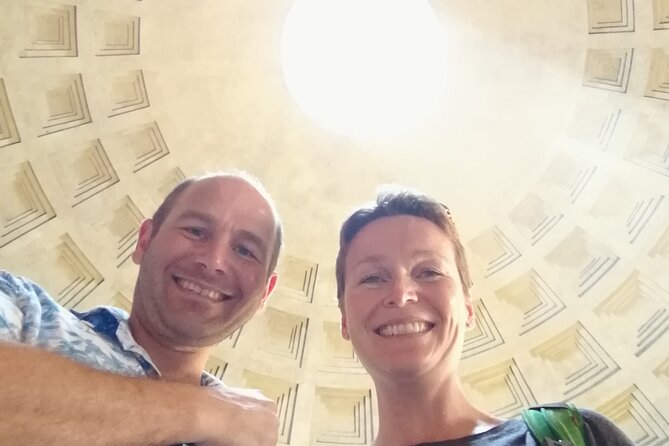
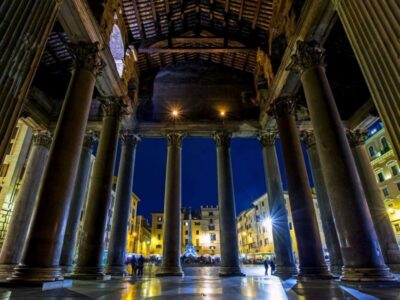
The Pantheon is easy to underestimate. From outside, it can look like another grand Roman facade in a city full of them. Then you walk beneath the ancient portico and into the vast round interior, where the dome rises above you like a piece of engineering that should not still be here.
This is often called the best-preserved Roman temple in the world, and the building’s long life is part of its fascination. It began with a pagan purpose and later became a Catholic church. A guide helps you connect those changes instead of seeing only a handsome dome and a polished floor.
I especially value a guide here because the Pantheon does not explain itself well. The building is impressive, but much of its meaning is hidden in its structure, symbols, changing use, and relationship with the surrounding streets. A good explanation turns a quick look upward into a story about ancient Roman beliefs, construction, later worship, and modern Rome.
The tour is offered in English, with a native-speaking or official guide. The exact guide varies. Claudia, Anthony, James, Jobe, Tommy, Maria Francesca, Valeria, Davide, and others have led this experience, so you should expect a different personality and style depending on the date.
More Trevi and Pantheon walks:
- Rome: Pantheon Timeless Marvel Guided Tour with Entry Ticket
★ 4.9 · 4,002 reviews - Rome: Pantheon Priority Entry Ticket & Audio Guide App
★ 4.1 · 3,234 reviews - Enjoy Spritz and Pasta Making in Piazza Navona
★ 5.0 · 1,681 reviews
Inside the Pantheon for about 30 minutes
The main part of the tour takes place inside the Pantheon and lasts about 30 minutes. That may sound brief, but it is enough time for a tight explanation of the building’s purpose, design, and later life, especially when you have only a short window in Rome.
Your guide begins by setting the scene before or as you enter. The tour puts ancient Roman myths and beliefs into context, then explains the building as more than an old monument. This opening matters because the word Pantheon suggests a connection with the gods, while the interior’s later Christian use tells a very different story.
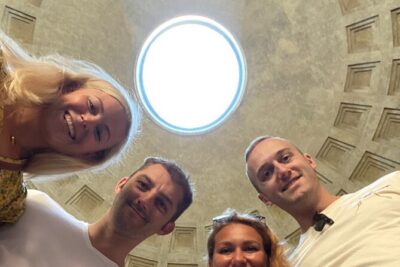
Look up as soon as you enter. The oculus at the centre of the dome is the unmistakable visual focus, and guides regularly use it to explain how the building works and why it feels so open despite its massive construction. Peter was singled out for making the oculus and the wider story easy to understand, while James was praised for discussing both construction and architecture.
You might also appreciate the practical help with photographs. Anthony has taken pictures for visitors, and Jobe has helped with panoramic images. These are small touches, but they suit a private visit. You can ask for a pause, clarify a detail, or take a photograph without being pushed along by a large group.
The guide’s approach is meant to be lively rather than stiff. Humour is part of the intended style, and Claudia, Anthony, Jobe, and others are repeatedly described as warm, funny, and engaging. That can make dates, architectural terms, and religious changes easier to follow.
Still, humour is personal. One visitor found a guide’s conversational approach distracting and felt that the historical explanation suffered. That complaint is a useful reminder: guide chemistry is not guaranteed. If you want a strictly academic presentation, say so at the start and steer the conversation toward architecture, archaeology, or religious history.
Piazza della Rotonda and the fountain
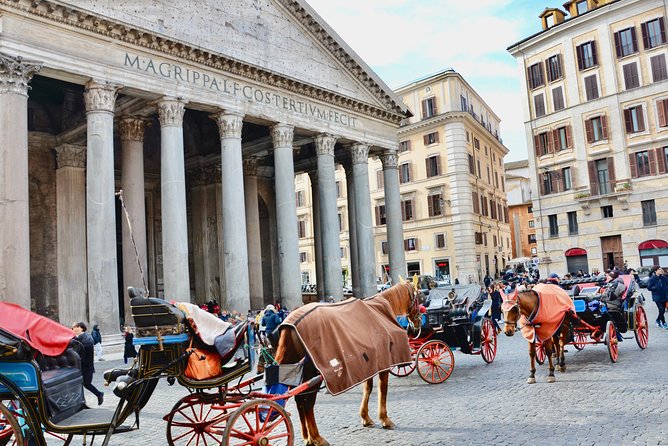
After the interior, the route spends about 10 minutes in Piazza della Rotonda, the square directly in front of the Pantheon. This is not filler. The square helps you understand how the ancient building fits into Rome’s later urban setting.
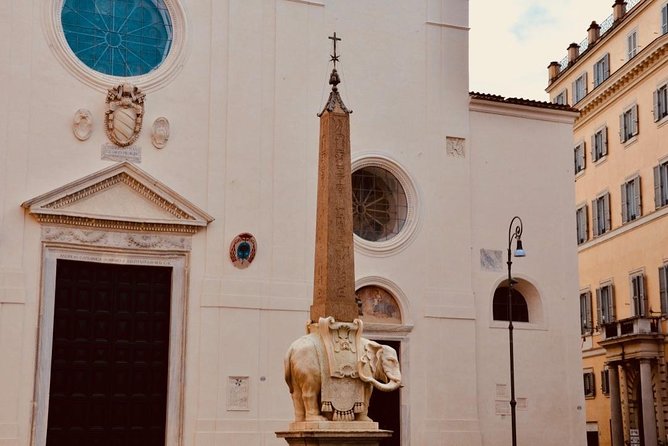
At its centre is a fountain by Jacopo della Porta, with an ancient obelisk rising above it and topped by a crucifix. The combination is classic Rome: ancient Egyptian stone, Renaissance design, and Christian decoration gathered into one public space.
Your guide can also explain the wider story of fountains in Rome. Late Renaissance fountains celebrated the return of water after nearly a thousand years when the city’s old water systems had fallen away. That makes the fountain more than a decorative photo stop. It reflects the city’s long pattern of reusing older objects and giving them new meanings.
The square can be lively, so this is a good place to listen closely and keep the group together. The stop is short, and the main purpose is context rather than a long architectural lecture. If you are hoping for extended free time in the piazza, you may find the schedule too tight.
Piazza della Minerva and Rome’s layered past
The final stop is Piazza della Minerva, about 10 minutes from the Pantheon route. This small square introduces a darker and more complicated side of Rome’s past.
The Palazzo Spadolini was once linked with a tribunal against heretics. The tour also discusses trials for witchcraft and the treatment of scientists such as Galileo by the Dominicans. Nearby is Santa Maria sopra Minerva, notable as the only church in Rome with a pagan name. It was built over a temple dedicated to Isis.
This short stop gives the tour more range. You are not looking only at ancient Rome in isolation. You are seeing how later religious and political institutions occupied older sacred spaces, and how the city kept building over its own past.
The information can feel dense if you are interested only in the Pantheon’s dome. If you enjoy the broader story of Rome, though, this is one of the tour’s strongest features. It adds human conflict, changing belief, and local history to what could otherwise be a very short monument visit.
More Rome tours worth comparing
- Rome by Golf Cart Private Tour: Beyond the Landmarks
★ 5.0 · 4,361 reviews - Early Morning Vatican, Sistine, St. Peter’s Semi or Private Tour
★ 5.0 · 3,779 reviews - Rome on a Golf Cart Semi-Private Tour Max 6 with Private Option
★ 5.0 · 2,502 reviews - Rome Private Arrival Transfer: Fiumicino Airport to Hotel in Rome
★ 4.5 · 2,492 reviews
What the private format changes
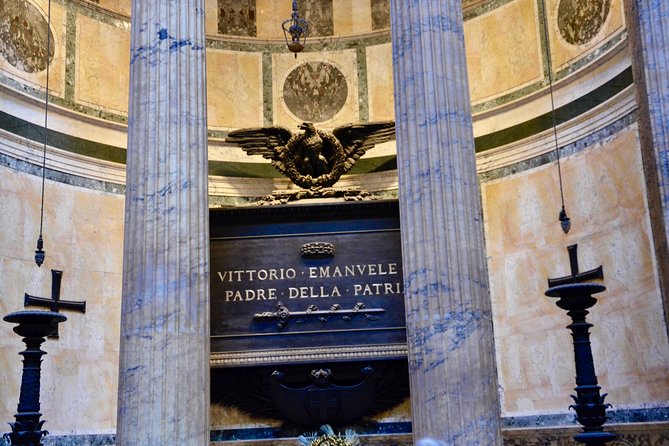
A private tour is not automatically better than a group tour, but the difference is clear here. You get the guide to yourself, which means you can ask about the details that catch your eye rather than follow a fixed lecture designed for a crowd.
That also helps with sound. The Pantheon can be a difficult place for a large group because the hard surfaces carry voices in every direction. With only your own party, it is easier to stay near the guide and hear the explanation.
The format also allows some flexibility. Claudia has contacted visitors before the tour to confirm arrangements and offer ideas for other things to do in Rome. Guides have answered questions about the city beyond the building itself, and some have stayed longer than planned.
Do not assume extra time is guaranteed. The advertised duration is approximately one hour, and the provider says the tour includes the interior visit and the two outside introductions. One account described 45 minutes inside, with the guide explaining that the full hour includes the outdoor portion. If your schedule is very tight, confirm the meeting time and allow a little breathing room.
The route is also useful for people who dislike large organized groups. Most people can participate, and the meeting point is near public transportation, though no specific route or station is given. You meet at Antica Salumeria at Piazza della Rotonda 4 and finish back at the same meeting point.
Is $114.65 per person a fair price?
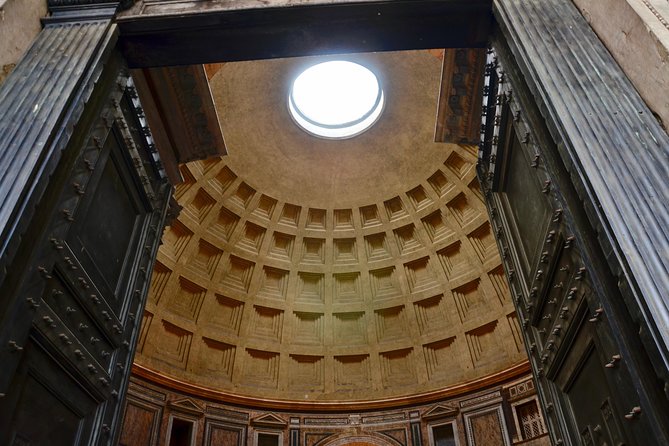
The price is high for an hour. If you are comfortable reading a guidebook, waiting in line, and exploring at your own pace, self-guided entry will cost less. You should not book this expecting a bargain admission ticket.
The value improves if you have limited time or want a reserved entrance during a busy period. One Saturday visitor found that the Pantheon was closed to people without booked reservations, making the prearranged entry especially useful. Another visitor said the reserved access helped during a crowded period.
The private format also matters for families, couples, and small groups with different interests. You can ask for more architecture, more ancient religion, more Christian history, or more local context. That personal attention is the product you are buying.
There can be confusion at the entrance, especially on holidays or when the ticket system and queue arrangements change. One visitor described an uncomfortable dispute after the guide moved toward the front of the line. The provider explained that May 1 was a national holiday and that entrance procedures were unclear that day. This does not erase the unpleasant moment, but it shows why you should follow the guide closely and ask where your reserved entry applies.
For me, the tour makes the most financial sense when the Pantheon is a major priority, your time is limited, or you are traveling with people who want clear explanations. It makes less sense if you want a relaxed, lengthy walk through central Rome or if you mainly want to take photographs.
Which guide style might suit you?

You cannot select a specific guide from the information provided, but the individual guides have recognizable strengths.
Claudia is described as friendly, funny, clear, and good at making complex history understandable. She also brings an Italian perspective and has shared suggestions for other places in Rome.
Anthony is praised for his passion, patience, professionalism, and ability to answer questions. He has also helped with photographs and brought the story of the building’s shift from pagan temple to Catholic church to life.
James focuses strongly on architecture, construction, and the city’s past. His tours are described as efficient and full of useful details, a good match for you if you want substance in a short time.
Jobe brings long experience living in Rome, local colour, humour, and help with panoramic photographs. One useful point for English speakers is that he is American, which may make his accent especially easy for some people to follow.
Tommy has advanced degrees in art and history and is praised for detail, energy, and local context. He also received one sharply negative assessment, so his playful style may not suit every group.
Maria Francesca, Valeria, and Davide are also described as warm, professional, and strong on the Pantheon’s history. The guide is a major part of the experience, so it is sensible to keep your expectations focused on the service rather than one particular personality.
Who should book this Pantheon tour?
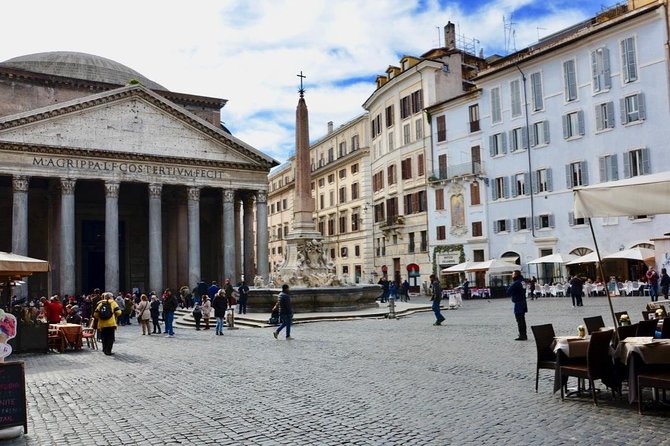
I would choose this for a first visit to Rome when you want the Pantheon to make sense quickly. It also suits you if you have only a morning or afternoon free, want to avoid a large group, or prefer asking questions to listening silently through a headset.
Families may like the one-hour length, especially if younger members are not ready for a three-hour history walk. Couples and small groups can also make good use of the private format, particularly if they want a few photographs and a manageable introduction before continuing through central Rome.
History and architecture fans should find plenty to discuss, but I would tell you to ask for the level of detail you want. The guide can cover myths, beliefs, engineering, church history, the surrounding piazzas, and later events such as Galileo’s treatment.
I would skip it if your budget is tight or if you prefer wandering without a fixed pace. You can see the Pantheon without a guide, and the tour’s value depends on how much you want interpretation and reserved access.
Practical details before you book
The tour costs $114.65 per person and lasts approximately one hour. It is offered in English, uses a mobile ticket, and is booked on average about 57 days ahead, which suggests that popular dates can fill well before arrival.
You choose a morning, midday, or afternoon time when available. The starting point is Antica Salumeria, Piazza della Rotonda 4, Rome. The tour returns to that meeting point.
Confirmation is provided when you book. The activity is private, and only your group participates. It is near public transportation, and most people can take part.
Free cancellation is available if you cancel at least 24 hours before the local start time. Changes or cancellations inside that 24-hour window are not accepted for a refund. If poor weather or an insufficient number of participants causes cancellation, you are offered another date or experience, or a full refund.
Should you book it?
Book this tour if you want the Pantheon explained by a real person, need a reserved time, and value a private conversation over the lowest possible price. The strongest parts are the clear focus, the attention to the oculus and the building’s changing role, and the extra context supplied by Piazza della Rotonda and Piazza della Minerva.
Skip it if $114.65 feels too steep for an hour or if you are happy to explore on your own. For everyone else, this is a compact, useful way to turn one of Rome’s most famous interiors into a place you actually understand.
FAQ
How long does the Pantheon private tour last?
The experience lasts approximately one hour. About 30 minutes are spent inside the Pantheon, with roughly 10 minutes in Piazza della Rotonda and 10 minutes in Piazza della Minerva.
What language is the tour offered in?
The tour is offered in English with a native-speaking or official guide.
Is this a private tour?
Yes. Only your group participates in the activity.
Where does the tour meet?
The meeting point is Antica Salumeria at Piazza della Rotonda 4, 00186 Rome.
Where does the tour finish?
The tour ends back at the meeting point.
Is admission to the Pantheon included?
Yes. An admission ticket is included for the Pantheon portion of the tour.
Can I choose the tour time?
The experience offers morning, midday, or afternoon time options, subject to availability.
What is the cancellation policy?
You can cancel at least 24 hours before the local start time for a full refund. Cancellations or changes made less than 24 hours before the start are not accepted, and poor-weather or minimum-participant cancellations offer a different date, another experience, or a full refund.
Newest reviews from Rome
- ROME:Colosseum & Ancient Rome – private/small group TOUR★ 5.0 · 24 reviews
- Off the Beaten Track in Rome: Rione VI Parione Private Tour★ 5.0 · 24 reviews
- Cinematic Photoshoot in Rome★ 5.0 · 24 reviews
- Rome: Best of Colosseum and Roman Forum Small Group Guided Tour★ 4.5 · 24 reviews
- The Labyrinth of Rome between catacombs and ancient quarries★ 4.5 · 24 reviews
- Vatican and Trionfale Market Tour with Wine and Food Tasting★ 5.0 · 24 reviews
- private tour: Vatican Museums, Sistine Chapel, St. Peter’s Basilica★ 4.5 · 24 reviews
- Colosseum guided tour with Virtual Reality★ 5.0 · 24 reviews
Trevi Fountain & Pantheon Walks, compared.
Pantheon Timeless Marvel Guided Tour with Entry Ticket
Read our review →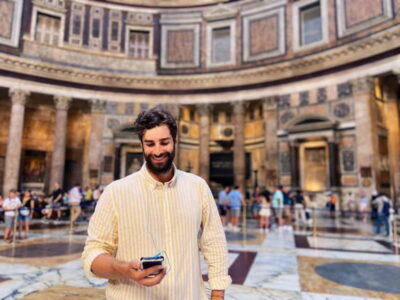
Pantheon Priority Entry Ticket & Audio Guide App
Read our review →
Enjoy Spritz and Pasta Making in Piazza Navona
Read our review →
Pantheon Elite Guided Tour – Rome’s Iconic Ancient Temple
Read our review →
Pasta & Tiramisu Cooking Class near the Spanish Steps
Read our review →
Traditional Pizza Cooking Class near Piazza Navona
Read our review →
Rome’s Iconic Temple: Pantheon Audio Guided Tour with Fast Access
Read our review →Browse the lists this tour appears in