
Reviewed · ROME GOLF CART TOURS
Private Golf Cart Tour in Rome
Rome can wear you out before lunch. Its headline sights are scattered across busy streets, broad piazzas, and uneven pavement. This private golf cart tour gives you a fast, comfortable overview, from the Colosseum and Arch of Constantine to the Pantheon, Spanish Steps, and Trevi Fountain.
I like two things right away: you can cover far more ground than on foot, and your private group can ask for a slower pace or a special stop. Guides including Dino, Antonio, Andreea, and Marco have been singled out for lively storytelling and care with families and older people. The tradeoff is simple: you see many monuments from outside, but this is not an inside tour.
In This Review
- Key points at a glance
- Why a Golf Cart Makes Sense in Rome
- Starting With the Colosseum and Constantine’s Arch
- Circus Maximus and the Mouth of Truth
- Ancient Temples Beside the Tiber
- Piazza Venezia and Caesar’s Final Days
- Piazza Navona and the Pantheon
- Bernini’s Elephant, the Spanish Steps, and Trevi
- What the Guides Add
- Is $1,102.88 Good Value?
- Who Should Book This Rome Golf Cart Tour?
- FAQ
- How long does the private golf cart tour last?
- How many people can join the private tour?
- Are admission tickets included?
- Where does the tour begin and end?
- Is the tour suitable for children?
- Can I cancel for a full refund?
- Should You Book It?
Key points at a glance
- See Rome’s major outdoor sights in about two to three hours, a useful first look when your schedule is tight.
- Travel privately with up to six people, so you can set the pace and discuss possible stops with the guide.
- Reach small streets and central squares more easily than a bus, while avoiding a long day of walking.
- Hear stories about ancient Rome, Baroque art, emperors, and Italian unification from a local guide.
- Stop for photos at 11 major sights, with Pantheon entry the only admission listed as not included.
- Expect a high group price of $1,102.88, which makes the most sense when shared by five or six people.
Why a Golf Cart Makes Sense in Rome
The appeal is not speed alone. Rome’s center is compact on a map, but the route between the Colosseum, the Pantheon, Piazza Navona, and the Trevi Fountain can take serious time on foot. Add summer heat, crowds, children, or limited mobility, and a golf cart becomes a practical sightseeing tool rather than a novelty.
You sit above the road, get a moving view of the city, and step out for short visits and photographs. The format also avoids the fixed route of a large bus. The guide can respond to your interests, and several of the strongest tour experiences involved small adjustments, lesser-known stops, and special requests.
The tour is private for your group, with a maximum of six people. That matters at this price. At full capacity, the cost works out to about $184 per person. For two people, it is a costly way to sightsee, but for a family or group of friends it can compare more favorably with several separate taxis, especially when you factor in a dedicated guide.
The tour lasts roughly two to three hours. Some outings have run beyond three hours, but you should treat that as a possibility, not a guarantee. The meeting point is the Italy In Love Tours office on Via del Cardello, 31, near the Colosseum area. The listed end point is Piazza Venezia, a useful central location for continuing your day.
More golf cart tours of Rome:
- Rome by Golf Cart Private Tour: Beyond the Landmarks
★ 5.0 · 4,361 reviews - Rome on a Golf Cart Semi-Private Tour Max 6 with Private Option
★ 5.0 · 2,502 reviews - Rome Highlights by Golf Cart Private Tour
★ 5.0 · 2,379 reviews
Starting With the Colosseum and Constantine’s Arch
The Colosseum is the natural opening scene. This four-story amphitheater was built under the Flavian emperors from stone, concrete, and tuff. Its elliptical plan allowed large crowds to watch gladiatorial contests and public spectacles.
A golf cart cannot take you inside, and admission is not part of the tour. Still, an exterior look gives you a sense of the building’s huge scale, its weathered arches, and its place beside the ancient Roman center. I would use this stop to decide how much time you want to spend inside later. If the Colosseum is a priority, book a separate timed entry rather than expecting this ride to cover it.
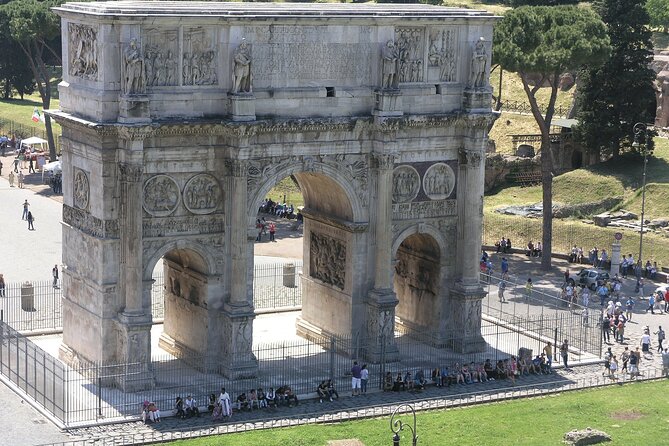
Nearby, the Arch of Constantine adds a different layer. Completed in AD 315, it celebrates Constantine and his victory at the Battle of Milvian Bridge. Its reliefs were taken from earlier monuments, so the arch reads almost like a Roman scrapbook, linking a new emperor to respected rulers of the past.
Your guide can help you see the change taking place in the empire, especially Constantine’s connection with the rise of Christianity. It is a quick stop, but a useful one because it connects the Colosseum’s older pagan spectacles with the later imperial world.
Circus Maximus and the Mouth of Truth
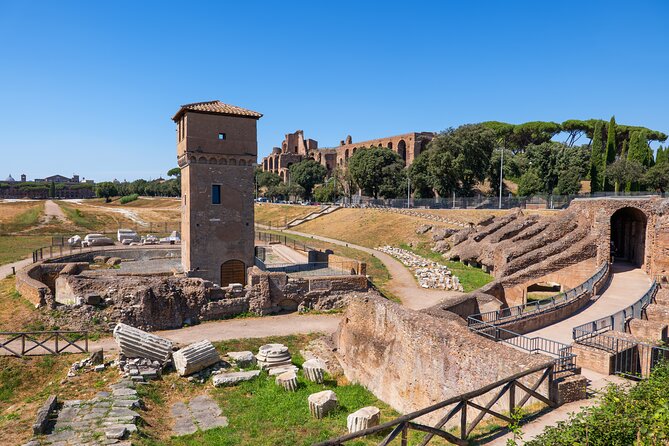
At the Circus Maximus, you see a broad open area where one of antiquity’s largest sporting venues once held around 150,000 spectators. Chariot races were the main draw, but the site also hosted public games and religious ceremonies.
Today, much of the valley is open parkland, so do not expect intact stadium seating. The value here is scale. From the cart, you can understand the space between the Palatine and Aventine hills and picture why Roman racing was such a major public event. The planned stop is about 10 minutes and has no admission fee.
The nearby Bocca della Verità, or Mouth of Truth, is a marble mask with an uncertain original purpose. It may have been a well cover, fountain decoration, or manhole cover. Its later reputation as a truth-testing object turned it into one of Rome’s most playful photo stops.
This visit is also short and free. Because the mask is a specific object rather than a large site, you may need to wait briefly if other people are taking pictures. The tour gives you a chance to see it without building your whole day around the stop.
Ancient Temples Beside the Tiber
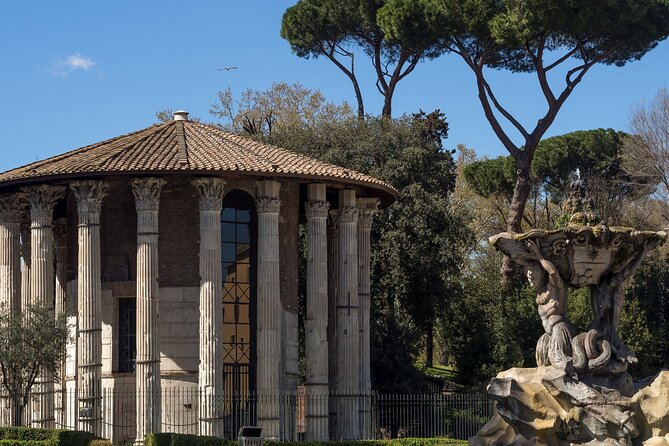
The Temple of Hercules Victor sits in Piazza Bocca della Verità beside the Forum Boarium and the Tiber. Built in the second century BCE, it has a circular design with a complete ring of columns. Its Greek influence is easy to spot, yet it belongs firmly to the Roman city.
This is one of the more rewarding stops for anyone who likes architecture. The Colosseum is the blockbuster, but this smaller temple shows how Roman builders borrowed and adapted Greek forms. You see it from outside, with about 10 minutes scheduled and no entry fee.
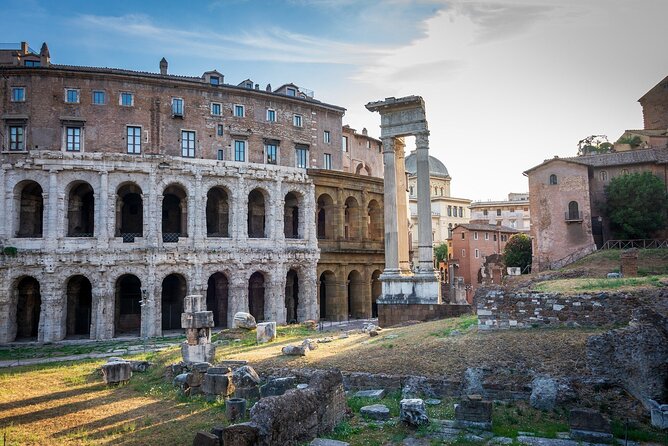
The nearby Theatre of Marcellus offers another example of Rome’s habit of building one era over another. Commissioned by Julius Caesar and completed under Augustus, the theatre once held about 20,000 people for plays and musical performances. Its curved outer structure recalls the Colosseum, though it predates it.
The unusual part is what happened later. The ancient theatre was remodeled and incorporated into private residences. Look closely at the upper levels and you can see how Roman remains became part of a living city. This is a good place to ask your guide how Rome’s monuments changed after antiquity, rather than treating ancient sites as frozen ruins.
More Rome tours worth comparing
- Early Morning Vatican, Sistine, St. Peter’s Semi or Private Tour
★ 5.0 · 3,779 reviews - Rome Private Arrival Transfer: Fiumicino Airport to Hotel in Rome
★ 4.5 · 2,492 reviews - Private Pompeii, Positano & Amalfi coast Tour from Rome
★ 4.5 · 1,888 reviews - Private Departure Transfer: Hotel to Rome Fiumicino Airport
★ 4.5 · 1,050 reviews
Piazza Venezia and Caesar’s Final Days
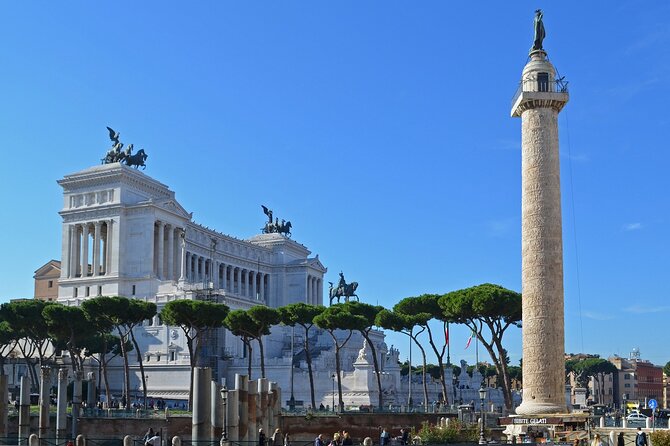
Piazza Venezia is one of Rome’s major road junctions, set at the foot of Capitoline Hill. The huge Altare della Patria honors Italian unification and gives the square its boldest visual mark. The nearby Palazzo Venezia explains the piazza’s name and its connection with the Republic of Venice.
This stop is more about orientation than quiet beauty. Traffic and monumental scale shape the experience, but the square helps you understand how modern Rome, Renaissance Rome, and ancient Rome overlap. It is also the listed end point, so clarify with your guide if you want to continue elsewhere after the final stop.
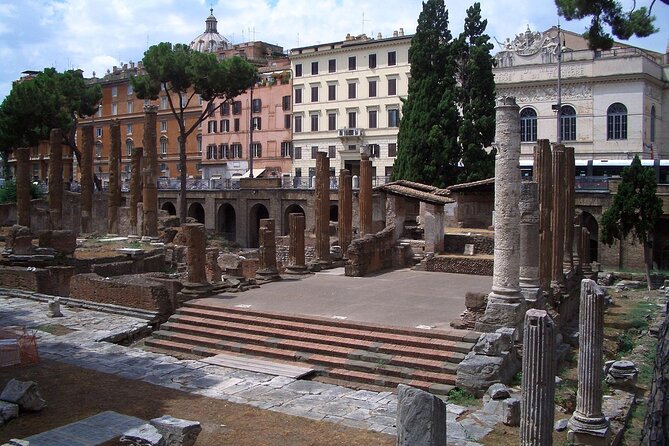
Before that, the route visits Largo di Torre Argentina. Four Republican-era temples survive below street level, and the area is linked with Pompey’s Theatre, where Julius Caesar was assassinated. A cat sanctuary adds a lighter present-day note to a place tied to one of Rome’s most famous political murders.
You will view the archaeological area rather than enter it. The stop works best when your guide explains what lies below the modern street and why Caesar’s death happened in this part of the city. Again, allow about 10 minutes.
Piazza Navona and the Pantheon
Piazza Navona is one of Rome’s great public spaces, shaped by the footprint of an ancient stadium. Its three fountains and Baroque buildings make it a natural place to pause, take pictures, and watch city life. The Fontana dei Quattro Fiumi, with its obelisk, is the main visual prize, while Sant’Agnese in Agone provides the church facade across the square.
The cart gets you close, but you still need to walk a short distance in the piazzas. That is true throughout the tour. This experience reduces walking between sights, not all walking at the sights themselves.
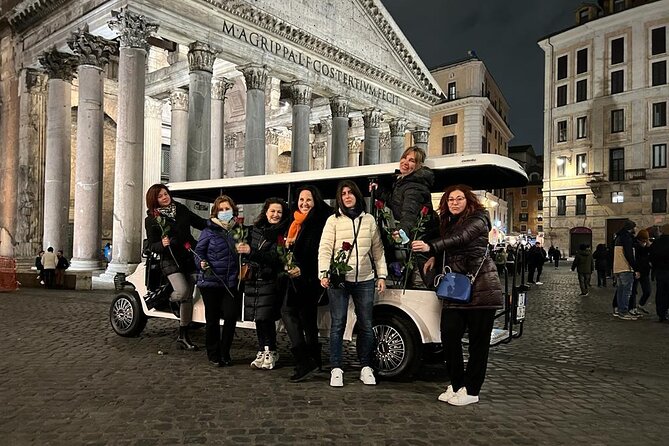
The Pantheon is the one stop where admission is specifically not included. Its granite-columned portico leads into a vast domed rotunda, one of the clearest examples of Roman engineering still in everyday view. If you want to go inside, ask about timing and entry before the tour begins. With only about 10 minutes listed, an interior visit may require more time than the standard schedule allows.
For me, this is a key decision point. If seeing the Pantheon’s dome from inside matters to you, plan a separate visit. If your main goal is a fast overview and an exterior look, the stop still gives you an excellent sense of the building.
Bernini’s Elephant, the Spanish Steps, and Trevi
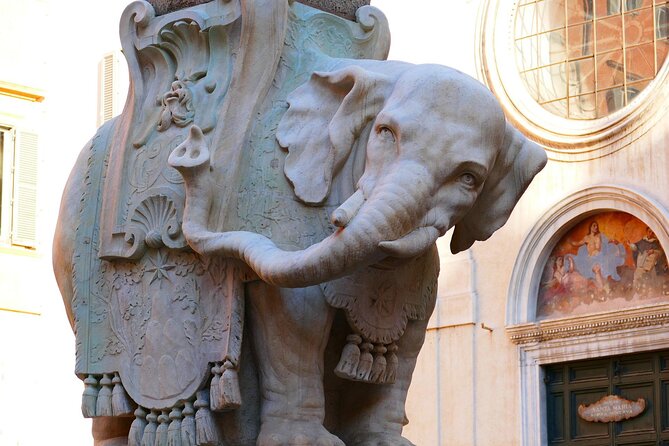
Near Santa Maria sopra Minerva, look for Bernini’s small elephant carrying an obelisk. The sculpture is often called the Minerva chick. Its charm comes from the contrast between the sturdy little elephant and the ancient monument on its back.
This stop shows a side of Rome that a checklist tour can miss. It blends Baroque imagination, religious symbolism, and the city’s fascination with ancient Egyptian objects. The church itself is important, but the listed visit focuses on the sculpture outside and does not include admission.
Piazza di Spagna follows. The square takes its name from the Palazzo di Spagna, home of the Spanish Embassy to the Vatican since the 17th century. The Spanish Steps climb toward Trinità dei Monti and remain one of Rome’s best-known gathering spots.
Expect crowds here, and remember that the experience is a photo and orientation stop, not a long pause for sitting on the steps. The cart helps you reach the area, but you will be on foot around the piazza.
The finale is the Trevi Fountain, completed in 1762 and designed by Nicola Salvi. At about 26.3 meters high and 49.15 meters wide, it is much larger than photographs suggest. The sculptures and moving water make it one of Rome’s most theatrical sights.
The classic coin toss is part of the fun. Some guides, including Dino, have carried coins for the group, though you should not assume every guide will do so. The fountain is free to see, but crowded conditions can limit how long you linger. Its illumination after dark is especially attractive, yet this tour’s exact timing is not specified, so do not book solely for a nighttime view.
What the Guides Add
The guide can make or break a quick city overview. Names connected with particularly strong experiences include Dino, Antonio, Andreea, Marco, Elaine, and Alex. Their roles have varied, with some outings using a driver-guide and others pairing a driver with a separate guide.
Dino is noted for his enthusiasm for Rome and for using audio earpieces so a family of six could hear clearly. Antonio is described as informative and fun. Andreea has been especially helpful with families, including a group with a six-year-old, while Marco brought formal study in history and archaeology and experience with a Roman Forum excavation.
These details matter because the tour moves through noisy streets. Ask for an earpiece if one is offered, and tell the guide early if you want more detail on ancient buildings, Baroque art, food, or modern Rome. The private format gives you a better chance to shape the conversation than a large group tour.
There is one point to check carefully: the additional information says babies and children are not accepted, yet recorded tour experiences include families with children, including a six-year-old and children ages eight to fourteen. Contact Italy In Love Tours before booking if you are traveling with children, especially infants, and get a clear answer for your date.
Is $1,102.88 Good Value?
The listed price is $1,102.88 per group of up to six. That is a premium price for a short tour, but the math changes with group size. Six people pay about $184 each, four pay about $276 each, and two pay about $551 each.
At full capacity, you are paying for private transport, a dedicated guide, flexibility, and a way to see much of central Rome without arranging taxis. For a family group, senior group, or first-time visitor with just one free afternoon, that convenience can be worth it.
For two people on a generous budget, it is harder to justify. A walking tour and public transport cost far less, though they will not give you the same coverage or comfort. You also need to budget for any entry tickets, food, drinks, and tips. The Pantheon is the only listed attraction with admission not included, but the Colosseum and other sites are viewed from outside.
Free cancellation is available if you cancel at least 24 hours before the start time. Within 24 hours, the amount paid is not refunded, and late changes are not accepted.
Who Should Book This Rome Golf Cart Tour?
I would recommend it most strongly to:
- Families who want an overview without asking children to walk all day
- Older people who need frequent rests
- Visitors with limited mobility, provided they confirm the vehicle and stop arrangements
- First-time visitors with only a short stay
- Small groups willing to split a high private-tour cost
- Anyone who wants to choose the pace and ask for extra photo stops
It is less suited to you if your main goal is entering the Colosseum, Pantheon, or other monuments. It is also not the right choice if you want a slow, detailed examination of each neighborhood. The tour is broad rather than deep, and its strength is showing you how Rome fits together.
FAQ
How long does the private golf cart tour last?
The tour lasts approximately two to three hours. Some recorded outings lasted more than three hours, but the standard duration is best understood as a two to three-hour experience.
How many people can join the private tour?
The tour is private and accommodates up to six people per group. Only your group participates.
Are admission tickets included?
No. Entry tickets are not included. The Pantheon is specifically listed as having admission not included, while the other scheduled stops are outdoor visits with no admission fee listed.
Where does the tour begin and end?
It begins at the Italy In Love Tours office at Via del Cardello, 31, 00184 Rome. The listed end point is Piazza Venezia.
Is the tour suitable for children?
The additional information says babies and children are not accepted, but recorded experiences include families with children, including a six-year-old. Contact the provider before booking to confirm the rule for your group.
Can I cancel for a full refund?
Yes, if you cancel at least 24 hours before the experience start time. Cancellations within 24 hours are not refunded, and changes made within that period are not accepted.
Should You Book It?
Book this private golf cart tour if you want a comfortable, efficient first look at Rome and can share the cost with a group. Its best features are the broad route, short walks between major sights, private setting, and guides such as Dino, Andreea, Antonio, and Marco, who bring personality and useful local context.
I would treat it as an orientation tour, not a substitute for the Colosseum or Pantheon. Pair it with timed entries on another day, or use it at the start of your visit to decide which monuments deserve a closer look. For a full group of six, it offers a practical way to get your bearings fast. For two people on a tight budget, the price is difficult to defend.
Newest reviews from Rome
- ROME:Colosseum & Ancient Rome – private/small group TOUR★ 5.0 · 24 reviews
- Off the Beaten Track in Rome: Rione VI Parione Private Tour★ 5.0 · 24 reviews
- Cinematic Photoshoot in Rome★ 5.0 · 24 reviews
- Rome: Best of Colosseum and Roman Forum Small Group Guided Tour★ 4.5 · 24 reviews
- The Labyrinth of Rome between catacombs and ancient quarries★ 4.5 · 24 reviews
- Vatican and Trionfale Market Tour with Wine and Food Tasting★ 5.0 · 24 reviews
- private tour: Vatican Museums, Sistine Chapel, St. Peter’s Basilica★ 4.5 · 24 reviews
- Colosseum guided tour with Virtual Reality★ 5.0 · 24 reviews
Rome Golf Cart Tours, compared.
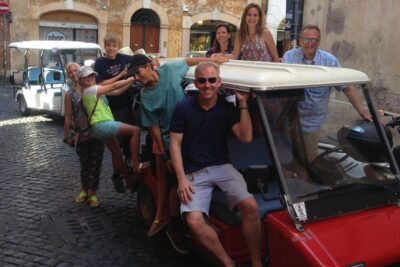
Rome by Golf Cart Private Tour: Beyond the Landmarks
Read our review →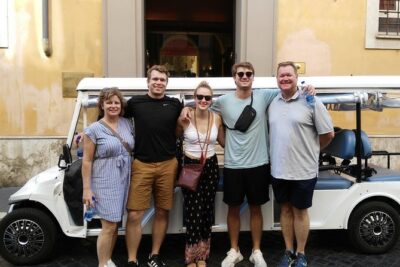
Rome on a Golf Cart Semi-Private Tour Max 6 with Private Option
Read our review →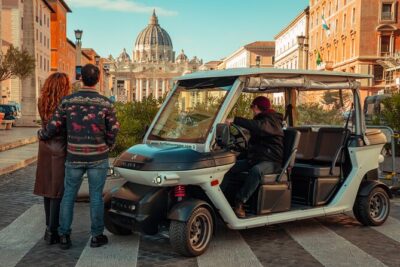
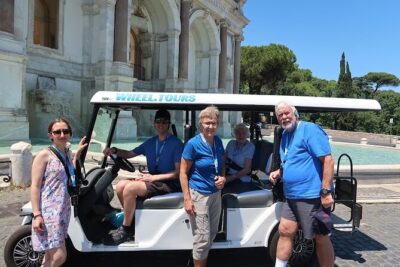
Rome Highlights City Tour by Golf Cart with Gelato
Read our review →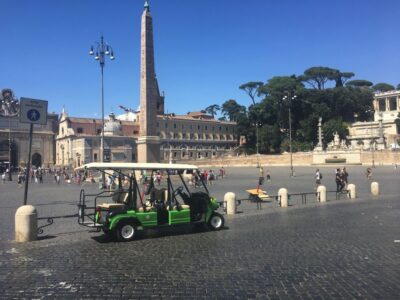
Imperial City Tour by Golf Cart with Optional Transfer
Read our review →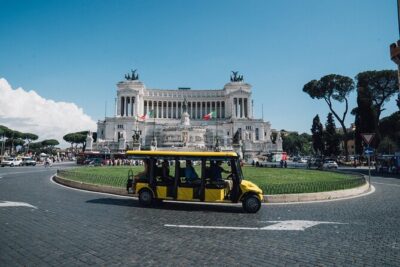
Golf Cart Small-Group Guided Tour: Rome City Highlights
Read our review →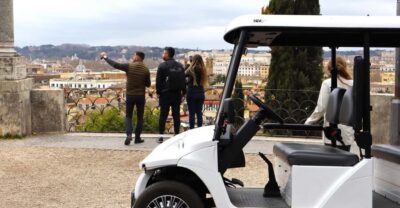
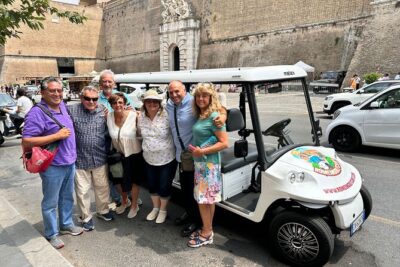
Private/Group 4 Hours Golf Cart SightseeingTour
Read our review →Browse the lists this tour appears in