Reviewed · MUSEUMS
Private Tour – National Museum of Palazzo Massimo
Palazzo Massimo is where Rome’s broken ruins become easier to understand. Instead of only seeing columns and fragments outdoors, you can examine the objects that once filled Roman homes, honored the dead, marked the calendar, and gave public figures a face. The Boxer at Rest and the painted rooms from Villa Livia are the major draws.
I like the private format because you can ask questions without a crowd waiting, and I like that admission is already covered in the $150.18 price. The two-hour visit also gives you a focused look at one of Rome’s best museums without consuming an entire afternoon.
The main caution is the guide-arrival risk reported in one serious complaint: the guide did not show up, leaving the customer to visit alone. That appears to be an isolated problem against a 4.9 rating from 51 ratings and a 98 percent recommendation, but it is still worth keeping the provider’s contact details handy on the day.
In This Review
- Key points to know before booking
- Why Palazzo Massimo deserves two hours
- Meeting the Roman world at 2:30 p.m.
- Ancient calendars and the shape of Roman time
- Portraits, ancestors, and the Roman face
- The Boxer at Rest and the power of imperfection
- Villa Livia’s painted garden rooms
- Religion beyond temples and statues
- What the private format is worth
- Who should book this museum visit
- Should you book the Palazzo Massimo tour?
- FAQ
- Where does the Palazzo Massimo tour begin?
- What time does the tour start?
- How long does the experience last?
- Is museum admission included?
- What is included besides admission?
- Is hotel pickup or private transportation included?
- Is the tour private?
- Is the tour offered in English?
- Can I cancel for a full refund?
Key points to know before booking
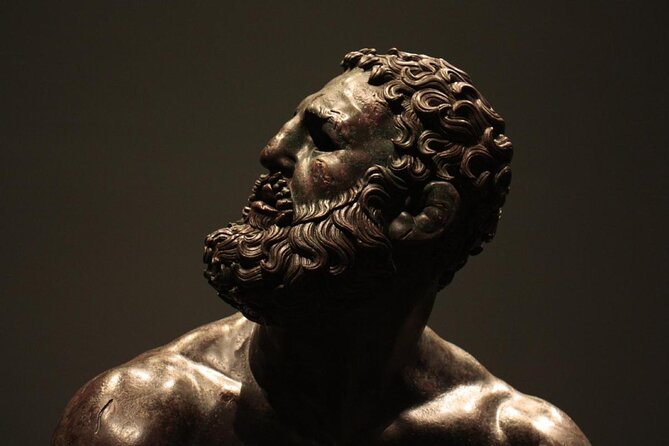
- The Boxer at Rest is the headline sculpture: Its tired, battered appearance gives ancient art a human edge that polished statues often lack.
- Villa Livia’s frescoes bring a Roman house to life: You see how wealthy Romans decorated interior rooms, not just how their public buildings looked.
- The tour explains daily customs, not only famous objects: Calendars, ancestor worship, portraits, mosaics, and religious practice all fit into the visit.
- Admission is included in the $150.18 price: You are paying for both entry and a private English-language guide.
- The meeting point is near Rome’s public transport: Start at Palazzo Massimo alle Terme, Largo di Villa Peretti 2, at 2:30 p.m.
- Bags must go in the checkroom: Bring only what you are comfortable leaving there, since backpacks and bags cannot be carried through the museum.
Why Palazzo Massimo deserves two hours
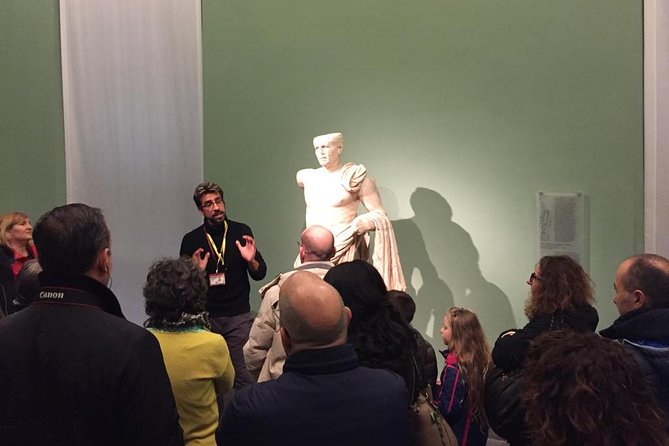
Rome’s outdoor ruins can be hard to read. You see a wall, a column base, or a stretch of ancient pavement, but the original rooms, colors, furnishings, and customs are gone. Palazzo Massimo helps fill in those missing pieces.
The museum is part of the Museo Nazionale Romano, and this visit focuses on the ancient Roman world through sculpture, painting, mosaics, portraits, and objects tied to belief and daily life. The guide’s job is not simply to point out attractive pieces. It is to explain how the objects worked in Roman society.
That makes the museum a good match for you if you have already seen some of Rome’s ruins and want more context. It also works well early in your visit, since the information about houses, portraits, religion, and public life can sharpen what you notice elsewhere in the city.
The scheduled visit lasts about two hours. That is long enough for a guided route with a clear theme, but short enough to fit before dinner or alongside another afternoon plan. You should not expect to see every room in detail. Palazzo Massimo has more material than a two-hour visit can cover, so the value depends on the guide choosing well and explaining the important pieces clearly.
More museums and galleries in Rome:
- Vatican: Museums & Sistine Chapel Entrance Ticket
★ 4.5 · 144,003 reviews - Vatican Museums & Sistine Chapel Tour with Optional Basilica
★ 4.3 · 67,413 reviews - Vatican Museums, Sistine Chapel & St Peter’s Basilica Guided Tour
★ 4.5 · 39,149 reviews
Meeting the Roman world at 2:30 p.m.
You meet at Palazzo Massimo alle Terme, at Largo di Villa Peretti 2, 00185 Rome. The stated start time is 2:30 p.m., and the tour returns to the same meeting point when it ends.
The location is near public transportation, which is useful in central Rome. Private transportation is not included, and there is no hotel pickup or drop-off. You need to make your own way to the museum and arrive ready to begin at the appointed time.
The afternoon schedule has a practical advantage. You can spend the morning at another site, have lunch, and then use Palazzo Massimo for a more contained museum visit. Still, Rome’s streets and public transport can take longer than expected, so I would allow extra time rather than cutting it close.
At the entrance, bags and backpacks must be left in the checkroom. That rule matters more than it may sound. Bring only essential items, and keep valuables with you according to the museum’s checkroom arrangements. The tour information does not provide further details about the storage system, so you should be prepared to follow the staff’s instructions.
Ancient calendars and the shape of Roman time
One of the more unusual subjects covered here is the Roman calendar. That may sound dry until you remember that a calendar in ancient Rome was not just a household planning tool. It helped organize festivals, religious duties, public business, and the rhythm of civic life.
A guide can use the museum’s objects to connect the calendar with the way Roman society functioned. You begin to see that religion was not kept in a separate corner of life. It touched public ceremonies, family customs, political identity, and the use of time itself.
This is exactly the kind of subject that benefits from a private explanation. A label can identify an object, but it rarely explains why a date, festival, or ritual mattered to an ordinary Roman household. With only your group present, you can stop when an idea needs more explanation or ask how it connects with something you saw at another Roman site.
The tour description does not promise a dedicated calendar exhibit, so you should think of this as one of the interpretive themes rather than a single guaranteed display. The strength of the visit will depend partly on how the guide builds the subject around the museum’s objects.
Portraits, ancestors, and the Roman face
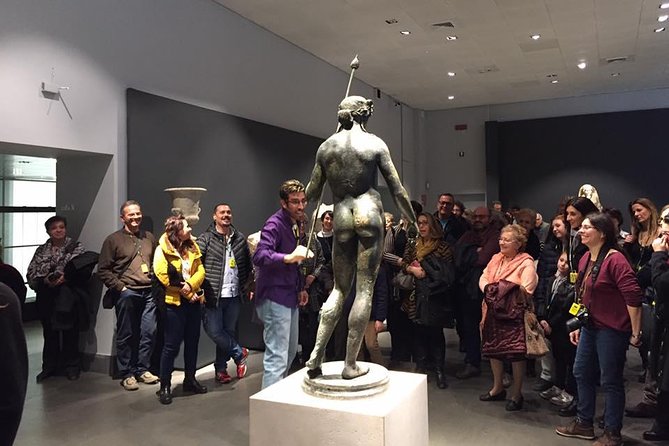
Roman portraiture often feels more direct than the idealized sculpture associated with ancient Greece. Faces may show age, wrinkles, stern expressions, or individual features. The point was not always to make a person look young and perfect. It could be more important to show family identity, experience, status, or connection to the past.
The visit explains how Romans portrayed their heroes and how they could honor deceased relatives. That gives the portraits a personal and social meaning. You are not simply looking at marble heads. You are considering how a Roman family remembered its ancestors and how public images shaped reputation.
Ancestor worship is another useful bridge between museum pieces and Roman remains around the city. When you later see tombs, statues, or family references in inscriptions, you will have a better sense of why the dead remained part of Roman household life.
I especially like this theme for anyone who finds standard art tours too focused on names and dates. The question becomes how people used art. A portrait could preserve memory, support family pride, express political loyalty, or place someone within a long line of ancestors.
The private setting should help here. Portraits can look repetitive when you see them alone. A guide who explains the differences in expression, clothing, hairstyle, and purpose can turn a row of heads into a lesson about Roman society.
More Rome tours worth comparing
- Rome by Golf Cart Private Tour: Beyond the Landmarks
★ 5.0 · 4,361 reviews - Early Morning Vatican, Sistine, St. Peter’s Semi or Private Tour
★ 5.0 · 3,779 reviews - Rome on a Golf Cart Semi-Private Tour Max 6 with Private Option
★ 5.0 · 2,502 reviews - Rome Private Arrival Transfer: Fiumicino Airport to Hotel in Rome
★ 4.5 · 2,492 reviews
The Boxer at Rest and the power of imperfection
The Boxer at Rest is the museum’s most emotionally immediate work. It depicts a seated fighter after a bout, with the physical evidence of exhaustion and injury. Rather than presenting an untouched ideal, the sculpture shows a body that has endured pain.
That contrast gives the work its force. Ancient sculpture is often associated with calm gods, perfect athletes, and heroic bodies. This boxer feels vulnerable. The subject is still powerful, but the power comes through fatigue and survival rather than flawless beauty.
Your guide should use the sculpture to explain ancient artistic practice and the way Romans valued Greek art and athletic subjects. The tour’s emphasis is not limited to the boxer, so you will likely see it as part of a larger discussion of portraiture and representation.
Because the visit is private, this is a good place to pause and look closely. You can consider the boxer’s posture, expression, and injuries without being rushed through a large group. If you already know the work, the guide can provide context. If you do not, it is likely to be one of the museum moments that stays with you after the tour.
The museum’s collection is broad, so do not assume the entire two hours will center on this one statue. It is a major highlight, not the whole experience.
Villa Livia’s painted garden rooms
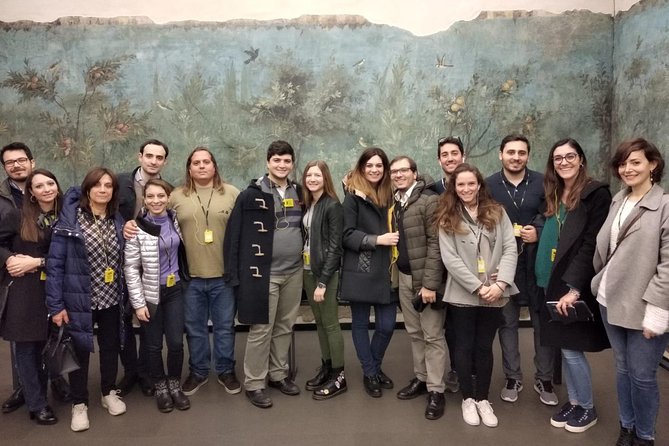
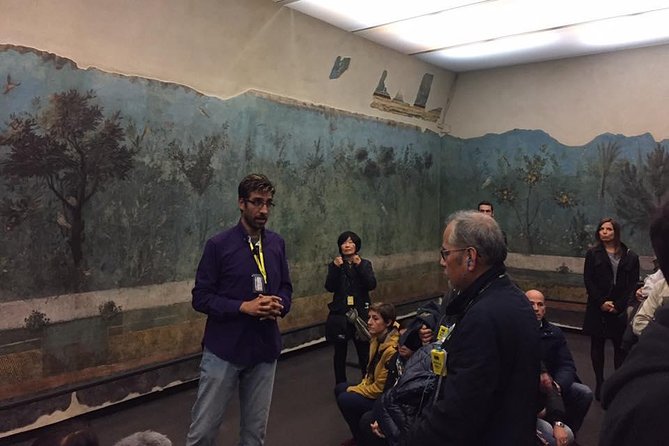
The frescoes from Villa Livia offer a different kind of encounter with ancient Rome. Instead of studying a single figure, you see how an interior space could be decorated. The paintings are associated with Villa Livia, a wealthy Roman residence, and are known for their garden imagery.
These frescoes matter because they show the private side of Roman life. Temples, forums, and amphitheaters tell you about public Rome. Painted walls reveal how elite households wanted their rooms to feel and what kinds of nature, abundance, and refinement they brought indoors.
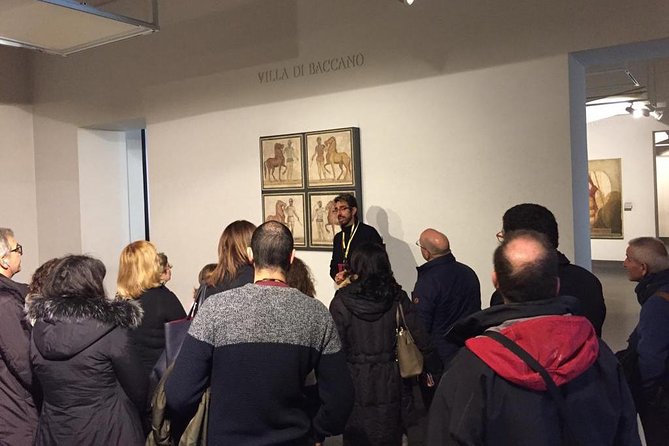
The experience is especially valuable if you have been looking at bare archaeological walls across Rome. The frescoes remind you that many Roman buildings were once colorful and carefully decorated. Mosaics and wall paintings were not minor finishing touches. They helped shape the character of a room.
The tour also covers the way Romans decorated their houses, so the Villa Livia material gives the guide a strong example to work with. You can connect the paintings with the larger question of how Romans experienced their homes, including movement through rooms, display of wealth, and the use of images in private settings.
There is a practical limitation: the supplied details do not specify how long the guide spends with the frescoes or which other villas and rooms are included. If Villa Livia is your main reason for booking, ask at the start how the route will be balanced.
Religion beyond temples and statues
The religious side of Roman life appears throughout the museum themes. The tour addresses how Romans venerated their dead and investigates the religious aspect of ancient Roman society.
That approach is useful because Roman religion was not only about grand temples. It reached into the home, the family, the calendar, and public institutions. The museum’s objects can show how belief shaped rituals and how the Romans understood their relationship with ancestors and gods.
You will not simply hear a list of deities. The bigger benefit is seeing how religious ideas affected behavior. A household image, a commemorative portrait, or an object connected with ritual can reveal what people hoped to preserve, protect, or honor.
If you are visiting the Colosseum, Roman Forum, or other ruins, this discussion can make those places easier to interpret. You begin to ask who used each building, what ceremonies took place there, and how decoration guided people through a sacred or public space.
The tour is not advertised as a specialist archaeology seminar. Its appeal is the broad connection between objects and habits. You get an introduction to Roman institutions and customs, with the guide using the museum collection to make those subjects concrete.
What the private format is worth
The price is $150.18 per person, with admission tickets, a professional guide, a local guide, and private-tour service included. At two hours, that is a significant per-person cost, especially for one person or a couple.
The calculation looks better for a small group that wants personal attention. A private tour can be worthwhile when you care more about clear interpretation and questions than about finding the lowest entry price. Group discounts are available, so check the final rate for your party before deciding.
You are also paying for time saved. A self-guided visit may cost less, but you would need to decide what matters in a large collection and build the Roman context yourself. This tour gives you a planned route and a person to connect the art with the city outside.
The value is weaker if you prefer wandering freely, reading labels at your own speed, or spending several hours on a single section. A two-hour private visit has structure. That structure is helpful for many people, but it will not suit everyone.
The strong rating record, 4.9 from 51 ratings and 98 percent recommended, supports the idea that the format works well overall. Still, the report of a guide failing to appear is serious. I would confirm the meeting details before the start and keep the provider’s contact information available.
Who should book this museum visit
I would consider this tour a good choice for you if you want to understand Roman objects rather than simply photograph them. It suits first-time Rome visitors who need context, as well as returning visitors who have seen the major ruins and now want the domestic and artistic side of Roman life.
It is also a sensible option for families or mixed-interest groups. Calendars, family memory, houses, mosaics, frescoes, and the Boxer at Rest offer several entry points, so one member of your group may connect with sculpture while another prefers daily life or religion.
The tour is offered in English and is private, meaning only your group participates. Most people can take part, according to the supplied participation information. The visit does require leaving bags and backpacks in the checkroom.
You should look elsewhere if your priority is transportation from your hotel, a full-day museum study, or guaranteed attention to one single object. Those services and promises are not part of this experience.
Should you book the Palazzo Massimo tour?
Book it if you want a compact, guided explanation of ancient Roman life and you value having a private English-speaking guide. The strongest reasons are the included admission, the chance to ask questions, and the mix of major art with practical subjects such as calendars, ancestors, homes, and religion.
The museum offers something Rome’s ruins cannot: color, faces, interiors, and objects that show how people lived and remembered. The Boxer at Rest and Villa Livia frescoes alone give the visit two memorable anchors.
I would be cautious only if $150.18 per person feels high for two hours, or if you prefer independent museum time. For a group sharing the cost, or for anyone who wants the Roman collection explained without spending half a day planning a route, this is a strong use of an afternoon.
FAQ
Where does the Palazzo Massimo tour begin?
It begins at Palazzo Massimo alle Terme, Largo di Villa Peretti 2, 00185 Rome, Italy.
What time does the tour start?
The scheduled start time is 2:30 p.m.
How long does the experience last?
The guided museum visit lasts approximately two hours.
Is museum admission included?
Yes. Admission tickets are included in the tour price.
What is included besides admission?
The experience includes a professional guide, a local guide, and a private tour for your group.
Is hotel pickup or private transportation included?
No. Private transportation and hotel pickup and drop-off are not included.
Is the tour private?
Yes. Only your group participates in the activity.
Is the tour offered in English?
Yes. The tour is offered in English.
Can I cancel for a full refund?
Yes. You can cancel at least 24 hours before the experience start time for a full refund. Cancellations or changes made less than 24 hours in advance are not accepted for a refund.
Newest reviews from Rome
- ROME:Colosseum & Ancient Rome – private/small group TOUR★ 5.0 · 24 reviews
- Off the Beaten Track in Rome: Rione VI Parione Private Tour★ 5.0 · 24 reviews
- Cinematic Photoshoot in Rome★ 5.0 · 24 reviews
- Rome: Best of Colosseum and Roman Forum Small Group Guided Tour★ 4.5 · 24 reviews
- The Labyrinth of Rome between catacombs and ancient quarries★ 4.5 · 24 reviews
- Vatican and Trionfale Market Tour with Wine and Food Tasting★ 5.0 · 24 reviews
- private tour: Vatican Museums, Sistine Chapel, St. Peter’s Basilica★ 4.5 · 24 reviews
- Skip the Line: Vatican Wheelchair Accessible Private Tour★ 5.0 · 24 reviews
Museums, compared.
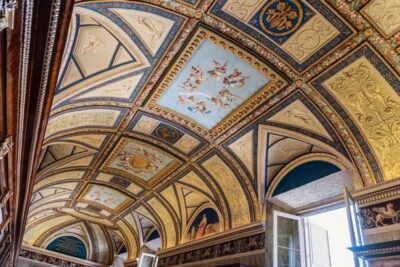
Vatican Museums & Sistine Chapel Tour with Optional Basilica
Read our review →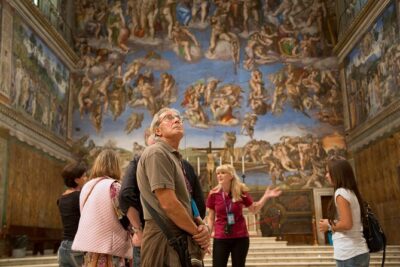
Vatican Museums, Sistine Chapel & St Peter’s Basilica Guided Tour
Read our review →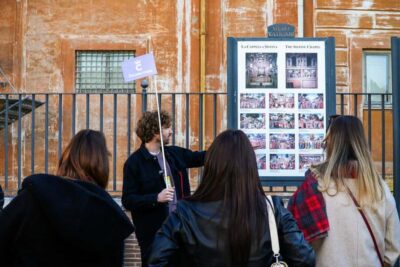
Vatican Museums, Sistine Chapel & Basilica Tour
Read our review →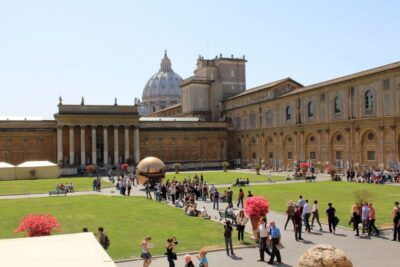
Vatican Museums & Sistine Chapel Skip-the-Line Entry Ticket
Read our review →Vatican Museums, Sistine Chapel & Basilica Tour
Read our review →
Vatican Museums & Sistine Chapel Guided Tour
Read our review →