Reviewed · PRIVATE
Private Tour – Palazzo Barberini
Palazzo Barberini gives you a smart way to understand Rome through its art. In two hours, you move from the Middle Ages toward the Renaissance and Baroque, with major works by Caravaggio, Titian, and El Greco along the way. The real prize is Pietro da Cortona’s huge ceiling fresco, which turns a museum visit into a lesson in power, faith, and spectacle.
I like the private format, since you can ask questions without waiting for a large group to catch up. I also like the way the tour connects paintings to political and religious change, rather than treating each work as an isolated pretty picture.
The main drawback is the price, about $138.03 per person. That can be fair for a private guide and included admission, especially for a small group, but it is a serious expense for a two-hour museum visit. You’ll also need to leave bags and backpacks in the checkroom.
In This Review
- Key points to know before you book
- Why Palazzo Barberini deserves two hours
- The palace collection, from medieval art to the Baroque
- Caravaggio, Titian, and El Greco in one visit
- Pietro da Cortona’s ceiling fresco
- What the private format adds
- The 3:30 pm meeting time and museum routine
- Is two hours enough?
- Who should book this Palazzo Barberini experience?
- Booking, cancellation, and practical details
- Should you book it?
- FAQ
- How long does the private Palazzo Barberini tour last?
- What time does the tour begin?
- Where does the tour meet?
- Where does the tour end?
- Is museum admission included?
- Is this a private activity?
- Is hotel pickup or private transportation included?
Key points to know before you book
- Pietro da Cortona’s ceiling fresco is a major reason to go: Look up as well as around. The grand Baroque decoration is central to the palace experience.
- The tour covers several turning points in Italian art: You’ll move from medieval works toward Renaissance and Baroque art, with political and religious change used as part of the explanation.
- A private guide changes the pace: Your group gets the guide’s attention, and you have time to ask about artists, symbols, technique, or historical setting.
- Caravaggio, Titian, and El Greco are included in the artistic lineup: This is not a narrow tour devoted to just one painter or period.
- The meeting point is easy to identify: Begin at Gallerie Nazionali di Arte Antica, Palazzo Barberini, Via delle Quattro Fontane 13.
- The 3:30 pm start suits an afternoon plan: The tour lasts about two hours and ends back at the meeting point.
Why Palazzo Barberini deserves two hours
Rome has no shortage of famous museums, so it is fair to ask why Palazzo Barberini belongs on your schedule. The answer is focus. This is a place where the building, the collection, and the story of Rome’s changing artistic taste work together.
The museum presents Italian art from the Middle Ages through the Baroque period. That broad span lets you see how styles change over time, from more formal religious images to the movement, drama, and theatrical scale associated with the Baroque.
A guide can make those changes easier to follow. Instead of simply pointing out famous names, the tour explains how shifts in religion and politics affected what artists produced and what powerful patrons wanted to display.
That context matters in Rome. Art here was never only decoration. Paintings and frescoes could express faith, reinforce a family’s public image, or show that a ruler had money, influence, and a place in the city’s power structure.
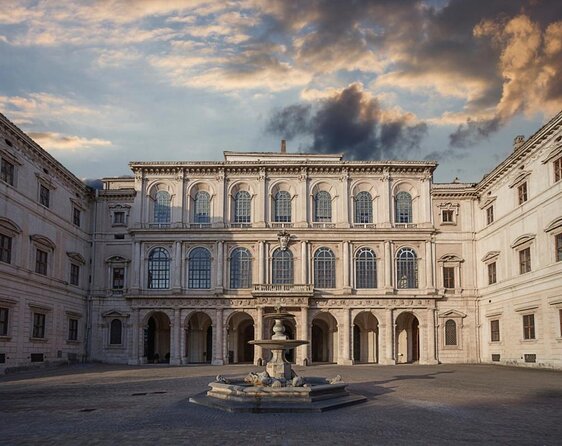
The palace setting adds weight to the visit. You are not looking at major works in a plain white room with no connection to the city around them. The building helps you understand why scale and spectacle mattered so much to Roman patrons.
More Rome tours worth comparing
- Rome by Golf Cart Private Tour: Beyond the Landmarks
★ 5.0 · 4,361 reviews - Early Morning Vatican, Sistine, St. Peter’s Semi or Private Tour
★ 5.0 · 3,779 reviews - Rome on a Golf Cart Semi-Private Tour Max 6 with Private Option
★ 5.0 · 2,502 reviews
The palace collection, from medieval art to the Baroque
The tour’s route is designed around an art-history story rather than a simple checklist of famous paintings. You begin with earlier Italian art and then follow the changes that lead toward the Renaissance and Baroque.
The medieval section gives you a starting point. You can expect the guide to explain how religious subjects and established artistic conventions shaped the period. This part may be less immediately dramatic than the Baroque rooms, but it gives you a useful baseline for noticing later changes.
As you move forward, artists become more interested in natural appearance, human expression, space, and movement. The Renaissance does not arrive as a single switch being flipped. It develops through changing ideas about the body, the world, classical influence, and the role of art.
The Baroque period then pushes many of these ideas further. Scenes become more emotional, compositions more energetic, and decoration more theatrical. A good guide helps you see the choices behind that effect rather than reducing Baroque art to gold, grandeur, and dramatic gestures.
The tour also includes artists who worked in Rome during the Renaissance and Baroque ages. Titian, Caravaggio, and El Greco offer very different ways to think about color, light, emotion, and religious subjects.
That range is useful for first-time art visitors. You do not need to arrive with a long list of dates and styles. You need enough guidance to compare what you are seeing and understand why one artist’s approach differs from another’s.
Caravaggio, Titian, and El Greco in one visit
The presence of Caravaggio gives the tour a strong point of interest. His name is closely tied to dramatic light, direct human presence, and a forceful approach to religious storytelling. You may find that his work becomes easier to appreciate when a guide explains what makes the scene feel so immediate.
Titian brings a different kind of lesson. His work can help you think about color, painterly handling, and the way portraits or religious images communicate status and feeling. The value of seeing several major artists in the same museum is comparison. You are not stuck with one artistic language for the whole visit.
El Greco adds another change in mood and style. His distinctive approach can make the collection feel less predictable, especially after looking at more traditional Renaissance works. A guide’s explanation is useful here because unfamiliar forms can seem odd if you only glance at them without context.
The goal is not to memorize every name. I would pay attention to three questions: What does the artist want you to notice first? How is light used? What does the image tell you about the people or institutions that paid for it?
Those questions give you a way into the art, even if you do not normally spend much time in museums.
Pietro da Cortona’s ceiling fresco
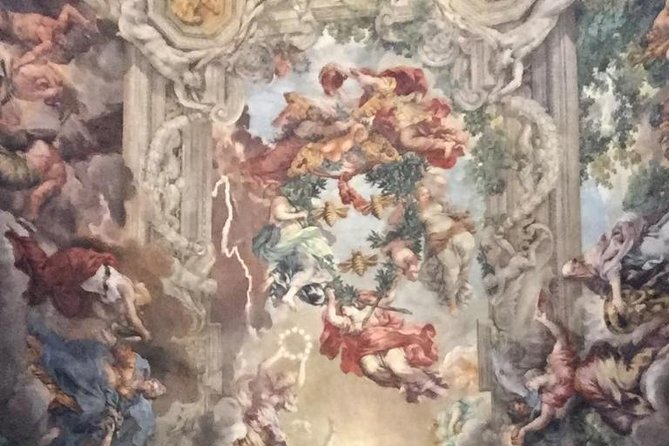
The ceiling fresco by Pietro da Cortona is the visual high point of the experience. It is the sort of work that asks you to stop, look up, and take in the full scale before trying to sort out individual figures and details.
Cortona’s fresco represents the grand Baroque taste at its most ambitious. It uses a ceiling not as a flat surface, but as a stage for a sweeping image. The effect depends on illusion, movement, and the suggestion that the painted space opens beyond the architecture.
This is where a guide earns the fee. Without help, you may simply register a large and busy ceiling. With an explanation, you can begin to understand the symbols, the arrangement, and the message the decoration was meant to send.
Give yourself time here. Do not rush because the group is moving toward the next room. In a private tour, you can ask the guide to pause and explain a section that catches your eye.
The fresco also helps explain why the Baroque style mattered to Roman patrons. It was not shy. It aimed to impress from a distance and reward close attention at the same time.
A completely different way to spend the day in Rome:
- Vatican: Museums & Sistine Chapel Entrance Ticket
★ 4.5 · 144,003 reviews - Vatican Museums & Sistine Chapel Tour with Optional Basilica
★ 4.3 · 67,413 reviews - Vatican Museums, Sistine Chapel & St Peter’s Basilica Guided Tour
★ 4.5 · 39,149 reviews - Rome: Colosseum, Palatine Hill and Roman Forum Guided Tour
★ 4.8 · 32,814 reviews
What the private format adds
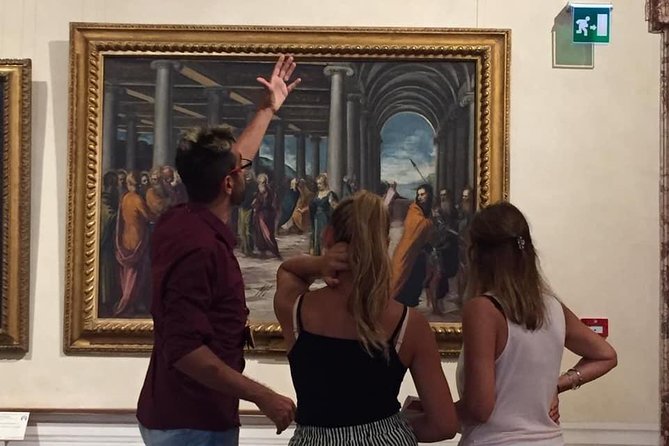
A private tour is most useful when you want conversation rather than a standard speech. You can ask why a painting matters, how a technique works, or what a religious symbol means without worrying that you are slowing down a group of strangers.
The guide can also adjust the emphasis. If you already know something about Caravaggio, you can spend more time on another artist. If you are new to art history, you can ask for basic explanations without feeling out of place.
That flexibility is the clearest reason to consider the price. Admission is included, and the guide is reserved for your group. The cost is still high, but the value improves if you are traveling with family or friends and can share the private experience across several people.
Group discounts are available, so check the final price for your party rather than judging the per-person figure alone. The listed rate is about $138.03 per person, and the tour lasts approximately two hours. For someone who wants a guided introduction to the museum, that may be reasonable. For someone who prefers to wander alone with a museum map, it may not be.
One guide specifically named in tour feedback is Viscenzo. He is described as interactive, enthusiastic, and skilled at adding background stories about the artists. Your assigned guide may differ, so treat that as a possibility rather than a promise, but the point is important: the guide’s personality will shape much of the visit.
The 3:30 pm meeting time and museum routine
The tour begins at 3:30 pm at Gallerie Nazionali di Arte Antica, Palazzo Barberini, Via delle Quattro Fontane 13, Rome. It ends at the same meeting point.
That afternoon start makes the tour easy to pair with other Rome plans. You can use the morning for an outdoor sight or a long lunch, then visit the palace when the day is already underway. Leave enough time to reach the address without rushing, since the tour starts at a fixed time.
The museum is near public transportation, which helps if you are not staying in the immediate area. Hotel pickup and drop-off are not included, and there is no private transportation, so you are responsible for reaching the meeting point.
Plan around the bag rule. Backpacks and bags must be left in the checkroom. If you have a full day of sightseeing ahead of you, this matters. Keep your essentials organized and avoid arriving with luggage that could complicate your entry.
Most people can participate, according to the supplied tour details. Still, the visit is built around moving through museum rooms and spending time looking upward at the fresco, so you should consider your own comfort with a two-hour museum tour.
Is two hours enough?
Two hours is enough for a guided introduction, not for every room and every work in the collection. That is not a flaw, but you should set the right expectation.
The tour concentrates on major artists, key periods, and the museum’s central story. You get a clear framework instead of trying to absorb the whole collection in one tiring sweep.
If you are an art specialist or want a slow look at many individual paintings, you may want more time afterward. The private tour can show you what deserves a second look, then you can decide if you want to continue independently.
For most visitors, two hours is a sensible length. A shorter visit might feel rushed, while a much longer lecture could be hard to absorb after a day of Rome’s churches, ruins, and piazzas.
I would bring a small notebook only if you like recording artist names or questions. The private setting gives you a chance to ask as you go, which is more useful than trying to remember every fact at the end.
Who should book this Palazzo Barberini experience?
This tour is a strong fit if you want help making sense of Italian art without committing to a full-day museum program. It also suits families, couples, and small groups who prefer a guide’s attention to a large shared group.
You will get the most from it if you enjoy stories about artists and patrons, not just a quick list of masterpieces. The political and religious background gives the visit more meaning, especially if you are curious about why Roman art looks so dramatic and public.
It may be less suitable if you dislike fixed schedules or prefer complete independence. The 3:30 pm start is set, the tour lasts about two hours, and the experience is built around following a guide.
It is also not the cheapest way to enter Palazzo Barberini. The private format is the selling point, not a bargain admission ticket. If you are splitting the cost with a group and want a personal introduction, the value is easier to see.
Booking, cancellation, and practical details
Confirmation is received at the time of booking. The experience is offered in English, and admission tickets, a local guide, and a professional guide are included.
Free cancellation is available if you cancel at least 24 hours before the local start time. Cancellations or changes made less than 24 hours before the experience are not accepted for a refund, so do not leave changes until the last minute.
The tour is provided by Rome Guides. The activity is private, meaning only your group participates. That is useful if you want to ask plenty of questions or keep the pace centered on your own interests.
The overall rating is 5 out of 5 from 23 reviews, with 100 percent recommending the experience. The most consistent praise centers on the guide bringing the museum to life, explaining the art in an entertaining way, and sharing stories about the artists. That is exactly the quality you want from a private museum tour.
Should you book it?
Book this tour if you want a focused, guided introduction to Palazzo Barberini and value the chance to ask questions. The included admission, private format, strong art-historical range, and time with works by Caravaggio, Titian, El Greco, and Pietro da Cortona make it a serious museum experience rather than a quick walk-through.
Think twice if $138.03 per person feels too high for two hours, or if you prefer exploring at your own pace. For a small group that wants an engaging English-speaking guide and a clearer understanding of Renaissance and Baroque art, this is a worthwhile choice. For independent museum regulars, admission alone and a self-guided visit may offer better value.
FAQ
How long does the private Palazzo Barberini tour last?
The tour lasts approximately two hours.
What time does the tour begin?
The scheduled start time is 3:30 pm.
Where does the tour meet?
It meets at Gallerie Nazionali di Arte Antica, Palazzo Barberini, Via delle Quattro Fontane 13, 00184 Rome, Italy.
Where does the tour end?
The activity ends back at the meeting point.
Is museum admission included?
Yes. Admission tickets are included in the tour price.
Is this a private activity?
Yes. Only your group participates in the private tour.
Is hotel pickup or private transportation included?
No. Hotel pickup, hotel drop-off, and private transportation are not included.
Newest reviews from Rome
- Fiumicino Airport Arrivals Private Transfer Free with private half day tour of Rome★ 5.0 · 23 reviews
- Full Day Tour of Rome★ 5.0 · 23 reviews
- From Rome: Private Day-Tour of Tuscany★ 4.3 · 23 reviews
- Rome at the Sunset; Navona, Trevi Fountain, Pantheon and more★ 5.0 · 23 reviews
- Rome: Wonders of Ancient Rome at Dusk★ 4.8 · 23 reviews
- Private Golf Cart Twilight Tour Rome★ 4.5 · 23 reviews
- Rome Key Sights Golf Cart Tour | Private & Groups★ 5.0 · 23 reviews
- Rome: Vatican Museum and Sistine Chapel Official Guided Tour★ 3.2 · 23 reviews
Private, compared.
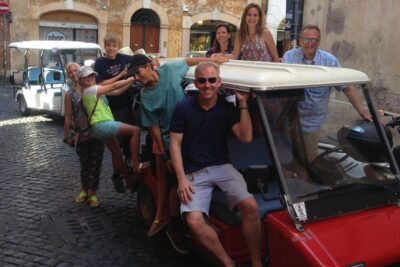
Rome by Golf Cart Private Tour: Beyond the Landmarks
Read our review →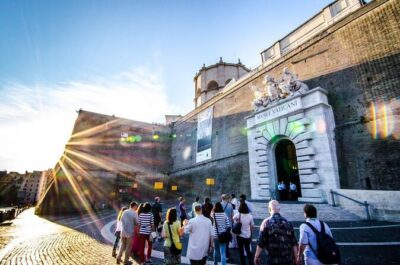
Early Morning Vatican, Sistine, St. Peter’s Semi or Private Tour
Read our review →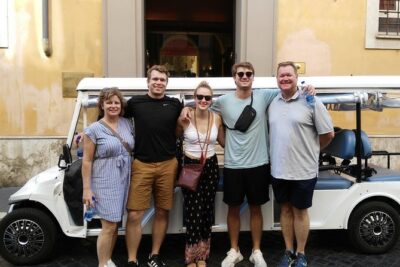
Rome on a Golf Cart Semi-Private Tour Max 6 with Private Option
Read our review →
Rome Private Arrival Transfer: Fiumicino Airport to Hotel in Rome
Read our review →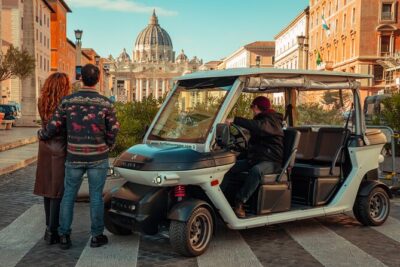
Private Pompeii, Positano & Amalfi coast Tour from Rome
Read our review →
Private Departure Transfer: Hotel to Rome Fiumicino Airport
Read our review →