
Reviewed · ROME
Rome: Wonders of Ancient Rome at Dusk
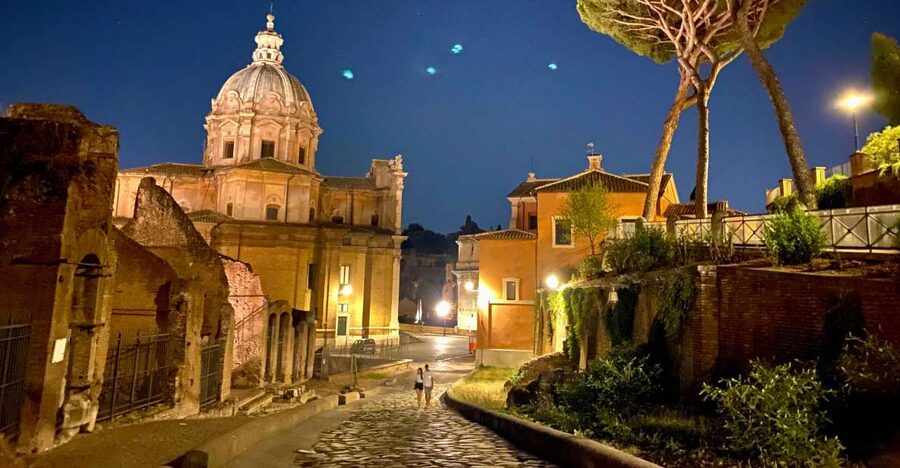
Rome’s ancient center takes on a different mood at dusk. The Colosseum, Arch of Constantine, Roman Forum, and Trajan’s Forum are easier to appreciate when the harsh midday sun and daytime crowds have faded. This tour keeps you moving through the heart of Ancient Rome while your guide explains what once happened at each stop.
I like the small maximum of 10 people, which makes it easier to hear the guide and ask questions. I also like the route’s final climb to Capitoline Hill, where you get a broad view over the ruins and Rome’s historic center. The main drawback is important: you do not enter the Colosseum, Roman Forum, or Trajan’s Forum. If you want the inside of the Colosseum, book a separate entry tour.
In This Review
- Key points to know before booking
- Why a dusk walk works well in Ancient Rome
- Starting at the Colosseum for 40 minutes
- The Arch of Constantine and Rome’s changing rulers
- Walking through the Roman Forum from outside
- Trajan’s Forum and the Column of Trajan
- Climbing Capitoline Hill for the final view
- What the $81 price really covers
- Group size, pace, and accessibility
- Who will get the most from this tour
- Should you book the Wonders of Ancient Rome at Dusk tour?
- FAQ
- Does this tour enter the Colosseum?
- Can I enter the Roman Forum?
- Is Trajan’s Forum included?
- Where does the tour meet?
- How early should I arrive?
- How large is the small group?
- What languages are offered?
Key points to know before booking
- The Colosseum is an exterior stop: You hear about its construction and gladiator games, but no interior access is included.
- Dusk improves the setting: The route offers a calmer look at Ancient Rome away from much of the daytime rush.
- The group stays small: Small-group departures are limited to 10 participants, with private tours also available.
- The route ends above the ruins: Capitoline Hill provides the tour’s best wide view and a memorable finish.
- Guides use visual aids: José is noted for illustrating Roman history with photographs, a useful touch when the ruins are viewed from outside.
- The walk lasts two hours: Comfortable shoes matter, especially for the route up Capitoline Hill.
Why a dusk walk works well in Ancient Rome
The timing is the real selling point here. Ancient Rome can feel crowded and noisy in the middle of the day, especially around the Colosseum. At dusk, the monuments become easier to study as parts of one connected historic area rather than a series of packed photo stops.
You begin near the Colosseo metro station and walk through the old imperial center. The guide supplies the missing pieces: who built these monuments, how they were used, and what life was like under Rome’s emperors. Since most of the structures are viewed from the outside, the quality of the storytelling matters more than usual.
That makes the guide a key part of the experience. José is known for using photographs to show how the ancient buildings once looked, while Matilde has also received strong praise for her guiding. Those visual comparisons can help you picture the missing floors, marble decoration, and crowds that the surviving stone alone cannot explain.
The tour is available in English, Italian, Spanish, Portuguese, French, and German. You should select your language when booking, since the stories and explanations are central to the value of the walk.
Tours travellers often pair with this one in Rome:
- Vatican: Museums & Sistine Chapel Entrance Ticket
★ 4.5 · 144,003 reviews - Vatican Museums & Sistine Chapel Tour with Optional Basilica
★ 4.3 · 67,413 reviews - Vatican Museums, Sistine Chapel & St Peter’s Basilica Guided Tour
★ 4.5 · 39,149 reviews
Starting at the Colosseum for 40 minutes
The meeting point is the green kiosk at street level outside the Colosseo metro station on Line B, Rome’s blue metro line. Look for a staff member holding a yellow Touriks sign. The station has an upper-level exit too, so make sure you meet downstairs at street level.
You are asked to arrive 30 minutes before the scheduled start. That may feel early for a two-hour walk, but the Colosseum area has several exits, roads, and meeting points. Giving yourself time to find the right kiosk is sensible, especially after a long day of sightseeing.
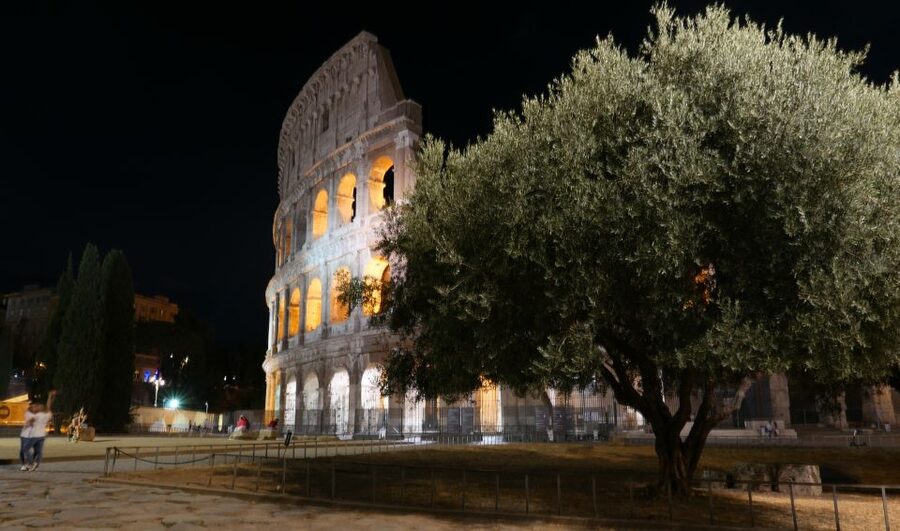
The first 40 minutes focus on the Colosseum from outside. This is enough time to cover its construction, purpose, and role in the public life of Ancient Rome without rushing straight through the story.
The guide explains the arena’s connection to gladiator battles and the violent public games staged for Roman crowds. You also hear about the emperors who controlled these spectacles and the political reasons such shows mattered. The subject can be grim, but it explains why the Colosseum was more than an impressive building. It was also a tool of power and public entertainment.
Do not expect an exterior view to replace an interior visit. You will not walk through the seating levels, underground chambers, or arena floor. Still, this opening stop works well if you want an introduction before visiting the inside on another day.
The Arch of Constantine and Rome’s changing rulers
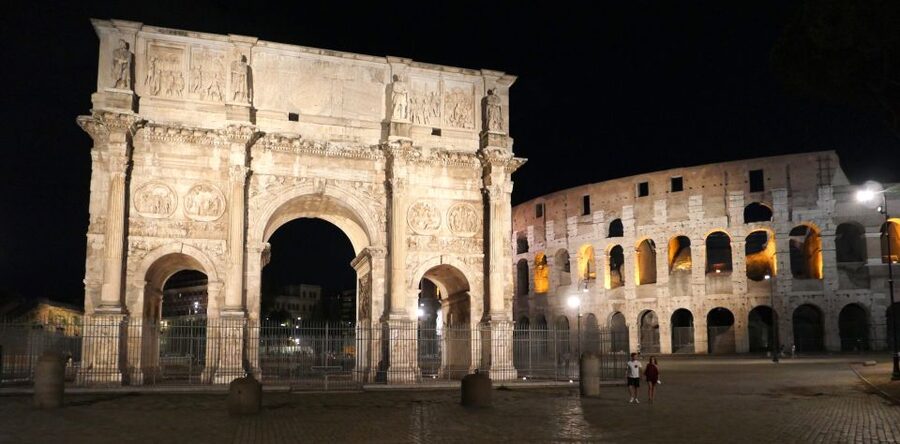
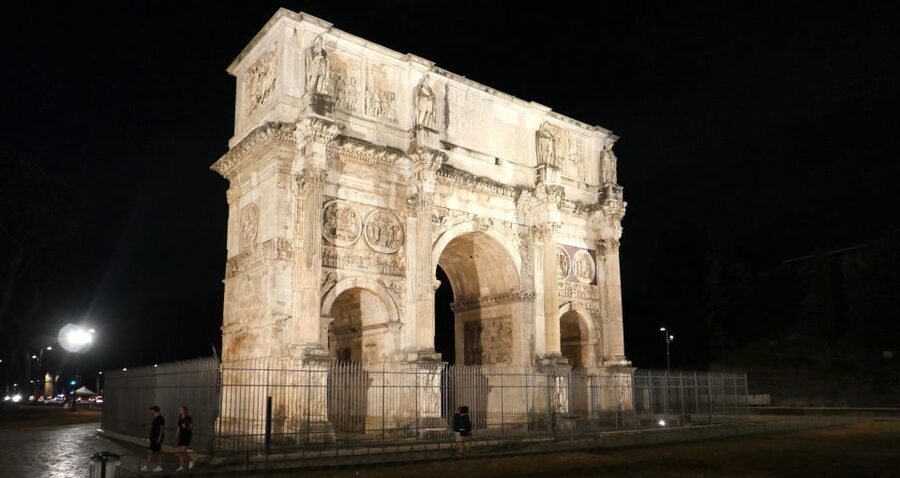
The short stop at the Arch of Constantine lasts about 10 minutes. It sits beside the Colosseum and fits naturally into the walking route.
The arch gives the guide another way to explain Rome’s imperial story. After hearing about the arena and its emperors, you get a nearby monument tied to Constantine, one of the most important rulers of the later empire. The stop is brief, so expect a focused explanation and time to look closely at the monument before moving on.
This part of the walk is useful because it breaks up the Colosseum discussion. Instead of spending the entire first section on one building, the guide begins to show how power, architecture, and public memory changed across different periods of Roman rule.
Walking through the Roman Forum from outside
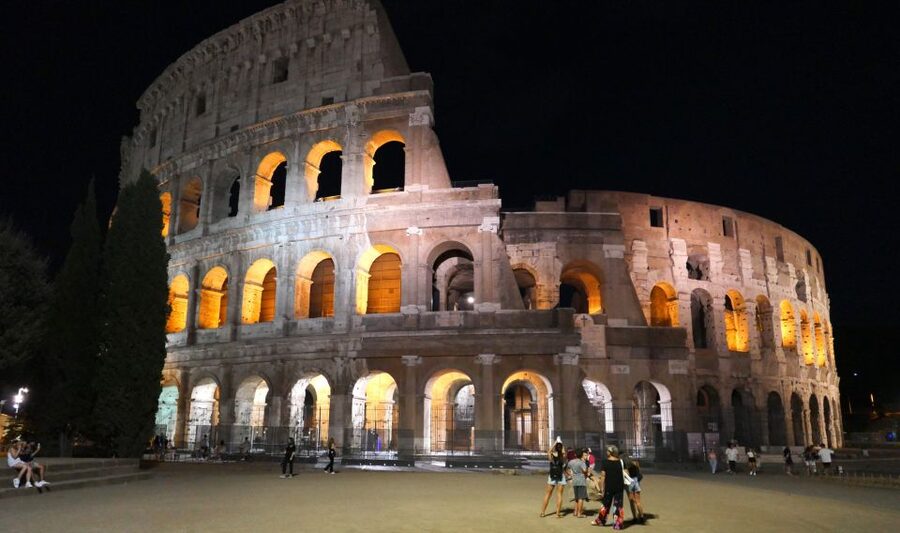
The Roman Forum receives about 40 minutes, making it the longest stop after the Colosseum. You view the area from outside rather than entering the archaeological site.
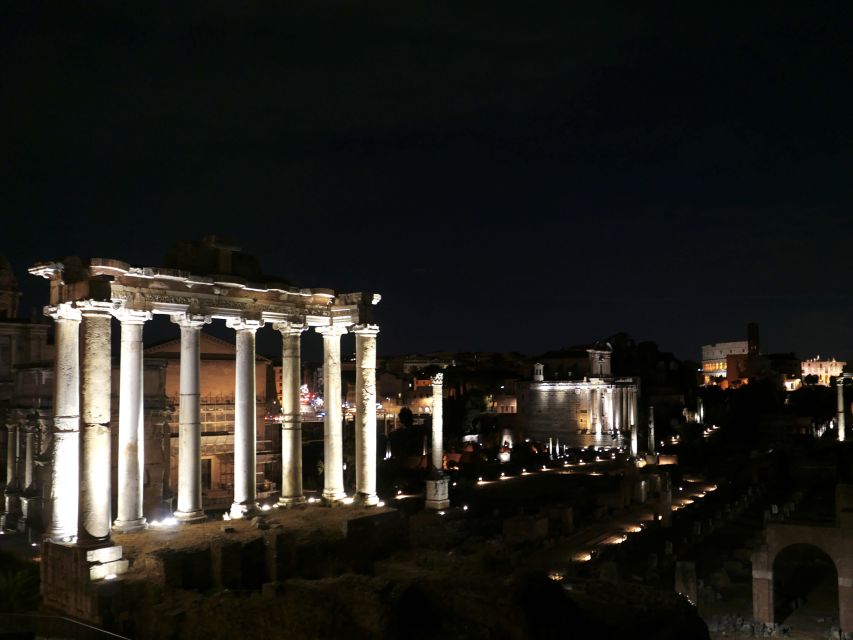
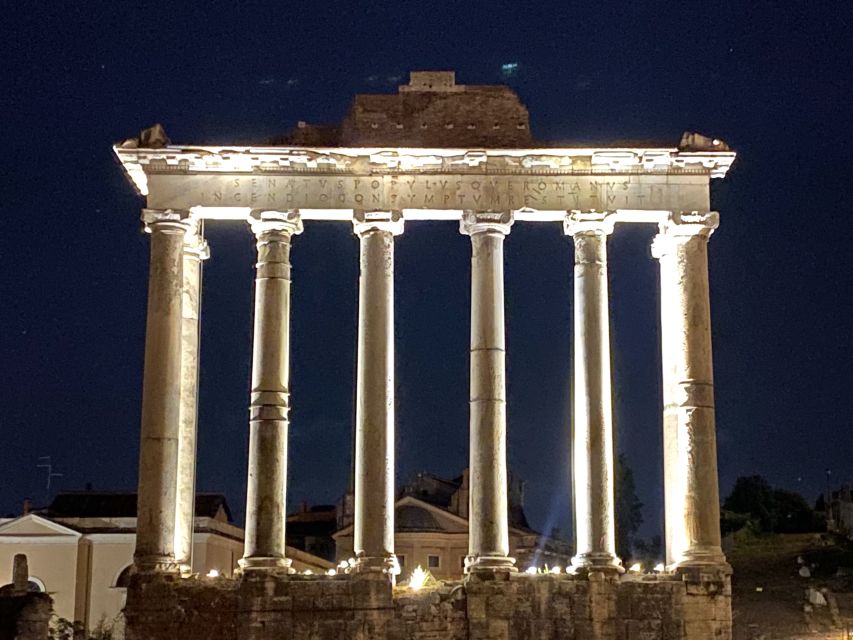
The Forum was the center of public life in Ancient Rome, and the guide points out major remains including the Temple of Castor and Pollux, the Arch of Titus, and the Senate House. These ruins can be hard to read on your own. Columns, foundations, and broken walls rarely explain their original purpose without help.
The Temple of Castor and Pollux is one of the most recognizable sights in the Forum, with its surviving columns rising above the ruins. The Arch of Titus connects the site to Roman military triumphs and imperial ceremony. The Senate House brings the political side of Rome into the story, giving you a clearer sense of where public decisions were made.
I like this section because it adds daily and political life to the earlier gladiator stories. You hear about emperors and public spectacles, but also about the civic machinery that held Rome together. The result is a more useful overview than a simple parade of famous ruins.
The limitation remains access. You do not walk inside the Forum grounds, so your view depends on the route and the guide’s ability to point out features from outside. If seeing the ruins at close range is your priority, pair this tour with a daytime ticket to the Colosseum and Forum.
A completely different way to spend the day in Rome:
- Rome: Colosseum, Palatine Hill and Roman Forum Guided Tour
★ 4.8 · 32,814 reviews - Rome: Guided Tour of Colosseum, Roman Forum & Palatine Hill
★ 4.7 · 27,897 reviews - Rome: Colosseum & Forum with Audio Guide App -Optional Arena
★ 4.2 · 24,770 reviews - Rome: Colosseum, Roman Forum and Palatine Hill Guided Tour
★ 4.5 · 23,903 reviews
Trajan’s Forum and the Column of Trajan
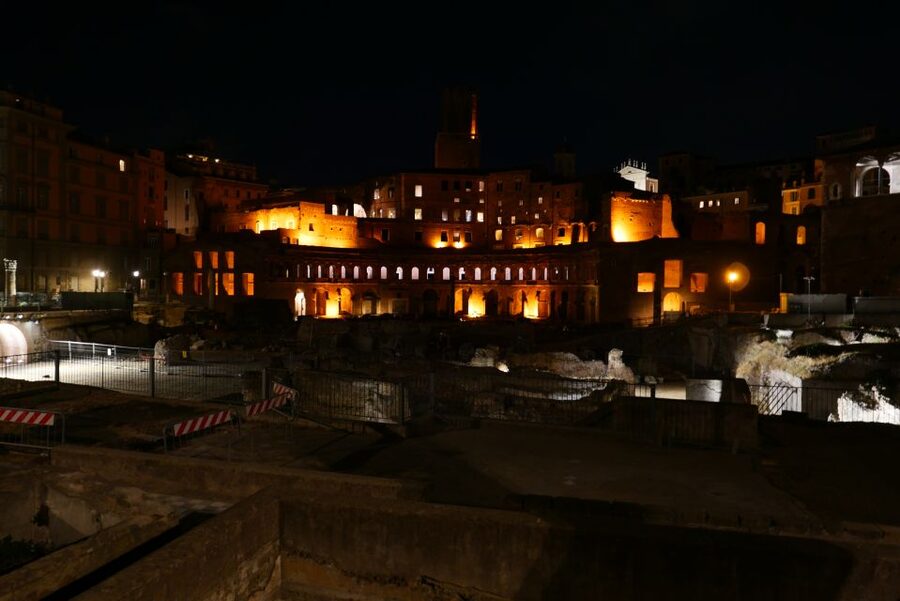
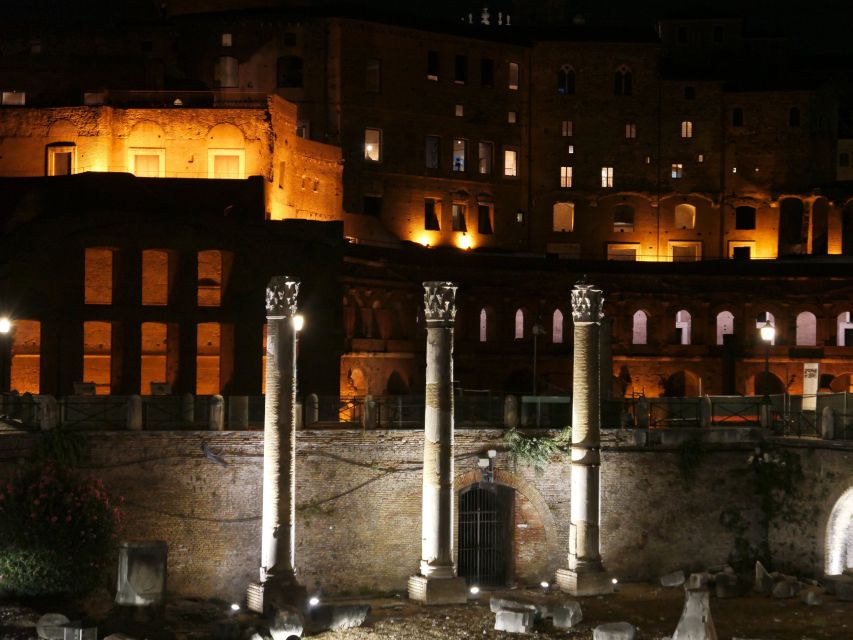
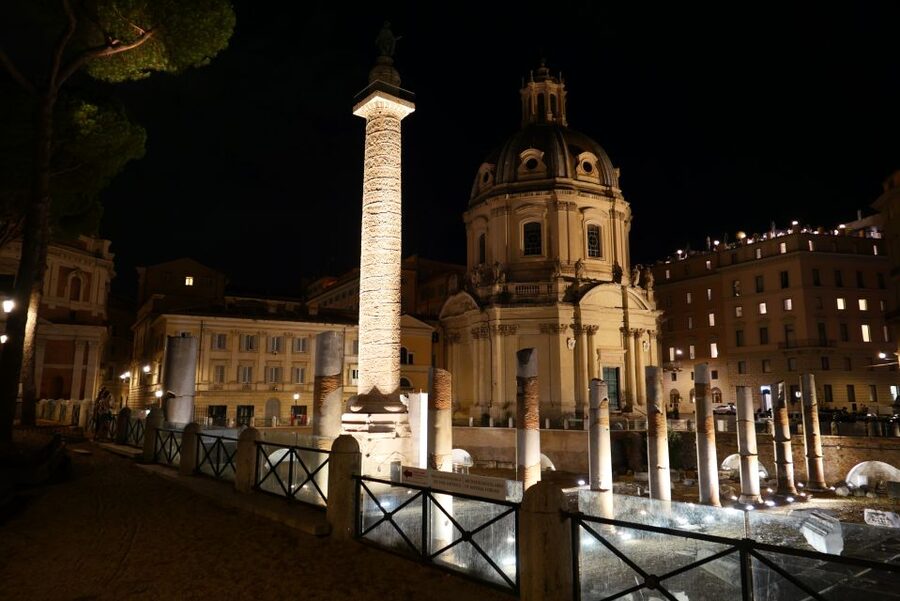
The walk continues to Trajan’s Forum for about 15 minutes. Again, the visit is exterior only, but the area adds a different chapter to Rome’s imperial story.
The highlight is the Column of Trajan. You have time to take a photograph and hear why this monument matters. Its carved spiral tells a long military story, making the column a powerful example of how Roman rulers used public art to celebrate conquest.
This stop also helps you understand that Ancient Rome was not limited to the Colosseum and the Forum. The imperial center extended across several monumental spaces, each linked to a different ruler and purpose. The guide’s job here is to connect the visible column and ruins with the larger story of Roman ambition.
Fifteen minutes is enough for an explanation and photographs, but not for a long inspection. Treat Trajan’s Forum as a concise stop within the walking tour, not as a full archaeological visit.
Climbing Capitoline Hill for the final view
The route ends in Piazza del Campidoglio after a 15-minute guided visit. Reaching it requires a climb up Capitoline Hill, so comfortable shoes are a practical must.
This is a smart place to finish. After walking around the lower ancient center, you gain a higher viewpoint over Rome. The panorama lets you connect the monuments you have just seen and gives the tour a sense of arrival rather than ending beside another busy road.
The piazza itself is a grand urban space, and the hill has long held an important place in Rome’s civic story. Here, the guide can pull the earlier stops together: imperial power near the Colosseum, public life in the Forum, military celebration at Trajan’s Column, and the continuing importance of Rome’s central hills.
The view is not a substitute for a dedicated lookout visit, but it is a satisfying closing moment. You finish at Piazza del Campidoglio, not back at the Colosseum, so plan your next journey from there.
What the $81 price really covers
At $81 per person, this is not a cheap orientation stroll. The price makes more sense if you want a live guide, a set route, and a small group rather than trying to piece together the ancient center alone.
Your fee covers a professional guide, sterilised headsets, on-site assistance, and taxes. The headsets matter in a busy city setting. Even at dusk, traffic and street noise can make it difficult to follow a guide while standing near major roads and open archaeological areas.
The small group option has a maximum of 10 participants. That is a useful limit for a walking tour because you can usually stay close to the guide and hear the commentary clearly. A private option is also available if you want the route shaped around your own pace and questions.
The price does not include food, drinks, hotel pickup, or entrance to the Colosseum, Roman Forum, or Trajan’s Forum. That last point affects the value more than anything else. You are paying for interpretation and access to the exterior route, not admission tickets.
I would call the tour a fair choice for a first evening in Rome if you value context and convenience. I would not choose it as your only ancient-sites experience if your main goal is to walk inside the Colosseum and Forum.
Group size, pace, and accessibility
Two hours is long enough for a useful introduction but short enough to fit before dinner or after a day elsewhere in Rome. The route includes several stops with explanations, photographs, and walking between monuments, so expect a steady sightseeing pace rather than a long stationary lecture.
The small-group tour is capped at 10 people, and you can also choose a private format. Private touring costs more in general, but the option may suit families or people who want extra time for questions. The available languages are English, Italian, Spanish, Portuguese, French, and German.
The activity is listed as wheelchair accessible. The tour still includes city walking and the climb to Capitoline Hill, so you should consider your personal comfort with that route and confirm any specific mobility needs before booking.
Wear comfortable shoes. That advice is especially important here because you will walk on city streets and finish uphill. Bring only what you want to carry for two hours, since the tour does not include hotel pickup or drop-off.
The tour runs in rain unless conditions become unsuitable. If the operator cancels because of severe weather, you are offered another date or a full refund.
Who will get the most from this tour
I think this works best for a first-time Rome visitor who wants the ancient center explained without spending half a day inside archaeological sites. The dusk timing is also useful if your daytime schedule is already full.
It suits you if:
- You want a clear introduction to the Colosseum, Forum, and imperial monuments.
- You prefer a group no larger than 10 people.
- You enjoy stories about emperors, gladiators, politics, and Roman public life.
- You want a scenic finish at Capitoline Hill.
- You plan to visit the Colosseum interior separately.
I would be more cautious if you have limited walking tolerance or if you expect admission to every monument named in the route. The exterior-only format is the single detail most likely to cause disappointment. One booking was made with the expectation of entering the Colosseum, so treat that restriction as essential information, not fine print.
Should you book the Wonders of Ancient Rome at Dusk tour?
Book it if you want a well-paced evening introduction to Rome’s ancient center, especially with a small group and a guide who can turn scattered ruins into a readable story. The route covers the Colosseum, Arch of Constantine, Roman Forum, Trajan’s Forum, and Capitoline Hill in two hours, with the best view saved for the end.
Skip it if you want interior access or a long archaeological visit. In that case, spend your money on an entry tour that includes the Colosseum and Roman Forum, then use this dusk walk only if you still want a broader exterior overview.
For many visitors, the best plan is to do both: explore inside during the day, then use this shorter evening route to understand how the monuments fit together. At $81, that makes the most sense for you if strong guiding and a quieter setting matter more than admission access.
FAQ
Does this tour enter the Colosseum?
No. The Colosseum is visited from the outside, with about 40 minutes of guided explanation.
Can I enter the Roman Forum?
No. The Roman Forum is viewed from outside. The guide discusses sites such as the Temple of Castor and Pollux, the Arch of Titus, and the Senate House.
Is Trajan’s Forum included?
Yes, Trajan’s Forum is included as an exterior stop. The visit lasts about 15 minutes and includes time to see and photograph the Column of Trajan.
Where does the tour meet?
Meet at the green kiosk at street level outside the Colosseo metro station on Line B, the blue line. Look for staff holding a yellow Touriks sign. Do not use the upper-level station exit as your meeting point.
How early should I arrive?
You should arrive 30 minutes before the scheduled start time.
How large is the small group?
The small-group tour has a maximum of 10 participants. A private tour option is also available.
What languages are offered?
You can choose an English, Italian, Spanish, Portuguese, French, or German-speaking guide.
Newest reviews from Rome
- Fiumicino Airport Arrivals Private Transfer Free with private half day tour of Rome★ 5.0 · 23 reviews
- Full Day Tour of Rome★ 5.0 · 23 reviews
- Private Tour – Palazzo Barberini★ 5.0 · 23 reviews
- From Rome: Private Day-Tour of Tuscany★ 4.3 · 23 reviews
- Rome at the Sunset; Navona, Trevi Fountain, Pantheon and more★ 5.0 · 23 reviews
- Private Golf Cart Twilight Tour Rome★ 4.5 · 23 reviews
- Rome Key Sights Golf Cart Tour | Private & Groups★ 5.0 · 23 reviews
- Rome: Vatican Museum and Sistine Chapel Official Guided Tour★ 3.2 · 23 reviews