
Reviewed · BORGHESE GALLERY TOURS
Rome: Borghese Gallery Fast Access Tour or Ticket
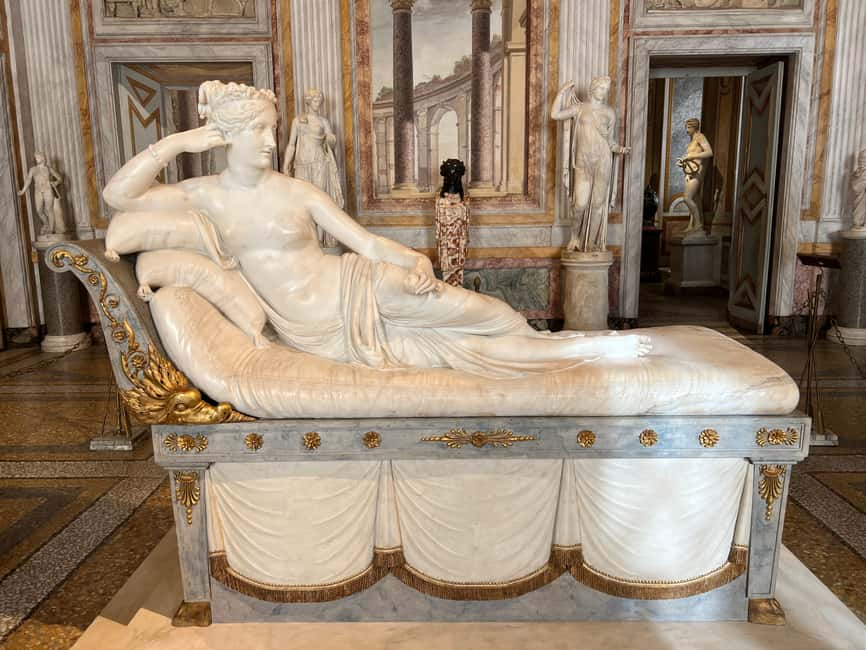
The best reason to visit the Borghese Gallery is simple: this former 17th-century villa puts some of Rome’s finest sculpture and painting in a compact, elegant setting. Bernini’s Apollo and Daphne, Caravaggio’s David with the Head of Goliath, and Raphael’s The Deposition of Christ all reward a closer look, and a guide can help you see the drama behind them.
I like the choice between a six-person tour and a larger group of up to 15. I also like the ticket-only option, which suits you if you already know your art or want to set your own pace. The main drawback is the fixed two-hour visit and the strict bag rules, so this is not a casual stop for anyone carrying luggage or a large backpack.
In This Review
- Key points to know before booking
- Why the Borghese Gallery deserves two hours
- Meeting at Piazzale Borghese Scipione 5
- Choosing between six people, 15 people, or no guide
- Bernini’s Apollo and Daphne
- Caravaggio’s drama and Raphael’s sorrow
- What the guides add to the visit
- The Borghese family behind the collection
- What the two-hour itinerary feels like
- Price and value at $88.36
- Who should book this Borghese visit
- Should you book it?
- FAQ
- Where does the Borghese Gallery tour begin?
- Where does the activity end?
- How long does the experience last?
- Is fast entry included?
- Is a guide included with every option?
- How large are the tour groups?
- What language is the tour in?
- Can I bring a backpack or large bag?
- Is the tour suitable for wheelchair users?
- Can I cancel the booking?
Key points to know before booking
- Bernini takes center stage: See Apollo and Daphne and other major works in rooms built to impress.
- Three ways to visit: Pick a guided group of up to 6, a regular group of up to 15, or admission without a guide.
- Fast entry saves time: You meet outside the gallery and skip the ticket line.
- English guidance only: Guides explain the Borghese family, the art, and the stories behind the collection.
- Compact two-hour format: The visit is focused and efficient, but you will not have unlimited time in every room.
- Pack lightly: Food, drinks, luggage, large bags, backpacks, and baby strollers are not allowed.
Why the Borghese Gallery deserves two hours
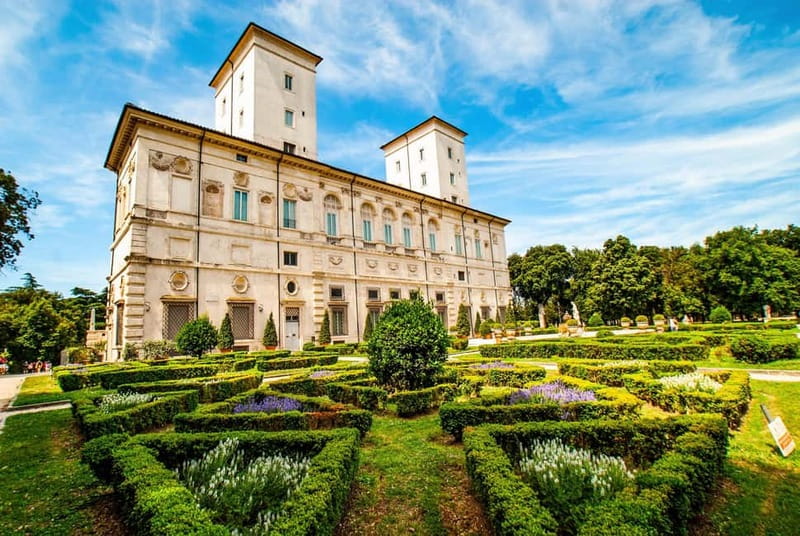
Rome has no shortage of famous museums, but the Borghese Gallery feels different from a huge public collection. It occupies the Villa Borghese, an opulent residence built for the powerful Borghese family, and the building itself is part of the experience.
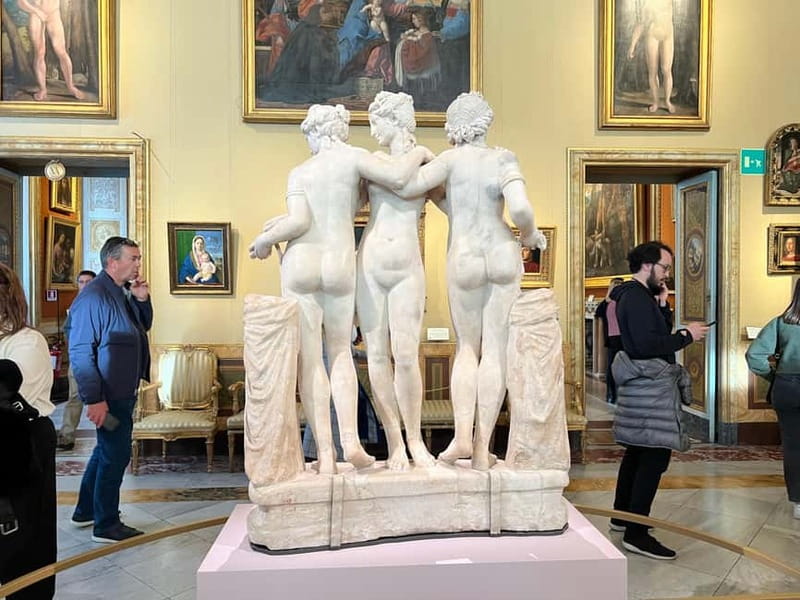
You move through decorated rooms rather than plain museum halls. Frescoes, painted ceilings, marble sculpture, and framed works compete for your attention. That setting explains why the collection can feel theatrical. The Borghese family did not simply gather art for storage. They displayed it as proof of taste, money, influence, and power.
The collection brings together artists from different periods, including Bernini, Caravaggio, Raphael, and Titian. You can compare sculpture and painting in the same visit, then notice how each artist handles movement, emotion, light, and the human body.
A two-hour visit works well here because the gallery offers a concentrated experience. You can see the leading works without committing half a day to a museum. At the same time, the clock matters. If you become absorbed in one room, you may need to move along rather than study every painting at leisure.
More Borghese Gallery entries:
- Rome: Borghese Gallery Guided Tour with Skip-the-Line Entry
★ 4.8 · 2,649 reviews - Rome: Borghese Gallery Skip-the-Line Tickets with Audioguide
★ 4.6 · 2,562 reviews - Rome: Borghese Gallery Entry Ticket & Optional Guided Tour
★ 4.5 · 2,237 reviews
Meeting at Piazzale Borghese Scipione 5
Your meeting point is in front of the Galleria Borghese entrance at Piazzale Borghese Scipione 5, 00197 Rome. Look for the representative holding an EcoArt flag.
This is a useful arrangement because you do not need to search through the surrounding area for an office. Still, arrive with enough time to identify the representative and settle in before the group enters. The activity ends back at the same meeting point, and hotel pickup and drop-off are not included.
You will want comfortable shoes. The tour lasts two hours, and you will be standing and walking through the gallery rather than sitting through a presentation.
The fast-access feature is particularly useful at a museum with timed admission. You are paying for more than a standard walk-up visit. The practical value comes from having the entry arranged and from avoiding the ticket line at the door.
Choosing between six people, 15 people, or no guide
The small-group option allows up to six people. This is the best fit if you want to ask questions, stay close to the guide, and hear the explanations without competing with a large crowd.
The regular group allows up to 15 people. It can cost less than a very small private-style group, while still keeping the visit more manageable than a large coach tour. You should expect less freedom to pause for long questions, especially when the guide is explaining a popular sculpture.
The ticket-only option is the simplest choice. Your tickets arrive by email, and you explore independently after using the fast entry. Choose this if you have already read about the collection, prefer silence, or want to spend your time on a few favorite works instead of following a set explanation.
The tradeoff is clear. A guide gives you context and helps you decide what deserves your attention. A ticket-only visit gives you control but leaves you responsible for understanding the collection and managing your time.
Bernini’s Apollo and Daphne
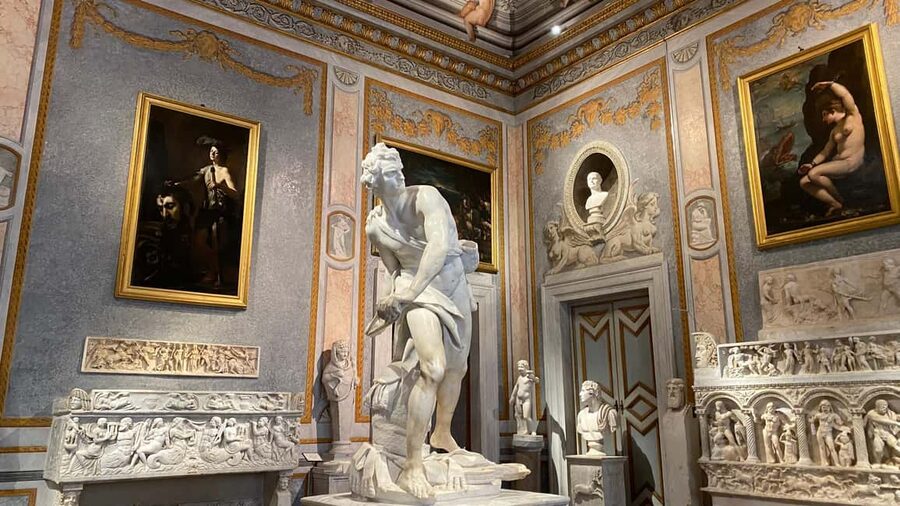
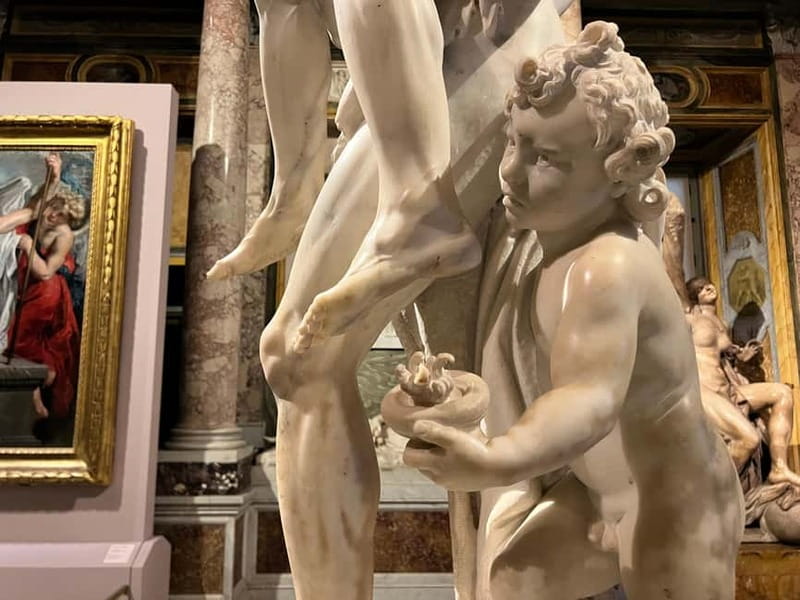
Apollo and Daphne is one of the gallery’s essential stops. The sculpture captures the moment when Daphne changes into a laurel tree as Apollo reaches her. Look closely at the fingers, hair, bark, and leaves. Bernini turns hard marble into a scene that appears to be changing in front of you.
This is a work where a guide can add real value. Without context, you may admire the technical skill and move on. With an explanation of the story and the figures’ expressions, the sculpture becomes easier to read. You can follow the movement from Apollo’s pursuit to Daphne’s transformation.
The gallery setting also matters. The sculpture is not isolated in a modern white cube. It belongs to a villa designed to impress, and that surrounding decoration helps you understand how the Borghese family wanted art to be experienced.
More museums and galleries in Rome:
- Vatican: Museums & Sistine Chapel Entrance Ticket
★ 4.5 · 144,003 reviews - Vatican Museums & Sistine Chapel Tour with Optional Basilica
★ 4.3 · 67,413 reviews - Vatican Museums, Sistine Chapel & St Peter’s Basilica Guided Tour
★ 4.5 · 39,149 reviews - Rome: Vatican Museums, Sistine Chapel & Basilica Tour
★ 4.3 · 13,872 reviews
Caravaggio’s drama and Raphael’s sorrow
Caravaggio’s David with the Head of Goliath gives the collection a darker mood. The painting presents a tense biblical scene, with David holding the severed head of Goliath. Caravaggio’s strong contrast between light and shadow directs your eye toward the figures and heightens the emotional force.
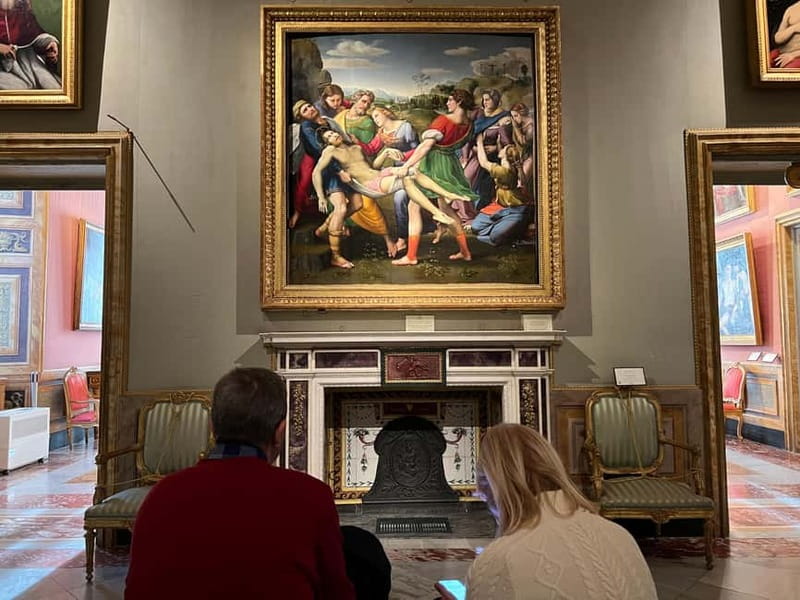
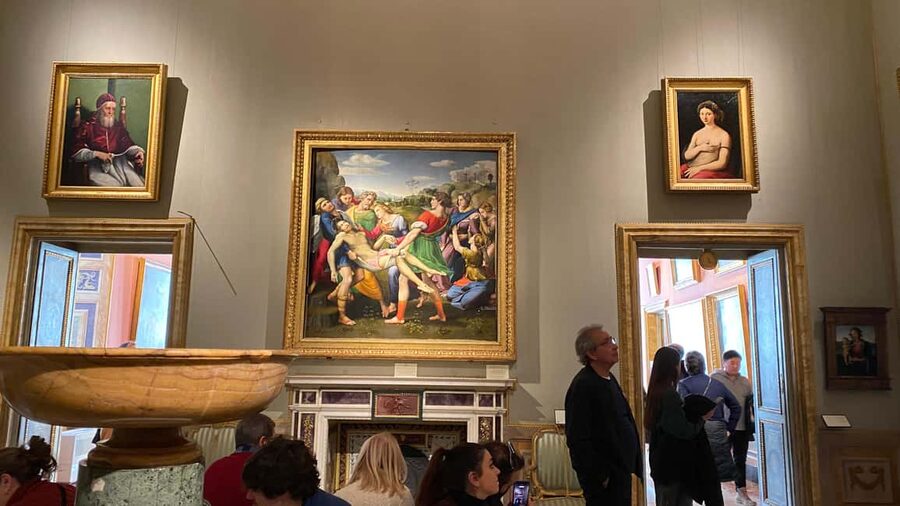
Raphael’s The Deposition of Christ offers a different kind of drama. It is a major religious painting, but its interest is not only the subject. You can look at the arrangement of the figures, the gestures, and the emotional weight carried by the people around Christ.
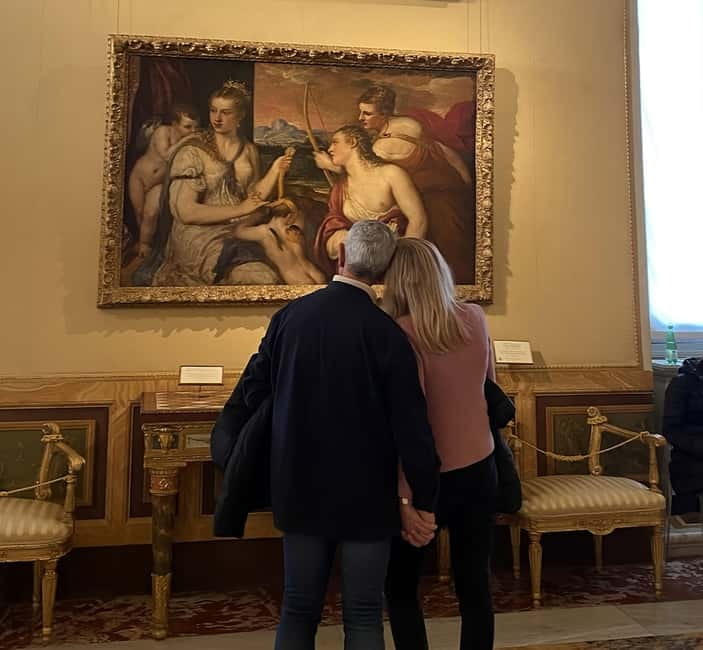
Titian adds another important voice to the collection. Seeing Titian alongside Raphael, Caravaggio, and Bernini gives you a quick lesson in the changing language of European art. You are not visiting a single-artist museum, so the pleasure comes from comparison as much as from individual masterpieces.
An English-speaking guide can point out details that are easy to miss when you are trying to absorb a room on your own. The strongest guide feedback has praised clear pacing, lively delivery, and stories that do not feel like a list of dates.
What the guides add to the visit
The guide quality matters more here than it would at a museum where every label explains the basics. Several guides connected with this experience have been named for their energy and clear storytelling, including Eddy, Riccardo, Raphael, Lorelei, and Federica.
Eddy has been singled out for a friendly, funny style that made the information easy to follow. Riccardo helped make the two-hour visit feel quick, while Raphael was praised for bringing energy and enthusiasm. Lorelei’s approach focused on key details without overwhelming the group, and Federica was noted for explaining stories rather than simply reciting facts.
Those names do not guarantee who will lead your tour. They do show the kind of experience the operator aims to provide: an English tour built around stories, artistic detail, and the Borghese family’s role in Rome.
One practical point deserves attention. A participant found the guide’s pronunciation difficult to understand and needed to listen carefully. That can happen on any foreign-language tour. If English is not your first language, standing near the guide and asking for clarification may help. The small group option should make that easier.
The Borghese family behind the collection
The art is more interesting when you understand why it is in this villa. The Borghese family was a powerful Roman dynasty with considerable wealth and influence. Their passion for art helped shape the collection, while their social position gave them access to leading artists and important works.
A guided visit explains how the family acquired and displayed its art. That context turns the gallery from a list of famous names into a story about ambition and status. The rooms were designed to show both artistic taste and power.
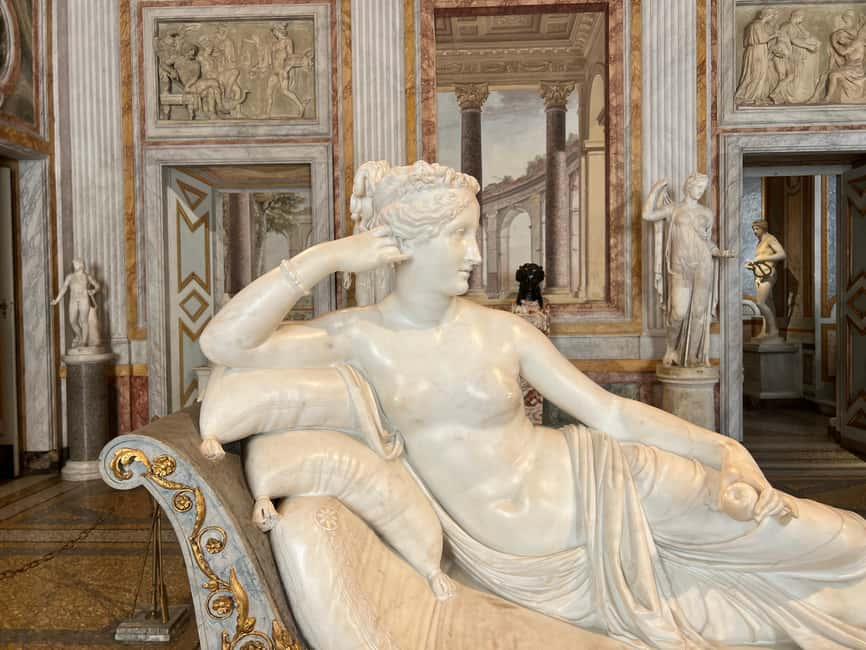
You may notice that the building and collection work together. Paintings occupy the walls, sculptures command attention in the rooms, and decorative details reinforce the sense of luxury. The result is a museum visit that feels tied to its original purpose, even though you now enter as a modern visitor.
What the two-hour itinerary feels like
The activity has one main stop: the Borghese Gallery. You meet outside, enter with fast access, and spend about two hours on the guided visit if you select that option.
The guide leads you through the key rooms and explains major works by Bernini, Caravaggio, Raphael, and Titian. The tour is not designed as a slow, private study session. It is a focused introduction to the gallery’s most important art and the family that assembled it.
That format suits a first visit to Rome. You get a strong overview without using an entire day, leaving time for the rest of Villa Borghese or other sights in the city. It also suits you if you want help choosing what to remember from a collection that can otherwise feel visually crowded.
The ticket-only option changes the rhythm. You can linger where you wish, but you will need to keep an eye on the available visit time and decide how to divide it among the rooms.
Price and value at $88.36
At $88.36 per person, this is not a bargain admission ticket. The price makes more sense if you value fast entry, an English-speaking guide, and a small group rather than simply wanting access to the building.
The six-person option offers the best chance for a personal exchange with the guide. The group of up to 15 may be the better middle ground if you want explanations without paying for the smallest format. The ticket-only option is worth comparing carefully with other entry choices if you do not need guidance, since its main advantages are arranged admission and convenience.
I would pay the higher price for a first visit if art is a major reason you are in Rome. The gallery has many famous works packed into a relatively short visit, and a strong guide can prevent you from rushing past details. If you already have a firm plan and enjoy reading labels at your own pace, the guided premium may not be necessary.
The reserve-now-and-pay-later option also has practical value when your Rome schedule is still moving around. You can hold a place without paying immediately, and free cancellation is available up to 24 hours before the activity for a full refund.
Who should book this Borghese visit
I recommend the guided option for first-time visitors, art lovers who want context, and anyone who likes a lively explanation rather than a silent museum walk. The small group is especially appealing if you want to ask questions or have trouble hearing guides in larger crowds.
The ticket-only option fits repeat visitors and independent museumgoers. It also works if you have already studied Bernini, Caravaggio, or Raphael and want to return to a particular work without following a set route.
Families should check the restrictions before booking. Baby strollers are not allowed, and the activity is not suitable for wheelchair users. Large bags, backpacks, food, drinks, and luggage are also not permitted, so arrive with only what you can comfortably carry.
Should you book it?
Book this experience if the Borghese Gallery is high on your Rome list and you want a focused visit with entry handled for you. I would choose the six-person guided option for the most personal format, the 15-person tour for a balance of price and explanation, and ticket-only access if independence matters most.
Skip the guided version if you dislike fixed schedules or prefer to spend long stretches with one painting. Also think twice if you need wheelchair access or will be carrying luggage. For most visitors who want to see Bernini, Caravaggio, Raphael, and Titian in a beautiful former villa, the two-hour format offers a strong and practical introduction.
FAQ
Where does the Borghese Gallery tour begin?
It begins in front of the entrance to the Galleria Borghese at Piazzale Borghese Scipione 5, 00197 Rome. A representative waits with an EcoArt flag.
Where does the activity end?
The activity ends back at the meeting point outside the gallery.
How long does the experience last?
The experience lasts two hours. Starting times vary, so you need to check availability when booking.
Is fast entry included?
Yes. Skip-the-line access and the Borghese Gallery admission ticket are included.
Is a guide included with every option?
No. The guided options include an English-speaking insider guide. The ticket-only option provides admission without a guided tour.
How large are the tour groups?
You can choose a small group of up to six people or a regular group of up to 15 people.
What language is the tour in?
The live guided tour is in English.
Can I bring a backpack or large bag?
No. Large bags and backpacks are not permitted. Luggage, food, drinks, and baby strollers are also not allowed.
Is the tour suitable for wheelchair users?
No. The activity is listed as not suitable for wheelchair users.
Can I cancel the booking?
Yes. You can cancel up to 24 hours in advance for a full refund. You can also reserve now and pay later to keep your plans flexible.
Newest reviews from Rome
- ROME:Colosseum & Ancient Rome – private/small group TOUR★ 5.0 · 24 reviews
- Off the Beaten Track in Rome: Rione VI Parione Private Tour★ 5.0 · 24 reviews
- Cinematic Photoshoot in Rome★ 5.0 · 24 reviews
- Rome: Best of Colosseum and Roman Forum Small Group Guided Tour★ 4.5 · 24 reviews
- The Labyrinth of Rome between catacombs and ancient quarries★ 4.5 · 24 reviews
- Vatican and Trionfale Market Tour with Wine and Food Tasting★ 5.0 · 24 reviews
- private tour: Vatican Museums, Sistine Chapel, St. Peter’s Basilica★ 4.5 · 24 reviews
- Colosseum guided tour with Virtual Reality★ 5.0 · 24 reviews
Borghese Gallery Tours, compared.
Borghese Gallery Guided Tour with Skip-the-Line Entry
Read our review →
Borghese Gallery Skip-the-Line Tickets with Audioguide
Read our review →
Borghese Gallery Entry Ticket & Optional Guided Tour
Read our review →
Borghese Gallery & Gardens Small Group Guided Tour
Read our review →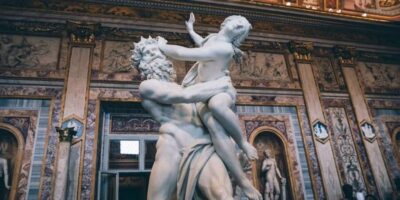
Borghese Gallery, Canova’s Masterpieces Skip-the-Line Guided Tour
Read our review →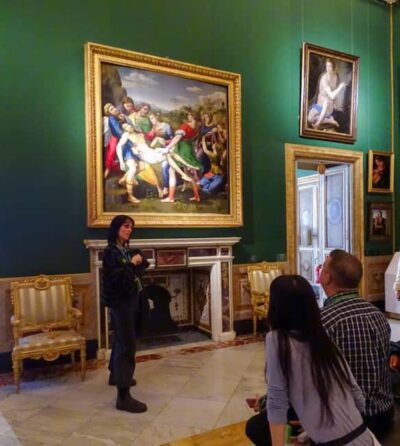
Borghese Gallery Guided Tour with Skip-the-Line Entry
Read our review →Browse the lists this tour appears in