
Reviewed · BORGHESE GALLERY TOURS
Rome: Borghese Gallery Guided Tour with Skip-the-Line Ticket
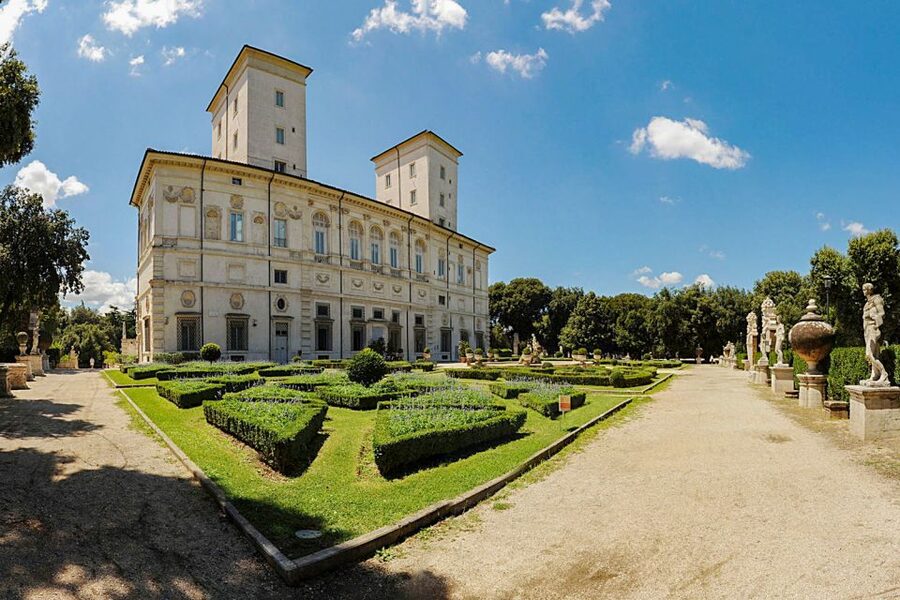
The Borghese Gallery is where Bernini’s marble figures seem ready to breathe, turn, or run straight out of the room. This two-hour guided visit gives you reserved entry to a museum that often fills its daily time slots, then leads you through the former villa of Cardinal Scipione Borghese.
I like the tight focus on the gallery’s greatest works, especially Bernini’s Apollo and Daphne, David, and The Rape of Proserpine. I also like the small group, limited to five participants, and the chance to finish with a walk through Villa Borghese toward the Pincio terrace.
The main drawback is that two hours passes quickly in a museum with 20 art-filled rooms. Meeting the guide can also take patience, since the entrance area is busy and the meeting point may not be easy to spot.
In This Review
- Key points to know before you book
- Why the Borghese Gallery deserves a place in your Rome plans
- Meeting at the gallery entrance
- Inside 20 rooms of art
- Bernini’s marble figures steal the show
- Caravaggio, Rubens, Titian, and Canova
- The ancient Roman collection
- What the two-hour format feels like
- A walk through Villa Borghese after the museum
- Is $116.68 a fair price?
- Practical details that affect your visit
- Who will enjoy this tour most?
- Should you book the Borghese Gallery guided tour?
- FAQ
- How long does the Borghese Gallery guided tour last?
- What does the ticket include?
- Where does the tour meet?
- Is hotel pickup included?
- Is the tour available in English?
- Can I cancel for a refund?
Key points to know before you book
- Bernini gets the star treatment: See several of his most powerful sculptures, from early work to his famous dynamic masterpieces.
- Reserved entry matters: The gallery is frequently fully booked, so a pre-arranged ticket can save you from a wasted trip.
- A small group helps: With as few as five people, you can hear the guide clearly and ask questions without shouting across a crowd.
- Ancient and modern art share the rooms: Expect Roman antiquities, a gladiator mosaic from about 320 to 330 AD, Renaissance paintings, and Baroque sculpture.
- The outdoor finish is worthwhile: Walk through the broad Villa Borghese park and reach the Pincio terrace for views across central Rome.
- Plan for a fast visit: The tour covers the major rooms and stories, but it is not a slow, scholarly study of every artwork.
Why the Borghese Gallery deserves a place in your Rome plans
Rome has museums that require stamina. The Borghese Gallery is different. Its collection is compact, concentrated, and unusually dramatic. You are not wandering through endless corridors hoping to recognize a famous name. Instead, you move from room to room with major works close at hand.
The museum began with Cardinal Scipione Borghese, a powerful collector and a central figure in the cultural life of 17th-century Rome. He gathered ancient sculpture, Renaissance painting, and new Baroque art for his villa outside the old city. The result is a place where different periods sit side by side, sometimes in surprising conversation.
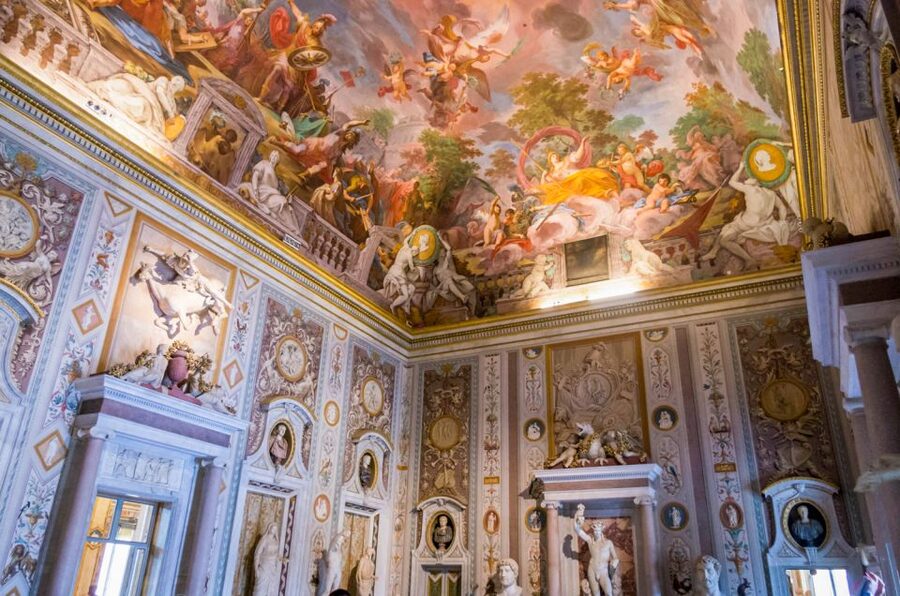
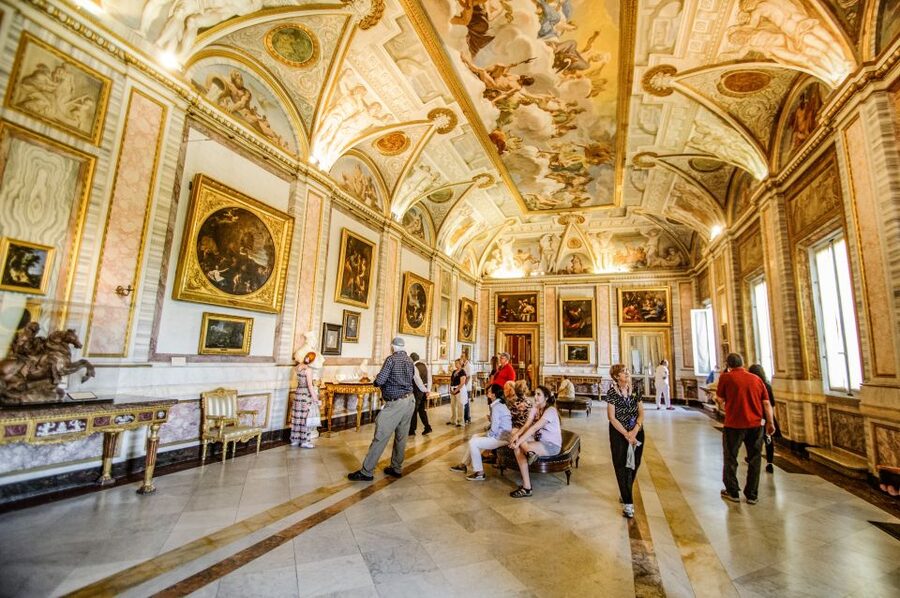
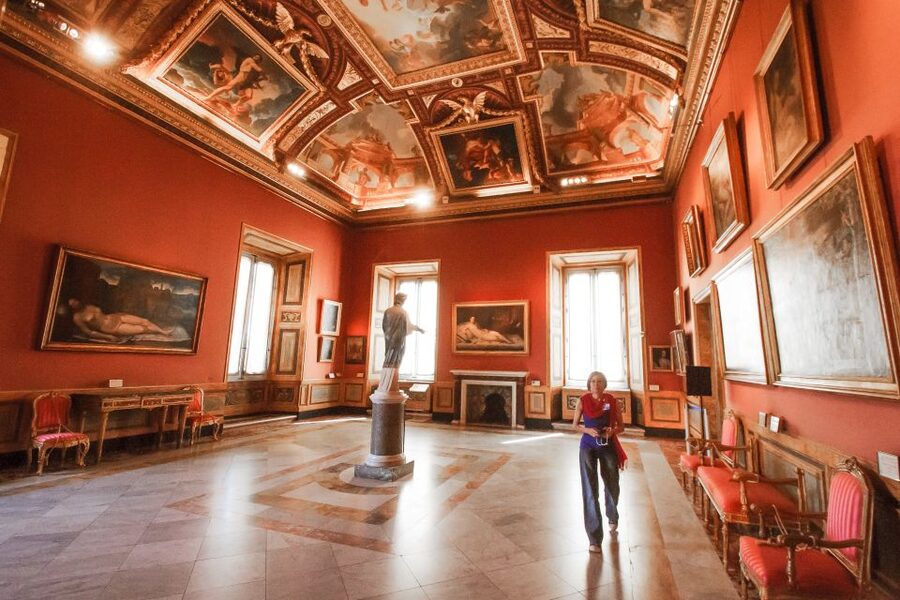
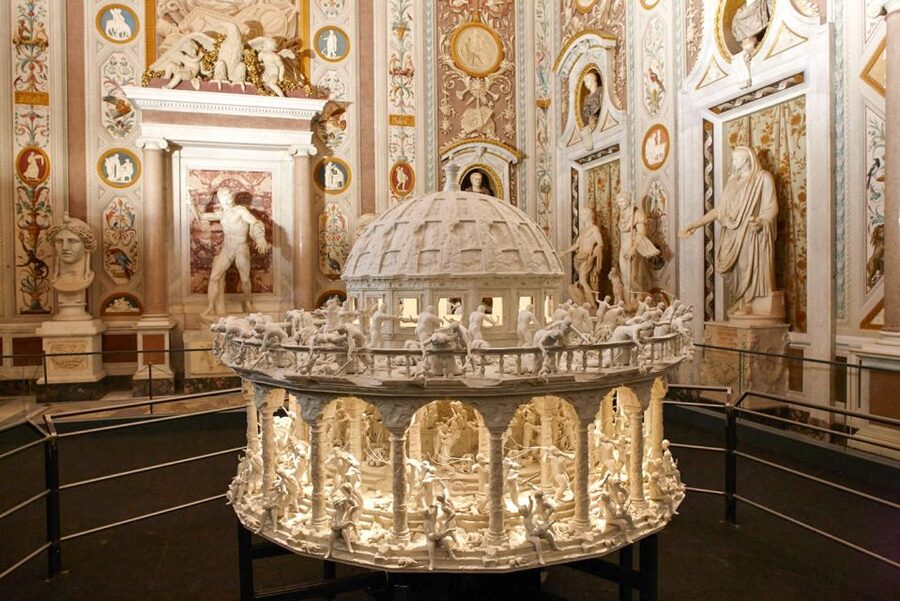
That setting matters. The art was assembled for a private residence, not a plain modern museum. Marble floors, painted ceilings, carved decoration, and grand rooms make the building part of the experience. You are looking at art in a house built to impress.
The guide helps you make sense of that visual overload. Without guidance, it is easy to spend too much time taking in the room and miss the small details that make the works special. A good guide slows you down in front of the right sculpture, points out a carefully carved strand of hair or a tense hand, and explains why the subject mattered to its original audience.
More Borghese Gallery entries:
- Rome: Borghese Gallery Guided Tour with Skip-the-Line Entry
★ 4.8 · 2,649 reviews - Rome: Borghese Gallery Skip-the-Line Tickets with Audioguide
★ 4.6 · 2,562 reviews - Rome: Borghese Gallery Entry Ticket & Optional Guided Tour
★ 4.5 · 2,237 reviews
Meeting at the gallery entrance
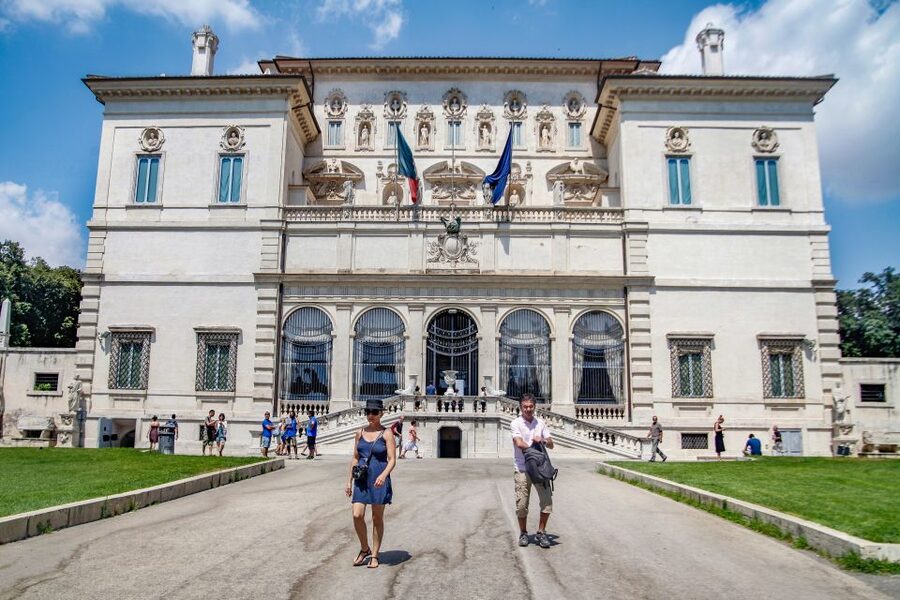
You meet the guide at the entrance to the Museo e Galleria Borghese. There is no hotel pickup or return transport, so you need to reach the museum on your own and allow time to find the entrance.
This is the least polished part of the experience. The gallery area can be confusing, and the guide may not be immediately obvious among the people waiting outside. A particularly useful tip is to arrive early and look carefully for the tour representative rather than assuming a large flag or company sign will be visible.
Once the group has formed, the reserved ticket takes away the biggest worry: getting inside. The Borghese Gallery commonly requires advance booking, and same-day access can be difficult. Paying $116.68 per person is a serious expense, but part of that price pays for certainty in a museum where an independent visitor may find no ticket left.
The group is advertised as very small, limited to five participants. Some past tour group sizes may vary, so check the booking details for your date, but the small-group format is one of the experience’s strongest features. You get a closer connection with the guide and a better chance to ask about a particular painting or sculpture.
You receive a headset. That becomes useful if the group is bilingual or the room is noisy, since you can hear the guide without needing to stand right beside the sculpture.
Inside 20 rooms of art
The guided portion lasts two hours. That gives you enough time to see the main rooms and understand the collection’s story, but not enough time to examine every object at leisure.
The first impression is often the building itself. Painted ceilings use trompe l’oeil effects to create the illusion of extra height and depth. Look up as you move between rooms. The ceilings are not background decoration. They were designed to compete with the sculpture and paintings below.
The tour usually connects the objects to the Borghese family and to the changing fortunes of the collection. You learn about Cardinal Borghese’s collecting habits and the family’s relationship with Napoleon in the 19th century. That political link explains why some important works later left Rome and why the collection’s story is about power as much as taste.
A guide is especially useful here. Dates and names alone can make a museum visit feel like a school lesson. The better guides turn the family story into a reason to look more closely at the rooms and the way the collection was formed.
Bernini’s marble figures steal the show
If you book this tour for one artist, make it Gian Lorenzo Bernini. The Borghese Gallery holds several works that show how quickly he changed sculpture.
Begin with the early Goat Amalthea with Infant Jupiter and Faun. It is not as famous as the later sculptures, but it shows the young Bernini testing forms and expressions. The work helps you see that his skill did not arrive fully formed. The gallery lets you follow his progress in the same building.
Then come the sculptures that made his name. In The Rape of Proserpine, the mythological story becomes a study in movement and touch. Look at Pluto’s fingers pressing into Proserpine’s thigh. The marble appears soft under his grip, even though you know it is hard stone. This is the sort of detail a guide can point out in seconds, saving you from walking past it.
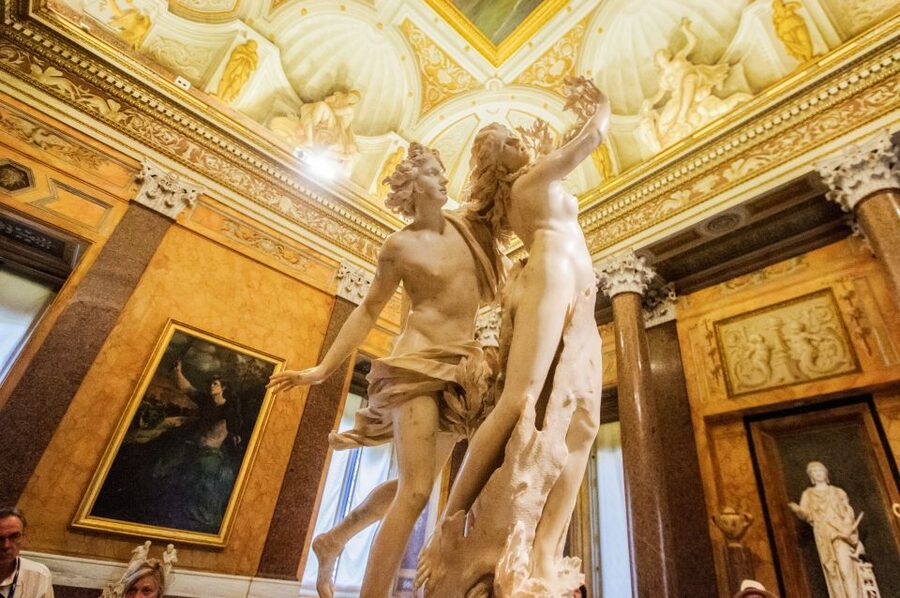
Apollo and Daphne is another highlight. The figures are caught at the instant Daphne changes into a laurel tree. Bernini turns a story of pursuit into a sculpture full of motion: Apollo reaches forward, while Daphne’s fingers stretch into branches and her feet become roots.
In David, the hero is not posing after victory. He is twisting into the action, his body tightened as he prepares to hurl the stone. You can read the direction of the unseen target in the turn of his torso. The sculpture asks you to move around it, not simply face it from the front.
The guides who receive the strongest praise include Alessandra, Alex, Matteo, Danielle, Christina, Fabio, and Elge S. Their approach is described as clear, lively, and story-driven. You are not guaranteed a particular guide, but the consistent strength of the guiding is important here. Bernini’s work rewards explanation because the drama is in the small choices.
More museums and galleries in Rome:
- Vatican: Museums & Sistine Chapel Entrance Ticket
★ 4.5 · 144,003 reviews - Vatican Museums & Sistine Chapel Tour with Optional Basilica
★ 4.3 · 67,413 reviews - Vatican Museums, Sistine Chapel & St Peter’s Basilica Guided Tour
★ 4.5 · 39,149 reviews - Rome: Vatican Museums, Sistine Chapel & Basilica Tour
★ 4.3 · 13,872 reviews
Caravaggio, Rubens, Titian, and Canova
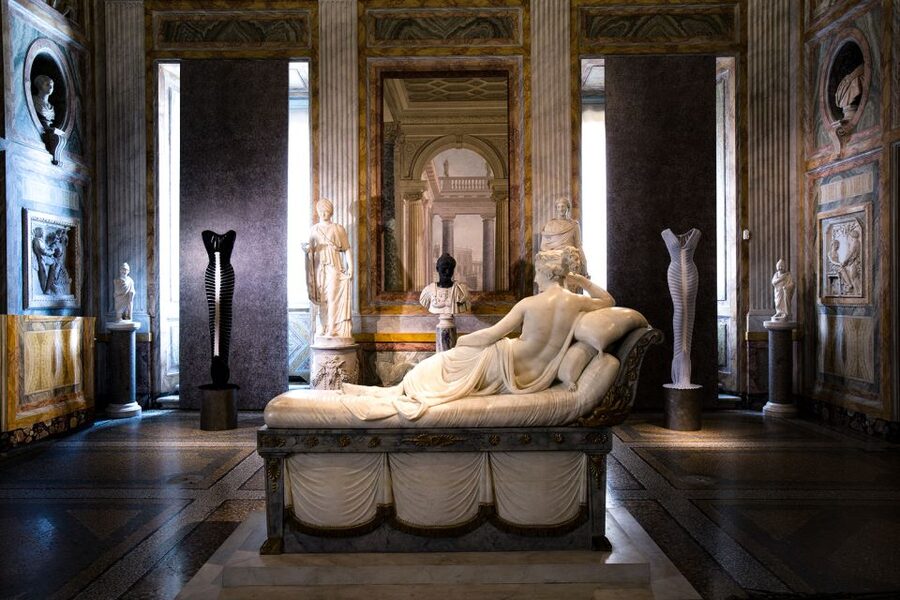
The gallery is not only a Bernini museum. You also see paintings by Caravaggio, Rubens, and Titian, along with Antonio Canova’s celebrated Paolina Borghese.
Caravaggio’s paintings are a good counterpoint to Bernini. His figures use sharp light and strong human emotion. A guide can help you see how the paintings pull your eye toward a face, a hand, or a gesture, then leave other parts of the scene in darkness.
Rubens brings a different kind of energy, with fuller compositions and strong movement across the canvas. Titian gives you a chance to compare a more painterly approach with the hard physical precision of Bernini’s marble.
Canova’s Paolina Borghese is one of the museum’s most recognizable works. Paolina Bonaparte is shown reclining as Venus Victrix, holding the apple associated with the goddess’s victory. The polished marble, relaxed pose, and refined surface make a striking contrast with Bernini’s action-filled figures.
This is where a guided visit earns its keep. You may already know the names Bernini, Caravaggio, and Canova, but the guide links them to the room, the patron, and the artistic choices. You see not just famous objects, but the reason each one matters.
The ancient Roman collection
The gallery also reaches much farther back than the Renaissance and Baroque periods. Its classical antiquities date from the 1st through 3rd centuries AD, and they help explain Cardinal Borghese’s interest in owning objects connected with the ancient world.
One unusual piece is a mosaic of gladiators dated to about 320 to 330 AD. It was found on the Borghese estate at Torrenova. The subject is familiar from Roman history, but the mosaic gives you a more direct sense of how gladiatorial imagery appeared in Roman domestic decoration.
Ancient sculpture also provides a useful comparison with Bernini. Both traditions value the human body, but Bernini adds sudden movement, emotion, and theatrical tension. A guide can show you how the later artist borrowed from antiquity while pushing sculpture in a new direction.
Do not rush these rooms simply because the Bernini works are the headline. The antiquities make the gallery’s collection feel broader and help you understand the taste of the Borghese family. The museum is at its best when you treat the ancient, Renaissance, and Baroque pieces as parts of one story.
What the two-hour format feels like
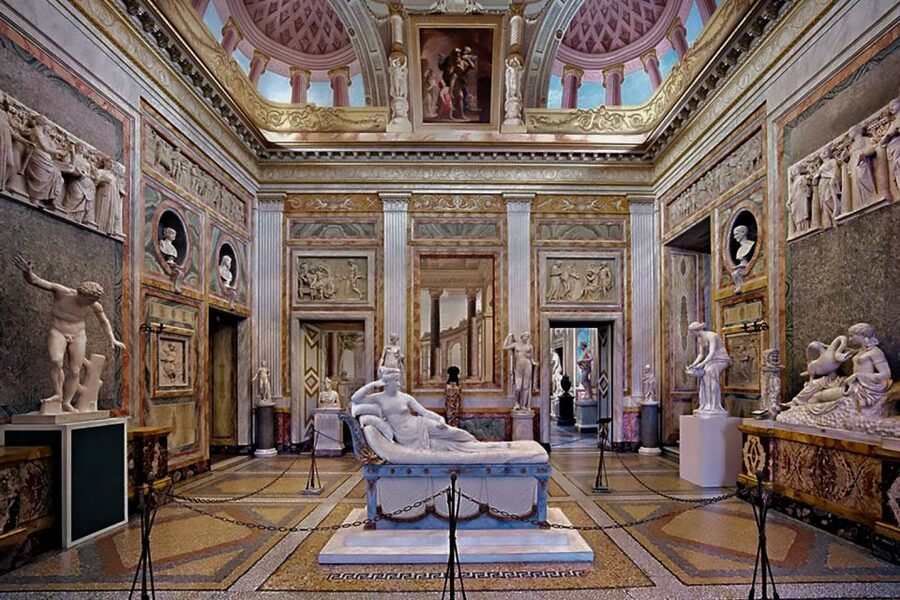
Two hours is long enough for a strong introduction and short enough to fit into a busy Rome schedule. It works well if you want a clear tour of the essential rooms rather than a full day of art.
The tradeoff is pace. You may stop for only a few minutes at works you would like to study longer. If Bernini is a personal passion, you might leave wishing for more time with Apollo and Daphne or The Rape of Proserpine. If you try to linger at every object, you risk falling behind the guide.
The tour is most useful for a first visit. The guide gives you a map of the museum in your head, points out the major works, and explains how the collection came together. You can return another time with a better sense of where to focus, if your ticket and schedule allow.
The headsets also keep the visit orderly. You do not need to crowd around the guide, and you can usually stand at a sensible distance from the artwork while following the explanation.
A walk through Villa Borghese after the museum
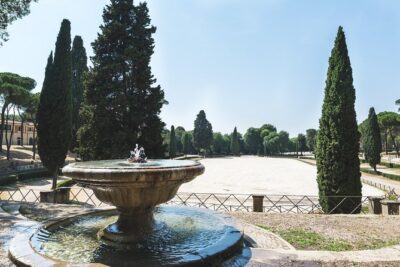
The official tour ends back at the gallery entrance, but the surrounding park makes a natural next stop. Villa Borghese is much larger than the museum itself, with tree-lined paths, open areas, and several ways to continue your walk.
The most useful destination is the Pincio terrace. From there, you can look toward Piazza del Popolo and the Prati district. On a clear day, the view also reaches St. Peter’s Dome, the Gianicolo, the Quirinale, Piazza Venezia, and Capitoline Hill.
This is a good change of pace after two hours indoors. The walk helps you place the museum within Rome rather than treating it as an isolated stop. One guide-led route finishes with a walk through the park toward the Spanish Steps, which can make a pleasant continuation of the day.
The park is large, so do not expect to see all of it on foot after the museum. If you want to explore farther, bicycles are suggested as a practical option. A small vehicle around the gardens would be useful for some people, but that is not included in this experience.
Is $116.68 a fair price?
At $116.68 per person, this is not a bargain museum entry. You are paying for the reserved ticket, an English-speaking guide, a headset, and the convenience of having the gallery’s key works explained in a small group.
The value is strongest during busy periods, when the gallery may be fully booked. A cheaper independent plan is not much use if you cannot get inside. The price also makes sense if you want help understanding Bernini and the collection’s complicated family story rather than simply walking through the rooms alone.
The value is weaker if you prefer to read labels quietly and set your own pace. You will have less freedom to linger, and the two-hour route is designed around the main works. Someone who already knows the gallery well may prefer a standard reserved ticket, if one is available.
For a first visit to Rome, I think the cost is defensible if the Borghese Gallery is high on your list. It is one of those museums where a good explanation can change what you see. Just be sure the price fits your wider Rome budget, since the city offers many excellent sights at lower cost.
Practical details that affect your visit
The tour runs in all weather, although most of the guided time is indoors. The walk through Villa Borghese is best enjoyed with comfortable shoes and a little flexibility after the museum.
The activity is offered in English. If a group is bilingual, headsets are provided so different languages do not interfere with one another.
Cancellation is free up to 24 hours before the start time, and you can reserve now and pay later. Starting times vary, so check availability before arranging lunch, transport, or another timed attraction.
The information includes both wheelchair accessible and not suitable for people with mobility impairments. Because those statements do not fully match, anyone with mobility concerns should confirm the route and access arrangements before booking.
There is no hotel pickup or drop-off. Your meeting and finishing point is the Borghese Gallery entrance, so allow extra time to reach the museum and identify the guide.
Who will enjoy this tour most?
I would choose this for a first-time Rome visitor who wants the major Borghese works explained without spending hours researching the collection beforehand. It is also a good fit for anyone who values stories, context, and a guide who can answer questions.
The small-group format suits couples, solo visitors, and small families who do not want to trail behind a large crowd. The guides are described as friendly, clear, and able to make the history of the art feel immediate. Matteo is praised for his humor and careful explanations, while Christina is noted for bringing Bernini’s sculptures to life and working well with a small group.
Art specialists may want more time. You might also prefer a self-guided visit if you like to study one painting for 20 minutes or move through the rooms without a set pace.
Should you book the Borghese Gallery guided tour?
Book it if you want secure access, a short but focused introduction, and a guide who can explain why Bernini’s marble figures are so astonishing. The ancient mosaic, Canova’s Paolina Borghese, Caravaggio, and the gallery’s decorated rooms give the visit plenty of range.
Skip it if $116.68 feels too high for two hours, or if you already have a reserved ticket and prefer to explore alone. Also think twice if you need a slow pace or have mobility concerns that require confirmed access details.
For most first visits, I would book ahead, arrive early for the meeting point, and keep time afterward for the Pincio terrace. The museum is the main event, but the park and city views give the experience a satisfying finish.
FAQ
How long does the Borghese Gallery guided tour last?
The guided tour lasts two hours. The walk through Villa Borghese after the museum is not part of a separate timed tour, so you can continue at your own pace.
What does the ticket include?
The experience includes a skip-the-line ticket to the Borghese Gallery, an English-speaking guide, and a headset.
Where does the tour meet?
You meet your guide at the entrance to the Borghese Gallery. The activity ends back at the same meeting point.
Is hotel pickup included?
No. Hotel pickup and drop-off are not included, so you need to make your own way to the gallery.
Is the tour available in English?
Yes. The live tour guide speaks English. Headsets are provided when a group is bilingual.
Can I cancel for a refund?
Yes. You can cancel up to 24 hours before the activity for a full refund. You can also reserve now and pay later.
More Skip the Line in Rome
- Vatican Museums & Sistine Chapel Skip-the-Line Entry Ticket
★ 4.4 · 13,838 reviews - Skip-the-Line Group Tour of the Vatican, Sistine Chapel & St. Peter’s Basilica
★ 4.5 · 12,779 reviews - Rome: Vatican Museums & Sistine Chapel Skip-The-Line Ticket
★ 4.2 · 11,708 reviews - Vatican, Sistine Chapel & St. Peter’s Skip-the-Line Tour
★ 4.5 · 7,770 reviews
Newest reviews from Rome
- Rome: Vatican Museums & Sistine Chapel Skip-the-Line Ticket★ 4.4 · 148 reviews
- Shared Shuttle Transfer from Rome to Civitavecchia Port★ 5.0 · 148 reviews
- Rome: Crypts & Catacombs After Hours Tour with Bone Chapel★ 4.6 · 149 reviews
- Ghosts Legends and Mysteries of Rome Walking Tour★ 5.0 · 149 reviews
- Skip the Line: Vatican and Sistine Chapel with Guided Tour★ 4.0 · 149 reviews
- Tivoli: Villa Gregoriana Entrance Ticket★ 4.7 · 150 reviews
- Pizza and Tiramisu Cooking Class in Rome, Piazza Navona★ 5.0 · 150 reviews
- Appian Way E-bike Tour with Gourmet Picnic and Catacombs★ 4.5 · 150 reviews
Borghese Gallery Tours, compared.
Borghese Gallery Guided Tour with Skip-the-Line Entry
Read our review →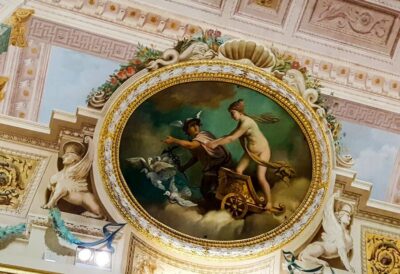
Borghese Gallery Skip-the-Line Tickets with Audioguide
Read our review →
Borghese Gallery Entry Ticket & Optional Guided Tour
Read our review →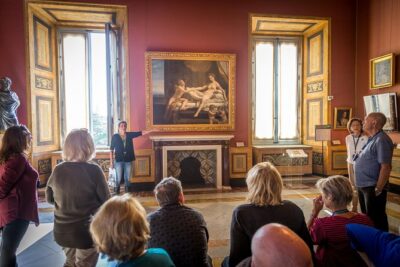
Borghese Gallery & Gardens Small Group Guided Tour
Read our review →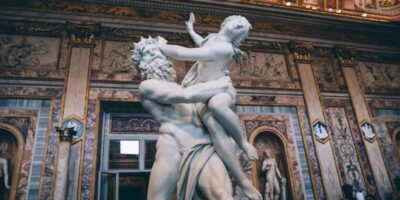
Borghese Gallery, Canova’s Masterpieces Skip-the-Line Guided Tour
Read our review →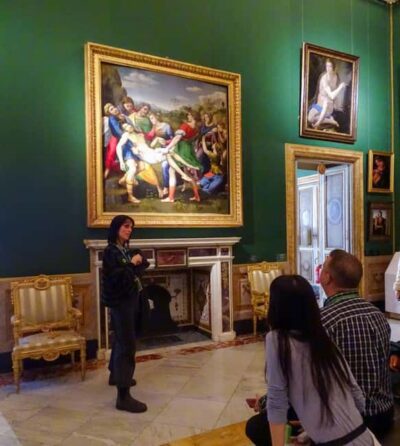
Borghese Gallery Guided Tour with Skip-the-Line Entry
Read our review →Browse the lists this tour appears in