Reviewed · PRIVATE
Rome: Caracalla Baths & Circus Maximus — Private or Shared
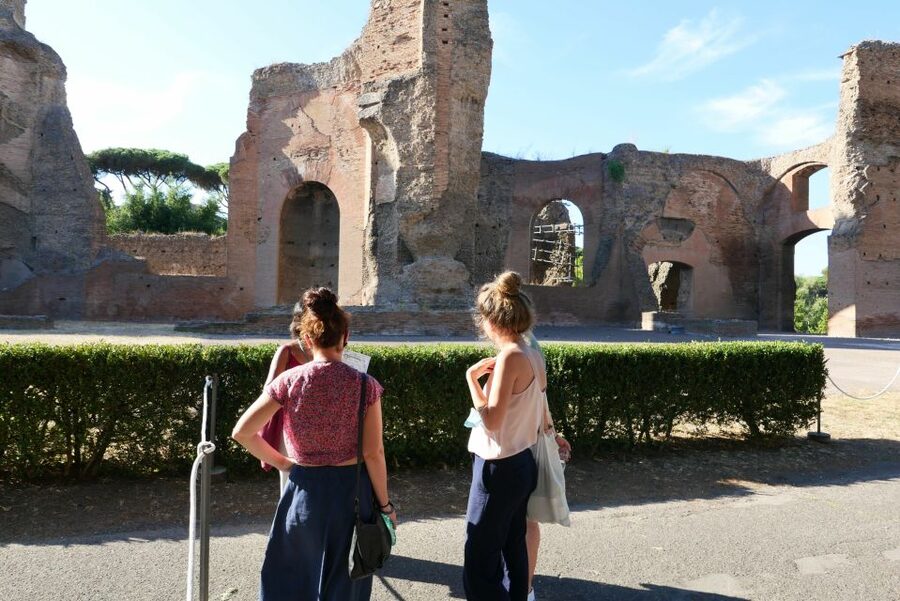
The Baths of Caracalla are where this tour earns its keep. Their huge brick walls, surviving mosaics, and vast bathing rooms make ancient Rome feel less like a collection of stones and more like a functioning public machine. Then you walk to Circus Maximus, the former racecourse where Rome once gathered by the tens of thousands.
I like the small groups and strong guides, with past tours led by Chiara, Francesca, Lars, Anestis, Mario, and Samuele. I also like the focus on practical Roman life: how the underfloor heating worked, how rooms held different temperatures, and what a normal bath day looked like. The main drawback is simple: Circus Maximus has little surviving structure, so much of that 30-minute visit depends on your imagination and the guide’s storytelling.
In This Review
- Key points to know before booking
- Why the Baths of Caracalla deserve your time
- Mosaics, frescoes, and the remains under your feet
- What one hour at Caracalla is really like
- Circus Maximus: huge in the past, subtle today
- The guides are the real value
- Is $77 a fair price?
- Meeting point, timing, and walking advice
- Who will enjoy this Rome tour most
- Should you book it?
- FAQ
- How long does the Caracalla Baths and Circus Maximus tour last?
- Where is the meeting point?
- Is admission to the Baths of Caracalla included?
- What languages are available?
- How large is the group?
- Is the tour wheelchair accessible?
- What should I bring, and what is not allowed?
Key points to know before booking
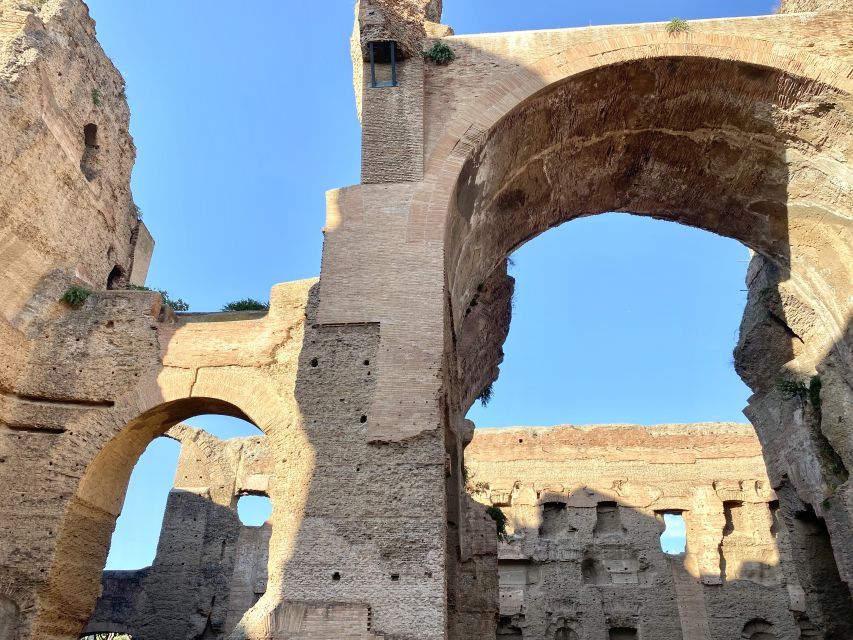
- The Baths of Caracalla are the main event: Expect towering ruins, geometric mosaics, and a clear explanation of Roman bathing customs.
- Circus Maximus is mostly an open archaeological site: You see the former stadium area, but not an intact arena like the Colosseum.
- The guide makes the difference: Archaeologist guides explain engineering, daily life, Roman games, and the myths tied to the site.
- Small groups keep the visit personal: The maximum group size is 10, and private or semi-private options are available.
- The tour lasts 90 minutes: Plan on one hour at the baths and about 30 minutes at Circus Maximus.
- Wear practical shoes: You will walk across an archaeological area, and large bags, trolleys, pets, and strollers are not allowed.
Why the Baths of Caracalla deserve your time
Rome gives you plenty of famous ruins, but the Baths of Caracalla offer a different kind of spectacle. This was not simply a place to wash. It was a huge public complex built for exercise, social life, relaxation, and mental escape.
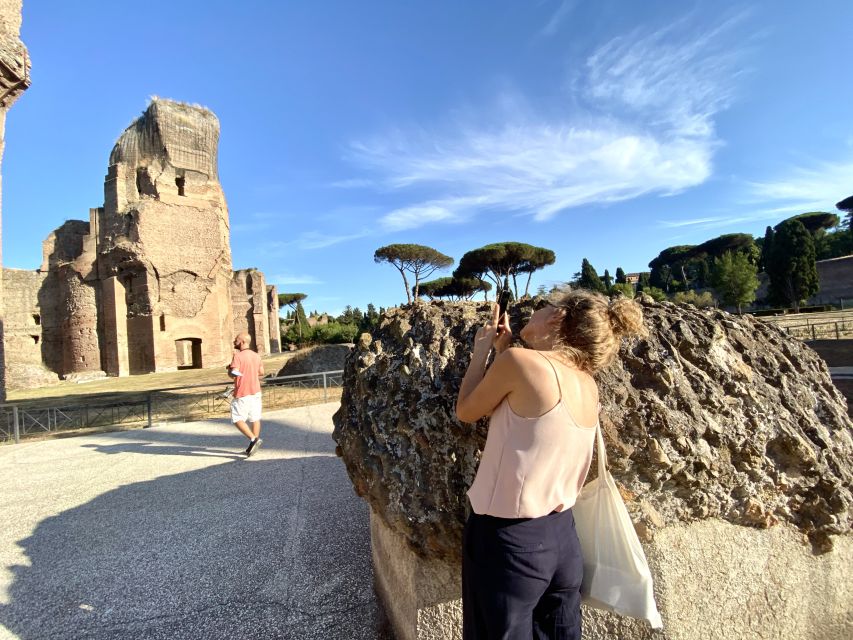
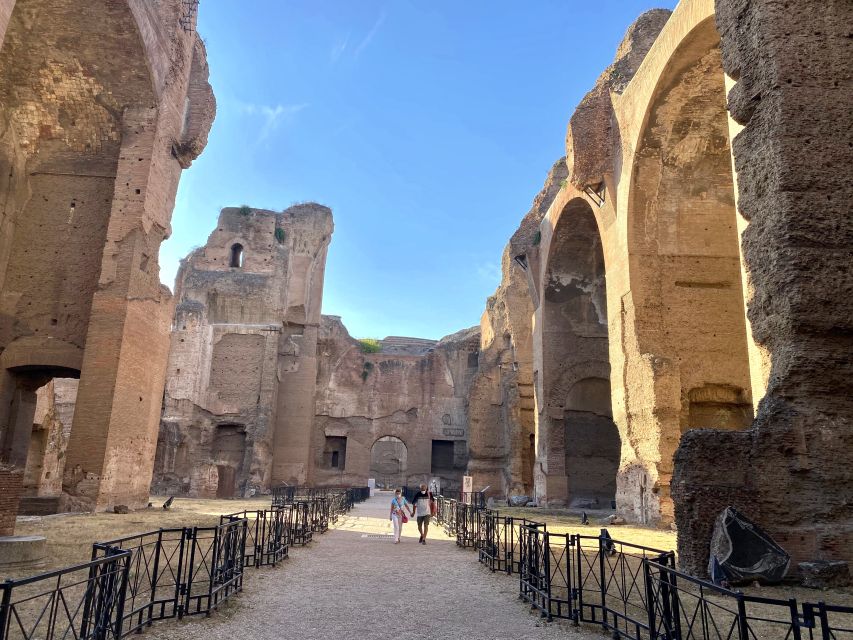
As you walk through the remains, the scale is the first thing you notice. The walls are still high enough to make you look up, and the open rooms give you a strong sense of the original size. The baths were designed for crowds, not for a handful of private clients. That matters because it changes how you picture Roman society: bathing was part of public life, not a quiet luxury hidden behind a hotel door.
Your guide takes you through the likely sequence of a Roman visit. You learn how bathers moved between rooms with different temperatures and how the complex served both body and mind. The tour description presents this as a typical day in the third century AD, which gives the visit a useful human scale. Instead of only hearing dates and emperors, you can think about what people actually did once they arrived.
The site is especially good for visitors who enjoy seeing how an ancient building worked. The focus on the hypocaust heating system is one of the tour’s strongest details. Your guide explains how hot air moved beneath the floors and how workers maintained the right temperature in each room. The engineering becomes easier to appreciate when you understand the constant labor required to keep a complex this large running.
More Rome tours worth comparing
- Rome by Golf Cart Private Tour: Beyond the Landmarks
★ 5.0 · 4,361 reviews - Early Morning Vatican, Sistine, St. Peter’s Semi or Private Tour
★ 5.0 · 3,779 reviews - Rome on a Golf Cart Semi-Private Tour Max 6 with Private Option
★ 5.0 · 2,502 reviews
Mosaics, frescoes, and the remains under your feet
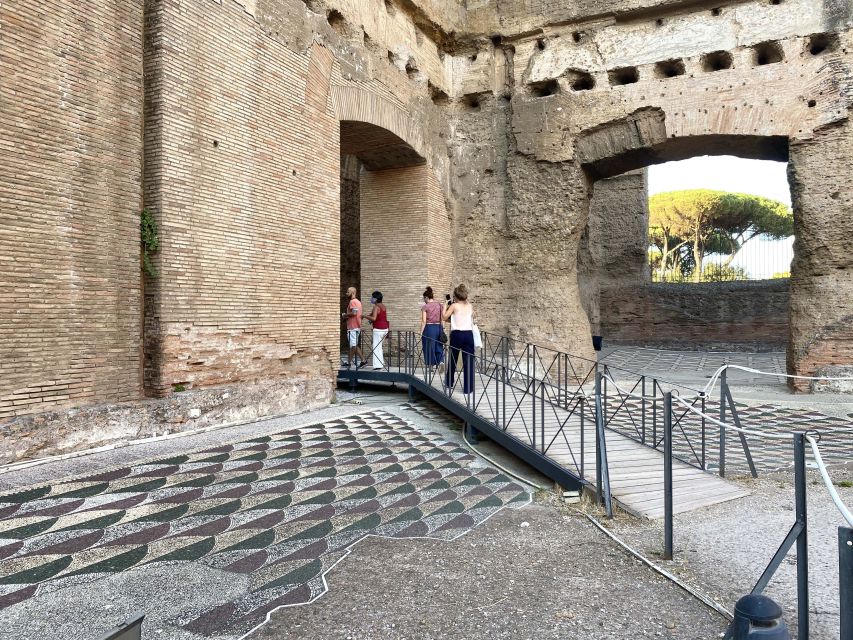
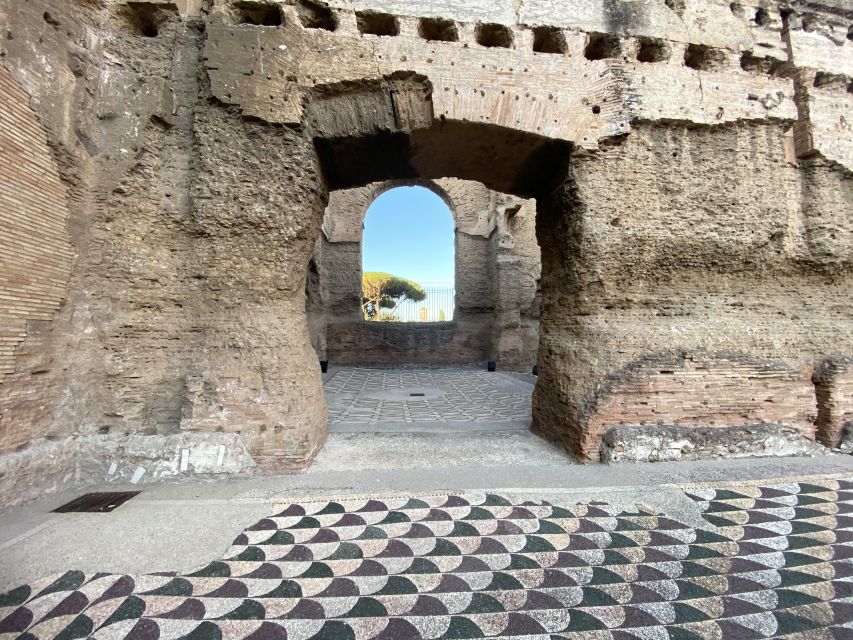
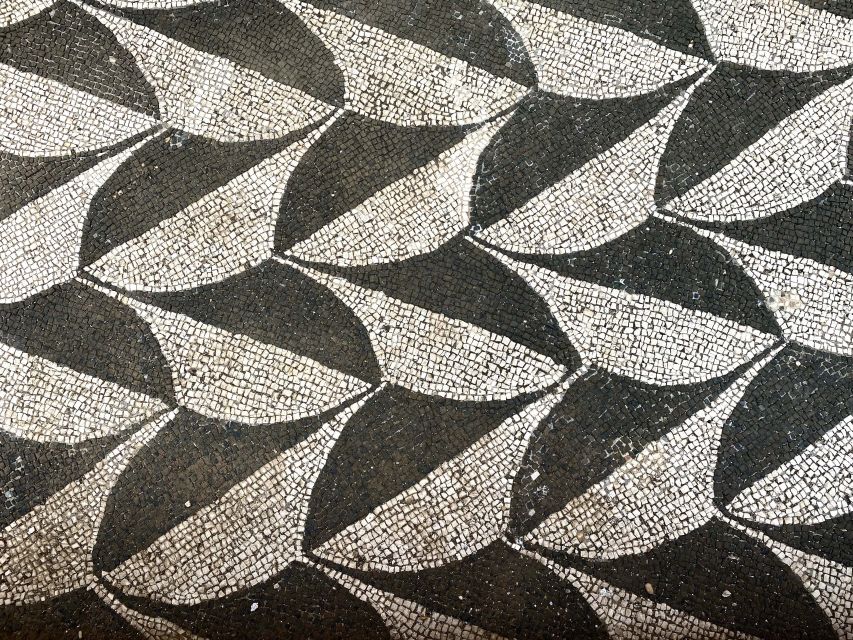
The Baths of Caracalla are not empty shells. Surviving mosaic floors and decorative details give you glimpses of the original finish. Some sections retain strong geometric patterns, and past visitors have been struck by how much of the flooring remains in place.
You should pay attention to the relationship between decoration and function. The mosaics were not random patches of color. Their patterns helped create a polished public setting, one designed to impress as well as serve. The remaining fragments also make the losses easier to grasp. What you see is only part of a once elaborate complex, but the surviving pieces are enough to show the care that went into it.
Frescoes and other traces of decoration may also help you picture the interior. The scale can be hard to understand from photographs, so let your guide point out the proportions of the rooms and walls. One guide, Anestis, was praised for making the ruins easy to picture through clear explanations of the architecture and decoration. That is exactly the kind of help this site needs.
The baths are also a pleasant change from Rome’s busiest central monuments. The archaeological area is green and generally calmer than the Colosseum zone. You are still close to the city’s major sights, but the setting gives you more space to look and listen without the same level of crowd pressure.
What one hour at Caracalla is really like
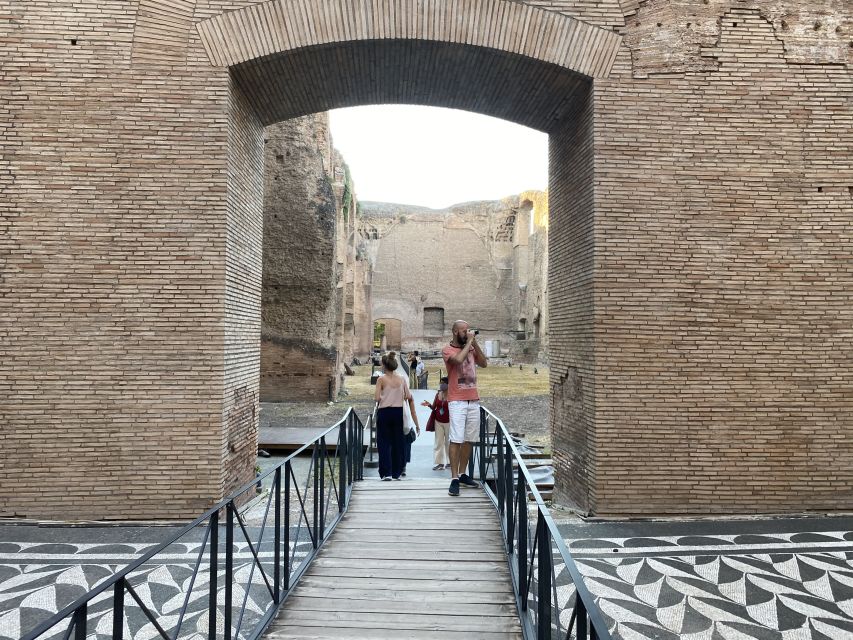
The schedule gives the Baths of Caracalla about one hour. That is enough for a focused guided visit, but it is not enough to inspect every corner at a slow pace.
Expect your guide to keep the group moving through the major rooms and explain the complex as a whole. You will likely spend time on the bathing sequence, heating, mosaics, architecture, and the services offered at the baths. The tour is designed as an express visit, so it works best if you want a strong overview rather than a long independent study session.
I would choose the private option if your group has a specific interest in Roman engineering, architecture, or daily life. A private tour can also suit families who need a more flexible pace. Small-group visitors still get a useful experience, since the maximum is 10 people and several past groups were smaller than expected.
A few people were lucky enough to receive a private-style visit when their language group had only one booking. That is not something you should count on, but it shows why the group format can sometimes feel more personal than the headline suggests. Guides such as Francesca and Chiara have been singled out for answering questions and adding context beyond the basic route.
Circus Maximus: huge in the past, subtle today
After the baths, the tour moves to Circus Maximus. In ancient Rome, this was the enormous venue for public games, especially chariot racing. The site also connects to the Roman Ludi, major celebrations that could run for several days and include different forms of entertainment.
Here, the contrast with Caracalla is sharp. The baths still give you substantial walls and visible rooms. Circus Maximus is mainly a broad open area with far fewer surviving structures to read. One past participant put the issue plainly: there is not much to see at the circus itself. Another said the site leaves much to the imagination.
That does not make the stop useless. It makes the guide more important. You are standing on the ground associated with chariot races, gladiatorial events, crowds, and public celebration, but the physical evidence is limited. Your guide supplies the scale and noise that the ruins cannot provide.
The tour also reaches back before Rome’s familiar imperial period. You hear about the early myths and gods connected with the circus and its origins. This gives the site a broader frame, linking the later games venue with the stories Romans used to explain their city.
Keep your expectations realistic. If you want intact seating, dramatic arches, and visible ancient interiors, the Baths of Caracalla will satisfy you more. If you enjoy reconstructing a vanished place from geography, stories, and fragments, Circus Maximus adds useful context.
A completely different way to spend the day in Rome:
- Vatican: Museums & Sistine Chapel Entrance Ticket
★ 4.5 · 144,003 reviews - Vatican Museums & Sistine Chapel Tour with Optional Basilica
★ 4.3 · 67,413 reviews - Vatican Museums, Sistine Chapel & St Peter’s Basilica Guided Tour
★ 4.5 · 39,149 reviews - Rome: Colosseum, Palatine Hill and Roman Forum Guided Tour
★ 4.8 · 32,814 reviews
The guides are the real value
The strongest part of this experience is the guide’s ability to turn engineering and ruins into a story you can follow. Several names appear repeatedly among memorable visits, including Chiara, Francesca, Lars, Anestis, Mario, Samuele, Alicia, and Sam.
Chiara has been praised for bringing the ruins to life and for offering useful local suggestions for the rest of a Rome visit. Francesca is known for a friendly manner, clear answers, and strong archaeological background. Lars has led private-style tours with easy conversation and careful answers to questions. Anestis has been described as patient, clear, and able to continue effectively in bad weather.
Mario is another guide associated with vivid explanations, including a detailed picture of an actual day at the baths. Samuele has drawn praise for combining Ancient Rome with wider discussion of art, architecture, reunification, and Rome’s modern story. Guides vary, of course, but the activity is built around live explanation rather than a recorded script.
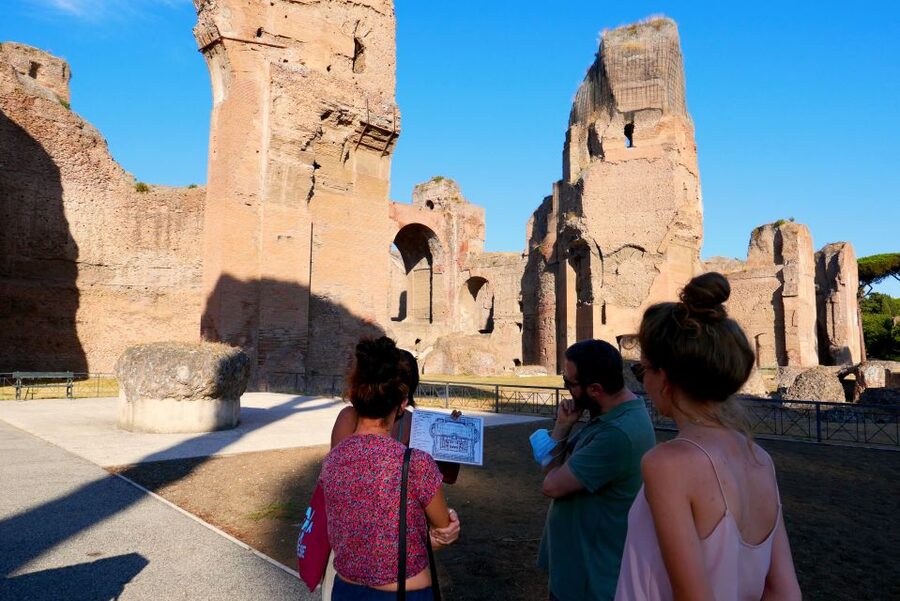
You receive sterilized headsets, which is useful when the group is moving through open ruins. You do not need to stand shoulder to shoulder with the guide to hear the explanation. That small feature matters at a site where walls and distance can easily swallow a normal speaking voice.
The available languages are English, Italian, French, Portuguese, Spanish, and German. Check the language and start time carefully when booking, since the quality of the experience depends heavily on understanding the guide’s explanations.
Is $77 a fair price?
At $77 per person, this is not the cheapest way to see the Baths of Caracalla. You are paying for admission, an archaeologist guide, a headset, and on-site assistance, not just entry to the ruins.
The value depends on how you like to visit ancient sites. If you already know Roman architecture and prefer to read signs at your own pace, buying entry alone may make more sense. If you want the heating system, room functions, mosaics, social customs, and Roman games explained as you walk, the guided format adds something you would otherwise need to research yourself.
The 90-minute length also affects the calculation. This is a compact tour, not a half-day archaeological program. Some past participants considered it expensive compared with longer Rome activities. At the same time, others felt it was worth the cost because the guide gave the remains a clear shape and because the private or small-group setting allowed questions.
I would see the price as easier to justify for a private booking, a family group, or anyone with a serious interest in Roman life. For a solo visitor on a tight budget, the shared option may be the better compromise. The tour has earned a 4.7 rating from 835 reviews, which suggests a consistently strong experience, but the value question still comes down to how much guidance you want.
Meeting point, timing, and walking advice
You meet at the exit of the Circo Massimo Metro Station in the direction of Laurentina, in front of the FAO building. Look for a yellow label showing the local partner’s name. Arrive at least five minutes early so the sign-up process does not delay the group.
The starting point is convenient for an Ancient Rome day, since you are already near the Circus Maximus area and within reach of the Colosseum district. Hotel pickup and drop-off are not included, and food and drinks are not included, so plan those parts yourself.
Wear comfortable walking shoes. The tour takes place around large archaeological sites, and the practical advice is not decorative. Trolleys, large backpacks, luggage, baby strollers, pets, drones, weapons, and sharp objects are not allowed inside the monuments. A small day bag is the sensible choice.
The tour is listed as wheelchair accessible, though you should still confirm the exact route and conditions for your booking if access is a major concern. Weather can affect the visit. In unfavorable conditions, the activity may be canceled and you are offered another date or a full refund.
You can cancel up to 24 hours before the start for a full refund, and the reserve-now, pay-later option keeps your plans flexible. Those terms are useful in Rome, where heat, rain, transport problems, and changing schedules can disrupt a tightly packed day.
Who will enjoy this Rome tour most
I would recommend this tour to anyone who has already seen the Colosseum or wants a quieter Ancient Rome experience. It suits visitors who like architecture, technology, and ordinary Roman life, not only battles and emperors.
Families can benefit from the short format and the visual scale of the baths. Children may respond better to the idea of hot air heating floors, crowded bathing rooms, and chariot races than to a long lecture about political chronology. A private booking gives you more control if younger children need pauses or simpler explanations.
It also suits repeat visitors. The Baths of Caracalla feel different from the Forum and Colosseum, and the open setting can provide a calmer afternoon away from the city center’s tightest crowds. If you are visiting Rome for several days, this is a good later-day or later-trip activity when you want something substantial but not exhausting.
I would be more cautious if Circus Maximus is your main reason for booking. The surviving remains do not match the enormous reputation of the ancient stadium. Treat it as a storytelling stop attached to a much stronger visit at Caracalla.
Should you book it?
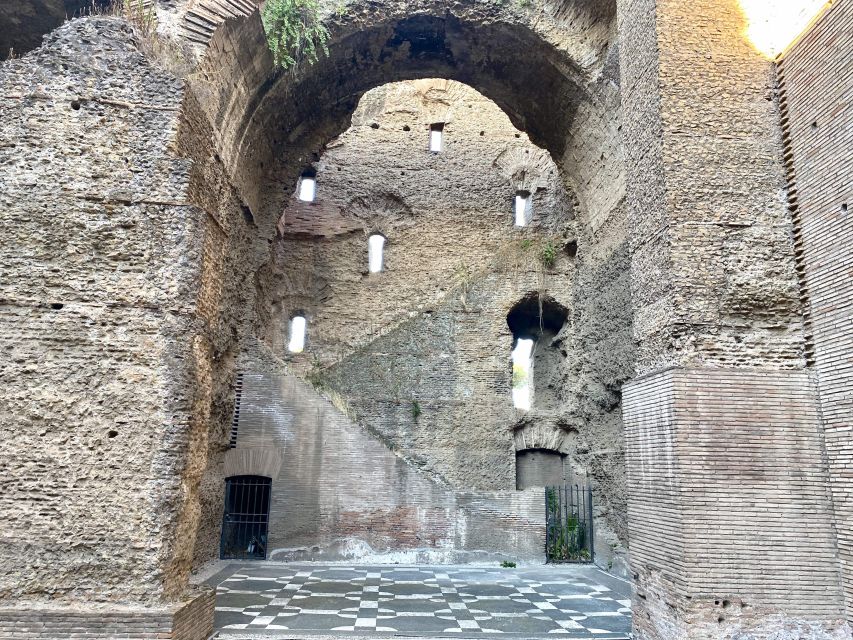
Book this tour if you want the Baths of Caracalla explained properly, prefer a small group, and like ancient engineering as much as famous names. The towering walls, surviving mosaics, and underfloor heating system give the visit real substance, while a good guide helps you picture the rooms in use.
Choose the private option for a family or for a group with detailed questions. Choose shared or small-group if you want the guide’s insight at a lower overall cost. Just remember that Circus Maximus is mostly a place to imagine, not a second Colosseum.
For a short, focused look at two very different Roman leisure sites, this is a strong choice. The baths are the reason to go. The circus adds scale, myth, and spectacle, but your expectations should be set by the surviving ruins rather than by the ancient descriptions.
FAQ
How long does the Caracalla Baths and Circus Maximus tour last?
The tour lasts 1.5 hours. The guided visit includes about one hour at the Baths of Caracalla and 30 minutes at Circus Maximus.
Where is the meeting point?
Meet at the exit of the Circo Massimo Metro Station in the direction of Laurentina, in front of the FAO building. Look for a yellow label with the local partner’s name.
Is admission to the Baths of Caracalla included?
Yes. Entrance fees to the Baths of Caracalla are included, along with a headset and on-site assistance.
What languages are available?
The tour is offered in English, Italian, French, Portuguese, Spanish, and German.
How large is the group?
The maximum group size is 10 participants. Private and small-group options are available.
Is the tour wheelchair accessible?
The activity is listed as wheelchair accessible. Contact the provider before booking if you need details about the exact route or access conditions.
What should I bring, and what is not allowed?
Bring comfortable walking shoes. Pets, weapons, sharp objects, baby strollers, luggage, large bags, trolleys, large backpacks, and drones are not allowed inside the monuments.
Newest reviews from Rome
- Rome: Vatican Museums & Sistine Chapel Skip-the-Line Ticket★ 4.4 · 148 reviews
- Shared Shuttle Transfer from Rome to Civitavecchia Port★ 5.0 · 148 reviews
- Rome: Crypts & Catacombs After Hours Tour with Bone Chapel★ 4.6 · 149 reviews
- Ghosts Legends and Mysteries of Rome Walking Tour★ 5.0 · 149 reviews
- Skip the Line: Vatican and Sistine Chapel with Guided Tour★ 4.0 · 149 reviews
- Tivoli: Villa Gregoriana Entrance Ticket★ 4.7 · 150 reviews
- Pizza and Tiramisu Cooking Class in Rome, Piazza Navona★ 5.0 · 150 reviews
- Rome: Borghese Gallery Skip-the-Line Entry and Guided Tour★ 4.7 · 150 reviews
Private, compared.
Rome by Golf Cart Private Tour: Beyond the Landmarks
Read our review →
Early Morning Vatican, Sistine, St. Peter’s Semi or Private Tour
Read our review →
Rome on a Golf Cart Semi-Private Tour Max 6 with Private Option
Read our review →
Rome Private Arrival Transfer: Fiumicino Airport to Hotel in Rome
Read our review →

Private Pompeii, Positano & Amalfi coast Tour from Rome
Read our review →
Private Departure Transfer: Hotel to Rome Fiumicino Airport
Read our review →