Reviewed · PRIVATE
Rome: Caracalla Baths Express Small-Group or Private Tour
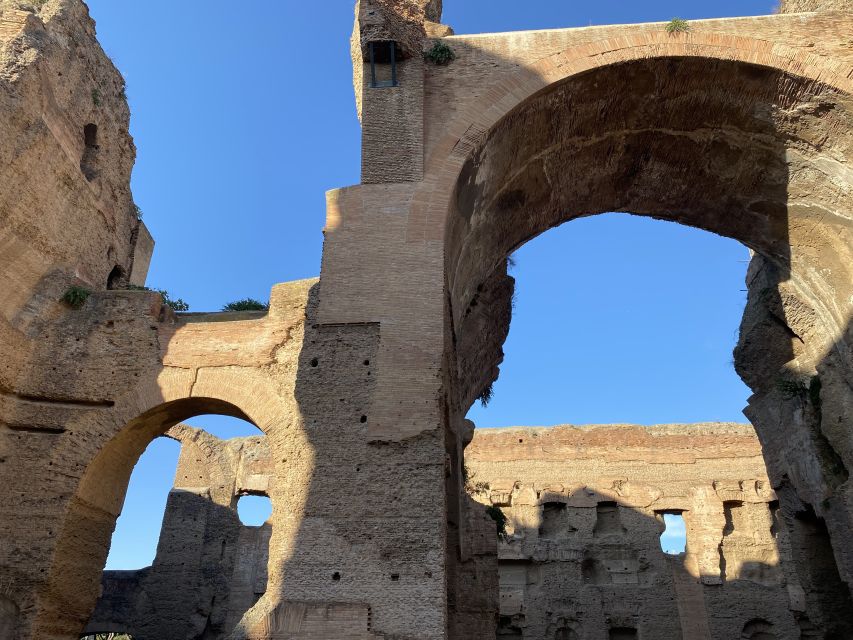
The Baths of Caracalla are not a tidy little ruin. They are a huge, open-air lesson in Roman ambition, with towering walls, grand rooms, mosaics, and traces of an ingenious heating system. This one-hour guided tour gives you a clear route through the complex without asking you to spend half a day on it.
I like the expert archaeologist guide and the small maximum group of 10. I also like the chance to choose a private visit at a fairly modest price, or join a small group and keep costs down. The main drawback is the short format. The Baths are enormous, and one hour can feel brisk, especially if your guide includes extra walking near Circo Massimo.
- Roman engineering on a giant scale: See how underfloor heating helped control the temperature in different rooms.
- A practical look at Roman bath life: Follow the stages of a typical visit to this 3rd-century leisure center.
- Mosaics worth slowing down for: Look closely at geometric floor patterns that can be easy to miss.
- Small groups only: The group size is capped at 10, with private tours also available.
- Useful meeting point: Meet outside Circo Massimo Metro, in front of the FAO building.
- Good guide choice: Tours are offered in English, Italian, French, Spanish, German, and Portuguese.
In This Review
- Why the Baths of Caracalla Are Worth Your Rome Time
- Meeting at Circo Massimo Metro
- Inside the Monumental Bath Complex
- Roman Heating Without Modern Machinery
- Mosaics and the Details You Might Miss
- Private or Small Group: Which Format Fits You?
- What the Guides Add
- Timing, Comfort, and What to Bring
- Who Should Book This One-Hour Visit?
- Is $70 a Fair Price?
- Should You Book the Baths of Caracalla Tour?
- FAQ
- How long does the Baths of Caracalla tour last?
- Where is the meeting point?
- How early should I arrive?
- Is entrance to the Baths included?
- Is the tour private or shared?
- Which languages are available?
- Are headsets provided?
- Is the experience wheelchair accessible?
- Can I bring luggage?
Why the Baths of Caracalla Are Worth Your Rome Time
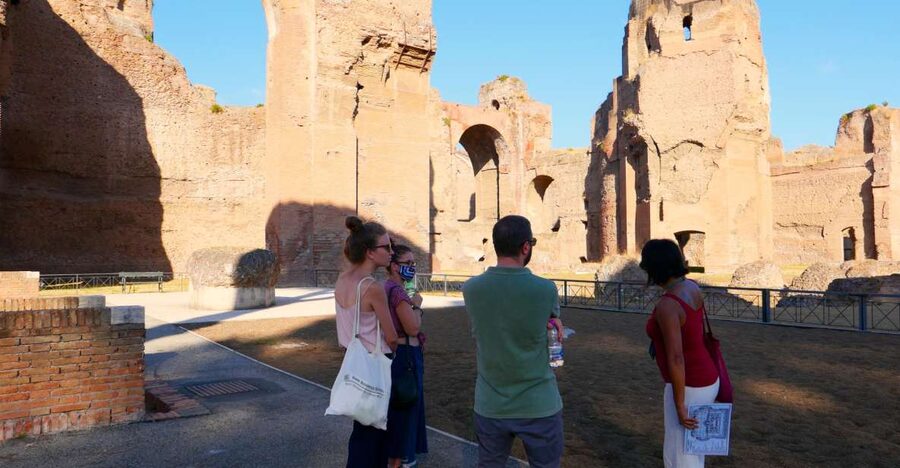
Rome has no shortage of famous ruins, but the Baths of Caracalla offer something different from the Forum or Colosseum. You are not looking at one monument with a single purpose. You are walking through an entire leisure center designed for exercise, washing, social life, and the care of body and mind.
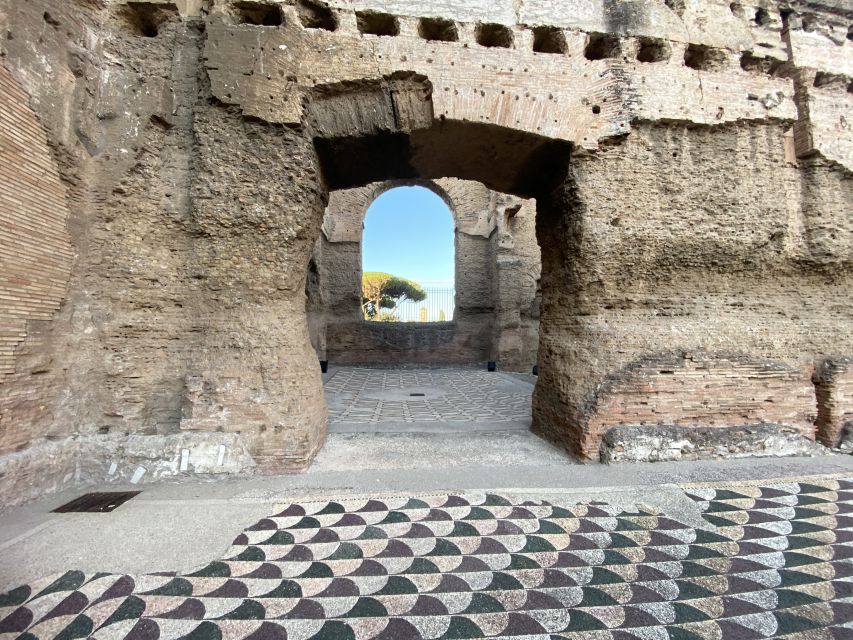
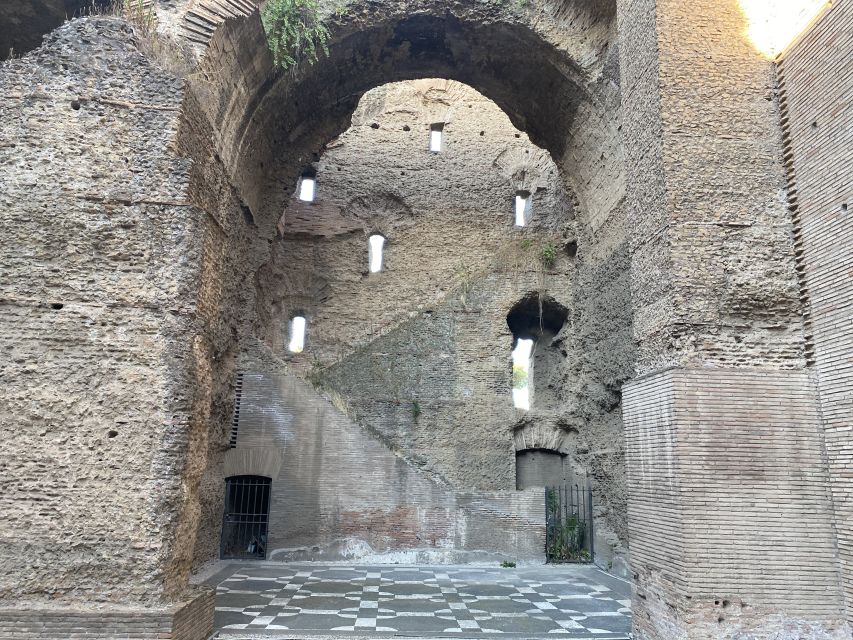
The scale is the first surprise. The surviving walls rise high above you, and the broad rooms make it easier to picture the original complex as a working public facility rather than a lonely archaeological site. Even in ruined form, the Baths show how much space Imperial Rome was willing to devote to public comfort.
I especially like this site for visitors who have already seen Rome’s most famous monuments and want a quieter place with a strong sense of scale. It has also been praised for its calm atmosphere and low crowds at some times of day. That peace helps you look up, notice construction details, and listen to your guide without the constant rush found at busier sights.
Meeting at Circo Massimo Metro
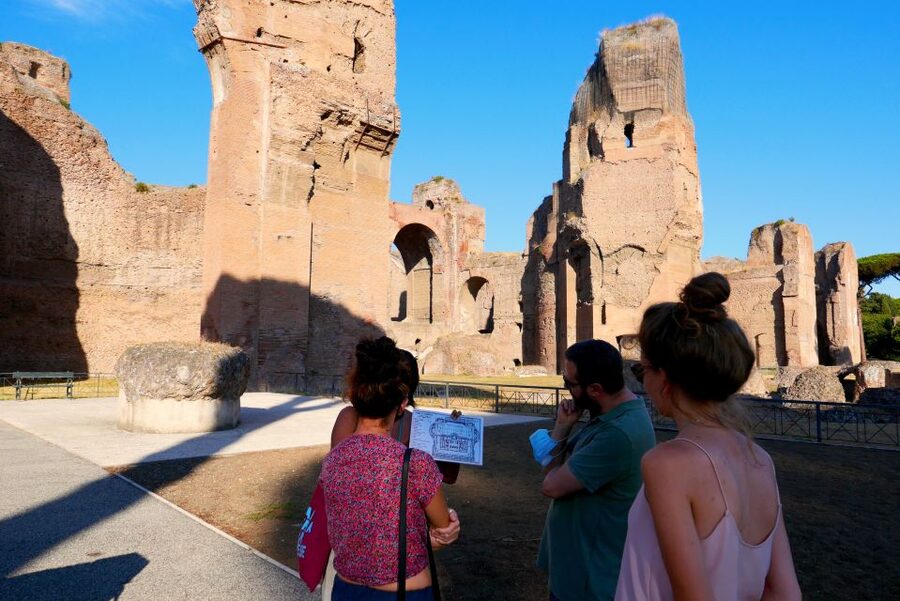
Your meeting point is at the exit of the Circo Massimo Metro station, in front of the FAO building. Look for the yellow Touriks label. Arrive five minutes before your scheduled start, since a short tour leaves little room for late arrivals.
This location is useful if you are already visiting the Circus Maximus, Aventine Hill, or nearby ancient sites. It also gives you a clear public transport reference point. Still, pay attention to the exact exit and the FAO building landmark. A large Roman site can have several paths and open spaces, so do not assume the guide will find you if you are waiting somewhere else.
The walk from the meeting area can affect how much time you spend inside the Baths. One visitor felt that walking from Circus Maximus reduced viewing time and made the visit feel rushed. If your schedule is tight, ask at the start how the hour will be divided between reaching the entrance and touring the complex.
More Rome tours worth comparing
- Rome by Golf Cart Private Tour: Beyond the Landmarks
★ 5.0 · 4,361 reviews - Early Morning Vatican, Sistine, St. Peter’s Semi or Private Tour
★ 5.0 · 3,779 reviews - Rome on a Golf Cart Semi-Private Tour Max 6 with Private Option
★ 5.0 · 2,502 reviews
Inside the Monumental Bath Complex
Once inside, your guide brings structure to a site that can otherwise feel confusing. The Baths are made up of huge rooms and walls, and without context you may see impressive stonework without understanding how the parts fit together.
The route explains the Baths as a normal Roman day out. You learn about the order of activities, the different functions of the rooms, and the wide range of services connected with this ancient spa. The point is not simply to admire old walls. It is to picture a public place where Romans went for washing, exercise, conversation, and personal well-being.
That guided sequence is one of the tour’s best features. A self-guided visit might give you time to wander, but it may not explain why the rooms were arranged as they were or how visitors used them. Your guide turns the complex into a working system.
The one-hour length keeps the experience focused. You will not spend the day on every corner, and that is useful if you are fitting several ancient sites into one Rome itinerary. The tradeoff is clear: you need to stay with the group and keep moving. Visitors with bad knees or limited mobility should tell the guide early. A previous participant appreciated a guide who kept a pace that allowed everyone to take part, but the tour still covers a large archaeological area.
Roman Heating Without Modern Machinery
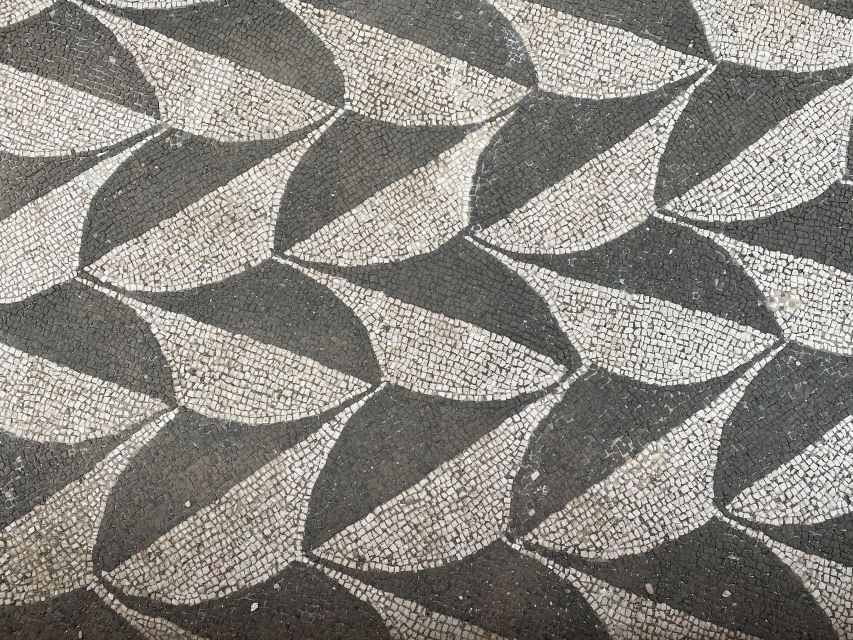
The engineering lesson here is especially good. Your guide explains the labor-intensive underfloor heating system and how Romans worked to maintain different temperatures from room to room.
This is the kind of detail that changes the way you see the ruins. A wall is no longer just a wall. It becomes part of a building that required fuel, workers, planning, and constant control. The system depended on heat moving beneath floors, an arduous process that reveals how much organization supported Roman public life.
You also get a better sense of the practical work behind the luxury. The Baths may have offered relaxation, but keeping them running required serious labor. That contrast, comfort for the users and hard work behind the scenes, is one of the most interesting themes of the visit.
Guides such as Mario, Sara, Chiara, Marco, and Francesca have been praised for making the information lively and personal. The strongest guide experience here seems to come from clear explanations, humor, and a willingness to answer questions. The guide matters because the ruins do not explain themselves.
Mosaics and the Details You Might Miss
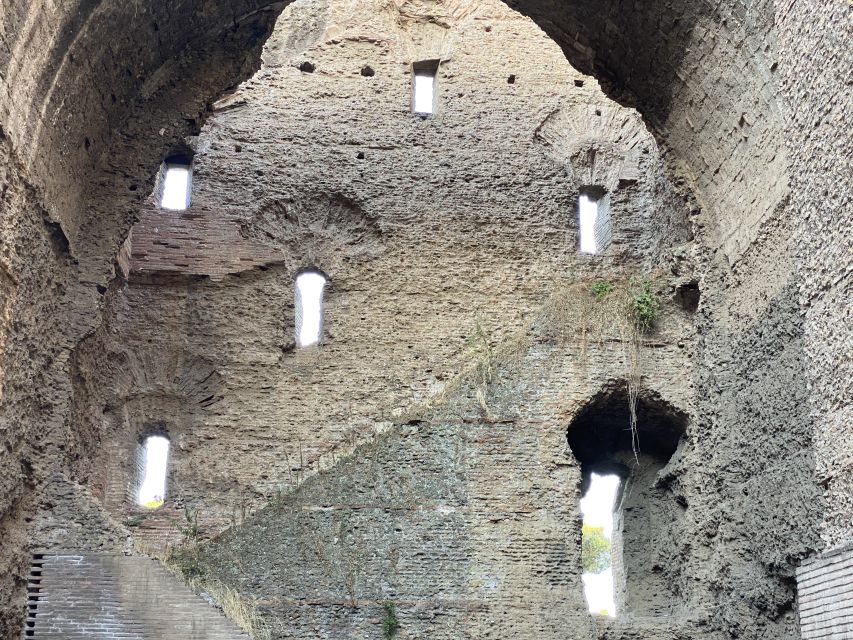
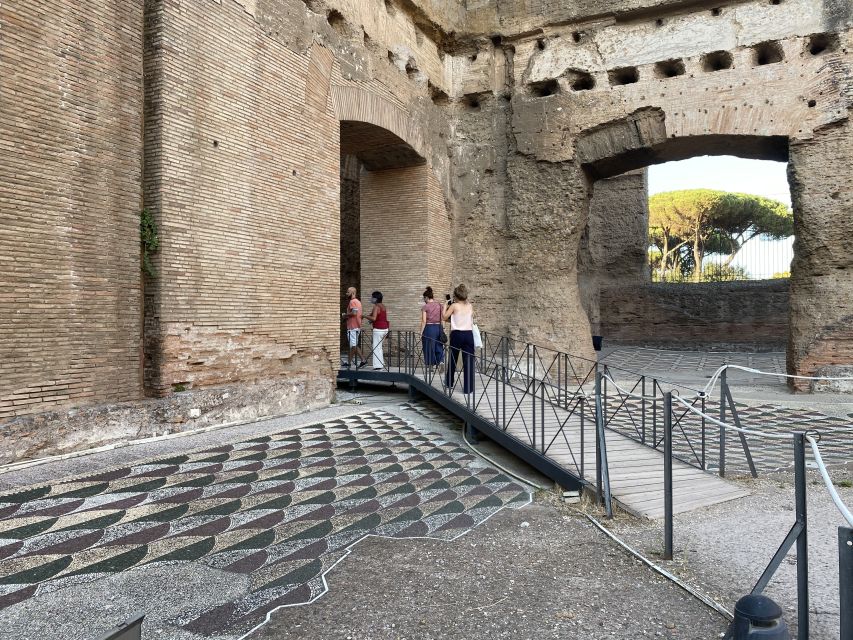
The massive architecture gets most of your attention at first, but do not let it hide the smaller details. The tour points out geometric motifs in the mosaics, giving you a reason to look down as well as up.
These patterns help show that the Baths were not built only for function. Decoration mattered. Large public rooms were designed to impress, and carefully laid mosaics added order and style to spaces used by ordinary Roman citizens and the wider public.
I recommend staying close enough to hear the guide’s comments about the floors. The sterilized headsets are included, which is useful when the group is spread across a large room or when other visitors are nearby. Clear audio makes a real difference in a place with such broad open spaces.
A completely different way to spend the day in Rome:
- Vatican: Museums & Sistine Chapel Entrance Ticket
★ 4.5 · 144,003 reviews - Vatican Museums & Sistine Chapel Tour with Optional Basilica
★ 4.3 · 67,413 reviews - Vatican Museums, Sistine Chapel & St Peter’s Basilica Guided Tour
★ 4.5 · 39,149 reviews - Rome: Colosseum, Palatine Hill and Roman Forum Guided Tour
★ 4.8 · 32,814 reviews
Private or Small Group: Which Format Fits You?
The small-group option is limited to 10 participants, a useful middle ground between a large sightseeing crowd and a private guide. You get the social ease of a shared visit without being one face in a mass of people.
A private tour makes more sense if you want to ask many questions, set your own pace, or focus on Roman engineering, architecture, or daily life. It can also suit families or couples who prefer a more personal visit. The supplied price is $70 per person, but the exact value depends on the private or shared format you choose.
For a one-hour experience, the price is reasonable if you value a professional archaeologist guide and want entrance fees handled. You are paying for interpretation as much as access. The site itself is impressive, but the guide helps you understand how the rooms worked and why the ruins matter.
If you are comfortable reading signs and exploring at your own speed, you may find the hourly cost less attractive. If you want a clear explanation in your own language and have limited time, the tour earns its keep more easily.
What the Guides Add
The best moments on this experience depend on the guide’s skill. Several guides have been singled out for warmth, humor, strong explanations, and thoughtful answers. Mario, in particular, has been praised for a funny, passionate presentation, while Sara was described as high-energy and engaging.
That does not mean every guide will use the same style. You might get a more academic explanation, a relaxed conversation, or a brisk overview. The important point is that the tour is led by a professional archaeologist, not simply a guide who points out the largest walls.
I like the fact that guides have also offered suggestions for other places to visit in Rome. That can be useful late in your trip, when you have a better sense of what kind of history or architecture interests you. Do not hesitate to ask questions. A short tour becomes more useful when you tell the guide what you want to understand.
The language choice is another practical advantage. English, Italian, French, Spanish, German, and Portuguese tours are available. Check your selected language and start time carefully when booking.
Timing, Comfort, and What to Bring
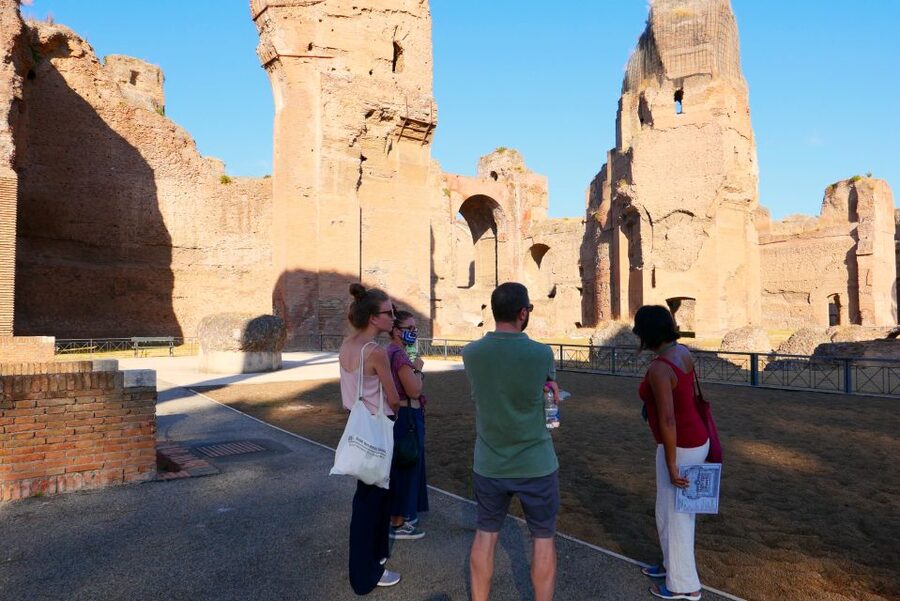
The tour lasts one hour, so it works well before lunch, after a morning at the Forum, or as part of an afternoon around southern central Rome. It is not a relaxed half-day outing. Think of it as a focused introduction to one major site.
Wear comfortable shoes and expect to walk through an archaeological complex. The tour is listed as wheelchair accessible, but the broad site and the need to keep to a schedule mean you should still raise any mobility concerns with the provider.
Bring a passport or ID card. Large bags and luggage are not allowed, so leave suitcases elsewhere and avoid arriving with more than you need. The headset is provided, and entrance fees are included.
Late afternoon light can be especially pleasant for the high walls and open spaces, but the time of day also depends on your wider Rome plans. If you choose a later departure, allow enough time to reach the meeting point and find the correct Metro exit.
Who Should Book This One-Hour Visit?
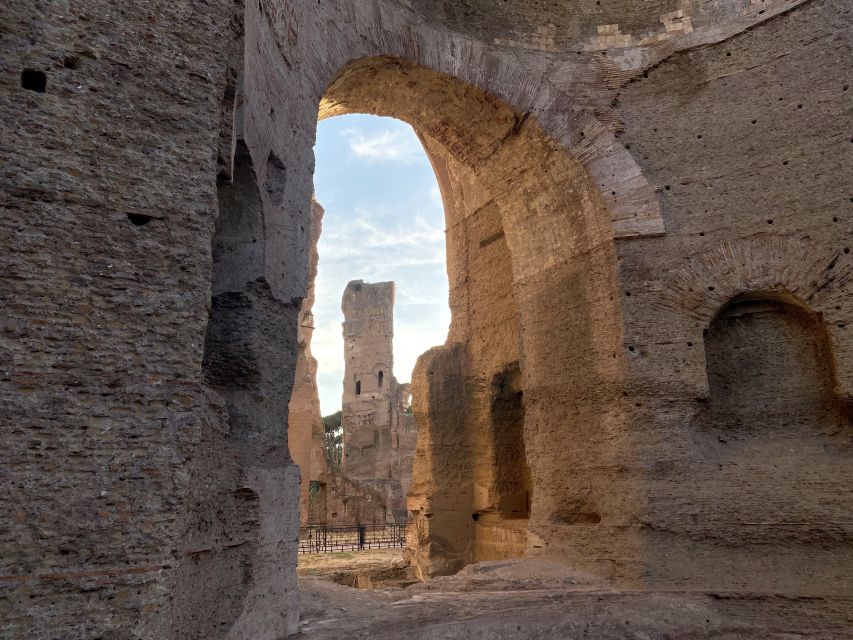
This tour suits you if you want:
- A short, guided introduction to the Baths of Caracalla
- An archaeologist’s explanation of Roman architecture and engineering
- A small group rather than a large crowd
- A private option without committing to a full-day tour
- A quieter ancient site away from Rome’s most crowded monuments
- A tour in English, Italian, French, Spanish, German, or Portuguese
It is less suitable if you want hours of independent photography or a slow, unplanned wander. The complex is too large to see every detail in one hour, and the pace may feel fast if walking is difficult.
Families can benefit from the practical storytelling about heating, room use, and daily routines. History fans will appreciate the architectural scale. First-time Rome visitors can use it as a manageable introduction to ancient public life, especially if the Forum and Colosseum already fill the rest of the day.
Is $70 a Fair Price?
At $70 per person, this is not the cheapest way to see a Roman ruin. Its value comes from the combination of admission, a professional guide, headsets, and a compact schedule.
I would compare it with the cost of a longer private tour. If you have only one hour and want expert context, this format avoids paying for a broad city tour that spends time on several unrelated sights. The private option may be worthwhile for a couple or family that wants direct attention.
The shared format offers better value for solo visitors and couples who do not need a personal itinerary. With no more than 10 people, you should still be able to hear the guide and ask questions.
Flexible booking also helps. You can reserve now and pay later, and cancellation is free up to 24 hours before the start for a full refund. Those terms matter in Rome, where heat, transport delays, and changing sightseeing plans can affect your day.
Should You Book the Baths of Caracalla Tour?
Book it if you want a clear, lively explanation of a huge Roman site and have only an hour to spare. The strongest reasons are the archaeologist guide, the small group limit, the close look at engineering and mosaics, and the chance to see a quieter side of ancient Rome.
Before booking, accept the main limitation: this is an express visit. If you want to linger in every room, take many photographs, or explore at a very slow pace, go independently or choose a longer format. If you want the site to make sense quickly, this tour is a smart use of Rome time.
FAQ
How long does the Baths of Caracalla tour last?
The guided visit lasts one hour.
Where is the meeting point?
Meet at the exit of the Circo Massimo Metro station, in front of the FAO building. Look for a yellow label marked Touriks.
How early should I arrive?
Arrive five minutes before the scheduled start time.
Is entrance to the Baths included?
Yes. Entrance fees to the Baths of Caracalla are included.
Is the tour private or shared?
You can choose a private tour or a small-group tour. Shared groups have a maximum of 10 participants.
Which languages are available?
Tours are available in English, Italian, French, Spanish, German, and Portuguese.
Are headsets provided?
Yes. Sterilized headsets are provided so you can hear the guide clearly.
Is the experience wheelchair accessible?
Yes, the activity is listed as wheelchair accessible.
Can I bring luggage?
No. Luggage and large bags are not allowed. Bring a passport or ID card instead.
Newest reviews from Rome
- Rome: Vatican Museums & Sistine Chapel Skip-the-Line Ticket★ 4.4 · 148 reviews
- Shared Shuttle Transfer from Rome to Civitavecchia Port★ 5.0 · 148 reviews
- Rome: Crypts & Catacombs After Hours Tour with Bone Chapel★ 4.6 · 149 reviews
- Ghosts Legends and Mysteries of Rome Walking Tour★ 5.0 · 149 reviews
- Skip the Line: Vatican and Sistine Chapel with Guided Tour★ 4.0 · 149 reviews
- Pizza and Tiramisu Cooking Class in Rome, Piazza Navona★ 5.0 · 150 reviews
- Tivoli: Villa Gregoriana Entrance Ticket★ 4.7 · 150 reviews
- Rome: Borghese Gallery Skip-the-Line Entry and Guided Tour★ 4.7 · 150 reviews
Private, compared.
Rome by Golf Cart Private Tour: Beyond the Landmarks
Read our review →
Early Morning Vatican, Sistine, St. Peter’s Semi or Private Tour
Read our review →
Rome on a Golf Cart Semi-Private Tour Max 6 with Private Option
Read our review →
Rome Private Arrival Transfer: Fiumicino Airport to Hotel in Rome
Read our review →

Private Pompeii, Positano & Amalfi coast Tour from Rome
Read our review →
Private Departure Transfer: Hotel to Rome Fiumicino Airport
Read our review →