
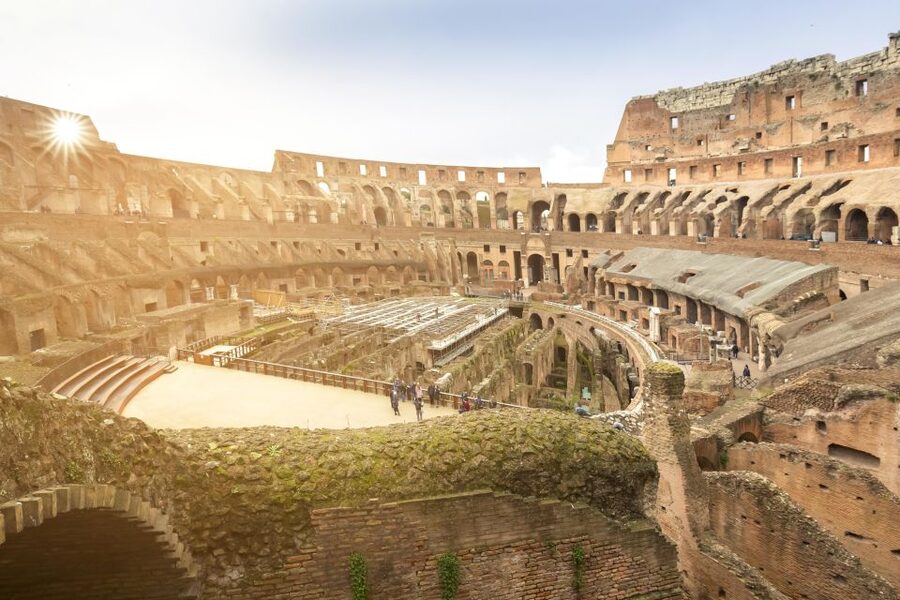
Reviewed · UNDERGROUND ROME TOURS
Rome: Colosseum Underground, Arena & Forum Tour
The most unusual part of this Rome tour is the Colosseum Underground, where animals were held before being sent into the arena. You also walk onto the Arena level, then see the Forum and Palatine Hill, the heart of ancient Roman public life and imperial power.
I like the tour’s three-hour sweep through several major sites, and I like having a guide explain the engineering, politics, social classes, and daily life behind the ruins. The main caution is physical: uneven ground, stairs, and a moderate amount of walking make this a poor fit for wheelchair users, stroller users, or anyone with serious back or mobility problems.
In This Review
- Key points to know before booking
- Why the Colosseum Underground is worth the higher price
- Meeting at the Colosseo metro station
- Entering the Colosseum and reaching the Arena
- The Underground and the machinery behind the games
- Walking through the Roman Forum
- Palatine Hill and the views over ancient Rome
- The guides are the heart of the experience
- Timing, heat, crowds, and the three-hour pace
- Who will get the most from this tour
- A practical verdict on the $157.47 price
- Should you book the Colosseum Underground, Arena & Forum Tour?
- FAQ
- How long does the tour last?
- What sites are included?
- Is the Underground guaranteed?
- What language is the live tour?
- Where do I meet the guide?
- How early should I arrive?
- Is the tour wheelchair or stroller accessible?
Key points to know before booking
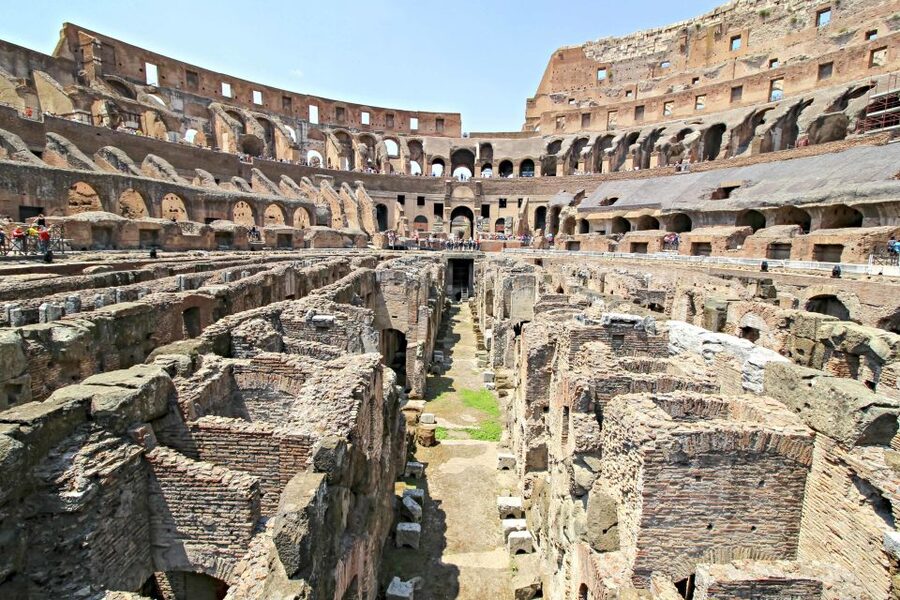
- The Underground adds the behind-the-scenes story: See where wild animals were kept before appearing in the arena.
- The Arena level changes your view of the Colosseum: You get closer to the stage where the public events took place.
- The Forum and Palatine Hill complete the picture: Ancient Rome was more than an amphitheater, and these sites show how people worshipped, governed, and lived.
- Guides make the difference: Pat, Francesca, Donatella, Gabriele, and others are praised for clear explanations, humor, and a steady pace.
- The guide language is Spanish: Confirm this suits your group before booking.
- Plan for real walking: No elevator is available, and large bags, luggage, strollers, and professional cameras are not allowed.
Why the Colosseum Underground is worth the higher price

At $157.47 per person, this is not a bargain entrance ticket. You are paying for a guided visit, access to the Underground and Arena areas, entry to the Colosseum, and admission to the Roman Forum and Palatine Hill.
The extra cost makes the most sense if the Underground is a priority. A standard Colosseum visit can show you the seating tiers and central arena, but the lower level explains how the spectacle worked behind the scenes. Animals were kept below before being sent upward for the games, and the restricted area helps you picture the labor and machinery that supported each event.
You also get a guide who connects the stones to the society around them. The strongest parts of the tour are not just dates and names. Guides explain why the games mattered politically, how class divisions shaped Roman life, and how Roman engineers built such a large structure. That context gives the Colosseum a human scale.
There is one important value question. The Underground can occasionally be cancelled, even when the rest of the tour goes ahead. One guest described receiving a refund for that portion, while another had the Underground cancelled and still enjoyed the guide-led visit. Since the main attraction here is the restricted access, ask how refunds are handled if that section is unavailable.
If you are happy with a regular Colosseum ticket and prefer to explore alone, this tour may be more than you need. If you want the lower level, a clear explanation of the site, and a structured visit to three major ancient monuments, the price is easier to justify.
More ways to see the Colosseum:
- Rome: Colosseum, Palatine Hill and Roman Forum Guided Tour
★ 4.8 · 32,814 reviews - Rome: Guided Tour of Colosseum, Roman Forum & Palatine Hill
★ 4.7 · 27,897 reviews - Rome: Colosseum & Forum with Audio Guide App -Optional Arena
★ 4.2 · 24,770 reviews
Meeting at the Colosseo metro station
The meeting point is the green kiosk on the right as you exit the Colosseo metro station. Look for a staff member carrying a yellow label with the local operator’s name.
Arrive 30 minutes before your scheduled start. The station has an upper-floor exit, so go downstairs rather than assuming you are already at street level. This small detail matters because the Colosseum area is crowded, and you do not want to spend your arrival time circling the station.
The activity ends back at the meeting point. Hotel pickup and drop-off are not included, so plan your own way to and from the site.
Bring your passport or ID card and wear comfortable shoes. Large bags, luggage, baby strollers, sharp objects, sprays, aerosols, glass objects, drones, and professional cameras are not allowed. Pets are also excluded. Pack lightly, since you may be turned away or delayed if you arrive with prohibited items.
Entering the Colosseum and reaching the Arena
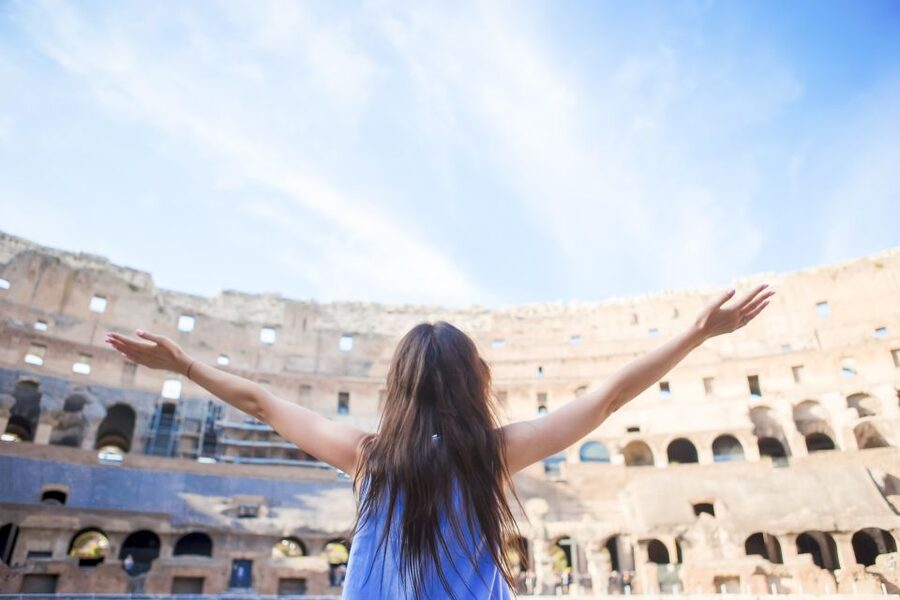
The tour gives you access to the Colosseum with an official guide. The exact order can change, so your group might begin with the amphitheater or visit the Forum and Palatine Hill first.
Inside, your guide explains how the building was made and how it survived for centuries. The construction story is especially useful because the Colosseum can otherwise feel like a giant shell. Looking at arches and seating is one thing. Understanding the planning, engineering, and movement of crowds helps you see it as a working machine.
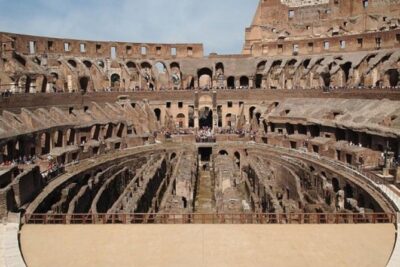
The Arena level gives you a closer view of the central performance space. From here, the scale of the seating and the distance between the public and the action become easier to understand. You can also look toward the lower areas and picture how animals, gladiators, equipment, and workers moved through the building.
The Arena visit is not simply a better photo stop. It helps explain the division between what the audience saw and what happened below. That contrast is the reason I would choose this tour over a basic walk through the upper levels.
Expect other groups and crowded conditions. One guide, Francesca, was praised for keeping people comfortable and moving along even in very hot, packed conditions. That is an important skill at the Colosseum, where a slow group can lose time quickly.
The Underground and the machinery behind the games
The Underground is the tour’s special access point. This was the working level beneath the Arena, including areas where wild animals were held before the public events.
Your guide discusses the practical side of the games: animals, gladiators, equipment, and the systems that brought action into view. The lower level turns an abstract story into a sequence of spaces. Instead of hearing only that an animal appeared in the arena, you can consider where it waited and how it reached the stage.
The Underground also adds a social and political layer. The games were not random entertainment. They reflected power, status, public loyalty, and the relationship between rulers and the people. A good guide can show how the Colosseum served both as an engineering achievement and as a tool of public life.
Access to this area is not guaranteed if conditions or site management require a change. The tour can continue without it, and a refund for that section may be offered, but check the current terms before paying the premium. Do not book this experience assuming the Underground can never be changed or cancelled.
More underground Rome tours:
- Colosseum: Underground and Ancient Rome Tour
★ 4.7 · 12,691 reviews - Rome: Crypts and Catacombs Underground Tour with Transfers
★ 4.6 · 5,341 reviews - Expert Guided Tour of Colosseum Arena OR Underground, and Forum
★ 4.5 · 5,041 reviews - Rome: Colosseum Underground Small Group Guided Tour
★ 4.7 · 4,844 reviews
Walking through the Roman Forum
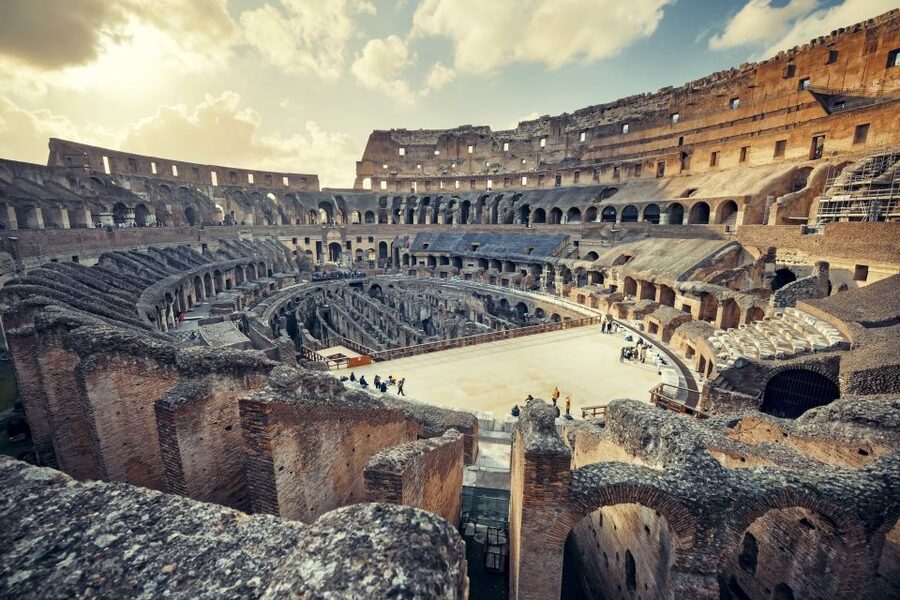
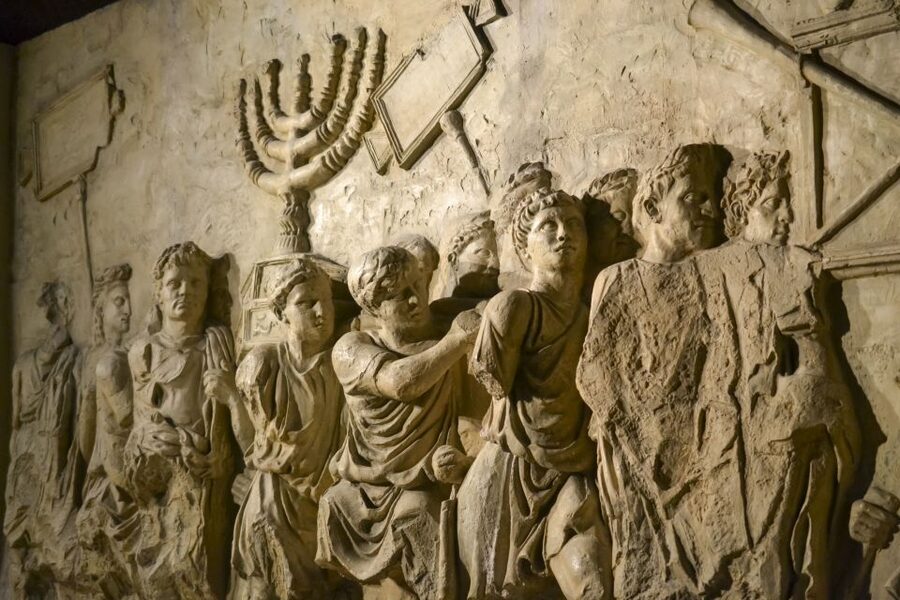
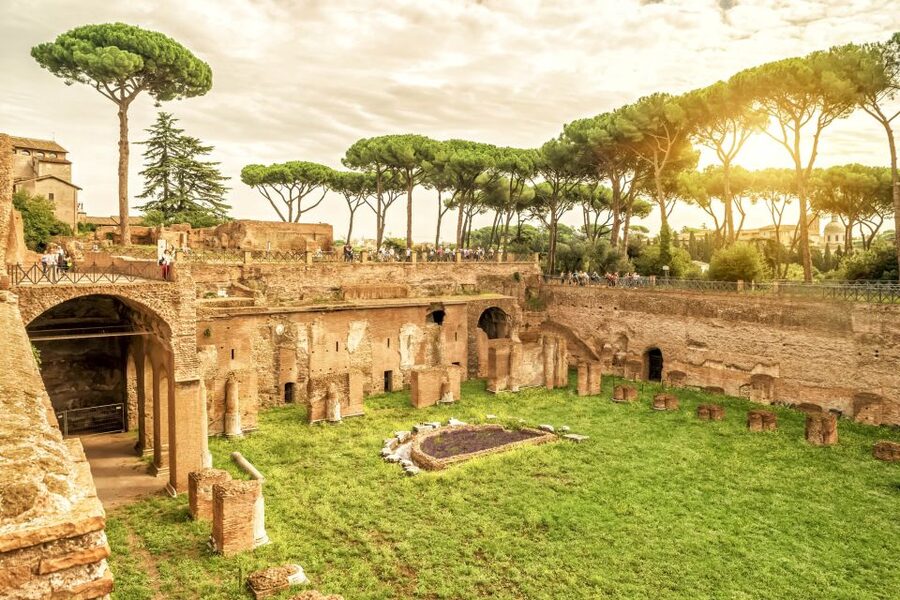
The Roman Forum is where the tour moves from spectacle to everyday public life. Its scattered columns and foundations can be hard to read without help, so the guide’s explanations are valuable here.
You learn about the spaces where Roman political, religious, and community life took place. The Forum also helps you understand the difference between imperial monuments and ordinary civic activity. Temples, meeting places, roads, and public buildings were part of a larger system, not isolated ruins.
The pace is designed to cover a lot without racing. Donatella, one of the guides, was praised for moving the group through the Forum and Colosseum Underground efficiently while the sites were packed. That balance matters because the Forum is large, uneven, and exposed to the weather.
The information is not limited to emperors. Guides discuss religious architecture, class structures, community life, and the ways buildings changed over time. You may also hear how later generations reused or altered ancient structures. That sort of explanation keeps the Forum from becoming a parade of unfamiliar names.
Depending on the day’s order, part of the Forum and Palatine Hill experience may be completed on your own after the official tour. The benefit is freedom to linger. The drawback is that you may need to manage your own route and attention once the guide’s structured explanation ends.
Palatine Hill and the views over ancient Rome
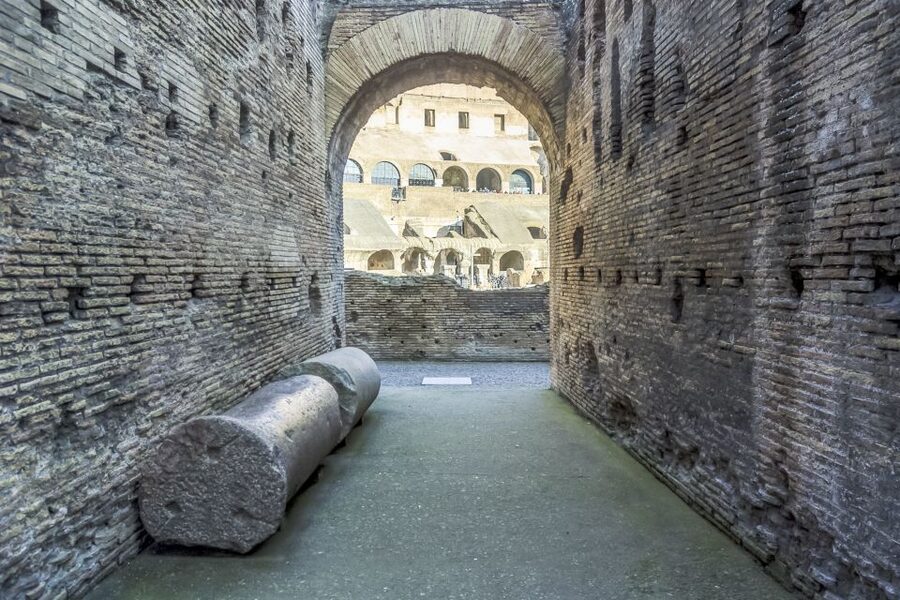
Palatine Hill adds height and perspective. From the hill, you get views toward the Colosseum and Circus Maximus, while the ruins around you point to the area’s importance in ancient Rome.
The hill is not a quick add-on. It helps connect the Forum to the wider city. You can see how public spaces, entertainment venues, and imperial residences occupied the same central zone.
Expect slopes, uneven surfaces, and walking. Comfortable shoes are essential, not just a polite suggestion. If your back hurts easily or you have a mobility impairment, the combination of the Forum and Palatine Hill may be tiring. The tour is not wheelchair accessible, and it is not suitable for wheelchair users or strollers because there is no elevator.
One useful feature is that you can stay longer at the end of the official tour. If you still have energy, use that time to look again at the views or revisit a ruin that went by too quickly. If you are tired, you can leave rather than being locked into another scheduled activity.
The guides are the heart of the experience
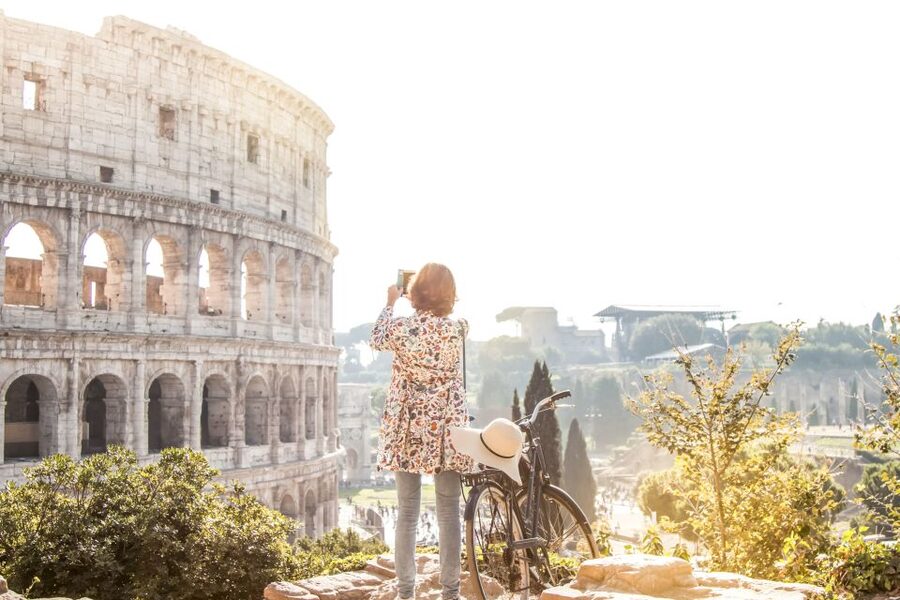
The strongest pattern in the feedback is the quality of the guides. Names that appear repeatedly include Francesca, Donatella, Gabriele, Gabriel, Pat, Janina, and Evie. The most praised traits are clear explanations, humor, patience, and the ability to keep a group moving without making it feel hurried.
Gabriele is described as an energetic storyteller who mixed facts with jokes. Francesca is praised for being lively, friendly, and attentive, including when the weather was hot or a member of the group was eight months pregnant. Donatella is noted for managing a crowded route at a good pace and responding with understanding when someone’s back began to hurt.
These details matter because Rome’s ancient sites can overwhelm you. A guide who only lists facts will leave you with names but little sense of how the city worked. A guide who explains politics, religious practice, social class, architecture, and daily life gives you a framework for understanding what you see.
The tour language is Spanish. The activity information identifies Spanish as the live guide language, so make sure everyone in your group can follow a Spanish explanation. Headsets are provided when eight or more people are present, which helps in a large group, though you should still stay close to the guide.
Group size can vary. Some bookings have turned into private tours when no other people were scheduled, while other groups have been larger. You should not book expecting a private experience, but a small group can sometimes happen.
Timing, heat, crowds, and the three-hour pace
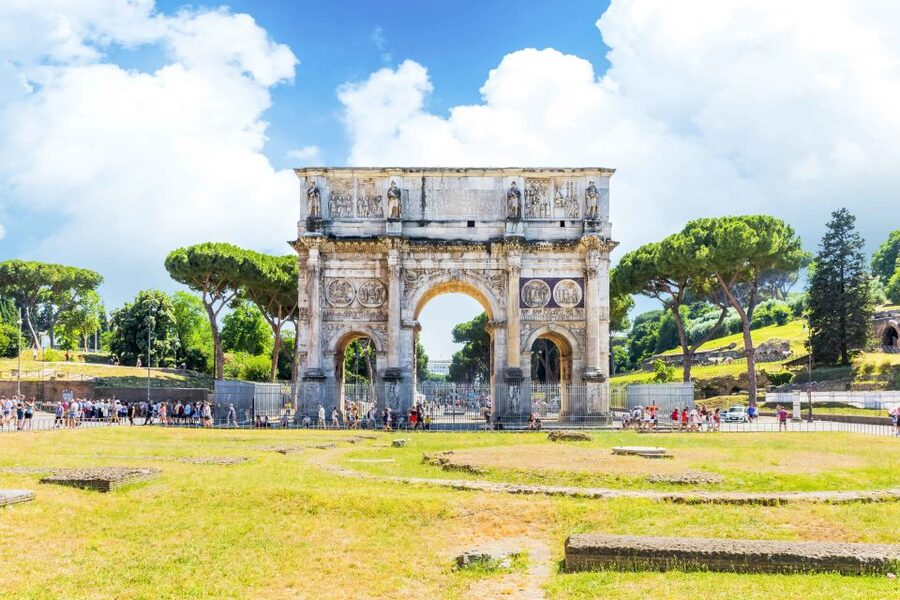
The scheduled duration is three hours. That is enough time for a serious overview, but not enough to examine every ruin at leisure.
The order of the sites can change. This flexibility likely helps the operator respond to crowd levels and entry conditions, but it means you should not plan around a precise sequence. Keep the rest of your day flexible, especially if you want to stay at the Forum or Palatine Hill after the guided portion.
Rome’s heat can make the route harder than the clock suggests. The Colosseum and archaeological area include open sections with limited shade. Bring what you need for a comfortable outdoor visit, while still following the restrictions on bags, sprays, glass, and other prohibited objects.
The pace is intended to maximize sightseeing without rushing. You will walk steadily, stop for explanations, and continue through several large sites. If you want a slow photographic study of every column, choose a self-guided visit or allow extra time after the tour.
Who will get the most from this tour
I would choose this tour for a first visit to Rome if you want the Colosseum to make sense, not just appear in your photographs. It suits people who value a live guide and want the Underground and Arena included from the start.
It is also a good fit for visitors with limited time. In three hours, you cover the Colosseum, Forum, and Palatine Hill without having to build a route from separate tickets and guidebooks.
Families with older children may find the Underground more engaging than a standard monument lecture because it explains action, animals, workers, and machinery. Still, strollers are not allowed, and the walking can be demanding.
I would hesitate to recommend it to anyone with significant back trouble, limited mobility, or difficulty with stairs and uneven ground. It is not wheelchair or stroller accessible. I would also skip it if your group cannot follow Spanish comfortably.
A practical verdict on the $157.47 price
The price is high compared with basic entry, but the comparison is not quite fair. This is a guided three-hour route with access to the Underground and Arena, plus the Forum and Palatine Hill.
The value is strongest when the restricted areas are available and when you want interpretation. The guide helps you understand why the games mattered, how the building worked, and what life was like beyond the arena. That can save you from wandering through impressive but confusing ruins.
The value is weaker if you prefer to read at your own speed, already know ancient Roman history, or only want a quick look at the Colosseum. It is also weaker if the Underground is the only reason you are booking and you are not comfortable with the possibility of that section being cancelled.
The activity is non-refundable, so check the time, language, physical demands, and prohibited-item rules before you commit.
Should you book the Colosseum Underground, Arena & Forum Tour?
Book it if you want the Colosseum’s lower level, prefer a guide to explain the political and social meaning of the games, and can manage three hours of walking. The Underground and Arena make this more revealing than a basic amphitheater visit, while the Forum and Palatine Hill give you the wider Roman setting.
Skip it if you need wheelchair or stroller access, dislike fixed group pacing, cannot follow Spanish, or want a low-cost ticket with plenty of independent time. For the right visitor, this is a strong all-in-one introduction to ancient Rome, especially when you get a guide such as Francesca, Donatella, or Gabriele who brings the ruins to life without hurrying you past them.
FAQ
How long does the tour last?
The tour lasts three hours. Starting times vary, so check availability when booking.
What sites are included?
The experience includes the Colosseum, its Underground and Arena areas, the Roman Forum, and Palatine Hill.
Is the Underground guaranteed?
The tour includes exclusive access to the Underground, but that section can be cancelled. In that situation, a refund for the Underground portion may be provided.
What language is the live tour?
The live tour guide language is Spanish.
Where do I meet the guide?
Meet at the green kiosk on the right as you exit the Colosseo metro station. Go downstairs if you reach the station’s upper-floor exit, and look for staff carrying a yellow label with the local operator’s name.
How early should I arrive?
Arrive 30 minutes before your scheduled start time.
Is the tour wheelchair or stroller accessible?
No. There is no elevator, and the tour involves a moderate amount of walking. It is not suitable for wheelchair users, stroller users, people with mobility impairments, or people with back problems.
Newest reviews from Rome
- Rome: Vatican Museums & Sistine Chapel Skip-the-Line Ticket★ 4.4 · 148 reviews
- Shared Shuttle Transfer from Rome to Civitavecchia Port★ 5.0 · 148 reviews
- Rome: Crypts & Catacombs After Hours Tour with Bone Chapel★ 4.6 · 149 reviews
- Ghosts Legends and Mysteries of Rome Walking Tour★ 5.0 · 149 reviews
- Skip the Line: Vatican and Sistine Chapel with Guided Tour★ 4.0 · 149 reviews
- Tivoli: Villa Gregoriana Entrance Ticket★ 4.7 · 150 reviews
- Pizza and Tiramisu Cooking Class in Rome, Piazza Navona★ 5.0 · 150 reviews
- Rome: Borghese Gallery Skip-the-Line Entry and Guided Tour★ 4.7 · 150 reviews
Underground Rome Tours, compared.
Colosseum: Underground and Ancient Rome Tour
Read our review →
Crypts and Catacombs Underground Tour with Transfers
Read our review →
Expert Guided Tour of Colosseum Arena OR Underground, and Forum
Read our review →
Colosseum Underground Small Group Guided Tour
Read our review →
St. Peter’s Basilica, Dome Climb, and Underground Tour
Read our review →
Colosseum Underground & Ancient Rome Guided Tour
Read our review →
Ancient Rome: Colosseum Underground Group Tour
Read our review →Browse the lists this tour appears in