Reviewed · VATICAN MUSEUMS & SISTINE CHAPEL
Rome: Early Bird Vatican Museums Small Group Tour (MAX 6 People)
The best thing about this Vatican tour is its early start. You meet at 7:30 AM near the Museums, then enter at the first 8:00 AM access, before the day’s full crush settles in. The Vatican is enormous, but this three-and-a-half-hour route gives you a strong first look at its greatest hits.
I like two things in particular: the six-person limit, which makes it easier to hear your guide and move through tight galleries, and the route into St. Peter’s Basilica, where you see Michelangelo’s Pietà and Bernini’s huge bronze Baldachin. The early entry also matters in hot weather, when the lines and crowded rooms become tiring fast.
The catch is that early access does not mean an empty Vatican. The Museums and Sistine Chapel can still feel crowded, and the chapel may be noisy despite its importance. At $179.81 per person, you are paying for time saved, a very small group, and expert explanation rather than simple admission.
In This Review
- Key points at a glance
- Why the 7:30 AM meeting time matters
- A six-person group changes the visit
- The Vatican Museums from the Courtyard of the Pigna
- The Gallery of Maps in five concentrated minutes
- Renaissance storytelling in the Gallery of Tapestries
- Ancient sculpture in the Gallery of the Candelabra
- The Sistine Chapel: famous, powerful, and often crowded
- The route to St. Peter’s Basilica
- Bernini’s Baldachin and the scale of the basilica
- St. Peter’s Square is the right ending
- What the $179.81 price buys you
- Practical details before you book
- Who should book this Vatican tour?
- Should you book it?
- FAQ
- What time does the Vatican tour start?
- How many people are in the tour group?
- Does the tour include St. Peter’s Basilica?
- How long does the experience last?
- What should I wear to the Vatican?
- Can I cancel for a full refund?
Key points at a glance
- First entry at 8:00 AM: Meet at Giuly’s Café at 7:30 AM and get moving before the later crowds arrive.
- Maximum six people: A small group makes it easier to ask questions and keep a steady pace.
- The Vatican’s essential galleries: See the Courtyard of the Pigna, Gallery of Maps, Gallery of Tapestries, and Gallery of the Candelabra.
- Michelangelo in two forms: Spend time with the Sistine Chapel frescoes and the Pietà in St. Peter’s Basilica.
- A guide-led Vatican route: Guides such as Ala, Alessia, Doriana, Francesca, Elisa, and Carlo have been praised for clear explanations and personal attention.
- Ends in St. Peter’s Square: The tour finishes beneath Bernini’s grand colonnade, not back at the starting café.
Why the 7:30 AM meeting time matters
The meeting point is Giuly’s Café at Via Santamaura 3, a short walk from the Vatican Museums. You meet at 7:30 AM for the 8:00 AM first access. That early appointment is the main reason to choose this tour instead of a later Vatican visit.
The Vatican Museums receive a steady stream of people throughout the day. Even at the first entry, you should expect other tour groups and individual visitors. Still, early access gives you a better chance to move through the opening galleries before the worst buildup.
You may wait only a few minutes to enter, but conditions can vary. Special events, security checks, and Vatican closures can change the flow. One important point: skip-the-line access saves you from the regular ticket queue, but it does not let you ignore security or every line inside the complex.
The early hour is especially useful from late spring through summer. Several people have found the Vatican hot, with little air conditioning in many rooms and only occasional fans. Bring water, wear light clothing that still meets the dress rules, and use comfortable shoes.
More Vatican Museums and Sistine Chapel entries:
- Vatican: Museums & Sistine Chapel Entrance Ticket
★ 4.5 · 144,003 reviews - Vatican Museums & Sistine Chapel Tour with Optional Basilica
★ 4.3 · 67,413 reviews - Vatican Museums, Sistine Chapel & St Peter’s Basilica Guided Tour
★ 4.5 · 39,149 reviews
A six-person group changes the visit
The maximum group size is six. That is unusually helpful in a place where larger groups can stretch across doorways, lose people in galleries, or spend time waiting for stragglers.
A small group also gives your guide room to adjust. If your family has questions, you can ask them without trying to interrupt a lecture meant for 25 or 40 people. Guides have been praised for moving at a comfortable pace, giving concise explanations, and spending a little time letting people absorb the Sistine Chapel.
This is not a private tour, though the group may be smaller than the maximum. One booking had only two couples, while another group had five people. You get personal attention, but the route and timing still need to suit the whole party.
The guide quality is one of the strongest parts of this experience. Named guides including Alessia, Ala, Doriana, Francesca, Elisa, Carlo, Valentina, Anna Maria, Mirta, Rafaela, and Lucca have been singled out for their art and history background, patience, friendly manner, or skill with children. Your exact guide is not guaranteed, but the format gives you a much better chance to interact than a large coach tour.
The Vatican Museums from the Courtyard of the Pigna
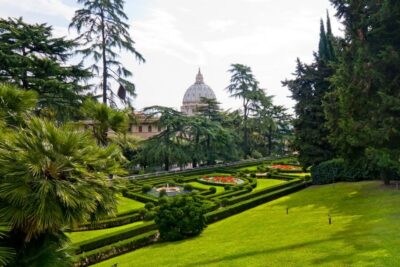
Once inside, the tour begins among the Vatican Museums’ galleries and courtyards. The first main area is the Courtyard of the Pigna, created from the 16th-century Belvedere area. It gives you room to orient yourself before entering the long interior sequence of art collections.
Look for Arnaldo Pomodoro’s Sphere within a Sphere, a large bronze globe with a cracked outer shell and a smaller sphere inside. The sculpture brings a modern note to the Vatican setting. Its fractured surface and inner form invite questions about creation, order, and hidden structure, and your guide can give the work context before the tour moves on.
The opening Museums visit lasts about 1 hour and 10 minutes. That sounds generous until you remember the scale of the collection. You will not see everything, and you should not expect to. The useful idea here is selection: your guide leads you toward major rooms and explains what deserves your attention instead of leaving you to wander through miles of corridors.
The Gallery of Maps in five concentrated minutes
The Gallery of Maps is one of the most memorable passages in the Vatican Museums. Its 16th-century maps of Italy were made under Pope Gregory XIII and stretch for about 120 meters.
The maps show how Italy was understood and pictured in the late Renaissance. You can study coastlines, cities, and regions while also noticing the decorative treatment of the walls and ceiling. Five minutes is not enough for a close look at every map, but it is enough for a focused introduction and a chance to take in the length of the gallery.
This is where a guide earns the fee. Without context, you might see a long decorated hallway. With a clear explanation, you begin to read it as a political, religious, and geographic picture of Italy from another age.
More ways to visit the Vatican:
- Rome: Vatican Museums, Sistine Chapel & Basilica Tour
★ 4.3 · 13,872 reviews - Vatican Museums & Sistine Chapel Skip-the-Line Entry Ticket
★ 4.4 · 13,838 reviews - Rome: Vatican Museums, Sistine Chapel & Basilica Tour
★ 4.7 · 13,217 reviews - Skip-the-Line Group Tour of the Vatican, Sistine Chapel & St. Peter’s Basilica
★ 4.5 · 12,779 reviews
Renaissance storytelling in the Gallery of Tapestries
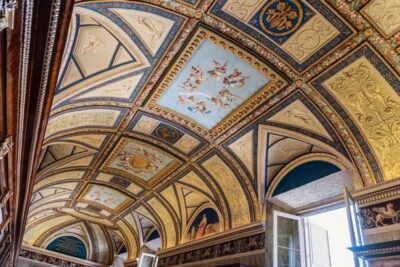
The Gallery of Tapestries contains woven scenes from biblical and historical stories, dating mainly from the 15th and 16th centuries. The designs were influenced by Raphael’s school, linking the room to one of the central artistic forces of the Renaissance.
The stop is listed at about five minutes, so think of it as a well-chosen viewing rather than a full art lesson. Look for the way fabric is used to create figures, movement, and space. Woven art can be easy to pass without noticing, but these works were made to carry painting-like detail into a different medium.
Your guide’s explanation can help you connect the gallery to the wider Vatican collection. This is also a good place to pause and decide what you want to remember, since the next rooms continue at a steady pace.
Ancient sculpture in the Gallery of the Candelabra
The Gallery of the Candelabra takes its name from the large marble candelabra dividing its sections. Inside are Greek and Roman statues, sarcophagi, and reliefs, displayed in a late 18th-century gallery setting.
The room combines ancient art with formal architecture. You will see how the Vatican’s collections bring objects from the ancient Mediterranean into a later papal setting. Again, the scheduled stop is short, about five minutes, but a guide can point out details you would likely miss on your own.
This part of the visit helps keep the Vatican from becoming only a Michelangelo pilgrimage. The Museums are also a record of ancient sculpture, Renaissance mapping, decorative arts, and centuries of collecting.
The Sistine Chapel: famous, powerful, and often crowded
The Sistine Chapel receives about 30 minutes on the route. Its name comes from Pope Sixtus IV, who had the older chapel restored between 1477 and 1480. It later became famous for its frescoes by Michelangelo and for the papal conclave held here.
Your guide explains the chapel before you enter, which is important because direct guiding and commentary are restricted inside. That preparation gives you a way to read the ceiling and the Last Judgment rather than simply look up at a famous surface.
The chapel can be the emotional center of the tour, but it can also be the most frustrating stop. Even in the morning, the room may be packed and noisy. Photography is not allowed, though enforcement can vary. If you want quiet contemplation, you may find the crowd disappointing. If you arrive with realistic expectations, you can still appreciate the scale, color, and drama of Michelangelo’s work.
The small group helps before and after the chapel. You can hear the explanation more clearly, and your guide can make sure you know where to go next. One guide allowed about 10 minutes for quiet personal time inside, a welcome balance between instruction and reflection.
The route to St. Peter’s Basilica
The tour continues to St. Peter’s Basilica, with about 45 minutes inside. Admission to the basilica is included at no separate ticket charge, though access can be affected by papal ceremonies, religious services, or special events.
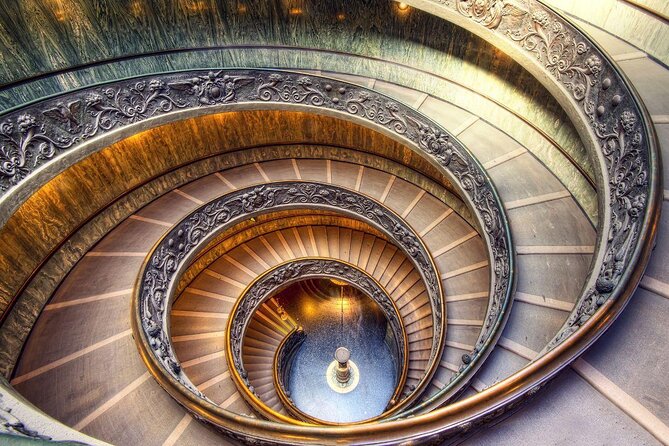
The route is important because St. Peter’s Basilica is not simply another room at the end of a museum tour. It is a vast church filled with major works of art and memorials. The transition from the Sistine Chapel toward the basilica also includes visually striking stairs, which can be a highlight in their own right.
Your guide helps you find the Pietà, Michelangelo’s Carrara marble sculpture of Mary holding the body of Christ. Created between 1498 and 1499, it was commissioned for a French cardinal’s funeral monument and later moved to its current chapel near the basilica entrance. It is the only work Michelangelo signed.
You also stop at the tomb of Saint John Paul II, identified in the tour information by his birth name, Karol Wojtyla. This gives the basilica visit a personal and modern connection alongside the Renaissance art.
Bernini’s Baldachin and the scale of the basilica
Near the high altar, Bernini’s Baldachin rises more than 90 feet above the floor. This elaborate bronze canopy is one of the basilica’s great visual anchors, marking the altar area with twisting forms and ornate detail.
The planned stop lasts about five minutes, but the Baldachin deserves a moment to understand its role. It is not merely a decorative canopy. It draws your eye upward, sets the center of the church, and shows how Baroque design uses scale to create drama.
The basilica can feel overwhelming if you enter without a plan. A guide points out the major works and keeps the visit moving, which is valuable when you have limited time. You will still see only a portion of what is inside, but the selection gives you a useful framework for a later return.
St. Peter’s Square is the right ending
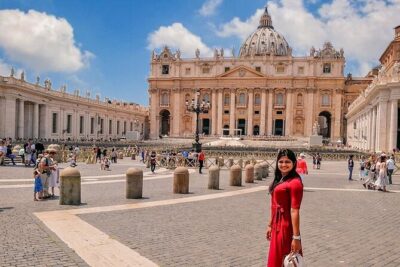
The tour ends in St. Peter’s Square, where you can admire Bernini’s monumental design. The elliptical space is enclosed by 284 Doric columns arranged in four rows, creating a grand embrace around the square.
About 15 minutes is set aside here. It is enough to look back toward the basilica, understand the geometry of the colonnade, and take photos. The end point is practical, too. You can continue exploring the Vatican area, find lunch, or make your way to another part of Rome without returning to the café.
The square can also become unexpectedly crowded during papal appearances or major celebrations. In one unusual case, a guide helped a group find a spot to see the Pope arrive. That kind of flexibility is possible, but it should be treated as luck and timing, not as a promised feature.
What the $179.81 price buys you
At $179.81 per person, this is an expensive half-day outing. You are not paying only for admission. The price covers first access, a guide, the small six-person format, and a carefully chosen route through several of Rome’s most difficult sights to manage alone.
The value is strongest if you dislike long lines, have limited time, or want art explained rather than simply displayed. Skip-the-line entry can save hours on a crowded day, and a good guide helps you avoid wasting energy on routes that do not fit your schedule.
The price is harder to justify if you are comfortable studying the Museums on your own or already have a strong plan. The Vatican ticket itself is not the whole cost of the experience, so independent visitors can spend less. You also need to accept that the three-and-a-half-hour visit is an introduction, not a complete tour of the Vatican collections.
For families, the format may be worth the extra cost. Guides have been praised for answering children’s questions patiently and keeping teenagers interested. For older visitors, avoiding long waits and traveling with a small group can make the day less tiring.
Practical details before you book
The tour is offered in English, uses a mobile ticket, and does not include transportation from your hotel. You need to make your own way to Giuly’s Café for the 7:30 AM meeting.
Dress carefully. Knees and shoulders must be covered for both men and women, with no shorts or sleeveless tops allowed in the basilica and selected museum areas. You could be refused entry if your clothing does not meet the rules.
Expect a moderate amount of walking, stairs, and time on your feet. Comfortable shoes are a must. Service animals are allowed, and the activity is near public transportation. Most people can take part, but anyone needing assistance with stairs should contact the provider before booking. A guide has assisted a participant who needed help navigating stairs, but you should not assume every route will be effortless.
Free cancellation is available up to 24 hours before the local start time. Cancellations or changes made less than 24 hours before the tour are not refunded or accepted.
The Jubilee brings one more warning. Some monuments may close or undergo restoration because of special celebrations. St. Peter’s Basilica can be shut with little notice. The operator may change the route or issue information about a partial refund, but no tour company can guarantee access during major religious events.
Who should book this Vatican tour?
I would choose this tour for a first visit to Rome, especially if you have only one chance to see the Vatican. It suits you if you want a guide to explain the art, need to protect your morning from long queues, or prefer a small group over a large headset-led procession.
It is also a smart choice for families and anyone visiting in hot weather. The early start does not remove the heat or crowds, but it reduces the amount of time spent in the worst conditions.
I would skip it if your main goal is a quiet Sistine Chapel. No early tour can promise that. I would also think twice if St. Peter’s Basilica is the one sight you care about most during Jubilee celebrations, since sudden closures can change the route.
Should you book it?
Book this Vatican tour if time, guidance, and a small group matter more to you than finding the lowest price. The early access is useful, the six-person limit is a real advantage, and the route covers the Vatican’s essential art and architecture without pretending that you can see everything.
Just arrive ready for security checks, walking, dress restrictions, and some crowding even at 8:00 AM. If you accept those limits, this is a well-planned way to meet the Vatican before the day reaches full volume.
FAQ
What time does the Vatican tour start?
You meet at Giuly’s Café, Via Santamaura 3, at 7:30 AM. First access to the Vatican Museums is scheduled for 8:00 AM.
How many people are in the tour group?
The group has a maximum of six travelers. Some departures may have fewer people.
Does the tour include St. Peter’s Basilica?
Yes. The visit to St. Peter’s Basilica is included, with no separate admission charge listed. Access can change because of papal events, religious services, or Jubilee-related closures.
How long does the experience last?
The tour lasts approximately three hours and 30 minutes. It ends in St. Peter’s Square.
What should I wear to the Vatican?
You must cover your knees and shoulders. Shorts and sleeveless tops are not allowed, and both men and women must follow the dress code.
Can I cancel for a full refund?
Yes, if you cancel at least 24 hours before the local start time. Cancellations and changes made less than 24 hours before the experience are not refunded or accepted.
More Museums in Rome
- Rome: Vatican Museums & Sistine Chapel Guided Tour
★ 4.3 · 12,117 reviews - Rome: Vatican Museums & Sistine Chapel Skip-The-Line Ticket
★ 4.2 · 11,708 reviews - Vatican Museums & Sistine Chapel Skip-the-Ticket-Line Tour
★ 4.3 · 10,486 reviews - Vatican Museums, Sistine Chapel & St Peter’s Basilica Tour
★ 4.6 · 10,222 reviews
Newest reviews from Rome
- ROME:Colosseum & Ancient Rome – private/small group TOUR★ 5.0 · 24 reviews
- Off the Beaten Track in Rome: Rione VI Parione Private Tour★ 5.0 · 24 reviews
- Cinematic Photoshoot in Rome★ 5.0 · 24 reviews
- Rome: Best of Colosseum and Roman Forum Small Group Guided Tour★ 4.5 · 24 reviews
- The Labyrinth of Rome between catacombs and ancient quarries★ 4.5 · 24 reviews
- Vatican and Trionfale Market Tour with Wine and Food Tasting★ 5.0 · 24 reviews
- private tour: Vatican Museums, Sistine Chapel, St. Peter’s Basilica★ 4.5 · 24 reviews
- Skip the Line: Vatican Wheelchair Accessible Private Tour★ 5.0 · 24 reviews
Vatican Museums & Sistine Chapel, compared.
Vatican Museums & Sistine Chapel Tour with Optional Basilica
Read our review →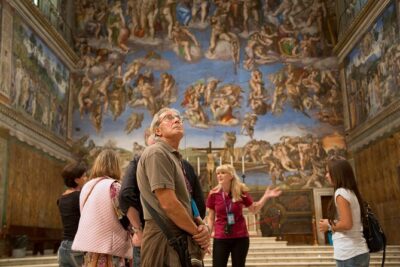
Vatican Museums, Sistine Chapel & St Peter’s Basilica Guided Tour
Read our review →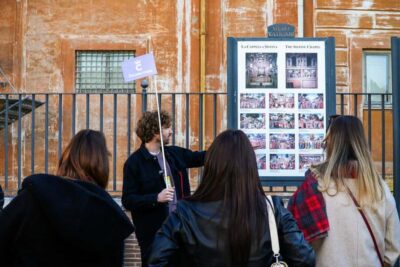
Vatican Museums, Sistine Chapel & Basilica Tour
Read our review →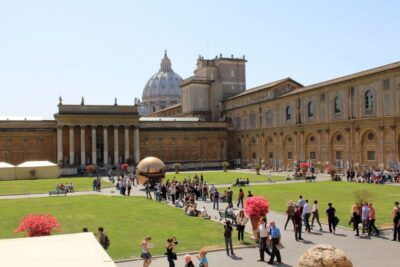
Vatican Museums & Sistine Chapel Skip-the-Line Entry Ticket
Read our review →Vatican Museums, Sistine Chapel & Basilica Tour
Read our review →
Skip-the-Line Group Tour of the Vatican, Sistine Chapel & St. Peter’s Basilica
Read our review →