
Reviewed · BORGHESE GALLERY TOURS
Rome: Galleria Borghese Museum Entry Ticket and Guided Tour
Rome’s Borghese Gallery packs an astonishing amount of art into a former villa, but the real draw is the face-to-face meeting with Bernini’s Apollo and Daphne. The marble seems to catch the instant Daphne turns into a laurel tree, with leaves, hair, and fingertips carved in delicate detail. Nearby, Caravaggio’s dark, sharp paintings give the visit a different mood.
I like the way this tour puts the major works into context instead of leaving you to guess why they matter. I also like the included headset, especially in a busy room where a guide’s voice can vanish quickly. The main caution is timing: two hours goes fast, and one reported booking lasted only 45 minutes, so confirm the meeting point and tour length at the start.
In This Review
- Key points to know before you book
- Why the Borghese Gallery earns two hours of your Rome schedule
- Meeting at Piazzale Scipione Borghese 5
- The Salone and its remarkable ceiling
- Bernini’s Apollo and Daphne
- Rape of Proserpine and the power of marble
- David and Bernini’s changing style
- Caravaggio’s dark, direct paintings
- What the guide adds to the visit
- Is $94 a fair price?
- Who should choose this tour?
- Should you book the Borghese Gallery guided visit?
- FAQ
- Where does the tour meet?
- How long does the tour last?
- What languages are available?
- Is admission to the Borghese Gallery included?
- What should I bring?
- Is the gallery wheelchair accessible?
- Can I cancel the booking?
Key points to know before you book
- Bernini takes center stage: See Apollo and Daphne, Rape of Proserpine, David, and earlier works such as Aeneas, Anchises and Ascanius.
- Caravaggio’s dramatic paintings: Look for Boy with Basket of Fruit, Saint Jerome Writing, Sick Bacchus, and Saint John the Baptist.
- The ceiling frescoes deserve attention: Mariano Rossi’s illusionistic fresco in the Salone appears almost three-dimensional.
- Two-hour guided visit: Admission, a live guide, and headsets are included, with English, French, and Italian available.
- Meet by a red flag: Find the guide at Piazzale Scipione Borghese 5, marked with the Saints Tour logo.
- Plan light: Large bags and luggage are not allowed, and you should bring a passport or ID card.
Why the Borghese Gallery earns two hours of your Rome schedule
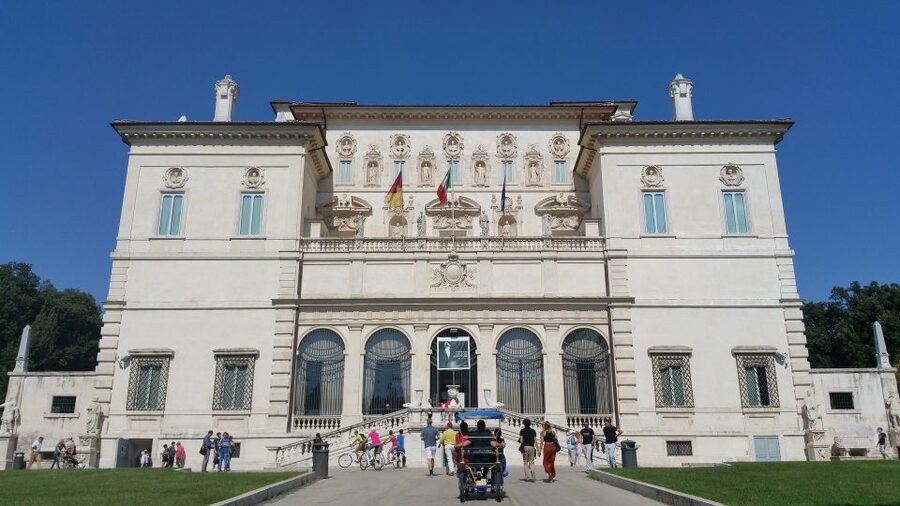
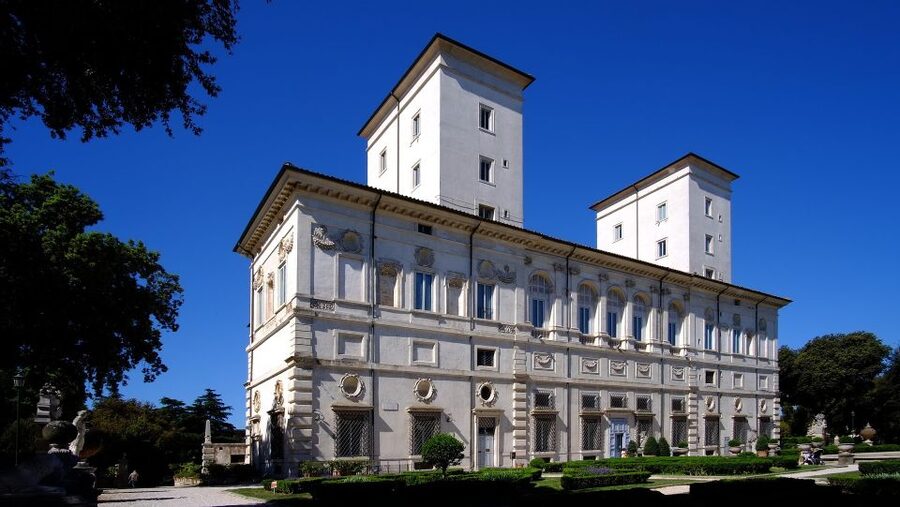
The Borghese Gallery is not a giant museum where you spend half a day wandering until your feet give up. It is a compact, highly concentrated collection housed in the former Borghese Villa, and that makes a guided visit especially useful.
Cardinal Scipione Borghese began the collection. He was the nephew of Pope Paul V and a determined patron of art, with a particular interest in Caravaggio. The result is a collection shaped by one person’s taste rather than assembled as a broad survey of European art.
That focus gives the gallery a clear personality. You see ancient sculpture, Baroque marble, portrait busts, and some of Caravaggio’s most striking paintings in rooms that were designed to impress. A guide helps connect the pieces, so you can see how the collection reflects the ambition and taste of its founder.
The two-hour limit is both a strength and a weakness. You get a focused route rather than an exhausting museum marathon, but you will not study every object at length. If you want to sketch, read every label, or linger over smaller works, you may want a separate visit.
More Borghese Gallery entries:
- Rome: Borghese Gallery Guided Tour with Skip-the-Line Entry
★ 4.8 · 2,649 reviews - Rome: Borghese Gallery Skip-the-Line Tickets with Audioguide
★ 4.6 · 2,562 reviews - Rome: Borghese Gallery Entry Ticket & Optional Guided Tour
★ 4.5 · 2,237 reviews
Meeting at Piazzale Scipione Borghese 5
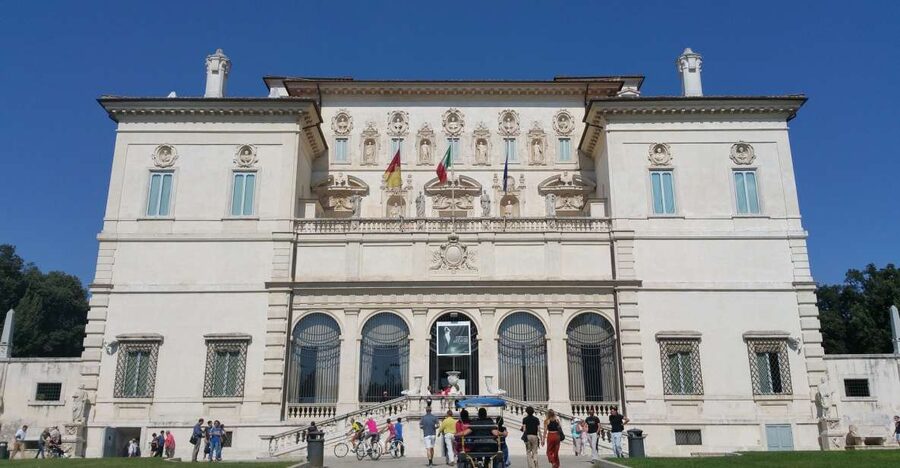
The meeting point is Piazzale Scipione Borghese 5. Your guide carries a red flag with the Saints Tour logo, which is the detail to watch for when you arrive.
There is no hotel pickup or drop-off, so you need to make your own way to the gallery. Give yourself enough time to reach the meeting point without rushing. The supplied details do not specify a particular entrance procedure or transport route, so follow the booking instructions you receive and look for the red flag rather than relying on a vague meeting area.
Bring a passport or ID card. Large bags and luggage are not allowed, so arrive with only what you need for the visit. This is practical advice for any museum day in Rome, but it matters here because a bulky bag can slow you down before the art begins.
The tour operates rain or shine. That matters if the weather turns wet, since your outdoor arrival still goes ahead.
The Salone and its remarkable ceiling
The first major visual surprise is not a famous statue. It is the ceiling of the Salone, the large first room.
Mariano Rossi painted the fresco showing Marcus Furius Camillus relieving the siege of the Capitol by the Gauls. The clever use of foreshortening makes the scene seem to project into the room. From the floor, the figures and architecture can look almost three-dimensional.
This is exactly the sort of detail that can slip past you when you walk through a grand room while aiming straight for Bernini. I like having a guide call attention to the ceiling early, because it changes how you read the rest of the gallery. The rooms are not neutral containers for art. They are part of the display.
The Salone also leads into smaller rooms with their own decorative details. The Chamber of Ceres contains a marble vase depicting Oedipus and the Sphinx. Another room has a ceiling fresco by Francesco Caccianiga showing the Fall of Phaeton.
The ceiling paintings are not merely decoration between the famous sculptures. They set the tone for the gallery: theatrical, ambitious, and designed to reward anyone who remembers to look up.
Bernini’s Apollo and Daphne
Bernini’s Apollo and Daphne is one of the visit’s essential stops. The sculpture shows the mythological moment when Daphne escapes Apollo by changing into a laurel tree.
The work is famous for its movement, but its greatest power is in the small details. Daphne’s fingers stretch into leaves, her hair flows behind her, and the surface of the marble shifts from human skin to bark and foliage. Bernini makes hard stone feel soft, wet, and alive.
You will get more from this piece if you take a moment to walk around it as far as the gallery allows. From one angle, the chase is clear. From another, the transformation becomes the main subject. Your guide can explain the story and point out details that are easy to miss when the room is full.
The sculpture is in the third room of the Salone area, according to the route provided for the visit. That gives the tour a useful rhythm: grand ceiling, decorative rooms, then a major work that demands close attention.
More museums and galleries in Rome:
- Vatican: Museums & Sistine Chapel Entrance Ticket
★ 4.5 · 144,003 reviews - Vatican Museums & Sistine Chapel Tour with Optional Basilica
★ 4.3 · 67,413 reviews - Vatican Museums, Sistine Chapel & St Peter’s Basilica Guided Tour
★ 4.5 · 39,149 reviews - Rome: Vatican Museums, Sistine Chapel & Basilica Tour
★ 4.3 · 13,872 reviews
Rape of Proserpine and the power of marble
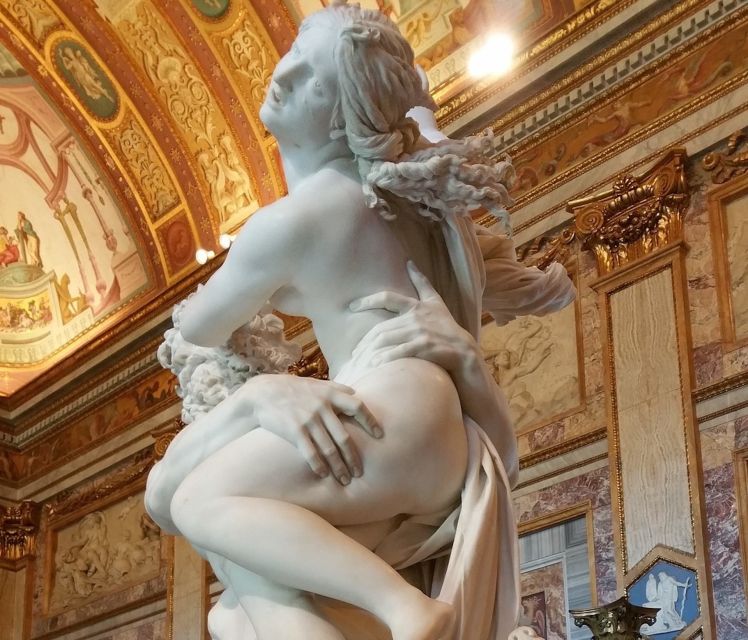
Bernini’s Rape of Proserpine is another centerpiece. The subject is violent and unsettling: Pluto carries Proserpine away, and her body twists against his grip.
Look closely at Pluto’s hand pressing into Proserpine’s thigh. Bernini carved the impression of fingers in flesh from marble. That detail is often what people remember, but the whole composition matters. Proserpine turns away while Pluto drives forward, creating a tight spiral of bodies and force.
This is not a calm or pretty sculpture. It shows how Baroque art uses motion, emotion, and physical drama to seize your attention. A good guide can also help you place the work among Bernini’s early secular sculptures, rather than treating it as an isolated showpiece.
The gallery contains a large share of Bernini’s secular sculpture, so the visit lets you compare how his style develops. You see early works such as Goat Amalthea with Child Jupiter and Faun and Aeneas, Anchises and Ascanius, then move toward the famous dynamic works.
David and Bernini’s changing style
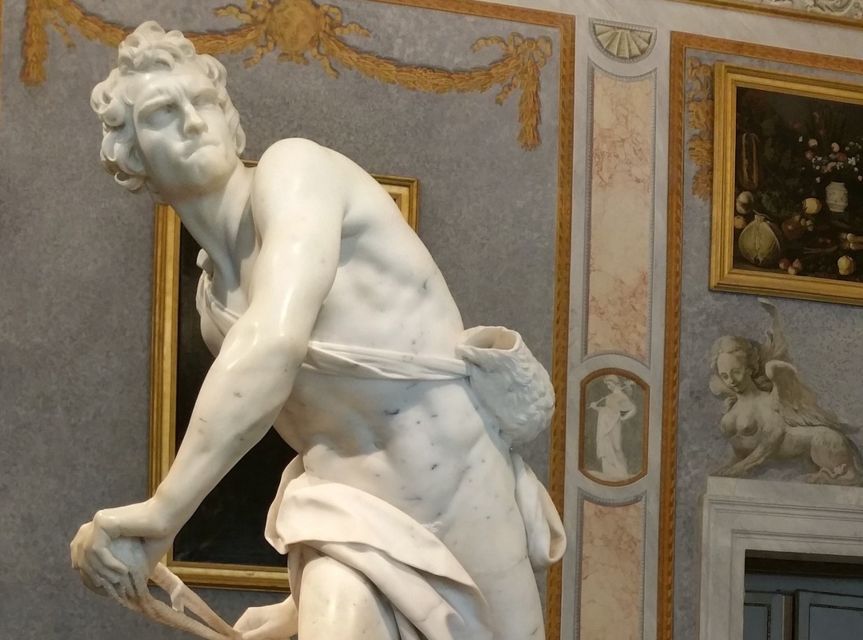
Bernini’s David is another major work on the ground floor sculpture route. Unlike Michelangelo’s David, which presents a figure poised before action, Bernini shows David in the middle of his movement.
That difference is useful to discuss in a guided tour. Bernini’s figure twists through space, making you feel that the action continues beyond the block of marble. The sculpture asks you to imagine the unseen target, rather than simply admire a finished pose.
Seeing David beside Apollo and Daphne and Rape of Proserpine helps you notice Bernini’s recurring interest in movement. Bodies turn, faces react, and the sculptures seem built around a split second. The guide can point out how the works engage the room and the person looking at them.
You will also see portrait busts, including Pope Paul V and two portraits of Cardinal Scipione Borghese. These are important because they return the focus to the man who formed the collection. Scipione was not just a name attached to the building. His portrait presence reminds you that personal power and personal taste shaped what you see.
Caravaggio’s dark, direct paintings
Caravaggio brings a sharp change of mood after the white marble of Bernini. His paintings use strong contrasts of light and shadow, with figures that feel immediate and human rather than idealized.
The collection includes Boy with Basket of Fruit, Saint Jerome Writing, and Sick Bacchus, along with Saint John the Baptist. These works show why Scipione Borghese prized Caravaggio.
Saint John the Baptist deserves special attention. The painting is not a grand public scene filled with many figures. Instead, its power comes from the direct presence of the subject and Caravaggio’s control of light. Your guide can help you compare its treatment of the human body and expression with Bernini’s carved figures nearby.
The Caravaggio works also give you a chance to slow down. Sculpture often rewards movement around an object, while painting asks you to stand still and watch the light. In a two-hour visit, that contrast keeps the route from becoming a string of similar marble masterpieces.
The gallery’s Caravaggio group is one of the strongest reasons to choose a guided tour rather than treat the building as a quick photo stop. The paintings are famous, but fame alone does not explain what you are seeing. A guide can connect the works to Cardinal Borghese’s collecting habits and show how different their mood is from the grand Baroque sculpture.
What the guide adds to the visit
A live guide is included in English, French, or Italian, and headsets are provided. The headsets are a small but useful feature. They allow you to hear the explanation without standing directly beside the guide, which helps when other people are viewing the same work.
The best use of a guide here is not simply naming each artist. You want help with the stories behind the sculptures, the illusion in the ceiling frescoes, and the visual links between Bernini’s works.
One booking received a private visit because only one family attended. That is not something you should count on, since group size can vary, but it shows that the experience may sometimes feel more personal than a standard large-group tour.
A guide named Silvia received particular praise for covering the key works within the limited time and for being patient with teenagers. If Silvia is leading your departure, you can expect a guide who has been specifically appreciated for keeping a family group engaged. Guide assignments can change, so do not book solely on the expectation that she will lead your tour.
The overall rating is 4.5 from 111 reviews, but the lower score attached to a 45-minute visit is worth taking seriously. If your tour seems to be ending far earlier than the advertised two hours, ask the guide for clarification before leaving.
Is $94 a fair price?
At $94 per person, this is not a cheap museum entry. The price includes the admission ticket, a live guided tour, and headsets, so you are paying for both access and interpretation.
The value depends on how you use the two hours. If you already know the gallery well and prefer to move at your own pace, a guided ticket may feel expensive. If Bernini and Caravaggio are high on your Rome list, the guide can help you spend limited time on the works that matter most.
Advance planning also matters. One French booking noted that late spaces became much more expensive, so do not leave this visit until the last minute if your schedule is fixed. The gallery is a popular stop, and a set time can be worth paying for when you have only a few days in Rome.
The flexible booking terms add some value: you can reserve now and pay later, and cancellation is free up to 24 hours in advance for a full refund. Those terms do not make the ticket inexpensive, but they reduce the risk of committing too early.
Who should choose this tour?
I would choose this visit if you want the main Borghese highlights explained in a compact format. It suits first-time visitors, families, and anyone who wants a clear route through Bernini’s sculptures and Caravaggio’s paintings.
It is also a good fit for families with teenagers, especially if your group benefits from a guide who can keep the pace moving. Silvia’s reported patience with teenagers is an encouraging detail, though the guide is not guaranteed.
Art lovers who already know the collection may prefer more time alone. The two-hour structure keeps things focused, but it may feel rushed if you want to examine every portrait bust, ancient object, or fresco.
The gallery is wheelchair accessible. You still need to check the exact arrangements for your own visit, since the supplied details confirm accessibility but do not describe the route or facilities in detail.
Should you book the Borghese Gallery guided visit?
Book it if you want Bernini and Caravaggio to be the center of your Rome art plans, and if you value a guide who can explain what makes the famous works special. The ceiling frescoes, the dramatic marble, and the compact two-hour route make this a strong use of limited time.
Think twice if you dislike fixed schedules, want a long unhurried museum session, or are unwilling to pay $94 for guided access. Confirm the meeting point, arrive with ID and no large bag, and check that your visit will run for the full advertised duration.
For most first-time visitors, I would book ahead rather than gamble on a later and possibly pricier opening. The gallery’s best works are too concentrated to skip, and a clear route makes the visit easier to enjoy.
FAQ
Where does the tour meet?
The meeting point is Piazzale Scipione Borghese 5. Your guide carries a red flag with the Saints Tour logo.
How long does the tour last?
The advertised duration is two hours. Check the available starting times when booking.
What languages are available?
The live tour guide and audio guide are available in English, French, and Italian.
Is admission to the Borghese Gallery included?
Yes. The entry ticket is included, along with the guide and headsets.
What should I bring?
Bring your passport or ID card. Large bags and luggage are not allowed.
Is the gallery wheelchair accessible?
Yes, the activity is listed as wheelchair accessible.
Can I cancel the booking?
You can cancel up to 24 hours in advance for a full refund. You can also reserve now and pay later.
Newest reviews from Rome
- ROME:Colosseum & Ancient Rome – private/small group TOUR★ 5.0 · 24 reviews
- Off the Beaten Track in Rome: Rione VI Parione Private Tour★ 5.0 · 24 reviews
- Cinematic Photoshoot in Rome★ 5.0 · 24 reviews
- Rome: Best of Colosseum and Roman Forum Small Group Guided Tour★ 4.5 · 24 reviews
- The Labyrinth of Rome between catacombs and ancient quarries★ 4.5 · 24 reviews
- Vatican and Trionfale Market Tour with Wine and Food Tasting★ 5.0 · 24 reviews
- private tour: Vatican Museums, Sistine Chapel, St. Peter’s Basilica★ 4.5 · 24 reviews
- Colosseum guided tour with Virtual Reality★ 5.0 · 24 reviews
Borghese Gallery Tours, compared.
Borghese Gallery Guided Tour with Skip-the-Line Entry
Read our review →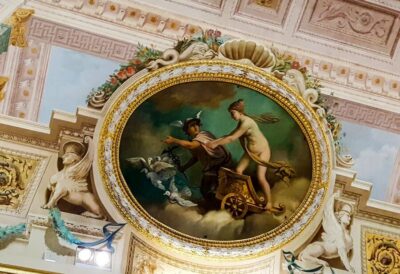
Borghese Gallery Skip-the-Line Tickets with Audioguide
Read our review →
Borghese Gallery Entry Ticket & Optional Guided Tour
Read our review →
Borghese Gallery & Gardens Small Group Guided Tour
Read our review →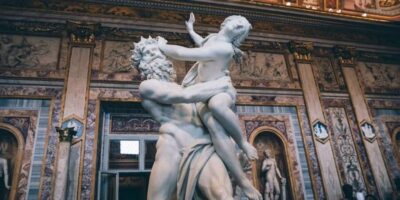
Borghese Gallery, Canova’s Masterpieces Skip-the-Line Guided Tour
Read our review →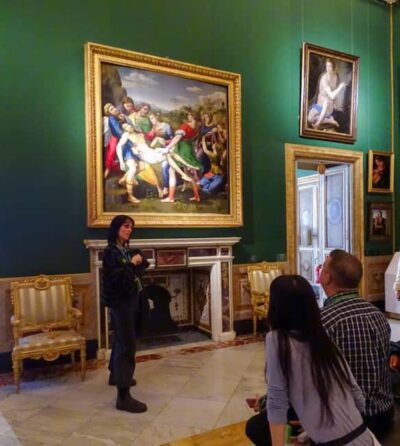
Borghese Gallery Guided Tour with Skip-the-Line Entry
Read our review →Browse the lists this tour appears in