
Reviewed · EVENING EXPERIENCES
Rome: Guided City Center Evening Sightseeing Walking Tour
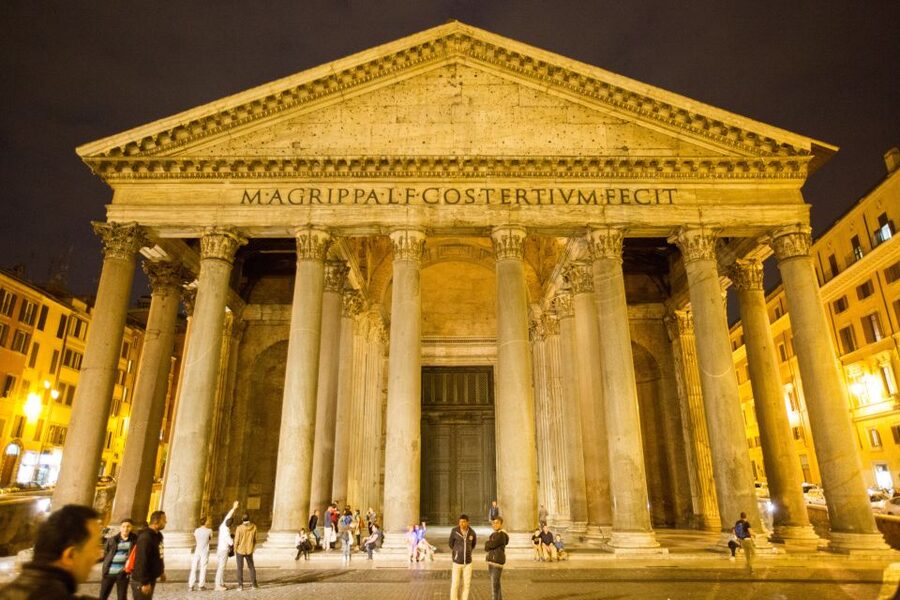
Rome is at its most atmospheric when the heat eases and the stonework catches the last light. This three-hour evening walk takes you from Piazza del Popolo to Campo de’ Fiori, with sunset from Pincio Terrace and Rome’s great center-stage sights along the way.
I like the smart route, which links the Spanish Steps, Trevi Fountain, Pantheon, and Piazza Navona without wasting time on transport. I also like the guides’ lively approach: Andrada, Carolina, Marzia, and others have brought history, art, religion, and local food tips into the walk. The main drawback is simple: you walk almost nonstop, including an uphill start, and the tour is not suitable for wheelchair users.
In This Review
- Key points to know before booking
- Why an evening walk is a smart way to meet Rome
- Starting at Piazza del Popolo and climbing to Pincio Terrace
- Spanish Steps and Bernini’s Barcaccia Fountain
- Trevi Fountain and the famous coin toss
- The Pantheon from Piazza della Rotonda
- Piazza Navona and Bernini’s Four Rivers Fountain
- Finishing at Campo de’ Fiori
- Pace, comfort, and what the three hours feel like
- Is $46 a fair price?
- Who should book this Rome walking tour?
- Should you book it?
- FAQ
- How long is the Rome evening walking tour?
- What sights are included?
- Where does the tour meet?
- Where does the tour finish?
- What language is the tour offered in?
- Is hotel pickup included?
- Are children allowed to join for free?
- Is the tour suitable for wheelchair users?
Key points to know before booking
- Sunset from Pincio Terrace: Begin with a high view across Rome’s rooftops from above Piazza del Popolo.
- Classic city-center route: See the Spanish Steps, Trevi Fountain, Pantheon, Piazza Navona, and Campo de’ Fiori in one evening.
- History with a human voice: Guides including Andrada, Carolina, Marzia, and Ghil have been praised for clear explanations, humor, and answers to unexpected questions.
- A useful first-night tour: The route helps you get your bearings and choose places to revisit during the rest of your stay.
- Three hours on foot: Wear comfortable shoes and expect steps, uneven streets, and no scheduled rest break.
- Good evening value: At $46 per person, you are paying for a live guide and an efficient introduction to Rome’s historic heart, not entry to the monuments.
Why an evening walk is a smart way to meet Rome
Rome can feel like too much on a first day. Every street seems to lead to a fountain, church, palace, or ancient column, and it is easy to see the sights without understanding what you are looking at. A guided walk gives those details a place in the larger story.
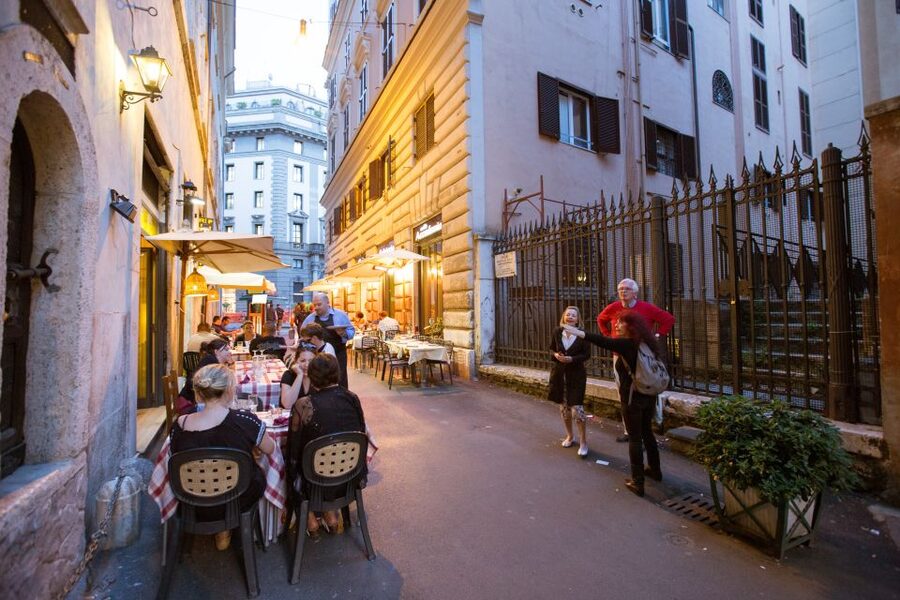
The evening timing helps in two practical ways. First, the city is often more comfortable after the day’s heat, especially in summer. Second, the monuments look different under evening light. The Trevi Fountain glows, Piazza Navona takes on a social buzz, and the rooftops seen from Pincio Terrace turn soft and gold around sunset.
I especially like this as a first evening in Rome. You cover a good sweep of the center, learn where the main squares are, and can make mental notes about where to return for dinner, a drink, or a slower look. One useful touch is that guides have suggested Roman foods such as supplì and offered restaurant advice during the walk.
This is not a museum tour. The Pantheon is viewed from outside, and the walk does not include monument entry. Think of it as a city orientation with strong views, public art, architecture, and stories along the way.
More walking tours in Rome:
- Rome: Trastevere & Campo de Fiori Street Food Walking Tour
★ 4.9 · 2,768 reviews - Rome: Paranormal Night Walking Tour & Secret Backstreets
★ 4.9 · 1,921 reviews - Rome by Night Walking Tour – Legends & Criminal Stories
★ 4.5 · 1,003 reviews
Starting at Piazza del Popolo and climbing to Pincio Terrace
Meet your guide in Piazza del Popolo, in front of Santa Maria del Popolo Church, beside the Leonardo da Vinci Museum. Look for the Rome Your Way sign. The meeting point can be a little confusing, so arrive with enough time to identify the church and find the guide rather than waiting until the scheduled start.
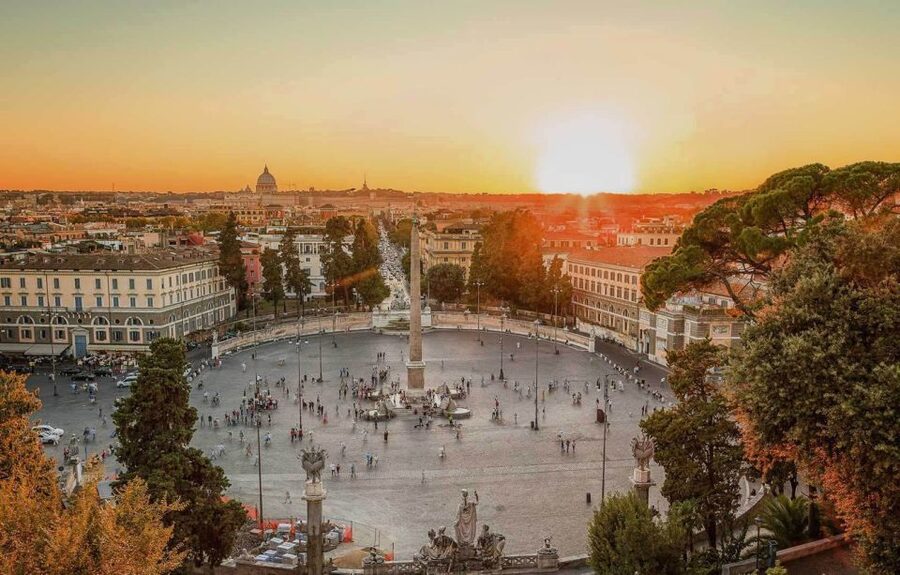
Piazza del Popolo is a fitting place to begin. Churches, fountains, and monuments frame the broad square, giving you an immediate lesson in Rome’s habit of layering different centuries in one place. The square is grand without being hard to understand, and a guide can point out how its layout works before the group heads uphill.
The first climb to Pincio Terrace is the tour’s clearest physical test. It is not a long mountain walk, but the slope and steps can feel sharp at the start, especially after a flight or a full afternoon of sightseeing. One person described this uphill section as the difficult part, while also making clear that the view was worth the effort.
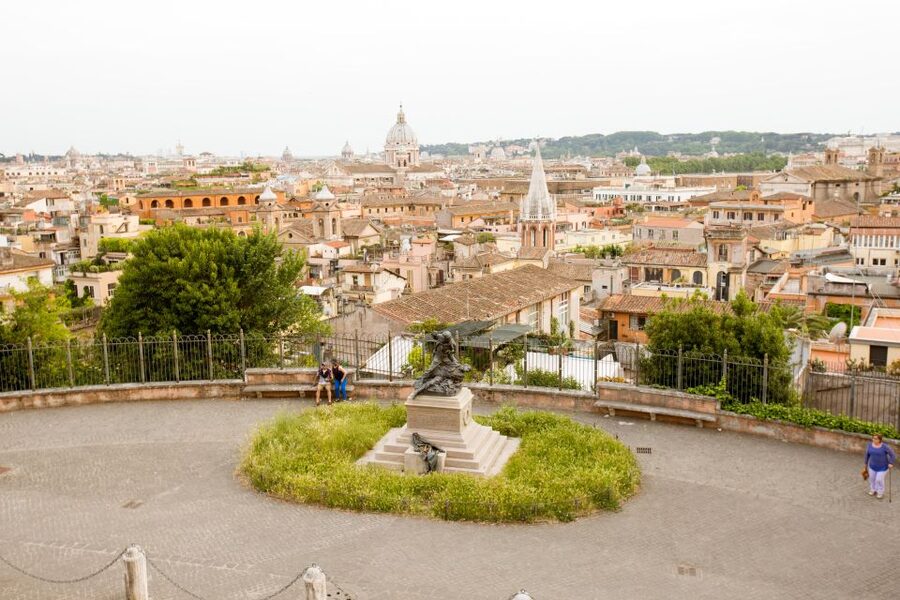
At the terrace, you look across Rome from above. This is one of the tour’s best moments because it gives you a sense of the city before you return to street level. Sunset times change with the season, so check the available start time carefully. The schedule should match the light if this view is a main reason for booking.
Spanish Steps and Bernini’s Barcaccia Fountain
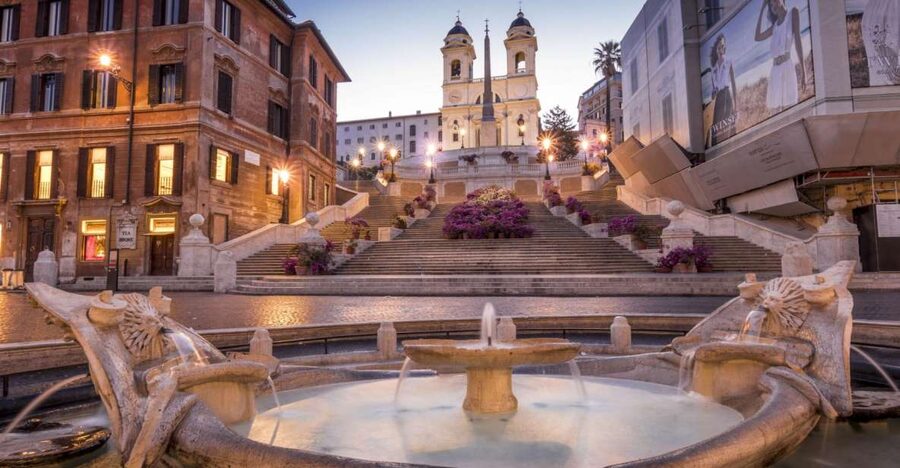
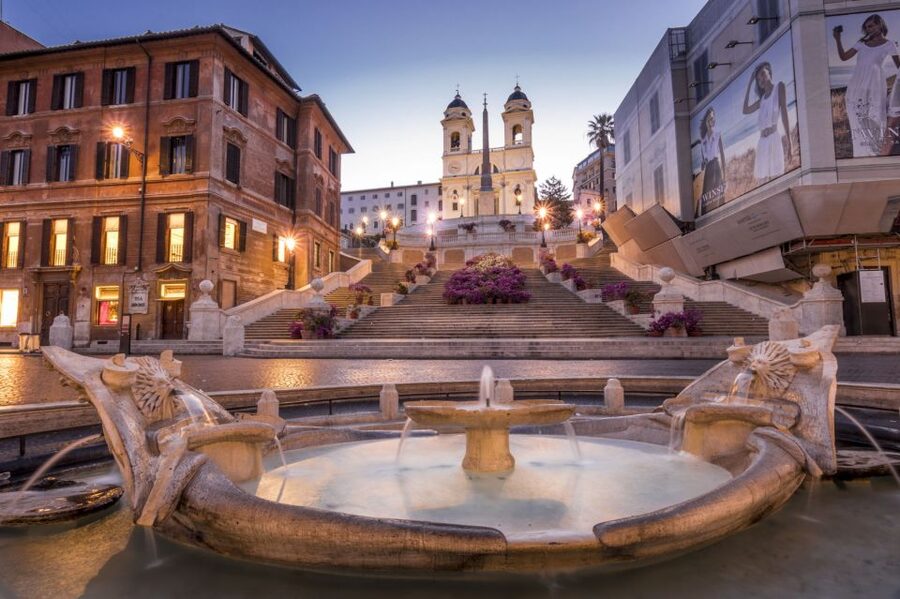
From the Pincio area, the route continues toward Piazza di Spagna and the Spanish Steps. The steps are one of Rome’s most recognizable public spaces, but their appeal is not only photographic. They connect the lower square with the upper streets and create a lively meeting place in the middle of the historic center.
At the foot of the steps sits Bernini’s Barcaccia Fountain, shaped like a partly sunken boat. It is a small fountain compared with the Trevi, but its low profile makes it easy to miss when you walk past alone. This is exactly the sort of detail a guide adds value to.
The Spanish Steps are also a good example of why this tour suits people who want context rather than a checklist. You can see the steps in minutes by yourself. With an English-speaking guide, you get the story of the setting, the sculpture, and the surrounding architecture while the place is still part of a wider route.
Do not expect a long stop for private photos or quiet sitting. The walk has several major sights to cover, and the pace is purposeful. You will have time to look, listen, and take pictures, but this is not designed as a leisurely café crawl.
Trevi Fountain and the famous coin toss
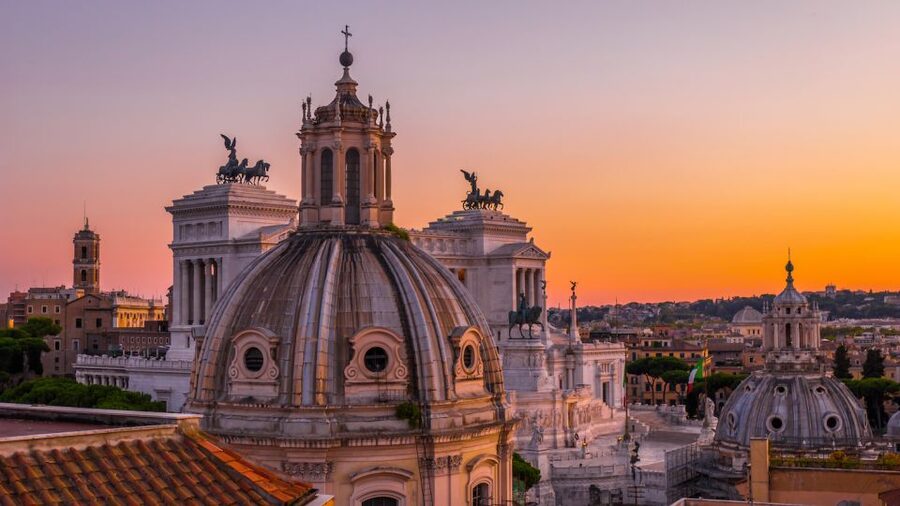
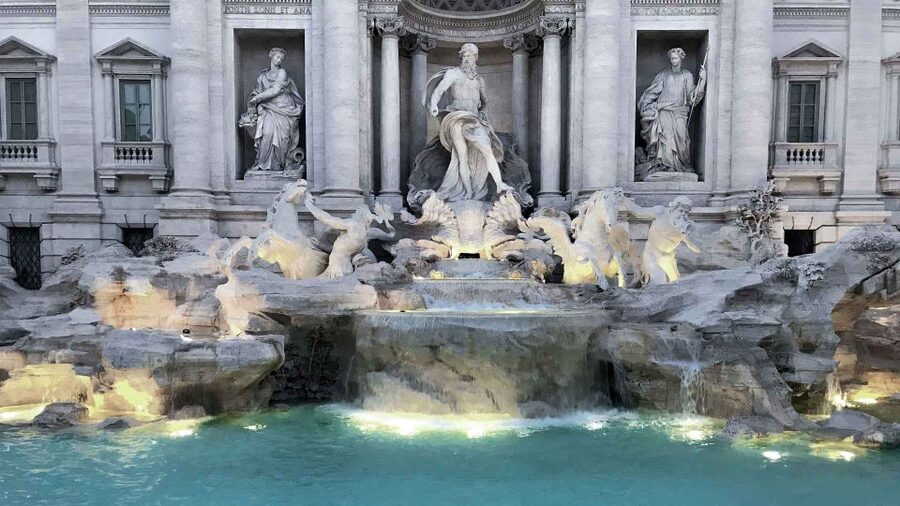
The Trevi Fountain is the route’s big crowd-pleaser. It is Rome’s largest Baroque fountain, filling the space with rockwork, water, figures, and theatrical movement. Even if you have seen photographs, the full scale is more impressive in person.
The traditional coin toss is part of the fun. Toss a coin over your left shoulder into the fountain, and legend says you will return to Rome. It is a small ritual, but it fits the mood of an evening walk through the city. Bring a coin if you want to take part, but the tour does not depend on it.
The practical issue here is crowding. The fountain is one of Rome’s most popular sights, and the space can be busy even after sunset. A guide helps by giving you something useful to focus on instead of simply trying to find a clear view. Listen for the explanation of the fountain’s design, then take your pictures when the group pauses.
This stop also shows the value of having a guide who can handle questions. One guide was praised for answering questions beyond the immediate site, which matters in Rome. You may start with a fountain and end up asking about Baroque art, Roman religion, or how the city changed over time.
More Rome tours worth comparing
- Rome: City Highlights Open-Top Bus Night Tour
★ 4.1 · 2,038 reviews - Vespa Sidecar Tour By Night with Pickup
★ 5.0 · 1,803 reviews - Rome by Night – Ebike Small Group Tour – Food and Wine (Option)
★ 5.0 · 1,275 reviews - Colosseum Sunset Tour with Entry
★ 4.5 · 1,230 reviews
The Pantheon from Piazza della Rotonda
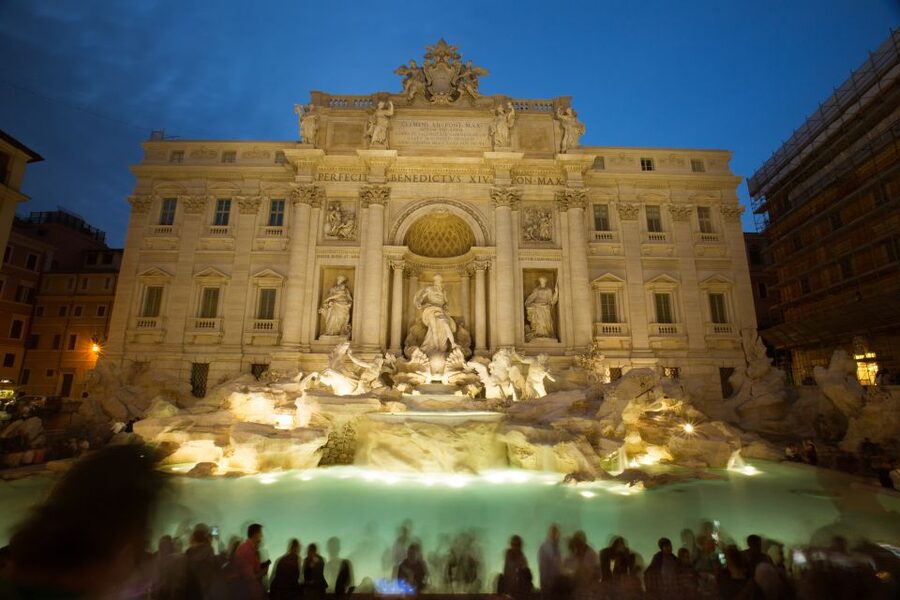
The walk then reaches Piazza della Rotonda and the exterior of the Pantheon. This is a shorter visit than a dedicated Pantheon tour, but the building’s outside tells an important story on its own.
The Pantheon was built in 27 B.C. and dedicated to all the Roman gods. In the seventh century, it became a church dedicated to Mary and the martyrs. That change of use helps explain why the building survived while so much ancient Roman construction disappeared or was altered.
The Pantheon is also the burial place of major Renaissance figures, including Raffaello. You will not go inside as part of this walking experience, so book this tour for the exterior setting and historical explanation, not for an interior look at the dome and opening above it.
Piazza della Rotonda gives the stop extra character. The Pantheon faces a public square where you can appreciate the building’s proportions and the way ancient Rome remains part of everyday city life. This is one of the places where a short explanation can make a familiar photograph feel much more meaningful.
Piazza Navona and Bernini’s Four Rivers Fountain
Piazza Navona is one of the evening’s most rewarding stops. The long, open square follows the shape of an ancient Roman stadium, and today it is lined with fountains, restaurants, churches, and grand buildings.
At the center is Bernini’s Four Rivers Fountain. Its figures represent four great rivers, and the sculpture gives the square a strong visual focus. Your guide can help you read the gestures, rocks, animals, and central obelisk instead of treating the fountain as a single mass of marble.
There is more to see here than Bernini’s work. The Church of Sant’Agnese in Agone, associated with Borromini, faces the square, while Palazzo Pamphili adds a grand architectural backdrop. At the northern end is the Neptune Fountain, and the Moor Fountain sits at the southern end.
I like this stop because it combines art, architecture, and public life. You are not standing in front of an isolated monument. You are in a Roman square that works as a place to walk, meet friends, eat, and watch the city move around its historic center.
The guide’s storytelling matters particularly here. Several guides have been praised for making art and architecture easy to follow, even for people without a background in either subject. If you are traveling with family members who lose interest in dates and names, the square’s drama and the guide’s stories help keep the pace lively.
Finishing at Campo de’ Fiori
The walk ends at Campo de’ Fiori, which gives you a useful choice at the end of the evening. You can continue exploring, find food nearby, or simply enjoy Rome without having to return to the starting point.
The square has a darker past. It was once used for races and executions, and the statue of Giordano Bruno in the center recalls that history. Today, Campo de’ Fiori is a morning market and a nightlife meeting place after dark. That contrast makes it a fitting final stop.
Ending here is practical. The tour does not include hotel pickup or drop-off, but you finish in a central area where you can continue your night. Guides have offered restaurant suggestions along the way, so pay attention if you want to turn the walk into a longer evening.
The final location also gives the route a sense of progression. You begin with an elevated sunset view, pass through Rome’s grandest squares and fountains, then finish in a place tied more closely to ordinary city life. That is a better introduction than seeing monuments as disconnected stops.
Pace, comfort, and what the three hours feel like
Plan to be on your feet for nearly the full three hours. One direct description of the walk called it fast-paced and noted that there was no break, so do not schedule this immediately before another demanding activity.
Comfortable shoes are essential. You will encounter the initial climb to Pincio Terrace, steps at the Spanish Steps, and the hard or uneven surfaces common in Rome’s historic center. The tour is not suitable for wheelchair users, and anyone with limited mobility should consider that restriction carefully.
The pace appears to be one of the tour’s strengths when the group is fit. Guides have been praised for keeping a good rhythm while still allowing time to appreciate the sights. At the same time, a three-hour city walk cannot give every monument a long stop. You are getting breadth and orientation rather than detailed study.
Headsets are provided when needed. That can help when the group gathers near busy squares, though you should still stay close to the guide. Rome’s public spaces are easy places for a group to spread out.
The tour is offered in English with a live guide. Named guides praised for their approach include Andrada, Carolina, Marzia, Ghil, Ava, and Juliano. The strongest pattern is not one fixed personality, but a style of guiding that mixes history, art, humor, questions, and practical tips.
Is $46 a fair price?
At $46 per person, this is not the cheapest way to stroll through Rome, but the price can make sense for a first visit. You are paying for a three-hour route, an English-speaking guide, and a carefully linked set of central sights. You are not paying admission fees, transport, food, or hotel transfers.
The value is strongest if you would otherwise spend the first evening wandering without a plan. A guide can show you the layout of the center in one stretch and give you enough background to make later visits more rewarding. The tour can also save you from missing smaller details, such as Barcaccia Fountain or the story behind Giordano Bruno’s statue.
It is less useful if you already know Rome’s center well or prefer to explore at your own speed. You could visit every public sight on the route without buying a ticket, although you would give up the explanations and the organized flow.
Children five and younger go free, which helps families manage the cost. Free cancellation up to 24 hours before the activity and the option to reserve now and pay later also reduce the risk when your plans are still changing.
Who should book this Rome walking tour?
I would choose this for a first or second night in Rome, especially if you want an overview before committing to individual museums and monuments. It suits couples looking for an atmospheric evening, families with older children who can manage a steady walk, and short-stay visitors who need to see the essentials efficiently.
It is also useful after arriving in Rome in the afternoon. One past guest booked it after a 2 p.m. arrival and found that the evening route gave the trip a stronger beginning than wandering alone. That makes sense: you can settle in, then use the walk to build a map in your head.
You should think twice if you need frequent rests, use a wheelchair, dislike group pacing, or want to enter the Pantheon and spend a long time at each stop. This tour shows you the outside of the Pantheon and focuses on many sights in one evening.
Should you book it?
Book it if you want Rome’s essential center explained in plain English, with sunset views and cooler evening streets as part of the experience. The route is efficient, the finish at Campo de’ Fiori is useful, and the guides bring more than dates to the monuments.
Skip it if your priority is a slow, self-guided evening or detailed interior visits. For most first-time visitors who can handle three hours of walking, $46 is a reasonable price for a strong orientation to Rome, particularly when scheduled near the beginning of your stay.
FAQ
How long is the Rome evening walking tour?
The tour lasts three hours.
What sights are included?
The route includes Piazza del Popolo, Pincio Terrace, the Spanish Steps, Bernini’s Barcaccia Fountain, the Trevi Fountain, Piazza della Rotonda, the exterior of the Pantheon, Piazza Navona, Bernini’s Four Rivers Fountain, and Campo de’ Fiori.
Where does the tour meet?
Meet in Piazza del Popolo, in front of Santa Maria del Popolo Church, next to the Leonardo da Vinci Museum. Look for a guide holding a Rome Your Way sign.
Where does the tour finish?
The walk ends at Campo de’ Fiori.
What language is the tour offered in?
The live guided tour is offered in English.
Is hotel pickup included?
No. Hotel pickup and drop-off are not included.
Are children allowed to join for free?
Children aged five years and younger go free.
Is the tour suitable for wheelchair users?
No. The activity is not suitable for wheelchair users.
Newest reviews from Rome
- Rome: Vatican Museums & Sistine Chapel Skip-the-Line Ticket★ 4.4 · 148 reviews
- Shared Shuttle Transfer from Rome to Civitavecchia Port★ 5.0 · 148 reviews
- Rome: Crypts & Catacombs After Hours Tour with Bone Chapel★ 4.6 · 149 reviews
- Ghosts Legends and Mysteries of Rome Walking Tour★ 5.0 · 149 reviews
- Skip the Line: Vatican and Sistine Chapel with Guided Tour★ 4.0 · 149 reviews
- Tivoli: Villa Gregoriana Entrance Ticket★ 4.7 · 150 reviews
- Pizza and Tiramisu Cooking Class in Rome, Piazza Navona★ 5.0 · 150 reviews
- Rome: Borghese Gallery Skip-the-Line Entry and Guided Tour★ 4.7 · 150 reviews
Evening Experiences, compared.
Paranormal Night Walking Tour & Secret Backstreets
Read our review →
Rome by Night – Ebike Small Group Tour – Food and Wine (Option)
Read our review →
Rome by Night Walking Tour – Legends & Criminal Stories
Read our review →
Colosseum by Evening Guided Tour with Optional Arena Floor Access
Read our review →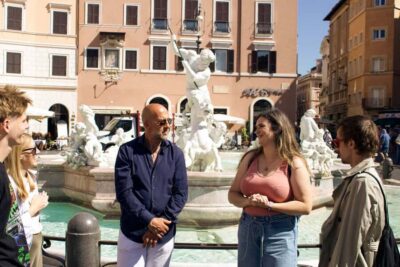
Browse the lists this tour appears in