Reviewed · TICKETS
Rome: Palazzo Barberini Galleria Corsini Ticket & Audioguide
Rome’s Barberini Gallery gives you two treats in one visit: major paintings by Caravaggio, Raphael, Holbein, and Rubens, plus the grand palace built for the Barberini pope. I like the freedom to set your own pace, and the digital audioguide gives the paintings useful context without tying you to a group schedule.
I also like that the ticket includes the Corsini Gallery, a quieter late-Baroque palace with a fine collection of its own. The main caution is that this is an entry ticket, not a guided tour, and some rooms may occasionally be closed for conferences or other events.
In This Review
- Key points to know before you go
- Why these two Roman galleries belong together
- Inside Palazzo Barberini, where art and power meet
- How to use the app audioguide well
- The Corsini Gallery and its late-Baroque palace
- The best way to plan your museum day
- What the $19 price really buys you
- Who will enjoy this ticket most
- Accessibility and entry details
- Is the Barberini and Corsini ticket worth booking?
- FAQ
- What does the ticket include?
- Is a guided tour included?
- Which artists can I see at Palazzo Barberini?
- What is special about Palazzo Barberini?
- What is the Corsini Gallery?
- How long is the ticket valid?
- Where do I start the activity?
- Is the activity wheelchair accessible?
Key points to know before you go
- Two galleries, one ticket: Visit Palazzo Barberini and the Corsini Gallery as part of the same art outing.
- Caravaggio and Bernini: See important works connected with two of Rome’s most famous artists.
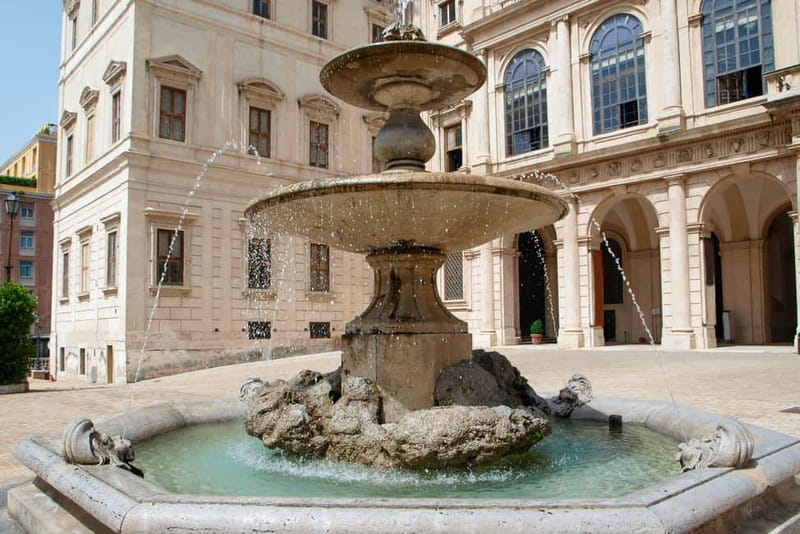
- A palace as part of the experience: Barberini was designed for Pope Urban VIII, while Corsini was built for the Corsini family.
- Explore independently: You can move through both museums at your own speed rather than follow a fixed group.
- App audioguide included: Download extra commentary and information for your visit.
- Good value at $19: The price is sensible if you plan to see both galleries, especially for a self-guided museum day.
Why these two Roman galleries belong together
Rome’s best-known art stops often pull attention toward the Vatican Museums, the Colosseum, and the Borghese Gallery. Palazzo Barberini and the Corsini Gallery offer a different kind of museum day. You get major Italian and European paintings, but you also get to see the buildings that housed powerful Roman families.
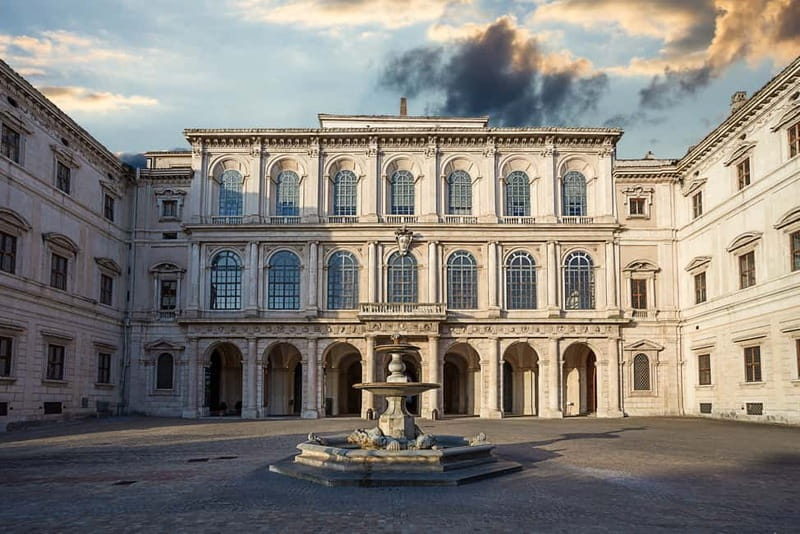
That architectural setting matters. At Palazzo Barberini, the art is displayed inside a palace built for Maffeo Barberini, who became Pope Urban VIII. The building was begun in the sixteenth century on the former site of Villa Sforza, with Carlo Maderno involved in the design. The result is not a plain gallery box. You are walking through a grand papal residence where the rooms themselves help explain the art and power of the period.
The Corsini Gallery offers a second palace experience. Palazzo Corsini was built for the Corsini family between 1730 and 1740, based on designs by Ferdinando Fuga. It belongs to the late-Baroque world, so the architecture gives your visit a different mood from Barberini’s earlier and more overtly papal setting.
I like this pairing because you are not simply checking two art museums off a list. You are seeing how painting, architecture, family wealth, and papal influence worked together in Rome.
More Rome tours worth comparing
- Vatican: Museums & Sistine Chapel Entrance Ticket
★ 4.5 · 144,003 reviews - Rome:Hop-On Hop-Off Panoramic Open Bus Ticket 3 Circuits x 1
★ 4.0 · 15,405 reviews - Vatican Museums & Sistine Chapel Skip-the-Line Entry Ticket
★ 4.4 · 13,838 reviews
Inside Palazzo Barberini, where art and power meet
Start at the Palazzo Barberini ticket office, where you exchange your smartphone voucher for the official entry ticket. The ticket is designed to let you skip the ticket line, though you should still allow time for the voucher exchange and any entry procedures.
Once inside, give yourself time to look up and around before heading straight for the paintings. The palace setting is part of the attraction, and rushing through it would reduce the visit to a checklist of famous names.
The collection includes work by Bernini, Caravaggio, van Dyck, Holbein, Beato Angelico, Filippo Lippi, Lorenzo Lotto, Mattia Preti, Nicolas Poussin, El Greco, Raphael, Tiepolo, Tintoretto, Rubens, Murillo, Ribera, and Titian. That list covers several centuries and different European schools, so the museum rewards both focused art fans and people who simply want a strong introduction to old-master painting.
Caravaggio is one of the main reasons to come. His paintings are known for dramatic light, physical presence, and scenes that feel close enough to touch. The collection gives him meaningful attention rather than treating his work as a token masterpiece hidden among unrelated rooms.
Bernini adds another important thread. He is best known to many visitors for his sculpture and Roman fountains, but seeing his work in a palace collection helps place him within the larger artistic world of seventeenth-century Rome. If you are already visiting churches connected with Bernini, this gallery adds useful context.
Raphael is another major draw. One of the strongest points of the collection is its combination of Raphael and Caravaggio, two artists separated by style and period but united by their influence on European painting. You can compare Raphael’s controlled balance with the sharper drama associated with Caravaggio.
The museum also includes northern European masters such as van Dyck and Holbein, along with Spanish and Flemish names including Murillo, Ribera, and Rubens. This makes the collection broader than a purely Roman or Italian survey.
How to use the app audioguide well
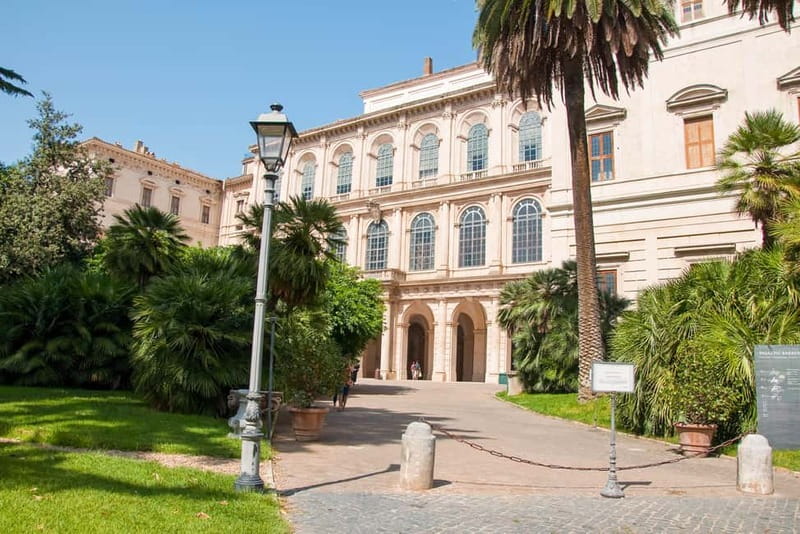
The digital audioguide is accessed through a downloadable app. It is useful if you want more than labels but do not want to join a formal group tour.
You control the pace, which is especially helpful in a collection with so many major artists. You can listen closely to works that interest you, then move faster through paintings that do not hold your attention. That flexibility is one of the practical strengths of this ticket.
You should download or prepare the app before you begin, since an audioguide is only useful when it is easy to access. The supplied information does not identify individual guides, and there is no live guide included. One comment praises an enjoyable and informative guided experience, but this particular package is sold with an app audioguide rather than a scheduled person-led tour.
I would treat the app as a helpful layer, not a substitute for planning. If Caravaggio is your main reason for visiting, spend extra time with his works. If you care more about palace design, listen to the sections that explain the building and the Barberini family. You do not need to follow every audio stop.
The Corsini Gallery and its late-Baroque palace
The Corsini Gallery is the second half of the ticket and should not be treated as a minor add-on. It occupies Palazzo Corsini, built for the Corsini family from 1730 to 1740 according to designs by Ferdinando Fuga.
The palace itself is a key part of the visit. Late-Baroque interiors often place as much emphasis on display and ceremony as on practical living, and that setting changes how you look at the paintings. The collection becomes part of a story about family status, taste, and the role of art in an aristocratic home.
The Corsini stop is also useful after the larger Barberini experience. You can compare two Roman palaces built for powerful families in different periods. Palazzo Barberini reflects the world of Pope Urban VIII and the Barberini family. Palazzo Corsini reflects a later phase of Roman aristocratic life.
The available details do not provide a room-by-room list of Corsini highlights, so I would not arrive expecting a precisely timed route through named masterpieces. Instead, plan to enjoy the palace atmosphere and the collection as a counterpart to Barberini.
If you are short on time, Barberini is likely to receive most of your attention because of its especially strong concentration of famous names. Still, skipping Corsini means giving up half of what makes this ticket worthwhile.
A completely different way to spend the day in Rome:
- Vatican Museums & Sistine Chapel Tour with Optional Basilica
★ 4.3 · 67,413 reviews - Vatican Museums, Sistine Chapel & St Peter’s Basilica Guided Tour
★ 4.5 · 39,149 reviews - Rome: Colosseum, Palatine Hill and Roman Forum Guided Tour
★ 4.8 · 32,814 reviews - Rome: Guided Tour of Colosseum, Roman Forum & Palatine Hill
★ 4.7 · 27,897 reviews
The best way to plan your museum day
The activity is listed as valid for one day, with starting times shown during the availability check. The information also says the ticket is for one visit and can be used within 20 days after purchase. Because those details refer to different parts of the booking process, check the date and validity terms attached to your selected option before you pay.
You should plan enough time for both galleries rather than squeezing them between several distant sights. The ticket is intended for independent visits, so there is no group timetable pushing you from one room to the next. That is helpful, but it also means you need to manage your own pace.
A sensible approach is to begin with Barberini while your attention is fresh, then visit Corsini afterward. Palazzo Barberini has the longer list of major artists and is likely to be the more demanding stop. Corsini can then provide a calmer second part of the day focused on a late-Baroque palace and its collection.
You may also prefer to reverse the order depending on your plans. The key point is to treat the ticket as a full art outing, not as a quick photo stop.
The museums are in Rome’s Lazio region, and the supplied details identify the Barberini ticket office as the starting point. No transport is included, so you arrange your own way to the meeting point. The activity ends back at that same meeting point after your museum visits.
What the $19 price really buys you
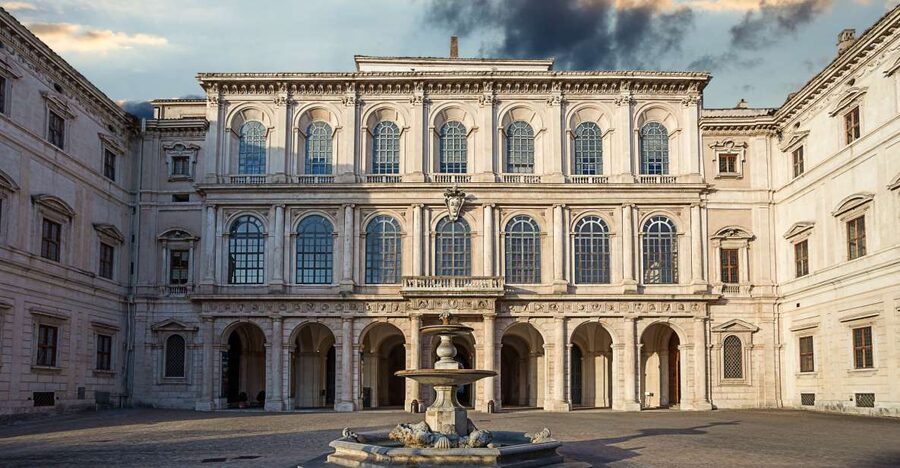
At $19 per person, this is a reasonable price if you intend to visit both galleries. You are paying for two entrance tickets and an app audioguide, not for a live guide, transportation, food, or a wider Rome sightseeing package.
The value improves if you appreciate painting and architecture. A single famous work can make a small museum worthwhile, but this ticket offers more depth: Caravaggio, Bernini, Raphael, and a long list of European masters, plus two historic palaces.
The value is weaker if you only want one specific painting and have little interest in the buildings or the rest of the collection. In that case, a two-gallery ticket may ask more of your time than you want to give.
The strongest praise for this experience centers on the collection itself, especially the representation of Raphael and Caravaggio, as well as the beauty of the palace. Helpful staff also receive specific approval, which matters when you are exchanging a phone voucher and finding your way through a major museum.
The overall rating of 3.9 from 322 ratings suggests a generally worthwhile experience with some uneven moments. The main practical warning is that areas may be unavailable when a conference is taking place. That is not something you can always predict, so check current access information if seeing every part of the palace is important to you.
Who will enjoy this ticket most
I would recommend this experience to you if you like old-master painting but prefer freedom over a fixed tour. The mix of famous artists and grand interiors gives you enough substance for a serious museum visit without requiring a full day at one enormous institution.
It also suits repeat visitors to Rome. If you have already seen the city’s most famous churches and ancient sites, these galleries provide a quieter way to understand Roman artistic life and the families who shaped it.
Art students and committed museum visitors will appreciate the range of artists. You can compare Italian, Spanish, Flemish, Dutch, and other European traditions in one ticketed outing. The app adds context without forcing you to absorb every detail at once.
Families and mixed-interest groups may also find the self-guided format useful. Someone who wants to linger with Caravaggio can do so, while someone else can move on to the architecture or a different artist. The downside is that you must provide your own structure, and the app may not hold everyone’s attention equally.
I would be less enthusiastic about this ticket if you are looking for a personal art historian, a lively group discussion, or a carefully timed route. Those are not part of the package.
Accessibility and entry details
The activity is listed as wheelchair accessible. That is important for visitors who need step-free or accessible museum arrangements, though the supplied information does not give detailed route or restroom specifications.
You begin by exchanging your smartphone voucher at the Palazzo Barberini ticket office for the official entry ticket. The ticket includes admission to both Galleria Barberini and Galleria Corsini, along with the digital app audioguide.
There is no guided tour included. You visit independently, and the activity ends back at the meeting point. Since the booking is non-refundable, confirm your date and availability before purchase.
Is the Barberini and Corsini ticket worth booking?
Yes, if you want a flexible art outing with real names behind it. Caravaggio, Bernini, and Raphael provide the headline appeal, while the two palace interiors give the visit a stronger sense of place than a standard gallery visit.
Book it if you can spare enough time for both museums and are comfortable using an app rather than joining a live tour. At $19, the combination is good value for an independent museum day.
Think twice if you want a guide to lead you from masterpiece to masterpiece, or if your schedule allows only a quick stop. Also keep in mind that conference-related closures can affect some rooms. For art lovers, repeat visitors, and anyone curious about Rome’s grand palace collections, this is a practical choice with plenty to see.
FAQ
What does the ticket include?
The ticket includes entrance to Galleria Barberini, entrance to Galleria Corsini, and a digital app audioguide.
Is a guided tour included?
No. This is an independent visit with an app audioguide. A live guided tour is not included.
Which artists can I see at Palazzo Barberini?
The collection includes Caravaggio, Bernini, Raphael, van Dyck, Holbein, Beato Angelico, Lippi, Lotto, Preti, Poussin, El Greco, Tiepolo, Tintoretto, Rubens, Murillo, Ribera, and Titian.
What is special about Palazzo Barberini?
Palazzo Barberini was designed for Pope Urban VIII, a member of the Barberini family. Carlo Maderno worked on the building, which was developed on the former location of Villa Sforza.
What is the Corsini Gallery?
The Corsini Gallery is located inside Palazzo Corsini, a late-Baroque palace built for the Corsini family between 1730 and 1740. Its design was based on plans by Ferdinando Fuga.
How long is the ticket valid?
The activity is listed as valid for one day, with starting times shown when you check availability. The information also states that the one-visit ticket is valid for 20 days after purchase, so check the terms for your selected option.
Where do I start the activity?
You start by exchanging your smartphone voucher at the Palazzo Barberini ticket office for an official entry ticket.
Is the activity wheelchair accessible?
Yes. The activity is listed as wheelchair accessible.
Newest reviews from Rome
- Rome: Vatican Museums & Sistine Chapel Skip-the-Line Ticket★ 4.4 · 148 reviews
- Shared Shuttle Transfer from Rome to Civitavecchia Port★ 5.0 · 148 reviews
- Rome: Crypts & Catacombs After Hours Tour with Bone Chapel★ 4.6 · 149 reviews
- Ghosts Legends and Mysteries of Rome Walking Tour★ 5.0 · 149 reviews
- Skip the Line: Vatican and Sistine Chapel with Guided Tour★ 4.0 · 149 reviews
- Tivoli: Villa Gregoriana Entrance Ticket★ 4.7 · 150 reviews
- Pizza and Tiramisu Cooking Class in Rome, Piazza Navona★ 5.0 · 150 reviews
- Rome: Borghese Gallery Skip-the-Line Entry and Guided Tour★ 4.7 · 150 reviews
Tickets, compared.
Vatican Museums & Sistine Chapel Skip-the-Line Entry Ticket
Read our review →
Vatican Museums & Sistine Chapel Skip-The-Line Ticket
Read our review →
Vatican Museums & Sistine Chapel Skip-the-Ticket-Line Tour
Read our review →
St. Peter’s Basilica & Dome Entry Ticket & Audio Tour
Read our review →
Vatican Museums Sistine Chapel Skip-the-Line Ticket
Read our review →
Vatican & Sistine Chapel Ticket with Optional Audio Guide
Read our review →