
Reviewed · TREVI FOUNTAIN & PANTHEON WALKS
Rome: Pantheon, Trevi Fountain and Roman Squares Guided Tour
Rome’s historic center is best understood on foot, and this three-hour route links several of its biggest sights with a few fine surprises along the way. You’ll see Caesar’s murder site, Bernini fountains, Caravaggio paintings, the Pantheon, Trevi Fountain, and the Spanish Steps in one compact morning.
I like the small group of no more than 10 and the included headset, which can make a real difference on crowded Roman streets. I also like that San Luigi dei Francesi is included, since its Caravaggio paintings are easy to miss when you explore on your own. The main drawback is pace: six stops in three hours can feel brisk, especially when crowds or ticket delays get in the way.
In This Review
- Key points to know before booking
- Why this Rome walking route works
- Largo Argentina and the place Caesar was killed
- Piazza Navona and Bernini’s fountain
- Caravaggio inside San Luigi dei Francesi
- The Pantheon, Rome’s great engineering marvel
- Trevi Fountain and the reality of Roman crowds
- The Spanish Steps and Piazza di Spagna finish
- Guides, group size, and the pace of the morning
- Practical details that affect your visit
- Who should book this Rome tour?
- FAQ
- How long does the tour last?
- What time does the tour begin?
- Where does the tour start?
- Where does the tour end?
- Is Pantheon admission included?
- How many people can join the tour?
- What happens if I need to cancel?
Key points to know before booking
- The route covers six major stops: Largo Argentina, Piazza Navona, San Luigi dei Francesi, the Pantheon, Trevi Fountain, and the Spanish Steps.
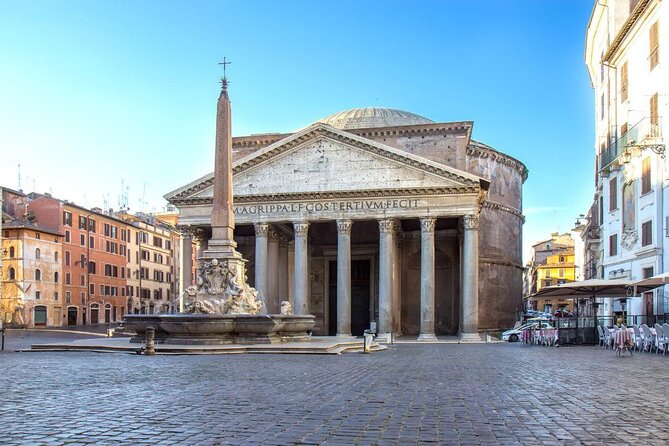
- The Pantheon visit is included, with entry planned as part of the tour rather than as an extra purchase.
- San Luigi dei Francesi adds real artistic value, thanks to Caravaggio’s famous Saint Matthew paintings.
- A group limit of 10 keeps the walk personal, and guides including Serena, Angelo, Donatella, Marco, and Patrícia have been praised for clear explanations and patience.
- The tour runs from 9:30 a.m. for about three hours, ending at Piazza di Spagna, not back at the starting point.
- Dress and security rules matter: bring identification, avoid large bags and metal objects, and cover shoulders and legs for church entry.
Why this Rome walking route works
This tour gives you a useful first look at central Rome without trying to cover the Colosseum, Vatican, and every ancient ruin in town. Instead, it focuses on the compact district around the Pantheon, where ancient Roman monuments, Baroque fountains, churches, cafés, fashion shops, and busy pedestrian streets sit close together.
I find this area ideal for a guided walk because Rome often hides its best details in plain sight. A fountain may look decorative until someone explains its political message. A church may seem modest from the street, then reveal an important Caravaggio cycle inside. The tour’s value comes from joining those pieces together.
The group size is a genuine advantage. With a maximum of 10 people, your guide has a better chance of answering questions and keeping everyone together. Headsets are supplied, which is helpful near Trevi Fountain and other noisy public spaces. One practical warning: even with the equipment, hearing can be difficult in dense crowds, so stay close to your guide.
The tour costs $41.94 per person. That is a sensible price if you want a structured introduction to Rome’s center and plan to visit the Pantheon and San Luigi anyway. You are paying for the guide, headsets, and included admission, as well as the time saved figuring out the route. If you prefer to linger for long stretches at each monument, the price may feel less worthwhile because the schedule moves along.
More Trevi and Pantheon walks:
- Rome: Pantheon Timeless Marvel Guided Tour with Entry Ticket
★ 4.9 · 4,002 reviews - Rome: Pantheon Priority Entry Ticket & Audio Guide App
★ 4.1 · 3,234 reviews - Enjoy Spritz and Pasta Making in Piazza Navona
★ 5.0 · 1,681 reviews
Largo Argentina and the place Caesar was killed
The tour begins at Largo di Torre Argentina, 52, at 9:30 a.m. This is a practical meeting point near public transportation, but arrive early. No refund is given if you are late and miss the departure.
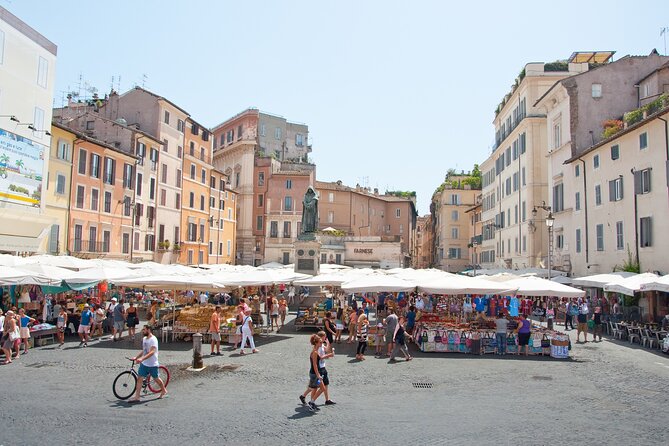
Largo Argentina is an archaeological area with the remains of several Roman temples. It is also identified as the place where Julius Caesar was murdered. Your guide uses the site to set the stage for Rome’s political past before leading you into the later city.
You spend about 15 minutes here, and admission is free. That short visit is appropriate because the ruins are viewed from outside rather than explored as a long museum stop. I like beginning here because it gives you an ancient-Rome reference point before the walk shifts toward imperial architecture, Christian art, and Baroque Rome.
The starting area also helps you get oriented. From here, the route moves through some of the city’s most attractive public spaces, with plenty of visual change in a short distance.
Piazza Navona and Bernini’s fountain
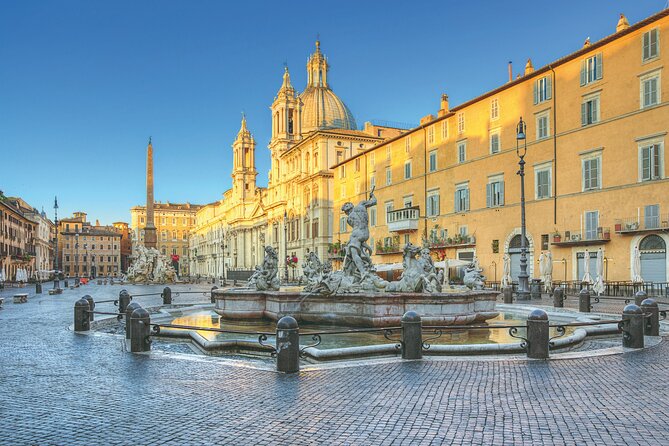
Piazza Navona receives about 30 minutes, making it one of the longer outdoor stops. The square follows the shape of an ancient Roman stadium, and today it is one of Rome’s grandest gathering places, lined with cafés, street performers, and ornate architecture.
The main attraction is Bernini’s Fountain of the Four Rivers. Its figures and stonework reward a close look, but the square is just as interesting for its social life. You can watch Rome operate around the monument: people meeting, artists working, musicians performing, and café tables filling the edges.
This is also one of the places where the tour’s headset can help. Piazza Navona can be noisy, and your guide may need to speak over street sounds and nearby groups. Stay within earshot and do not wander far for photographs while the explanation is underway.
I would not expect the full half hour to feel leisurely during a busy morning. The square invites you to sit and watch the scene, but the tour has several more stops ahead. If you want café time or extended photographs, plan to return later.
Caravaggio inside San Luigi dei Francesi
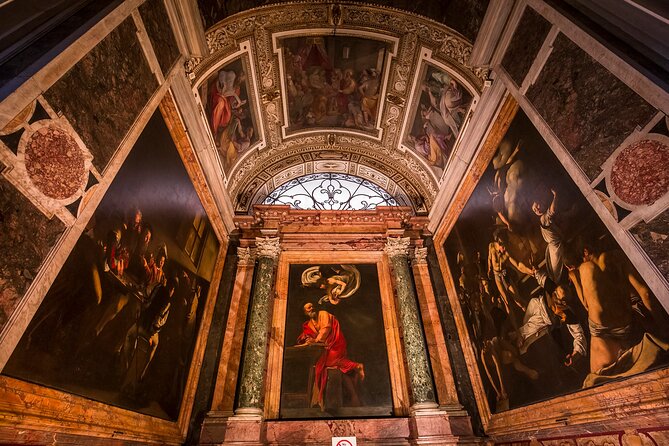
The Church of St. Louis of the French is the route’s most rewarding surprise for many first-time visitors. It is included in the tour, and about 15 minutes are set aside for the interior.
The church houses Caravaggio’s Saint Matthew cycle, among the most important paintings associated with the artist. This is a very different experience from the open-air spectacle of Piazza Navona or Trevi Fountain. Inside, the focus shifts to light, gesture, religious storytelling, and the physical impact of standing before an original work.
I especially like this stop because it adds substance to a route that could otherwise become a checklist of famous fountains and squares. The church is a reminder that Rome’s artistic treasures are often found in active places of worship, not only in major museums.
Dress properly for entry. Shorts, miniskirts, and uncovered shoulders are not permitted. You should also avoid bringing large bags, metal objects, or animals, although assistance dogs are allowed. These rules are important for the church and later security checks, so it is easier to dress appropriately from the start.
More Rome tours worth comparing
- Vatican Museums, Sistine Chapel & St Peter’s Basilica Guided Tour
★ 4.5 · 39,149 reviews - Rome: Colosseum, Palatine Hill and Roman Forum Guided Tour
★ 4.8 · 32,814 reviews - Rome: Guided Tour of Colosseum, Roman Forum & Palatine Hill
★ 4.7 · 27,897 reviews - Rome: Colosseum & Forum with Audio Guide App -Optional Arena
★ 4.2 · 24,770 reviews
The Pantheon, Rome’s great engineering marvel
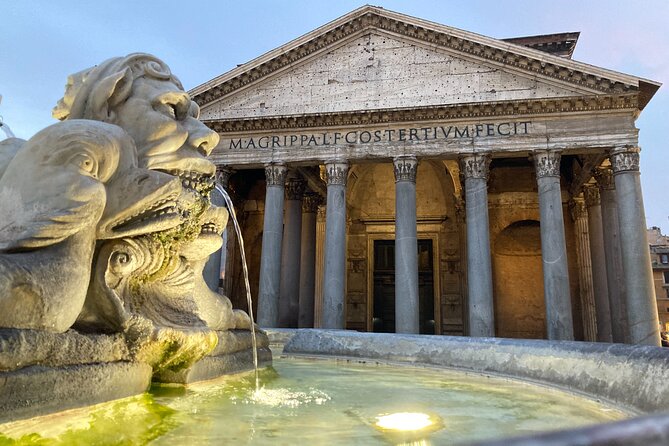
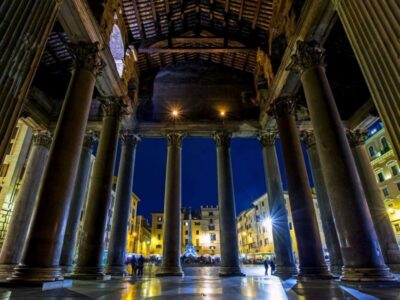
The Pantheon is the tour’s central ancient monument, with about 30 minutes inside. Admission is included, and the experience is intended to include entry rather than only an explanation from outside.
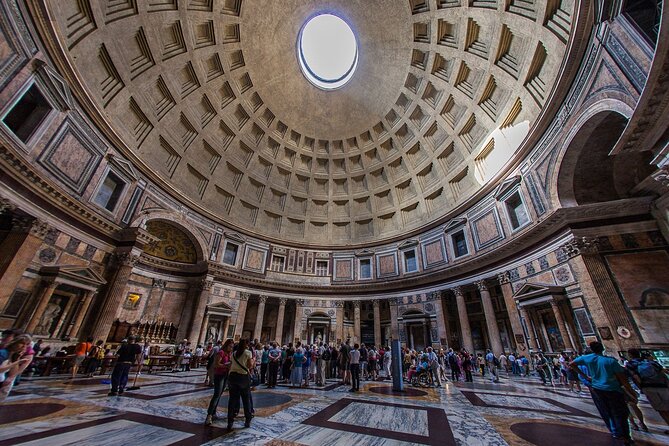
The building is famous for its vast unreinforced concrete dome, still one of the great achievements of Roman engineering. It is also among the best-preserved ancient Roman buildings, which gives you a rare chance to see Roman architecture on a scale that remains easy to understand.
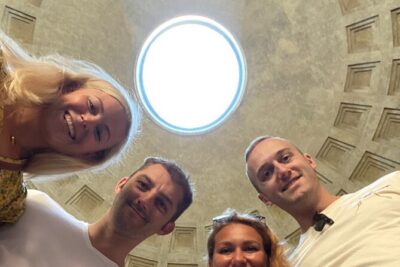
Look up. The dome’s oculus opens the center of the ceiling to the sky, bringing natural light into the interior. That single opening changes the mood of the space and helps you grasp the building’s structure better than a photograph can.
Thirty minutes is enough for a guided explanation and a good look around, though it is not a long study visit. Crowds, security, and access rules can affect the timing. If the Pantheon is closed or cannot be entered during the scheduled time, the guide will explain it from outside instead. That possibility is worth accepting before you book, since access can change.
The included entry improves the tour’s value. You do not have to arrange a separate Pantheon visit, and the guide can connect the building’s design to the broader story of Rome.
Trevi Fountain and the reality of Roman crowds
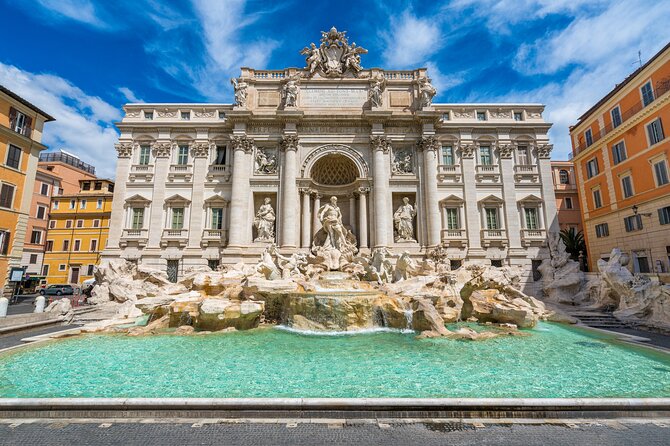
The walk continues to Trevi Fountain for about 30 minutes. Entry is listed as included, and the route is designed to help the group reach the fountain efficiently.
Trevi is Rome’s largest Baroque fountain and one of its best-known public monuments. It is hard to approach without feeling the scale of the setting: rockwork, water, sculpture, and the monumental façade combine in a tight urban space.
This is also where crowds can test the tour. The fountain is one of Rome’s busiest photo stops, and it can be difficult to hear or move as a group. One guide, Donatella, has been particularly praised for steering the group through the crowd, while still answering questions. That is exactly the sort of practical help a guide can provide here.
Do not expect solitude. The point is to see the fountain, hear its story, and take your photographs without losing the group. Keep your belongings secure and follow instructions around the edge of the fountain. The tour’s included access and group management are useful, but no ticket can remove the public crowd from the square.
The Spanish Steps and Piazza di Spagna finish
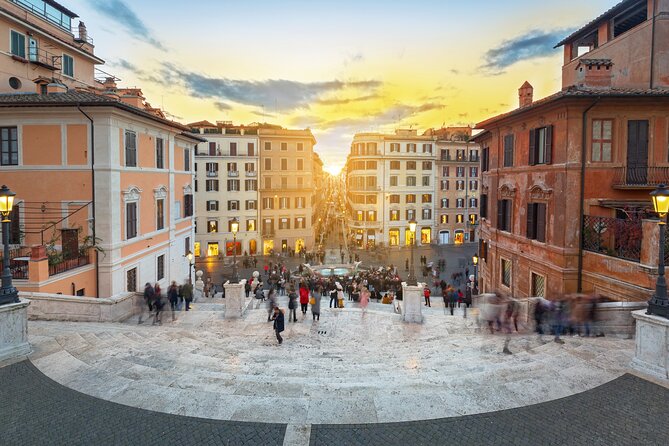
The tour ends at Piazza di Spagna after about 20 minutes at the Spanish Steps. This makes the final stop convenient if you want to continue shopping, have lunch, or explore central Rome on your own.
The steps rise toward Trinità dei Monti, with Bernini’s Fountain of the Barcaccia below. The surrounding streets are also known for high-fashion boutiques, so this stop combines architecture, city life, and shopping.
Ending here rather than returning to Largo Argentina is worth noting. You should plan your next activity from Piazza di Spagna, not from the original meeting point. The central location makes onward sightseeing easy, but hotel drop-off is not included.
The steps can be crowded, and the walk itself involves standing and moving over urban pavement for several hours. Most people can take part, but you should be comfortable with a sustained walking tour. The schedule is active rather than slow.
Guides, group size, and the pace of the morning
The English-speaking guides are central to the experience. Serena has been praised for keeping a thoughtful pace, sharing historical and professional insight, and answering questions with patience. Angelo has been described as interactive and able to handle detailed questions about his city. Donatella has helped groups manage the crowds around Trevi Fountain.
Marco and Patrícia have also led the route, with particular praise for clear explanations, friendliness, safety, and patience. Guide quality can vary from one departure to another, but the repeated emphasis on explanation and personal attention fits the small-group format.
The schedule allows roughly 15 to 30 minutes at each stop. That is enough for a strong overview, not enough for extended personal exploration. One reported ticket delay added about 30 minutes to a tour, so you should leave some flexibility afterward rather than booking a tight lunch reservation or timed attraction.
I would choose this tour early in a Rome stay. It gives you a map in your head, introduces the city’s major visual themes, and helps you decide which places deserve a return visit. I would not choose it for a quiet, slow art tour or for a day built around long museum visits.
Practical details that affect your visit
The tour is offered in English and uses a mobile ticket. The meeting time is 9:30 a.m. at Largo di Torre Argentina, and the route finishes at Piazza di Spagna after about three hours.
Bring identification, since new security provisions require an ID. Avoid metal objects and big bags, and remember that animals are not permitted except assistance dogs. Church dress rules apply, so cover your shoulders and avoid shorts or miniskirts.
Free cancellation is available up to 24 hours before the start time. Cancellations or changes made less than 24 hours before departure are not accepted for a refund. The local time in Rome controls the cutoff.
Who should book this Rome tour?
I would recommend it to first-time visitors who want to see several headline sights without organizing separate tickets and routes. It also suits you if you value a guide who can explain the connection between ancient Rome, Baroque design, Catholic art, and modern street life.
It is a particularly good fit for people who enjoy questions and conversation. The small group gives you a better chance to interact with Serena, Angelo, Donatella, Marco, Patrícia, or whoever leads your departure.
I would hesitate if you need a slow pace, want to spend a long time inside the Pantheon, or dislike crowded public spaces. You should also avoid booking it before an appointment that cannot move, since ticket delays or crowd conditions may extend the morning.
At $41.94, the tour offers fair value for a compact route with a maximum of 10 people, a guide, headsets, San Luigi entry, and Pantheon admission. The best reason to book is not simply the number of monuments. It is the chance to understand how Rome’s ancient ruins, grand squares, churches, fountains, and shopping streets fit together.
FAQ
How long does the tour last?
The tour lasts approximately three hours.
What time does the tour begin?
It begins at 9:30 a.m.
Where does the tour start?
The meeting point is Largo di Torre Argentina, 52, Rome.
Where does the tour end?
The tour ends at Piazza di Spagna.
Is Pantheon admission included?
Yes. Pantheon skip-the-line entry is included, although access may be replaced by an outside explanation if the building is closed or unavailable during the scheduled time.
How many people can join the tour?
The maximum group size is 10 travelers.
What happens if I need to cancel?
You can receive a full refund if you cancel at least 24 hours before the experience start time. Cancellations or changes made less than 24 hours before the start time are not accepted.
Newest reviews from Rome
- ROME:Colosseum & Ancient Rome – private/small group TOUR★ 5.0 · 24 reviews
- Off the Beaten Track in Rome: Rione VI Parione Private Tour★ 5.0 · 24 reviews
- Cinematic Photoshoot in Rome★ 5.0 · 24 reviews
- Rome: Best of Colosseum and Roman Forum Small Group Guided Tour★ 4.5 · 24 reviews
- The Labyrinth of Rome between catacombs and ancient quarries★ 4.5 · 24 reviews
- Vatican and Trionfale Market Tour with Wine and Food Tasting★ 5.0 · 24 reviews
- private tour: Vatican Museums, Sistine Chapel, St. Peter’s Basilica★ 4.5 · 24 reviews
- 3 Hours Mosaic Workshop in Trastevere★ 5.0 · 24 reviews
Trevi Fountain & Pantheon Walks, compared.
Pantheon Timeless Marvel Guided Tour with Entry Ticket
Read our review →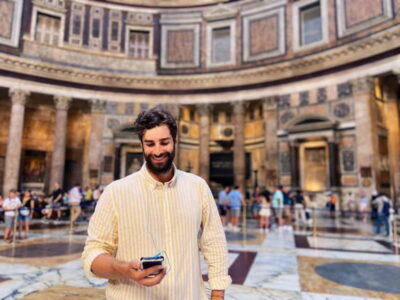
Pantheon Priority Entry Ticket & Audio Guide App
Read our review →
Enjoy Spritz and Pasta Making in Piazza Navona
Read our review →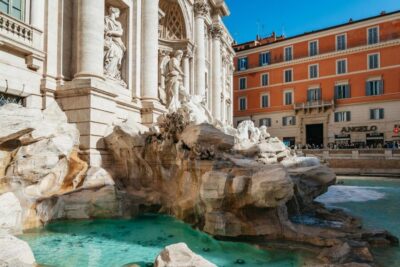
Pantheon Elite Guided Tour – Rome’s Iconic Ancient Temple
Read our review →
Pasta & Tiramisu Cooking Class near the Spanish Steps
Read our review →
Traditional Pizza Cooking Class near Piazza Navona
Read our review →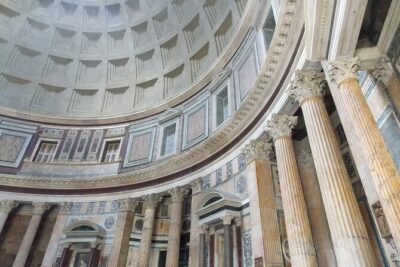
Rome’s Iconic Temple: Pantheon Audio Guided Tour with Fast Access
Read our review →Browse the lists this tour appears in