Reviewed · VATICAN MUSEUMS & SISTINE CHAPEL
Rome: Sistine Chapel, Vatican & St. Peters Private Tour
The ceiling of the Sistine Chapel is the star, but this private Vatican tour gives you much more than a quick look upward. In three hours, you move through the Vatican Museums, Raphael Rooms, Sistine Chapel, and St. Peter’s Basilica with a guide who can connect the art to the popes, artists, and ideas behind it.
I like the private format because your guide can adjust the pace, explain details that are easy to miss, and keep a family or mixed-age group together. I also like the direct route from the Sistine Chapel into St. Peter’s Basilica, which saves you from joining another long security line. The main drawback is time: three hours is efficient, but the Vatican is enormous, and the Raphael Rooms may be skipped if museum staff redirect the crowd.
In This Review
- Key points at a glance
- A focused Vatican route, not a wander through every gallery
- The Vatican Museums begin with a clear plan
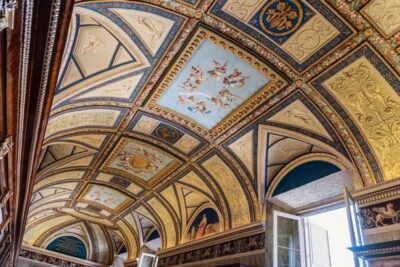
- The Gallery of Maps turns geography into art
- The Raphael Rooms reward a slower look
- The Sistine Chapel deserves more than a glance
- Direct entry to St. Peter’s Basilica
- Why a private guide changes the experience
- Is $241.30 per person a fair price?
- Timing, clothing, and access details
- Who will enjoy this Vatican tour most?
- Should you book it?
- FAQ
- Where does the Vatican tour begin?
- How long does the tour last?
- What sights are included?
- Is the tour private?
- Does the tour include skip-the-line access?
- Can I enter St. Peter’s Basilica directly after the Sistine Chapel?
- Are the Raphael Rooms guaranteed?
- What should I wear?
- Can I bring luggage or large bags?
- Is the experience wheelchair accessible?
Key points at a glance
- See four major Vatican sights in three hours: The route covers the Vatican Museums, Raphael Rooms, Sistine Chapel, and St. Peter’s Basilica.
- Enter through the ticket line: Skip-the-line access helps you avoid the standard ticket queue, though crowded galleries and security checks can still slow the visit.
- Study Raphael’s School of Athens: The guide gives context for Raphael’s papal commission and the Renaissance fascination with ancient Greece and Rome.
- Walk through famous museum galleries: The Chiaramonti Museum, Gallery of the Candelabra, Gallery of Tapestries, and Gallery of Maps are all part of the route.
- Use a private guide to manage the crowd: Guides such as Tatianna have kept large family groups, including nine teenagers, moving at a good pace.
- Dress for a church visit: Shorts and sleeveless shirts are not allowed, and comfortable shoes are a smart choice.
A focused Vatican route, not a wander through every gallery
This tour begins at Viale Vaticano 100, in front of Caffe Vaticano. Look for a guide holding a Through Eternity sign or flag. You walk only about a minute before entering the museum complex, so the meeting point is easy to reach once you are on the correct stretch of Viale Vaticano.
The route is designed to show you major rooms without pretending that three hours can cover the entire Vatican collection. That matters. The museums contain far more art than anyone can absorb in one visit, and a private guide helps you spend your limited time on works and rooms with real historical weight.
You should expect a steady walking tour rather than a leisurely afternoon. There are several galleries, crowded corridors, the Sistine Chapel, and a full hour planned for St. Peter’s Basilica. Wear comfortable shoes and bring water, since food and drinks are not included.
More Vatican Museums and Sistine Chapel entries:
- Skip the Line: Vatican & Sistine Chapel Ticket with Audio Guide
★ 4.0 · 3,271 reviews - Skip-the-Line Ticket with Host – Vatican Museums & Sistine Chapel
★ 5.0 · 1,267 reviews - Skip The Line ticket to the Vatican Museums & the Sistine Chapel
★ 3.0 · 1,160 reviews
The Vatican Museums begin with a clear plan
The guided museum portion lasts about 100 minutes. Instead of leaving you to follow signs through a maze, the guide leads you through a sequence of rooms that builds toward the Sistine Chapel.
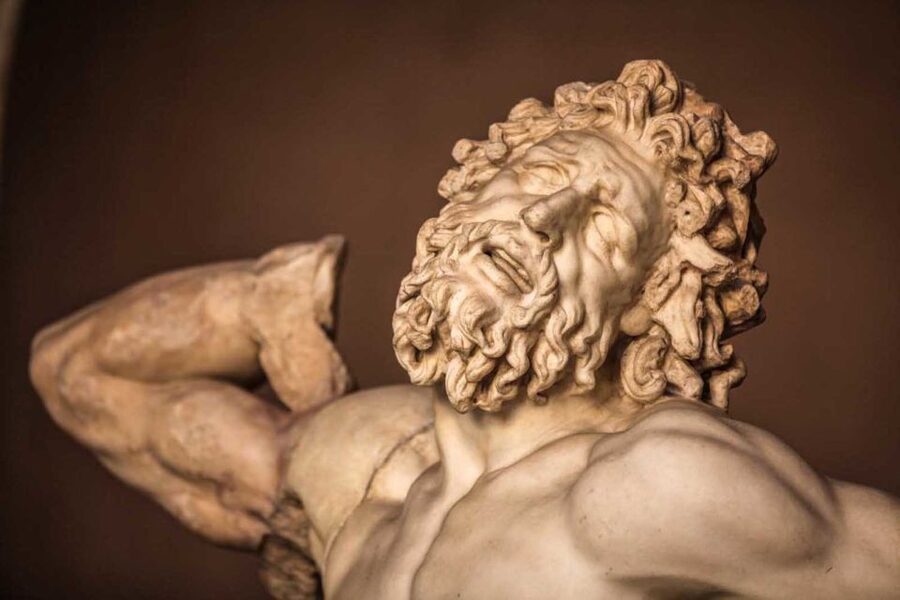
The Chiaramonti Museum is an early stop. Its long display of ancient sculpture helps set the tone for the Vatican’s collection and shows how successive popes gathered and presented classical works. Your guide can help you look beyond the number of statues and understand the role ancient art played in Renaissance and papal culture.
Next comes the Gallery of the Candelabra, named for its large marble candelabra. It is one of the grand ceremonial galleries that prepare you for the more famous rooms ahead. The details can blur together when you are tired, so this is where a guide’s selection of important objects is useful.
The Gallery of Tapestries gives the route a change of texture and scale. Painted scenes are replaced by large woven works designed for papal interiors. Look at the way the images are framed, the decorative borders, and the amount of labor required to produce each piece. You do not need to memorize every artist or date to appreciate how these rooms functioned as displays of wealth and authority.
The Gallery of Maps turns geography into art
The Gallery of Maps is one of the Vatican’s most memorable passages. Its walls are covered with large painted maps of Italy, created when mapmaking was both a practical tool and a statement of power.
The gallery works especially well with a guide because you can connect the painted geography with the political world of the papal states. It is also an easy place to lose sight of the fact that you are looking at a corridor. The decoration is so elaborate that the passage itself becomes an attraction.
Crowds can be heavy here. Skip-the-line entry gets you past the main ticket queue, but it does not create an empty Vatican. You may still move with the flow of the museum, pause behind other groups, or have only a short moment at the most popular displays.
The Raphael Rooms reward a slower look
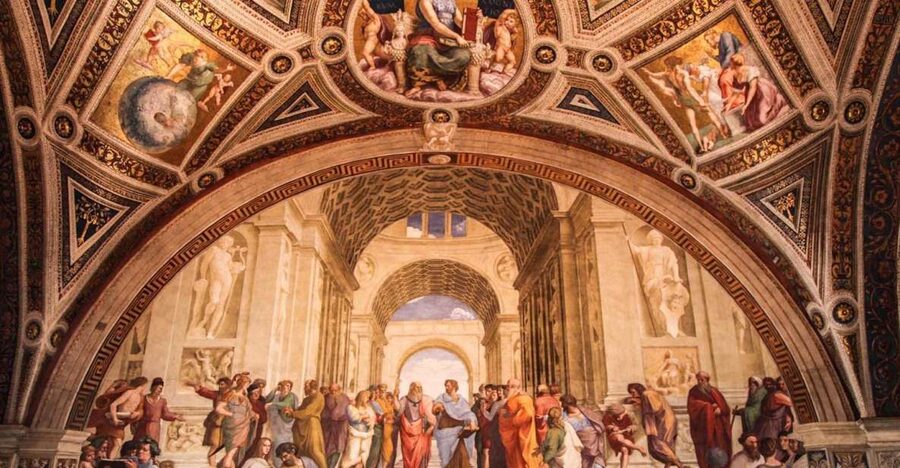
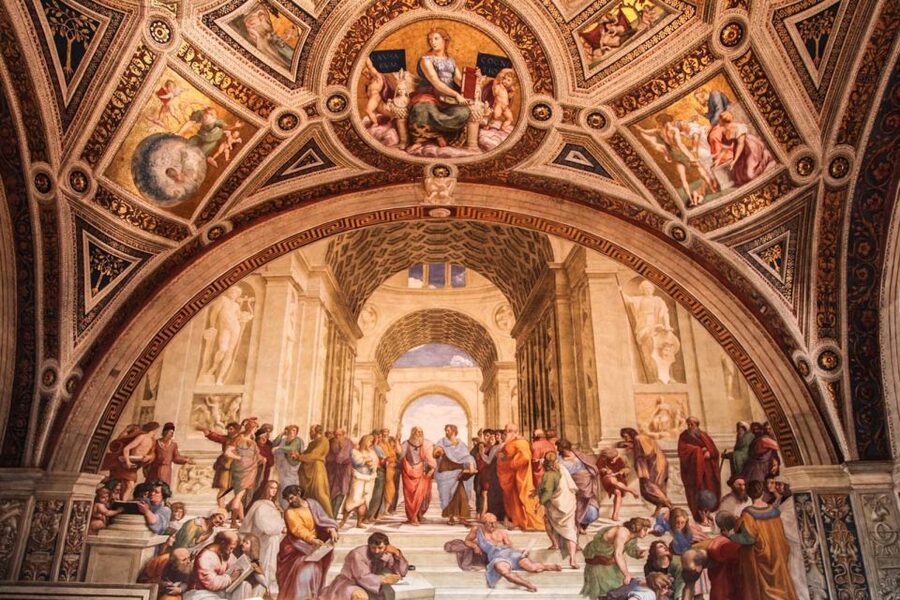
The Raphael Rooms are the artistic counterpoint to Michelangelo’s chapel ceiling. These former papal apartments contain frescoes by Raphael and his workshop, including the famous School of Athens.
The School of Athens presents ancient philosophers in a grand architectural setting. Plato and Aristotle appear at the center, surrounded by figures representing the classical search for knowledge. Raphael also included portraits associated with artists of his own time, creating a conversation between the ancient world and the Renaissance.
Your guide explains why Raphael, a young painter from Urbino, received such an important papal commission. The story is not only about artistic talent. It also reflects competition at the papal court, the prestige of major commissions, and the Renaissance desire to revive and reinterpret classical culture.
I would give these rooms your full attention. Many people are eager to reach the Sistine Chapel and pass through the Raphael Rooms too quickly. Here, the private format is particularly useful because you can ask about a figure, a technique, or the political setting without waiting for a large group to catch up.
There is one important qualification. Although the Raphael Rooms are part of the planned route, Vatican staff control crowd movement and room access on the day. If the galleries are too crowded or traffic is redirected, your guide may not be able to include them. This is not something the tour operator can fully control.
More ways to visit the Vatican:
- Rome: Vatican Pass plus Top Attractions and Transport
★ 3.5 · 1,242 reviews - Vatican, Sistine Chapel & St. Peter’s Skip-the-Line Tour
★ 4.1 · 1,070 reviews - Vatican Museums & Sistine Chapel Guided Tour
★ 4.5 · 763 reviews - Rome: Skip-the-Line Vatican Museums and Sistine Chapel Tour
★ 4.3 · 719 reviews
The Sistine Chapel deserves more than a glance
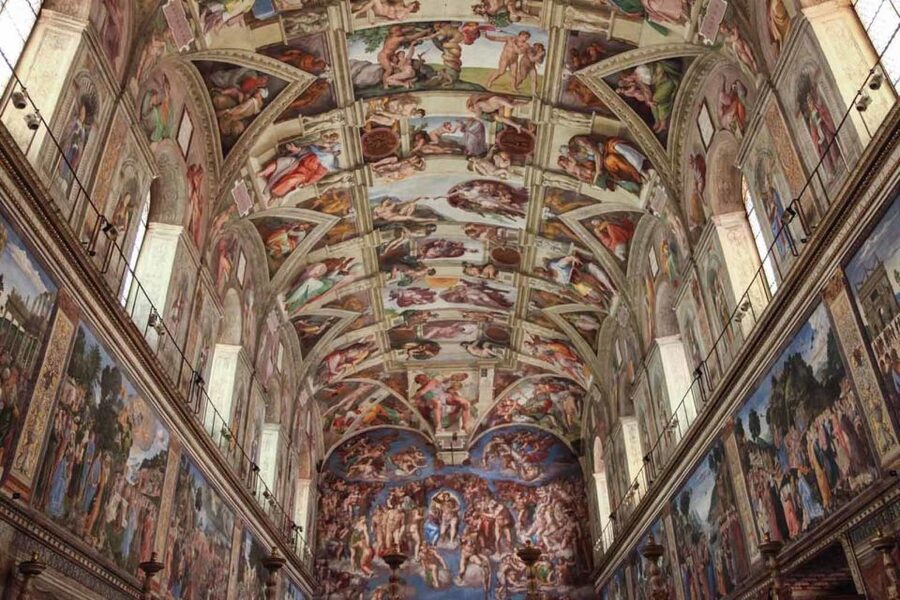
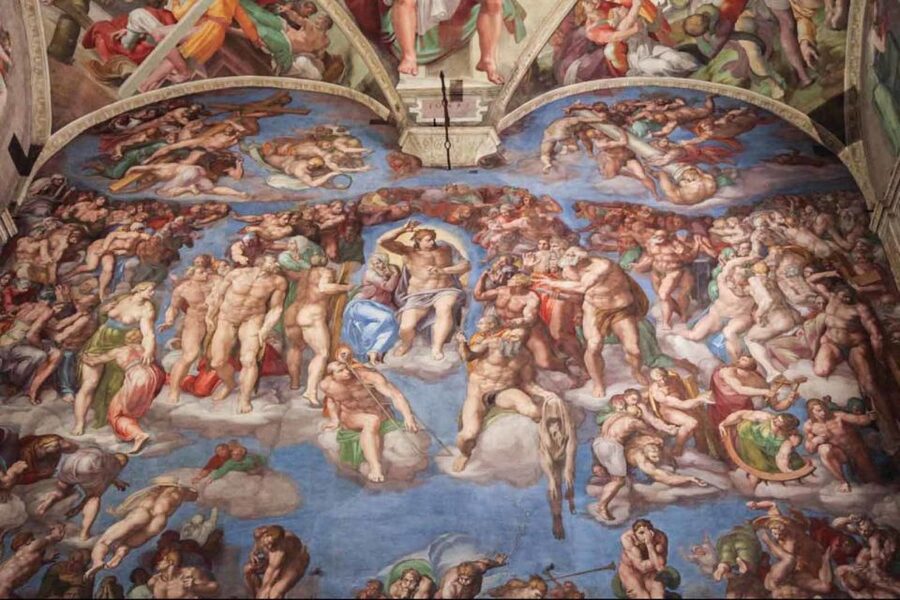
The Sistine Chapel visit is scheduled for about 20 minutes. That is enough to look carefully at the ceiling and the wall behind the altar, but it is not enough for a long, quiet study of every scene.
Michelangelo’s ceiling is often treated as a single famous image, yet it is a carefully organized series of biblical scenes, prophets, ancestors, and architectural details. Your guide can explain how the pictures fit together and point out the visual tricks that make painted figures and structures appear more solid than they are.
The chapel is also a working religious space, not simply an art gallery. Silence is required, and photography is not permitted. You should listen closely before entering, since your guide may need to give the main explanation outside the chapel or in a place where speaking is allowed.
Even with a private tour, this part may feel busy. The benefit is not guaranteed solitude. The benefit is arriving with a framework, knowing what to look for, and having enough time to appreciate the ceiling rather than simply passing underneath it.
Direct entry to St. Peter’s Basilica
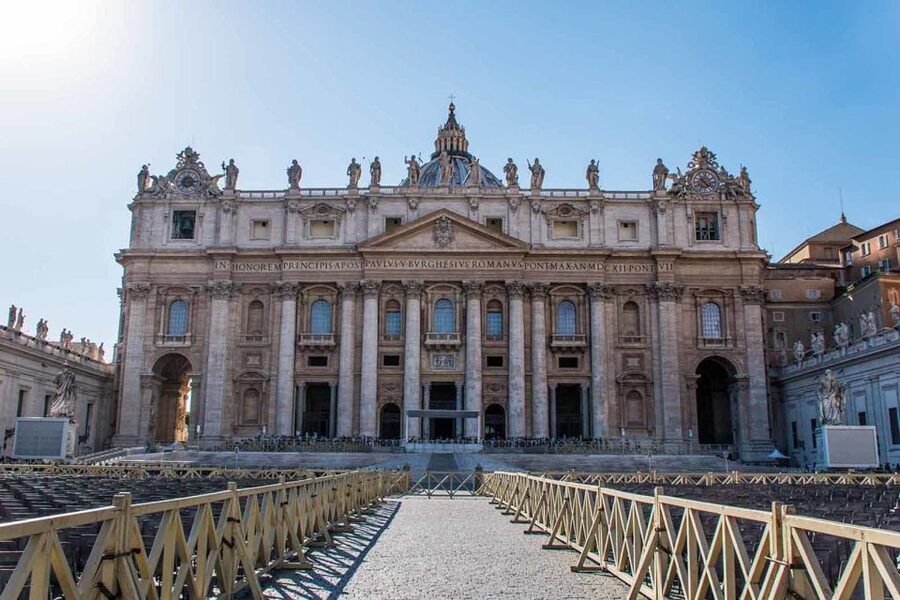
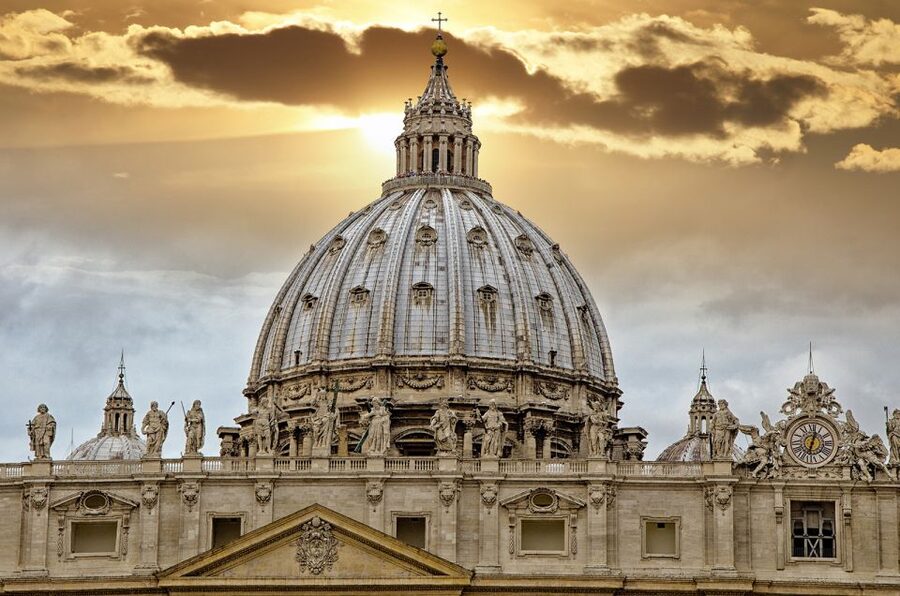
After the Sistine Chapel, the route continues directly into St. Peter’s Basilica without another ticket line. This is one of the strongest practical features of the experience. The basilica is a separate highlight, and entering directly means you do not lose a large part of the tour waiting outside.
The planned guided visit lasts about one hour. That gives you time to see the vast interior and hear how the basilica developed from an early burial site into one of Christianity’s most important churches.
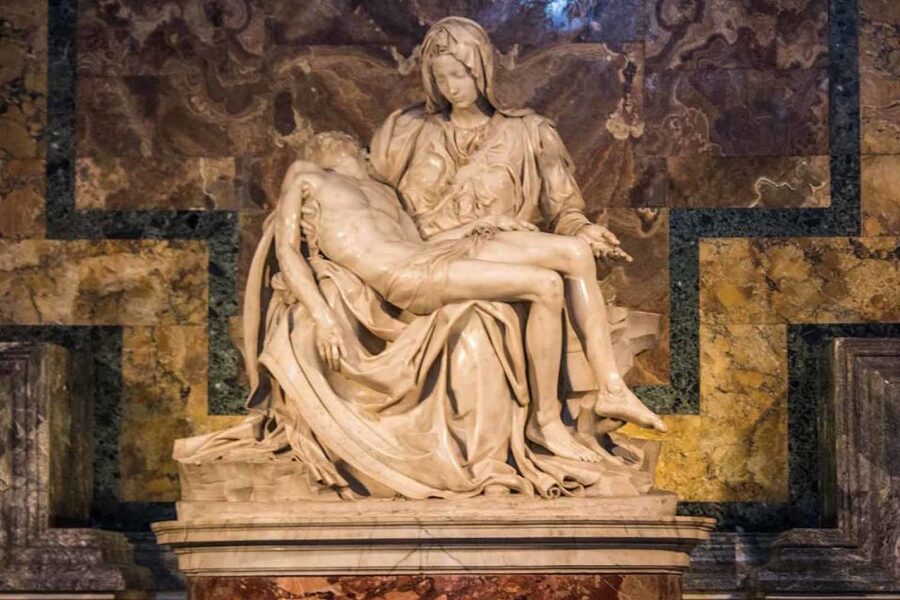
Your guide places the building within Christian history, rather than treating it as a collection of oversized marble decorations. You can expect explanations of its religious importance, its long development, and the works of art that make the interior famous.
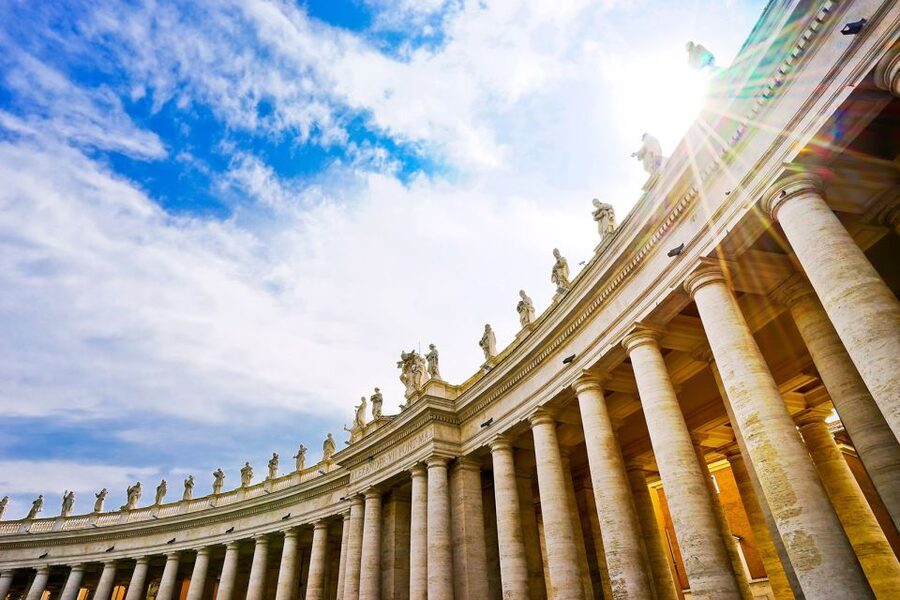
The scale can be overwhelming. A guide helps you turn a grand room into a series of details: sculpture, architecture, memorials, and paintings designed to be seen from far below. St. Peter’s is not a quiet chapel, and the number of people inside can affect how long you pause at each work.
The stated route finishes at the basilica, while the meeting information identifies the activity as ending back at the meeting point. Confirm the exact end arrangement with the provider if you need to meet a driver or reserve a timed activity immediately afterward.
Why a private guide changes the experience
A private group gives you more control than a large scheduled tour. You can ask questions, slow down for Raphael, or move along when the children have had enough of ancient sculpture. That flexibility matters in a museum where concentration often fades before the art does.
The guide also has a practical job: keeping you on the correct route through a crowded system of galleries. One family group included nine teenagers, and the guide, Tatianna, kept everyone moving at a workable pace. That detail is useful if you are traveling with children or young adults who may not want a long lecture at every stop.
The guides speak English or Italian. The experience is presented as a private guided visit, with an experienced guide explaining the art and history along the way. The most useful guide will not simply recite dates. You want someone who can identify the few details worth remembering and explain why they matter.
Is $241.30 per person a fair price?
At $241.30 per person, this is not a budget Vatican visit. The value depends on what you want from the morning or afternoon.
You are paying for a private guide, skip-the-ticket-line access, and a carefully chosen route through four major sights. For a couple or family that wants personal attention and does not want to organize museum entry, the cost can make sense. It is especially useful if you have only a short stay in Rome and want to combine the Vatican Museums with St. Peter’s Basilica in one outing.
The price is harder to justify if you prefer to move independently, spend hours with a single painting, or see the Vatican at the lowest possible cost. Three hours also limits the number of rooms you can explore. You are buying direction and efficiency, not an all-day museum experience.
For families, the value is partly practical. A guide can keep the route moving, explain the major works in plain language, and prevent the visit from becoming a confusing march through crowded halls. For serious art students, the private format lets you ask more specific questions, though you should remember that the schedule still covers a broad range of rooms.
Timing, clothing, and access details
The tour lasts three hours, but starting times vary, so check availability before booking. Start times can change, and you should provide a working contact number so the operator can reach you about schedule updates. If you do not respond, the provider is not responsible for a missed departure.
Dress for the Vatican and the basilica. Shorts and sleeveless shirts are not allowed. Comfortable shoes are essential because the route includes extensive walking and standing. Large bags and luggage are also not allowed, so do not arrive with airport baggage.
Wheelchair access is available. Vatican Museums admission can be free for a visitor who meets the stated Vatican City requirement of at least 74 percent disability and presents the required certification. If that person needs an accompanying assistant, the assistant also receives free admission. Tell the provider in advance so the ticket portion can be removed from the tour price where applicable.
The tour does not include food or beverages. Bring water, but keep the bottle manageable for museum security and the church visit.
Because of the Jubilee, some monuments may be under restoration, and the route can change. The Vatican also controls crowd movement, so the Raphael Rooms are not guaranteed on every departure.
Who will enjoy this Vatican tour most?
I would recommend this experience to you if you want the major Vatican sights explained in a compact visit. It fits first-time Rome visitors, families, couples, and anyone who feels that the Vatican’s size would be difficult to manage alone.
It is also a good match for a group with different interests. One person can ask about Renaissance painting, another can focus on church history, and younger members can stay engaged because the guide controls the pace. The private setting makes it easier to keep the group together.
You may want a different plan if you need a slow, scholarly study of the collection or if $241.30 is beyond your budget. The Sistine Chapel visit is only about 20 minutes, and the Vatican’s crowd level may limit how long you can stop in certain galleries.
Should you book it?
Book this private Vatican tour if you value clear explanations, direct basilica entry, and an efficient route more than the lowest price. The strongest parts are the private guide, the careful progression through the museum galleries, and the chance to give the Raphael Rooms proper attention when crowd conditions allow.
I would choose it for a family or small private group that wants help managing a demanding museum visit. Just arrive properly dressed, wear good shoes, keep your schedule flexible, and understand that the Vatican can change the route. If those limits are acceptable, this is a practical way to see Michelangelo, Raphael, the Vatican galleries, and St. Peter’s Basilica in one well-organized visit.
FAQ
Where does the Vatican tour begin?
Your guide meets you in front of Caffe Vaticano at Viale Vaticano 100. Look for a Through Eternity sign or flag.
How long does the tour last?
The tour lasts three hours. Starting times vary, so check availability when you choose your date.
What sights are included?
The route includes the Vatican Museums, Chiaramonti Museum, Gallery of the Candelabra, Gallery of Tapestries, Gallery of Maps, Raphael Rooms, Sistine Chapel, and St. Peter’s Basilica.
Is the tour private?
Yes. The activity is for a private group with a live English- or Italian-speaking guide.
Does the tour include skip-the-line access?
Yes. Skip-the-ticket-line access is included. This helps you avoid the standard ticket queue, but it does not guarantee empty galleries or no waiting caused by security and crowd controls.
Can I enter St. Peter’s Basilica directly after the Sistine Chapel?
The planned route allows direct entry into St. Peter’s Basilica after leaving the Sistine Chapel, without waiting in another line.
Are the Raphael Rooms guaranteed?
No. The Raphael Rooms are part of the planned itinerary, but Vatican staff may change crowd flows and access on the day. In some circumstances, the guide may not be able to include them.
What should I wear?
Do not wear shorts or sleeveless shirts. Comfortable shoes are recommended because the tour involves considerable walking.
Can I bring luggage or large bags?
No. Luggage and large bags are not allowed. Bring only what you need for the visit.
Is the experience wheelchair accessible?
Yes, the activity is listed as wheelchair accessible. Visitors who meet the Vatican City requirement of at least 74 percent disability may qualify for free admission with the proper certification, and an assisting person may also receive free admission. Contact the provider in advance if this applies to you.
Newest reviews from Vatican City
- Reserved Papal Audience Ticket with Assistance On Site★ 3.5 · 25 reviews
- Private Rome Historical and Early Vatican Guided Tour★ 5.0 · 25 reviews
- Vatican Museum and Sistine Chapel Skip-the-Line Guided Group Tour and tickets★ 3.5 · 27 reviews
- Vatican City Guided Tour With Less Crowd Than Regular Hours★ 3.5 · 28 reviews
- Vatican museum’s & Sistine Chapel Reserved Entrance★ 3.5 · 28 reviews
- Sistine Chapel & Vatican Tour Premium – Skip the Line★ 5.0 · 29 reviews
- Vatican Museums and Sistine Chapel with Skip The Line Ticket★ 4.5 · 30 reviews
- Entrance to Vatican Museums and Sistine Chapel★ 3.5 · 32 reviews
Vatican Museums & Sistine Chapel, compared.
Vatican Museums & Sistine Chapel Tour with Optional Basilica
Read our review →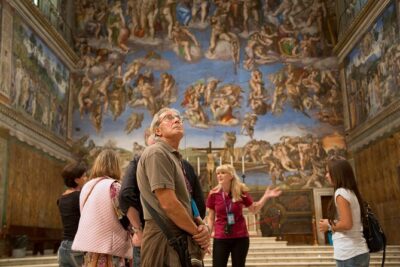
Vatican Museums, Sistine Chapel & St Peter’s Basilica Guided Tour
Read our review →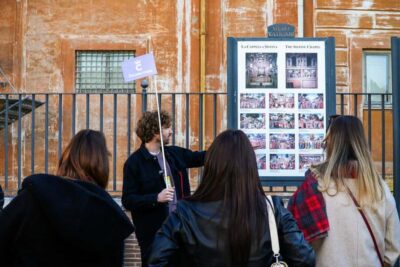
Vatican Museums, Sistine Chapel & Basilica Tour
Read our review →
Vatican Museums & Sistine Chapel Skip-the-Line Entry Ticket
Read our review →Vatican Museums, Sistine Chapel & Basilica Tour
Read our review →
Skip-the-Line Group Tour of the Vatican, Sistine Chapel & St. Peter’s Basilica
Read our review →