
Reviewed · ROME STREET FOOD TOURS
Rome Street Food Tour with Local Guide
Rome’s best food lessons often come in small bites. This 2.5-hour walking tour starts at Campo de Fiori, moves through the Jewish Ghetto and the ruins of Largo Argentina, and turns a light meal into a moving tour of Roman life. You’ll try staples such as supplì, pizza, cured meat, seasonal produce, pastries, and gelato.
I like the mix of food and sightseeing, since you get context for what you eat instead of simply sitting at a restaurant. I also like the small group, capped at 15, and the guides, including Ramona, Francesca, Mattia, Matteo, and Kristian, are often praised for sharing useful tips along with Roman history. The main catch is practical: you’ll spend much of the tour standing and walking outdoors, and the evening route misses the Campo de Fiori market.
In This Review
- Key points to know before booking
- Why this food walk works as a first taste of Rome
- Campo de Fiori begins with market flavor
- Passetto del Biscione adds a quieter Roman corner
- The Jewish Ghetto connects food with difficult history
- Portico of Octavia brings ancient Rome into the meal
- Largo Argentina ends with Caesar and gelato
- What you are likely to eat and drink
- The guides make or break the experience
- Lunch or dinner: choose with care
- Dietary needs and physical effort
- Is $54.42 a fair price?
- Who should book this Rome food tour?
- FAQ
- How long does the Rome Street Food Tour last?
- How much does the tour cost?
- Where does the tour begin?
- Where does the tour end?
- What foods are included?
- Are wine and beer included?
- Can vegetarians take this tour?
- Can vegans or people following gluten-free diets take part?
- Is the Campo de Fiori market open on evening tours?
- How large is the group?
- Is the tour suitable for people with limited mobility?
- What happens if I need to cancel?
Key points to know before booking
- Start at Giordano Bruno’s statue: Meet your guide in the center of Piazza Campo de Fiori, a busy and easy-to-recognize meeting spot.
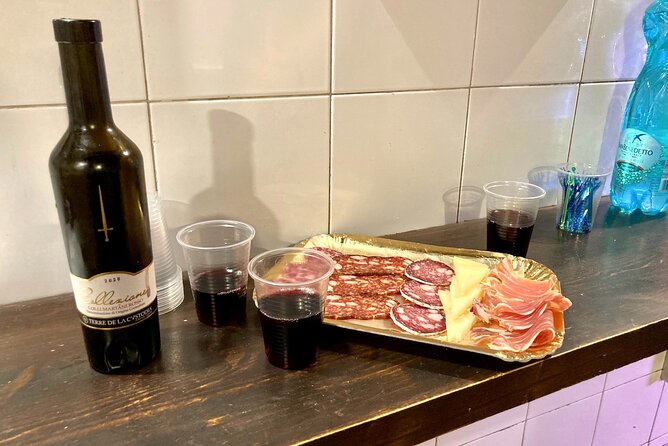
- Taste classic Roman street food: Expect changing selections that may include supplì, pizza, cheese, cured meat, fruit, pastries, Roman-Jewish specialties, wine, beer, and gelato.
- Walk through major historic areas: The route links Campo de Fiori, Passetto del Biscione, the Jewish Ghetto, Portico of Octavia, and Largo Argentina.
- Choose lunch or dinner: Morning departures can include the historic market, while evening tours take a different approach because the market stalls are closed.
- Plan for outdoor eating: Seats are not guaranteed, and the tour is not suited to people with limited walking or standing ability.
- Dietary limits matter: Vegetarians can be accommodated only with advance notice. Vegan, gluten-free, and dairy-free diets cannot be accommodated.
Why this food walk works as a first taste of Rome
At $54.42 per person, this is priced like a modest meal with a guide attached. That comparison matters. You are not paying for a full restaurant dinner, and the tasting portions are described as small bites, but you are getting several stops, drinks, neighborhood walks, and practical city advice in one outing.
I think the tour makes the most sense early in your Rome stay. A good guide can point out useful drinking fountains, explain local food customs, and offer suggestions for later meals. Kristian, for example, was praised for helping with train travel advice, while other guides shared restaurant recommendations and tips for getting around Rome.
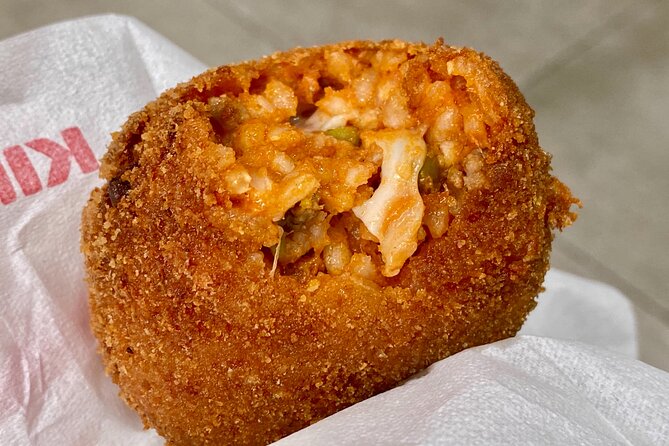
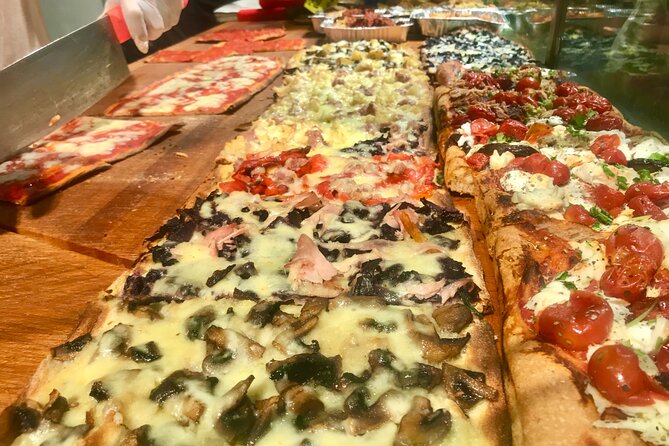
The food also gives you a useful introduction to Roman habits. Supplì is not just fried rice. It is a crisp rice ball with tomato and mozzarella at the center, and it is one of the city’s classic quick foods. Pizza, cured meats, cheese, seasonal fruit, and gelato show different sides of Roman eating, from market grazing to a sweet finish.
The tour has earned a 4.8 rating from 2,361 reviews, with 96 percent of participants recommending it. That high score fits the strongest pattern in the feedback: people value the guides’ warmth, food knowledge, and ability to connect a snack with the street or monument around it.
More Rome street food crawls:
- Rome: Trastevere or Jewish Quarter Street Food Tour
★ 4.8 · 3,839 reviews - Rome: Trastevere & Campo de Fiori Street Food Walking Tour
★ 4.9 · 2,768 reviews - Trastevere & Campo de’ Fiori Street Food Tour, Eat Like a Local
★ 5.0 · 207 reviews
Campo de Fiori begins with market flavor
Meet under the statue of Giordano Bruno in the middle of Piazza Campo de Fiori. Allow enough time to find the statue and gather your group, since the square can be busy and crowded with pedestrians.
The first stop is also the most time-sensitive. In the morning, Campo de Fiori hosts one of Rome’s oldest food markets, and the tour uses the stalls for early tastings. You may sample cheese, cured meat, wine, seasonal fruit, and other products as you move among the vendors.
This market portion gives the tour a more local feel than a simple series of restaurant counters. You can see the ingredients before they are served, and the guide can explain how they fit into Roman cooking. Seasonal changes are part of the deal, so do not arrive expecting a fixed menu.
The catch is clear: the market tastings are available only in the morning. A lunch or dinner departure can still include Roman food and wine, but the square will not have its morning market activity. If browsing market stalls is a priority, choose the morning option.
One criticism raised about the tour involved buying vinegar from vendors and the feeling that the purchase was not good value. You do not need to buy anything extra to take part. Treat vendor purchases as optional, and compare prices before spending beyond the tour price.
Passetto del Biscione adds a quieter Roman corner
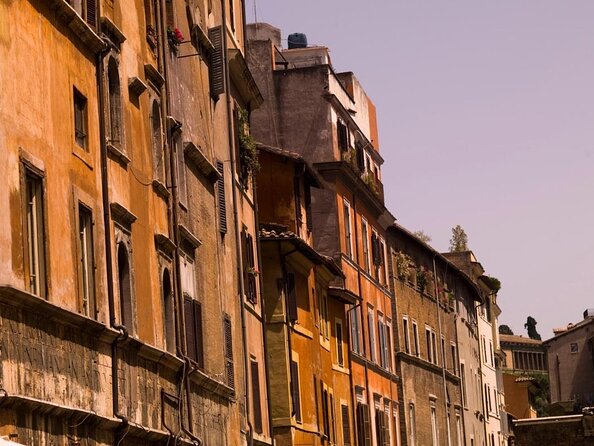
From Campo de Fiori, the walk continues to Passetto del Biscione. This short section helps break up the tastings and gives you a look at one of Rome’s less obvious historic passages.
The stop lasts about 15 minutes, so think of it as a brief orientation rather than a major sightseeing visit. You will taste local street food while the guide explains the quarter and points out its historic character.
This is one of the reasons the tour suits people who want more than a food checklist. Rome can be hard to read on your own. A narrow passage, old wall, or tucked-away route may look like background scenery until someone explains its place in the city.
The walk is not especially long according to one family’s experience, but it does involve regular movement between stops. You should be comfortable walking on Rome’s uneven urban surfaces and standing while eating.
The Jewish Ghetto connects food with difficult history
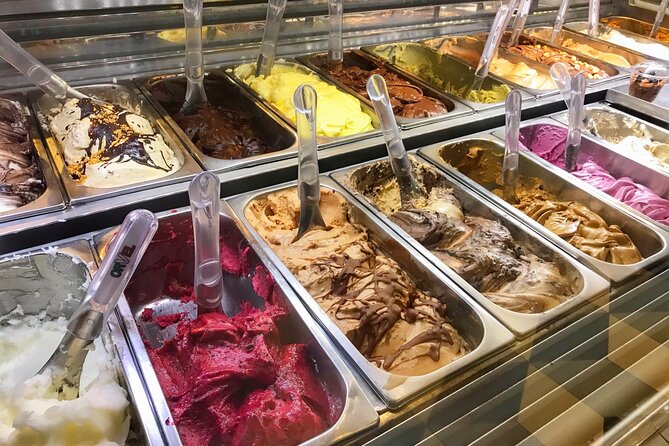
The route then reaches Rome’s former Jewish Ghetto, established by Pope Paul IV to segregate Jewish people. This part of the tour is important because the food here is tied to a distinct Roman-Jewish tradition, not simply to generic Italian cooking.
You’ll hear about the history of the Ghetto and taste one of its well-known specialties. The exact food can vary by season and availability, but artichokes and other Roman-Jewish dishes appear in the tasting reports. Fried artichokes are one example, though they also drew one complaint from someone who became ill after the tour on a very hot day.
That isolated account is a useful reminder to pace yourself, drink water, and take care with rich or fried foods in hot weather. The tour takes place rain or shine, so conditions can affect how pleasant the outdoor portions feel.
The Ghetto is also a good place to ask questions. Guides such as Ramona, Francesca, and Matteo have been praised for tying food to architecture, religion, daily life, and Roman customs. The history is presented during a walk, so it remains approachable rather than becoming a formal lecture.
More food tours in Rome:
- Rome: Tuscany & Montepulciano Day Trip with Lunch & Wine Tasting
★ 4.5 · 5,232 reviews - Winner 2025 Rome Twilight Trastevere Food Tour by Eating Europe
★ 5.0 · 5,157 reviews - Rome Food Tour: Unlimited Tastings with Fine Wine & Barolo
★ 5.0 · 3,365 reviews - Rome: Trastevere Food tour with Free-Flowing Fine Wine
★ 5.0 · 2,853 reviews
Portico of Octavia brings ancient Rome into the meal
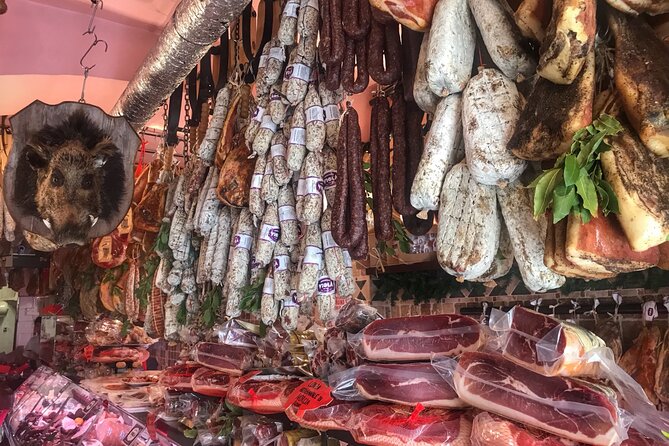
At the Portico of Octavia, you’ll see the remains of ancient monuments dating to the first century BC. These ruins sit within the former Jewish Ghetto, making this a particularly effective point on the route. You are not moving from a food district to a separate museum visit. You are seeing how different layers of Rome occupy the same streets.
The stop lasts about 30 minutes. The emphasis remains on walking, explanation, and tasting rather than an extended archaeological visit. If you want a detailed examination of the ruins, you will need more time elsewhere, but this stop gives you useful context during a compact tour.
I like this pairing because it shows the practical strength of a food walk in Rome. A plate of food can lead into a discussion about neighborhood identity, while a ruin can explain why the surrounding streets developed as they did. The guide’s skill matters here, and the feedback repeatedly highlights clear explanations of both food and history.
Largo Argentina ends with Caesar and gelato
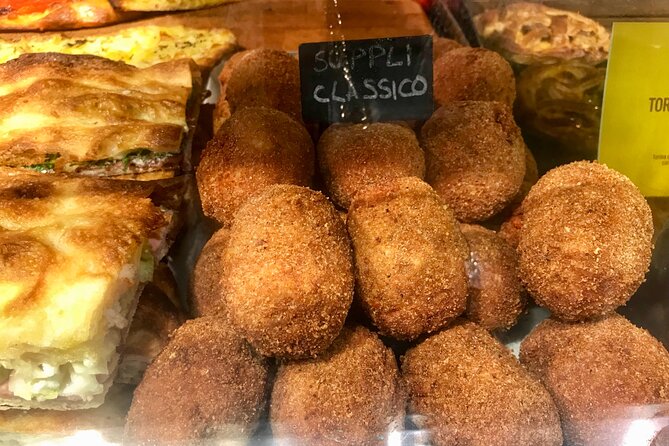
The final area is Largo Argentina, where Julius Caesar was assassinated. The site contains the remains of ancient temples and is one of the most memorable outdoor archaeological areas in central Rome.
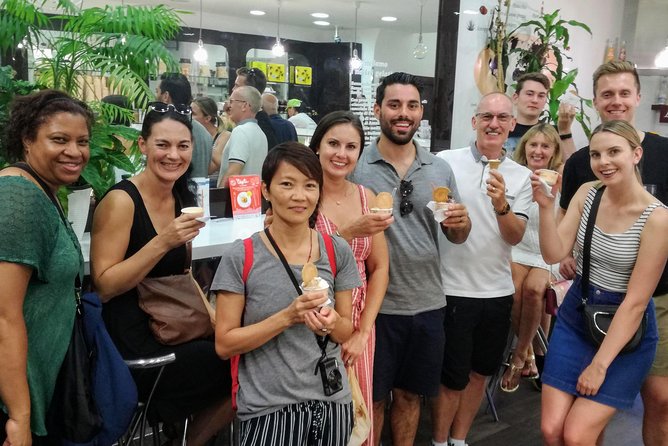
After the history lesson, the tour finishes at a nearby family-run gelateria. You’ll eat artisanal gelato and hear from the owner about how gelato is made. This final stop gives the tour a pleasant rhythm: savory foods early on, historical sights along the way, then a cold dessert at the end.
Gelato is also a good subject for a short demonstration because the making process helps you think about texture, ingredients, and freshness. You should not expect a full gelato class, but the owner’s explanation adds something beyond simply receiving a cone or cup.
The listed end point is Piazza di Sant’Eustachio, near central Rome. That location can be useful if you want to continue sightseeing after the tour, though the exact flow between the gelateria and the end point may depend on the day’s vendors and route.
What you are likely to eat and drink
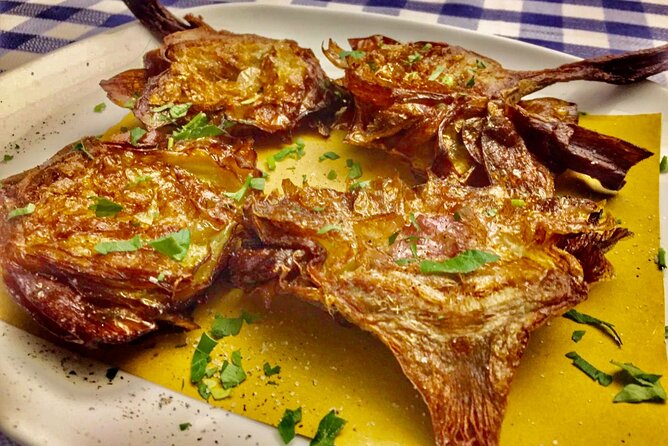
The tasting list is broad, but it is not fixed. The tour includes several street food samples, with selections changing by season. The food described includes:
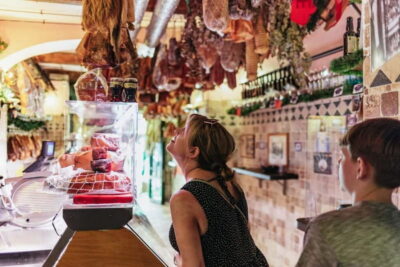
- Cheese and cured meat
- Seasonal fruit and produce
- Pizza
- Supplì with tomato and mozzarella
- Roman-Jewish specialties, which may include artichoke-based dishes
- Pastries or cannoli
- Artisanal gelato
- Local wine and beer
The most useful expectation is variety rather than large portions. One person described the servings as quick small bites that added up to enough for a light meal. Another advised not eating before the tour, while a separate account called the portions a nice amount of food.
I would plan a small breakfast or lunch rather than arriving stuffed. The tour is meant to replace a light meal, not necessarily a long, sit-down dinner. If you have a large appetite, you may want another meal later.
Extra drinks are not included. Wine and beer tastings are included, but any additional beverages cost extra. Rome has public drinking fountains with potable water, and guides may point them out, so carrying a refillable bottle is sensible, especially in warm weather.
The guides make or break the experience
The provider uses different local guides, so your guide is not guaranteed to be a particular person. Names praised in the feedback include Ramona, Francesca, Mattia, Matteo, Matthias, Kristian, Andreas, Fabrizia, and others.
The strongest guide qualities are consistent. You can expect food explanations, Roman history, neighborhood details, and practical advice to be woven together. Ramona is often described as warm and passionate about Rome, Francesca as friendly and enthusiastic, and Mattia and Matteo as strong on both local cuisine and history.
The small-group limit of 15 helps here. It is not a private tour, but it is small enough for questions and conversation. Several people enjoyed meeting other participants, and families found the format approachable for teenagers and children.
The social side is worth noting. You will be eating while standing or walking, and you may share tastings with people you have just met. That can make the experience lively, but it may not suit you if you prefer a quiet, private meal.
Lunch or dinner: choose with care
The tour can be taken around lunch or dinner. I would choose based on your priorities rather than simply selecting the most convenient time.
Pick the morning or lunch option if you want to see Campo de Fiori’s food market. This is when the market stalls are active and the first tastings can take place among the vendors.
Choose dinner if you prefer a later start and do not care about the market. The evening route still includes the Jewish Ghetto, ancient ruins, Roman food, drinks, and gelato, but Campo de Fiori will not offer its morning market scene.
The tour runs rain or shine. Much of the experience takes place outdoors, so check the forecast and bring suitable clothing. One participant specifically noted the amount of outside time in chilly or rainy weather, while another linked feeling unwell after the tour to a very hot day. Comfortable shoes, water, and sensible clothing will help.
Dietary needs and physical effort
This tour can accommodate vegetarians only when you advise the provider in advance. It does not accommodate vegan, gluten-free, or dairy-free diets. People with nut allergies should know that cross contamination is possible.
A few participants with gluten concerns were given some gluten-free items by individual guides, but you should not treat that as a guaranteed arrangement. The stated policy is that gluten-free diets cannot be accommodated, so people with celiac disease or serious allergies should contact the provider before booking and decide carefully.
You will walk and stand throughout the experience, and seats are not guaranteed. The activity is not suitable for people with limited walking or standing capacity. Most people can participate, and the route is near public transportation, but the practical issue is endurance rather than access to the starting area.
The booking includes mobile ticketing and confirmation at the time of booking. Free cancellation is available up to 24 hours before the local start time. Inside that window, refunds are not offered, and the tour requires a minimum number of participants. If the minimum is not reached, you should be offered another date or experience, or a full refund.
Is $54.42 a fair price?
For Rome, $54.42 is fair if you want a guided introduction rather than a self-directed snack crawl. The price covers multiple tastings, wine and beer, a local guide, and a route through several important central neighborhoods.
It is less compelling if you mainly want large servings. You can buy pizza, supplì, gelato, and market food on your own for less, especially if you already know where to go. The added value here comes from the explanations, the organized sequence, and the chance to sample foods you might otherwise overlook.
I see it as a good first-night or first-day activity. It gives you a sense of Roman food, introduces central sights, and can help you plan the rest of your meals. The tour is not a replacement for a proper Roman dinner, but it is a useful way to get your bearings while eating.
Who should book this Rome food tour?
Book it if you want a social, small-group walk with traditional Roman foods and short history lessons. It suits first-time visitors, families with older children or teenagers, and returning visitors who want a fresh look at Roman cuisine.
It is especially useful if you enjoy learning why a dish matters, not just tasting it. Guides often share local customs and practical city advice, and the route gives you several central sights without requiring a separate sightseeing block.
Think twice if you need a vegan, dairy-free, or gluten-free menu, or if standing and walking are difficult. Also reconsider it if you want a formal market tour in the evening, a full dinner, or a private food experience.
For everyone else, I would book it early in a Rome stay, choose a morning departure if the Campo de Fiori market matters to you, and arrive ready for small portions, outdoor walking, and a generous sampling of Roman flavor.
FAQ
How long does the Rome Street Food Tour last?
The tour lasts approximately 2 hours and 30 minutes.
How much does the tour cost?
The listed price is $54.42 per person.
Where does the tour begin?
Meet at Piazza Campo de Fiori, under the statue of Giordano Bruno in the middle of the square.
Where does the tour end?
The stated end point is Piazza di Sant’Eustachio in central Rome.
What foods are included?
Tastings may include cheese, cured meat, seasonal produce, pizza, supplì, pastries, Roman-Jewish specialties, and artisanal gelato. The exact selection can change with the season.
Are wine and beer included?
Tastings of local wine and beer are included. Extra drinks are not included.
Can vegetarians take this tour?
Yes, vegetarians can be accommodated if you advise the provider in advance.
Can vegans or people following gluten-free diets take part?
No. The tour does not accommodate vegan, gluten-free, or dairy-free diets.
Is the Campo de Fiori market open on evening tours?
No. The local market is closed in the evenings, so market tastings are available only in the morning.
How large is the group?
The group has a maximum of 15 participants.
Is the tour suitable for people with limited mobility?
No. The tour involves walking and standing, seats are not guaranteed, and it is not suitable for people with limited walking or standing capacity.
What happens if I need to cancel?
You can receive a full refund if you cancel at least 24 hours before the local start time. Cancellations or changes made within 24 hours are not refunded or accepted.
Newest reviews from Rome
- Rome: Vatican Museums & Sistine Chapel Skip-the-Line Ticket★ 4.4 · 148 reviews
- Shared Shuttle Transfer from Rome to Civitavecchia Port★ 5.0 · 148 reviews
- Rome: Crypts & Catacombs After Hours Tour with Bone Chapel★ 4.6 · 149 reviews
- Ghosts Legends and Mysteries of Rome Walking Tour★ 5.0 · 149 reviews
- Skip the Line: Vatican and Sistine Chapel with Guided Tour★ 4.0 · 149 reviews
- Tivoli: Villa Gregoriana Entrance Ticket★ 4.7 · 150 reviews
- Pizza and Tiramisu Cooking Class in Rome, Piazza Navona★ 5.0 · 150 reviews
- Appian Way E-bike Tour with Gourmet Picnic and Catacombs★ 4.5 · 150 reviews
Rome Street Food Tours, compared.
Trastevere or Jewish Quarter Street Food Tour
Read our review →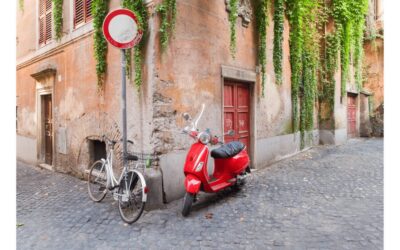
Trastevere & Campo de Fiori Street Food Walking Tour
Read our review →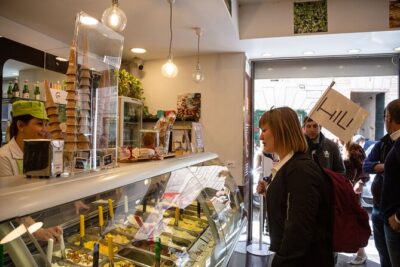
Trastevere & Campo de’ Fiori Street Food Tour, Eat Like a Local
Read our review →
Hidden Rome: Small Group E-Bike Tour with Street Food Stops
Read our review →
Trastevere & Tiber Island Street Food Tour at Sunset
Read our review →Browse the lists this tour appears in