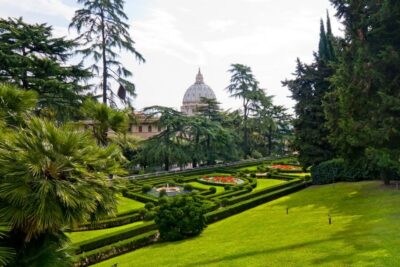
Reviewed · VATICAN MUSEUMS & SISTINE CHAPEL
Rome: Turning the Lights on at the Vatican Museums
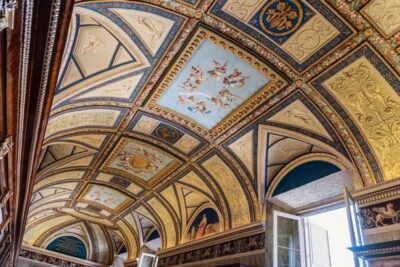
Before the Vatican Museums fill with people, you help open them. The old keys turn, lights flick on, and rooms holding Michelangelo, Raphael, and centuries of papal art appear in the quiet of early morning. It is a rare way to see this famous complex, with head key keeper Gianni Crea leading the opening routine.
I love the small-group access to the Sistine Chapel, where the ceiling has room to breathe before the crowds arrive. I also like the human side of the tour: Gianni shares stories from his years as head clavigero, and visitors take turns opening doors and switching on lights. The main drawback is price. At $396.50 per person, this is a serious splurge, and the 2.5-hour route does not cover every Vatican gallery.
In This Review
- Key points at a glance
- Why the dawn opening changes the Vatican visit
- Meeting Gianni Crea before the doors open
- Turning keys and switching on the lights
- Selected galleries, not every room
- The Sistine Chapel before the crowds
- Breakfast in the Cortile della Pigna
- Can you continue inside after breakfast?
- Is $396.50 a fair price?
- Dress, bags, and security rules
- Who should book this early Vatican experience?
- Should you book it?
- FAQ
- Where does the Vatican key keeper tour begin?
- Where does the activity end?
- How long does the tour last?
- Is the Vatican Museums admission ticket included?
- Is St. Peter’s Basilica included?
- What language is the tour conducted in?
- What should I wear?
- Can I bring luggage or a large backpack?
Key points at a glance
- Help open the museums: Turn historic keys and switch on lights in selected Vatican rooms with Gianni Crea.
- See the Sistine Chapel early: Enjoy Michelangelo’s ceiling and frescoes in a much quieter setting.
- Hear the Vatican’s opening story: An English interpreter translates Gianni’s Italian commentary and anecdotes.
- Visit selected special areas: The route can include rooms and views not normally open to the public.
- Finish with breakfast: Eat a simple American-style breakfast in the Cortile della Pigna.
- Return for more on your own: After the guided portion, you may be able to continue through the museums as public opening time approaches.
Why the dawn opening changes the Vatican visit
The Vatican Museums are famous for their art, but the crowds can make the experience feel like a slow march through grand rooms. This tour gives you a brief window when the buildings belong mainly to the staff and a small group of early risers.
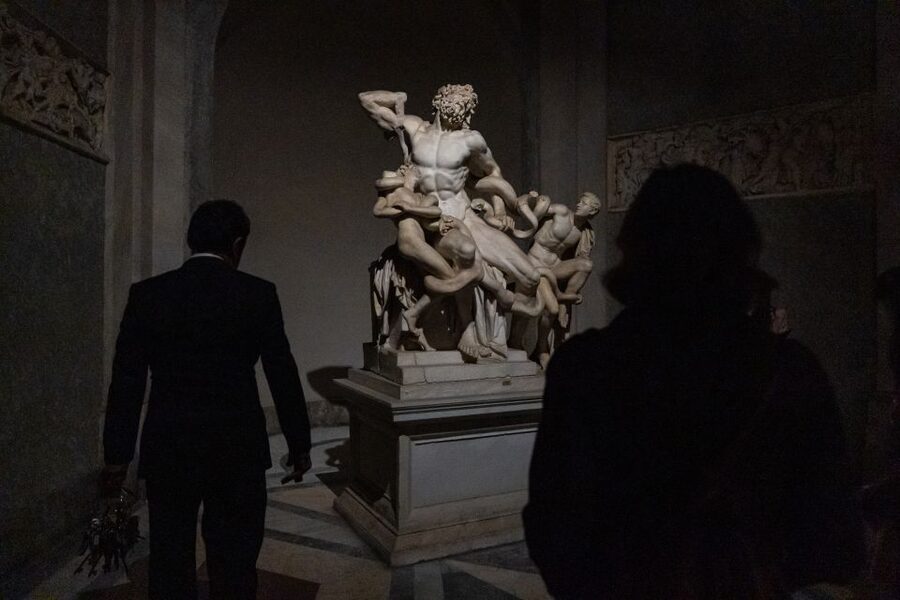
The difference is not only the number of people. At dawn, you notice sounds that disappear later: keys turning in heavy locks, doors opening one after another, and the quiet inside a chapel before the normal stream of visitors begins.
The opening routine also gives the Vatican a practical, working character. You are not simply entering through a reserved gate and following a guide. You see part of the daily task of preparing 24 connected galleries, museums, and chapels for the day.
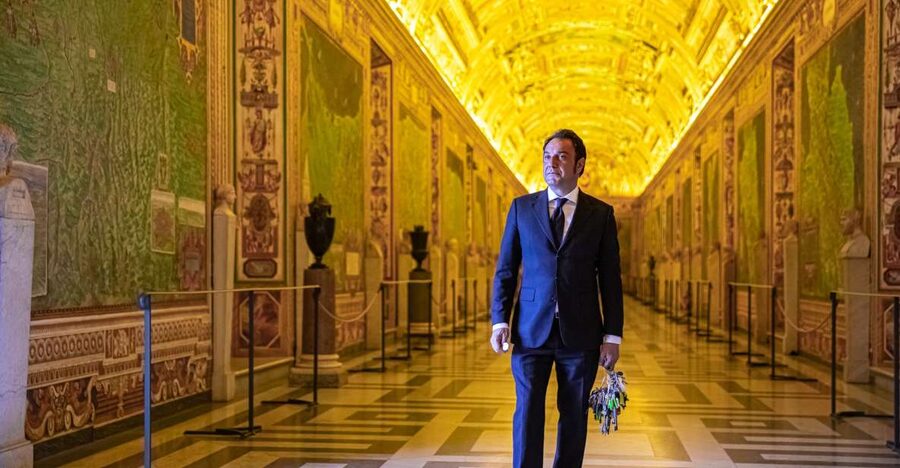
Gianni Crea has led this morning routine for about a decade. His role as head clavigero, or chief key keeper, gives the tour its special focus. The keys and switches are not stage props. They are part of the real process of bringing the museums to life.
That detail matters. A standard early-entry ticket can get you inside before the main crowds, but it usually does not give you this behind-the-scenes ritual or the chance to hear directly from the person responsible for opening the rooms.
More Vatican Museums and Sistine Chapel entries:
- Vatican: Museums & Sistine Chapel Entrance Ticket
★ 4.5 · 144,003 reviews - Vatican Museums & Sistine Chapel Tour with Optional Basilica
★ 4.3 · 67,413 reviews - Vatican Museums, Sistine Chapel & St Peter’s Basilica Guided Tour
★ 4.5 · 39,149 reviews
Meeting Gianni Crea before the doors open
You meet at the main entrance to the Vatican Museums. The precise starting time depends on the date you choose, but this is a pre-opening experience, so expect an unusually early start and arrive with time to spare.
Late arrivals are not accommodated. That rule is important here because the group enters as part of a carefully timed opening process. If you are the type who likes to cut things close, build in extra time for finding the entrance and passing through security.
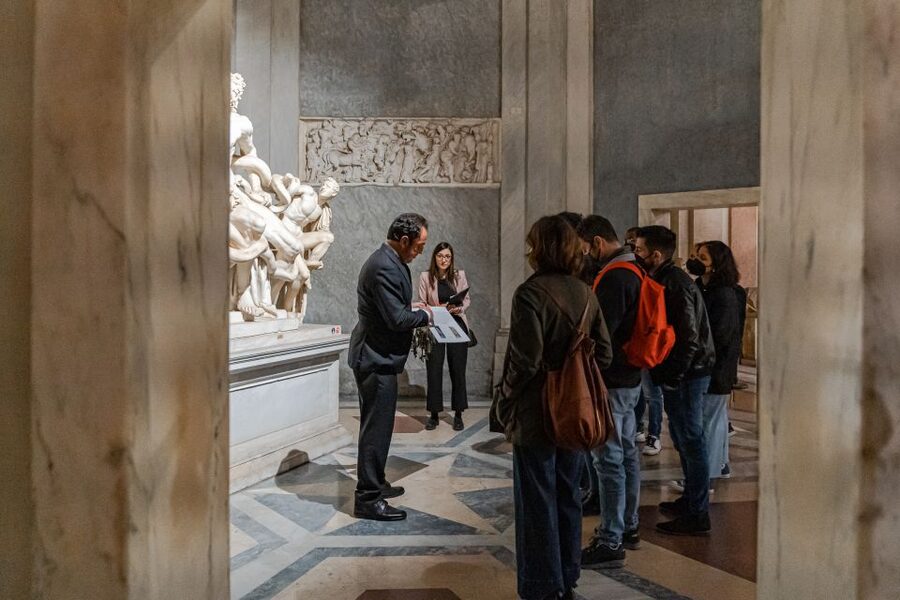
The group is kept small. The exact number can vary, but some outings have had only seven people, while others have included around a dozen or slightly more. A small group gives you a fair chance to take a turn with a key, hear the explanations, and find a clear view in the rooms.
Gianni conducts the tour in Italian. An interpreter provides the English translation, and the quality of that interpretation matters because Gianni’s personal stories are central to the experience. Guides and interpreters have included Assunta, Elena, Eric, and others, depending on the departure.
The interpreter may also help with photographs. One especially useful touch is the chance to have photos taken while you perform the opening ritual, rather than trying to manage a camera while handling an old key.
Turning keys and switching on the lights
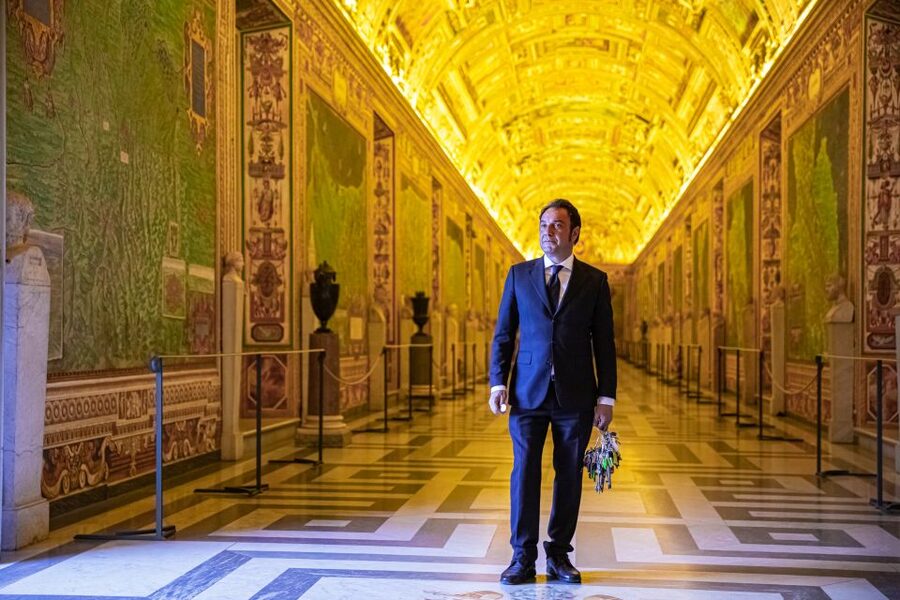
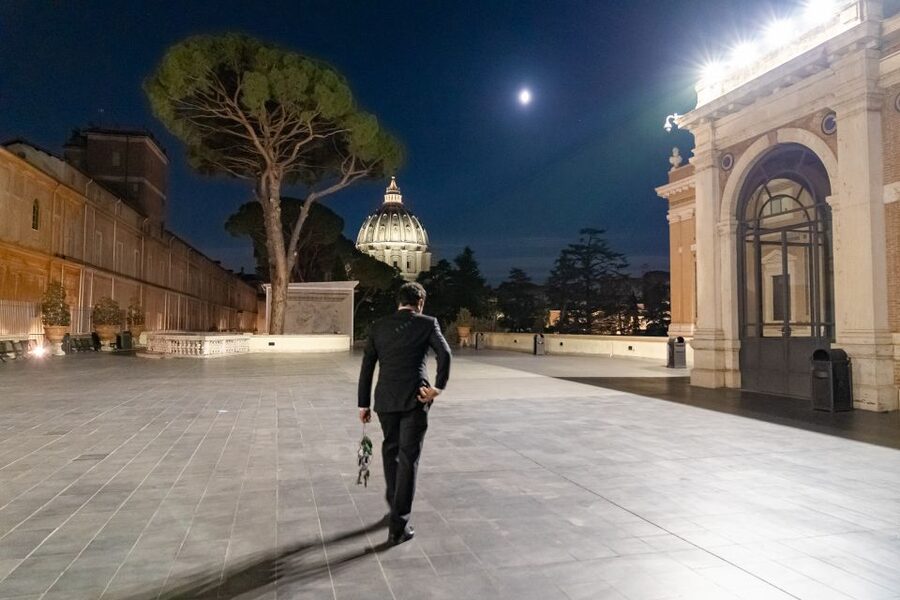
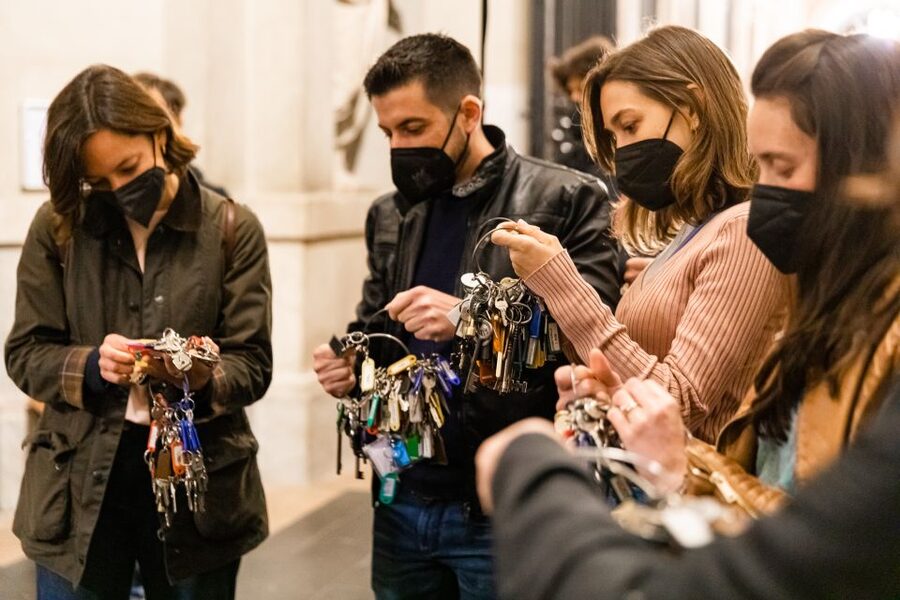
The first portion feels more like a working morning than a regular sightseeing tour. You move from door to door as the key keepers open selected spaces and bring up the lights.
Some participants get to hold keys and turn them in the locks. Others operate the switches. The jobs are simple, but the setting makes them memorable. Turning on a light in an ordinary room is forgettable. Turning on the lights in a Vatican gallery, with centuries-old art waiting in the dark, is not.
You will not open every one of the 24 connected spaces yourself. The group moves through selected areas, and the pace is brisk. Still, the sequence gives you a sense of the museum as a large living institution, not just a collection of rooms arranged for visitors.
The route can include areas that are not normally open to the public. Past participants have described seeing renovation work in progress, private rooms, and high views over the Cortile della Pigna. These details are subject to the day’s access and the Vatican’s operating needs, so treat them as possible additions rather than guaranteed stops.
The mood is one of the tour’s strongest features. Staff are preparing the building around you, and the group is small enough that the early morning can feel almost private. You may want to pause after crossing a gallery, look back, and take a photo once the group has moved ahead. That is often better than competing for the first view when a door opens.
Selected galleries, not every room
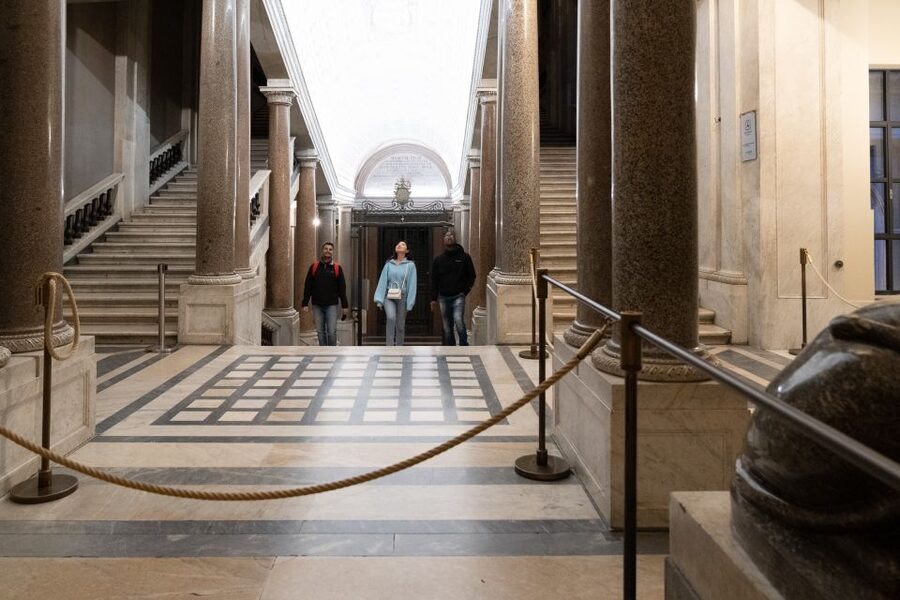
This experience is not designed to cover every room in the Vatican Museums. The complex is simply too large, and the opening routine adds its own timing and movement.
You can expect a guided look at some of the most important areas, but the route may leave out galleries you had hoped to see. The Raphael Rooms, for example, have not been included on every outing.
That is the central trade-off. You pay for access, atmosphere, and the opening ritual, not for a complete museum survey. If your goal is to check off every major gallery, a regular museum ticket with plenty of time may suit you better.
On the other hand, the tour can leave you with time to continue independently once the guided portion ends. Some participants return to the galleries after breakfast, while the museum is still relatively calm. This is a useful way to make up for rooms not covered with the group.
Ask about the day’s arrangement if seeing particular galleries is essential to you. Do not assume that the guided path includes every famous room simply because the ticket covers the museum.
More ways to visit the Vatican:
- Rome: Vatican Museums, Sistine Chapel & Basilica Tour
★ 4.3 · 13,872 reviews - Vatican Museums & Sistine Chapel Skip-the-Line Entry Ticket
★ 4.4 · 13,838 reviews - Rome: Vatican Museums, Sistine Chapel & Basilica Tour
★ 4.7 · 13,217 reviews - Skip-the-Line Group Tour of the Vatican, Sistine Chapel & St. Peter’s Basilica
★ 4.5 · 12,779 reviews
The Sistine Chapel before the crowds
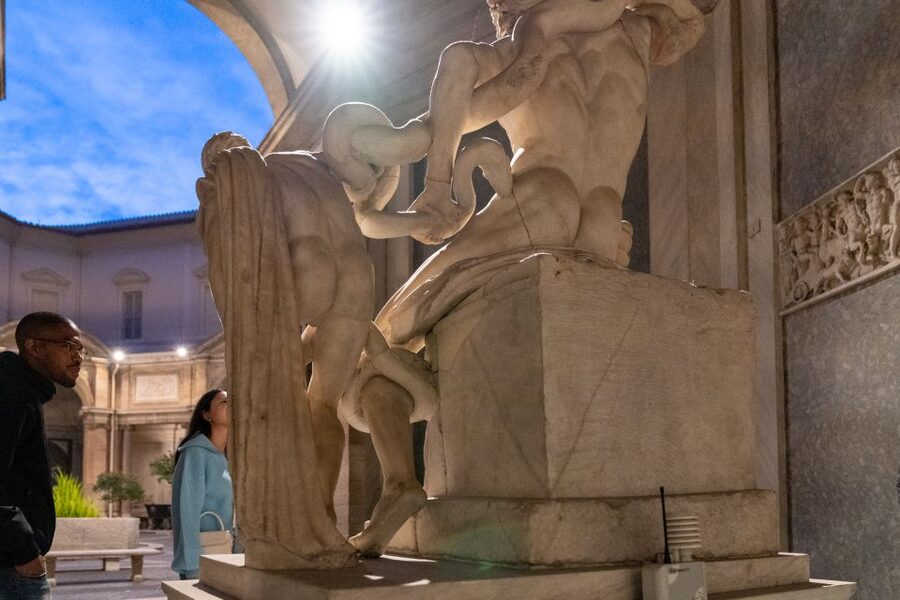
The Sistine Chapel is the emotional center of the morning. Michelangelo’s ceiling, including The Creation of Adam, is difficult to appreciate when the chapel is packed and the whole room seems to move as one body.
Here, the group enters while the public has not yet arrived. You can look up without someone directly in front of you, take in the scale of the ceiling, and spend a little time with the wall frescoes.
Photography is not permitted inside the Sistine Chapel, so the quiet is for looking, not collecting pictures. That restriction is easy to accept when you have room to focus on the art itself.
The lighting ritual makes the chapel especially memorable. Watching the room change from dark to light gives the visit a strong sense of occasion, but the art remains the reason to come. Michelangelo’s work rewards time, and the early hour gives you more mental space for it.
You should still keep expectations sensible. This is not an unlimited private visit with no schedule. The group must keep moving through the opening routine, and the chapel portion is only one part of a 2.5-hour program.
Breakfast in the Cortile della Pigna
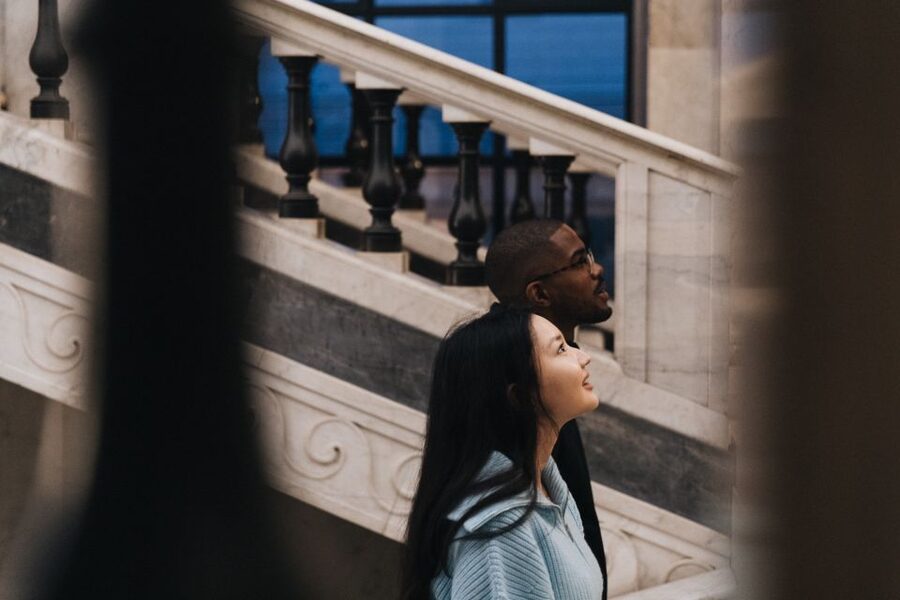
After the museum portion, you finish in the Cortile della Pigna with an American-style breakfast. The menu includes a croissant or pain au chocolat, pancakes with peanut butter or marmalade, orange or apple juice, and tea or coffee.
The meal is a pleasant end to a very early start. It gives you a chance to sit down, talk with the guide and other members of the group, and let the morning settle in.
I would not choose this experience for the food. The breakfast is basic rather than a major culinary event, and some people may prefer to use the time for more museum viewing. If you are eager to see additional galleries while they remain quiet, you may want to eat quickly or ask how much independent museum time is available afterward.
The courtyard itself helps. Breakfast in a Vatican setting feels more distinctive than eating a packaged snack outside the entrance, even if the menu is straightforward.
The Cortile della Pigna is also a practical point in the schedule. By the time you sit down, the museum is moving toward normal public hours. The transition from near-silence to the regular opening period becomes part of the experience.
Can you continue inside after breakfast?
The guided activity ends back at the meeting point, but the museum ticket and the morning schedule can allow you to continue exploring independently. This is one of the best ways to improve the value of the expensive admission.
The timing gives you a head start on the general public. You have already seen the major route with a guide, so you can return to rooms that were skipped or revisit the galleries that interested you most.
This independent time is not guaranteed to feel as empty as the opening portion. Once the public enters, the character of the museum changes quickly. Still, starting early puts you in a better position than arriving later in the morning.
The tour does not include a guided visit to St. Peter’s Basilica. Entry to the basilica itself is free, but access can be difficult because of large crowds. Do not count on a quick transfer from the museums into the church.
There is also no guaranteed access to every Vatican area. One account described choosing St. Peter’s Basilica instead of the Vatican Gardens because the short route between sites could not be used both ways. If the gardens are a priority, ask about the day’s options before committing to another route.
Is $396.50 a fair price?
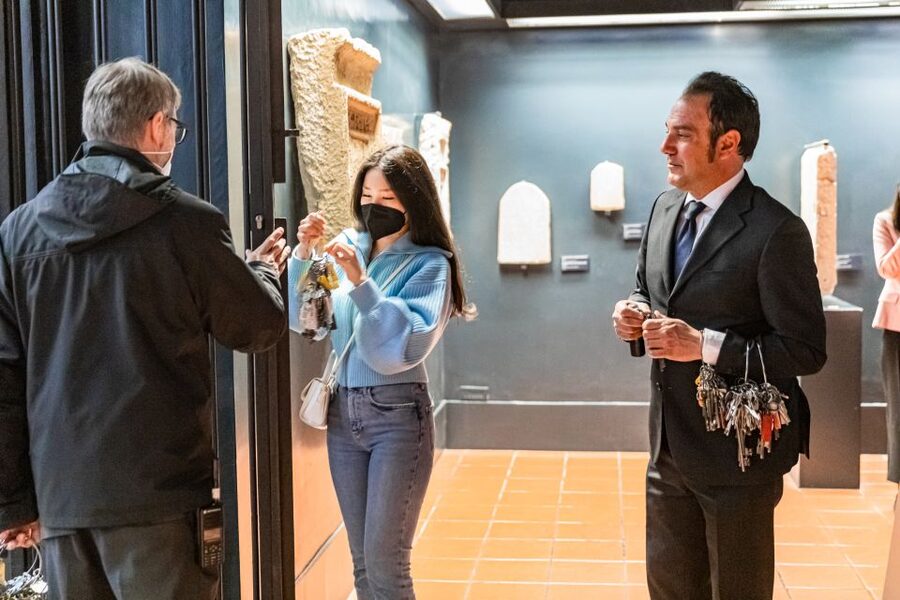
At $396.50 per person, this tour costs far more than ordinary Vatican admission. The price pays for early access, a small group, the museum ticket, a guide and interpreter, the opening routine with the key keeper, the Sistine Chapel visit, and breakfast.
The value depends on what you want from Rome. If you mainly want to see the Vatican’s art at the lowest possible cost, this is not the right choice. A regular admission gives you more freedom to spend the day inside and costs much less.
If the crowds are your biggest concern, the calculation changes. The Vatican is one of Rome’s most crowded sights, and quiet time in the Sistine Chapel can be worth a great deal to someone marking a special occasion or making a first and perhaps only visit.
I also see value in the access to Gianni and the opening ritual. You are paying for a story and a piece of daily Vatican life, not only for a shorter queue. That distinction makes this feel more like a special event than a standard museum tour.
The time limit keeps the price from being an automatic bargain. The guided program lasts 2.5 hours, and the route does not include all rooms. To get the most from the fee, plan to continue independently afterward if the schedule permits.
Dress, bags, and security rules
The Vatican dress code is enforced. You must cover your shoulders and knees, so wear a long-sleeved shirt and long pants. Shorts, short skirts, sleeveless shirts, and clothing that leaves the shoulders uncovered can lead to refused entry.
Wear comfortable shoes. The route moves through several museum areas, and the early start is hard enough without uncomfortable footwear.
Airport-style security is required for all visitors. Bring a passport or ID card, as these may be required during the visit.
Large bags, luggage, umbrellas, and pets are not allowed. Backpacks are also listed as prohibited, although only small backpacks and handbags are permitted inside the museums under the stated rules. The safest choice is to travel light with a small handbag or similarly modest bag.
The route uses several areas that are not wheelchair accessible. This experience is not suitable for wheelchair users, and anyone with mobility concerns should contact the provider before booking.
Who should book this early Vatican experience?
I would recommend it most strongly for someone who values atmosphere over breadth. You are a good match if you want a quiet Sistine Chapel, enjoy unusual access, and are willing to pay for a small-group event.
It also suits an art lover who has already seen the Vatican once and wants a different perspective. The key keepers, opening switches, staff areas, and dawn setting add something a normal museum visit cannot provide.
Families can enjoy the hands-on parts, especially taking turns with the keys and lights. The early hour and the need to remain quiet in important rooms may be tiring for very young children, so consider your group’s energy before booking.
I would hesitate if you have only one morning in Rome and want to see both the Vatican Museums and St. Peter’s Basilica. The basilica is not part of the tour, and entering it afterward may be difficult.
Book only if you can arrive on time, follow the clothing rules, carry very little, and accept that the route covers selected spaces rather than the entire museum. Free cancellation is available until 1 day and 12 hours before the activity, but late arrivals receive no accommodation.
Should you book it?
Book this if the idea of opening the Vatican before dawn excites you more than saving money. The strongest moments are specific and hard to reproduce: turning an old key, watching the galleries come to light, and seeing the Sistine Chapel before the normal crowds arrive.
Skip it if you want the broadest possible museum visit, a relaxed start, or a low-cost ticket. For everyone else, this is one of Rome’s more unusual splurges, especially if you make time to continue through the museum after breakfast.
FAQ
Where does the Vatican key keeper tour begin?
It begins at the main entrance to the Vatican Museums.
Where does the activity end?
The activity ends back at the meeting point.
How long does the tour last?
The experience lasts 2.5 hours. Starting times vary, so check availability for your date.
Is the Vatican Museums admission ticket included?
Yes. The Vatican Museums entry ticket and early access before public opening hours are included.
Is St. Peter’s Basilica included?
No. The tour does not include a visit to St. Peter’s Basilica. Entry to the basilica is free, but access may be difficult because of large crowds.
What language is the tour conducted in?
Gianni Crea conducts the tour in Italian, and an interpreter translates into English. Live tour services are available in Italian and English.
What should I wear?
You must cover your shoulders and knees. Long pants and a long-sleeved shirt are recommended.
Can I bring luggage or a large backpack?
No. Luggage, large bags, backpacks, umbrellas, and pets are not allowed. Only small backpacks and handbags are permitted inside the Vatican Museums.
More Museums in Rome
- Rome: Vatican Museums & Sistine Chapel Guided Tour
★ 4.3 · 12,117 reviews - Rome: Vatican Museums & Sistine Chapel Skip-The-Line Ticket
★ 4.2 · 11,708 reviews - Vatican Museums & Sistine Chapel Skip-the-Ticket-Line Tour
★ 4.3 · 10,486 reviews - Vatican Museums, Sistine Chapel & St Peter’s Basilica Tour
★ 4.6 · 10,222 reviews
Newest reviews from Rome
- ROME:Colosseum & Ancient Rome – private/small group TOUR★ 5.0 · 24 reviews
- Off the Beaten Track in Rome: Rione VI Parione Private Tour★ 5.0 · 24 reviews
- Cinematic Photoshoot in Rome★ 5.0 · 24 reviews
- Rome: Best of Colosseum and Roman Forum Small Group Guided Tour★ 4.5 · 24 reviews
- The Labyrinth of Rome between catacombs and ancient quarries★ 4.5 · 24 reviews
- Vatican and Trionfale Market Tour with Wine and Food Tasting★ 5.0 · 24 reviews
- private tour: Vatican Museums, Sistine Chapel, St. Peter’s Basilica★ 4.5 · 24 reviews
- Skip the Line: Vatican Wheelchair Accessible Private Tour★ 5.0 · 24 reviews
Vatican Museums & Sistine Chapel, compared.
Vatican Museums & Sistine Chapel Tour with Optional Basilica
Read our review →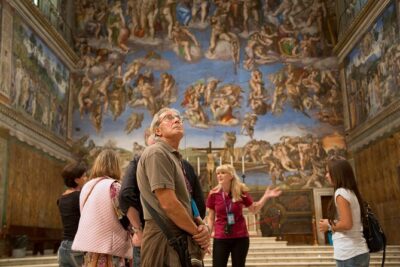
Vatican Museums, Sistine Chapel & St Peter’s Basilica Guided Tour
Read our review →
Vatican Museums, Sistine Chapel & Basilica Tour
Read our review →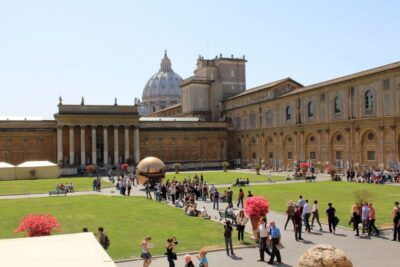
Vatican Museums & Sistine Chapel Skip-the-Line Entry Ticket
Read our review →Vatican Museums, Sistine Chapel & Basilica Tour
Read our review →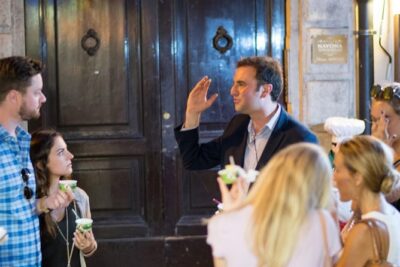
Skip-the-Line Group Tour of the Vatican, Sistine Chapel & St. Peter’s Basilica
Read our review →