Reviewed · VATICAN MUSEUMS & SISTINE CHAPEL
Rome: Vatican Museum and Sistine Chapel Tour
The great strength of this tour is its route through the Vatican Museums, which moves from the Pope’s vehicles and ancient sculpture to Michelangelo’s Sistine Chapel. Skip-the-line entry matters here, since a long wait can drain your energy before the art even begins.
I like the focused three-hour format, and I like that the guide leads you through specific highlights rather than leaving you to wander without a plan. The Dutch-speaking guide also adds real value if Dutch is your preferred language. The main drawback is that the tour does not include a guided visit to St Peter’s Basilica, and three hours may feel long for younger children.
In This Review
- Key points to know before booking
- Starting at Caffè Vaticano on Viale Vaticano
- Why the Vatican route saves time
- The Carriage Gallery and the Vatican’s unusual side
- Ancient sculpture: Laocoön and the Belvedere Torso
- Raphael-related works and the Gallery of Maps
- Michelangelo’s Sistine Chapel in about 20 minutes
- Leaving by the Scala Regia and Bronze Gate
- What you can do at St Peter’s Basilica
- Is $130.28 a fair price?
- Who will enjoy this tour most?
- Small details that make the visit easier
- Should you book this Vatican tour?
- FAQ
- How long does the Vatican Museums and Sistine Chapel tour last?
- What language is the tour conducted in?
- Where does the tour start?
- Does the price include skip-the-line tickets?
- Is St Peter’s Basilica included?
- Can I visit the dome of St Peter’s Basilica?
- What should I wear to the Vatican?
Key points to know before booking
- See the Popemobile in the Carriage Gallery, a fun change from the usual parade of ancient statues and grand rooms.
- Follow a planned route through major Vatican sights, including the Momo Staircase, Laocoön Group, Belvedere Torso, Nero’s Bath, and the Gallery of Maps.
- Spend about 20 minutes in the Sistine Chapel, with Michelangelo’s ceiling and Last Judgment explained by your Dutch-speaking guide.
- Use headsets during the tour, though a soft-spoken guide and background noise may make the audio harder to follow at times.
- Finish at St Peter’s Square, with directions to the basilica’s metal detectors, but without a guided basilica visit.
- Dress for church rules and security, and leave large bags, long objects, and sleeveless clothing behind.
Starting at Caffè Vaticano on Viale Vaticano
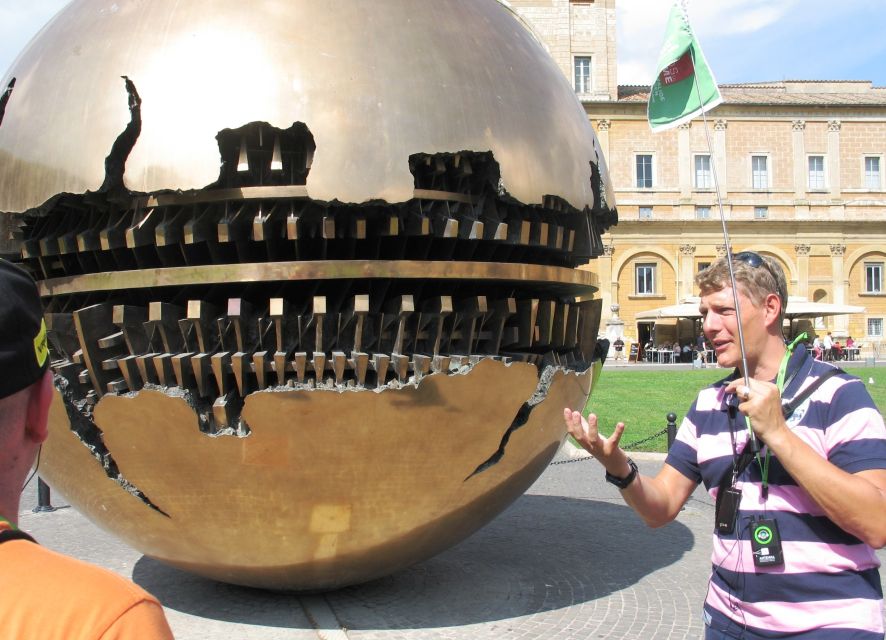
Your meeting point is at the top of the steps beside Caffè Vaticano, at Viale Vaticano 100, opposite the Vatican Museums entrance. Look for the guide holding a sign with the tour operator’s name.
This is a busy area, so arrive with enough time to find the café and the steps. The meeting point is not inside the museum. You first meet the guide outside, then join the group for the museum entrance.
The tour lasts three hours, with starting times depending on availability. That makes it easy to fit into a Rome day, but the fixed length still deserves attention. You will be on your feet for most of the visit, moving through large galleries and crowded public spaces. Wear comfortable shoes, bring a camera and sunglasses, and keep your hands free.
The tour includes skip-the-line tickets, which means you avoid the regular ticket queue. You still need to follow the museum’s security procedures. Skip-the-line does not mean you walk past every checkpoint or move through the buildings alone. It means the guide handles the planned museum entry instead of leaving you to face the standard ticket line.
More Vatican Museums and Sistine Chapel entries:
- Vatican: Museums & Sistine Chapel Entrance Ticket
★ 4.5 · 144,003 reviews - Vatican Museums & Sistine Chapel Tour with Optional Basilica
★ 4.3 · 67,413 reviews - Vatican Museums, Sistine Chapel & St Peter’s Basilica Guided Tour
★ 4.5 · 39,149 reviews
Why the Vatican route saves time
The Vatican Museums are not a single quiet gallery. They are a huge sequence of rooms, corridors, stairs, courtyards, and collections. Without a plan, you can spend a great deal of time finding the famous pieces, then arrive at the Sistine Chapel tired and unsure of what you have seen.
This tour gives you a clear route. The guide points out selected works and explains how the rooms connect, so you get a strong first visit without trying to cover everything. You will not see every object in the Vatican Museums, but that is not the purpose of a three-hour tour.
The route includes a useful mix of subjects:
- Papal vehicles in the Carriage Gallery
- The Momo Staircase
- The Hall of the Animals
- The Laocoön Group
- The Torso of the Belvedere
- Nero’s Bath
- Flemish works connected with Raphael’s school
- The Gallery of Maps
That mix gives the visit a better rhythm than a tour made up only of religious paintings. You begin with a glimpse of the papal world, move into ancient sculpture and Roman references, then finish with major Renaissance art.
The Carriage Gallery and the Vatican’s unusual side
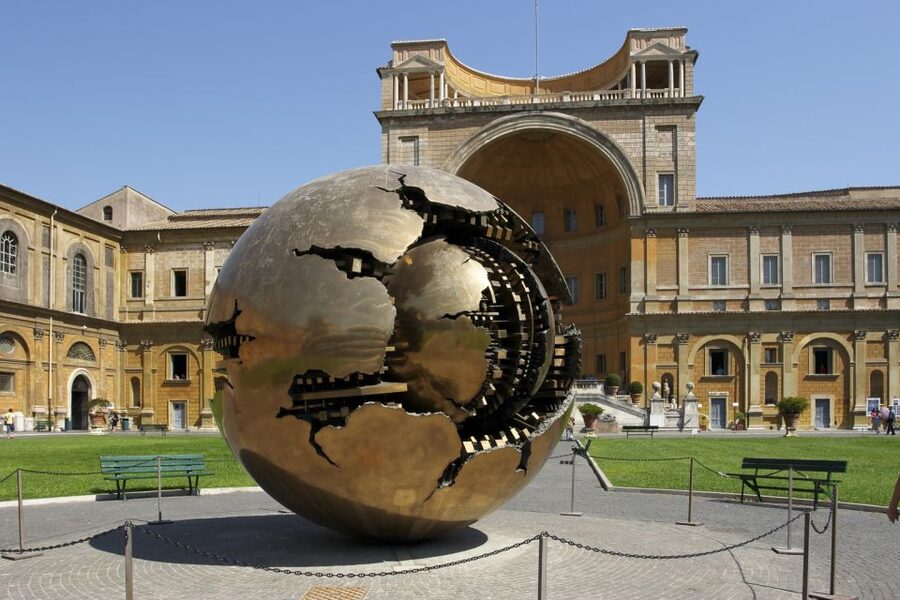
The Carriage Gallery, sometimes called the Pope’s garage, is one of the most approachable early stops. You can see the Popemobile, which gives the museum visit a modern and human touch.
This room helps make the Vatican feel less distant. Alongside priceless ancient and Renaissance objects, you see the practical vehicles used by recent popes. For children, this may be one of the easiest displays to connect with. It also gives adults a welcome break from trying to identify one classical figure after another.
From there, the tour moves into older collections and formal museum spaces. The Hall of the Animals brings you face to face with carved creatures and decorative pieces. The Momo Staircase is another memorable visual point, with its striking spiral design and steady stream of people moving through it.
The guide’s role matters here. A staircase can be admired in a few seconds, but a guide can explain why it was built and how it functions within the museum route. Since the tour is in Dutch, you can follow those details without relying on signs or trying to read while walking.
Ancient sculpture: Laocoön and the Belvedere Torso
The Laocoön Group is one of the route’s major ancient sculptures. It shows a father and his sons caught in a violent struggle with sea serpents. The work is famous for its twisting bodies and intense expression, but it is easy to look at it quickly and move on.
A guide can help you slow down and notice the movement, the arrangement of the figures, and the emotional force of the scene. This is one of the places where a short explanation can turn a celebrated name into a memorable object.
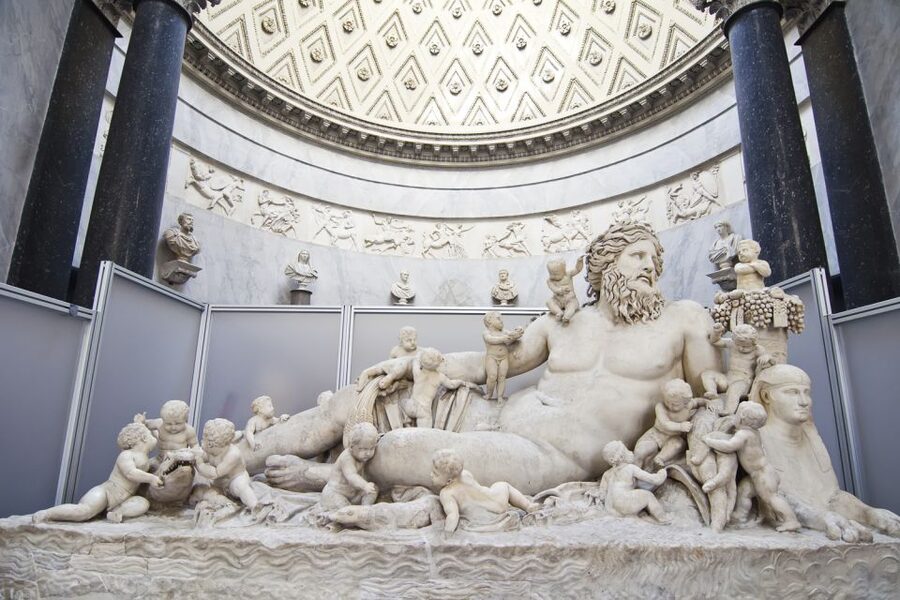
The Torso of the Belvedere offers a different kind of lesson. It is a fragment, yet its powerful posture influenced later artists, including Michelangelo. You will see why unfinished or damaged ancient works could still shape Renaissance art.
Nero’s Bath adds another Roman note to the route. The stop helps connect the museum’s objects with the world of imperial Rome, rather than treating them as unrelated pieces in separate rooms.
These rooms are not equally easy for every person. The Vatican Museums can feel crowded, and the amount of visual information is high. The headset lets you hear the guide while looking at the art, but the audio setup has a weakness: the guide may speak softly, and surrounding noise can make one over-ear earpiece difficult to hear. Pay attention at the start and tell the guide quickly if the sound is unclear.
More ways to visit the Vatican:
- Rome: Vatican Museums, Sistine Chapel & Basilica Tour
★ 4.3 · 13,872 reviews - Vatican Museums & Sistine Chapel Skip-the-Line Entry Ticket
★ 4.4 · 13,838 reviews - Rome: Vatican Museums, Sistine Chapel & Basilica Tour
★ 4.7 · 13,217 reviews - Skip-the-Line Group Tour of the Vatican, Sistine Chapel & St. Peter’s Basilica
★ 4.5 · 12,779 reviews
Raphael-related works and the Gallery of Maps
The route includes a Flemish gallery with works produced by artists connected to Raphael’s school. This section gives you a chance to compare different artistic traditions and techniques before the tour reaches Michelangelo.
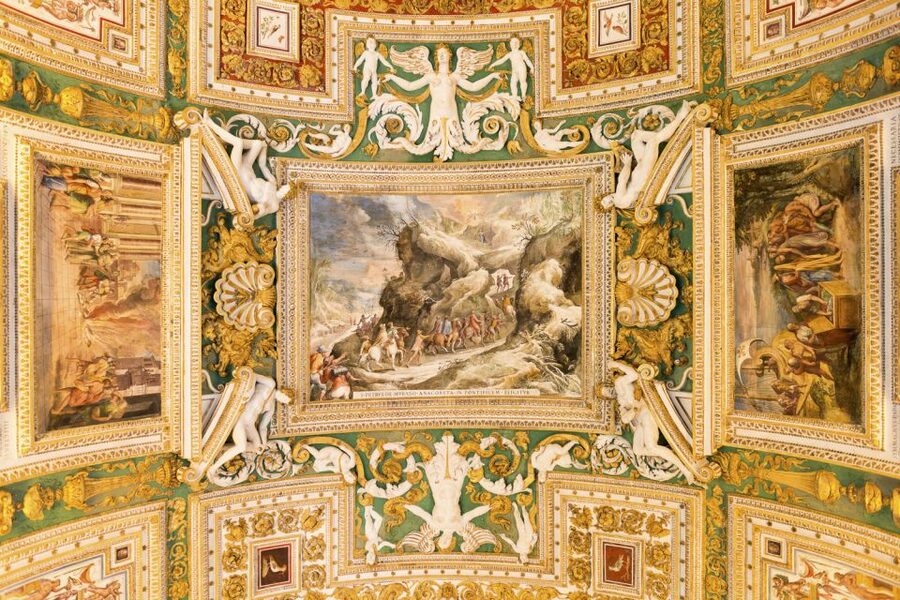
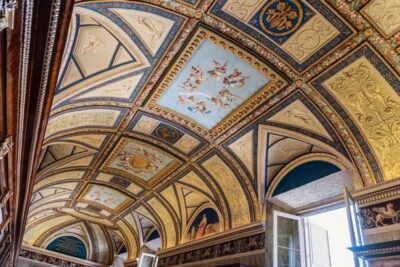
You will also see the Gallery of Maps, one of the Vatican’s most memorable corridors. Its long series of painted maps turns geography into decoration. Look upward and along the walls as you walk, but do not forget to watch your footing and stay with the group.
The Gallery of Maps is a good example of why a guide helps. On your own, you might notice the length and color first. With an explanation, you can better understand the purpose of the room and the effort required to create such a detailed visual record.
The route is carefully selected, but you should not expect a slow, private museum visit. This is a public attraction with many people moving in the same direction. Your guide keeps the group moving so the tour can reach the Sistine Chapel on time.
Michelangelo’s Sistine Chapel in about 20 minutes
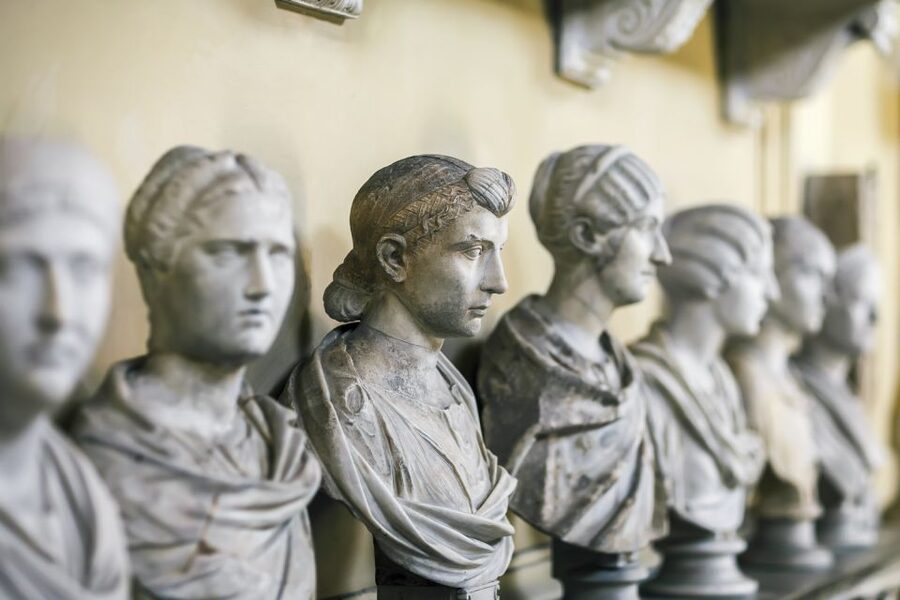
The Sistine Chapel is the emotional center of the tour. Michelangelo began work on the ceiling in 1508 under Pope Julius II. The ceiling shows more than 300 figures across an area of more than 500 square meters, including scenes from the Creation story.
You will also see The Last Judgment on the altar wall. Michelangelo returned to the chapel about twenty years after completing the ceiling, and the altar wall was finished in 1541.
The chapel is not simply another room on a museum route. It is still used for the conclave, the gathering in which cardinals elect a new pope. That living function gives the room a weight that goes beyond its artistic fame.
Your guide explains the chapel before or during the visit, helping you understand what you are looking at. The stated chapel visit lasts about 20 minutes. That is enough time to look carefully at the ceiling and altar wall, but not enough for an unhurried study of every figure.
Keep your expectations realistic. The Sistine Chapel is famous, and many people want silence and space to take it in. The tour helps you arrive with context, but it cannot remove the crowd or give you unlimited time. Photography rules also matter. Flash photography is not allowed, so bring your camera but follow the chapel and museum instructions.
Dress properly for this section of the visit. Bare shoulders are not allowed, and skirts and shorts should reach the knee. Men should wear knee-length shorts or long trousers. These rules apply to the religious spaces, so it is safer to dress correctly from the start rather than hope to adjust your clothing later.
Leaving by the Scala Regia and Bronze Gate
After the Sistine Chapel, the route leaves the museums through the imposing Scala Regia, the grand staircase leading toward St Peter’s Square. This gives the ending a sense of movement and ceremony rather than sending you back through the same ordinary entrance route.
You then pass near the Bronze Gate, where you can see the Swiss Guards. Their uniforms and formal position make this a memorable final Vatican moment. The guide brings you toward St Peter’s Square, where the guided portion ends.
The square is a useful place to pause and get your bearings. You can look toward the basilica, take photographs, and decide how to use the rest of your day. The tour is advertised as ending in St Peter’s Square, while the meeting-point information indicates the activity finishes back in the same general meeting area. Confirm the exact departure and finish instructions with the guide on the day.
What you can do at St Peter’s Basilica
St Peter’s Basilica is not included as a guided stop. The guide will show you the way to the metal detectors, and entrance to the basilica itself is free. You enter through the Porta Santa.
This distinction is important when you compare tours. You receive a guided Vatican Museums and Sistine Chapel visit, not a full Vatican complex tour. If the basilica is high on your list, you can continue on your own after the group ends, subject to the entrance and security procedures in place that day.
The dome is another option. The practical tip here is to buy your dome ticket on the spot at the ticket office if you want to climb for the view. The dome is not included in this tour, and the guide does not accompany you for that visit.
That arrangement can work well if you prefer flexibility. You can finish the guided tour, decide how much energy you have left, and then choose the basilica or dome without paying for a guided segment you may not need. The tradeoff is that you must manage that part yourself.
Is $130.28 a fair price?
At $130.28 per person, this is not a budget museum visit. The value comes from three things: skip-the-line admission, a three-hour guided route, and a professional Dutch-speaking guide with headsets.
For you, the price makes the most sense if Dutch is your preferred tour language or if you want a guide to organize the Vatican’s major highlights. The museum is large enough that a planned route can save time and prevent you from missing the key rooms.
The value is weaker if you want only the Sistine Chapel or plan to spend a full day exploring every gallery. You also need to budget time and possibly money for the basilica and dome separately, since neither is included as part of the guided tour.
I would think of this as a structured first visit, not a complete Vatican day. It gives you the main artistic landmarks, some unusual displays, and a clear finish at the square. You can then return independently to any area that caught your interest, if your schedule allows.
Who will enjoy this tour most?
This tour suits you if you want a Dutch-speaking guide and prefer a clear three-hour plan. It is also useful if you are visiting Rome for a short time and want to avoid spending part of your day in the regular ticket queue.
The route works well for adults interested in sculpture, Renaissance art, papal life, and the Vatican’s architecture. The Popemobile and animals may also help keep the visit varied for older children.
Families with young children should think carefully. A three-hour museum tour can be a lot, and the route includes long periods of looking, listening, and walking. One direct piece of feedback found the tour slightly too long for children. That is not a flaw in the art, but it is a real planning issue.
This experience is not suitable for people with mobility impairments. Large bags and luggage are not allowed, and long objects such as umbrellas or selfie sticks are prohibited. Pets, weapons, smoking, and flash photography are also not permitted.
Small details that make the visit easier
Bring identification, since a passport or ID card is listed among the required items. Comfortable shoes matter more than stylish ones here. You will cover museum corridors, stairs, and public areas during the three-hour visit.
Keep your clothing church-ready from the beginning. Sleeveless shirts, bare shoulders, and clothing that does not cover the knees can cause trouble at the religious sections.
The headsets are included, but they are not perfect in every situation. The audio equipment uses one earpiece that sits over the ear, and a soft-speaking guide may be hard to hear when other groups are nearby. If you struggle to hear, stand closer to the guide and mention it promptly.
The tour allows free cancellation up to 24 hours before the start time, and you can reserve now and pay later. Those terms are useful when your Rome schedule is still changing.
Should you book this Vatican tour?
Book it if you want a Dutch-speaking guide, a carefully chosen Vatican route, and skip-the-line access in a compact three-hour visit. The Carriage Gallery, Laocoön Group, Gallery of Maps, Sistine Chapel, Scala Regia, and St Peter’s Square give you plenty of variety.
Think twice if your main goal is a guided visit inside St Peter’s Basilica, since that is not included. Families with young children should also weigh the full length and the occasional difficulty hearing through the headset.
At $130.28, this is best for a visitor who values structure and language support. It is a practical way to see the Vatican’s biggest artistic sights without trying to manage the museum alone, as long as you understand that the basilica and dome remain separate plans.
FAQ
How long does the Vatican Museums and Sistine Chapel tour last?
The tour lasts three hours. The Vatican Museums portion is listed at about 2 hours and 10 minutes, the Sistine Chapel visit takes about 20 minutes, and the guided portion at St Peter’s Square lasts about 30 minutes.
What language is the tour conducted in?
The tour has a live Dutch-speaking guide. Headsets are included so you can follow the guide while walking through the museums.
Where does the tour start?
The meeting point is at Viale Vaticano 100, at the top of the steps next to Caffè Vaticano, opposite the entrance to the Vatican Museums. The guide holds a sign with the tour operator’s name.
Does the price include skip-the-line tickets?
Yes. Skip-the-line tickets are included, allowing you to avoid the regular ticket queue for the Vatican Museums.
Is St Peter’s Basilica included?
A guided visit to St Peter’s Basilica is not included. The guide shows you the way to the metal detectors, and you may enter the basilica on your own. Entrance is free.
Can I visit the dome of St Peter’s Basilica?
The dome is not included in the tour. If you want to visit it, you can buy a ticket at the ticket office on the spot.
What should I wear to the Vatican?
You should cover your shoulders, and shorts and skirts should reach the knee. Men should wear knee-length shorts or long trousers. Comfortable shoes are recommended.
More Museums in Rome
- Rome: Vatican Museums & Sistine Chapel Guided Tour
★ 4.3 · 12,117 reviews - Rome: Vatican Museums & Sistine Chapel Skip-The-Line Ticket
★ 4.2 · 11,708 reviews - Vatican Museums & Sistine Chapel Skip-the-Ticket-Line Tour
★ 4.3 · 10,486 reviews - Vatican Museums, Sistine Chapel & St Peter’s Basilica Tour
★ 4.6 · 10,222 reviews
Newest reviews from Rome
- ROME:Colosseum & Ancient Rome – private/small group TOUR★ 5.0 · 24 reviews
- Off the Beaten Track in Rome: Rione VI Parione Private Tour★ 5.0 · 24 reviews
- Cinematic Photoshoot in Rome★ 5.0 · 24 reviews
- Rome: Best of Colosseum and Roman Forum Small Group Guided Tour★ 4.5 · 24 reviews
- The Labyrinth of Rome between catacombs and ancient quarries★ 4.5 · 24 reviews
- Vatican and Trionfale Market Tour with Wine and Food Tasting★ 5.0 · 24 reviews
- private tour: Vatican Museums, Sistine Chapel, St. Peter’s Basilica★ 4.5 · 24 reviews
- Colosseum guided tour with Virtual Reality★ 5.0 · 24 reviews
Vatican Museums & Sistine Chapel, compared.
Vatican Museums & Sistine Chapel Tour with Optional Basilica
Read our review →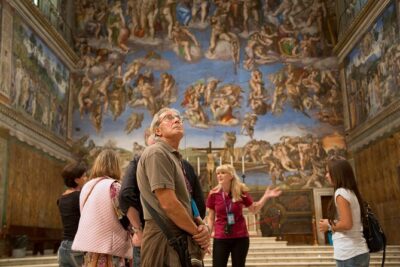
Vatican Museums, Sistine Chapel & St Peter’s Basilica Guided Tour
Read our review →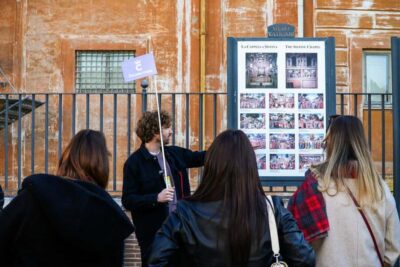
Vatican Museums, Sistine Chapel & Basilica Tour
Read our review →
Vatican Museums & Sistine Chapel Skip-the-Line Entry Ticket
Read our review →Vatican Museums, Sistine Chapel & Basilica Tour
Read our review →
Skip-the-Line Group Tour of the Vatican, Sistine Chapel & St. Peter’s Basilica
Read our review →