
Reviewed · VATICAN MUSEUMS & SISTINE CHAPEL
Rome: Vatican, Sistine Chapel, St. Peter’s Small-Group Tour
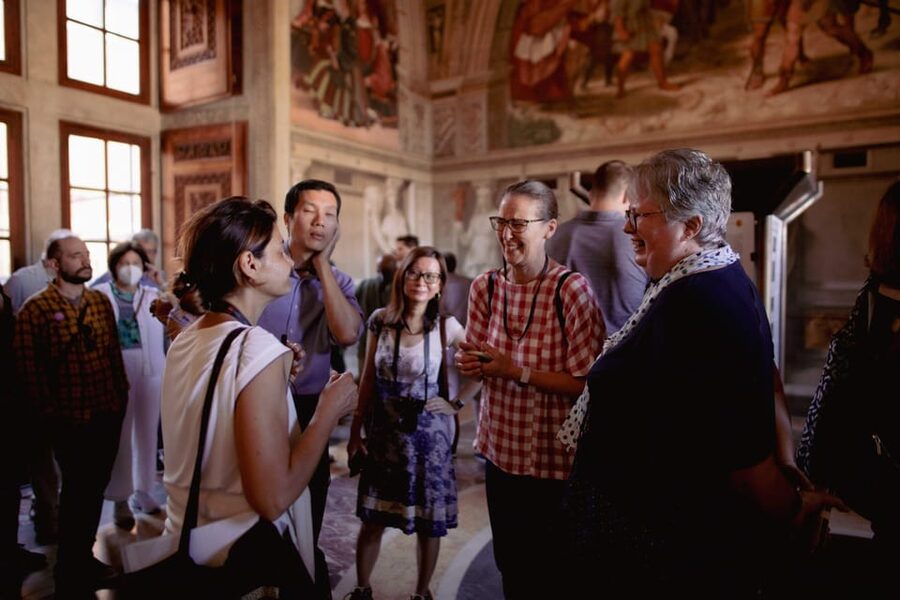
Michelangelo’s Sistine Chapel ceiling may be the headline, but the real strength of this tour is the route leading up to it. In just over three hours, you move from the Vatican’s courtyards through the Gallery of Maps and Raphael Rooms, then finish with St. Peter’s Basilica, without spending your day trying to make sense of the enormous museums alone.
I like the six-person maximum, which lets your guide answer questions and keep the group together without the feel of a crowded procession. I also like the way the best guides, including Ilaria, Selenia, Elisabetta, Lucy, Alessia, and Fabrizio, use the rooms before the Sistine Chapel to explain what you are about to see. The main consideration is the price, $214.11 per person, and the nearly three-hour pace. This is a serious art and history tour, not a quick family outing.
In This Review
- Key points to know before booking
- Why the small group changes the Vatican visit
- Starting at Viale Vaticano 100
- Courtyards, the Belvedere Torso, and ancient sculpture
- The Gallery of Maps and the woven wall hangings
- Raphael’s Rooms and the School of Athens
- Entering the Sistine Chapel
- St. Peter’s Basilica and Michelangelo’s Pietà
- What remains after the guided route
- Is $214.11 a fair price?
- Who should book this tour?
- Closures and changes to expect
- Should you book the Vatican small-group tour?
- FAQ
- How long does the Vatican small-group tour last?
- How many people are in each group?
- Where does the tour start?
- Does the tour include reserved Vatican entry?
- Which languages are available?
- What happens if St. Peter’s Basilica closes?
- Can I visit the Raphael Rooms?
- Is the tour suitable for wheelchair users?
Key points to know before booking
- No more than six people: The small group makes it easier to hear your guide and pause for questions.
- Reserved Vatican entry: You avoid the regular ticket line, though everyone still passes airport-style security.
- A strong art sequence: You see Raphael’s School of Athens, Michelangelo’s Sistine Chapel, Bernini’s bronze canopy, and Michelangelo’s Pietà in one visit.
- Three hours well used: The 195-minute route covers major highlights, with some time for water and restroom stops.
- Access can change: The Raphael Rooms may be altered because of crowd levels, and St. Peter’s Basilica can close for private events or Jubilee activity.
- Dress matters: Shorts, short skirts, and sleeveless shirts are not allowed.
Why the small group changes the Vatican visit
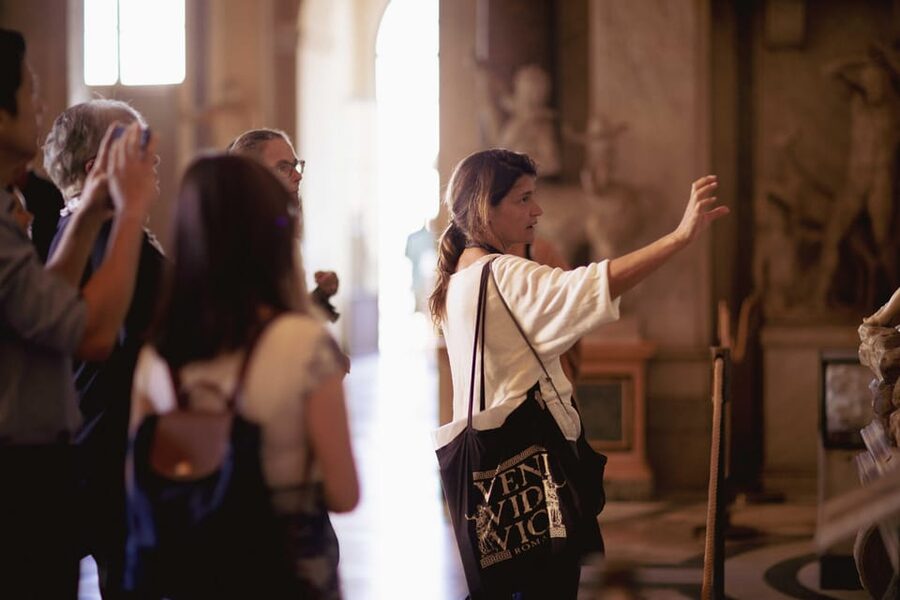
The Vatican Museums are too large to treat like an ordinary museum stop. You can walk for hours and still miss the meaning behind the rooms, symbols, and repeated names. A guide gives you a route and a story, which is especially useful when the corridors fill with people and every painted ceiling begins to compete for your attention.
A group capped at six is the practical sweet spot here. You get the efficiency of a planned visit without being folded into a large crowd. Several guides praised in the tour feedback, including Ilaria and Lucy, were noted for keeping a good pace while still allowing time to look. Alessia was especially good at mixing explanation with room to take in the art.
The supplied audio equipment is adequate, though not as clear as the best museum headsets. That matters less in a group of six because you are close to the guide, but you should still stay nearby when the rooms grow noisy.
The advertised duration is 195 minutes. That is long enough to feel substantial, yet short enough to fit into a larger Rome plan. You will be walking and standing for much of it, so comfortable shoes and a realistic sense of your group’s energy will help.
More Vatican Museums and Sistine Chapel entries:
- Vatican: Museums & Sistine Chapel Entrance Ticket
★ 4.5 · 144,003 reviews - Vatican Museums & Sistine Chapel Tour with Optional Basilica
★ 4.3 · 67,413 reviews - Vatican Museums, Sistine Chapel & St Peter’s Basilica Guided Tour
★ 4.5 · 39,149 reviews
Starting at Viale Vaticano 100
The meeting point is in front of Café Vaticano at Viale Vaticano 100, across from the museum entrance. This is a useful landmark, but do not confuse the café with the entrance itself. Allow time to find your guide and gather before the scheduled start.
Reserved entry lets you bypass the standard ticket line. It does not mean you walk straight through the doors without checks. All visitors pass airport-style security, and in the high season that process can take up to 30 minutes. Bring patience for this part, even with a reserved ticket.
The route begins inside the Vatican Museums with the Pinecone Courtyard and the Octagonal Courtyard. These spaces help set the tone for the visit. You get an early look at the Vatican’s grand scale, along with a chance to orient yourself before the rooms become more crowded and visually intense.
Courtyards, the Belvedere Torso, and ancient sculpture
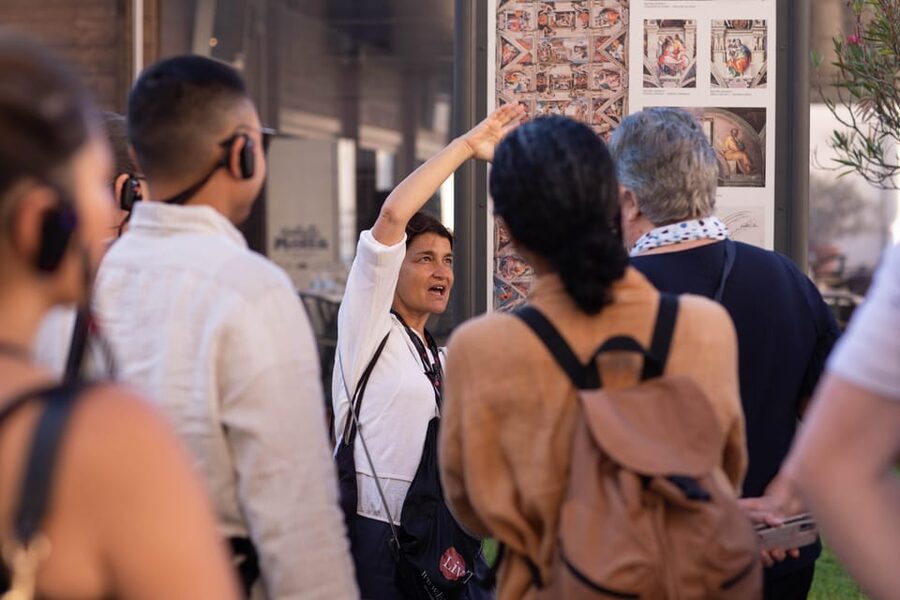
The Pinecone Courtyard takes its name from its large bronze pinecone sculpture. It is an easy place for a guide to explain how the Vatican combines ancient objects, Renaissance planning, and later additions in one complex.
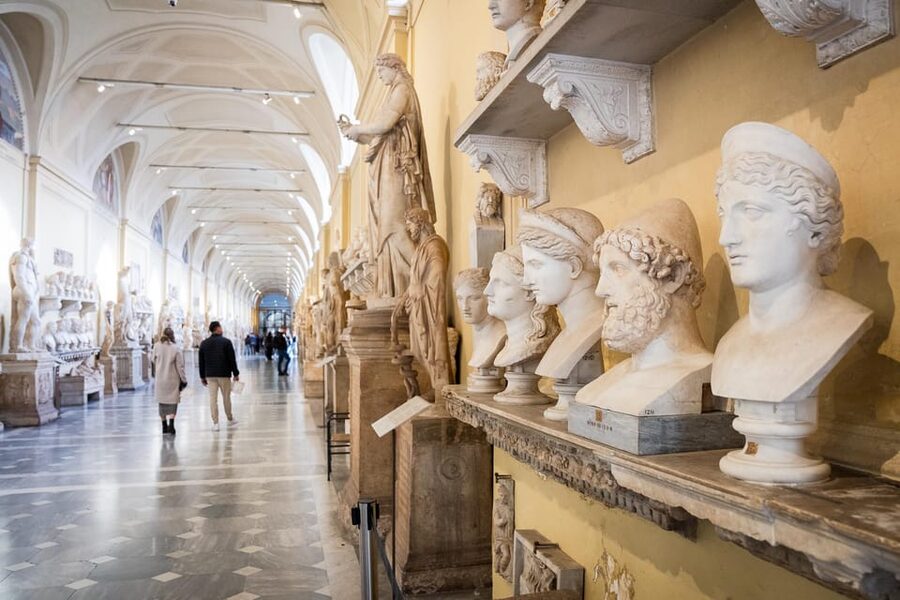
The Belvedere Torso is another early highlight. This fragment of ancient sculpture has had an outsized effect on Western art, including Michelangelo’s work. You do not need to know every detail of classical sculpture to appreciate the point: even a damaged torso can carry a powerful pose and influence artists for centuries.
The Octagonal Courtyard and nearby museum rooms bring in more ancient art. The route also includes the Round Room and the Greek Room, where you see the Constantine coffins. These stops are not simply filler between famous paintings. They show how the Vatican’s collection moves from Greek and Roman objects to Christian art and then to the major Renaissance rooms ahead.
The Gallery of Maps and the woven wall hangings
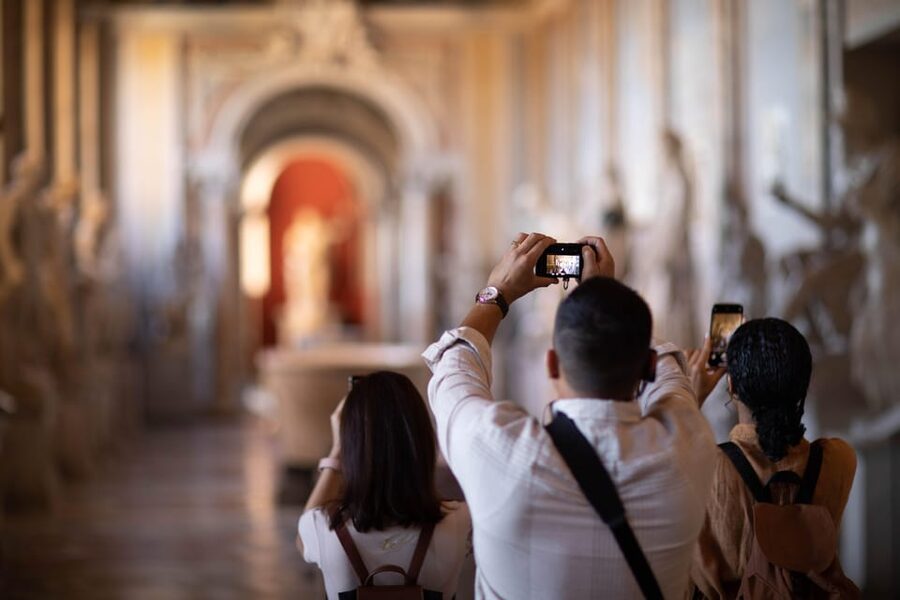
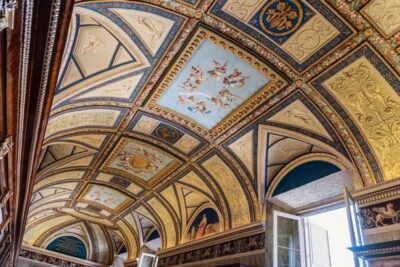
The Gallery of Tapestries is lined with handwoven works made by the school of Pieter van Aelst from designs connected to Raphael’s pupils. Look at the scale and detail as you walk. These are not small framed pictures, and the walls can make it difficult to take in each work at leisure.
The Gallery of Maps is one of the tour’s most rewarding stops. Its walls are covered with hand-painted sixteenth-century maps, offering a picture of how geography was understood at the time. You are not only looking at decoration. You are seeing political ideas, regional identities, and old geographic knowledge displayed as grand art.
This is also where a guide adds real value. A room full of maps can become a quick photo stop if you walk through alone. With context, you have reasons to look at the coastlines, place names, and decorative details. One of the strongest guide approaches described in the tour information is choosing fewer rooms and giving more attention to the Gallery of Maps and Raphael Rooms. I consider that a smart trade.
More St Peter's Basilica visits:
- Skip-the-Line Group Tour of the Vatican, Sistine Chapel & St. Peter’s Basilica
★ 4.5 · 12,779 reviews - Vatican Museums, Sistine Chapel & St Peter’s Basilica Tour
★ 4.6 · 10,222 reviews - Rome: St. Peter’s Basilica, Papal Tombs, and Dome Climb Tour
★ 4.6 · 9,652 reviews - Rome: Vatican, Sistine Chapel & St. Peter’s Basilica Tour
★ 4.2 · 9,089 reviews
Raphael’s Rooms and the School of Athens
The Raphael Rooms are among the major prizes of the route, though entry depends on crowd levels and the guard route in use that day. Your guide may adjust the sequence or substitute other rooms if access changes.
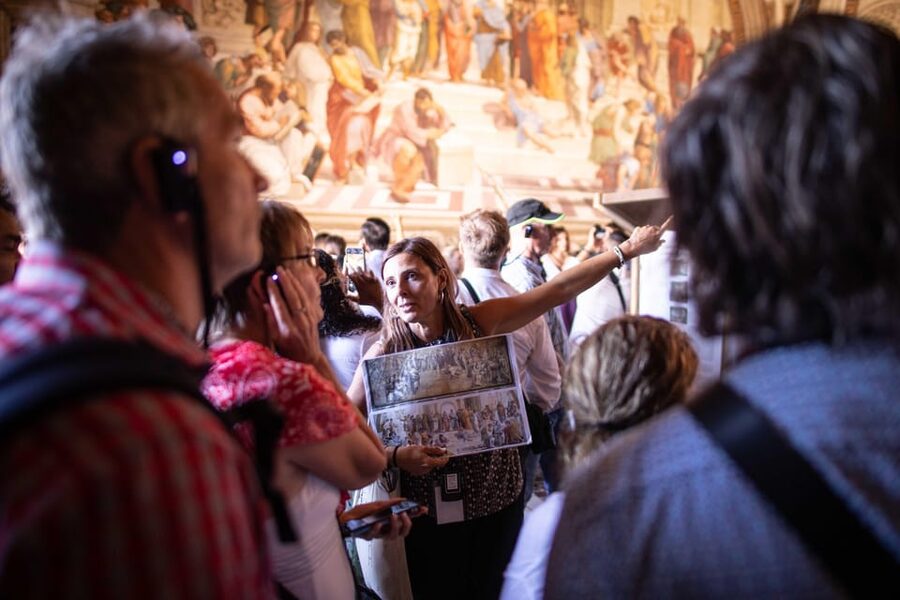
The centerpiece is The School of Athens, Raphael’s famous gathering of ancient philosophers. The painting rewards a few quiet minutes because it is packed with ideas, gestures, and portraits. Your guide can point out the great thinkers Raphael included and the contemporaries he placed among them, turning a familiar image into a more personal work of Renaissance ambition.
This is a place where a small group helps. A large party can block the best viewing points and make it hard to hear an explanation. With six people or fewer, you have a better chance of staying close to the guide while still looking up and around.
The Raphael Rooms also prepare you for the Sistine Chapel. That preparation is important because speaking inside the chapel is discouraged. Elisabetta was praised for explaining the chapel before entering, and Ilaria used a visual layout of the ceiling to help the group know what to look for. I strongly prefer this approach to arriving cold and trying to identify everything at once.
Entering the Sistine Chapel
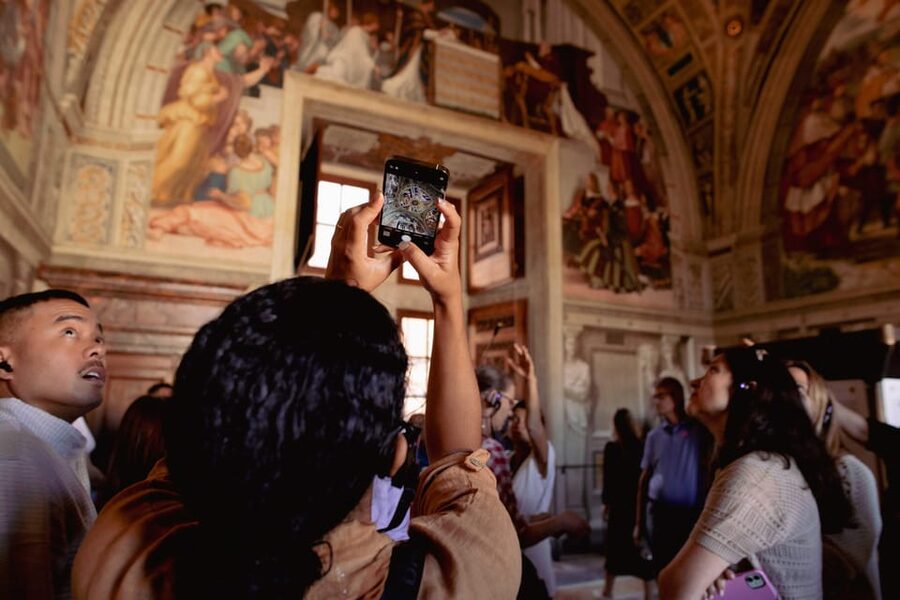
The Sistine Chapel is the emotional center of the visit. Michelangelo’s ceiling covers about 8,000 square feet, and The Last Judgement dominates the altar wall. The scale is hard to grasp from photographs, where the art is flattened and separated into familiar details.
Your guide cannot provide the same running commentary inside the chapel as in the galleries. That is why the earlier briefing matters. Pay attention to the major scenes, the figures around them, and the way the ceiling was planned as a complete visual program rather than a collection of famous images.
Expect a quiet, crowded room rather than a private viewing. The experience is still powerful, but you should not assume you can stand wherever you want or linger without interruption. Look up, then give your neck a break. The ceiling demands attention, and three hours of museum walking can catch up with you by this stage.
St. Peter’s Basilica and Michelangelo’s Pietà
After the Sistine Chapel, the route continues to St. Peter’s Basilica, the world’s largest Christian basilica and the traditional resting place of St. Peter. The church is immense, ornate, and difficult to understand without scale. A guide helps you connect the architecture, monuments, and religious purpose instead of treating the building as one vast decorated interior.
Michelangelo’s Pietà is one of the essential stops. The sculpture shows the Virgin Mary holding the dead Christ, and its calm finish contrasts with the emotional subject. It is protected behind glass, so your view may not feel as close as you would like, but the work still deserves a slow look.
Bernini’s bronze baldachin, the great canopy over the main altar, is another key sight. Its roughly 100,000 pounds of gilded bronze make it a remarkable engineering and artistic statement. It also gives you a clear sense of how the basilica uses size to direct attention toward the altar and the center of Catholic worship.
I particularly value the chance to hear how St. Peter’s Basilica was built and developed. That story gives the church more meaning than a list of statues and measurements. A guide can show you where the major pieces fit into the building’s design and why the interior feels almost theatrical.
What remains after the guided route
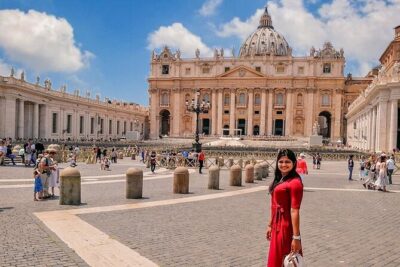
The guide leaves you inside St. Peter’s Basilica, giving you time to continue on your own. The stated finish point is Saint Peter’s Square, and the practical result is that you can decide how much longer to stay in the basilica and its surrounding area.
The Papal Tombs are an option for further exploration, and the tour information also notes the possibility of climbing to the top of the dome. These are not part of the guided portion, so treat them as add-on plans rather than guaranteed extensions. If you want to pursue them, check the day’s access and allow extra time.
This open-ended finish is useful. You do not have to leave just as you begin to understand the basilica. You can also stop at the square, regroup, or move on to another Rome sight.
Is $214.11 a fair price?
At $214.11 per person, this is not a budget Vatican visit. You are paying for reserved entrance, a fully guided route, and a very small group rather than only admission. The value depends on how much you want explanation and how much you dislike navigating crowded museums by yourself.
I think the price is easier to justify for a first Vatican visit, especially if you want the major rooms in one carefully planned outing. The Gallery of Maps, Raphael Rooms, Sistine Chapel, and St. Peter’s Basilica form a strong sequence. You also avoid losing time to wrong turns and long ticket queues.
The cost is harder to justify if you mainly want to see the Sistine Chapel quickly or prefer to move at your own pace. You will spend close to three hours following the guide’s route, and the experience is built around art, architecture, and religious history. It is not designed as a quick photo stop.
Free cancellation is available up to 24 hours before the tour for a full refund, and you can reserve now and pay later. Those terms help if your Rome schedule is still changing, but read the conditions carefully around closures.
Who should book this tour?
I would recommend it to adults and older children who want the Vatican explained rather than merely entered. It also suits anyone who values a calm, small-group format and wants to ask questions along the way.
The tour can work for a 12-year-old who enjoys art or stories, especially with a lively guide. A younger child may lose interest during the full 195 minutes. One guide received praise for making a 12-year-old feel welcome, but the overall route is still aimed more at interested older children and adults than at very young visitors.
This activity is not suitable for wheelchair users according to the supplied accessibility information. If you believe a disability qualifies you for complimentary Vatican access, notify the operator before booking.
The dress code is strict: no shorts, short skirts, or sleeveless shirts. Dress for a religious site, not a beach afternoon, and you will avoid an awkward problem at the entrance.
Closures and changes to expect
St. Peter’s Basilica may close without notice for private events. During the 2025 Jubilee, unexpected closures may also affect access. If that happens, the tour continues with more time in other Vatican areas, and the conditions state that a closure does not qualify for a refund.
The Raphael Rooms are also subject to crowd levels and guard routes. That means the exact order can change, and access is not guaranteed every day. I see this as a normal limitation of a busy working museum, but it is worth knowing before you book.
Ask your guide about water and restroom pauses. Ilaria was praised for fitting both into the route while keeping the group on schedule. That small bit of planning matters during a long museum visit.
Should you book the Vatican small-group tour?
Book it if you want a focused introduction to the Vatican Museums, Sistine Chapel, and St. Peter’s Basilica, and you are willing to pay for a group of no more than six. The strongest reasons are the reserved entry, the skilled guide-led interpretation, and the thoughtful sequence through the Gallery of Maps, Raphael Rooms, Sistine Chapel, and basilica.
Skip it if you want a low-cost admission ticket, a short visit, or complete freedom to wander. Also think twice if your group includes very young children or anyone who cannot manage extended walking and standing.
For most first-time visitors who want to understand what they are seeing, I consider this a strong use of half a day. The price is high, but the small group and careful explanations make the Vatican less confusing and much more rewarding.
FAQ
How long does the Vatican small-group tour last?
The tour lasts 195 minutes, or just over three hours. Check availability for the starting times offered on your chosen date.
How many people are in each group?
The semi-private group has a maximum of six people. Private and small-group options are available.
Where does the tour start?
The meeting point is in front of Café Vaticano at Viale Vaticano 100, across the street from the Vatican Museums entrance.
Does the tour include reserved Vatican entry?
Yes. Reserved Vatican entrance tickets are included, and the tour provides access past the regular ticket line. All visitors must still pass airport-style security.
Which languages are available?
The live guided tour is offered in English.
What happens if St. Peter’s Basilica closes?
The basilica may close without notice for private events or Jubilee activity. If it does, the tour continues with extended visits elsewhere, and the stated terms do not provide a refund for such closures.
Can I visit the Raphael Rooms?
The route includes the Raphael Rooms, but access depends on crowd levels and guard routes. Your guide may adjust the plan if the rooms are not available.
Is the tour suitable for wheelchair users?
No. The activity is listed as unsuitable for wheelchair users. Dress rules also apply, and shorts, short skirts, and sleeveless shirts are not allowed.
More Ways to Visit the Vatican
- Rome: Vatican Museums, Sistine Chapel & Basilica Tour
★ 4.3 · 13,872 reviews - Vatican Museums & Sistine Chapel Skip-the-Line Entry Ticket
★ 4.4 · 13,838 reviews - Rome: Vatican Museums, Sistine Chapel & Basilica Tour
★ 4.7 · 13,217 reviews - Rome: Vatican Museums & Sistine Chapel Guided Tour
★ 4.3 · 12,117 reviews
Newest reviews from Rome
- ROME:Colosseum & Ancient Rome – private/small group TOUR★ 5.0 · 24 reviews
- Off the Beaten Track in Rome: Rione VI Parione Private Tour★ 5.0 · 24 reviews
- Cinematic Photoshoot in Rome★ 5.0 · 24 reviews
- Rome: Best of Colosseum and Roman Forum Small Group Guided Tour★ 4.5 · 24 reviews
- The Labyrinth of Rome between catacombs and ancient quarries★ 4.5 · 24 reviews
- Vatican and Trionfale Market Tour with Wine and Food Tasting★ 5.0 · 24 reviews
- private tour: Vatican Museums, Sistine Chapel, St. Peter’s Basilica★ 4.5 · 24 reviews
- Colosseum guided tour with Virtual Reality★ 5.0 · 24 reviews
Vatican Museums & Sistine Chapel, compared.
Vatican Museums & Sistine Chapel Tour with Optional Basilica
Read our review →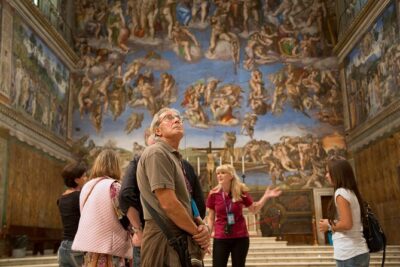
Vatican Museums, Sistine Chapel & St Peter’s Basilica Guided Tour
Read our review →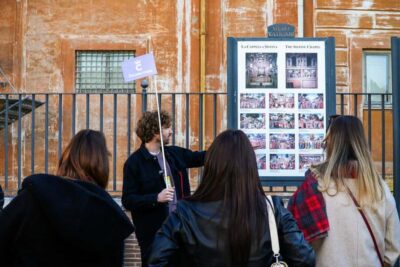
Vatican Museums, Sistine Chapel & Basilica Tour
Read our review →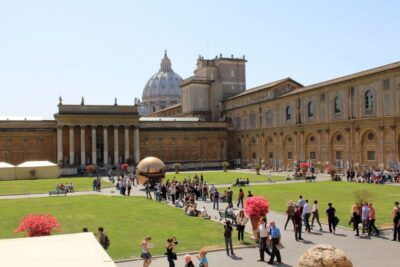
Vatican Museums & Sistine Chapel Skip-the-Line Entry Ticket
Read our review →Vatican Museums, Sistine Chapel & Basilica Tour
Read our review →
Skip-the-Line Group Tour of the Vatican, Sistine Chapel & St. Peter’s Basilica
Read our review →
Vatican Museums & Sistine Chapel Guided Tour
Read our review →Browse the lists this tour appears in