
Reviewed · BORGHESE GALLERY TOURS
Sketching in Rome Villa Borghese Private lesson with Guido
Villa Borghese becomes your outdoor studio on this unusual Rome experience. Guido leads you through the park, stopping at fountains, temples, villas, and gardens for short drawing exercises that build from simple observation to perspective, fast sketches, and watercolor.
I like two things right away: the setting keeps changing, and all drawing tools are supplied. I also like Guido’s relaxed teaching style, with personal stories about growing up near the park and enough humor to keep beginners from taking their first crooked fountain too seriously. The main drawback is that this is not a tour of the Borghese Gallery, and the meeting-point information needs careful checking because both the Pincio Terrace and the Fountain of Venus appear in the directions.
In This Review
- Key points to know before you book
- Why Villa Borghese makes a good art classroom
- What happens at the ten stops
- Giardino di Piazzale Scipione Borghese
- Fontana dei Cavalli Marini
- Piazza di Siena
- Temple of Asclepius
- Tempio di Diana
- Casa Del Cinema
- Monumento Ad Umberto Primo
- Museo Carlo Bilotti
- Fontana di Venere
- I Giardini Segreti di Villa Borghese
- The tools and teaching style
- Is two and a half hours enough?
- Who will enjoy this Rome experience?
- Price, timing, and practical value
- Check the meeting point before you leave
- Should you book the Villa Borghese sketching lesson?
- FAQ
- Where does the sketching activity take place?
- Is the activity inside the Borghese Gallery?
- Who teaches the lesson?
- Is the activity private?
- How long does the experience last?
- What language is offered?
- Are drawing materials included?
- What locations are included on the route?
- Is bottled water included?
- Can I cancel for a full refund?
Key points to know before you book
- A private lesson with Guido: Your group has the instructor to itself, which allows the pace and exercises to suit your interests.
- Ten Villa Borghese stops: The route includes fountains, temples, open squares, gardens, and cultural sites.
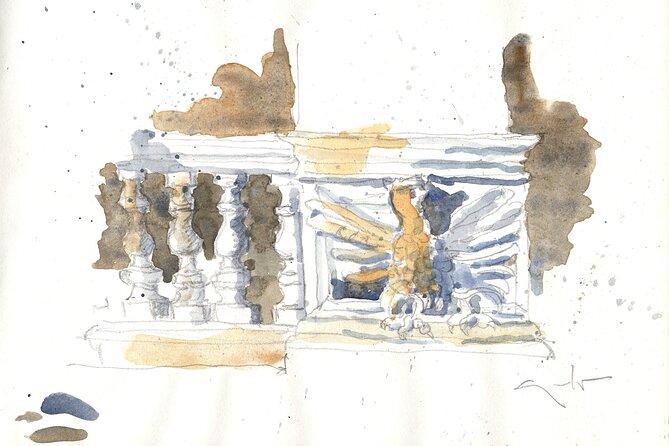
- Materials are included: Paper, a support tablet, pens, markers, brushes, watercolor paints, and other drawing tools are provided.
- Designed for beginners: Exercises begin with basic observation and move toward perspective, color, and faster sketching.
- A calm break from sightseeing: The park gives you time to sit, look closely, and make something instead of rushing from monument to monument.
- Check the starting point: The directions refer to the Terrace of Pincio, while the stated meeting point is the Fountain of Venus at Piazzale Scipione Borghese.
Why Villa Borghese makes a good art classroom
Rome can turn sightseeing into a race. You walk from one famous sight to the next, take a few photos, and hurry on before the next reservation. This lesson asks you to do the opposite. You stop, study one view, and give yourself time to notice its lines, shapes, light, and proportions.
That change of pace is the real value here. You are not simply being shown Villa Borghese. You are being asked to look at it with more care. A fountain becomes an exercise in form. A temple becomes a lesson in proportion. A villa becomes a quick study in perspective.
The park also gives Guido plenty of subjects to work with. The route moves through formal gardens, open spaces, water features, old structures, and quieter corners. You do not spend the full two and a half hours in one seat, but you also do not march continuously. The walking connects a series of short drawing sessions.
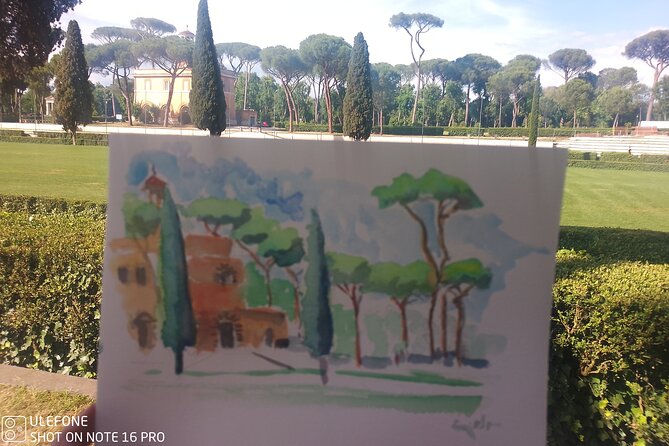
Guido’s teaching style sounds especially useful for first-time sketchers. He starts with clear, simple tasks and then adds new tools or ideas. You may begin by studying a subject carefully with a fountain pen and colored pencil, then try a drawing exercise that asks you to look away from the paper, and later make a very quick pen sketch followed by watercolor.
That variety matters. You do not need to arrive with a fixed style or a folder of polished drawings. The point is to try several ways of seeing. One exercise may feel controlled, another deliberately awkward, and another fast enough to stop you from overthinking every line.
More Borghese Gallery entries:
- Rome: Borghese Gallery Guided Tour with Skip-the-Line Entry
★ 4.8 · 2,649 reviews - Rome: Borghese Gallery Skip-the-Line Tickets with Audioguide
★ 4.6 · 2,562 reviews - Rome: Borghese Gallery Entry Ticket & Optional Guided Tour
★ 4.5 · 2,237 reviews
What happens at the ten stops
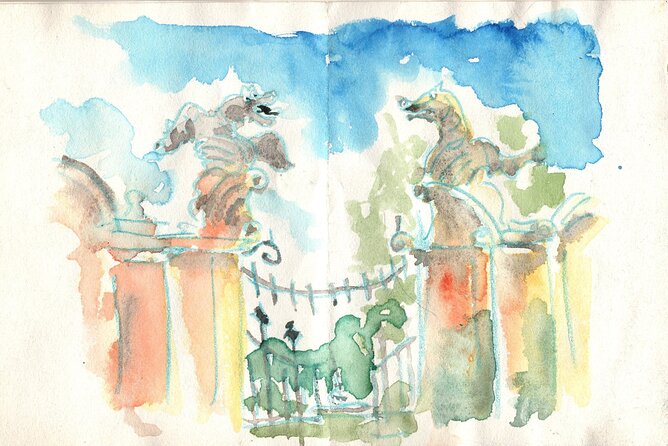
The published route lists ten locations. The exact time spent at each stop can vary because this is a private activity, but together they create a broad tour of Villa Borghese.
Giardino di Piazzale Scipione Borghese
The gardens near Piazzale Scipione Borghese are a natural place to begin. Early exercises can help you settle into the materials and learn how Guido explains shape, line, and proportion.
This opening stop is useful because you can start without pressure. You might use a fineliner, pencil, or ballpoint pen to make a straightforward study before moving on to color. If you have not drawn since school, this gentle start is likely more comfortable than being asked to paint a complicated view immediately.
Fontana dei Cavalli Marini
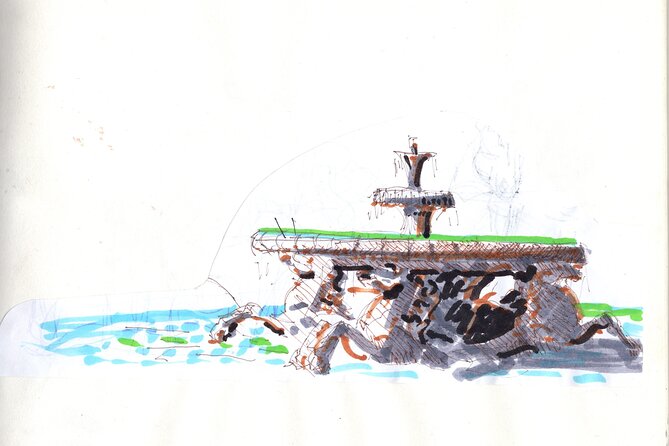
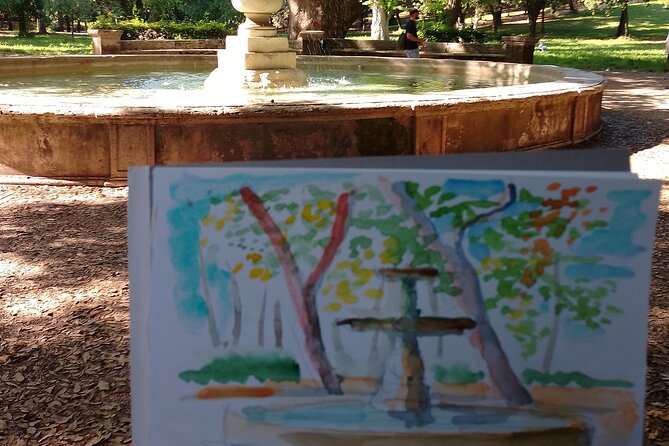
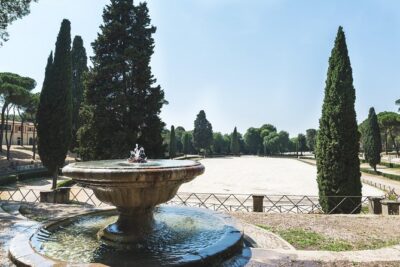
The Fountain of the Sea Horses gives you a subject with curves, repeated forms, and water-related detail. It is well suited to exercises in close observation.
One especially playful technique used during the lesson involves drawing a fountain without looking at the paper, then turning the paper over and drawing by looking only at the paper rather than the fountain. It sounds odd, and that is the point. The exercise loosens your grip on accuracy and helps you pay attention to what your eyes actually see.
You may use oil pastels or another supplied tool for this kind of experiment. Do not expect a perfect architectural study. Expect a memorable drawing exercise that may teach you more than a careful copy.
More Rome tours worth comparing
- 3 in 1 Cooking Class near Navona: Fettuccine, Ravioli & Tiramisu
★ 5.0 · 7,376 reviews - Rome: Pasta & Tiramisu Class with Fine Wine by the Vatican
★ 4.9 · 4,852 reviews - Rome: Pasta Making Class with Wine, Limoncello, and Dessert
★ 4.9 · 3,177 reviews - Rome: 3-in-1 Fettuccine, Ravioli, and Tiramisu Cooking Class
★ 4.9 · 2,704 reviews
Piazza di Siena
Piazza di Siena opens up the scale of the park. After working with a fountain or smaller subject, a wider space lets you think about the relationship between foreground, distance, and the surrounding buildings or trees.
This is where a lesson in perspective can become practical. Instead of treating the page as a collection of separate objects, you begin to consider how lines lead into the distance and how large forms fit together. One participant described the perspective guidance as especially helpful, and it is the sort of skill that can improve later drawings long after the tour ends.
Temple of Asclepius
The Temple of Asclepius introduces a more formal architectural subject. Columns, edges, and repeated shapes give you clear lines to study, while the surrounding park keeps the scene from feeling too technical.
Guido can use a place like this to show how to break a structure into simple forms. That is valuable for beginners. You do not have to understand every architectural detail before you begin. You can look for the main shapes first, then add smaller marks only if the drawing needs them.
Tempio di Diana
The Tempio di Diana offers another chance to work with classical forms. Having two temple stops on the route also lets you compare subjects rather than treating each sketch as an isolated task.
You may notice how a change in angle alters the drawing. The same basic lesson applies across Rome: look carefully before putting down a line. A private instructor can adjust the exercise if you want more help with structure, color, or speed.
Casa Del Cinema
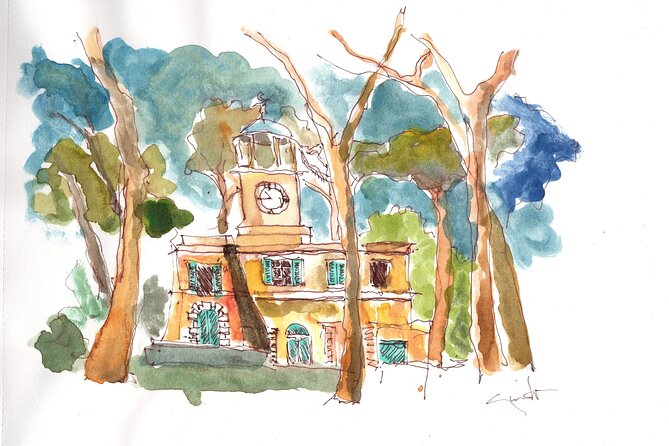
Casa Del Cinema adds a different kind of setting to the walk. The stop breaks up the ancient-looking subjects and gives you another building and park view to interpret.
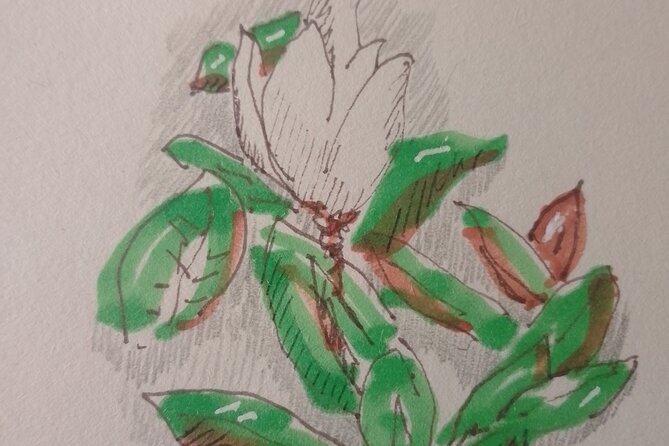
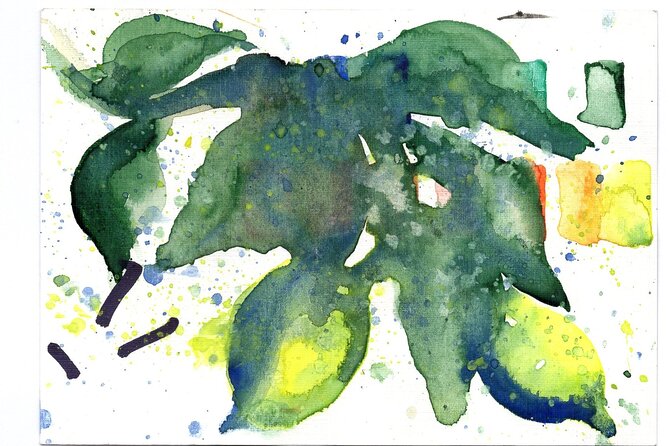
This is a good point for using markers, colored pencils, or watercolor. The supplied materials allow you to shift from a line-based sketch to a looser study with blocks of color. If you prefer drawing in black and white, you can stay with pens and pencils. The lesson does not require you to use every tool.
Monumento Ad Umberto Primo
The Monumento Ad Umberto Primo gives you a formal monument with strong shapes and a clear focal point. It can work well for a quick sketch, especially if Guido wants you to focus on the main outline instead of small details.
Fast drawing is one of the more useful parts of the experience. When you have only a short time, you must decide what matters most. That habit can make sketching more enjoyable because you spend less time trying to make every mark exact.
Museo Carlo Bilotti
The Museo Carlo Bilotti brings an art-related stop into an already creative route. The visit here is part of the outdoor sketching walk, not a separate museum tour described in the activity details.
You may use the setting as another subject for architecture and composition. It also reinforces the connection between the park and Rome’s wider art scene without turning the lesson into a standard gallery visit.
Fontana di Venere
The Fountain of Venus is important for two reasons. It is one of the route’s drawing subjects, and the listed meeting point is also given as Fountain of Venus, Piazzale Scipione Borghese 5.
At the same time, the instructions for the activity say that the meeting point for Sketching on Rome is the Terrace of Pincio. Since those details do not match perfectly, I would confirm the exact starting location before setting out. That small check could prevent an avoidable scramble at the beginning of a relaxed activity.
I Giardini Segreti di Villa Borghese
The Secret Gardens of Villa Borghese provide a fitting final setting. After trying different techniques, you can use the last part of the route to apply what you have learned in a quieter garden environment.
The ending is not described as a formal final test. It is better understood as a chance to draw with more independence while Guido offers occasional coaching. The activity returns to the meeting point, so you do not need to arrange a separate finish elsewhere.
The tools and teaching style
You do not need to bring an art kit. The fee includes drawing paper, a support tablet, fineliners, pencils, markers, brushes, watercolor paints, fountain pens, ballpoint pens, and other necessary supplies.
That is a meaningful part of the $72.01 price. Buying and carrying a full set of materials for one Rome activity would be inconvenient, especially if you are only curious about sketching. You can test several tools without committing to one medium.
Guido’s approach also seems to avoid the usual art-class trap: making beginners feel that they are being graded. The exercises are structured, but the mood is light. He uses amusing stories and personal memories, including stories about Villa Borghese as part of his childhood, to make the walk feel connected to Rome rather than like a lesson transplanted into a park.
The activity has earned a perfect 5 rating from 24 reviews, with 100 percent recommending it. More important than the number is the pattern of praise: Guido is repeatedly described as patient, friendly, encouraging, and easy to talk to. Families appreciated the way he helped children feel proud of their work, while solo participants valued his flexibility when they wanted to focus on particular techniques.
One small confusion appears in a piece of feedback that refers to the instructor as Leon. Guido corrected it with a joke, so the intended instructor is Guido. If you are booking specifically to work with him, that is worth knowing.
Is two and a half hours enough?
The stated duration is about 2 hours and 30 minutes. That gives you enough time for a park walk and several exercises, but it is not a full art course.
You should expect an introduction to observation, line, perspective, color, and speed rather than advanced technical training. The exercises build on one another, so the experience can feel productive even if you begin as a novice.
The private format helps. With only your own group participating, Guido can spend more time on a particular question or adjust the pace. A solo participant may receive especially direct instruction, while a family or couple can work at different levels without being compared with a large class.
Still, the activity includes walking between stops. If you want two and a half hours of uninterrupted seated painting, this is not that. It is a moving outdoor lesson with drawing breaks.
Who will enjoy this Rome experience?
I would recommend it most strongly to:
- Beginners who want a low-pressure introduction to sketching
- People who already draw and want new exercises or materials
- Families looking for an activity that includes children
- Couples or friends who prefer doing something creative together
- Repeat visitors seeking a quieter side of Rome
- Anyone who likes parks, art, and local stories more than another crowded sight
It also suits people who want a souvenir made by hand. One participant finished a drawing they planned to frame and kept using the techniques and materials afterward. The finished work may not look like a professional painting, but it can carry more personal meaning than another shop-bought item.
This may not suit you if your main goal is to see the Borghese Gallery. The activity is in Villa Borghese, but it specifically warns that it does not take place inside the gallery. It also may not suit someone who dislikes creative exercises that feel loose or unconventional. Drawing without looking at the page can be liberating for one person and frustrating for another.
Price, timing, and practical value
At $72.01 per person, this is not the cheapest way to spend a morning or afternoon in Rome. You are paying for a private English lesson, an instructor, a guided route through Villa Borghese, and a complete set of art materials.
The price makes more sense if you would otherwise pay for an art class and separately arrange your own park visit. Here, those pieces are combined. You also leave with practical drawing methods rather than only information about a monument.
The activity is often booked about 35 days ahead, so advance planning is sensible. Confirmation arrives at booking, and free cancellation is available until 24 hours before the start time. Changes or cancellations inside that 24-hour window are not refunded.
Bring water, since bottled water is not included. Public transportation is nearby, service animals are allowed, and most people can participate. Tips are optional but welcome.
Check the meeting point before you leave
This is the one practical detail I would not ignore. The activity directions name the Terrace of Pincio as the meeting point for Sketching on Rome. The meeting-point section lists Fountain of Venus at Piazzale Scipione Borghese 5, and the tour ends back at the meeting point.
Those locations are both associated with Villa Borghese, but they are not written as the same place. Confirm the exact spot with the operator before the day of the lesson, and allow time to reach it by public transportation or on foot. A little planning will let you begin with a pencil instead of a frantic search.
Should you book the Villa Borghese sketching lesson?
Book it if you want to slow down, try several art techniques, and see Rome through a local artist’s eyes. Guido’s warmth, personal connection to the park, patient instruction, and flexible private format are the strongest reasons to choose it.
The experience is especially good for beginners, families, and anyone tired of standard sightseeing. Skip it if you want a gallery visit, a formal art lecture, or a full day of advanced painting. For a modest two and a half hours, though, it offers something rare in Rome: a chance to stop looking at the city through a camera and make your own small record of it.
FAQ
Where does the sketching activity take place?
It takes place in Villa Borghese in Rome, with stops at gardens, fountains, temples, monuments, and other park locations.
Is the activity inside the Borghese Gallery?
No. The activity is not inside the Borghese Gallery.
Who teaches the lesson?
The lesson is taught by Guido.
Is the activity private?
Yes. Only your group participates in the private activity.
How long does the experience last?
The activity lasts approximately 2 hours and 30 minutes.
What language is offered?
The activity is offered in English.
Are drawing materials included?
Yes. Drawing paper, a support tablet, watercolor paints, brushes, markers, pencils, fineliners, fountain pens, ballpoint pens, and other necessary tools are included.
What locations are included on the route?
The route includes Giardino di Piazzale Scipione Borghese, Fontana dei Cavalli Marini, Piazza di Siena, Temple of Asclepius, Tempio di Diana, Casa Del Cinema, Monumento Ad Umberto Primo, Museo Carlo Bilotti, Fontana di Venere, and I Giardini Segreti di Villa Borghese.
Is bottled water included?
No. Bottled water is not included.
Can I cancel for a full refund?
Yes, if you cancel at least 24 hours before the experience start time. Cancellations made less than 24 hours in advance are not refunded.
Newest reviews from Rome
- ROME:Colosseum & Ancient Rome – private/small group TOUR★ 5.0 · 24 reviews
- Off the Beaten Track in Rome: Rione VI Parione Private Tour★ 5.0 · 24 reviews
- Cinematic Photoshoot in Rome★ 5.0 · 24 reviews
- Rome: Best of Colosseum and Roman Forum Small Group Guided Tour★ 4.5 · 24 reviews
- The Labyrinth of Rome between catacombs and ancient quarries★ 4.5 · 24 reviews
- Vatican and Trionfale Market Tour with Wine and Food Tasting★ 5.0 · 24 reviews
- private tour: Vatican Museums, Sistine Chapel, St. Peter’s Basilica★ 4.5 · 24 reviews
- Skip the Line: Vatican Wheelchair Accessible Private Tour★ 5.0 · 24 reviews
Borghese Gallery Tours, compared.
Borghese Gallery Guided Tour with Skip-the-Line Entry
Read our review →
Borghese Gallery Skip-the-Line Tickets with Audioguide
Read our review →
Borghese Gallery Entry Ticket & Optional Guided Tour
Read our review →
Borghese Gallery & Gardens Small Group Guided Tour
Read our review →
Borghese Gallery, Canova’s Masterpieces Skip-the-Line Guided Tour
Read our review →
Borghese Gallery Guided Tour with Skip-the-Line Entry
Read our review →Browse the lists this tour appears in