
Reviewed · VATICAN MUSEUMS & SISTINE CHAPEL
Skip-the-line Vatican and Sistine Chapel Private Guided Tour
The best feature here is control. Instead of being folded into a large group, you move with your own private guide through the Vatican Museums, stopping for questions and spending more time on the art that matters most to you. I especially like the skip-the-line entry and the chance to see less-famous rooms that large groups often pass by. Guides such as Tommaso, Francesco, Bruno, and Romina have been praised for turning a crowded museum into a clear, lively story.
I also like the route itself. You get ancient sculpture, Renaissance maps, Raphael’s School of Athens, and Michelangelo’s Sistine Chapel in one well-packed visit. The main drawback is the price: at $396.37 per person, this is a serious splurge, and the Basilica of Saint Peter is not included under the current Jubilee access rules.
In This Review
- Key Points to Know Before Booking
- Why a Private Vatican Tour Makes Sense
- Starting in the Belvedere Courtyard
- Ancient Sculpture, Maps, and Papal Rooms
- Raphael’s Rooms and the School of Athens
- Entering the Sistine Chapel
- Saint Peter’s Square, With an Important Limitation
- The Guides Make the Difference
- Is $396.37 Per Person a Fair Price?
- Who Will Get the Most From This Tour?
- Should You Book It?
- FAQ
- How long does the private Vatican tour last?
- Is the entrance fee included?
- Is this a private tour?
- Is Saint Peter’s Basilica included?
- Where does the tour begin?
- What language is the tour offered in?
- What should I wear?
- Can the Sistine Chapel close unexpectedly?
Key Points to Know Before Booking
- Private guide and private pace: Only your group takes part, so you can ask questions and adjust the emphasis.
- Three major art stops: The Vatican Museums, Raphael Rooms, and Sistine Chapel fill roughly three hours.
- Skip the long entry line: Entrance fees and priority access are included.
- Strong guide focus: Guides including Tommaso, Francesco, Bruno, Maximillian, Romina, and Fabiola have been praised for clear explanations and family-friendly storytelling.
- St. Peter’s Basilica is excluded: You finish near Saint Peter’s Square, but Basilica entry requires a separate queue.
- Plan your clothing carefully: Knees and shoulders must be covered for everyone.
Why a Private Vatican Tour Makes Sense
The Vatican Museums can feel like a city-sized art collection compressed into a few grand corridors. You may pass a Roman statue, a painted ceiling, a papal room, and a Renaissance map in the space of five minutes. Without context, it is easy to remember only a blur of marble and gold.
A private guide gives you a thread to follow. You can ask why a statue matters, how a room was used, or why one fresco receives more attention than another. You are not tied to the pace of twenty or thirty other people, and your guide can spend more time on ancient sculpture, painting, architecture, or Vatican politics according to your interests.
That flexibility matters most for families and mixed groups. One family described a guide adjusting the visit for adults and two twelve-year-olds, while another group of seven appreciated having important details highlighted without getting lost in every minor work. A private tour does not make the Vatican quiet, but it can make the noise easier to manage.
The three-hour length is also sensible. It gives you a serious look without trying to cover every corner of the museums. You will still leave with plenty left unseen, but the route focuses on rooms and works that form the backbone of a first visit.
More Vatican Museums and Sistine Chapel entries:
- Vatican: Museums & Sistine Chapel Entrance Ticket
★ 4.5 · 144,003 reviews - Vatican Museums & Sistine Chapel Tour with Optional Basilica
★ 4.3 · 67,413 reviews - Vatican Museums, Sistine Chapel & St Peter’s Basilica Guided Tour
★ 4.5 · 39,149 reviews
Starting in the Belvedere Courtyard
Meet your guide at the Vatican Museums entrance on Viale Vaticano. From there, the tour begins in the Belvedere Courtyard, created in the sixteenth century by Donato Bramante.
This is more than a place to gather. The courtyard helps you understand how the Vatican developed as both a papal residence and a center of art. Its design became influential in European architecture, and your guide can explain the way space, symmetry, and views were used to frame the buildings and collections.
The first portion of the route takes about an hour and a half. It begins with the Pio Clementino Museum, where ancient Greek and Roman sculpture takes center stage. Expect famous classical forms, idealized bodies, mythological subjects, and works that later Renaissance artists studied closely.
This section is especially useful with a guide because classical sculpture can look repetitive when you see it quickly. A good explanation can point out differences in pose, material, restoration, and Roman copying of Greek originals. The tour does not promise that every major statue will be covered, so your guide’s judgment helps keep the visit moving.
Ancient Sculpture, Maps, and Papal Rooms
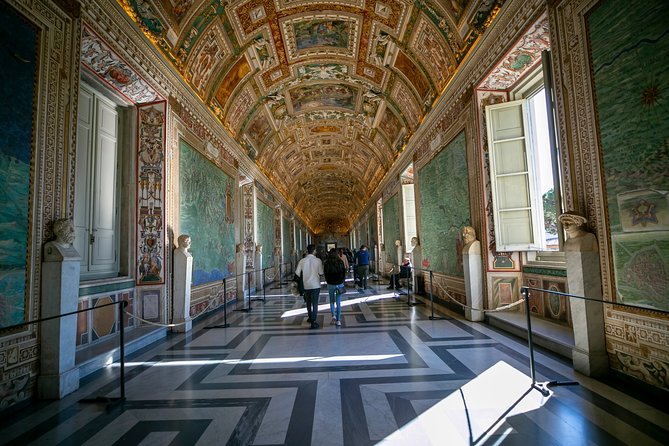
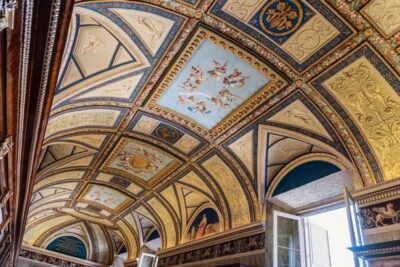
After the sculpture galleries, the route continues through the Gallery of Tapestries and the Gallery of Maps. The woven hangings show how religious and political stories were presented through textiles, while the maps offer a striking view of Renaissance geography.
The Gallery of Maps is one of the most memorable corridors in the Vatican. Its long sequence of painted maps gives you a sense of how sixteenth-century Italy was understood and pictured. You will want to look upward as well as forward, since the ceilings add another layer of decoration.
Your guide then brings you to the Sobiesky Room, which contains the Vatican’s largest canvas painting. This is a useful stop because it breaks up the better-known parade of frescoes and allows you to see how a large oil painting differs from wall decoration.
The Immaculate Conception Room follows, with nineteenth-century frescoes and a later chapter of Vatican art. Not every visitor gives this room much time, but it helps show that the Vatican collection did not stop with the Renaissance. The museum continued to add and commission art long after Michelangelo and Raphael.
One advantage of a private visit is the possibility of stopping in smaller rooms when time and crowd flow allow. A large organized group usually has to keep moving. Here, you can ask your guide to pause when a work catches your eye, though the Vatican’s crowds and security rules still shape the route.
Raphael’s Rooms and the School of Athens
The Raphael Rooms receive about an hour of the visit. Pope Julius II commissioned Raphael to decorate these rooms in the early sixteenth century, and they are among the clearest examples of Renaissance art used to express learning, faith, and papal authority.
Your guide will focus on major scenes such as Parnassus and The School of Athens. The latter is not just a wall filled with famous philosophers. Its composition places thinkers from the classical world into an ideal architectural setting, with Plato and Aristotle at the center. Your guide can help you recognize the gestures, groupings, and references that make the painting more than a collection of faces.
This is one of the places where a private guide earns the fee. The figures are small, the symbolism is layered, and the room can be crowded. A guide can direct your attention to key details before you are swept along by the next group.
If you have an interest in art technique, ask about the difference between fresco painting and later restoration. If history is more your concern, ask why Julius II wanted these rooms decorated and how Raphael’s work fit the pope’s larger plans. The private format gives you room to shape that conversation.
More ways to visit the Vatican:
- Rome: Vatican Museums, Sistine Chapel & Basilica Tour
★ 4.3 · 13,872 reviews - Vatican Museums & Sistine Chapel Skip-the-Line Entry Ticket
★ 4.4 · 13,838 reviews - Rome: Vatican Museums, Sistine Chapel & Basilica Tour
★ 4.7 · 13,217 reviews - Skip-the-Line Group Tour of the Vatican, Sistine Chapel & St. Peter’s Basilica
★ 4.5 · 12,779 reviews
Entering the Sistine Chapel
The final museum stop is the Sistine Chapel, scheduled for about thirty minutes. This is the emotional high point for many people, but it is also the most controlled part of the visit.
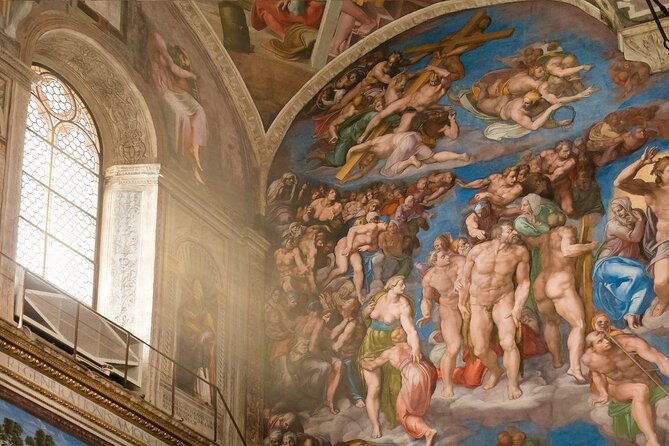
You will see frescoes by Michelangelo, Botticelli, and other major artists. Michelangelo’s ceiling includes The Creation of Adam, one of the most recognized images in Western art. The chapel also contains Michelangelo’s Last Judgment on the altar wall, although the supplied tour details specifically emphasize the ceiling and the famous artists represented there.
Your guide explains the chapel’s artistic program, history, and role in the papal conclave. The conclave is the process used to elect a new pope, and learning how this room functions as both a place of worship and a setting for a major church decision adds meaning to the visit.
You should expect rules inside. Food and drinks are not allowed, although bottled water is permitted in the museums. Follow all instructions about silence and photography, since the chapel is an active religious space and access rules can be enforced.
The half-hour allocation is enough for an introduction and time to look, but it is not a long private viewing. The Sistine Chapel is shared with many other people, so do not picture a quiet room with unlimited time. The private guide helps you prepare before entry and explains what to watch for, but cannot remove the crowd.
Saint Peter’s Square, With an Important Limitation
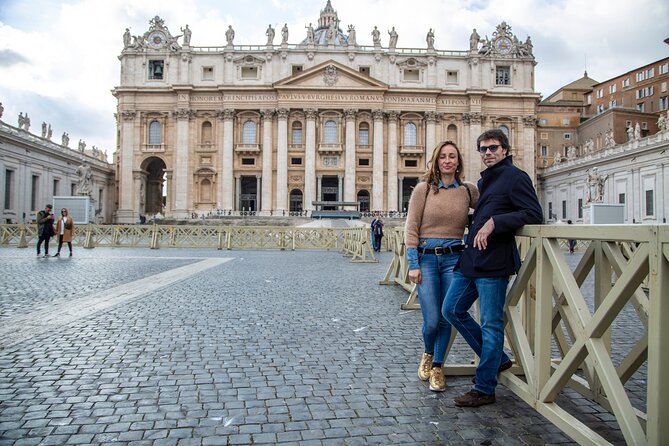
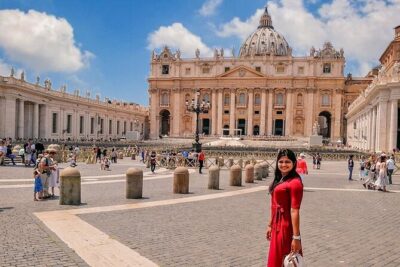
The route ends with a look at Saint Peter’s Square, the Pope’s Palace, and the Swiss Guards. This gives you a chance to connect the museum visit with the public face of Vatican City.
The Basilica of Saint Peter is not included. Current Jubilee access rules require you to visit the square and join the Basilica queue separately. This is an important distinction when comparing tours, since some Vatican products advertise the Basilica as part of the day.
The information for this experience describes the final sightseeing point as Saint Peter’s Square and also states that the activity ends back at the meeting point. Confirm the exact end location with the operator so you know where to continue your day.
Last-minute closures are possible. Areas such as the Sistine Chapel or Basilica may become inaccessible because of papal events or Vatican ceremonies. If that happens, the guide provides an alternative visit inside the Vatican Museums. That is not the same as seeing the chapel, but it is better to know this risk before paying for a non-refundable booking.
The Guides Make the Difference
The strongest part of this experience is the guide-led storytelling. Names associated with especially well-received visits include Tommaso, Francesco, Bruno, Maximillian, Romina, Michela, Elisabetta, Fabiola, and Thomas.
The descriptions of these guides point to several useful qualities. Tommaso was praised for tailoring time to personal interests and using enthusiasm to explain history, architecture, and art. Bruno was described as fun and effective with a family group. Maximillian focused on the most important information for a group of seven.
Romina’s role began before the visit with text communication to confirm arrangements, then continued with crowd navigation and detailed explanations. Elisabetta was singled out for including children aged eleven and fifteen without making the adults feel overlooked. Fabiola was especially strong at answering questions beyond the planned route.
Guide assignments can change, so booking does not guarantee a particular person unless the operator confirms one in writing. Still, these examples show what to ask for: a guide who can adjust the tour, explain art without drowning you in dates, and keep children involved.
Is $396.37 Per Person a Fair Price?
At $396.37 per person, this is not a budget entry ticket. You are paying for admission, skip-the-line access, and a private Blue Badge art historian guide, not merely for transportation or a headset.
The value depends heavily on your group. For two people, the total cost is high, but the private pace and ability to ask unlimited questions may justify it if the Vatican is a major reason for your Rome visit. For a larger family or group, group discounts could improve the calculation, although the exact discount is not provided.
I would not choose this tour simply to get inside quickly. I would choose it if you want the art explained and do not want to organize the route yourself. The Vatican rewards preparation, and a private guide can prevent you from spending your limited time on rooms that matter less to you.
The price is harder to justify if you are happy to walk through the museums independently, already know the major works, or mainly want the Basilica. Since the Basilica is excluded, you would need to plan that separate visit and queue.
Who Will Get the Most From This Tour?
This is a good fit for first-time visitors who want a focused introduction to Vatican art. It also suits families, since the private guide can adjust explanations for children and adults.
Art students, history fans, and curious couples may appreciate the chance to ask specific questions about Raphael, Michelangelo, ancient sculpture, or papal commissions. The visit is also useful if your Rome schedule is tight and you want the major rooms covered in three hours.
You should have a moderate level of physical fitness. The Vatican route involves standing and walking through large museum spaces, and the crowd can make the experience tiring even when the tour is well paced.
Dress for a place of worship. Men and women must cover their knees and shoulders, and shorts or sleeveless tops can lead to refused entry. Bring only bottled water for the museum portion, since other food and drinks are not allowed.
The tour is offered in English and includes a mobile ticket. It is near public transportation, but hotel pickup and drop-off are not included, so you must make your own way to the entrance.
Should You Book It?
Book this tour if you want private attention, priority entry, and clear art explanations in a concentrated three-hour visit. The strongest reason to choose it is not simply the line-skipping. It is the ability to ask questions, adjust the pace, and have a guide connect ancient sculpture, Raphael’s rooms, Michelangelo’s ceiling, and the Vatican’s ceremonial role.
Think twice if the cost strains your budget or if Saint Peter’s Basilica is your top priority. You will need a separate queue for the Basilica, and the Sistine Chapel can close at short notice because of Vatican events.
For a first Vatican visit, especially with children or a group with mixed interests, I think the private format offers real value. Just arrive properly dressed, allow for crowds, and confirm the meeting and finishing points before you go.
FAQ
How long does the private Vatican tour last?
The tour lasts approximately three hours. The Vatican Museums portion takes about one hour and thirty minutes, the Raphael Rooms about one hour, and the Sistine Chapel about thirty minutes.
Is the entrance fee included?
Yes. Admission tickets for the Vatican Museums, Raphael Rooms, and Sistine Chapel are included, along with guaranteed skip-the-line entry.
Is this a private tour?
Yes. Only your group participates, and you can explore at your own pace with a private guide.
Is Saint Peter’s Basilica included?
No. The Basilica is not included because of current Jubilee access rules. You can visit it from Saint Peter’s Square by joining the queue there.
Where does the tour begin?
The stated meeting location is the Vatican Museums entrance on Viale Vaticano in Rome.
What language is the tour offered in?
The tour is offered in English.
What should I wear?
You must cover your knees and shoulders. This rule applies to both men and women, and entry may be refused if you do not follow the dress requirements.
Can the Sistine Chapel close unexpectedly?
Yes. The Sistine Chapel or other Vatican areas may close at short notice because of papal events or other Vatican activities. If access is not possible, the guide provides an alternative inside the Vatican Museums.
More Skip the Line in Rome
- Rome: Vatican Museums & Sistine Chapel Skip-The-Line Ticket
★ 4.2 · 11,708 reviews - Vatican, Sistine Chapel & St. Peter’s Skip-the-Line Tour
★ 4.5 · 7,770 reviews - Skip-the-Line Vatican, Sistine Chapel & St. Peter’s | Small Group
★ 5.0 · 7,060 reviews - Vatican: Vatican Museums Sistine Chapel Skip-the-Line Ticket
★ 4.2 · 6,682 reviews
Newest reviews from Rome
- ROME:Colosseum & Ancient Rome – private/small group TOUR★ 5.0 · 24 reviews
- Off the Beaten Track in Rome: Rione VI Parione Private Tour★ 5.0 · 24 reviews
- Rome: Best of Colosseum and Roman Forum Small Group Guided Tour★ 4.5 · 24 reviews
- Cinematic Photoshoot in Rome★ 5.0 · 24 reviews
- The Labyrinth of Rome between catacombs and ancient quarries★ 4.5 · 24 reviews
- Vatican and Trionfale Market Tour with Wine and Food Tasting★ 5.0 · 24 reviews
- private tour: Vatican Museums, Sistine Chapel, St. Peter’s Basilica★ 4.5 · 24 reviews
- Colosseum guided tour with Virtual Reality★ 5.0 · 24 reviews
Vatican Museums & Sistine Chapel, compared.
Vatican Museums & Sistine Chapel Tour with Optional Basilica
Read our review →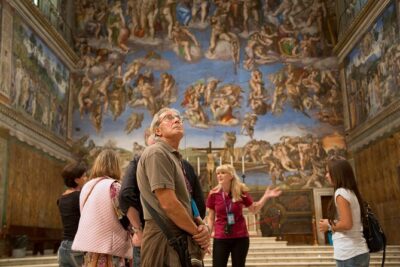
Vatican Museums, Sistine Chapel & St Peter’s Basilica Guided Tour
Read our review →
Vatican Museums, Sistine Chapel & Basilica Tour
Read our review →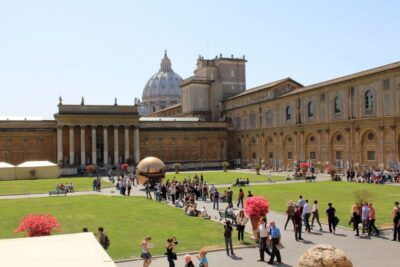
Vatican Museums & Sistine Chapel Skip-the-Line Entry Ticket
Read our review →Vatican Museums, Sistine Chapel & Basilica Tour
Read our review →
Skip-the-Line Group Tour of the Vatican, Sistine Chapel & St. Peter’s Basilica
Read our review →
Vatican Museums & Sistine Chapel Guided Tour
Read our review →Browse the lists this tour appears in