
Reviewed · ROME
The ancient aqueducts of Rome
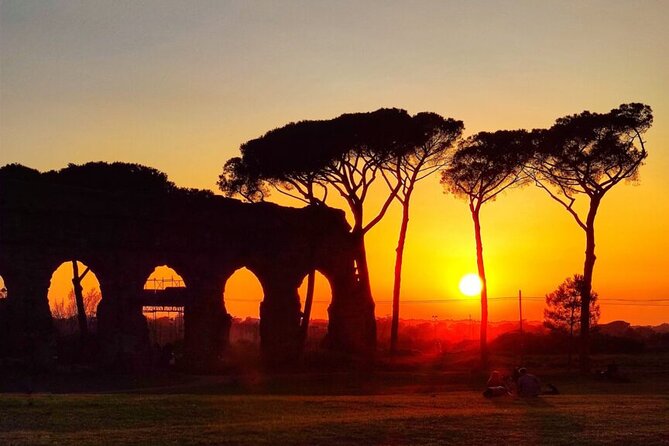
Rome’s most memorable ancient monument may be the one you reach by metro. At Parco degli Acquedotti, towering arches cross a wide local park instead of a crowded archaeological corridor. You see several generations of Roman waterworks in one place, including aqueducts built for emperors and a later line commissioned by a pope.
I like the small groups of no more than 10 and the guides’ strong command of archaeology. Giuseppe, Riccardo, Liviana, and other guides are praised for explaining engineering, politics, stones, roads, and daily life in clear English. I also like the setting: cyclists, joggers, families, and locals replace the usual Rome crowd.
The main drawback is simple: this is a walking tour, not a quick photo stop. You cover mostly flat ground for about two hours, and comfortable shoes matter. The park is outside the historic center, so you need to allow time for the metro ride to Giulio Agricola.
In This Review
- Why Rome’s Aqueduct Park Matters
- Key points to know
- From Giulio Agricola to the Open Park
- The 144 BC Aqueduct and Its Later Life
- Pope Sixtus V and the Felice Aqueduct
- The Water Giant
- The Anio Vetus and Claudian Aqueducts
- Ancient Roads, Reused Stones, and Details at Foot Level
- What the Two-Hour Walk Feels Like
- Is $96.38 a Fair Price?
- Timing, Weather, and Practical Details
- Who Should Book This Rome Walk?
- FAQ
- Where does the aqueduct tour begin?
- Where does the tour end?
- How long does the experience last?
- What language is offered?
- How many people can join the tour?
- Is admission to Parco degli Acquedotti included?
- What should I wear?
- Is the tour suitable for most people?
- Are service animals allowed?
- What happens if the weather is poor?
- Can I cancel for a full refund?
Why Rome’s Aqueduct Park Matters
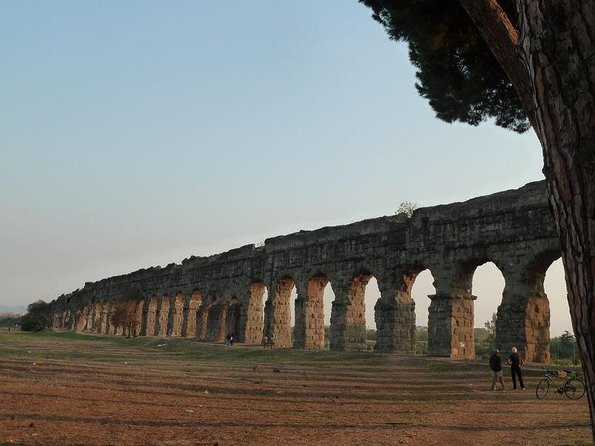
The Romans built aqueducts to carry water across long distances by using a carefully controlled downhill slope. The system fed fountains, baths, homes, and public buildings, helping Rome grow into a huge ancient city. At this park, the remains are not isolated fragments behind a fence. They run across open ground, so you can see how large the system really was.
Seven aqueducts pass through this relatively compact area. That concentration gives the tour its main advantage. Instead of studying one monument and moving on, you compare different building periods, heights, repairs, and methods within a short walk.
The setting also gives you a useful contrast. Central Rome is full of churches, traffic, ticket lines, and tightly packed ruins. Here, the ancient structures share space with ordinary Roman life. You might see people cycling, jogging, sunbathing, or walking through the park while the arches rise behind them.
Key points to know
- Seven aqueducts in one park: You can compare several Roman water lines without crossing the city.
- Archaeology-led guiding: Giuseppe, Riccardo, Liviana, and other guides explain construction, stonework, politics, and daily life.
- A local atmosphere: The park is used by Romans and has far fewer sightseeing crowds than the central ruins.
- Ancient and later engineering together: One aqueduct dates to 144 BC, while another was built around 1500 AD by Pope Sixtus V.
- A glimpse inside the water system: The walk includes a look at the underground canal area, where water can still be seen leaking.
- Easy to reach by metro: The meeting point is at Giulio Agricola, with the tour ending near Lucio Sestio.
Tours travellers often pair with this one in Rome:
- Vatican: Museums & Sistine Chapel Entrance Ticket
★ 4.5 · 144,003 reviews - Vatican Museums & Sistine Chapel Tour with Optional Basilica
★ 4.3 · 67,413 reviews - Vatican Museums, Sistine Chapel & St Peter’s Basilica Guided Tour
★ 4.5 · 39,149 reviews
From Giulio Agricola to the Open Park
The meeting point is at Giulio Agricola, in Rome’s 00174 district. The tour ends at Lucio Sestio, also on the metro, so you are not left at a remote site with no clear way back.
The short metro ride is part of the appeal. It takes you beyond the usual Pantheon, Colosseum, and Trevi Fountain circuit and into a part of Rome where the city feels more residential. You should still plan your route before setting out, since the experience begins at a specific metro stop rather than at a major central monument.
The group begins with a short snack together. The exact snack can vary, but one guide provided an Italian suppli, a small fried rice treat. It is a modest touch, yet it helps turn the start into a friendly walk rather than a formal lecture.
The group size is capped at 10 people. That matters here. The aqueducts cover a broad area, and a guide needs to point out details that are easy to miss, such as reused stones, changes in masonry, or the line of a buried water channel. A small group also gives you room to ask questions without holding up a large crowd.
The 144 BC Aqueduct and Its Later Life
One of the first important structures dates to 144 BC. It was partly used until fairly recently because the later Felice aqueduct reused its arches.
That detail shows how Rome’s infrastructure was never simply abandoned and forgotten. Later builders adapted older structures to meet new needs. You are looking at ancient Roman engineering, but also at centuries of repair, reuse, and practical decision-making.
This is where the guides’ archaeological background becomes useful. Giuseppe is described as an amateur archaeologist with a strong grasp of Roman construction, stone types, and the ways aqueducts were damaged and rebuilt. Another guide, Riccardo, is praised for connecting water engineering with Roman politics, philosophy, recreation, and ordinary citizens.
You should not expect a museum display or a collection of objects laid out in cases. The evidence is in the stone, the arches, the slope of the ground, and the remains around you. A good guide helps you read those clues.
Pope Sixtus V and the Felice Aqueduct
The park also contains an aqueduct built around 1500 AD by Pope Sixtus V, who was also known as Pope Felice. Its builders reused arches from the Marcio aqueduct.
This later structure adds an important layer to the tour. Rome’s water story did not end with the fall of the ancient empire. Centuries later, papal Rome still needed reliable water, and engineers continued to use the old Roman framework where it made sense.
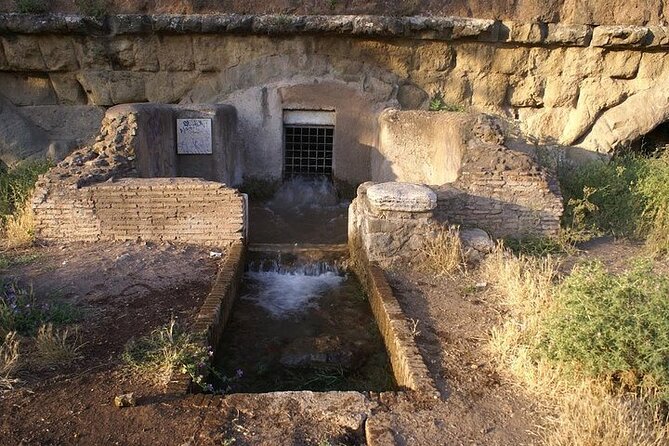
The underground part of the Felice aqueduct still functions. You can see water leaking from the canal, a small but striking reminder that this is not only a dead ruin. The detail gives the walk a practical edge. You are not just hearing that the system carried water. You are seeing water still moving through part of it.
The site is best appreciated slowly. Look at the height of the arches, the gaps between sections, and the way newer work sits on or beside older masonry. The tour is designed around this sort of close observation.
A completely different way to spend the day in Rome:
- Rome: Colosseum, Palatine Hill and Roman Forum Guided Tour
★ 4.8 · 32,814 reviews - Rome: Guided Tour of Colosseum, Roman Forum & Palatine Hill
★ 4.7 · 27,897 reviews - Rome: Colosseum & Forum with Audio Guide App -Optional Arena
★ 4.2 · 24,770 reviews - Rome: Colosseum, Roman Forum and Palatine Hill Guided Tour
★ 4.5 · 23,903 reviews
The Water Giant
Another aqueduct is described as having the healthiest water and enough height to supply the entire city of Rome. In some stretches, its arches reach about 30 meters high.
That height changes how you experience the ruins. At ground level, an arch can look like one section of a long wall. From a wider view in the park, the full scale becomes clearer. The structure is not merely decorative. It was a working water route raised high enough to maintain the flow and reach the city.
The nickname Water Giant fits the visual effect. You can stand beneath or beside the arches and understand why aqueducts became symbols of Roman engineering. They had to be stable, precise, and useful over long distances, yet they were also built on a grand scale.
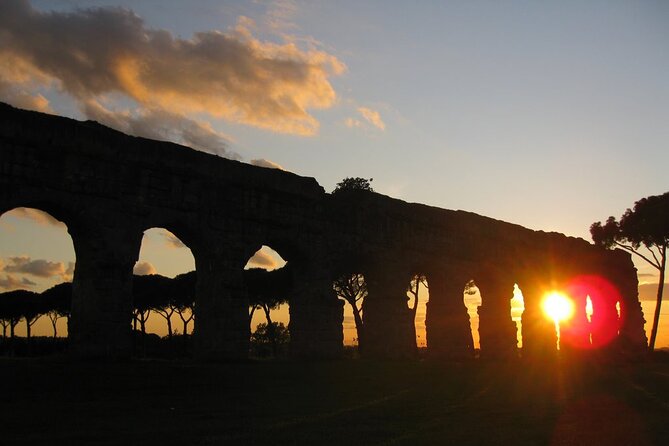
The open park makes photography easier than many central Roman sites. You can step back and frame long stretches of arches against the sky. If your tour takes place near sunset, the low light can give the stone a warm color and make the scale more dramatic.
The Anio Vetus and Claudian Aqueducts
The walk also covers the Anio vetus, built by Emperor Claudius together with the Claudian aqueduct. The Anio vetus was the highest of all 11 aqueducts that supplied ancient Rome.
This is the kind of detail that can sound abstract in a book but becomes much easier to grasp beside the actual structures. The guide can show you how height, route, and water flow worked together. The aqueducts were not all identical lines serving the same purpose. They belonged to a wider system with different elevations and building periods.
The guides also bring in the people behind the monuments. Liviana is praised for telling stories involving emperors, popes, engineers, enslaved people, and citizens. That human angle helps keep the tour from becoming a list of dates and construction facts.
You will hear about the public side of water as well as the technical side. Aqueducts supported baths, fountains, and the daily routines that made city life possible. They also carried political meaning. Reliable water helped rulers present themselves as providers, builders, and protectors of the population.
Ancient Roads, Reused Stones, and Details at Foot Level
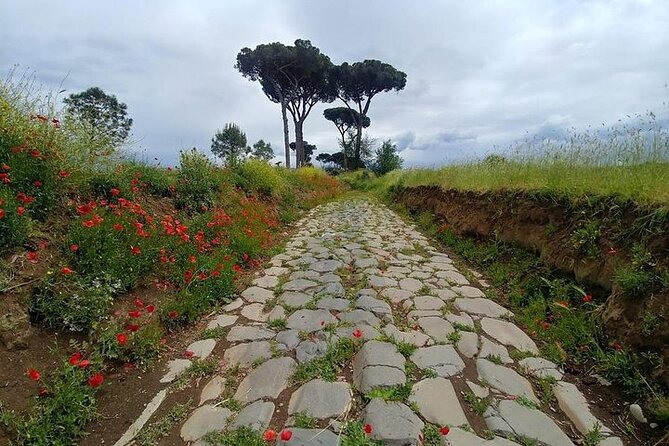
The aqueducts are the main event, but the park offers more. Guides have pointed out a section of an ancient Roman road, identified during the walk as the Latin road. You may also see fragments of Roman columns and older building pieces reused in a 17th-century farmhouse.
These details reward you for looking down and around, not only up at the arches. Rome is full of recycled stone. A column fragment may have served one purpose in antiquity and then become part of a later wall or farm building. The result is a layered view of the city, where Roman, papal, and modern life overlap.
One guide also points out tree types in the park. That may sound like a small addition, but it helps you understand the site as a living public space rather than a bare ruin. The walk combines archaeology with the ordinary surroundings of a Roman neighborhood.
The tour is especially useful if you have already visited the major central monuments and want a different view of Rome. You are still dealing with major ancient infrastructure, but the setting is quieter and less staged.
What the Two-Hour Walk Feels Like
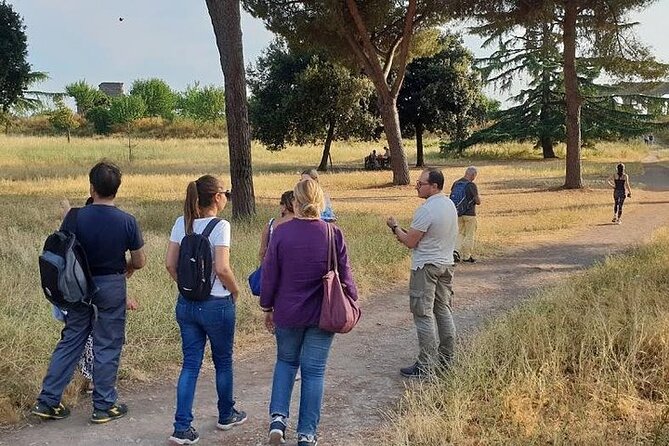
The experience lasts about two hours and covers a lot of ground. The route is mostly flat, but you should wear sturdy walking shoes. Sandals are a poor choice, especially if you want to stay comfortable while moving between the aqueducts and uneven archaeological remains.
The pace depends partly on the group and the guide. Giuseppe is praised for patiently answering many questions, while Riccardo is noted for helping with directions before and after the walk. That personal attention is useful because the site is broad and the meeting and ending points are different.
English is the offered language. The guides are praised for clear English, and the format allows plenty of explanation rather than a rushed commentary. Charts and photographs may be used to explain what the structures looked like and how the water system worked.
The park is family-friendly in one important sense: children have open space to move around, and the subject can be made lively through stories about emperors, engineers, and Roman life. Still, children need to be ready for a full two-hour walk. This is not a short attraction visit with frequent indoor breaks.
Is $96.38 a Fair Price?
At $96.38 per person, this is not a bargain-priced stroll. The value depends on what you want from a Rome experience.
If you only want to see the aqueducts and take a few pictures, you could visit the park without a guide. Admission to the park itself is free, and that makes an independent visit possible. You would save money, but you would also need to make sense of several structures spread across the site on your own.
The paid tour makes more sense if you want the aqueducts explained as a connected system. You are paying for about two hours with an English-speaking guide, a group limited to 10, archaeological context, help identifying the ancient road and reused stonework, and access to details such as the leaking underground canal.
I would choose it for a history-focused day when you have already seen Rome’s headline monuments. It is also a good pick if you want a quieter outing and value a guide who can answer questions rather than deliver a fixed speech.
The price may feel high for a two-hour walk, so go in knowing that the setting itself is free. The tour’s worth comes from interpretation and personal attention, not from admission to a ticketed monument.
Timing, Weather, and Practical Details
This experience requires good weather. If poor weather cancels the walk, you are offered another date or a full refund. That policy is useful, but you should still keep some flexibility in your Rome schedule.
Confirmation is normally sent at booking. If you book within one day of the start time, confirmation comes as soon as possible and depends on availability.
Service animals are allowed, and the meeting point is near public transportation. Most people can take part, but the walking distance and outdoor setting mean you should plan for sun, weather, and uneven ground.
Free cancellation is available until 24 hours before the start time for a full refund. Cancellations or changes made inside that 24-hour window are not accepted for a refund. The cut-off follows local Rome time.
Who Should Book This Rome Walk?
I would recommend this tour to anyone who likes ancient engineering, archaeology, and quieter corners of Rome. It suits people who want to understand how the city worked, not just photograph its most famous buildings.
It is also a strong choice for families with children who enjoy open space and stories. The guide can make the subject accessible without requiring you to be a specialist.
You may want to skip it if your Rome schedule is packed with central attractions and you dislike walking outside the historic center. The aqueducts are impressive, but you need to spend time reaching the meeting point and walking through a large park.
Book it if you want a close look at Roman infrastructure, a local setting, and a guide who can connect water with politics, architecture, roads, and daily life. Skip it if you only want a quick monument stop or prefer to explore entirely on your own.
FAQ
Where does the aqueduct tour begin?
It begins at Giulio Agricola, 00174 Rome, near the metro stop.
Where does the tour end?
The tour ends at Lucio Sestio, 00174 Rome.
How long does the experience last?
The tour lasts approximately two hours.
What language is offered?
The experience is offered in English.
How many people can join the tour?
The group has a maximum of 10 participants.
Is admission to Parco degli Acquedotti included?
The park has free admission.
What should I wear?
Wear comfortable walking shoes. The route involves a lot of walking, even though it is mostly flat.
Is the tour suitable for most people?
Most people can participate. You should be prepared for an outdoor walk lasting about two hours.
Are service animals allowed?
Yes, service animals are allowed.
What happens if the weather is poor?
If bad weather cancels the experience, you can choose another date or receive a full refund.
Can I cancel for a full refund?
Yes. You must cancel at least 24 hours before the local start time to receive a full refund. Changes or cancellations inside that period are not accepted.
Newest reviews from Rome
- ROME:Colosseum & Ancient Rome – private/small group TOUR★ 5.0 · 24 reviews
- Off the Beaten Track in Rome: Rione VI Parione Private Tour★ 5.0 · 24 reviews
- Rome: Best of Colosseum and Roman Forum Small Group Guided Tour★ 4.5 · 24 reviews
- Cinematic Photoshoot in Rome★ 5.0 · 24 reviews
- The Labyrinth of Rome between catacombs and ancient quarries★ 4.5 · 24 reviews
- Vatican and Trionfale Market Tour with Wine and Food Tasting★ 5.0 · 24 reviews
- private tour: Vatican Museums, Sistine Chapel, St. Peter’s Basilica★ 4.5 · 24 reviews
- Colosseum guided tour with Virtual Reality★ 5.0 · 24 reviews