
Reviewed · ROME
Urban Rafting on Rome’s Tiber River
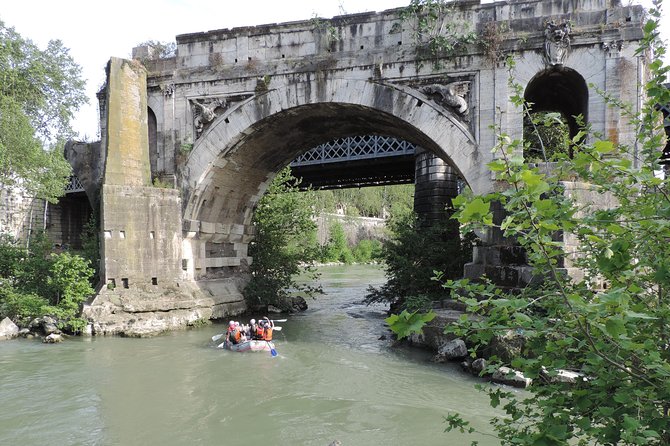
Rome’s Tiber is not a wild mountain river, but that is part of the appeal. This two-hour rafting trip gives you a quieter view of the city, with Castel Sant’Angelo, old bridges, river walls, and Isola Tiberina passing by at water level. Most of the ride is calm, followed by two mild rapids that add laughs without demanding serious rafting skills.
I like the mix of easy sightseeing and light exercise, especially for families with teenagers or anyone needing a break from Rome’s hot, crowded streets. I also like the guides’ role: Dario, Daniele, Carlos, Mariana, Michael, and others are described as friendly, funny, and well informed about the river and the city. The main drawback is that the Tiber can be slow and unattractive along parts of its banks, and you should expect wet clothes and a little logistical confusion at the end.
In This Review
- Key points to know before booking
- Why raft the Tiber in the middle of a Rome trip?
- Meeting under Porta del Popolo
- On the Tiber: calm water, city walls, and old bridges
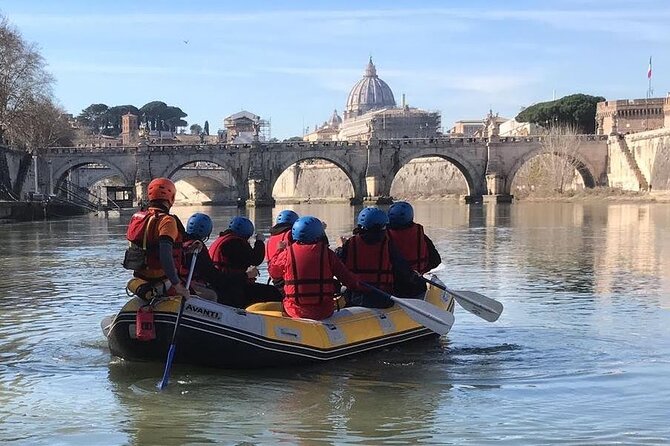
- Castel Sant’Angelo from the water
- Isola Tiberina and the slower side of Rome
- The rapids are fun, but keep the scale in mind
- Snacks, rowing, and the real two-hour rhythm
- Shoes, clothes, and the downstream exit
- What the $48.39 price really buys you
- Who will enjoy this Rome rafting trip?
- Should you book Urban Rafting on Rome’s Tiber River?
- FAQ
- Where does the tour start?
- How long does the activity last?
- What sights are included along the route?
- Is rafting experience required?
- What equipment is provided?
- Is food included?
- What should I wear?
- Is there a weight limit?
- Can I cancel for a full refund?
Key points to know before booking
- Two gentle rapids arrive near the end, so most of the trip is calm paddling and floating rather than white-water action.
- The city looks different from the river, especially around Castel Sant’Angelo, the bridges, river walls, and Isola Tiberina.
- Guides do more than steer the raft, sharing Roman stories and pointing out sights along the route.
- You receive the main safety equipment, including a life jacket, helmet, paddle, and waterproof bag.
- Sturdy shoes matter, since getting into and out of the raft involves uneven, slippery rocks.
- Plan for wet clothing and a separate journey afterward, as practical details about the downstream exit are not perfectly clear.
Why raft the Tiber in the middle of a Rome trip?
Rome is a city that rewards walking, but even the most enthusiastic sightseer eventually needs a change of pace. This trip takes you away from the traffic, scooters, tour groups, and hard pavement without sending you far from the historic center.
The Tiber is often treated as background scenery. From the river, it becomes the main subject. You see the underside of bridges, the high embankments, old stonework, and portions of Rome that are easy to miss while walking above. The view is not a nonstop parade of famous monuments, so you should book this for the unusual setting and relaxed rhythm, not as a replacement for a standard city tour.
The rafting itself is beginner-level. You paddle together after a short safety briefing, then alternate between rowing and drifting. The exercise is real but moderate. One detailed account describes the activity as requiring a decent amount of rowing, while others found it easy and similar to tubing. Your experience will depend on how hard your group paddles and how much work you put in.
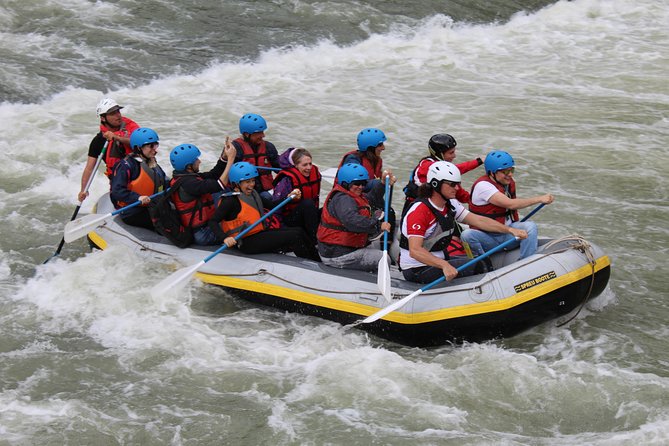
The final rapids are rated around level 1 or slightly above, according to the practical descriptions supplied for the tour. They are there for fun and splashing, not technical skill. You do not need white-water experience, but you do need enough balance and strength to get into and out of the raft.
More Tiber cruises:
- Rome: Tiber River Urban Rafting Tour with Roman Pizza
★ 4.6 · 334 reviews - Rome: Trastevere & Tiber Island Street Food Tour at Sunset
★ 4.9 · 71 reviews - Rome: Food Tasting and Wine Pairing & Tiber River Boat Ride
★ 4.8 · 49 reviews
Meeting under Porta del Popolo
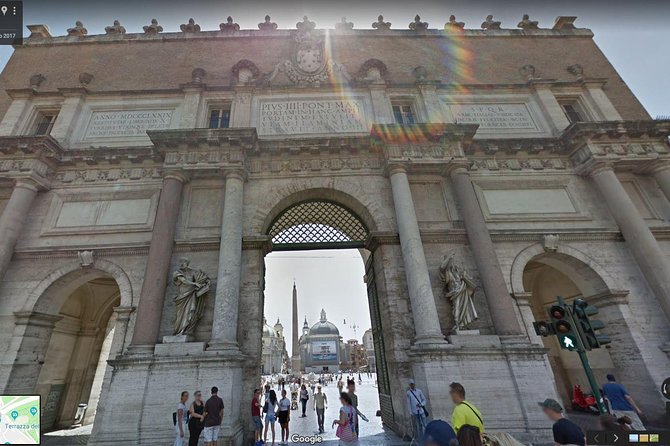
The meeting point is Piazza del Popolo, near Porta del Popolo. This is a useful place to begin because it is easy to reach and gives you a familiar Roman landmark while you wait.
Finding a small outdoor group in central Rome can be harder than expected. One guide, Connie, carried an oar to make herself easy to spot. That is a smart touch, and you should still arrive with the meeting point details open on your phone.
From Porta del Popolo, the guide walks with the group toward the river. Along the way, you receive a few Roman stories and curiosities before changing into rafting equipment. This short walk is part of the experience, though it means the activity does not begin the instant you reach the piazza.
The activity is offered in English, and confirmation arrives at booking. It is near public transportation, which helps if you are fitting it between other Rome plans. Because the tour needs good weather and a minimum number of participants, keep some flexibility in your schedule.
On the Tiber: calm water, city walls, and old bridges
Once you reach the river, the group receives life jackets and helmets, with paddles and a waterproof bag provided as well. The safety briefing covers the basic way to paddle and how to handle the raft. Most people can take part, but the 100-kilogram maximum weight limit is important and should be checked before you pay.
The raft carries a mixed group, with up to 60 participants possible. That is a fairly large maximum, although some departures may be much smaller. One outing had only five people plus the guide, which would feel more personal and easier to manage than a full departure.
You remain seated on the side of the raft during the ride and use your paddle when instructed. This is not a free-for-all on the water. The guide controls the pace and explains what you are seeing, while the group helps move the raft along.
The quiet sections are the heart of the trip. You float below street level, with Rome’s noise softened above you. The river does not rush, so you have time to listen, take photos when appropriate, and watch the city pass from an angle that walking tours cannot offer.
Do not expect major monuments at every bend. The best sights are concentrated around historic structures along the river rather than lining the whole route. The river itself, its bridges, and its embankments carry much of the visual interest.
Castel Sant’Angelo from the water
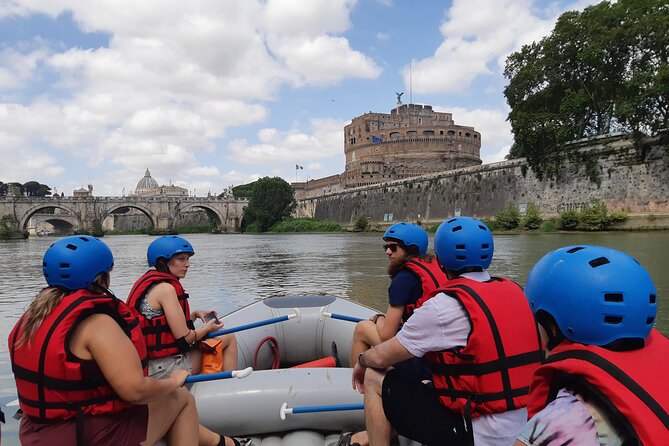
Castel Sant’Angelo is one of the strongest sightseeing moments on the route. From street level, you usually approach this massive cylindrical fortress through busy roads and open plazas. From the Tiber, you see it in relation to the river and the bridge crossings that helped shape this part of Rome.
The guide stops at points along the route to explain the surroundings and allow time for photographs. This adds value to the trip because the Tiber can otherwise seem like a simple floating ride. The historical commentary helps you notice why the river mattered to the city and how Rome grew around it.
Still, manage your expectations. This is not a guided interior visit to Castel Sant’Angelo. You will not enter the fortress or receive the same depth of detail as you would on a dedicated monument tour. Think of it as a scenic encounter and orientation stop.
That lighter approach suits a hot day. You can see a major landmark without standing in a ticket line or crossing a sun-baked piazza. For a first afternoon in Rome, the route can also help you get your bearings.
A completely different way to spend the day in Rome:
- Vatican: Museums & Sistine Chapel Entrance Ticket
★ 4.5 · 144,003 reviews - Vatican Museums & Sistine Chapel Tour with Optional Basilica
★ 4.3 · 67,413 reviews - Vatican Museums, Sistine Chapel & St Peter’s Basilica Guided Tour
★ 4.5 · 39,149 reviews - Rome: Colosseum, Palatine Hill and Roman Forum Guided Tour
★ 4.8 · 32,814 reviews
Isola Tiberina and the slower side of Rome
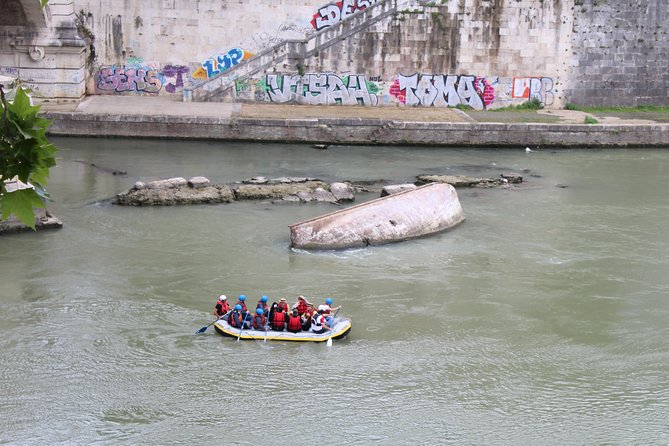
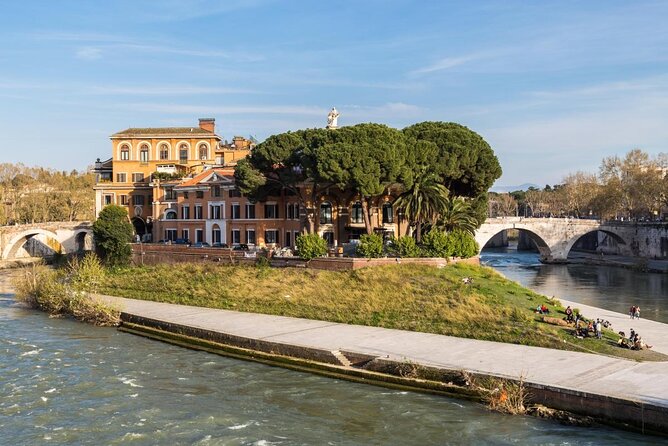
The route also reaches Isola Tiberina, the small island in the Tiber. Its position in the river makes it one of the more unusual urban sights in Rome. Seeing the island from the water shows how closely the city’s streets, bridges, and river are tied together.
The island is not presented as a long walking stop. You pass through the area while the guide explains the sights and surrounding history. That distinction matters. You receive a broad sense of place rather than a detailed visit to every monument.
This part of the ride also highlights the trip’s peaceful quality. Several accounts describe the river as a calm escape from the streets above. For families, that pause can be welcome after a morning at the Colosseum or Vatican Museums. For repeat visitors, it offers a part of Rome that standard sightseeing often skips.
The riverbanks are not polished throughout. Some sections may look neglected, and one strongly negative account objected to visible homelessness and poor conditions beside the river. You should not book this expecting a spotless recreational waterway. The setting is urban and uneven, with both beautiful historic views and less appealing stretches.
The rapids are fun, but keep the scale in mind
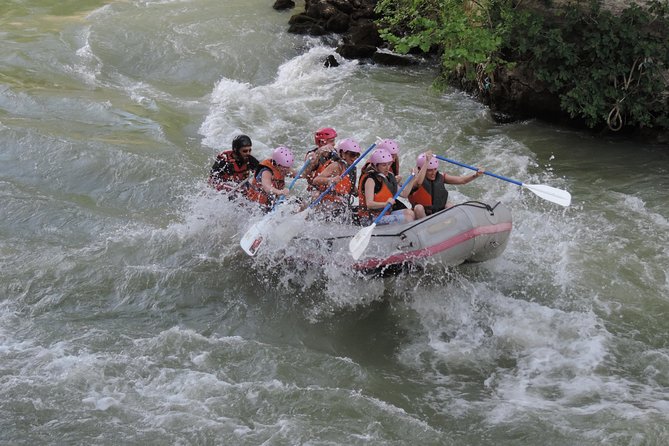
The raft’s two rapids come toward the end. This timing works well: you spend the first section learning the rhythm of paddling, then finish with a short burst of action.
The rapids are mild enough for beginners. The raft may splash, tip water inside, and leave you laughing, but this is not a serious white-water challenge. Several accounts describe people getting drenched, while another found only wet shoes and some water in the bottom of the raft. The difference may come from weather, group behavior, and how enthusiastically people handle the rapids.
You can get wet even if you do nothing dramatic. Bring clothes and shoes that can tolerate river water. The waterproof bag protects small belongings, but do not treat it as a reason to bring every electronic device you own. An action camera is not included.
The trip does not appear to involve intentionally swimming in the river. One family chose to jump in and cool off, but that was an extra choice, not the basic plan. Follow the guide’s instructions and assume that the water is for rafting, not bathing.
Snacks, rowing, and the real two-hour rhythm
A typical Roman street-food snack is included at the end of the rafting activity. Several descriptions refer to pizza, water, or a short food stop. Treat this as a pleasant extra rather than a meal. The food is simple, and the quality may not be the reason you remember the trip.
The physical effort is easy to underestimate. You are not sitting passively for two hours, since paddling is part of the group’s job. At the same time, this is not a hard training session. People with different fitness levels can take part if they can balance, paddle, and climb in and out of the raft.
A 66-year-old participant was made to feel comfortable despite initial nerves, and families with teenagers found the activity engaging. Those details point to the trip’s sweet spot: active enough to hold attention, gentle enough for beginners, and social without requiring special skill.
The advertised duration is about two hours. Allow extra time for the walk to the river, gearing up, safety instructions, the snack, and getting back into the city afterward.
Shoes, clothes, and the downstream exit
The most useful packing advice is simple: wear sturdy shoes with good grip and support. The river entry and exit may involve slippery, uneven rocks. Flip-flops and smooth-soled sandals are poor choices.
Wear clothing that can get wet. You may not be soaked from head to toe, but your shoes, lower clothing, and anything near the raft floor can take on river water. Some participants washed their clothes and tennis shoes twice after the trip. A spare outfit is sensible, especially if you have dinner or another tour afterward.
The waterproof bag is included for your belongings, and the crew can hold dry clothes and return them at the end according to the practical notes supplied. Even so, keep your valuables limited and well protected.
Pay close attention to the end point. The formal details say the activity ends back at the meeting point, but several practical accounts describe a downstream exit and no ride back to Piazza del Popolo. One group walked about 15 minutes to the Piramide Metro area and used the route to see the Pyramid of Cestius. Another found a nearby bus more useful than the Metro.
Because these details conflict, ask the operator to confirm the exit point before the day of the tour. If you are dropped downstream, build in walking and public transportation time. Do not schedule a tight museum entry or dinner reservation immediately afterward.
What the $48.39 price really buys you
At $48.39 per person, this is not the cheapest way to see Rome, but it is a fair price for a guided activity that includes equipment, instruction, a snack, and a different view of the city.
You are paying for the raft, paddle, helmet, life jacket, waterproof bag, guide, and organized access to the river. The historic commentary also gives the ride more purpose than a simple float. If you value unusual experiences and need a break from conventional sightseeing, the price makes sense.
The value drops if you want demanding rapids or a full monument tour. The Tiber is generally slow, and the two rapids are mild. You also need to provide your own action camera, clothing changes, and transport after the activity if the downstream exit applies.
The 4.7 rating from 138 reviews and 94 percent recommendation rate point to a strong overall experience, but the lower scores are useful warnings. Problems have included unclear communication, operator cancellations when the minimum group size was not reached, and disappointment with the river setting or food stop.
Free cancellation is available up to 24 hours before the start time. Bad weather or a failure to reach the minimum number of participants can lead to a different date, another activity, or a full refund. Last-minute changes are not accepted, so keep the weather and schedule in mind.
Who will enjoy this Rome rafting trip?
I would recommend it most to:
- Families with teenagers who need an activity beyond museums and churches
- First-time visitors who want a quick orientation from an unusual viewpoint
- Repeat visitors looking for a quieter side of Rome
- People traveling in hot weather who welcome time on the water
- Beginners who like light adventure but do not want demanding rapids
- Participants with varied fitness levels who can manage paddling and boat access
I would think twice if you dislike getting wet, have trouble with balance, or want polished river scenery. The 100-kilogram maximum also rules out some participants. Anyone expecting a full white-water ride will find the action brief.
The guides are a major part of the experience. Dario and Sebastian, Dario alone, Daniele, Michael, Carlos, Mariana, Greg, and other staff members are described as warm, funny, helpful, and good at explaining the city. Guide quality can shape the ride, since the water itself is mostly calm.
Should you book Urban Rafting on Rome’s Tiber River?
Book it if you want a relaxed, funny, slightly wet break from Rome’s usual sights. The strongest reasons are the river-level views, the easy pace, the mild rapids, and the guides who connect the ride to Roman history. It is especially useful for a family trip or a hot summer day.
Skip it if you want serious rafting, spotless riverbanks, or a tightly managed sightseeing schedule. Confirm the final drop-off point, wear shoes you can wash, and leave room for the activity to run beyond the advertised two hours.
For the right expectations, this is a memorable way to meet the Tiber. It is less about adrenaline than about seeing Rome from below, paddling a little, laughing a lot, and enjoying a side of the city most walking tours miss.
FAQ
Where does the tour start?
The tour starts at Piazza del Popolo, near Porta del Popolo in Rome.
How long does the activity last?
The rafting experience lasts approximately two hours.
What sights are included along the route?
The route includes views of Castel Sant’Angelo and Isola Tiberina, along with historic bridges, river walls, and other parts of Rome seen from the Tiber.
Is rafting experience required?
No. The rapids are suitable for beginners, and the activity includes a safety briefing and basic instruction.
What equipment is provided?
The tour provides a life jacket, helmet, paddle, and waterproof bag.
Is food included?
Yes. A typical Roman street-food snack is included at the end of the rafting activity. The practical descriptions also refer to pizza and water during the stop.
What should I wear?
Wear sturdy shoes with good traction and support, plus clothing that can get wet. The entry and exit areas may include slippery, uneven rocks.
Is there a weight limit?
Yes. The maximum weight limit is 100 kilograms.
Can I cancel for a full refund?
You can cancel at least 24 hours before the start time for a full refund. Poor weather or failure to meet the minimum number of participants can also lead to a new date or a full refund.
Newest reviews from Rome
- Rome: Vatican Museums & Sistine Chapel Skip-the-Line Ticket★ 4.4 · 148 reviews
- Shared Shuttle Transfer from Rome to Civitavecchia Port★ 5.0 · 148 reviews
- Rome: Crypts & Catacombs After Hours Tour with Bone Chapel★ 4.6 · 149 reviews
- Ghosts Legends and Mysteries of Rome Walking Tour★ 5.0 · 149 reviews
- Skip the Line: Vatican and Sistine Chapel with Guided Tour★ 4.0 · 149 reviews
- Tivoli: Villa Gregoriana Entrance Ticket★ 4.7 · 150 reviews
- Pizza and Tiramisu Cooking Class in Rome, Piazza Navona★ 5.0 · 150 reviews
- Rome: Borghese Gallery Skip-the-Line Entry and Guided Tour★ 4.7 · 150 reviews