Reviewed · VATICAN MUSEUMS & SISTINE CHAPEL
Vatican: Priority Entry to Vatican Museums an Sistine Chapel
Michelangelo’s ceiling is the main event, but the route to the Sistine Chapel takes you through some of the Vatican’s finest rooms. This priority-entry ticket saves you from buying a ticket at the museum, though you still need to pass through security.
I like the clear meeting point at Via Vespasiano 20, close to the museum entrance, and the freedom to explore without being tied to a live guide. I also like the chance to see the Raphael Rooms, Gallery of Maps, Belvedere Apollo, and Belvedere Torso before reaching the chapel.
The weak spot is organization. One booking had a host who sent the group through several queues and got them inside about 40 minutes late. Arrive 15 minutes early, follow the host closely, and remember that a late arrival means a lost ticket with no refund or rescheduling.
In This Review
- Key points to know before booking
- What this Vatican ticket really gives you
- Meeting at Via Vespasiano 20
- Security comes before the art
- The Raphael Rooms: art made for power
- The Gallery of Maps and the Pinacoteca Vaticana
- Ancient sculpture and the Belvedere Torso
- The Sistine Chapel and Michelangelo’s Genesis scenes
- What is not included: St. Peter’s Basilica
- Self-guided freedom, limited explanation
- Who should book this experience?
- Practical advice for a smoother visit
- Should you book this Vatican priority-entry ticket?
- FAQ
- Where do I meet the host?
- How early should I arrive?
- How long does the experience last?
- Is St. Peter’s Basilica included?
- Is a guide or audio guide included?
- What languages are available from the host?
- Do I need identification?
- Is the Vatican Museums visit wheelchair accessible?
Key points to know before booking
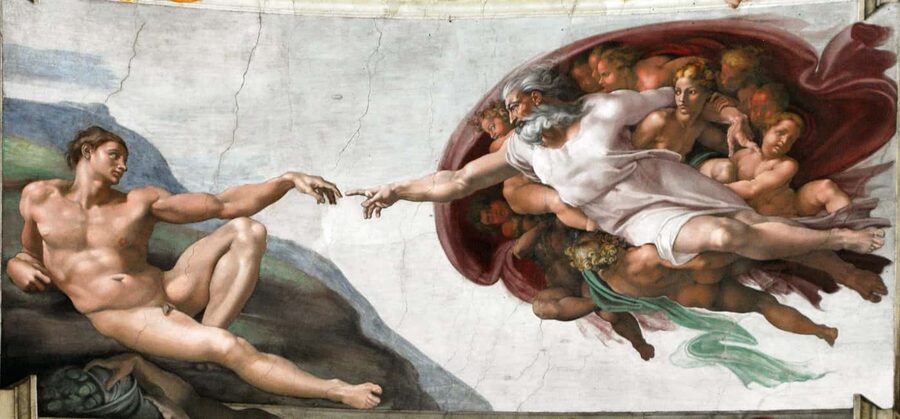
- Michelangelo’s Sistine Chapel ceiling: See nine Genesis scenes, from the Separation of Light from Darkness to the Drunkenness of Noah.
- Three hours inside: Once through security, you explore at your own pace rather than following a full guided tour.
- Priority ticket collection: Meet at Via Vespasiano 20, not at the museum entrance, then walk with the host to the entry.
- Several major Vatican rooms: The route includes the Raphael Rooms, Gallery of Maps, Pinacoteca Vaticana, and ancient sculptures.
- No St. Peter’s Basilica access: This ticket covers the Vatican Museums and Sistine Chapel only.
- Strict timing and dress rules: Be early, cover shoulders and knees, and bring a passport or accepted copy of your ID.
What this Vatican ticket really gives you
This is a ticket-and-host arrangement, not a traditional guided tour. You meet a host near the Vatican Museums, collect your entry ticket, pass through the security process, and then explore on your own.
That distinction matters. If you want a historian explaining every painting, this is not the right product. If you mainly want a smoother way into the museums and enough time to set your own pace, it can be a sensible choice.
The advertised duration is about three hours. That gives you enough time for a focused visit, though the Vatican Museums contain far more art than you can see in one sitting. I would plan to concentrate on the main route instead of trying to inspect every gallery.
The price is listed at $45.44 per person. I see the value mainly in the time saved and the simplicity of having a host point you toward the correct entrance. It is less appealing if you already know how to buy a standard museum ticket and are comfortable handling the arrival process yourself.
More Vatican Museums and Sistine Chapel entries:
- Vatican: Museums & Sistine Chapel Entrance Ticket
★ 4.5 · 144,003 reviews - Vatican Museums & Sistine Chapel Tour with Optional Basilica
★ 4.3 · 67,413 reviews - Vatican Museums, Sistine Chapel & St Peter’s Basilica Guided Tour
★ 4.5 · 39,149 reviews
Meeting at Via Vespasiano 20
Your visit begins at Via Vespasiano 20. Do not go directly to the museum entrance first. You need to collect the ticket at the meeting point, wait for the departure time, and then walk with the host toward the Vatican Museums.
Arrive at least 15 minutes early. This is not a casual suggestion. The instructions say that late arrivals lose their tickets, with no refund, change of time, or rescheduling. Rome traffic, crowded sidewalks, and trouble finding the right door can all eat into your buffer.
The meeting point is described as close to the Vatican entrance, which is useful once you know where to go. One practical note from the experience: a queue outside the museum may look alarming, but it can move quickly when the correct entry time arrives. Do not abandon the process just because you see a long line.
The host languages are English, French, Spanish, Italian, and German. The host’s role is mainly to organize entry and guide you to the museum door. After you get inside, you are free to continue independently.
Security comes before the art
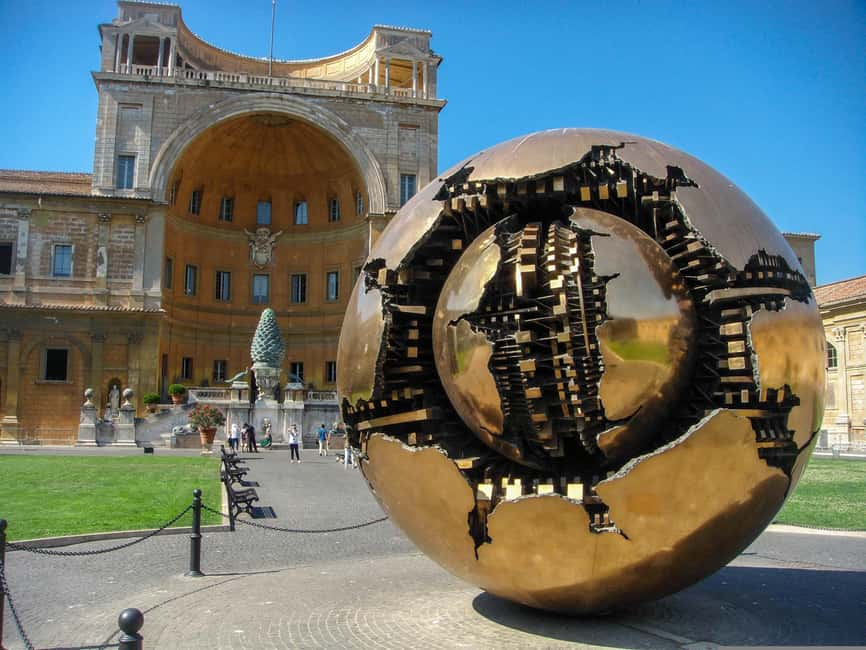
Priority entry does not mean walking straight into the galleries. You still pass through a security check before starting your visit.
Sharp objects, weapons, glass objects, drones, alcohol, drugs, and other prohibited items are not allowed. Smoking and vaping are also forbidden. Flash photography is not permitted, and you cannot touch the displays.
Wear comfortable shoes. Three hours on museum floors can feel longer than expected, especially if you stop often in the major rooms. The dress code is strict: no shorts, short skirts, sleeveless shirts, or tight clothing. Cover your shoulders and knees before you arrive so you do not face a problem at the entrance.
Bring a passport or ID card. A copy is accepted according to the activity information. Keep it easy to reach, since you may need it during the entry process.
The museum is wheelchair accessible. That makes this option workable for many visitors with mobility needs, though the information does not give details about a particular accessible route or equipment. If you need a specific arrangement, confirm it before booking.
The Raphael Rooms: art made for power
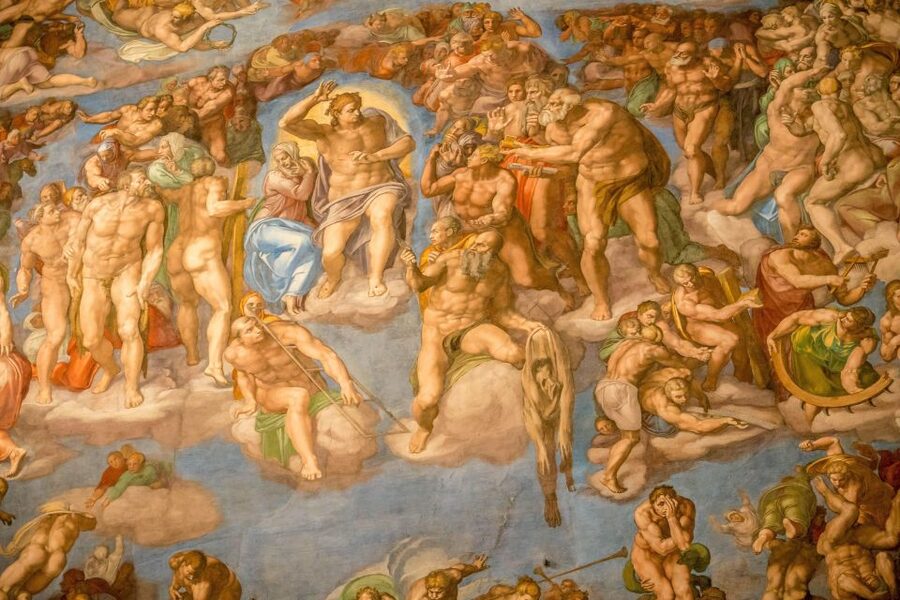
The Raphael Rooms are among the most rewarding stops on the Vatican route. These rooms were decorated for the papal apartments, and their paintings show how art, religion, and political power worked together in Renaissance Rome.
Raphael’s frescoes reward a slow look. You will see large scenes filled with figures, gestures, architecture, and carefully arranged groups. The famous School of Athens is part of this wider tradition of grand intellectual and religious painting, though the specific information for this activity highlights the Raphael Rooms as a whole rather than promising a particular guided stop.
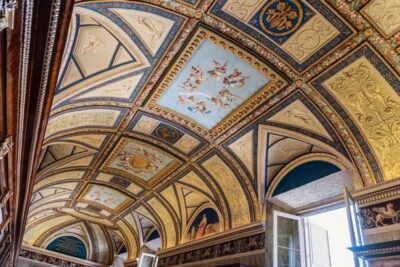
I like these rooms because they prepare you for the Sistine Chapel. You begin to see how Renaissance artists used walls and ceilings to tell complex stories. You also get a chance to look at paintings at eye level before the crowds and upward gaze of Michelangelo’s chapel take over.
Since there is no live guide or audio guide included, take your time with the details that catch your eye. Read any available museum labels, but do not try to turn every room into a history lesson. Pick a few scenes and look closely at how the figures are arranged.
More ways to visit the Vatican:
- Rome: Vatican Museums, Sistine Chapel & Basilica Tour
★ 4.3 · 13,872 reviews - Vatican Museums & Sistine Chapel Skip-the-Line Entry Ticket
★ 4.4 · 13,838 reviews - Rome: Vatican Museums, Sistine Chapel & Basilica Tour
★ 4.7 · 13,217 reviews - Skip-the-Line Group Tour of the Vatican, Sistine Chapel & St. Peter’s Basilica
★ 4.5 · 12,779 reviews
The Gallery of Maps and the Pinacoteca Vaticana
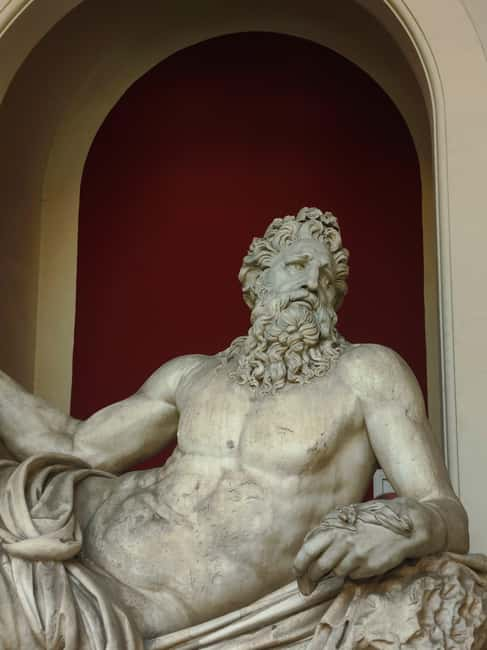
The Gallery of Maps is one of the Vatican Museums’ most memorable corridors. Its large painted maps turn geography into decoration, with a long sequence of regional views and ornate surroundings.
The appeal is partly visual scale. You can walk through the corridor and see how much effort went into presenting Italy as a place that could be measured, pictured, and controlled. Look up as well as forward. The ceiling is part of the experience, not just a frame for the maps.
The Pinacoteca Vaticana offers a different kind of visit. Instead of crowded wall-to-wall fresco programs, the picture gallery presents important paintings in a setting where individual works can receive more attention. The information provided does not list the individual works included in your route, so I would treat this as a valuable section to explore rather than plan around one specific painting.
This is where the self-guided format can work well. You can spend extra time in the gallery if painting is your main interest, then move on when your attention fades. A fixed guided tour would give you more explanation, but less control.
Ancient sculpture and the Belvedere Torso
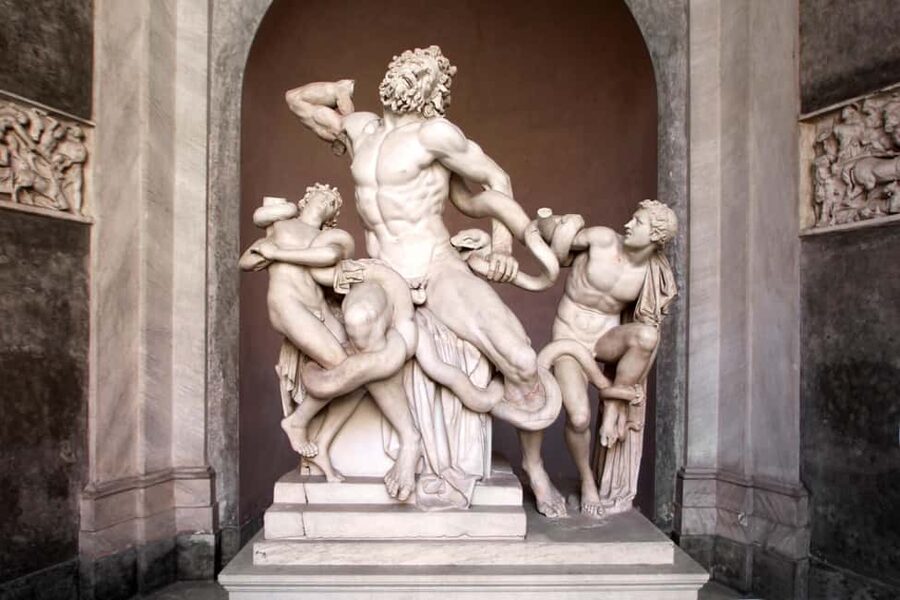
The route also brings you to famous ancient sculptures, including the Belvedere Apollo and the Belvedere Torso.
The Belvedere Apollo is admired for its idealized human form and poised movement. The Belvedere Torso is especially important for understanding Michelangelo’s artistic world. Its powerful, twisted body was highly valued by Michelangelo for its expressive force and helped shape the way he imagined the human figure.
You do not need to know every detail of ancient sculpture to enjoy these works. Notice the physical energy in the Torso. Even though it is incomplete, the body feels active and forceful. That unfinished quality is part of its impact.
These sculptures also give the visit a useful chronological range. You are not seeing only Renaissance paintings. You are moving among ancient Greek and Roman art, Renaissance sculpture, religious frescoes, and the Vatican’s picture collection.
The Sistine Chapel and Michelangelo’s Genesis scenes
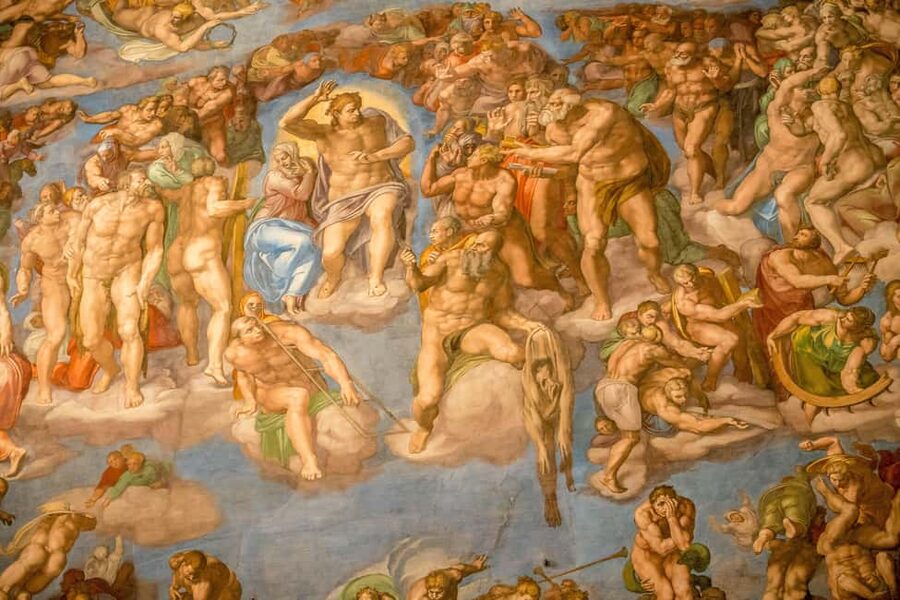
The Sistine Chapel is the point most people have in mind when they book this experience. The walls and ceiling are covered with frescoes, and the central ceiling panels present nine scenes from Genesis.
The sequence runs from the Separation of Light from Darkness to the Drunkenness of Noah. Michelangelo painted the ceiling over four years. The scale is hard to grasp from photographs. Look for the way the scenes are divided, the figures around them, and the sense of movement across the ceiling.
The chapel is not simply a single famous image. It is a complete visual program. The Creation of Adam is the scene most people seek, but it gains power when you look at the panels around it and follow the larger story.
Give yourself time to look up, but do not expect silence or a private atmosphere. The chapel is a major stop on a very popular museum route. The rules are especially important here: no flash photography, no touching, and no unnecessary noise. You should also follow the staff instructions on the day of your visit.
There is no live guide or audio guide included, so you will not receive a formal explanation inside. That can feel limiting if you want context. On the other hand, it lets you study the ceiling without having to keep up with a group.
What is not included: St. Peter’s Basilica
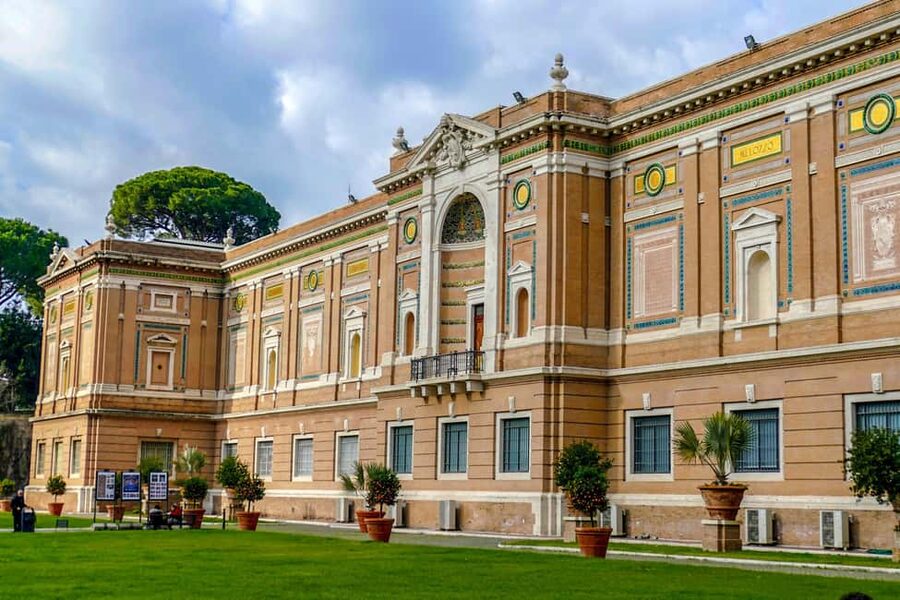
A common planning mistake is assuming that a Vatican Museums ticket also includes St. Peter’s Basilica. This one does not.
The museums and Sistine Chapel are separate from the basilica visit for planning purposes. If St. Peter’s Basilica is important to you, you need to arrange that separately and leave enough time in your Rome schedule. Do not count on this ticket to cover it.
The exclusion is not a small technical point. Many visitors picture the Vatican as one single attraction, but the museums, Sistine Chapel, and basilica have different access arrangements. Read the ticket details carefully before you book.
Self-guided freedom, limited explanation
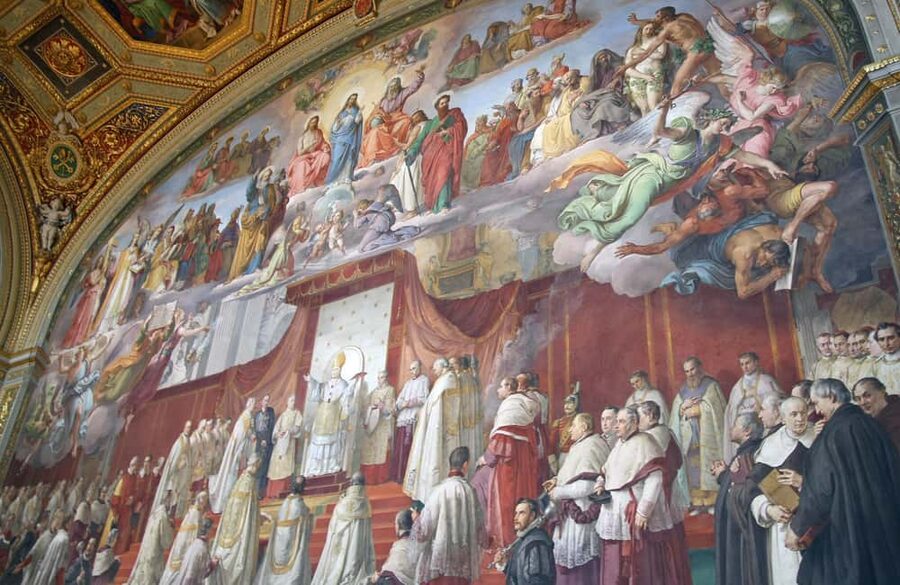
The best feature of this format is control. You can linger in the Raphael Rooms, move quickly through a crowded section, spend time with the ancient sculptures, or focus on the Sistine Chapel without a guide setting the pace.
The trade-off is context. No live guide and no audio guide are included. If you want to understand why a particular fresco matters or how the rooms fit together, you need to use the museum information or do some preparation before arrival.
The host service also deserves realistic expectations. Most of the value comes from getting you to the proper entry point, not from a long talk about Vatican art. One poorly organized visit involved confusion between queues and delayed entry, so I would stay alert and ask the host to confirm the correct line if anything seems unclear.
The overall rating is 4.4 from 143 reviews, which fits this mixed picture. The strongest praise centers on an easy meeting point and the relief of avoiding the standard ticket queue. The main criticism concerns organization at the entrance, not the art inside.
Who should book this experience?
I would consider this ticket for a first-time Rome visitor who wants the Vatican Museums and Sistine Chapel but does not need a full tour. It also suits independent museum-goers who prefer to stop when they want and avoid being led from room to room.
It is a practical choice during a busy Rome visit because the ticket handles the entry arrangement. The time savings can matter more than a small price difference when you have only a few days in the city.
Families may appreciate the freedom to move at their own speed, though the strict dress rules and three-hour museum visit require some planning. Art lovers who want detailed commentary should look for a guided tour or an option with an audio guide instead.
This ticket is less suitable if you dislike meeting-point logistics, expect door-to-door assistance, or want guaranteed entry at the exact minute shown. You must arrive early, find Via Vespasiano 20, collect the ticket, and follow the host through the entry process.
Practical advice for a smoother visit
Use this short checklist before leaving your hotel:
- Arrive at Via Vespasiano 20 at least 15 minutes early.
- Do not wait at the main museum entrance to collect your ticket.
- Wear shoes suitable for several hours of walking and standing.
- Cover shoulders and knees.
- Bring your passport, ID card, or an accepted copy.
- Leave sharp objects, drones, glass items, and prohibited substances behind.
- Keep your expectations clear: this is independent exploration, not a guided lecture.
- Plan St. Peter’s Basilica separately.
Once inside, resist the urge to rush straight to the Sistine Chapel. The Raphael Rooms, Gallery of Maps, Pinacoteca Vaticana, and ancient sculptures are major parts of the museum experience. The chapel may be the headline, but the earlier rooms give you a better sense of the Vatican’s art collection as a whole.
Should you book this Vatican priority-entry ticket?
Book it if you want a relatively simple way into the Vatican Museums and Sistine Chapel, value independent exploration, and can follow strict timing instructions. The price makes the most sense when avoiding a long ticket queue is important and your Rome schedule is tight.
Skip it if you want a detailed art-history tour, St. Peter’s Basilica included, or a relaxed arrival with no risk from late attendance. The entrance organization may not be perfect, so build in extra time and confirm the queue with the host.
For many independent visitors, this is a useful middle ground: more convenient than arranging everything alone, but less costly and less restrictive than a full guided tour. Just arrive early, dress correctly, and treat the ticket as priority access with a host, not as a private Vatican tour.
FAQ
Where do I meet the host?
Meet at Via Vespasiano 20 to collect your entry ticket. Do not go directly to the entrance of the Vatican Museums first.
How early should I arrive?
You should arrive at least 15 minutes before the departure time. Late arrivals lose their tickets, and the activity does not allow refunds, time changes, or rescheduling for late arrival.
How long does the experience last?
The stated duration is three hours. After entering, you explore the Vatican Museums and Sistine Chapel at your own pace.
Is St. Peter’s Basilica included?
No. The ticket includes entry to the Vatican Museums and Sistine Chapel, but St. Peter’s Basilica is not included.
Is a guide or audio guide included?
No. The activity includes a host or greeter for the meeting and entry process, but no live guide or audio guide inside the museums.
What languages are available from the host?
The host or greeter languages are English, French, Spanish, Italian, and German.
Do I need identification?
Yes. Bring a passport or ID card. A copy is accepted according to the activity information.
Is the Vatican Museums visit wheelchair accessible?
Yes. The activity is listed as wheelchair accessible. It is still sensible to confirm any specific access needs before booking.
More Museums in Rome
- Rome: Vatican Museums & Sistine Chapel Guided Tour
★ 4.3 · 12,117 reviews - Rome: Vatican Museums & Sistine Chapel Skip-The-Line Ticket
★ 4.2 · 11,708 reviews - Vatican Museums & Sistine Chapel Skip-the-Ticket-Line Tour
★ 4.3 · 10,486 reviews - Vatican Museums, Sistine Chapel & St Peter’s Basilica Tour
★ 4.6 · 10,222 reviews
Newest reviews from Rome
- ROME:Colosseum & Ancient Rome – private/small group TOUR★ 5.0 · 24 reviews
- Off the Beaten Track in Rome: Rione VI Parione Private Tour★ 5.0 · 24 reviews
- Cinematic Photoshoot in Rome★ 5.0 · 24 reviews
- Rome: Best of Colosseum and Roman Forum Small Group Guided Tour★ 4.5 · 24 reviews
- The Labyrinth of Rome between catacombs and ancient quarries★ 4.5 · 24 reviews
- Vatican and Trionfale Market Tour with Wine and Food Tasting★ 5.0 · 24 reviews
- private tour: Vatican Museums, Sistine Chapel, St. Peter’s Basilica★ 4.5 · 24 reviews
- Colosseum guided tour with Virtual Reality★ 5.0 · 24 reviews
Vatican Museums & Sistine Chapel, compared.
Vatican Museums & Sistine Chapel Tour with Optional Basilica
Read our review →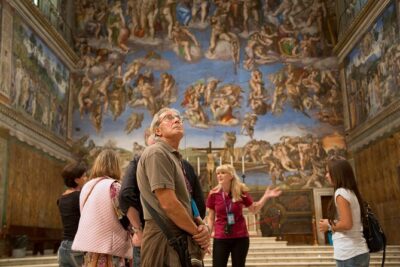
Vatican Museums, Sistine Chapel & St Peter’s Basilica Guided Tour
Read our review →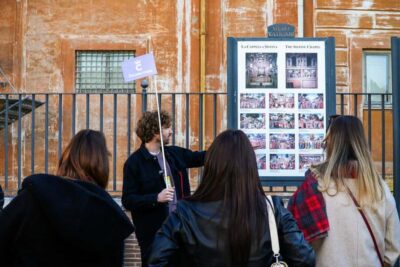
Vatican Museums, Sistine Chapel & Basilica Tour
Read our review →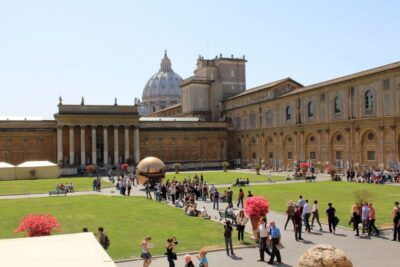
Vatican Museums & Sistine Chapel Skip-the-Line Entry Ticket
Read our review →Vatican Museums, Sistine Chapel & Basilica Tour
Read our review →
Skip-the-Line Group Tour of the Vatican, Sistine Chapel & St. Peter’s Basilica
Read our review →