
Reviewed · ROME VESPA TOURS
Vespa Tour – The Essence of Rome
Rome makes sense from a Vespa seat. In about three hours, you can cross from ancient ruins to Baroque fountains, the Colosseum, St. Peter’s Square, and lively Campo de’ Fiori without spending the day walking between them. I like the wide sweep of sights and the chance to see Rome the local way. I also like that guides such as Marco, Vittorio, Ricardo, and Alexander add stories, photo stops, and a personal touch.
The catch is plain: Rome traffic is not gentle. You need strong scooter skills, confidence on narrow streets, and a valid B driver’s license. This is also a sightseeing ride, not an interior tour, so you will view most monuments from outside and need separate time for the Colosseum, Roman Forum, Pantheon, or Vatican Museums.
In This Review
- Five things to know before you book
- A fast, fun introduction to Rome
- Starting at Largo Argentina
- The Roman Forum and Colosseum from the street
- Circus Maximus and the quieter ancient views
- Piazza Venezia and the monument-filled center
- Trevi Fountain and the Spanish Steps
- The Pantheon and Piazza Navona
- Castel Sant’Angelo and St. Peter’s Square
- Ending at Campo de’ Fiori
- What the $137.80 price really buys
- Who should ride, and who should skip it
- Guides, pace, and practical preparation
- Should you book the Essence of Rome Vespa Tour?
- FAQ
- How long is the Vespa tour?
- What is included in the price?
- Can I ride alone or share a scooter?
- What license do I need?
- Is the tour private?
- Is hotel pickup included?
Five things to know before you book
- You cover a huge slice of central Rome in three hours, from Largo Argentina and the Roman Forum to St. Peter’s Square and Campo de’ Fiori.
- You ride a Vespa with a helmet and fuel included, choosing one or two riders per scooter.
- The tour is private, with only your own group taking part, up to 10 people per booking.
- Traffic experience matters, especially on small streets and around major sights.
- Guides make the difference, with Marco, Vittorio, Ricardo, and Alexander praised for history, humor, photos, and flexible pacing.
- The $137.80 price buys transport and a guide, but not entry tickets, food, drinks, or hotel transfers.
A fast, fun introduction to Rome
This tour works best as a first look at the city. You get the basic Roman story, see the main monuments, and learn which places deserve a longer visit later.
The route is packed. Most stops last 10 to 15 minutes, enough for an explanation, a few photos, and a quick look around. That pace is a strength if you have only a few days in Rome. It is a weakness if you want to linger, enter every church, or study ancient ruins at length.
I like the way the ride links different versions of Rome. The route moves from Republican and Imperial ruins to Renaissance and Baroque squares, then to the modern city around St. Peter’s and Campo de’ Fiori. You are not simply checking off monuments. You are seeing how Rome’s eras sit on top of one another.
The guides also seem to shape the experience. Marco is noted for moving at a careful pace and stopping to wait when needed. Vittorio is described as lively and engaging, while Ricardo combines guiding with running the scooter shop. Alexander can guide in English and German and has adjusted the route for people who already knew Rome well.
More Vespa days in Rome:
- Vespa Sidecar Tour By Night with Pickup
★ 5.0 · 1,803 reviews - Rome Morning Vespa Sidecar Tour in Rome with Cappuccino
★ 5.0 · 1,771 reviews - Rome Vespa Scooter Tour with Professional Photographer
★ 5.0 · 857 reviews
Starting at Largo Argentina
The ride begins with Vespa pickup, helmets, and a meeting with your guide. The information gives the start point as BigaBike, Via di San Calisto 9, while the first stop names Vicolo di San Nicola dè Cesarini 4 near Area Sacra di Largo Argentina. Check your confirmation carefully so you go to the correct place.
Largo Argentina is a strong opening because it throws you straight into ancient Rome. The sunken archaeological area contains temple ruins and is also linked with the Curia of Pompey, the place traditionally associated with Julius Caesar’s assassination. The stop is brief, so expect an orientation rather than a full archaeological visit.
This is where the Vespa format begins to pay off. Rome’s center can feel scattered on foot. From the scooter, the gaps between major sights shrink, and you can connect them without spending your first morning studying a transit map.
The Roman Forum and Colosseum from the street
At the Roman Forum, your guide explains the major ruins that once formed the political and civic heart of ancient Rome. You will not enter as part of this tour, and admission is not included. Still, a street-side explanation can help you understand what you see when you return for a longer visit.
The Colosseum gets another short stop. Your guide covers the Flavian Amphitheatre, its role in Imperial Rome, and the nearby Arch of Constantine. The contrast between a 10-minute explanation and a full Colosseum visit is important: this ride gives you the story and the exterior, but not the underground levels, arena floor, or interior galleries.
I would use this stop to mark future priorities. If the Colosseum is high on your list, book separate admission and allow much more time. The Vespa tour is best for getting your bearings and seeing the monument without giving up the rest of the day.
Circus Maximus and the quieter ancient views
Circus Maximus offers a different feel. This huge former chariot-racing stadium sits between the Aventine and Palatine areas, with a view toward Palatine Hill, one of Rome’s Seven Hills.
There is no ticket charge for the stop, and the visit is short. You will not get a full archaeological walk, but the scale of the former racetrack is easier to grasp when you pause at the site. It also gives the ride a little breathing room after the Colosseum.
The route also includes the area around the medieval bell tower associated with the Basilica of San Giorgio in Velabro. Nearby are the Mouth of Truth, the Temple of Hercules Victor, and the Temple of Portunus. The details provided do not assign this section a stop number, so treat it as part of the passing route and confirm the exact pause with your guide.
More Rome tours worth comparing
- Rome: Highlights Vespa Sidecar Tour with Coffee and Gelato
★ 4.9 · 747 reviews - Rome Afternoon Sightseeing Vespa Sidecar Tour with Gourmet Gelato
★ 5.0 · 692 reviews - Rome Vespa Tour with Professional Photoshoot
★ 5.0 · 576 reviews - Vespa Sidecar Tour In Rome with Pickup, Drop-off, Gelato included
★ 5.0 · 472 reviews
Piazza Venezia and the monument-filled center
Piazza Venezia is a compact lesson in Rome’s public face. Your guide points out Trajan’s Column, the Vittoriano Monument, the Altare della Patria, Capitoline Hill, the Church of Saint Mark, and Palazzo Venezia.
The giant white Vittoriano is hard to miss. It houses Italy’s Tomb of the Unknown Soldier and gives the square its bold modern presence. Trajan’s Column, by contrast, is an ancient carved record of military campaigns. In a few minutes, you get a useful contrast between Imperial Rome, Renaissance power, and modern Italian national identity.
This is another outside-only stop. That is fine for a first pass, but do not expect time to climb the monument, visit Capitoline Museums, or study Trajan’s reliefs closely.
Trevi Fountain and the Spanish Steps
The Trevi Fountain gets 15 minutes, a sensible amount of time for a quick look and photographs. Your guide explains the Baroque fountain and its place in Rome’s tradition. You can toss a coin over your shoulder if you want the classic promise of a return to Rome.
The fountain is one of the busiest points on this route, so keep your group together and watch your belongings. You will not have a quiet, private view. The value here is seeing Trevi as part of the city rather than making a separate trek to it.
At the Spanish Steps, you get another 15-minute stop. Look for the Scalinata di Trinità dei Monti, the church above it, Bernini’s Barcaccia Fountain below, and the Column of the Immaculate Conception. The steps are a good example of Rome’s theatrical use of height, water, stone, and open space.
Do not plan on a long rest here. The schedule moves quickly, and the guide still has several major sights to cover. You will have enough time to take in the setting, not enough to browse the surrounding streets at leisure.
The Pantheon and Piazza Navona
The Pantheon receives a 10-minute explanation covering its history and architecture. Its famous dome and central opening make it one of Rome’s clearest examples of ancient engineering adapted for later religious use.
The tour data describes a full historical and architectural explanation, but it does not include an admission ticket. Confirm entry arrangements if you want to go inside. For many people, the exterior and a good explanation are enough for this first circuit, followed by a separate visit when they can take their time.
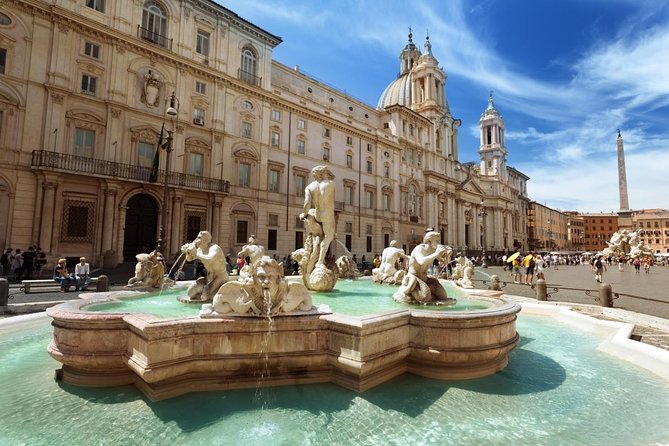
Piazza Navona gets 15 minutes and offers a generous change of pace. The long piazza follows the shape of an ancient stadium, while the Fountain of the Four Rivers provides its grand center. You will also see Sant’Agnese in Agone, the Fountain of Neptune, and the Moor Fountain.
I like this section because it shows Rome as a place for daily life, not only ancient monuments. You can walk a little with your guide, hear how the square developed, and take in the mix of churches, fountains, façades, and street activity.
Castel Sant’Angelo and St. Peter’s Square
Castel Sant’Angelo is viewed from outside. Originally built as the Mausoleum of Hadrian, the massive cylindrical structure later became a fortress and papal refuge. The short stop also takes in Ponte Sant’Angelo, whose angel sculptures line the bridge.
The bridge is especially effective from a moving route because the statues and castle form one clear visual scene. You will not enter the castle, so return later if you want the interior rooms and upper views.
St. Peter’s Square receives 15 minutes. Your guide explains St. Peter’s Basilica, the central obelisk, and Bernini’s sweeping colonnades. This is one of the tour’s most useful orientation stops, since the square can feel enormous when you first arrive.
Again, there is no Vatican entry included here. The guide can give you the setting and context, but you need a separate plan for the basilica or Vatican Museums. Dress rules for religious sites may also be stricter than the tour’s smart-casual dress code, so check current requirements if you intend to continue inside afterward.
Ending at Campo de’ Fiori
The final stop is Campo de’ Fiori, where you can stroll through the daily market. It is a fitting finish because the square feels more lived-in than the monumental sites earlier in the route.
You may find food and produce stalls, but food and drinks are not included in the tour. The schedule gives you 15 minutes, so think of this as a short walk and final taste of central Roman street life rather than a market visit with time for a full lunch.
The activity ends back at the meeting point. That makes planning easier, especially if you leave bags or have another appointment nearby, but hotel pickup and drop-off are not included.
What the $137.80 price really buys
At $137.80 per person, this is not a budget sightseeing ride. You are paying for the Vespa, helmet, fuel, and a professional guide, plus the ability to cover a large area without arranging several taxis or public transport connections.
The value is strongest if you have limited time, enjoy two-wheel travel, and want a personal route through Rome. It is also useful at the beginning of a longer stay, when the ride helps you decide where to spend your walking time later.
The value drops if you mainly want interior visits. Admission to the Roman Forum, Colosseum, Pantheon, Castel Sant’Angelo, or other attractions is not included, and the tour does not provide food, drinks, or hotel transport. You could spend less on a walking route if your main goal is detailed access to one or two monuments.
Since the activity is private, your group controls the feel of the ride more than on a large coach tour. The maximum is 10 people per booking, and only your group participates. That is useful for families of adults or friends who want to ask questions and keep the pace together.
Who should ride, and who should skip it
You should book this if you already ride scooters confidently in city traffic. The operator requires a B driver’s license, and US citizens need an International Driver’s Permit. The minimum age is 21.
The driving requirement is not a minor note. Rome’s streets can be narrow, traffic can feel intimidating, and maneuvering takes real attention. One rider can drive, or you can choose two riders per scooter, but everyone should be clear about who is comfortable handling the Vespa.
This is a good match for adults who want movement, views, and stories rather than long indoor visits. It also suits repeat visitors. Alexander has adapted the ride for people who already knew Rome, showing them different corners and responding to their wishes.
I would skip it if you dislike scooters, feel uneasy around traffic, or want a slow archaeological day. You should also skip it if your main goal is a serious visit to the Colosseum or Vatican. The ride gives you an excellent framework, not a replacement for those visits.
Guides, pace, and practical preparation
Guide quality matters on a route this full. Marco is described as riding slowly enough for the group to keep up and pulling over when needed. Vittorio brings energy and humor, while Ricardo is both a friendly host and the shop owner. Alexander has guided in both English and German.
Those details point to the kind of service you can expect: stories while riding, short explanations at each landmark, photo opportunities, and some flexibility in the group’s pace. Still, three hours leaves little room for major delays, so follow the guide closely and arrive ready to ride.
Wear smart-casual clothing and practical shoes. Helmets and fuel are included, but you should still dress for sitting on a scooter and walking briefly at each stop. Confirmation arrives when you book, and free cancellation is available up to 24 hours before the start time. After that point, the payment is not refunded, and late changes are not accepted.
Should you book the Essence of Rome Vespa Tour?
Book it if you want a lively overview of Rome, have solid scooter experience, and are happy to see major sights from outside. The route covers an impressive amount of ground, and the private format lets the guide keep the ride personal.
Do not book it as your only plan for Rome’s interiors. Pair it with separate visits to the Colosseum, Roman Forum, Pantheon, Castel Sant’Angelo, St. Peter’s Basilica, or Vatican Museums if those places matter to you.
For the right rider, $137.80 buys more than transport. It buys time, orientation, and a taste of Rome’s everyday motion. Just remember that the Vespa is part of the adventure, not a sightseeing bus with two wheels.
FAQ
How long is the Vespa tour?
The tour lasts approximately three hours.
What is included in the price?
The price includes use of a Vespa, helmets, fuel, and a professional guide.
Can I ride alone or share a scooter?
You can choose to ride one or two people per scooter.
What license do I need?
A B driver’s license is required. US citizens need an International Driver’s Permit.
Is the tour private?
Yes. Only your own group participates, with a maximum of 10 people per booking.
Is hotel pickup included?
No. Hotel pickup and drop-off are not included. The activity ends back at the meeting point.
More Motorbike & Scooter Rentals in Rome
- Rome by Vespa: Classic Rome Tour with Pick up
★ 5.0 · 321 reviews - Rome by Vespa – Live the City Like a Local
★ 5.0 · 297 reviews - Rome: Vespa Tour with Pro Photoshoot
★ 5.0 · 276 reviews - Rome by Vespa – with Francesco: the Best Guided Vespa Tour
★ 5.0 · 254 reviews
Newest reviews from Rome
- ROME:Colosseum & Ancient Rome – private/small group TOUR★ 5.0 · 24 reviews
- Off the Beaten Track in Rome: Rione VI Parione Private Tour★ 5.0 · 24 reviews
- Cinematic Photoshoot in Rome★ 5.0 · 24 reviews
- Rome: Best of Colosseum and Roman Forum Small Group Guided Tour★ 4.5 · 24 reviews
- The Labyrinth of Rome between catacombs and ancient quarries★ 4.5 · 24 reviews
- Vatican and Trionfale Market Tour with Wine and Food Tasting★ 5.0 · 24 reviews
- private tour: Vatican Museums, Sistine Chapel, St. Peter’s Basilica★ 4.5 · 24 reviews
- Colosseum guided tour with Virtual Reality★ 5.0 · 24 reviews
Rome Vespa Tours, compared.
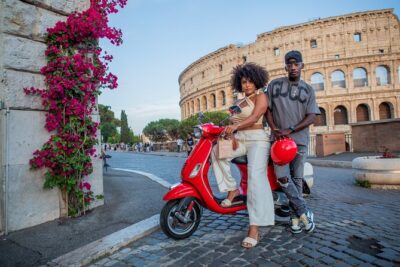
Rome Vespa Scooter Tour with Professional Photographer
Read our review →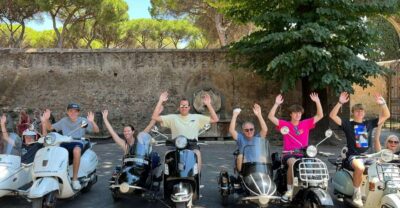
Highlights Vespa Sidecar Tour with Coffee and Gelato
Read our review →
Rome Afternoon Sightseeing Vespa Sidecar Tour with Gourmet Gelato
Read our review →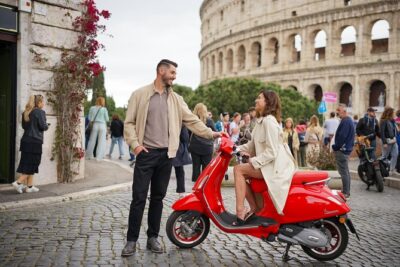
Vespa Sidecar Tour In Rome with Pickup, Drop-off, Gelato included
Read our review →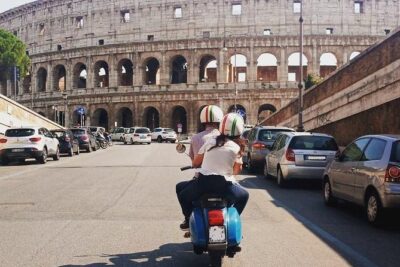
Browse the lists this tour appears in