
Reviewed · CATACOMBS & CRYPTS
Appian Way Aqueducts Bike Tour (Catacombs & Lunch Option)
Rome’s best outdoor history lesson may be a bicycle ride. This tour leaves the Colosseum area, slips through the Aurelian Walls, and reaches the Appian Way, where ancient stones, fields, goats, tombs, and towering aqueducts replace Rome’s noisy center.
I like the fresh-air escape and the way an electric bike turns a long route into a realistic half-day outing. I also like the small groups, capped at 12, and guides such as Ava, Alex, Chris, Iman, and Paolo, who combine route management with lively Roman history. The catch is simple: you must already ride a bike well. The route includes traffic, rough cobbles, dirt trails, short hills, and several hours in the saddle.
In This Review
- Key things to know before you book
- Why this bike ride reveals a different Rome
- Porta San Sebastiano and the first city escape
- Caffarella Park, where ruins meet everyday Rome
- The Appian Way, Rome’s original long-distance road
- The Fountain of Egeria and the Cecilia Metella tomb
- The five-hour option: San Callisto and lunch
- Aqueduct Park, the visual high point
- Circus of Maxentius and the return to central Rome
- What the e-bikes can and cannot do
- Guides and group size make a real difference
- Price, timing, and who gets good value
- Should you book the Appian Way e-bike tour?
- FAQ
- Where does the Appian Way e-bike tour start and finish?
- How long does the tour last?
- Are the Catacombs of San Callisto included?
- Is lunch included?
- Do I need to be an experienced cyclist?
- Are bikes and helmets provided?
Key things to know before you book
- The Appian Way is rough under your wheels: Expect large ancient paving stones, deep gaps, dirt paths, and uneven trails.
- The five-hour option adds the catacombs and food: San Callisto is included only on the longer tour, along with lunch or an afternoon aperitif.
- Electric assistance helps, but it does not remove the effort: Your legs still work, and the bike seat can become uncomfortable.
- You see Rome beyond the standard circuit: The ride includes Caffarella Park, Cecilia Metella’s mausoleum, aqueducts, the Circus of Maxentius, and the Baths of Caracalla.
- Traffic is part of the opening act: The group rides from the shop near the Colosseum through city streets before reaching quieter paths.
- Families can join with limits: Child seats are available up to 25 kilograms, while children ages 6 to 10 must be under 143 centimeters and use a trailer bike rather than a solo bicycle.
Why this bike ride reveals a different Rome
The appeal is not speed. It is reach. In four to five hours, you can connect several sites that are scattered across southern Rome and difficult to visit efficiently on foot.
You begin at Roma STARBIKE on Via dei SS. Quattro, a short distance from the Colosseum. After a helmet fitting and a quick adjustment to your high-quality e-bike, you follow your guide through the city. That first stretch requires attention, since Rome traffic can be busy and the group must stay together.
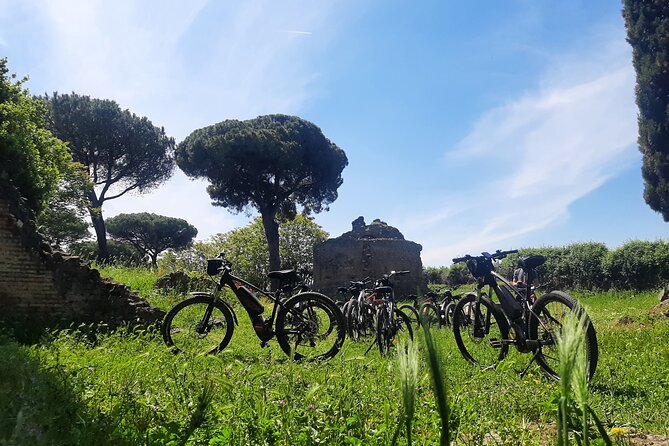
Once you pass through Porta San Sebastiano, the mood changes quickly. The Aurelian Walls give way to open parkland, old roads, trees, and Roman ruins. The ride is not a museum tour with a bicycle parked outside. You are moving through the setting itself, stopping often enough for your guide to explain what you are seeing and to allow photographs.
The e-bikes include electric assistance and suspension, which matter on the uneven Appian stones. They make hills and heat more manageable, but you should not confuse assistance with effortless travel. You still pedal, steer, brake, and balance for much of the day.
More catacomb and crypt visits from Rome:
- Rome: Crypts and Catacombs Underground Tour with Transfers
★ 4.6 · 5,341 reviews - The Original Roman Crypts and Catacombs Tour with Transfers
★ 4.5 · 4,896 reviews - Rome: Catacombs of St. Callixtus Entry Ticket & Guided Tour
★ 4.6 · 3,037 reviews
Porta San Sebastiano and the first city escape
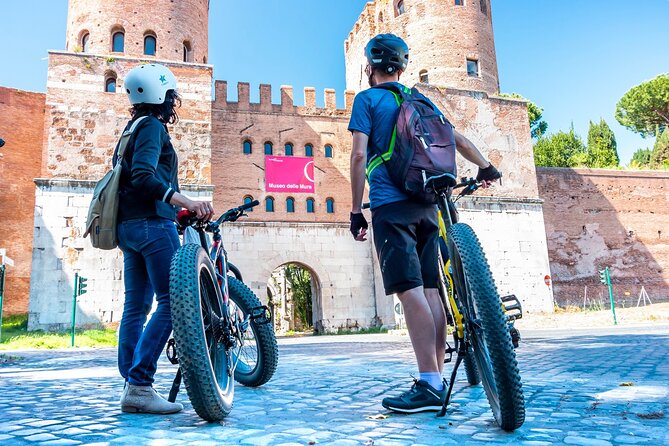
Porta San Sebastiano is a strong opening stop. Built into the Aurelian Walls around 275 AD, this southern gateway marked the route toward the ancient Via Appia Antica.
Allow about 15 minutes here. Your guide may point out medieval graffiti left by pilgrims passing through over the centuries. That small detail helps you see the gate not just as military architecture, but as a working passage used by people long after imperial Rome had faded.
The route to the gate is also where you get your first taste of the ride’s practical challenge. You are not teleported from the bike shop to the countryside. You must handle Rome’s streets first. Guides such as Alex, Ava, and Chris have been praised for giving clear instructions, checking on riders, and keeping groups calm in traffic.
If you feel nervous at the start, take it slowly and listen closely. The opening streets are the least relaxing part of the route, but they are manageable for a confident cyclist.
Caffarella Park, where ruins meet everyday Rome
Parco della Caffarella is one of the pleasures of this experience. It is a broad green area within the Appia Antica Regional Park, with paths, groves, old structures, and open views.
This is where you begin to understand the scale of Rome beyond its famous center. The park does not present history in a neat row of ticketed monuments. Ancient remains appear among grass and trees, and the setting feels more open and local than the Colosseum district.
The roughly 50-minute stop gives you time to ride rather than simply pause. You might see farm animals and other signs of ordinary countryside, a striking contrast to the packed piazzas around the central sights. The ride also gives your guide room to explain how the land around the Appian Way developed over centuries.
The paths can be uneven. A rider who has not been on a bicycle for years may find the combination of rough ground and constant steering tiring. The electric motor helps on inclines, but it does not solve balance or saddle discomfort.
The Appian Way, Rome’s original long-distance road
The Via Appia Antica was known to Romans as Regina Viarum, or queen of roads. Construction began in the fourth century BC under the censor Appius Claudius, first linking Rome with Capua and later reaching Brindisi, the major port in southern Italy.
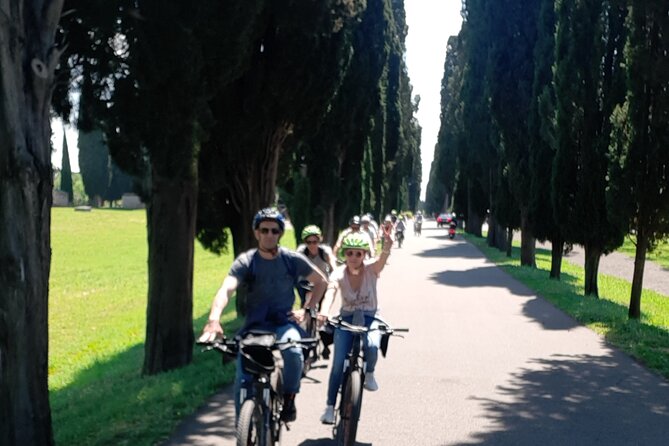
You ride a section of this ancient route for about 50 minutes. It is one of the tour’s most memorable parts because the road itself is the exhibit. The large basalt paving stones are impressive, but they are not smooth. Some stones are larger than dinner plates, and gaps between them can force quick decisions about where to place your wheels.
At times you can use dirt beside the stones. At other points, you must ride over the cobbles. The e-bikes have suspension, which softens the bumps, yet you should expect a sore backside by the end. Wear comfortable clothing, keep both hands ready on the handlebars, and do not rush to match the fastest rider.
Your guide’s role matters greatly here. Iman has been praised for clear cycling instructions and careful attention to riders’ physical condition. Chris and Alex have also been singled out for making stops, answering questions, and connecting the road to Roman and medieval life. The strongest part of the experience is often the mix of safe group riding and stories that give meaning to the stones beneath you.
More Appian Way days out:
- Rome EBike Tour: Appian Way, Catacombs & Roman Aqueducts
★ 5.0 · 1,766 reviews - Rome: Appian Way, Catacombs, & Roman Aqueducts E-bike Tour
★ 4.9 · 1,421 reviews - Rome:Appian Way E-bike Tour with Catacombs, Aqueducts & Food
★ 4.9 · 1,210 reviews - Rome Underground: Catacombs Tour, Aqueducts and Appian Way
★ 5.0 · 1,007 reviews
The Fountain of Egeria and the Cecilia Metella tomb
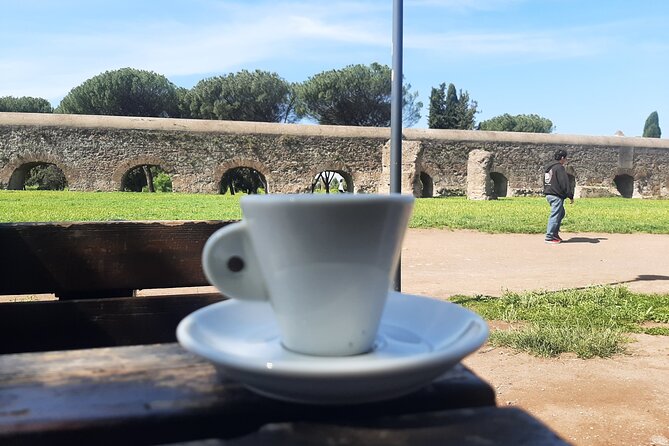
The Ninfeo di Egeria is a short, 20-minute stop tied to one of Rome’s oldest legends. Egeria was a nymph associated with Numa Pompilius, Rome’s second king. According to the story, her grief after his death produced a spring.
The site adds a welcome pause from military roads and imperial engineering. It also shows how Roman places gathered layers of myth, religion, and landscape over time. The stop is brief, so think of it as a small atmospheric break rather than a major archaeological visit.
Next comes the Mausoleo di Cecilia Metella, with about 20 minutes to look around. This first-century BC pagan tomb is one of the best-preserved monuments along the Appian Way. It was later incorporated into the medieval Castrum Caetani, where you can also see remains of the Caetani family complex and the perimeter walls of San Nicola church.
This stop makes the Appian Way feel like more than a road lined with ruins. Tombs and villas once announced wealth and status to anyone arriving in Rome. Later families reused and fortified the same structures. Your guide can help connect those separate eras instead of treating each ruin as an isolated photo stop.
The five-hour option: San Callisto and lunch
The longer tour adds the Catacombs of San Callisto, with a guided visit lasting about 50 minutes. The complex is described as the largest underground cemetery in Rome, with corridors extending for roughly 20 kilometers. It contains the burial places of more than 50 martyrs and 16 popes, along with the remains of many early Christians.
The catacombs change the pace and mood of the day. Above ground, you have open parks and wide Roman views. Below ground, you follow narrow corridors through a funerary site connected to the early Church of Rome.
This is an important choice when booking. The catacombs are included only in the five-hour version, not the four-hour ride. If underground religious history interests you, the extra hour is worthwhile. If you mainly want fresh air and cycling, the shorter option may suit you better.
The extended version also includes food. The tour information describes lunch in the morning version and an aperitif in the afternoon version. The meal is presented as a boxed lunch in one description, while the detailed route describes a simple sit-down restaurant meal, so check the exact departure option when booking if the food arrangement matters to you.
The timing is useful because the five-hour route is a substantial outing. Having lunch or an aperitif built in means you do not need to arrange a separate meal during the ride. Still, carry water and a small snack if you need regular fuel, since the ride can last several hours before the food stop.
Aqueduct Park, the visual high point
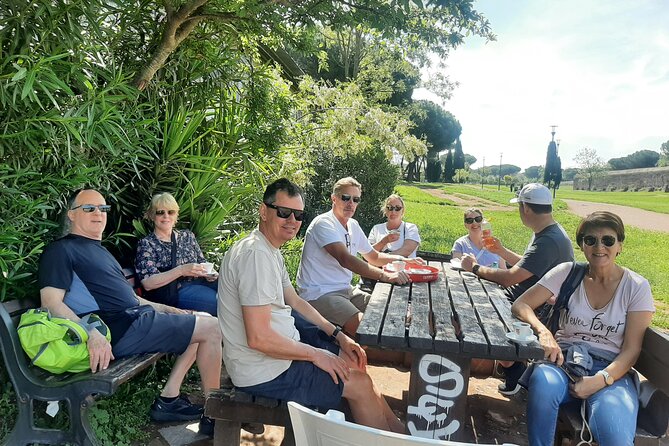
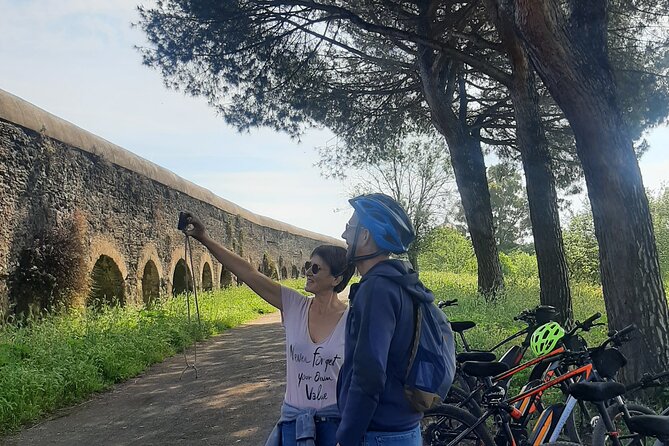
Parco degli Acquedotti is likely to be the tour’s most striking setting. Here, huge Roman aqueducts cross open green space, making the scale of ancient water engineering easy to grasp.
You spend about 20 minutes riding through this area after the food stop on the longer route. The remains of the Claudian aqueduct are especially impressive, and some parts are remarkably well preserved. The park was also crossed by the ancient Via Latina, one of Rome’s oldest roads.
The aqueducts explain why this tour offers something different from a standard ancient-Rome walk. You are not looking up at one isolated structure from a city street. You see the long lines of masonry set across open ground, where the engineering problem becomes visible: water had to travel over distance and maintain a steady fall toward the city.
Some aqueducts in the area are still in operation, another useful reminder that Roman infrastructure was not simply abandoned at the end of the empire. The combination of open space, quiet paths, and monumental arches makes this section especially good for photographs.
Circus of Maxentius and the return to central Rome
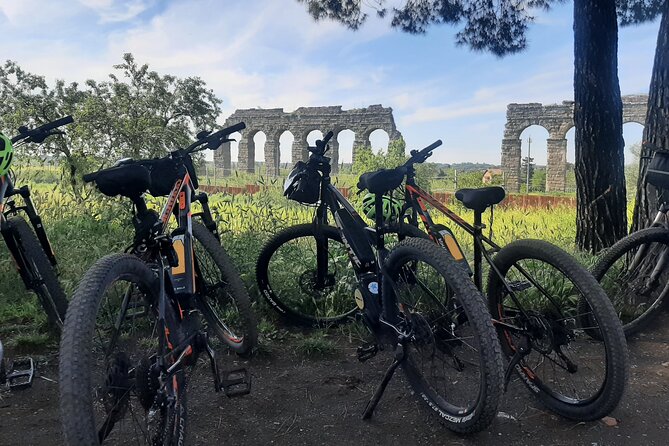
The Circus of Maxentius sits on the Appian Way and is one of the best surviving examples of a Roman circus. The route takes about 20 minutes here.
The central dividing barrier, called the spina, is still visible. It once held an obelisk that was later moved to Piazza Navona, where it forms part of the Fountain of the Four Rivers. That connection gives you a satisfying link between a quiet archaeological site and one of central Rome’s most famous squares.
The return ride brings you back toward the ancient walls and the city center. You pass the Baths of Caracalla, another major Roman complex, for about 15 minutes. Built under Emperor Caracalla, the baths were the largest public bathing complex in the Roman world for about a century.
The remains still show the enormous scale of Roman public life. Water reached the baths through a branch of the Aqua Marcia, carried by the Antoninian aqueduct. At Porta San Sebastiano, you can also see small remains associated with the water system.
The ride ends back at the original bike shop, where you return the e-bike and helmet. That is convenient, especially if you are staying near the Colosseum or have plans in central Rome afterward.
What the e-bikes can and cannot do
The included equipment keeps the logistics easy. You receive an e-bike, helmet, phone holder, handlebar holder, and child seat when needed. The stated maximum rider weight is 120 kilograms, or 265 pounds.
The electric motor is most useful on short hills and during warm weather. It also helps make the longer route possible for a reasonably fit cyclist who does not want a hard athletic workout. Some riders find the bikes a little clunky, but effective.
The bike does not eliminate the main physical demands. You still need to:
- Ride confidently through city traffic
- Brake and steer on uneven cobbles
- Handle dirt paths and short hills
- Stay alert around other cyclists
- Remain seated and active for several hours
The seats can become uncomfortable, particularly for older or occasional cyclists. Suspension helps with the rough ground, but it cannot turn the Appian Way into a smooth cycle path.
A child seat is available for children up to 25 kilograms. Children ages 6 to 10 qualify for the child rate only if they are under 143 centimeters tall, because they use a trailer bike rather than riding a bicycle alone. Ask yourself honestly if the child can manage a long, uneven ride before choosing this activity.
Guides and group size make a real difference
The maximum group size is 12, small enough for a guide to keep track of riders and make regular stops. That matters on roads and trails where the surface changes quickly.
Guide quality is central to the experience. Ava has been praised for being attentive and accommodating, while Alex has been noted for patience, humor, safety checks, and storytelling. Chris brings strong historical explanations and a relaxed pace. Iman is an experienced cyclist and historian who is especially careful about group welfare. Paolo has been described as friendly, entertaining, and quick to help after a fall.
You cannot select a particular guide from the information provided, but these names give you a sense of the team’s strengths. The best guides do more than point at ruins. They explain why the Appian Way mattered, how aqueducts worked, and how Rome’s defensive walls, roads, tombs, churches, and parks fit together.
Price, timing, and who gets good value
At $78.60 per person, the price is reasonable if you use the full five-hour version. The fee covers the e-bike, helmet, guided route, child seat when needed, and the catacomb visit, lunch, or aperitif on the extended option.
You are paying for access to a large area that would be awkward to cover by public transportation and walking in one morning. The ride links the Appian Way, Caffarella Park, San Callisto, aqueducts, Maxentius’s circus, and the Baths of Caracalla without requiring you to plan each transfer.
The four-hour option offers better value for people focused on scenery and ruins. Choose five hours if the catacombs and included food are important to you. The experience is often booked well ahead, around 38 days in advance on average, so reserve early if your Rome dates are fixed.
The tour is offered in English and uses a mobile ticket. Confirmation arrives at booking, and the activity starts and ends at Roma STARBIKE near the Colosseum. You need moderate physical fitness and must know how to ride a bike well.
Free cancellation is available up to 24 hours before the start time for a full refund. Poor weather can lead to a different date or a full refund, since the ride depends on safe outdoor conditions.
Should you book the Appian Way e-bike tour?
Book it if you want Roman history with movement, open air, and a break from the crowded center. It is particularly good for active couples, families with capable older children, and anyone who wants to see aqueducts and ancient roads in their actual setting.
Choose the five-hour version if you want San Callisto and the meal or aperitif. Choose four hours if you are unsure about your stamina or mainly want the parks, Appian Way, and aqueducts.
Skip it if you dislike cycling, have not ridden for years, or expect a smooth and effortless e-bike outing. The rough stones are part of the experience, not a minor footnote.
For a confident cyclist, this is one of the most useful ways to connect Rome’s scattered southern ruins. You get exercise, open scenery, strong guides, and a close look at the ancient infrastructure that made the city possible.
FAQ
Where does the Appian Way e-bike tour start and finish?
It starts and ends at Roma STARBIKE, Via dei SS. Quattro, 58, near the Colosseum in central Rome.
How long does the tour last?
The tour lasts approximately four to five hours. The five-hour version includes the catacombs and food, while the four-hour version does not.
Are the Catacombs of San Callisto included?
The guided visit to the Catacombs of San Callisto is included only in the five-hour tour.
Is lunch included?
Lunch is included in the five-hour morning version. The five-hour afternoon version includes an aperitif instead. Food is not included in the four-hour version.
Do I need to be an experienced cyclist?
You must know how to ride a bike well. The route includes city traffic, cobblestones, dirt paths, short hills, and uneven terrain, and participants should have moderate physical fitness.
Are bikes and helmets provided?
Yes. The tour includes a high-quality e-bike and helmet, plus a phone holder and handlebar holder. A child seat is available for children up to 25 kilograms.
More Lunch Experiences in Rome
- Pompeii and Mount Vesuvius Day Trip from Rome with Pizza Lunch
★ 4.5 · 6,151 reviews - Rome: Tuscany & Montepulciano Day Trip with Lunch & Wine Tasting
★ 4.5 · 5,232 reviews - From Rome: Pompeii Day Trip with Optional Vesuvius and Lunch
★ 4.6 · 5,067 reviews - Rome to Pompeii Guided Tour with Wine & Lunch by High Speed Train
★ 5.0 · 1,379 reviews
More Cycling Tours in Rome
- Rome: Top Highlights & Hidden Gems Tour by Cannondale E-Bike
★ 4.9 · 1,760 reviews - Rome City Small Group Bike Tour with quality Cannondale EBike
★ 5.0 · 1,380 reviews - Rome by Night – Ebike Small Group Tour – Food and Wine (Option)
★ 5.0 · 1,275 reviews - Rome: E-Bike Night Tour with Food and Wine Tasting
★ 4.9 · 1,131 reviews
Newest reviews from Rome
- Rome: Vatican Museums & Sistine Chapel Skip-the-Line Ticket★ 4.4 · 148 reviews
- Shared Shuttle Transfer from Rome to Civitavecchia Port★ 5.0 · 148 reviews
- Rome: Crypts & Catacombs After Hours Tour with Bone Chapel★ 4.6 · 149 reviews
- Ghosts Legends and Mysteries of Rome Walking Tour★ 5.0 · 149 reviews
- Skip the Line: Vatican and Sistine Chapel with Guided Tour★ 4.0 · 149 reviews
- Tivoli: Villa Gregoriana Entrance Ticket★ 4.7 · 150 reviews
- Pizza and Tiramisu Cooking Class in Rome, Piazza Navona★ 5.0 · 150 reviews
- Rome: Borghese Gallery Skip-the-Line Entry and Guided Tour★ 4.7 · 150 reviews
Catacombs & Crypts, compared.

Crypts and Catacombs Underground Tour with Transfers
Read our review →
The Original Roman Crypts and Catacombs Tour with Transfers
Read our review →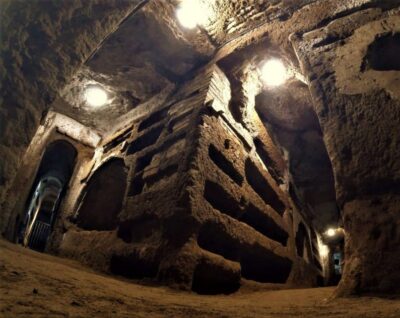
Catacombs of St. Callixtus Entry Ticket & Guided Tour
Read our review →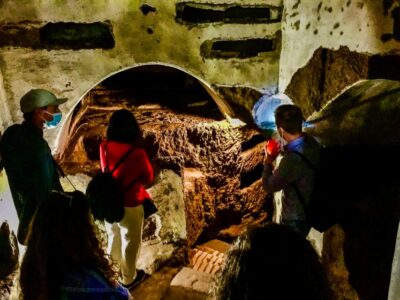

Rome EBike Tour: Appian Way, Catacombs & Roman Aqueducts
Read our review →
Catacombs and Capuchin Crypt Guided Tour with Transfer
Read our review →
St. Peter’s Basilica Priority Access Tour with Dome & Crypt
Read our review →Browse the lists this tour appears in