
Reviewed · CATACOMBS & CRYPTS
Appian Way Aqueducts Bike Tour with Catacombs & Lunch
Rome’s ancient Appian Way is best understood from a bicycle seat. This half-day ride carries you beyond the center to burial tunnels, Roman ruins, parks, and giant aqueducts, with an electric motor taking the sting out of the hills.
I like the small groups, capped at 12, and the careful guiding by people such as Lorenzo, Iman, Marco, Matt, and Flavio. I also like the mix of famous and quiet sights: the Catacombs of San Callisto, the Circus of Maxentius, and long stretches of open countryside. The catch is simple: this is a serious ride of about 23 kilometers, and the old cobbles can be rough on your back and seat.
In This Review
- Key points to know before you ride
- Why an e-bike is the right tool for ancient Rome
- Porta San Sebastiano and the start of the Appian Way
- Inside the Catacombs of San Callisto
- Caffarella Park and the Nymphaeum of Egeria
- Cecilia Metella and a medieval fortress
- The Aqueducts Park and lunch
- Riding beneath the Roman aqueducts
- Villa dei Quintili and Santa Maria Nova
- The Baths of Caracalla and Circus of Maxentius
- The cobbles, traffic, and comfort factor
- What the $107.41 price gives you
- Who should book this Rome bike tour
- Should you book the Appian Way Aqueducts Bike Tour?
- FAQ
- How long does the Appian Way Aqueducts Bike Tour last?
- Where does the tour begin and end?
- What is included in the tour price?
- Is lunch included on every departure?
- Do I need to be an experienced cyclist?
- Are the electric bikes suitable for first-time users?
- How rough is the Appian Way?
- Can children join the tour?
- What is the maximum group size?
Key points to know before you ride
- The Appian Way gets rough: About one kilometer of large, uneven original stones can be a bone-rattling challenge.
- The e-bike does real work: It helps with inclines, but you still need to know how to ride a bicycle well.
- The catacombs have their own guide: Your tour guide arranges entry, then an official catacomb guide leads the underground visit.
- Lunch depends on departure time: Morning departures include lunch and water. Afternoon departures include a cold-cuts aperitif and drinks.
- You see Rome’s quieter side: Parks, aqueducts, tombs, and Roman villas replace the crowds of the historic center.
- The group stays manageable: A maximum of 12 people gives the guide room to help with bikes, traffic, and questions.
Why an e-bike is the right tool for ancient Rome
The great strength of this experience is not speed. It is reach. Rome’s historic center is easy to explore on foot, but the Appian Way and Aqueducts Park sit beyond the usual walking circuit. Public transport does not give you the same view, and a standard bicycle could make the day feel like a workout.
The electric bikes let you cover a long route without turning every rise into a test of will. First-time e-bike riders have a short practice ride and an explanation of the controls before leaving. That matters, since you need to feel comfortable with the bike before entering traffic or tackling rough stones.
You still need moderate physical fitness and solid cycling skills. The motor helps, but it does not smooth out the cobbles or remove the need to steer, brake, and stay alert. The bikes have a maximum rider weight of 120 kilograms, or 265 pounds.
The tour begins at Roma STARBIKE on Via dei SS. Quattro, near public transportation, and returns there at the end. Plan on roughly five hours from start to finish. The ride itself takes up much of that time, with stops folded into the route rather than long periods sitting in a vehicle.
More catacomb and crypt visits from Rome:
- Rome: Crypts and Catacombs Underground Tour with Transfers
★ 4.6 · 5,341 reviews - The Original Roman Crypts and Catacombs Tour with Transfers
★ 4.5 · 4,896 reviews - Rome: Catacombs of St. Callixtus Entry Ticket & Guided Tour
★ 4.6 · 3,037 reviews
Porta San Sebastiano and the start of the Appian Way
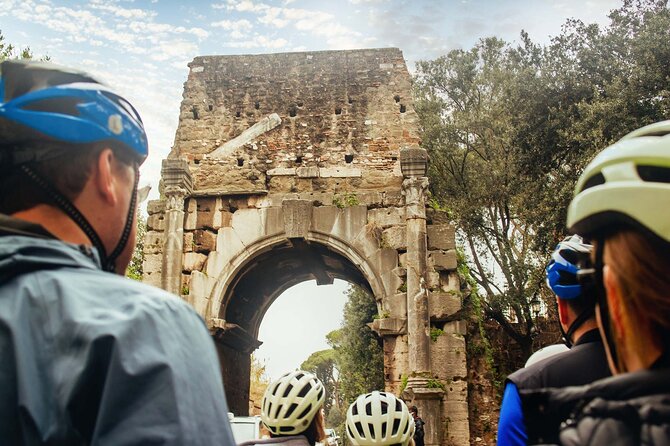
The first stop is Porta San Sebastiano, one of the largest gateways in Rome’s Aurelian Walls. Built around 275 AD, it marks the beginning of the ancient Via Appia Antica.
This is a useful opening lesson in how Rome worked. The walls protected the city, while the road beyond them carried soldiers, merchants, pilgrims, and mourners south through Italy. Medieval graffiti on the gate points to centuries of pilgrims passing through this same entrance.
You get about 15 minutes here. That is enough for photographs and a short explanation, but not a full examination of the walls. The stop works best as a scene-setter before the ride leaves the modern city behind.
Inside the Catacombs of San Callisto
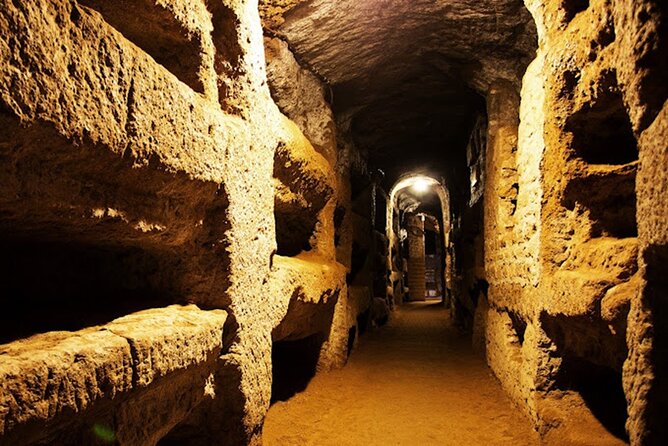
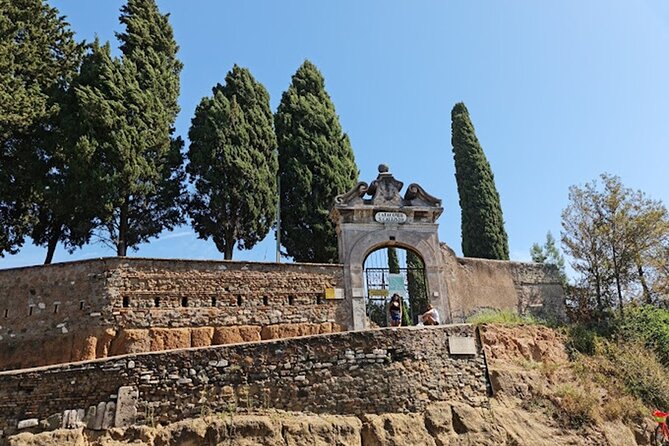
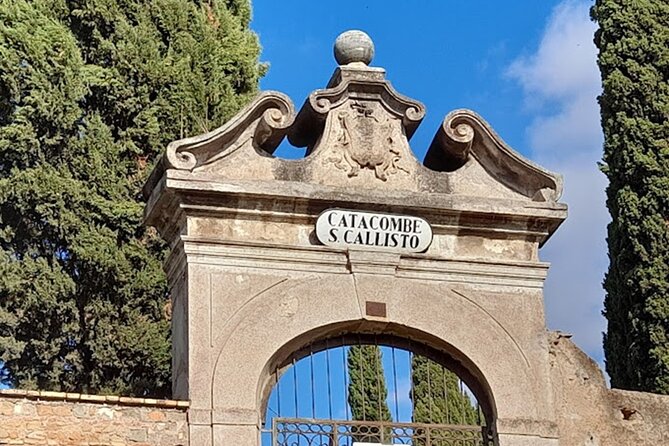
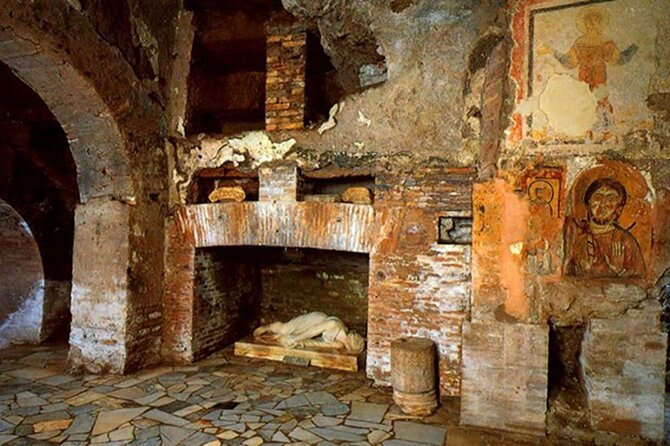
The Catacombs of San Callisto are the tour’s most enclosed and solemn stop. This is an official funerary complex of the early Church of Rome, with corridors extending for about 20 kilometers. The site took its name from the deacon Callixtus I and became a burial place for Christians, martyrs, and popes.
The visit lasts about 50 minutes. Your bike guide handles the ticket arrangements, while an official guide leads the underground portion. That division is helpful because the catacombs require site-specific interpretation, and your cycling guide can remain with the bikes and belongings.
Expect narrow underground corridors, early Christian burial spaces, and a serious tone. This is not a theatrical attraction. It is a place of burial and worship, and the experience depends on listening closely to the guide.
The catacombs are also a practical reason to choose this tour instead of simply renting a bicycle. You get the ride and a prearranged visit in one morning or afternoon, without having to work out how to connect the two.
Caffarella Park and the Nymphaeum of Egeria
After the catacombs, the route moves through Parco della Caffarella. The park is part of the Appian Way Regional Park and is one of Rome’s largest green areas. Its paths pass ancient remains, fields, groves, and old structures that are easy to miss from a car.
This section gives the ride breathing room. You are not stopping at one monument after another. Instead, you pedal through open space and see how close ancient Rome remains to the modern capital.
The Nymphaeum of Egeria adds a storybook note. According to the Roman tale, the nymph Egeria loved Numa Pompilius, Rome’s second king. When she learned of his death, her tears formed a spring. You spend about 20 minutes here, enough to hear the legend and take in the setting without turning the stop into a long lecture.
The park paths may feel easier than the Appian Way itself, but conditions can vary. Keep your eyes on the route and stay with the group, especially if you are new to electric bicycles.
More Appian Way days out:
- Rome EBike Tour: Appian Way, Catacombs & Roman Aqueducts
★ 5.0 · 1,766 reviews - Rome: Appian Way, Catacombs, & Roman Aqueducts E-bike Tour
★ 4.9 · 1,421 reviews - Rome:Appian Way E-bike Tour with Catacombs, Aqueducts & Food
★ 4.9 · 1,210 reviews - Rome Underground: Catacombs Tour, Aqueducts and Appian Way
★ 5.0 · 1,007 reviews
Cecilia Metella and a medieval fortress
The Mausoleum of Cecilia Metella is one of the best-preserved tombs along the Appian Way. It dates to the first century BC and was later incorporated into the medieval Castrum Caetani.
The round tomb is impressive, but the medieval additions make the stop more interesting than a single Roman monument. You can also see the remains of the Caetani family’s house and the perimeter walls of the church of San Nicola.
The scheduled stop is about 20 minutes. That is enough for a guided explanation and photographs, though not enough for a leisurely archaeological study. I would pay attention to the way the ancient tomb was reused. Along the Appian Way, Roman structures did not simply vanish. Later families built around them, adapted them, and gave them new purposes.
The Aqueducts Park and lunch
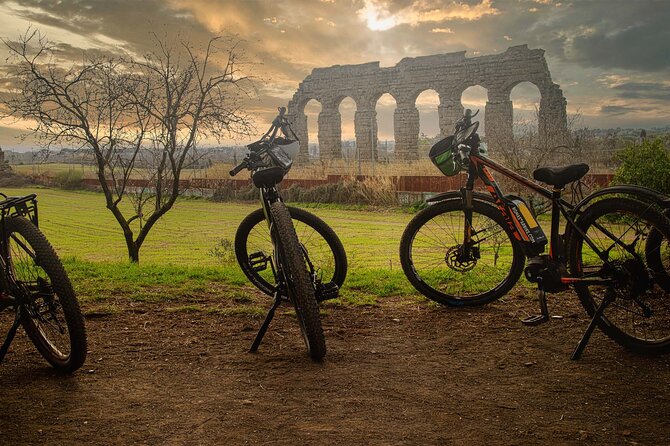
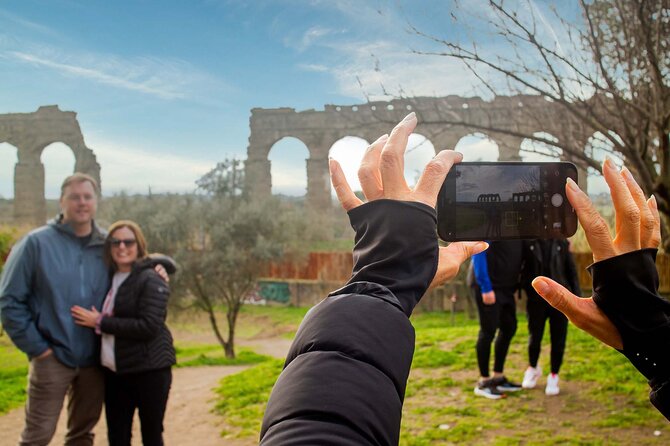
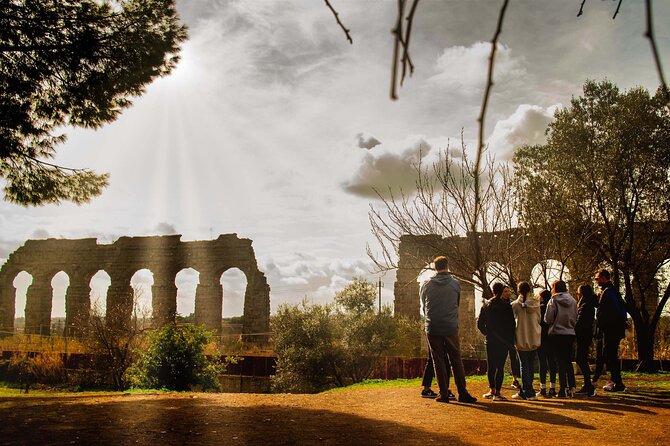
The Aqueducts Park is the visual high point of the ride. Here, enormous stone arches cross wide open space, showing the scale of Roman engineering in a way that is hard to grasp from a museum display.
The park was once a crossroads of Rome’s water system. Some aqueduct sections remain in good condition, and a few are still in operation. Your guide points out the structures and explains how the network supplied water to the ancient city.
The five-hour morning version includes lunch and water, with about 40 minutes set aside for the meal. The food is described as Italian specialties, and the available details point to sandwiches, pastries, biscuits, and a non-alcoholic drink at a local café. Dietary needs are checked at the start, which is useful, but you should keep expectations modest.
Lunch is a convenient break rather than a major food event. One meal description praised the sandwiches and biscuits, while another found the sandwiches plain and disappointing. The safest way to view it is as included fuel in a memorable setting, not as a destination meal. The afternoon departure replaces lunch with an aperitif of cold cuts and drinks.
Riding beneath the Roman aqueducts
After the break, you continue through Parco degli Acquedotti, part of the Appian Way Archaeological Park. The route follows the old Via Latina, one of Rome’s earliest roads, and passes the remains of several aqueducts.
This is where the e-bike earns its keep again. The park provides room to ride, but the total distance adds up. You will stop for explanations and photographs, yet you should not think of this as a gentle sightseeing loop with only a few minutes of pedaling.
The open views are a welcome contrast to the city center. You can look across broad grassland toward the arches, watch the aqueducts change shape as you pass, and get a clearer sense of the engineering effort behind Rome’s public water supply.
Bring water, use sunscreen in warm weather, and take the heat seriously. One ride took place during temperatures near 100 degrees Fahrenheit, making the five-hour outing far harder than the electric motor alone could solve. Rome’s summer sun can be severe, especially in open parks.
Villa dei Quintili and Santa Maria Nova
At about the fifth mile of the Appian Way, the route reaches the remains of Villa dei Quintili and Santa Maria Nova. The villa belonged to brothers who served as consuls in the second century AD. Emperor Commodus later had them killed and seized the property for imperial use.
That detail gives the ruins a sharp political edge. This was not simply a country home. It belonged to powerful Romans and was taken by an emperor who could turn wealth and property into his own possession.
The stop lasts around 20 minutes. You will not tour every section of the villa, but the ruins add another layer to the ride: tombs, roads, waterworks, public buildings, and private estates all occupied the same corridor.
The Baths of Caracalla and Circus of Maxentius
The return route includes a short stop at the Baths of Caracalla. For roughly a century, these were the largest public baths ever built. Much of the structure survives, giving you a strong sense of the scale of Roman public life.
The baths depended on a branch of the Aqua Marcia, carried through the Antoninian aqueduct. Small remains of that system can also be seen near Porta San Sebastiano, linking this stop to the aqueducts earlier in the day.
The final major stop is the Circus of Maxentius on the Appian Way. It is considered the best-preserved Roman circus of its kind. The central barrier, or spina, is still visible, and it once held an obelisk that was later moved to the Fountain of the Four Rivers in Piazza Navona.
You have about 20 minutes here. By this point, you may be ready for the return ride, but the circus is a worthwhile last look at Rome’s ability to build on a huge scale.
The cobbles, traffic, and comfort factor
The route is not difficult in the same way as a mountain bike ride, but it is not smooth. About one kilometer of the ancient Appian Way has very large, uneven cobbles. The surface can rattle your hands and seat, and some people may prefer to walk the bike through the worst section.
That is perfectly reasonable. Guides such as Iman have been praised for explaining the difficult stretch in advance, helping riders through it, and waiting for anyone who falls behind. The route includes some road riding, too, but the guide gives warnings before each section and leads the group carefully.
You should expect some saddle soreness. A padded seat cover could be useful if you are sensitive to firm bicycle saddles. Wear comfortable clothes, secure shoes, and something suitable for warm sun. Helmets are supplied, along with a mobile phone holder, handlebar holder, and handlebar bags for small belongings.
The group size makes a difference here. A guide can keep 12 people together more easily than a large convoy, check on nervous riders, and stop for questions without creating a traffic jam.
What the $107.41 price gives you
At $107.41 per person, the price is fair if you want several Appian Way sights in one organized outing. It includes a high-quality e-bike, helmet, child seat up to 25 kilograms, bike fittings, catacomb entry and guided visit, plus lunch and water on the morning departure or an aperitif in the afternoon.
You are paying for more than bike rental. The value comes from the route planning, the guide’s local explanations, the catacomb arrangements, and the ability to connect places that would be awkward to visit independently in half a day.
The price is less attractive if you want a relaxed ride, a long restaurant lunch, or a close study of every archaeological site. The schedule keeps moving, and the meal is basic. You also need to be comfortable cycling for much of five hours.
Children aged 6 to 10 qualify for the child rate only if they are under 143 centimeters, or about 4 feet 8 inches, tall. They use a trailer bike rather than a separate e-bike. That height rule is worth checking before you book.
Who should book this Rome bike tour
I would choose this tour if you have already seen the Colosseum, Forum, and central piazzas, and want a different side of Rome. It is especially good for people who enjoy ancient sites but do not want to spend another day indoors or moving between museums.
It also suits families with older children, couples, and active adults who want a guided outing. The e-bike makes the distance manageable for many riders, including people who have not cycled for years, but you must still ride well and handle rough ground.
I would think twice if you dislike cobblestones, struggle with long periods in the saddle, or are visiting during extreme heat. The tour does not turn cycling into a passive sightseeing activity. You are out there for hours.
Should you book the Appian Way Aqueducts Bike Tour?
Book it if you want to see Roman roads, catacombs, parks, aqueducts, villas, and circuses in one well-planned day. The strongest parts are the small group, capable guides, electric assistance, and the chance to reach places that are difficult to combine on foot.
Go in with clear expectations: the original road is rough, lunch is simple, and five hours on a bicycle can leave you tired. For a first e-bike ride, the staff’s test ride and patient guidance are reassuring. If you can ride confidently and want Rome beyond the center, this is a strong-value choice.
FAQ
How long does the Appian Way Aqueducts Bike Tour last?
The experience lasts approximately five hours, including cycling, archaeological stops, the catacomb visit, and the included meal or aperitif.
Where does the tour begin and end?
It begins and ends at Roma STARBIKE, Via dei SS. Quattro, 58, 00184 Rome. The activity returns to the meeting point.
What is included in the tour price?
The price includes a high-quality e-bike, helmet, mobile phone holder, handlebar holder, child seat up to 25 kilograms, the catacomb visit, and either lunch with water or an afternoon aperitif with cold cuts and drinks.
Is lunch included on every departure?
Morning departures include lunch and water. Afternoon departures include an aperitif with cold cuts and drinks instead of lunch.
Do I need to be an experienced cyclist?
You must know how to ride a bicycle well. The tour also requires a moderate level of physical fitness because you will cycle for much of the five-hour experience.
Are the electric bikes suitable for first-time users?
Yes. The staff explains how the bikes work and provides a brief test ride before departure. The electric assistance helps with inclines, but you still need to steer and control the bike confidently.
How rough is the Appian Way?
A section of about one kilometer has large, uneven original cobbles. The ride can be bumpy, and you may prefer to walk the bike through the roughest section.
Can children join the tour?
Children aged 6 to 10 can receive the child rate only if they are under 143 centimeters tall. They use a trailer bike rather than a separate e-bike. A child seat is also available for children up to 25 kilograms.
What is the maximum group size?
The tour has a maximum of 12 people. This allows the guide to give individual help and keep the group together on roads and uneven paths.
More Lunch Experiences in Rome
- Pompeii and Mount Vesuvius Day Trip from Rome with Pizza Lunch
★ 4.5 · 6,151 reviews - Rome: Tuscany & Montepulciano Day Trip with Lunch & Wine Tasting
★ 4.5 · 5,232 reviews - From Rome: Pompeii Day Trip with Optional Vesuvius and Lunch
★ 4.6 · 5,067 reviews - Rome to Pompeii Guided Tour with Wine & Lunch by High Speed Train
★ 5.0 · 1,379 reviews
More Cycling Tours in Rome
- Rome: Top Highlights & Hidden Gems Tour by Cannondale E-Bike
★ 4.9 · 1,760 reviews - Rome City Small Group Bike Tour with quality Cannondale EBike
★ 5.0 · 1,380 reviews - Rome by Night – Ebike Small Group Tour – Food and Wine (Option)
★ 5.0 · 1,275 reviews - Rome: E-Bike Night Tour with Food and Wine Tasting
★ 4.9 · 1,131 reviews
Newest reviews from Rome
- ROME:Colosseum & Ancient Rome – private/small group TOUR★ 5.0 · 24 reviews
- Off the Beaten Track in Rome: Rione VI Parione Private Tour★ 5.0 · 24 reviews
- Cinematic Photoshoot in Rome★ 5.0 · 24 reviews
- Rome: Best of Colosseum and Roman Forum Small Group Guided Tour★ 4.5 · 24 reviews
- The Labyrinth of Rome between catacombs and ancient quarries★ 4.5 · 24 reviews
- Vatican and Trionfale Market Tour with Wine and Food Tasting★ 5.0 · 24 reviews
- private tour: Vatican Museums, Sistine Chapel, St. Peter’s Basilica★ 4.5 · 24 reviews
- Skip the Line: Vatican Wheelchair Accessible Private Tour★ 5.0 · 24 reviews
Catacombs & Crypts, compared.

Crypts and Catacombs Underground Tour with Transfers
Read our review →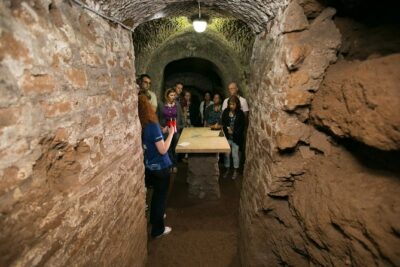
The Original Roman Crypts and Catacombs Tour with Transfers
Read our review →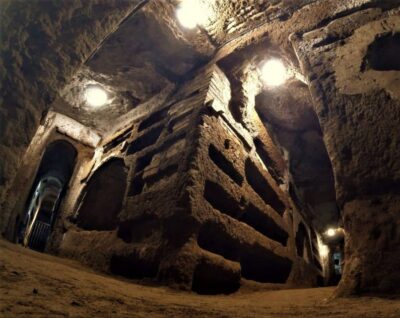
Catacombs of St. Callixtus Entry Ticket & Guided Tour
Read our review →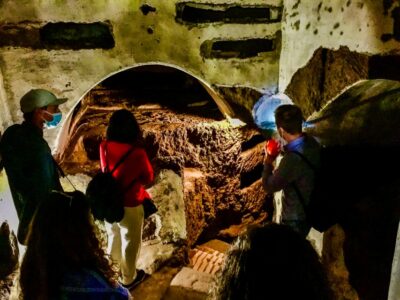
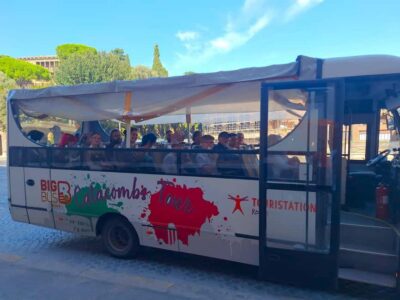

Rome EBike Tour: Appian Way, Catacombs & Roman Aqueducts
Read our review →
Catacombs and Capuchin Crypt Guided Tour with Transfer
Read our review →
St. Peter’s Basilica Priority Access Tour with Dome & Crypt
Read our review →Browse the lists this tour appears in