Reviewed · PASTA
Become a Masterchef in Rome: Pasta, Ravioli and Tiramisù Class
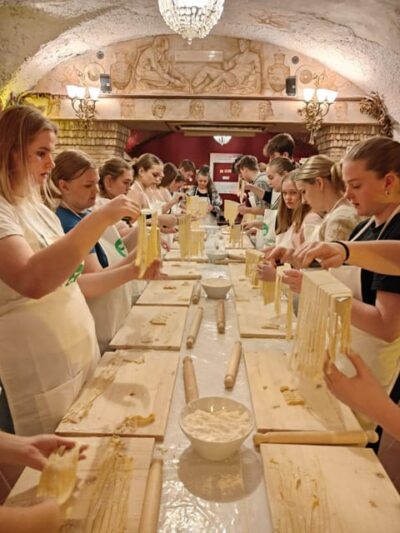
Fresh pasta is one of the best ways to understand Italian food. In this Rome class, you roll dough, fill ravioli, make tiramisu, and then sit down to eat what you prepared. The format is hands-on from the start, not a cooking demonstration where you watch someone else do all the work.
I like the personal cooking station, with its wooden board, apron, and rolling pin. I also like the social setup: a welcome Spritz, Roman cheese and pepper chips, bruschetta, wine, and a shared table turn dinner into part of the lesson.
The main consideration is time. About two hours are spent cooking, with the full experience lasting roughly three hours. You will be working with a group of up to 14 people, so this is a lively class rather than a quiet private lesson. Still, the price of about $47.16 per person makes it a strong value for a meal, drinks, instruction, and recipes.
In This Review
- Key points to know before booking
- Arriving at Via Andrea Doria 41 M
- A Spritz, cheese and pepper chips, and an easy start
- Rolling fresh fettuccine from scratch
- Filling ravioli and learning the fiddly part
- Making tiramisu with your own toppings
- Bruschetta, wine, and the meal you helped prepare
- Why the chefs make such a difference
- A good fit for beginners, couples, families, and solo diners
- Dietary requests and practical comfort
- Is $47.16 a fair price in Rome?
- What the high rating tells you, and what it does not
- Should you book this Rome pasta class?
- FAQ
- Where does the cooking class begin?
- Where does the experience end?
- How long does the class last?
- What dishes will I make?
- Is food and drink included?
- Is the class taught in English?
- Can I join if I have dietary restrictions?
- What happens if I need to cancel?
Key points to know before booking
- Make three Italian dishes: You prepare fresh fettuccine, filled ravioli, and your own tiramisu.
- A real meal is included: The menu includes bruschetta, pasta, ravioli, dessert, water, and one wine, beer, or soft drink.
- English instruction: Chefs including Carlo, Mersad, Manuela, Matteo, and Vincenzo lead the class in English.
- Small but social group: The maximum is 14 people, with each participant working at an individual station.
- Good for first-time cooks: The class is designed for beginners as well as people who already cook.
- Dietary needs can be handled: Vegetarian, pescatarian, vegan, gluten-free, and dairy-free options are available if arranged ahead of time.
Arriving at Via Andrea Doria 41 M
The class begins at Via Andrea Doria, 41 M, in Rome’s 00192 postal area. The meeting point is near public transportation, which matters because cooking classes work best when you arrive on time and ready to start.
Confirmation is provided when you book. Bring the booking information on your phone, since the experience accepts a mobile ticket. Children must be accompanied by an adult, and service animals are allowed.
The restaurant is air-conditioned. That is a small but welcome detail in Rome, where rolling pasta by hand in a warm kitchen could quickly become uncomfortable during the hotter months.
The activity ends back at the same meeting point. Plan on about three hours from welcome drink to final dessert, although the hands-on cooking portion is listed at roughly two hours.
More Rome tours worth comparing
- Rome: Pasta & Tiramisu Class with Fine Wine by the Vatican
★ 4.9 · 4,852 reviews - Rome: Pasta Making Class with Wine, Limoncello, and Dessert
★ 4.9 · 3,177 reviews - Rome: Fettuccine Pasta Cooking Class in Rome’s City Center
★ 4.8 · 2,414 reviews
A Spritz, cheese and pepper chips, and an easy start
The class begins with a bubbly Italian welcome drink, usually a Spritz, along with homemade cheese and pepper chips. This is more than filler food. It gives you a few minutes to settle in, meet the people at your table, and get comfortable with your chef before the flour comes out.
The opening helps set the tone. This is meant to be social and relaxed, and the chefs use humor and conversation to bring the group together. Carlo is especially praised for combining clear instruction with jokes and stories, while Mersad is known for keeping the room engaged and comfortable.
You are not expected to arrive with professional cooking skills. The class is built for first-time pasta makers, and solo participants can join without needing to bring a partner. The shared-table format gives you a natural way to meet other people, but you still have your own work area for the main tasks.
Rolling fresh fettuccine from scratch
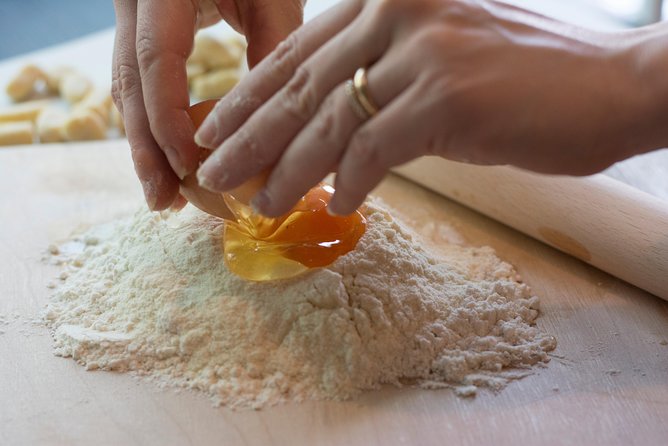
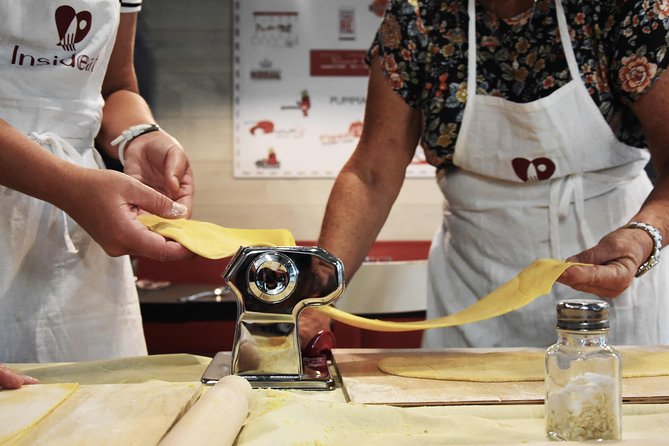
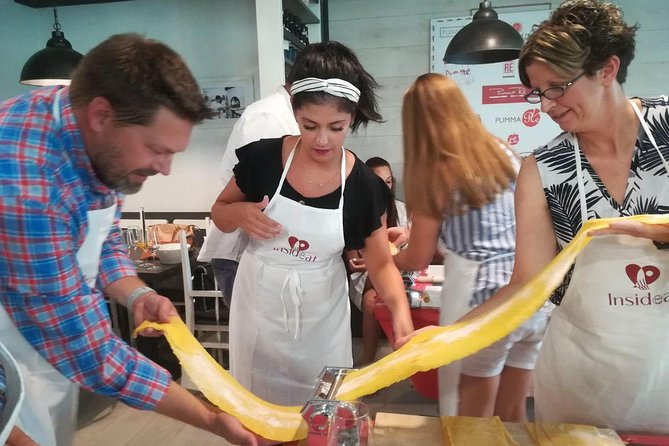
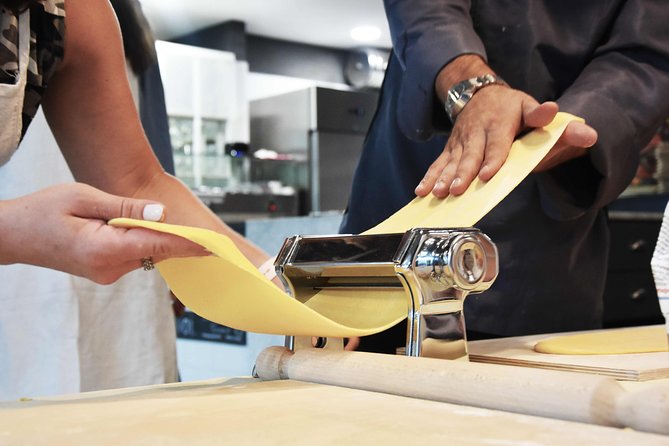
The central lesson begins with fresh pasta dough. You work at your own station with a wooden board, apron, and rolling pin, then shape the dough into fettuccine.
This is where the class earns its keep. Dried pasta is simple to boil, but fresh dough teaches you how flour, moisture, pressure, and timing affect the final texture. One useful lesson is that flour dough needs to be handled promptly. Leave it too long and it can become harder to work with.
The chef demonstrates the process and then helps you copy it. That guidance is useful for beginners because pasta dough can look deceptively simple. You need to judge its texture, roll it evenly, and avoid letting it stick. The class gives you a chance to make mistakes with an instructor nearby, rather than trying to solve every problem alone at home.
Your fettuccine is paired with classic Roman sauces. Cacio e pepe and carbonara are listed among the choices, along with other sauces selected by the kitchen. These recipes are a good match for the lesson because they show how a few ingredients can create a memorable dish when the pasta is fresh and properly cooked.
Do not expect to make a full restaurant menu from scratch. The point is to learn the main techniques and then eat the results. Some finishing work is handled by the chef and kitchen, so the meal reaches the table in good shape without making the cooking session drag on.
Filling ravioli and learning the fiddly part
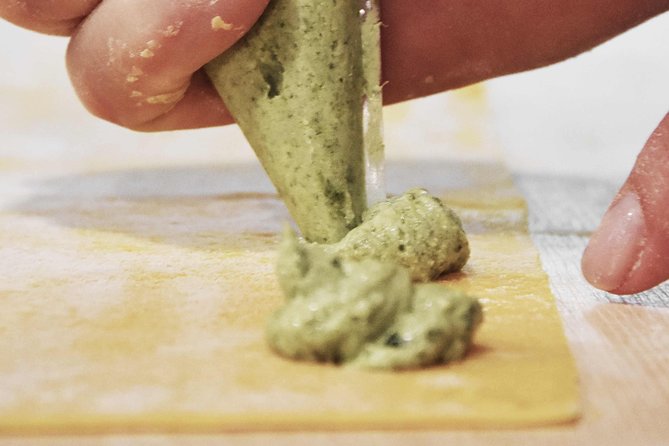
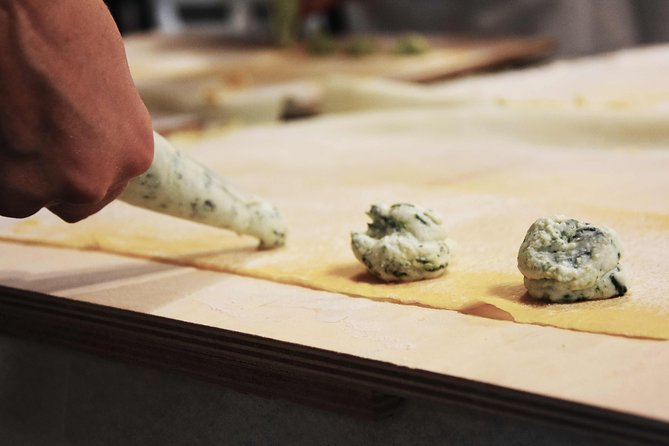
Ravioli adds a second skill to the pasta lesson. You prepare the filled pasta yourself, learning how to work with a thinner sheet of dough and how to seal the filling inside.
This part takes more care than fettuccine. Too much filling can split the ravioli, while too little can leave you with a disappointing bite. You also need to press the edges firmly and avoid trapping too much air. The chef can show you how to handle these details, which is one reason the small group matters.
The ravioli is finished with sauce by the chef before you eat it. That arrangement keeps the class practical. You get the satisfaction of shaping the pasta while the kitchen makes sure the final dish is served hot and attractively.
Families can enjoy this section, too. One family with children aged nine and 12 found the class manageable with help from the instructor. For younger children, an adult should be ready to work alongside them, since rolling and sealing pasta takes patience and hand control.
A completely different way to spend the day in Rome:
- Vatican: Museums & Sistine Chapel Entrance Ticket
★ 4.5 · 144,003 reviews - Vatican Museums & Sistine Chapel Tour with Optional Basilica
★ 4.3 · 67,413 reviews - Vatican Museums, Sistine Chapel & St Peter’s Basilica Guided Tour
★ 4.5 · 39,149 reviews - Rome: Colosseum, Palatine Hill and Roman Forum Guided Tour
★ 4.8 · 32,814 reviews
Making tiramisu with your own toppings
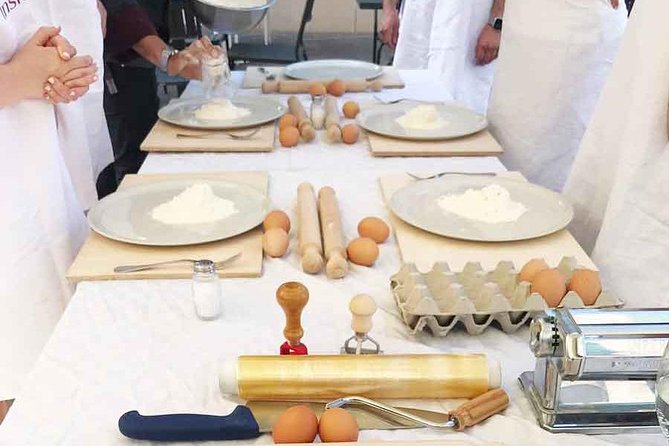
Tiramisu provides a change of pace after the pasta work. Instead of rolling dough, you prepare the creamy dessert and customize it with a variety of toppings.
The customization is a nice touch, particularly if you are cooking with children or simply want to make the dessert your own. You still work from the classic recipe, but the toppings let you add a personal finish.
Tiramisu is easy to underestimate. It has only a few familiar parts, yet the balance of coffee, cream, sweetness, and texture matters. The chef gives you the method, and you can take the recipe home for another try.
One practical tip: do not count on remembering every step. The class provides an exclusive cookbook filled with recipes, and a recipe QR code is also available. Keep the recipes handy when you return home, especially for the tiramisu and pasta timings.
Bruschetta, wine, and the meal you helped prepare
After the cooking, you relax in the restaurant or on the outdoor terrace and eat the meal. Tomato bruschetta with garlic, oregano, basil, and tomato is included, along with the pasta, ravioli, tiramisu, water, and one meal drink.
The included drink can be wine, beer, or a soft drink. A second drink is also included during the social meal, according to the experience description. The welcome aperitif comes before the cooking, so the drinks are spread across the session rather than saved for the final course.
This meal is an important part of the value. You are not paying only for a lesson and leaving with a small sample. You make dinner and then sit down to eat it in the restaurant, with the option of joining a social table and talking with the chef and other participants.
The food is not entirely prepared by your hands. The kitchen helps with finishing and service, which is sensible for a group class. You still make the main pasta, ravioli, and tiramisu, but the restaurant staff handles the parts that keep the meal moving.
Why the chefs make such a difference
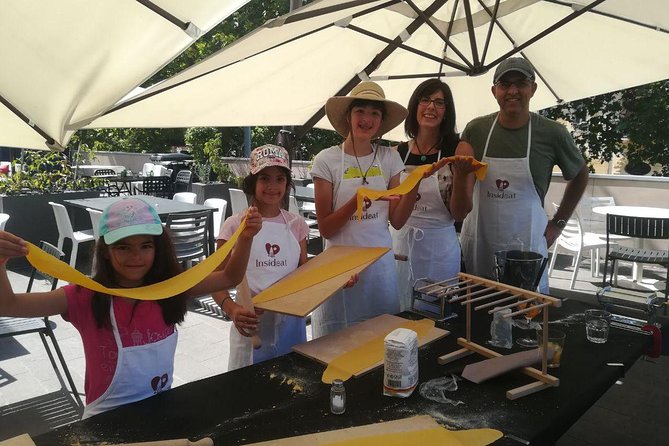
The strongest part of this class is the teaching style. Carlo is repeatedly praised for being patient, funny, and clear. Mersad is described as warm and engaging, with a talent for keeping the group laughing while still teaching the technique.
Other named chefs include Manuela, Matteo, Marina, and Vincenzo. The exact instructor can vary, but the format stays the same: an English-speaking Italian chef guides the group through each recipe and answers questions as you work.
That personality matters. Pasta making can become repetitive if the instructor simply lists directions. Here, the cooking is mixed with stories, humor, and conversation. Participants have described the class as welcoming for solo diners, couples, honeymooners, families, and people with no prior cooking-class experience.
You should not expect a culinary-school course. The chefs teach practical home cooking rather than advanced restaurant technique. That is a benefit if you want recipes you can make again without special equipment.
A good fit for beginners, couples, families, and solo diners
This class suits anyone who wants an activity with a clear result at the end. You learn something, eat dinner, and have a chance to meet people without committing to a full day away from Rome’s sights.
It is especially useful on a rainy afternoon or evening. The restaurant is indoors and air-conditioned, and the three-hour schedule gives you a comfortable block of time away from museums and churches.
Couples can treat it as an informal dinner date. Several dishes give you more to talk about than a standard meal, and the hands-on work creates a shared memory you can repeat at home. Honeymooners have particularly liked the combination of food, humor, and an easy social setting.
Solo participants should also feel comfortable booking. You do not need to arrive with a partner, and the social table gives you company without requiring you to make your own arrangements.
Families can join, but keep the children’s ages and attention spans in mind. Children must have an adult with them, and younger cooks may need extra help with the dough and ravioli.
Experienced home cooks will find the class less challenging than an advanced workshop. You may already know how to roll pasta or make tiramisu. Even so, the Roman sauces, chef tips, and group meal can make the session worthwhile if you want a light, social introduction to local cooking.
Dietary requests and practical comfort
Vegetarian and pescatarian participants are fully accommodated. Vegan, gluten-free, and dairy-free options are also available, but you need to tell the provider about restrictions before the class.
That advance notice is important because pasta, ravioli, cheese, butter, and tiramisu normally rely on ingredients that may not fit every diet. Do not wait until you arrive to explain a serious allergy or restriction.
The class includes an apron and cooking utensils, so you do not need to bring equipment. The mobile ticket also keeps check-in simple. Since the class starts at a fixed meeting point and runs as a group, arrive with enough time to find Via Andrea Doria 41 M.
Is $47.16 a fair price in Rome?
At about $47.16 per person, the price is reasonable for what is included. You receive an aperitif, snacks, a three-course food experience, a drink, water, chef instruction, equipment, ingredients, and recipes.
The strongest value is the combination of class and dinner. A cheaper pasta demonstration might teach you less and leave you hungry. A restaurant meal might cost a similar amount without giving you the skills to recreate it.
The group size also helps. A maximum of 14 people is not private instruction, but it is small enough for the chef to move around and give individual help. If every place were filled, the experience would still feel social rather than intimate, so book this for shared energy, not silence.
The class is often booked about 37 days ahead. That suggests planning early, especially if you need a certain date or want to fit it into a short Rome visit. The cancellation policy is flexible if you plan carefully: cancel at least 24 hours before the start for a full refund. Changes or cancellations inside that window are not refunded, and the class requires a minimum number of participants to operate.
What the high rating tells you, and what it does not
The experience has a 4.9 rating from 2,156 reviews, with 99 percent of participants recommending it. The consistent praise focuses on the chefs’ humor, patience, clear instruction, and the quality of the food served afterward.
That pattern is useful because it points to the real strength of the class: the atmosphere and teaching, not just the menu. Carlo, Mersad, Manuela, Marina, Matteo, and Vincenzo are all singled out in positive comments, suggesting that the experience does not depend on one instructor alone.
The rating does not mean every participant becomes a pasta expert in three hours. You will share the kitchen, work at a steady group pace, and receive a practical lesson rather than a private coaching session. If you want a calm, highly technical workshop, this may feel too social.
For most people, though, the balance is right. You learn enough to repeat the dishes, eat a generous meal, and leave with recipes instead of only photographs.
Should you book this Rome pasta class?
Book it if you want to cook your own dinner in Rome, enjoy meeting people, and prefer a friendly lesson over a formal lecture. It is a particularly good choice for couples, solo participants, families with older children, first-time cooks, and anyone needing an indoor activity.
Think twice if you dislike group dining, cannot commit to three hours, or want an advanced pasta course with one-to-one instruction. The maximum group size is 14, and the chef may finish some parts of the meal for service.
For about $47.16, the package is hard to fault: three Italian dishes, drinks, a meal, equipment, recipes, and an English-speaking chef. Book ahead, state dietary needs in advance, and arrive ready to make a little mess. That is how pasta class should work.
FAQ
Where does the cooking class begin?
It begins at Via Andrea Doria, 41 M, 00192 Roma RM, Italy.
Where does the experience end?
The activity ends back at the meeting point.
How long does the class last?
The full experience lasts approximately three hours. About two hours are devoted to hands-on preparation of fettuccine, ravioli, and tiramisu.
What dishes will I make?
You will prepare fresh fettuccine, handmade filled ravioli, and tiramisu. The pasta may be served with Roman sauces such as cacio e pepe and carbonara.
Is food and drink included?
Yes. The menu includes a welcome aperitif, cheese and pepper chips, bruschetta, fresh pasta, ravioli, tiramisu, water, and one wine, beer, or soft drink. A second drink is also included with the social meal.
Is the class taught in English?
Yes. An English-speaking Italian chef leads the class.
Can I join if I have dietary restrictions?
Vegetarian and pescatarian options are available, along with vegan, gluten-free, and dairy-free options. Tell the provider about your dietary needs before the class.
What happens if I need to cancel?
You can receive a full refund if you cancel at least 24 hours before the experience start time. Cancellations or changes made less than 24 hours before the start are not refunded or accepted.
Newest reviews from Rome
- Rome: Vatican Museums & Sistine Chapel Skip-the-Line Ticket★ 4.4 · 148 reviews
- Shared Shuttle Transfer from Rome to Civitavecchia Port★ 5.0 · 148 reviews
- Skip the Line: Vatican and Sistine Chapel with Guided Tour★ 4.0 · 149 reviews
- Rome: Crypts & Catacombs After Hours Tour with Bone Chapel★ 4.6 · 149 reviews
- Ghosts Legends and Mysteries of Rome Walking Tour★ 5.0 · 149 reviews
- Tivoli: Villa Gregoriana Entrance Ticket★ 4.7 · 150 reviews
- Pizza and Tiramisu Cooking Class in Rome, Piazza Navona★ 5.0 · 150 reviews
- Rome: Borghese Gallery Skip-the-Line Entry and Guided Tour★ 4.7 · 150 reviews
Pasta, compared.
Pasta & Tiramisu Class with Fine Wine by the Vatican
Read our review →
Pasta Making Class with Wine, Limoncello, and Dessert
Read our review →
Fettuccine Pasta Cooking Class in Rome’s City Center
Read our review →
Traditional Pasta with Cocktails Cooking Class
Read our review →
Learn to Make Pasta & Tiramisu with Wine and Limoncello Included
Read our review →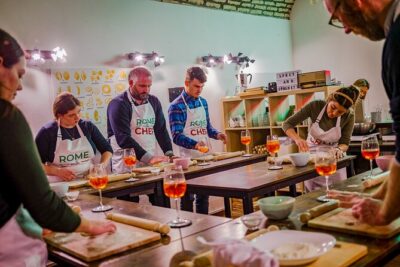
Pasta Cooking Class Near the Colosseum with 3 Spritz Cocktails
Read our review →
Enjoy Spritz and Pasta Making in Piazza Navona
Read our review →