
Reviewed · COOKING CLASSES
Rome: Traditional Pasta with Cocktails Cooking Class
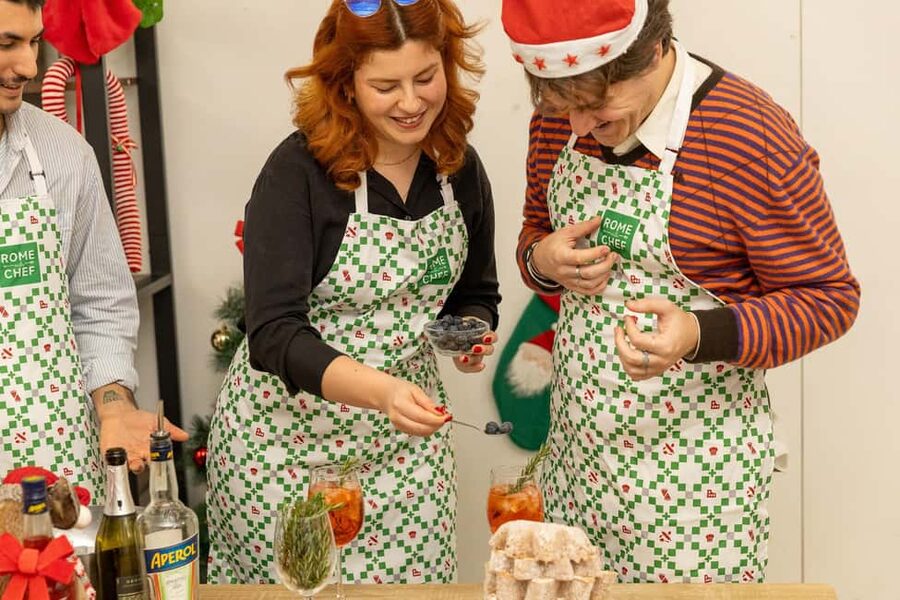
Rome’s answer to a cooking class is wonderfully direct: make pasta, mix spritzes, then sit down and eat what you prepared. This three-hour class combines a hands-on kitchen lesson with a social evening, so you are learning a few Roman staples without giving up the fun of dinner out.
I like the small group size, capped at 14, because you should have room to work rather than simply watch a chef. I also like the three-drink format: Aperol, Hugo, and limoncello spritzes give you a useful taste of Italy’s aperitivo culture, not just one standard cocktail.
The main catch is dietary. The class cannot accommodate coeliac disease, gluten intolerance, vegan diets, or lactose intolerance because the menu uses wheat and dairy. Ask about any other restriction before booking, since the kitchen may be able to adjust in some cases.
In This Review
- Key points at a glance
- Pasta and cocktails in one Roman evening
- The first spritz: Aperol and the art of aperitivo
- Making fresh pasta from scratch
- Carbonara or cacio e pepe for the main course
- Hugo and limoncello spritzes keep the class moving
- A social class with music, jokes, and dancing
- Is the $100.82 price good value?
- Who should book this class?
- Booking details that matter
- FAQ
- Where does the Rome pasta and spritz class meet?
- Where does the activity finish?
- How long does the cooking class last?
- What drinks do I make?
- What food do I prepare?
- Is the class taught in English?
- Can I join if I am vegan or gluten-free?
- Can I cancel or pay later?
- Should you book it?
Key points at a glance
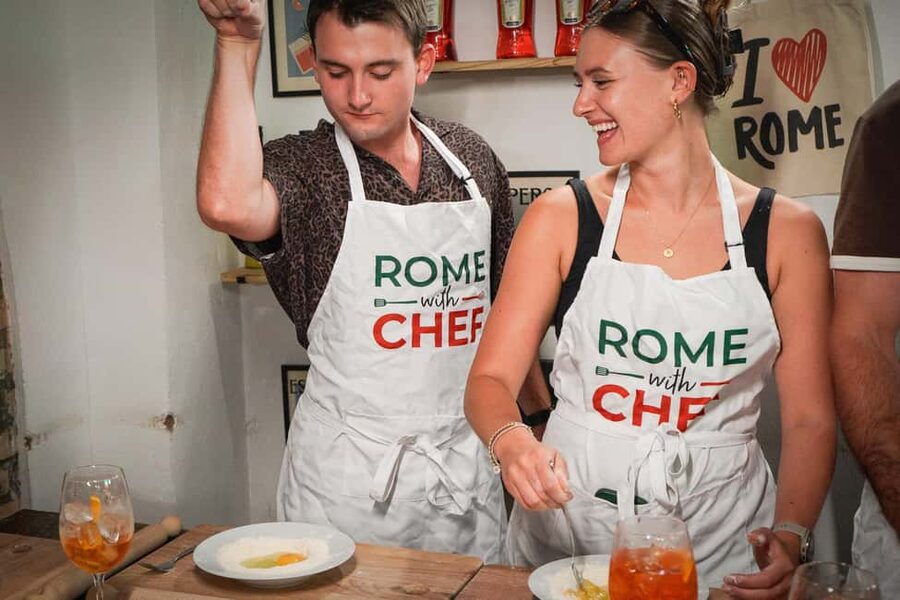
- Three spritzes are part of the lesson: You prepare an Aperol spritz, a Hugo spritz, and a limoncello spritz.
- Fresh pasta is made by hand: You work with the dough, then pair it with carbonara or cacio e pepe.
- The class is social and lively: Music, banter, dancing, and group cooking are recurring features of the atmosphere.
- English instruction keeps the class accessible: A chef and mixologist lead the session from start to finish.
- You eat everything you make: The class functions as both a lesson and a full meal.
- The central meeting point is easy to identify: Find Via Cesare Balbo 19, around the corner from the Hotel 77 entrance, with a Rome With Chef sign outside.
Pasta and cocktails in one Roman evening
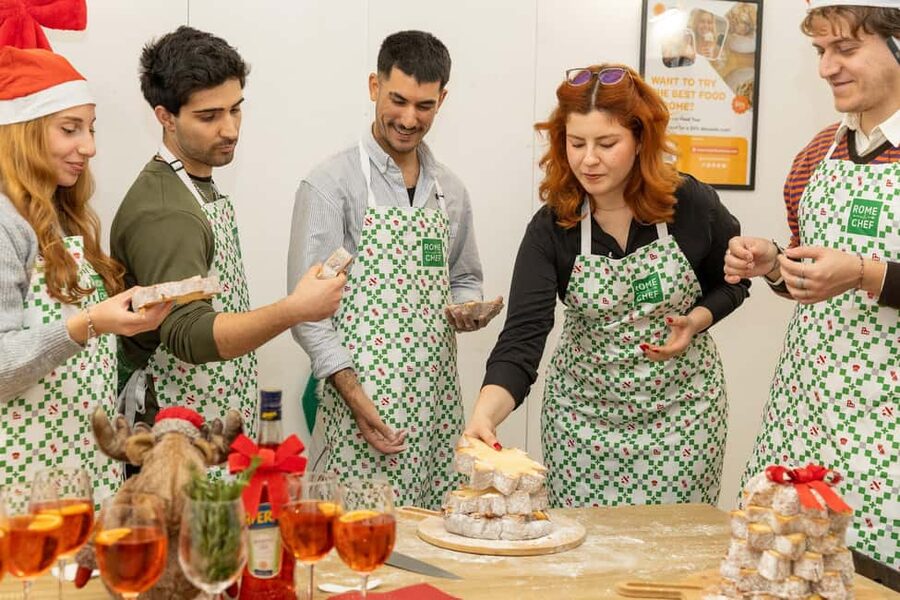
This experience works because it joins two parts of Italian life that belong together: food and drinks. You are not rushing between a separate cooking lesson and a bar. You learn a recipe, make a drink, continue cooking, and eventually sit down with the results.
The setting is in Lazio, in central Rome. The meeting point is Via Cesare Balbo 19, 00184, around the corner from the Hotel 77 entrance. Look for the Rome With Chef sign outside the class. The activity finishes at the same place, so you do not need to arrange transport between the lesson and the meal.
The class is taught in English by a live guide. The team includes chefs and mixologists, with hosts named in the feedback including Angela, Benjamin, Laura, Giovanna, Jem, Marzia, Sushi, and others. Staff can change from one session to another, but the strongest pattern is clear: the hosts are expected to teach while keeping the room relaxed and social.
That matters in a class like this. Pasta dough can feel intimidating if every step is treated like an exam. A playful instructor makes it easier to ask questions, recover from a messy fold, and enjoy the process instead of worrying about perfect restaurant results.
More cooking classes in Rome:
- 3 in 1 Cooking Class near Navona: Fettuccine, Ravioli & Tiramisu
★ 5.0 · 7,376 reviews - Rome: Pasta Making Class with Wine, Limoncello, and Dessert
★ 4.9 · 3,177 reviews - Rome: 3-in-1 Fettuccine, Ravioli, and Tiramisu Cooking Class
★ 4.9 · 2,704 reviews
The first spritz: Aperol and the art of aperitivo
The drink side of the class begins with Italian spritz culture. You make an Aperol spritz, one of the country’s best-known sparkling drinks, and learn how the drink fits into the broader Italian aperitivo tradition.
You are not simply handed a glass at the door. The mixologist host explains the drink while you take part in making it. This gives the opening part of the class an easy rhythm: listen, mix, taste, and start talking with the people around you.
The Aperol spritz is likely the familiar one for many participants, but it is useful as a starting point because it gives you a recognizable reference point for the two drinks that follow. The class is designed to keep a cocktail in your hand while you cook, though you can also choose unlimited water or soft drinks.
One practical note: this is a drinking class as well as a cooking class. Three spritzes over three hours is a sizeable part of the experience, particularly if you are not used to drinking while preparing food. Pace yourself, use the water provided, and remember that you can enjoy the cooking even if you take smaller servings or pause between drinks.
Making fresh pasta from scratch
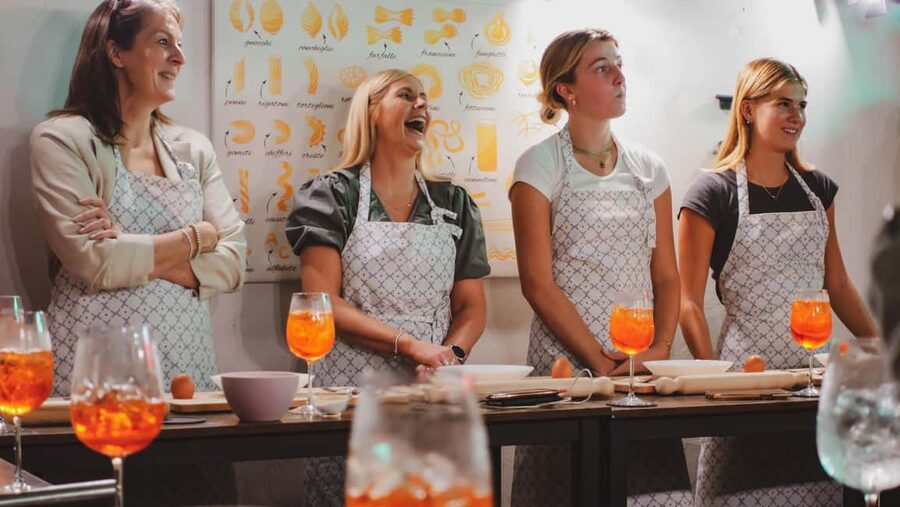
The food lesson centers on handmade pasta. You work with fresh ingredients and prepare your own dough before shaping it for the meal.
The appeal is not just the final plate. Fresh pasta gives you something concrete to take home as a skill. Once you understand the basic feel of the dough and the steps used in class, you can try the recipes again in your own kitchen.
The exact shape of the pasta is not specified, so do not book this expecting a particular regional form or a long technical course on every pasta style. The class is built around a friendly, approachable recipe rather than professional chef training.
That is a good fit for most visitors. You get enough hands-on work to feel involved, but the evening remains light and social. Hosts such as Angela and Benjamin are repeatedly praised for making the process easy to follow, while Marzia is noted for clear instructions and an engaging style.
I would expect some variation in the pace depending on the group. A small class of 14 or fewer should give you more personal attention than a large demonstration, but it is still a shared lesson. If you want a private, highly technical workshop with extensive time on pasta shapes, this may feel too casual.
Carbonara or cacio e pepe for the main course
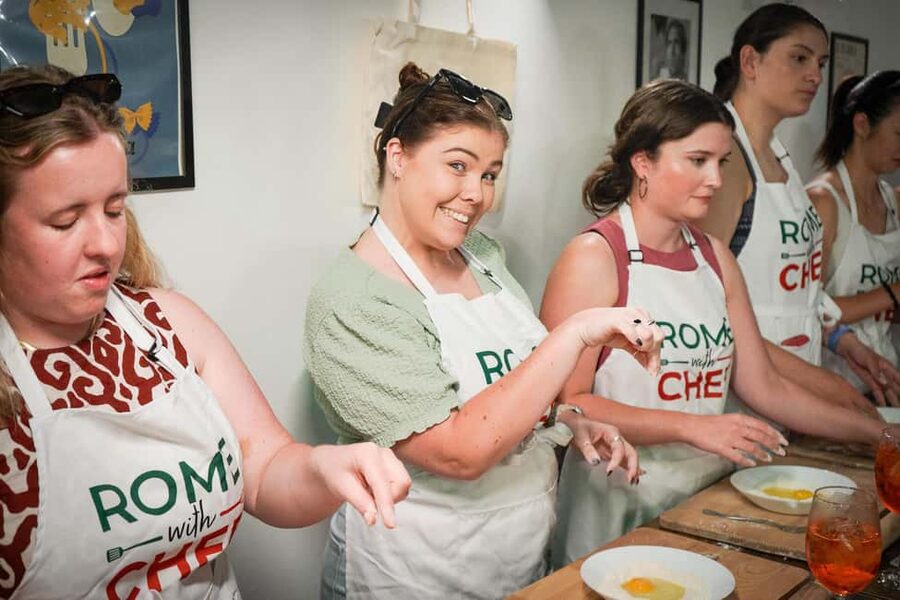
Once your pasta is ready, you choose between two Roman favorites: carbonara or cacio e pepe. Both are famous for relying on a small number of ingredients, which makes technique important.
Carbonara is creamy in texture but traditionally built without cream. The balance comes from eggs, cheese, and the other ingredients in the recipe. Cacio e pepe is even more stripped back, using cheese and pepper to create a sauce that clings to the pasta.
The choice is valuable because it lets you match the dish to your taste. Carbonara is the fuller, more substantial option, while cacio e pepe puts the pasta, cheese, and pepper at center stage. Vegetarian options are available, but the class is not vegan and still uses dairy.
Do not expect to leave with a menu of several courses. The food included is handmade pasta and sauce, followed by the chance to eat your work. This is best viewed as a generous activity and meal in one, not as a formal Roman restaurant tasting.
The final dish is also where the class pays off. You have mixed drinks, handled the dough, prepared the sauce, and then sit down with the group to eat. Hosts described as energetic and attentive, including Laura, Angela, and Benjamin, help turn that final meal into a shared occasion rather than a quick plate at the end of a lesson.
More Rome tours worth comparing
- Rome: Pasta & Tiramisu Class with Fine Wine by the Vatican
★ 4.9 · 4,852 reviews - Rome: Fettuccine Pasta Cooking Class in Rome’s City Center
★ 4.8 · 2,414 reviews - Learn to Make Pasta & Tiramisu with Wine and Limoncello Included
★ 5.0 · 2,345 reviews - Become a Masterchef in Rome: Pasta, Ravioli and Tiramisù Class
★ 5.0 · 2,156 reviews
Hugo and limoncello spritzes keep the class moving
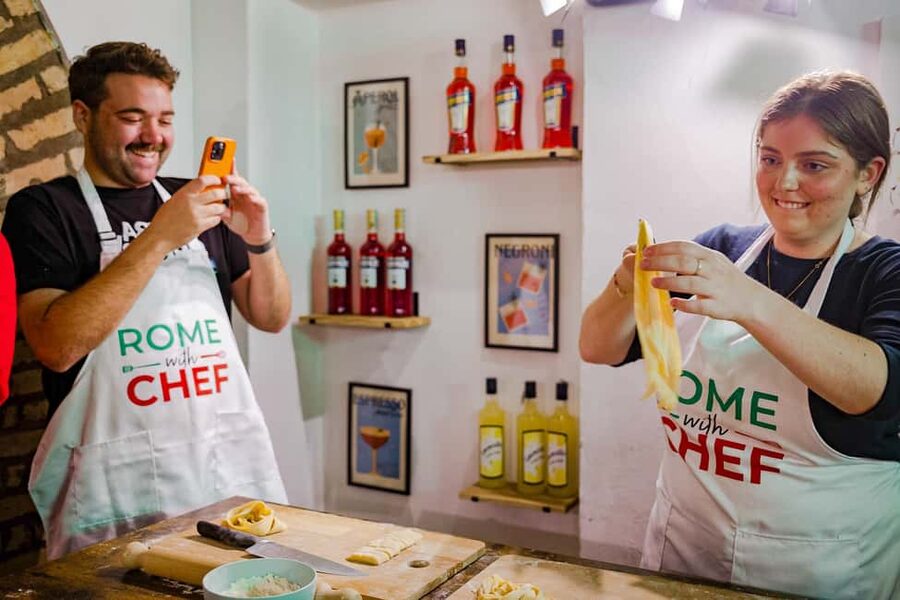
The second and third drinks give the experience more range. You prepare a Hugo spritz, a lighter, fragrant style of spritz, followed by a limoncello spritz with a brighter citrus character.
The three drinks are a smart part of the format. If you already know Aperol, the Hugo and limoncello versions give you something new to take home. One participant specifically singled out the Hugo as a new favorite, and the drinks are often described as a highlight alongside the food.
The order also helps the class feel like an evening rather than a single demonstration. Your first drink begins the lesson, another appears while the cooking continues, and the third accompanies the meal. Water and soft drinks are available without limit, which is useful both for pacing and for anyone in the group who wants to drink less.
The cocktail portion does have a practical limitation. Anyone seeking a serious mixology course may find it too brief, since the focus is split between drinks and pasta. You will learn three popular Italian spritzes, but the main value lies in the combination of cocktail making, cooking, and conversation.
A social class with music, jokes, and dancing
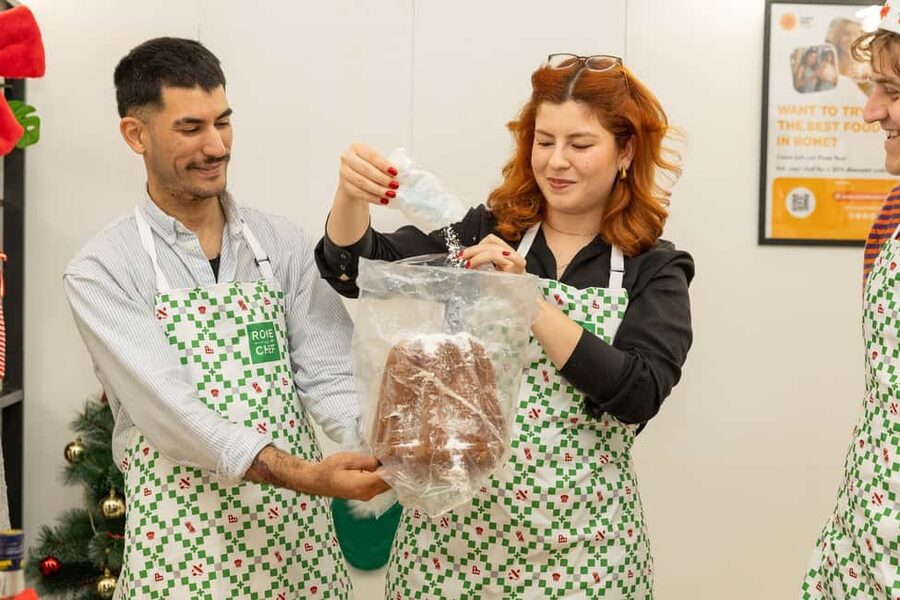
The tone is clearly informal. The hosts are not just there to read instructions. Angela is repeatedly praised for creating an atmosphere that feels like cooking with a friend, while Laura is described as using music and banter to keep the class moving. Other hosts, including Jem, Sushi, and Benjamin, are noted for energy and humor.
That atmosphere will suit you if you want an activity that brings people together. You may be celebrating a birthday, meeting other visitors, or simply looking for a break from churches and ancient ruins. The class has enough structure to keep the evening on track, but it is not stiff.
The social side can also be the main reason to book. A Rome cooking class is a good choice when you want to do something with your hands and still have time to talk. Participants have used it for birthdays, final nights in Rome, and group outings, and the format is well suited to those occasions.
Still, the lively mood is not for everyone. If you prefer a quiet lesson, a formal culinary school, or a private table with little interaction, the music and banter may feel like a distraction. A private group is available, so you can ask about that option if keeping your party together matters more than meeting new people.
Is the $100.82 price good value?
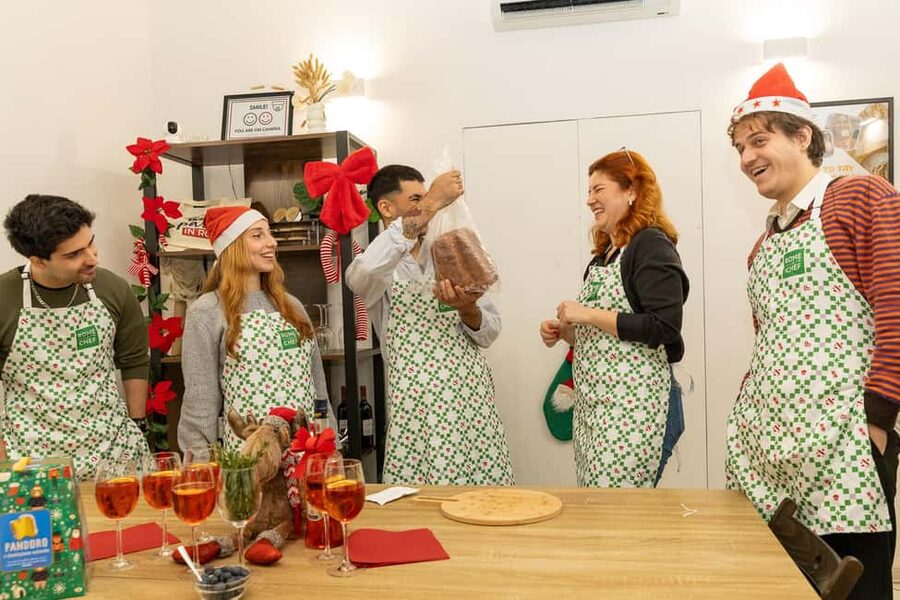
At $100.82 per person, this is not the cheapest pasta meal in Rome. The value comes from the number of elements packed into three hours: an English-language cooking lesson, fresh ingredients, handmade pasta, three spritzes, water and soft drinks, recipes to take home, and the meal itself.
If you would otherwise pay separately for dinner and drinks, the price becomes easier to justify. You are also paying for instruction and an organized social activity, not just ingredients. The recipes may continue to pay off when you make pasta or a spritz at home.
The class is especially good value for a first visit to Rome if you want a memorable evening that does not depend on sightseeing weather. It also gives you a break from the usual city itinerary. After several days of monuments, a kitchen table and a plate of fresh pasta can feel like exactly the right change of pace.
The price is less appealing if you do not drink, cannot eat wheat or dairy, or already have strong pasta-making skills. In those cases, much of the package may not be useful to you. Check the menu and dietary rules before paying.
Who should book this class?
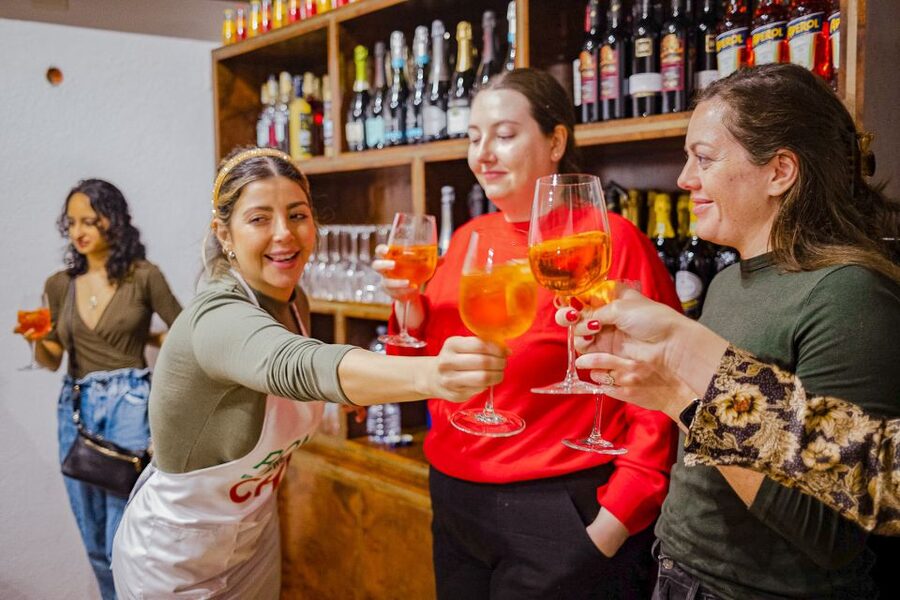
I would recommend it most strongly for couples, friends, families with adult children, and solo visitors who enjoy meeting people through food. It is also a good birthday activity, especially if you want something more personal than a standard restaurant reservation.
You should enjoy the class if you like:
- Hands-on cooking rather than watching a demonstration
- Classic Roman food and simple recipes
- Spritzes and light cocktail instruction
- Informal teaching with music and humor
- A meal that you help prepare
- Taking recipes home for another attempt
Families should check the booking details carefully before assuming children are suitable, since the supplied information does not specify an age policy. The drink-centered format also makes this more naturally suited to adults.
I would choose another activity if you need vegan, gluten-free, coeliac-safe, or dairy-free food. The class cannot accommodate those diets. It may also be the wrong fit if you want a quiet, advanced cooking course or a tour focused on Rome’s monuments and history.
Booking details that matter
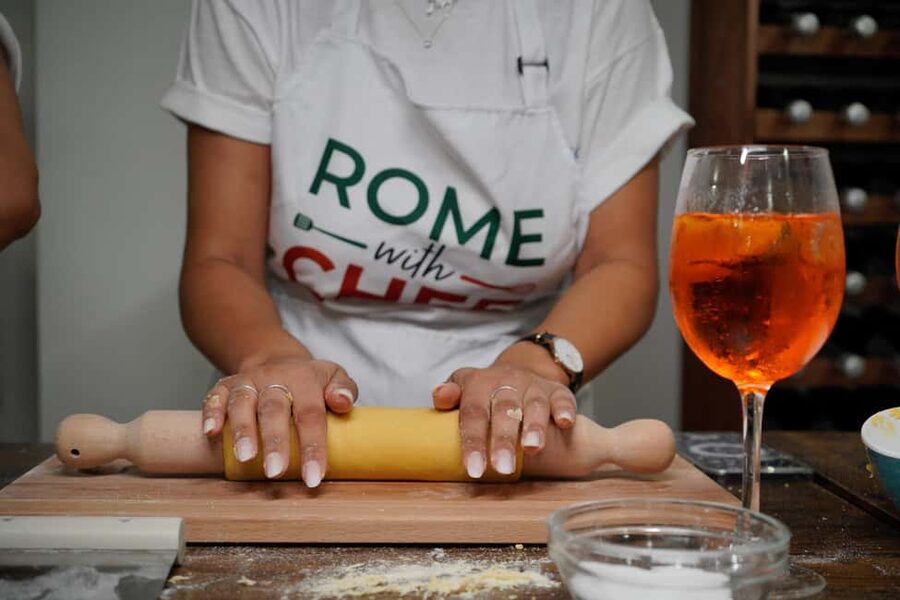
The experience lasts three hours, but starting times vary, so check the available options for your date. The meeting point is Via Cesare Balbo 19, near Hotel 77. You should look for the Rome With Chef sign rather than relying only on the street number.
The activity returns to the meeting point at the end. That makes it simple to pair with dinner plans nearby, though you may not need another meal after eating your pasta and sauces.
Free cancellation is available up to 24 hours before the activity for a full refund. You can also reserve now and pay later, which helps if your Rome schedule is still shifting. A private group option is available for those who want a more personal setting.
Tell the operator about dietary restrictions in advance. The stated exclusions are firm for coeliac disease, gluten intolerance, vegan diets, and lactose intolerance, but the provider asks you to discuss other needs before the class rather than assuming they can be handled on arrival.
FAQ
Where does the Rome pasta and spritz class meet?
It meets at Via Cesare Balbo 19, 00184, around the corner from the Hotel 77 entrance. Look for a Rome With Chef sign outside the class.
Where does the activity finish?
The class ends back at the meeting point on Via Cesare Balbo.
How long does the cooking class last?
The experience lasts three hours. Starting times vary, so you need to check availability for your chosen date.
What drinks do I make?
You make an Aperol spritz, a Hugo spritz, and a limoncello spritz.
What food do I prepare?
You make fresh handmade pasta and learn either carbonara or cacio e pepe. Vegetarian options are available.
Is the class taught in English?
Yes. The activity includes a live English-speaking guide.
Can I join if I am vegan or gluten-free?
No. The class cannot accommodate vegan diets, coeliac disease, or gluten intolerance. It also cannot accommodate lactose intolerance because dairy products are used.
Can I cancel or pay later?
You can cancel up to 24 hours in advance for a full refund. Reserve-now, pay-later booking is also available.
Should you book it?
Book this class if you want a fun, hands-on Roman evening rather than a formal culinary course. You will make fresh pasta, prepare two classic sauces to choose from, mix three Italian spritzes, and eat with the people around you.
The repeated praise for hosts such as Angela, Benjamin, Laura, Jem, and Marzia points to the most important part of the experience: the teaching style. The food matters, but the class depends just as much on an instructor who can keep beginners relaxed and the group involved.
Skip it if the dietary restrictions rule you out, if you do not drink, or if you want advanced pasta training. For everyone else, the combination of cooking, cocktails, recipes to take home, and a ready-made meal makes the $100.82 cost a reasonable use of three hours in Rome.
More Workshops in Rome
- Rome: Fettuccine and Tiramisu Cooking Class with Wine
★ 4.8 · 2,013 reviews - Pasta Cooking Class Near the Colosseum with 3 Spritz Cocktails
★ 5.0 · 1,686 reviews - Rome: Pasta & Tiramisu Cooking Class near the Spanish Steps
★ 4.8 · 1,395 reviews - Rome Tipsy Cooking Class: Make Pasta and Mix 3 Spritz Cocktails
★ 5.0 · 1,357 reviews
Newest reviews from Rome
- Rome: Vatican Museums & Sistine Chapel Skip-the-Line Ticket★ 4.4 · 148 reviews
- Shared Shuttle Transfer from Rome to Civitavecchia Port★ 5.0 · 148 reviews
- Rome: Crypts & Catacombs After Hours Tour with Bone Chapel★ 4.6 · 149 reviews
- Ghosts Legends and Mysteries of Rome Walking Tour★ 5.0 · 149 reviews
- Skip the Line: Vatican and Sistine Chapel with Guided Tour★ 4.0 · 149 reviews
- Tivoli: Villa Gregoriana Entrance Ticket★ 4.7 · 150 reviews
- Pizza and Tiramisu Cooking Class in Rome, Piazza Navona★ 5.0 · 150 reviews
- Rome: Borghese Gallery Skip-the-Line Entry and Guided Tour★ 4.7 · 150 reviews
Cooking Classes, compared.
3 in 1 Cooking Class near Navona: Fettuccine, Ravioli & Tiramisu
Read our review →
Pasta Making Class with Wine, Limoncello, and Dessert
Read our review →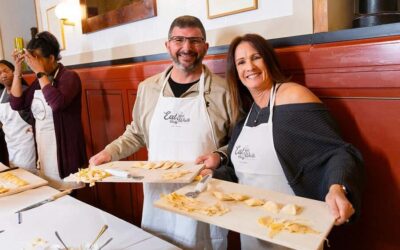
3-in-1 Fettuccine, Ravioli, and Tiramisu Cooking Class
Read our review →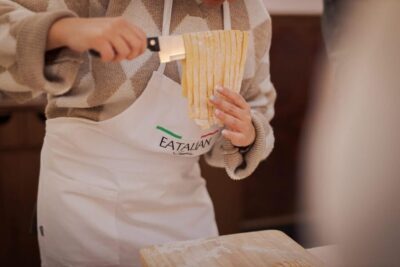
Fettuccine Pasta Cooking Class in Rome’s City Center
Read our review →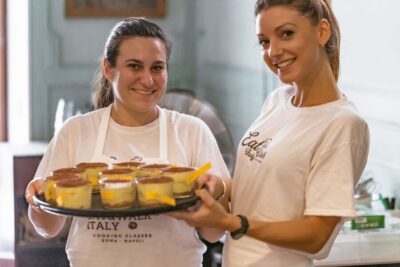
Fettuccine and Tiramisu Cooking Class with Wine
Read our review →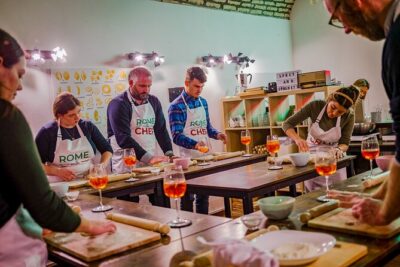
Pasta Cooking Class Near the Colosseum with 3 Spritz Cocktails
Read our review →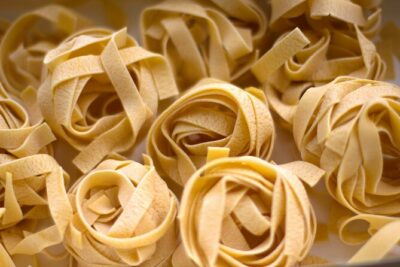
Enjoy Spritz and Pasta Making in Piazza Navona
Read our review →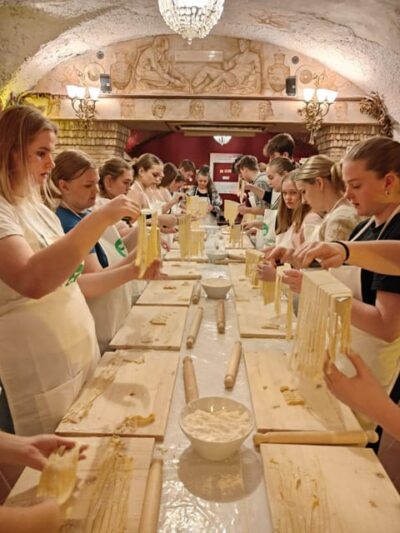
Pasta & Tiramisu Cooking Class near the Spanish Steps
Read our review →Browse the lists this tour appears in