
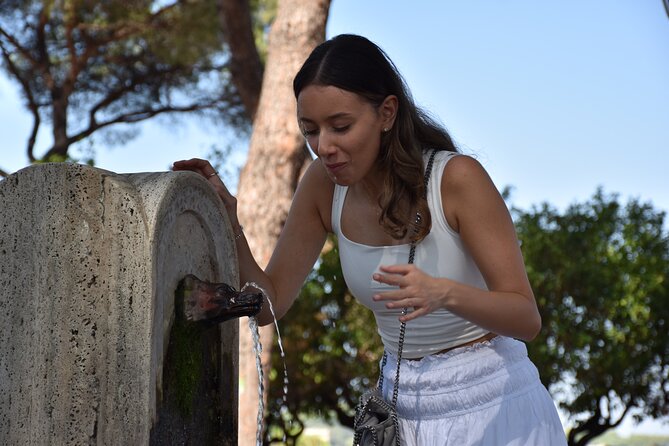
Reviewed · CATACOMBS & CRYPTS
Catacombs, Appian, Aqueducts, in a Fiat500 with a local, Pick-up
Rome’s oldest road makes a fine escape from the city center, and this private Fiat 500 tour gives you a pleasant way to reach it. You’ll pass the Baths of Caracalla, ancient tombs, Roman walls, catacombs, and open countryside in less than three hours. The catacombs are the main stop, with a 45-minute guided visit below ground.
I like the small, personal format and the chance to see Rome from a local’s point of view. I also like that hotel pickup, drop-off, entrance fees, and a professional photo shoot are included. The main drawback is the underground portion: the catacombs are not suitable for anyone with claustrophobia, and the short tour leaves little time for long visits at the outdoor monuments.
In This Review
- Key points to know before booking
- Why the Appian Way is worth your time
- Riding Rome in a classic Fiat 500
- From the Circus Maximus to the Baths of Caracalla
- The Appian Way and the Tomb of the Scipios
- The Catacombs of San Callisto
- Domine Quo Vadis and the footprint of Jesus
- The Tomb of Cecilia Metella and the Aurelian Walls
- Basilica San Sebastiano fuori le Mura
- Aqueduct views and the open Roman countryside
- What the $161.56 price includes
- Who should book this Fiat 500 tour?
- Should you book it?
- FAQ
- How long does the tour last?
- Is hotel pickup available?
- What is the main guided visit?
- Is the tour private?
- Are entrance fees included?
- Is the tour suitable for people with claustrophobia?
Key points to know before booking
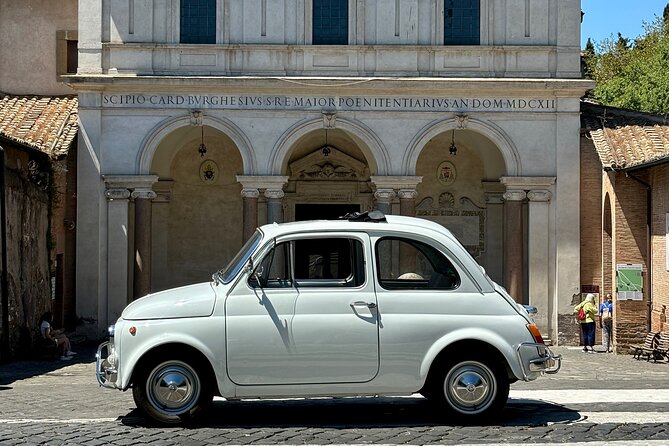
- A private ride in a Fiat 500: Your group travels alone with an English-speaking local guide and photographer.
- The Catacombs of San Callisto: A 45-minute guided visit is included, making this the most substantial stop.
- The Appian Way by car: You’ll pass ancient tombs, the Arch of Drusus, Roman walls, and the Baths of Caracalla.
- A quieter side of Rome: The catacombs sit among olive trees, cypresses, and meadows that feel far removed from central Rome.
- Professional photos included: A Nikon D850 and professional lenses are used during the experience.
- Hotel pickup and drop-off: Pickup is offered at your hotel or the closest practical point.
Why the Appian Way is worth your time
Rome’s center can fill your day with grand monuments, busy streets, and long lines. The Appian Way offers a different mood. This ancient road leads away from the dense center toward open ground, old stone walls, trees, tombs, and archaeological remains.
The route begins near the Circus Maximus if you do not choose hotel pickup. This was the largest stadium of the Roman era, though only parts of the original structure remain visible today. It is a useful meeting point because it places you near the southern edge of central Rome and close to the route toward the Appian Way.
The drive also passes the Baths of Caracalla. These enormous public baths once served as a major center of Roman social life. You do not receive a full interior visit here, so think of this as an exterior sight from the car rather than a substitute for a dedicated bath tour.
That distinction matters. This experience is designed to connect several ancient sites in one smooth outing, not to provide long, detailed visits at each monument. I like that approach for a first look at the Appian Way, especially if you have limited time in Rome.
More catacomb and crypt visits from Rome:
- Rome: Crypts and Catacombs Underground Tour with Transfers
★ 4.6 · 5,341 reviews - The Original Roman Crypts and Catacombs Tour with Transfers
★ 4.5 · 4,896 reviews - Rome: Catacombs of St. Callixtus Entry Ticket & Guided Tour
★ 4.6 · 3,037 reviews
Riding Rome in a classic Fiat 500
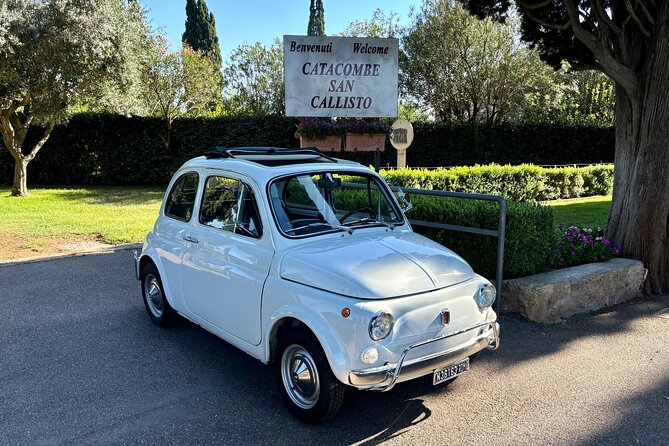
The Fiat 500 is a central part of the experience, not just a way to get from one stop to the next. The small car adds character to a route that could otherwise feel like a standard archaeological transfer.
You travel privately, with only your own group. That gives you more freedom than a large coach tour and makes it easier to ask questions or pause for photographs. The English-speaking local guide also serves as a photographer, and professional photos are taken with a Nikon D850 and professional lenses.
The exact guide is not guaranteed in the tour details, but Andrea is named in one account as the person who drove the Fiat 500 and explained the area. If Andrea is assigned to your booking, you can expect a local guide with a strong sense of the route and its Roman sights. Since staffing can change, I would not book solely on the assumption that he will lead your tour.
The car’s size is part of its charm, but it can also be a practical consideration. If your group includes several people or you prefer a great deal of personal space, ask about the vehicle arrangement before booking. The tour is private, but the Fiat 500 itself is a compact car.
From the Circus Maximus to the Baths of Caracalla
The optional starting point is Via del Circo Massimo, 5. If you select pickup, the tour collects you at your hotel or as close as possible. That is useful in Rome, where navigating to a meeting point can take longer than expected, especially early in the day or after a busy sightseeing schedule.
From the Circus Maximus, the route follows the archaeological area toward the Baths of Caracalla. This part of the drive gives you a quick introduction to the scale of ancient Rome. You see how the monumental center extended beyond the Colosseum and Roman Forum.
The Baths of Caracalla are especially striking from the road because of their size. The ruins are not delicate fragments. They are broad, imposing remains that hint at the scale of Roman public buildings. You will not have time for an extended visit inside, so keep your expectations clear: this is a passing view and a piece of the larger route.
The value comes from seeing the sites in relation to one another. Instead of visiting the Colosseum in isolation, you get a sense of the roads and public buildings that formed the wider Roman world.
The Appian Way and the Tomb of the Scipios
After the Baths of Caracalla, the Via Appia Antica begins. The Appian Way is often called Rome’s most famous ancient road, and the reason becomes clear as the modern city thins out and the old route opens up.
One early sight is the Tomb of the Scipios. The Scipios were one of ancient Rome’s most important families, and their tomb gives the road a personal connection to Roman power. This is not simply an anonymous ruin. It is a burial place tied to a prominent family, which makes the roadside remains easier to understand.
You also pass beneath the Arch of Drusus, an imposing Roman monument along the route. The arch is one of several reminders that the Appian Way was more than a local lane. It was a major route into and out of Rome, lined with monuments, tombs, and structures meant to be seen by people arriving in the city.
The tour gives you these sights from the car, with stops selected for the main visits. If you want to study every tomb or photograph each stretch of ancient road, a longer walking tour will serve you better. If you want a broad look without spending half a day on foot, this short drive is more practical.
More Appian Way days out:
- Rome EBike Tour: Appian Way, Catacombs & Roman Aqueducts
★ 5.0 · 1,766 reviews - Rome: Appian Way, Catacombs, & Roman Aqueducts E-bike Tour
★ 4.9 · 1,421 reviews - Rome:Appian Way E-bike Tour with Catacombs, Aqueducts & Food
★ 4.9 · 1,210 reviews - Rome Underground: Catacombs Tour, Aqueducts and Appian Way
★ 5.0 · 1,007 reviews
The Catacombs of San Callisto
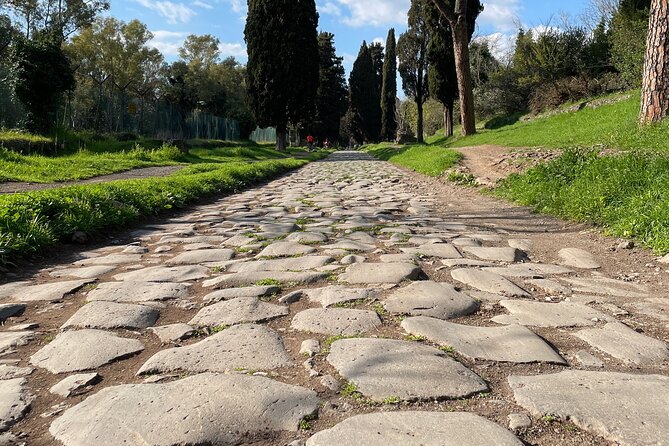
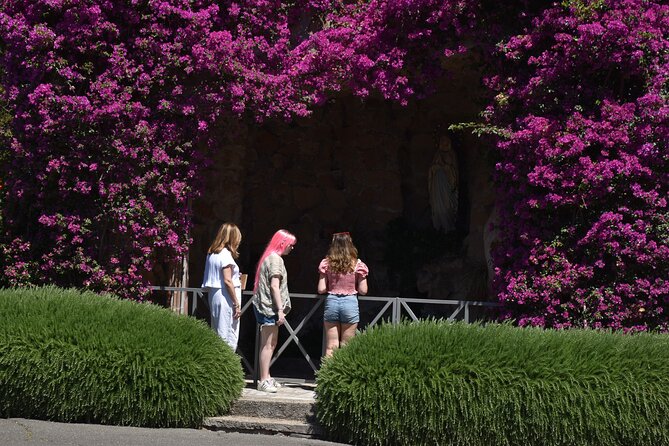
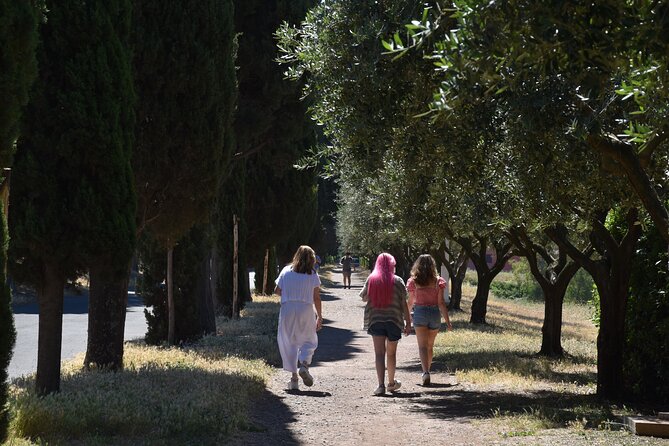
The Catacombs of San Callisto are the heart of the tour. Once you arrive, the setting changes quickly. Olive trees, cypress-lined roads, and green meadows surround the site, giving it a quiet countryside feel that contrasts sharply with central Rome.
The tour includes a 45-minute guided visit inside the catacombs. An expert guide leads the underground portion in a small group, which is important because the passageways are not suited to a large, loose crowd. You receive context about the site while moving through the enclosed spaces rather than simply entering on your own.
This is also the point where you need to judge your comfort level. The catacombs are underground, and the experience is not recommended if you suffer from claustrophobia. The tour details do not promise a fully accessible route, so anyone with mobility concerns should ask for current conditions before booking.
The catacombs add something that the outdoor ruins cannot. Tombs and arches show the public face of Roman history, while the catacombs point to burial practices and religious life below the road. You are not just looking at a wall from the car. You are entering a place with a more enclosed and personal atmosphere.
The 45-minute length is enough to make the visit worthwhile without turning the entire outing into an underground tour. Wear comfortable shoes and listen closely to the guide’s instructions. The supplied information does not specify temperature or exact conditions below ground, so a light layer may be sensible if you are sensitive to cool interiors.
Domine Quo Vadis and the footprint of Jesus

After San Callisto, the route continues to the Church of Domine Quo Vadis. The visit lasts about 15 minutes and includes admission.
This small stop connects the Appian Way with a Christian tradition about Saint Peter. The church houses a copy of a footprint associated with Jesus. The nearby Basilica of San Sebastiano also has a related footprint display, so the route gives you two brief encounters with this tradition.
Do not expect a large museum visit here. Fifteen minutes is enough for a look inside, a moment of quiet, and a quick explanation from your guide. The stop works best as part of the full route rather than as a stand-alone attraction.
I like this pause because it breaks up the sequence of Roman ruins. You move from imperial roads and tombs to a place of Christian memory, then continue toward the basilica.
The Tomb of Cecilia Metella and the Aurelian Walls
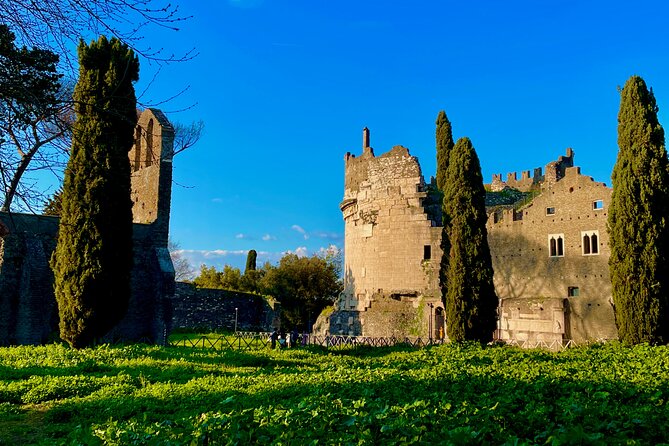
The Tomb of Cecilia Metella is one of the most recognizable monuments on the Appian Way. It began as a mausoleum and was later incorporated into a fortified structure by the Caetani family, turning a burial monument into part of a medieval defensive complex.
The planned visit is from the outside. You may enter independently if you wish, but that requires paying the separate admission cost. Since every other listed tour cost is included, this is the one possible extra expense to keep in mind.
The outside view still gives you a strong sense of the monument’s scale. The tomb is not just a low stone marker. Its large, fortified form shows how later generations reused ancient structures for their own needs.
A few meters after the Arch of Drusus, you also see one of Rome’s old access gates within the Aurelian Walls. This stretch is considered one of the more attractive parts of the walls, and the short stop helps show how the city was enclosed and defended.
The combination of tomb, arch, and wall makes this part especially good for visitors who like layers of history. A Roman road, a family mausoleum, a medieval fortification, and the later city defenses all appear along the same route.
Basilica San Sebastiano fuori le Mura
The Basilica of San Sebastiano fuori le Mura is the final named stop. It is one of the traditional seven churches visited by pilgrims during a jubilee and was built over the Catacombs of San Sebastiano.
The visit lasts about 15 minutes, and admission is included. The basilica also houses the last sculpture made by Bernini, giving the stop artistic importance as well as religious meaning.
As with Domine Quo Vadis, this is a concise visit. You will have time to enter, see the main features, and hear the essential background, but not to linger for a long church study. If Bernini is a major reason for your trip, you may want a separate visit with more time.
The basilica also rounds out the underground story. San Callisto provides the main guided catacomb experience, while San Sebastiano shows another Roman basilica built above catacomb remains. The two stops help you understand how burial sites and churches became linked in the city’s religious history.
Aqueduct views and the open Roman countryside
The experience is sold around the Appian Way, aqueducts, and catacombs. The listed stops focus most clearly on the Appian sites, while one account specifically notes that the route also included the aqueducts and found that part excellent.
That means you should confirm the exact aqueduct portion when booking, especially if aqueduct photography is your main goal. The route’s move beyond central Rome gives you a chance to see open land and ancient infrastructure that many short city tours skip, but the precise stopping point is not specified.
This is one reason the private format helps. A local guide can shape the drive around the route and explain what you are seeing along the way. Still, the full experience lasts about 2 hours and 45 minutes, so the aqueduct portion cannot be assumed to be a long walking visit.
What the $161.56 price includes
At $161.56 per person, this is not the cheapest way to see the Appian Way. The value depends on how much you would otherwise spend arranging the same pieces yourself.
The price includes private transportation, hotel pickup and drop-off, an English-speaking local guide, the professional photography session, the catacomb admission and guided visit, and the other listed entrance fees. There are no additional tour costs listed.
That bundle is useful in Rome. You do not need to organize transport to the Appian Way, find the catacomb entrance, arrange a separate photographer, or work out how to return to your hotel. The photography also has real value for couples, families, or anyone who wants more than quick phone snapshots.
The price is harder to justify if you mainly want a long, scholarly visit at each monument. This is a short private overview with one substantial guided stop underground and several brief outdoor or church visits. You are paying for convenience, privacy, the Fiat 500 experience, and photography as much as for the archaeology.
The experience is commonly reserved well ahead of time, with an average booking lead time of about 56 days. That suggests you should plan early if your Rome dates are fixed.
Who should book this Fiat 500 tour?
I would choose this experience if you want to get beyond the central sights without giving up comfort. It suits couples, families, and small private groups who prefer a personal outing to a coach tour.
It is also a good fit if you have already seen the Colosseum and Roman Forum and want a different side of the city. The Appian Way, catacombs, basilicas, and walls create a quieter day than central Rome’s main attractions.
The tour may suit you especially well if you enjoy photography. A Nikon D850 and professional lenses are included, and the Fiat 500 provides a distinctive setting for pictures. The tour is offered in English, and most people can participate, according to the supplied information.
I would hesitate if you dislike enclosed spaces, need a long pause at every site, or want a full aqueduct walking tour. I would also check the car setup if your group is larger or you need extra room.
Should you book it?
Book this tour if you want a compact, private way to reach the Appian Way and catacombs, with transport and professional photos handled for you. The strongest parts are the small-group catacomb visit, the unusual Fiat 500 ride, and the chance to see Rome’s ancient roads and monuments away from the center.
Skip it if your priority is maximum time inside each monument or a detailed archaeological lecture. At roughly three hours, it is best understood as a well-packed introduction, not a full-day study of the Appian Way.
The free cancellation policy gives you some flexibility: you can cancel up to 24 hours before the start time for a full refund. For the right visitor, this is a smart way to add a quieter and more atmospheric side trip to a busy Rome schedule.
FAQ
How long does the tour last?
The experience lasts approximately 2 hours and 45 minutes.
Is hotel pickup available?
Yes. Pickup and drop-off are offered at your hotel or at the closest possible point.
What is the main guided visit?
The main guided visit is inside the Catacombs of San Callisto. It lasts about 45 minutes and is led by an expert guide in a small group.
Is the tour private?
Yes. The activity is private, so only your group participates with the local guide and photographer.
Are entrance fees included?
Yes. The listed tour costs are included. Independent entry to the Tomb of Cecilia Metella, if you choose to go inside, requires a separate ticket.
Is the tour suitable for people with claustrophobia?
No. The experience is not recommended for people suffering from claustrophobia because it includes an underground visit to the catacombs.
Newest reviews from Rome
- ROME:Colosseum & Ancient Rome – private/small group TOUR★ 5.0 · 24 reviews
- Off the Beaten Track in Rome: Rione VI Parione Private Tour★ 5.0 · 24 reviews
- Cinematic Photoshoot in Rome★ 5.0 · 24 reviews
- Rome: Best of Colosseum and Roman Forum Small Group Guided Tour★ 4.5 · 24 reviews
- The Labyrinth of Rome between catacombs and ancient quarries★ 4.5 · 24 reviews
- Vatican and Trionfale Market Tour with Wine and Food Tasting★ 5.0 · 24 reviews
- private tour: Vatican Museums, Sistine Chapel, St. Peter’s Basilica★ 4.5 · 24 reviews
- Colosseum guided tour with Virtual Reality★ 5.0 · 24 reviews
Catacombs & Crypts, compared.

Crypts and Catacombs Underground Tour with Transfers
Read our review →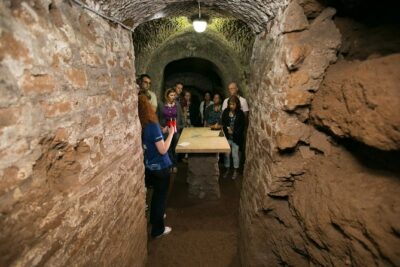
The Original Roman Crypts and Catacombs Tour with Transfers
Read our review →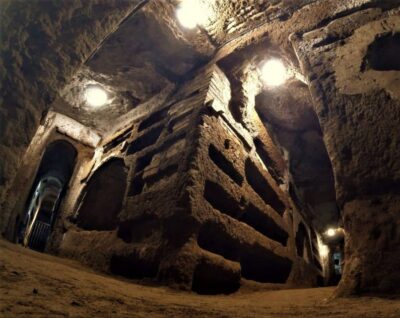
Catacombs of St. Callixtus Entry Ticket & Guided Tour
Read our review →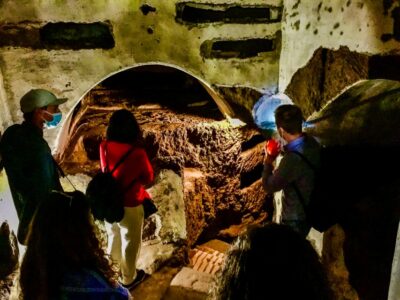


Rome EBike Tour: Appian Way, Catacombs & Roman Aqueducts
Read our review →
Catacombs and Capuchin Crypt Guided Tour with Transfer
Read our review →
St. Peter’s Basilica Priority Access Tour with Dome & Crypt
Read our review →Browse the lists this tour appears in