
Reviewed · TREVI FOUNTAIN & PANTHEON WALKS
City walk through Spanish steps, Trevi fountain, Pantheon, Navona, Angel Castle
Rome reveals itself best on foot, and this route strings together some of the city’s most rewarding central sights in three hours. You’ll move from the Spanish Steps and Trevi Fountain to the Pantheon, Caravaggio’s paintings, Piazza Navona, the Tiber, and Castel Sant’Angelo. I like the private format, which lets your guide adjust the pace and spend more time on subjects that interest you. I also like the clear historical thread, from ancient Rome to Baroque Rome and the city’s modern political center.
The main drawback is the price. At $524.97 for up to three people, this makes the most sense for a small private group, not a solo visitor watching every euro. You should also expect a fairly brisk route, with a lot of standing and walking between stops.
In This Review
- Key points to know before booking
- A strong first walk through Rome’s historic center
- Spanish Steps: Rome’s grand opening scene
- Trevi Fountain: a close look at Rome’s great water show
- Piazza Colonna and the political face of Rome
- The Pantheon, from exterior lines to interior space
- Saint Louis of the French and Caravaggio
- Piazza Navona and the layers beneath the Baroque
- The Tiber and Rome’s bridges
- Castel Sant’Angelo: ending beside a Roman fortress
- What the private format adds
- Is $524.97 a fair price?
- Who should book this Rome walk?
- Should you book it?
- FAQ
- How long does the walking tour last?
- Where does the tour begin?
- Where does the tour end?
- Is this a private tour?
- Is the tour offered in English?
- Can I cancel for a full refund?
Key points to know before booking
- Eight central stops in three hours: The route covers the Spanish Steps, Trevi Fountain, Piazza Colonna, the Pantheon, Saint Louis of the French, Piazza Navona, the Tiber, and Castel Sant’Angelo.
- A true private tour: Only your group participates, so you can ask questions and request a slower or faster pace.
- A useful Rome overview: You see major monuments while learning how ancient, religious, artistic, and political Rome fit together.
- Caravaggio is part of the route: The Church of Saint Louis of the French includes the Chapel of Saint Matthew and its Caravaggio paintings.
- Flexible departure choices: You can choose a morning or afternoon start.
- Best value for three people: The $524.97 group price works out to about $175 per person for three, but considerably more for one or two.
A strong first walk through Rome’s historic center
This is the kind of tour that helps you get your bearings quickly. In a short span, you see Rome’s most famous fountain, one of its best-preserved ancient buildings, a Baroque square, a working river, and the fortress beside the Vatican area.
I like that the route is not limited to postcard sights. Piazza Colonna gives you a look at modern government, Saint Louis of the French brings in major religious art, and the Tiber helps explain how the city functions beyond its monuments. The guide is there to connect those pieces instead of simply pointing at them.
The tour is offered in English and lasts about three hours. Morning and afternoon departures give you some control over your day, which is useful if you have train plans, museum reservations, or a late arrival. Since the route ends at Castel Sant’Angelo, you can continue exploring that area afterward rather than being returned to the starting point.
The walk begins at Babington’s Tea Room at Piazza di Spagna, 23. That is a precise and recognizable meeting point near the Spanish Steps. It finishes in front of Saint Angel Castle at Piazza Pia. The route is one-way, so plan your next activity near the Vatican side of central Rome, or allow time for your return journey.
More Trevi and Pantheon walks:
- Rome: Pantheon Timeless Marvel Guided Tour with Entry Ticket
★ 4.9 · 4,002 reviews - Rome: Pantheon Priority Entry Ticket & Audio Guide App
★ 4.1 · 3,234 reviews - Enjoy Spritz and Pasta Making in Piazza Navona
★ 5.0 · 1,681 reviews
Spanish Steps: Rome’s grand opening scene
The Spanish Steps are a fitting place to begin because the area combines architecture, shopping streets, fountains, and Rome’s old habit of turning public space into theater. Your guide covers the history and design of the square and the nearby streets during the opening half hour.
The steps themselves are free to view, as is the rest of the outdoor route. You can expect an explanation of how this part of Rome developed, rather than a quick photo stop. That matters because the square can seem like a simple staircase until someone explains how its surrounding buildings and public spaces work together.
The start is also practical. You get an immediate introduction to Rome’s layout before walking toward the Trevi Fountain. Wear comfortable shoes, and remember that this is a standing and walking tour rather than a coach ride with short exits.
Trevi Fountain: a close look at Rome’s great water show
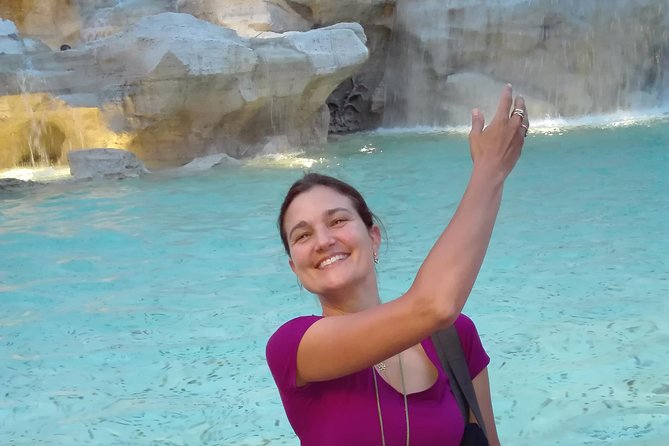
The walk continues to the Fontana di Trevi, with about 25 minutes devoted to its story and architecture. The fountain is one of Rome’s most recognizable sights, but a guide adds useful context about the design and the role of water in the city.
This is an outdoor stop, and no separate admission ticket is listed. Your guide can help you read the fountain as architecture, not just as a place to take a coin-toss photograph. Look closely at the figures, movement, and relationship between the sculpture and the surrounding buildings.
The short time here is a strength and a limitation. You get a focused explanation without spending half the tour at one monument, but you will not have a long period for sitting, sketching, or taking every possible photograph. If the fountain is especially crowded, the private format gives you a chance to ask questions while keeping the group moving.
Piazza Colonna and the political face of Rome
Piazza Colonna provides a useful change of subject. The stop lasts about 20 minutes and focuses on the square’s history and its role as a modern political center.
Many sightseeing walks rush from one ancient monument to the next. I like the inclusion of Piazza Colonna because it reminds you that Rome is not only a museum. Its squares still connect to government, civic life, and the working city.
This is also the point where a good guide can make the route feel less like a checklist. Chris, one of the guides associated with this experience, has been praised for explaining the meaning of what you are seeing and for helping guests understand important figures in Rome’s past. That approach is especially useful here, where context matters more than a single dramatic monument.
More walking tours in Rome:
- Rome: Trastevere & Campo de Fiori Street Food Walking Tour
★ 4.9 · 2,768 reviews - Rome: Paranormal Night Walking Tour & Secret Backstreets
★ 4.9 · 1,921 reviews - Rome by Night Walking Tour – Legends & Criminal Stories
★ 4.5 · 1,003 reviews - Rome: Guided City Center Evening Sightseeing Walking Tour
★ 4.4 · 953 reviews
The Pantheon, from exterior lines to interior space
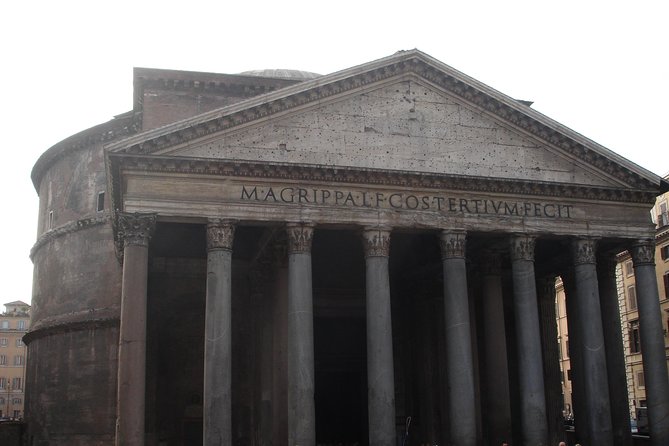
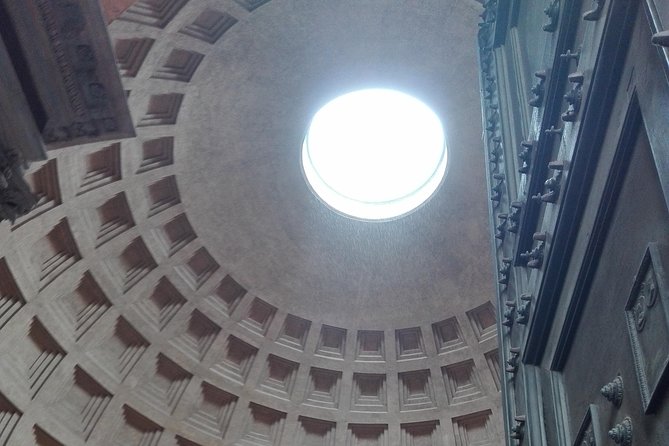
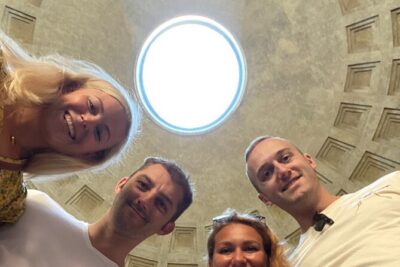
The Pantheon receives about 30 minutes, making it one of the longer stops. The guide discusses its architecture and explains the building from the outside and inside.
This is the architectural centerpiece of the walk. The exterior gives you the familiar columns and monumental front, while the interior shows why the building is so important to Rome’s story. Your guide can help you notice the scale, structure, and unusual details that are easy to miss when you enter alone and simply look upward.
The supplied tour details list admission as free. Still, conditions at major monuments can change, and access may depend on opening arrangements or crowd control on the day. Treat the visit as an important part of the route, but do not book another timed activity immediately afterward.
Thirty minutes is enough for an explanation and a careful look, but not for a long, quiet visit. If the Pantheon is your main reason for booking, you may want to return independently when you have more time.
Saint Louis of the French and Caravaggio
The Church of Saint Louis of the French is a particularly good addition. The stop lasts around 20 minutes and includes the Chapel of Saint Matthew, known for its Caravaggio paintings.
This is where the tour shifts from large public monuments to a more intimate art experience. Caravaggio’s work rewards close attention to light, faces, gesture, and drama. A guide can point out what makes the paintings important and explain their place within the church, rather than leaving you to search for them without context.
Because the church is an active religious site, conditions may affect the visit. Keep your clothing and behavior respectful, and remember that church access can be more sensitive than entry to an outdoor square. The tour information does not promise a private church viewing or extra time beyond the listed stop, so expect a focused visit.
For many people, this will be the most memorable stop. It has genuine artistic weight, yet it takes less time than the grander monuments. That is good itinerary design.
Piazza Navona and the layers beneath the Baroque
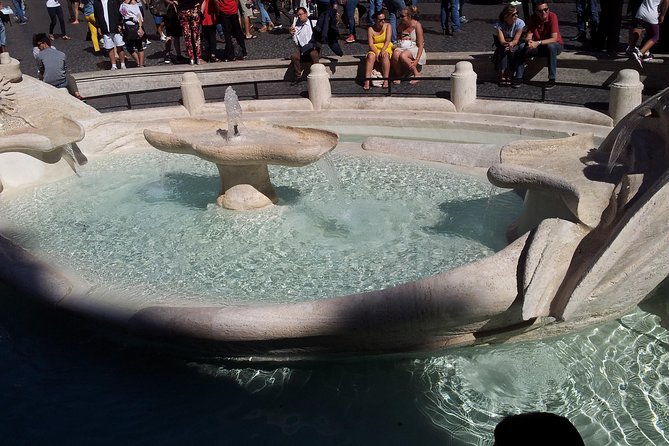
Piazza Navona receives about 25 minutes, with attention to its central fountain and the square’s change from an ancient stadium to a Baroque public space.
This is one of the clearest examples of Rome’s habit of building one age on top of another. You see a lively, elongated piazza today, but its form reflects an earlier Roman athletic venue. The guide’s job is to help you picture those layers without turning the explanation into a classroom lecture.
The central fountain gives the stop its visual focus, while the shape of the square provides the historical surprise. I like this pairing because you learn to look at the whole space, not just the sculpture in the middle.
Again, 25 minutes is a sampler, not a full exploration. You will understand why Piazza Navona matters, but you will not have time to linger at every fountain, church, café, or side street. If you enjoy people-watching, mark the square for a later return.
The Tiber and Rome’s bridges
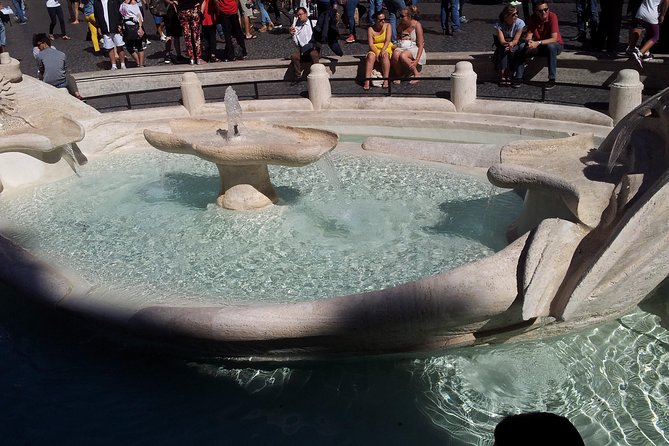
The route then reaches the Fiume Tevere, or Tiber River, for about 10 minutes. The discussion covers river life in the city and the bridges.
This is the shortest stop, but it serves an important purpose. The Tiber helps explain Rome’s geography and movement. Bridges connect neighborhoods, while the river gives the city a natural line through its historic center. You also get a break from churches and fountains and see a less polished part of Rome’s daily setting.
Do not expect a long riverside walk. Ten minutes is enough for orientation and a few views, not for a detailed study of the waterfront. The value is in the connection between the monuments you have seen and the physical shape of the city.
Castel Sant’Angelo: ending beside a Roman fortress
The final stop is the Museo Nazionale di Castel Sant’Angelo, discussed from the outside for about 20 minutes. The guide covers its changing role through the centuries, and the tour ends in front of Saint Angel Castle.
The building makes a strong ending because it carries several identities. You see a massive fortified structure beside the river, with a history that reaches across different periods of Rome. The outside explanation gives you a clear sense of why the building matters without requiring a full museum visit.
Admission inside is not included as a separate part of this walking experience. If you want to tour the museum, plan that as another activity and check its opening arrangements independently. The route itself finishes outside, at Piazza Pia.
Ending here is convenient if your next stop is in the Vatican area. It is less convenient if you need to return to the Spanish Steps, since this is a one-way walk. That is not a flaw, but it is something to include in your day plan.
What the private format adds
The biggest practical advantage is control. Only your group participates, so you can ask about a particular painting, slow down for a family member, or move along when a subject has been covered.
The itinerary is fixed enough to deliver a coherent overview, but the wording describes it as relaxed and flexible. That means you should feel comfortable telling the guide what interests you. Someone focused on architecture may want more time at the Pantheon. An art lover may want extra explanation at Saint Louis of the French. A first-time visitor may need help understanding the city’s major figures and periods.
Guide quality matters greatly on a route like this. Chris is noted for making the meaning of the sights and important figures clear. Gigi is described as keeping attention through the full tour while bringing strong subject knowledge and personal touches. You may not receive either guide, but their approach gives you a useful idea of the experience the company aims to provide.
Is $524.97 a fair price?
The price is $524.97 per group of up to three people. For a full group, that comes to roughly $175 per person. For two people, it is about $262.50 each, and a solo booking bears the full group cost.
That is expensive beside a large group walking tour. The value comes from privacy, an English-speaking guide, a route that covers eight important stops, and the chance to ask questions throughout. If you are three friends or family members who want a personal introduction to Rome, the cost is easier to justify.
The price is harder to defend if you mainly want transportation, long interior visits, or a slow art tour. This is a concentrated city walk. Tips are not included, so plan for that additional expense if you choose to leave one.
The fact that the experience is often booked 123 days ahead suggests that reserving early is sensible, especially if your dates are fixed. That figure is an average, not a guarantee of limited availability, but it tells you this is not necessarily a last-minute product.
Who should book this Rome walk?
I would recommend it most strongly to first-time Rome visitors with only a few hours, couples or families who value privacy, and small groups who want one guide for several major sights. It is also a good fit if you prefer learning the story of a place while walking through it rather than visiting disconnected monuments alone.
You should think twice if you dislike walking, need frequent seated breaks, or want to spend a long time inside the Pantheon or Castel Sant’Angelo. The three-hour schedule is full, and the route keeps moving.
The tour is near public transportation, and most people can participate. Service animals are allowed. The meeting point is clear, and the end point is equally clear, but you should plan your onward route from Castel Sant’Angelo rather than assuming you will return to Piazza di Spagna.
Free cancellation is available up to 24 hours before the start time for a full refund. Changes or cancellations made inside that window are not accepted for a refund.
Should you book it?
Book this walk if you want a private Rome orientation with real historical explanation, a manageable three-hour schedule, and a route that includes both headline sights and worthwhile lesser stops such as Saint Louis of the French and Piazza Colonna.
Skip it if the $524.97 group price is outside your budget or if you prefer to explore slowly on your own. For three people sharing the cost, the private format is much more appealing. For one person, the price is difficult to justify unless personal guiding is your top priority.
FAQ
How long does the walking tour last?
The tour lasts approximately three hours.
Where does the tour begin?
It begins at Babington’s Tea Room, Piazza di Spagna, 23, 00187 Roma RM, Italy.
Where does the tour end?
The tour ends in front of Saint Angel Castle at Piazza Pia, Rome.
Is this a private tour?
Yes. Only your group participates, with a maximum of three people.
Is the tour offered in English?
Yes. English is the available tour language.
Can I cancel for a full refund?
Yes. You can cancel at least 24 hours before the experience start time for a full refund. Changes or cancellations made less than 24 hours before the start time are not accepted for a refund.
Newest reviews from Rome
- ROME:Colosseum & Ancient Rome – private/small group TOUR★ 5.0 · 24 reviews
- Off the Beaten Track in Rome: Rione VI Parione Private Tour★ 5.0 · 24 reviews
- Cinematic Photoshoot in Rome★ 5.0 · 24 reviews
- Rome: Best of Colosseum and Roman Forum Small Group Guided Tour★ 4.5 · 24 reviews
- Vatican and Trionfale Market Tour with Wine and Food Tasting★ 5.0 · 24 reviews
- private tour: Vatican Museums, Sistine Chapel, St. Peter’s Basilica★ 4.5 · 24 reviews
- The Labyrinth of Rome between catacombs and ancient quarries★ 4.5 · 24 reviews
- Colosseum guided tour with Virtual Reality★ 5.0 · 24 reviews
Trevi Fountain & Pantheon Walks, compared.
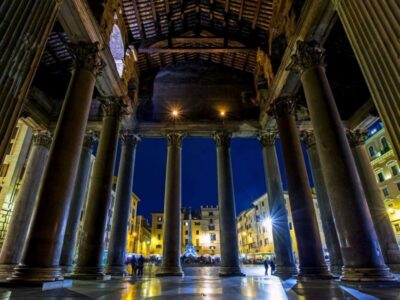
Pantheon Timeless Marvel Guided Tour with Entry Ticket
Read our review →
Pantheon Priority Entry Ticket & Audio Guide App
Read our review →
Enjoy Spritz and Pasta Making in Piazza Navona
Read our review →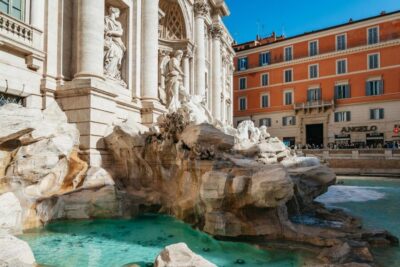
Pantheon Elite Guided Tour – Rome’s Iconic Ancient Temple
Read our review →
Pasta & Tiramisu Cooking Class near the Spanish Steps
Read our review →
Traditional Pizza Cooking Class near Piazza Navona
Read our review →
Rome’s Iconic Temple: Pantheon Audio Guided Tour with Fast Access
Read our review →Browse the lists this tour appears in