
Reviewed · COLOSSEUM TOURS
Colosseum and Roman Forum – Private tour
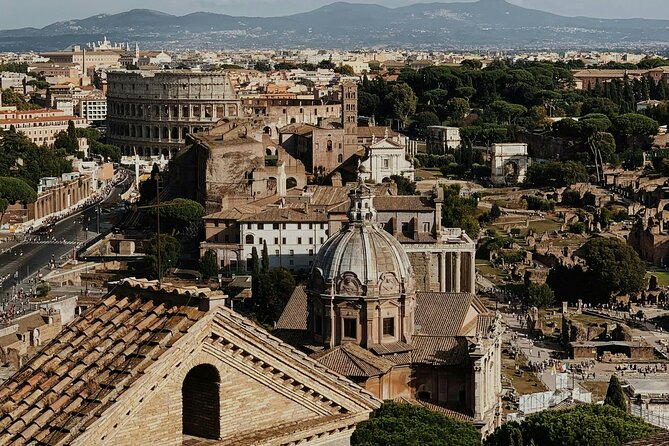
Rome’s ancient center makes the most sense when someone helps you read it. This private tour links the Roman Forum with the Colosseum, moving from the political heart of the Republic and Empire to the vast arena where about 60,000 spectators once watched public spectacles. A good guide turns scattered stones into a city you can picture.
I like the one-group format, since your guide can adjust the pace, answer family questions, and find shade on a hot day. I also like the use of visual aids and reconstructions, which help you understand buildings that now survive as fragments. The main drawback is the price: at $338.76 per person, this is a premium experience, and much of that cost covers the private service rather than the admission ticket itself.
In This Review
- Key points to know before booking
- Why this private tour works at Rome’s ancient center
- Walking Via dei Fori Imperiali
- The Roman Forum, where Rome debated and governed
- Curia Julia and the machinery of the Senate
- The Temple of Divus Julius and Caesar’s turning point
- The Temple of Vesta and the Vestal Virgins
- The Arch of Titus and the Via Sacra
- The Arch of Constantine beside the Colosseum
- Entering the Colosseum for 90 minutes
- The guides make or break the experience
- Price, pickup, and practical value
- Heat, shoes, water, and names on tickets
- Who should book this Rome tour?
- FAQ
- How long does the private Colosseum and Roman Forum tour last?
- Is the tour private?
- What language is the tour offered in?
- Are Colosseum and Roman Forum tickets included?
- Is arena access included?
- Can I arrange hotel pickup?
- What should I bring?
- Can I cancel for a full refund?
Key points to know before booking
- Three hours covers two major sites: You spend about an hour in the Forum and about 90 minutes inside the Colosseum, with nearby arches and the Imperial Fora included along the way.
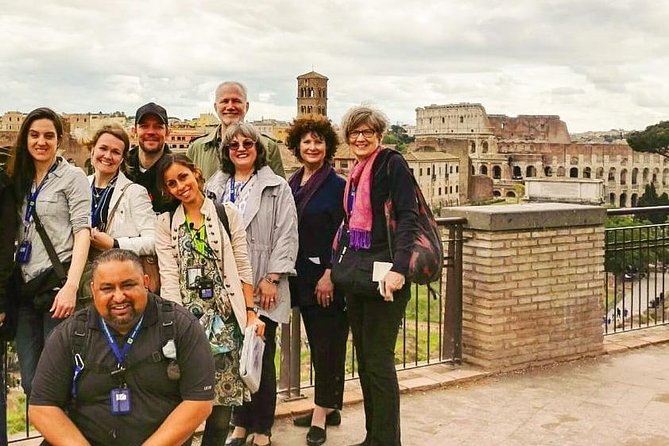
- Private means personal attention: Your group is the only group on the activity, so the guide can slow down, answer questions, or keep children engaged.
- The guides are the main value: Denis, Rachele, Paolo, Luisa, Paola, Barbara, Chiara, and Maria Serena are among the guides praised for clear explanations, patience, and strong storytelling.
- Expect a lot of walking: The route includes uneven ancient paths, stairs, open archaeological ground, and little shade.
- Bring legal identification: Every name on the booking must match the full name on a passport or government-issued photo ID.
- Pickup is optional: Hotel or Airbnb pickup and drop-off require the appropriate transfer option, rather than coming automatically with every booking.
Why this private tour works at Rome’s ancient center
The Colosseum is easy to admire and surprisingly hard to understand on your own. You see arches, tiers, tunnels, and worn stone, but the original purpose of each area is not always clear. The Roman Forum presents an even greater challenge. It is a wide field of ruins, with temples, government buildings, roads, and monuments spread across uneven ground.
A private guide gives those remains a human scale. Instead of simply pointing out a column, your guide can explain who used the building, how it fitted into Roman public life, and why the site mattered. The strongest guide accounts describe Denis explaining the wider story of Rome, while Rachele, Paolo, Luisa, and others made the ancient setting easier for children and teenagers to follow.
That personal approach matters here. You are not being pushed through a fixed script with a large crowd. If you want more detail on Julius Caesar, Roman religion, engineering, or gladiatorial games, you can ask. If your children need a change of pace, the guide can make the story more visual and direct.
Still, three hours goes quickly. You receive a focused introduction to the Forum and Colosseum, not an exhaustive study of every monument in the archaeological park. If you want to examine every inscription or spend long stretches taking photographs, you may need extra time before or after the tour.
More ways to see the Colosseum:
- Rome: Colosseum, Palatine Hill and Roman Forum Guided Tour
★ 4.8 · 32,814 reviews - Rome: Guided Tour of Colosseum, Roman Forum & Palatine Hill
★ 4.7 · 27,897 reviews - Rome: Colosseum & Forum with Audio Guide App -Optional Arena
★ 4.2 · 24,770 reviews
Walking Via dei Fori Imperiali
The route begins around Largo Corrado Ricci, near the broad avenue of Via dei Fori Imperiali. This road runs between Piazza Venezia and the Colosseum and cuts through the heart of ancient Rome.
It is a dramatic place to begin. On both sides, you can see the remains of the Imperial Fora connected with rulers such as Julius Caesar, Augustus, Nerva, and Trajan. These were not one single forum, but a series of public spaces built as Rome expanded and emperors used architecture to display power.
The avenue itself is modern compared with the ruins. It was built under Benito Mussolini between 1924 and 1932, cutting through archaeological areas that had been buried beneath later layers of Rome. That contrast is worth noticing. You are looking at ancient government centers while walking on a twentieth-century road designed to frame Rome’s imperial past.
This opening section helps you get your bearings, but it is also one of the least formal parts of the tour. Depending on the exact meeting arrangement and city conditions, you may spend only a short time here before entering the Forum. Do not expect a long, separate tour of every Imperial Forum. Its value is the setting and the broad picture.
The Roman Forum, where Rome debated and governed
The Roman Forum is the heart of the experience. Allow about an hour here, including the main ruins and several short stops.
In ancient Rome, this was a place for public business, politics, speeches, religious ceremonies, and legal affairs. Citizens came here to hear speakers, meet senators, conduct business, and follow events that shaped the Republic and later the Empire. This is why the Forum is more than a collection of broken temples. It was a working civic center.
Your guide can help you picture the old roads and buildings beneath the remains. The Curia, temples, arches, and basilicas were part of a busy public zone, not isolated monuments scattered across empty grass. Visual material is especially useful here, since reconstructions show what the Forum may have looked like when its buildings were covered in marble and decorated with statues.
The ancient paths are uneven and exposed. On a hot day, there may be little shade, and the pale stone reflects the sun. Wear comfortable walking shoes and carry water. Several people specifically found a hat useful, and guides such as Denis and Rachele were praised for choosing shaded spots when possible.
The Forum also requires imagination. Some buildings are preserved well enough to read, while others are little more than foundations and columns. If you prefer instant visual impact, the Colosseum may impress you more. If you enjoy politics, religion, and the daily machinery of an ancient city, the Forum may become the more rewarding half.
Curia Julia and the machinery of the Senate
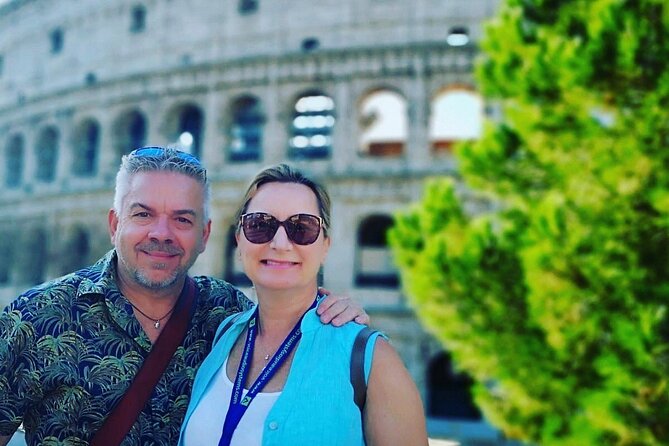
The Curia Julia receives a short stop, listed at about five minutes, but its importance is much greater than that time suggests.
Julius Caesar commissioned the building, and Augustus completed it in 29 BC. It served as a meeting place for the Roman Senate, the body that helped direct Roman public life during the Republic and continued to carry political weight under the emperors.
The structure is unusually well preserved compared with many Forum ruins. Its plain, imposing rectangular form gives you a strong sense of a formal political building. This is a useful moment to connect the Forum’s open public spaces with the rooms where decisions were debated and power was organized.
Five minutes will not allow a long architectural study. Listen for the explanation of how the Curia fits into the shift from Republic to Empire. That political change is one of the main threads tying the entire tour together.
More Roman Forum and Palatine Hill visits:
- Rome: Colosseum, Roman Forum and Palatine Hill Guided Tour
★ 4.5 · 23,903 reviews - Rome: Colosseum, Forum & Palatine Hill Tour & Optional Arena
★ 4.4 · 13,839 reviews - Rome: Colosseum, Palatine Hill & Roman Forum Guided Tour
★ 4.6 · 12,703 reviews - Rome: Colosseum Arena, Palatine Hill & Forum Guided Tour
★ 4.6 · 10,584 reviews
The Temple of Divus Julius and Caesar’s turning point
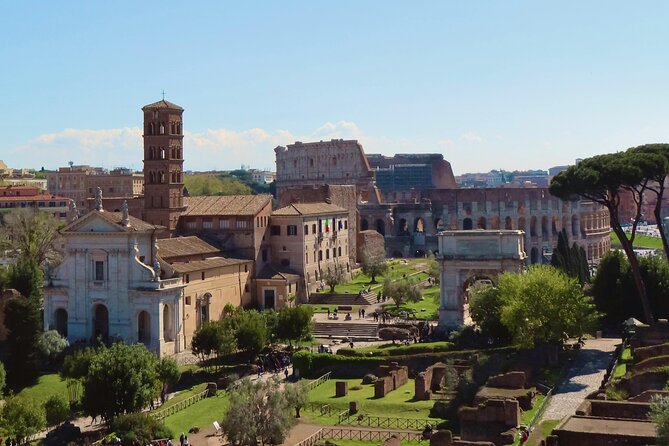
The Temple of Divus Julius marks a major emotional and political moment. Augustus built it in 29 BC to honor Julius Caesar after Caesar’s assassination and deification.
The temple stood on the site associated with Caesar’s cremation. That location turned the spot into both a religious shrine and a political statement. Caesar was no longer simply a dead leader. He had become a divine figure, and his adopted heir Augustus used that memory to support the new imperial order.
Today, you see ruins rather than the complete temple. Your guide’s explanation is what makes the site meaningful. This is a good example of why the private format can be worthwhile: you can ask how Caesar’s death affected Rome, how Augustus used his legacy, and why the site helped mark the end of the Republic.
The Temple of Vesta and the Vestal Virgins
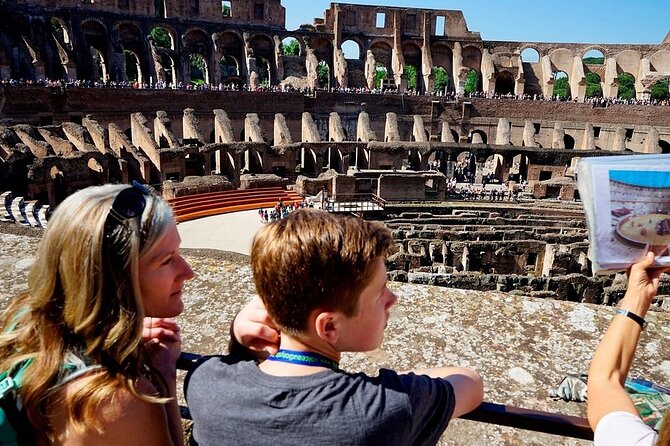
The circular Temple of Vesta was dedicated to the goddess of the hearth. Its round form represented continuity, and the sacred flame inside was tended by the Vestal Virgins.
The flame was linked with the safety and endurance of the Roman state. That idea gives the ruins a different tone from the Senate buildings and triumphal arches. Rome’s power was not based only on armies and politics. Religion was woven into public life, and ceremonies helped support the identity of the state.
Only fragments remain, so this stop depends heavily on explanation. A guide can show you how the circular plan worked and explain the role of the Vestal Virgins without making the site feel like a dry list of facts. For families, this is one of the easier stories to remember because the eternal flame gives the ruins a clear human meaning.
The Arch of Titus and the Via Sacra
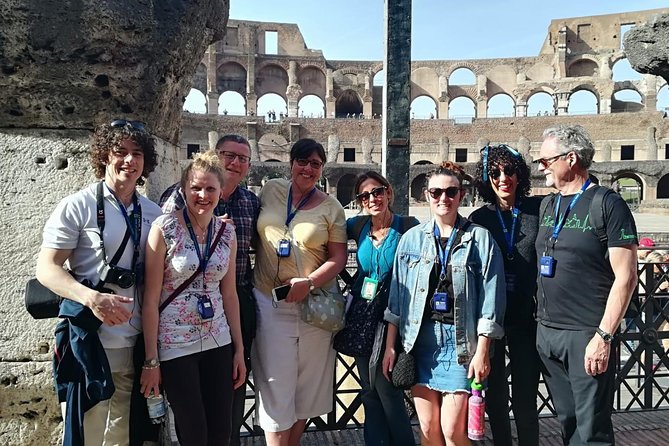
The Arch of Titus sits along the Via Sacra, one of the principal roads through the Roman Forum. Emperor Domitian built it in AD 81 to honor the military victories of his brother Titus, including the conquest of Jerusalem.
The reliefs on the arch show the emperor’s triumph and the spoils carried in the procession. Look closely at the carved scenes and you will see how Rome used monuments to celebrate conquest in public view.
The arch also helps you understand movement through the Forum. Ancient ceremonies were not abstract events. Triumphs passed along roads, crowds gathered, and monuments framed the procession. Your guide can connect the arch to the wider story of Roman military power and imperial image-making.
The Arch of Constantine beside the Colosseum
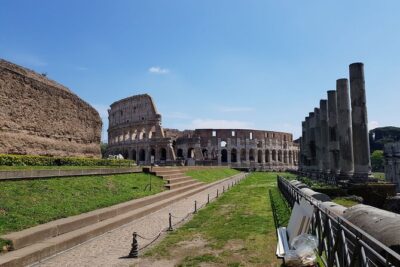
The Arch of Constantine is near the Colosseum and usually appears as a brief exterior stop. Built in AD 315, it celebrates Constantine’s victory over Maxentius at the Battle of the Milvian Bridge.
Its decoration includes sculptures and reliefs reused from earlier monuments. That mixture is useful to notice because it shows how Roman emperors borrowed the visual language of earlier rulers while presenting themselves as the next chapter in Rome’s story.
Unlike the Forum and Colosseum, this stop does not require an admission ticket. It is a quick but worthwhile pause before entering the amphitheater. You get a clear view of the arch and a reminder that Rome continued changing long after the first imperial monuments were built.
Entering the Colosseum for 90 minutes
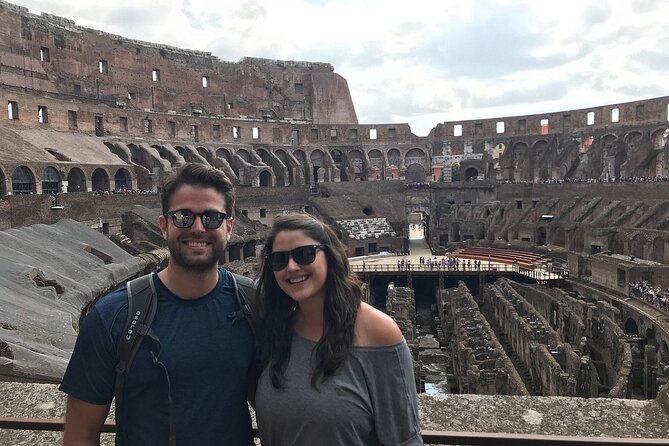
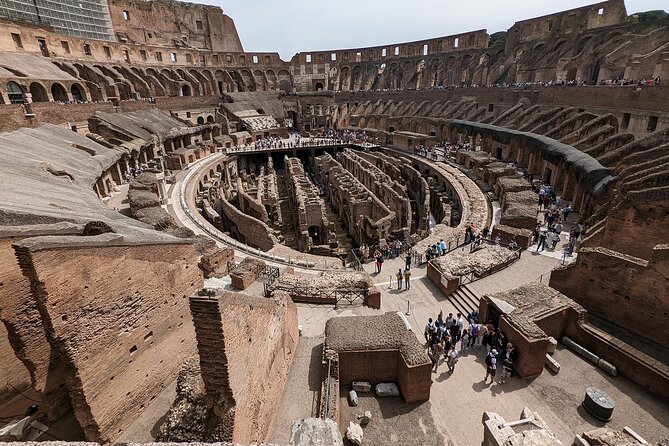
The Colosseum receives the longest part of the tour, about an hour and a half. Built from travertine limestone, tuff, and brick-faced concrete, the Flavian Amphitheatre was the largest amphitheater of its time and held roughly 60,000 spectators.
The scale becomes clear as soon as you enter. The outer walls, repeated arches, and high seating levels show the engineering skill behind a building designed to move huge crowds. The arena was not simply a stage. It was a carefully planned machine for entrances, exits, seating, spectacles, and control.
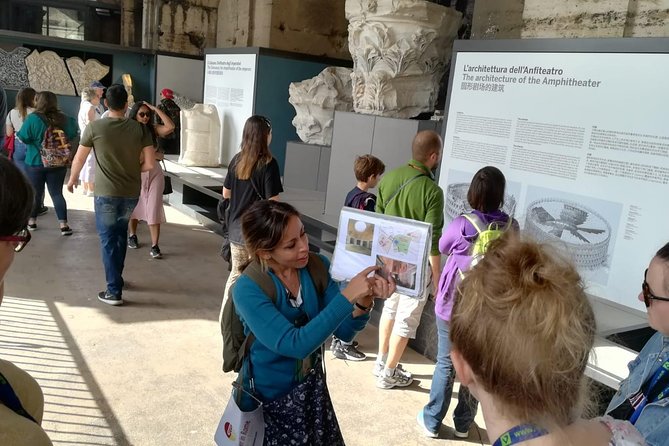
Your guide uses visual aids and reconstructions to show how the building may have looked in antiquity. This is especially useful when viewing the damaged upper levels or the exposed underground structures. Film scenes from Gladiator, Spartacus, and Ben-Hur may give you a dramatic starting point, but the real site is more complex than a movie set.
Expect stairs and a long walk. One particularly useful strength of the private format is the ability to stop at a sensible pace. Guides were praised for finding shade, choosing good photo spots, helping families with strollers, and keeping children involved. That does not remove the physical demands, but it can make the visit much more manageable.
Arena access is available only if you select that option. Do not assume it is part of the basic booking. The included entry covers the Colosseum and Roman Forum, while arena access is an upgrade.
The guides make or break the experience
The operator assigns English-speaking professional blue badge guides, and the guide is the main reason to consider paying for a private tour.
Denis receives especially strong praise for his long experience, clear English, broad Roman context, and ability to answer questions. He also worked well with children, located accessible routes, and helped a family find shade and water during extreme heat. Rachele and Luisa were also praised for vivid storytelling and for turning the ruins into a sequence of human events.
Paolo was noted for keeping children engaged and finding routes around crowds. Maria Serena was appreciated for explaining difficult history in an easy, friendly way. Paola, Barbara, Chiara, Katerina, and other guides were also described as patient, warm, and attentive.
You cannot be certain which guide you will receive unless the operator confirms it. You may request a preferred guide, but availability is not guaranteed. The consistent pattern is more useful than any one name: this tour suits you best if you want to ask questions and shape the visit around your group.
Price, pickup, and practical value
The listed cost is $338.76 per person. The included Colosseum ticket is valued at €18, with a €2 reservation fee, so the basic admission portion is only €20 per person. The remaining price pays for the private guide and related service.
That makes this poor value if you only want entrance. You can think of it as a premium guiding service attached to a standard entry ticket. For a couple or small family who wants historical context, personal attention, and a flexible pace, the price may feel justified. For a larger group, group discounts could improve the calculation, but the exact discount is not provided.
Hotel pickup and drop-off are optional. With the pickup option, an English-speaking private driver meets you in your hotel lobby or outside your Airbnb and takes you to meet the guide. This is useful if you are unfamiliar with Rome or want to avoid navigating to the start, but it adds another cost and does not replace the walking during the tour.
The advertised start is Caffè Valorani at Largo Corrado Ricci. The tour ends at the Colosseum. Public transportation is nearby, and confirmation is received at booking.
Heat, shoes, water, and names on tickets
Treat this as an outdoor walking tour with indoor archaeological spaces, not as a gentle museum visit. Wear sturdy, comfortable shoes, carry a bottle of water, and bring a hat in summer. Shade can be limited, although a private guide can choose better places to pause.
Casual dress is fine. Most people can take part, but the uneven surfaces and stairs deserve honest consideration. Families with young children can benefit from private pacing, and the guide may know accessible access points, but the activity remains physically active.
Take the ticket rules seriously. Every participant must bring a valid government-issued photo ID, and a photo of a passport is acceptable. The full legal name and surname on the booking must match the identification exactly. Nicknames, shortened names, and last-minute substitutions are not accepted.
Free cancellation is available if you cancel at least 24 hours before the local start time. Changes or cancellations inside that window are not refunded.
Who should book this Rome tour?
I would choose this tour for a first visit to Rome, a family with children, or anyone who wants the ancient center explained instead of simply photographed. It also suits you if you dislike large groups, want to stop for questions, or need a guide who can adjust the pace in hot weather.
I would hesitate if your budget is tight, you already know Roman archaeology well, or you are happy to read signs and explore independently. The ticket itself is not expensive, and the premium here is the guide.
For most first-time visitors who can afford it, the private format offers real value at the Forum, where context is hard to find on your own. Request Denis, Rachele, Paolo, Luisa, or another preferred guide if possible, but book for the service rather than expecting a particular person. You will get the most from it by arriving ready to walk, carrying water, and supplying full legal names when booking.
FAQ
How long does the private Colosseum and Roman Forum tour last?
The guided experience lasts approximately three hours. About one hour is allocated to the Roman Forum and about 90 minutes to the Colosseum, with shorter stops at nearby monuments.
Is the tour private?
Yes. Only your group participates in the private activity, allowing the guide to focus on your questions and adjust the pace.
What language is the tour offered in?
The tour is offered in English with a professional blue badge guide.
Are Colosseum and Roman Forum tickets included?
Yes. Entrance to the Colosseum and Foro Romano is included, along with the Colosseum ticket and reservation fee listed in the tour details.
Is arena access included?
Arena access is included only if you select that option when booking.
Can I arrange hotel pickup?
Yes. Hotel or Airbnb pickup is available when the pickup or transfer option is selected. An English-speaking private driver meets you in the lobby or outside the accommodation and takes you to meet the guide.
What should I bring?
Comfortable walking shoes and a bottle of water are recommended. A hat can also be useful, especially during hot weather. Every participant must carry valid government-issued photo identification, or a photo of a passport.
Can I cancel for a full refund?
You can cancel for a full refund at least 24 hours before the experience begins, based on local time. Cancellations or changes made less than 24 hours before the start are not accepted or refunded.
Newest reviews from Rome
- Rome: Vatican Museums & Sistine Chapel Skip-the-Line Ticket★ 4.4 · 148 reviews
- Shared Shuttle Transfer from Rome to Civitavecchia Port★ 5.0 · 148 reviews
- Rome: Crypts & Catacombs After Hours Tour with Bone Chapel★ 4.6 · 149 reviews
- Ghosts Legends and Mysteries of Rome Walking Tour★ 5.0 · 149 reviews
- Skip the Line: Vatican and Sistine Chapel with Guided Tour★ 4.0 · 149 reviews
- Tivoli: Villa Gregoriana Entrance Ticket★ 4.7 · 150 reviews
- Pizza and Tiramisu Cooking Class in Rome, Piazza Navona★ 5.0 · 150 reviews
- Rome: Borghese Gallery Skip-the-Line Entry and Guided Tour★ 4.7 · 150 reviews
Colosseum Tours, compared.
Colosseum, Palatine Hill and Roman Forum Guided Tour
Read our review →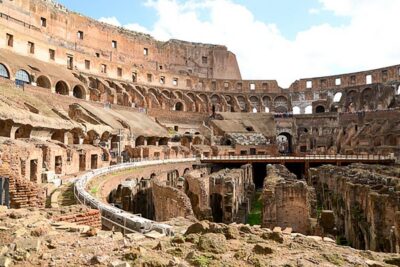
Guided Tour of Colosseum, Roman Forum & Palatine Hill
Read our review →
Colosseum & Forum with Audio Guide App -Optional Arena
Read our review →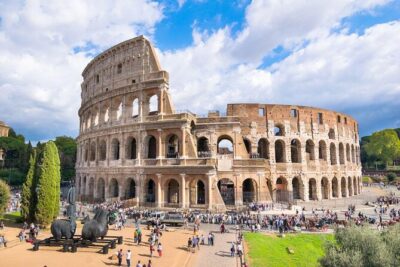
Colosseum, Roman Forum and Palatine Hill Guided Tour
Read our review →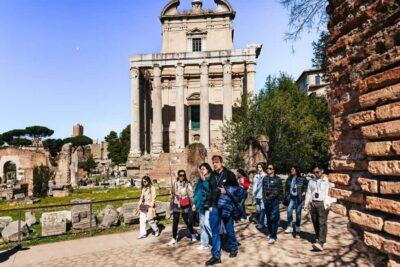
Colosseum, Forum & Palatine Hill Tour & Optional Arena
Read our review →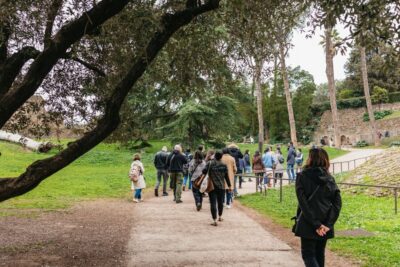
Colosseum, Palatine Hill & Roman Forum Guided Tour
Read our review →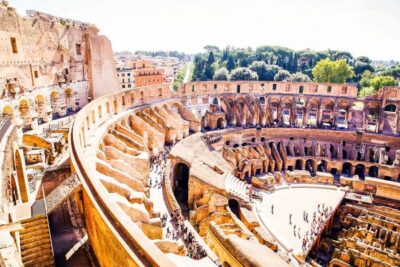
Colosseum: Underground and Ancient Rome Tour
Read our review →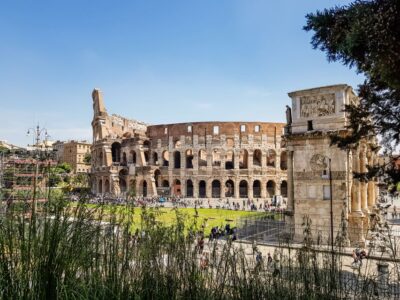
Colosseum Arena, Palatine Hill & Forum Guided Tour
Read our review →Browse the lists this tour appears in