
Reviewed · UNDERGROUND ROME TOURS
Colosseum Night Tour with Underground and Arena access
Seeing the Colosseum after dark changes the whole mood. The floodlit arches feel quieter and more dramatic, and the underground passages take on a wonderfully eerie air. I especially like the chance to walk onto the arena floor and then look below it, where animals, gladiators, lifts, and stage machinery once waited out of sight.
I also like the smaller evening setting, with a maximum of 25 people, and the headsets, which make it easier to follow the guide inside the stone shell. The main caution is value: at $142.59 per person, this is a short tour, and the quality of the English commentary can vary.
In This Review
- Key points to know
- Why the Colosseum at night feels different
- Meeting your guide and getting inside
- The grandstands and the scale of the monument
- Below the arena: tunnels, cages, and lifting machinery
- Stepping onto the arena floor through the Gate of Death
- A short tour with a high price
- Group size, guide quality, and language
- Weather, timing, and what to bring
- Palatine Hill and the Roman Forum afterward
- Who will get the most from this tour
- Should you book the Colosseum Night Tour?
- FAQ
- How long does the Colosseum Night Tour last?
- What areas of the Colosseum are included?
- Is the Roman Forum included?
- What language is the tour offered in?
- How many people can be in the group?
- Do I need to bring identification?
- Can I cancel or change the booking?
Key points to know
- The underground is the main prize: See animal chambers, cages, gladiator rooms, wooden elevators, and the old staging passages.
- You walk onto the arena floor: Enter through the archway known as the Gate of Death for a close view of the Colosseum’s central stage.
- Night brings cooler air and fewer people: The quieter setting makes photos and sightseeing easier than during a crowded daytime visit.
- The tour lasts about 1 hour 15 minutes: Some people have found the actual visit closer to 45 to 60 minutes, so keep the short format in mind.
- Palatine Hill and the Roman Forum are included: You can visit these areas independently, rather than with the evening guide.
- Arrive early with matching identification: Bring the passport or ID used for booking, and follow the latest meeting instructions carefully.
Why the Colosseum at night feels different
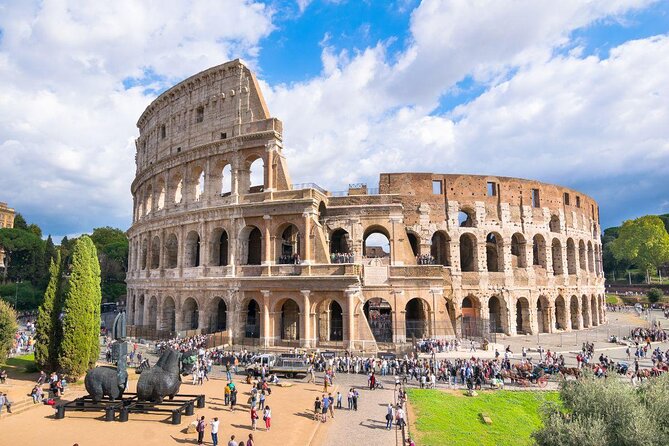
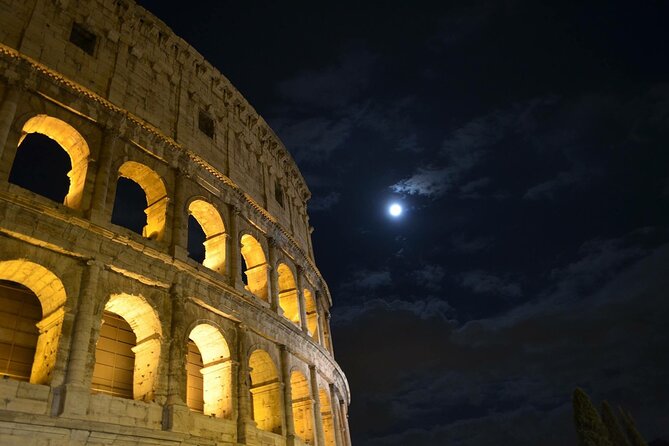
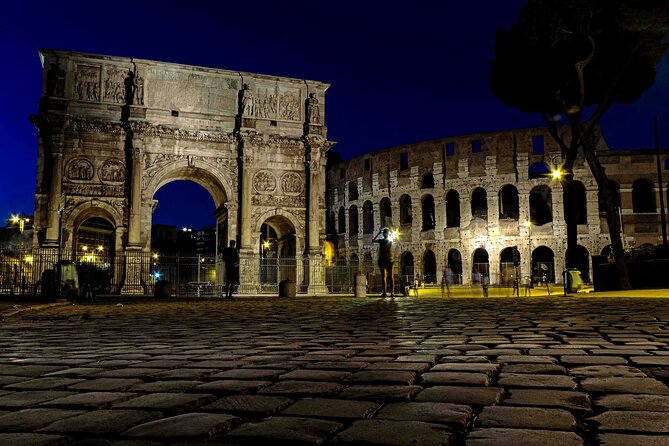
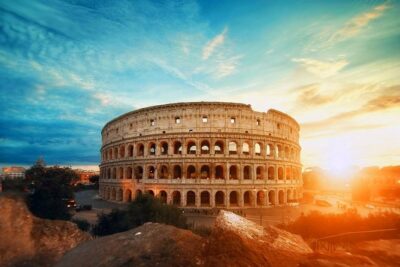
The Colosseum is impressive in daylight, but night gives you a different experience. The lights pick out the curved outer walls and broken arches while leaving parts of the monument in shadow. You notice the shape before the details, then gradually see the grandstands, corridors, and arena below.
The quieter setting matters here. During the day, the Colosseum can feel like a busy transport hub, with people moving in every direction and tour groups gathering at every turn. At night, the pace is usually calmer. You still share the monument with other groups, but the evening atmosphere can make the building feel more personal.
I would not book this simply to see the exterior lit up. You can enjoy that for free from outside. The reason to pay for this tour is the restricted access to the underground and arena floor, areas that are not part of a standard daytime ticket.
More ways to see the Colosseum:
- Rome: Colosseum, Palatine Hill and Roman Forum Guided Tour
★ 4.8 · 32,814 reviews - Rome: Guided Tour of Colosseum, Roman Forum & Palatine Hill
★ 4.7 · 27,897 reviews - Rome: Colosseum & Forum with Audio Guide App -Optional Arena
★ 4.2 · 24,770 reviews
Meeting your guide and getting inside
The meeting point is at the Colosseum in Rome, near public transportation. The precise meeting instructions deserve careful attention. Some people have had trouble identifying the correct spot, and ticket details may arrive separately by WhatsApp or another message service.
Read every message as soon as you receive it. If the operator sends a map, ticket image, or written meeting instruction, keep it open on your phone. A picture of the exact meeting place would make things easier, but you should not rely on finding the group by chance once you arrive.
Plan to be there 20 to 25 minutes before the scheduled start. Some instructions refer to meeting the guide 10 minutes before the tour, but the stricter advice is the safer one. Colosseum staff control entry to the underground area, and once the group has started, late arrivals may be refused.
This is not a good tour for a loose evening schedule. Airport delays, a late dinner, or a last-minute change of plans can easily make you miss it. There is no hotel pickup, so you must make your own way to the monument.
Bring the same valid passport or ID document used when booking. The name must match the booking details for entry to the Colosseum and Roman Forum.
The grandstands and the scale of the monument
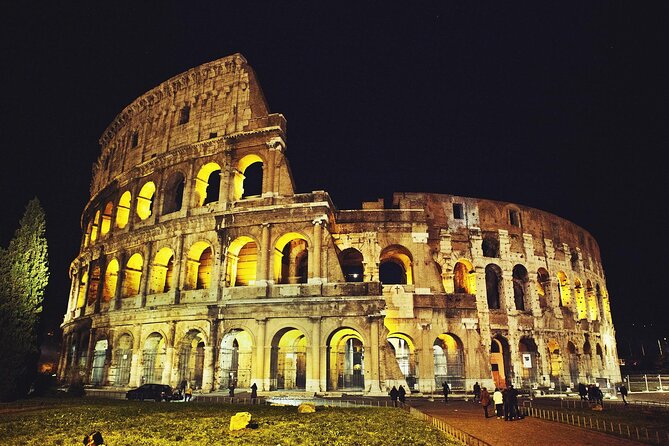
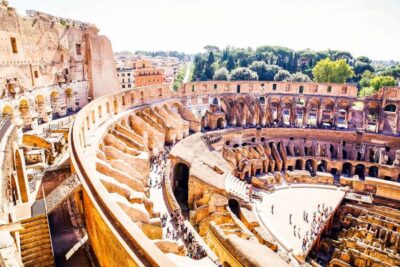
The tour begins in the main Colosseum areas, including the grandstands. From here, your guide explains how the amphitheater was arranged and how the arena worked as a huge public venue.
This first section gives you a sense of scale. From the upper levels, the arena floor looks smaller than expected. That perspective helps you understand how carefully the building was designed to control movement, sightlines, and access.
The guide uses a headset, a welcome feature in a stone building where voices can echo. With a group of up to 25 people, the audio equipment is more than a minor convenience. Without it, you may miss explanations whenever you pause for photographs or stand a few rows away.
The commentary is generally focused on the Colosseum itself. Some guides add humor and useful context, while others provide a quicker run through basic facts. Several people have found the explanations too superficial, and a few have had difficulty understanding the guide’s English because of speed or accent.
That does not make the tour automatically poor, but it affects what you get for the price. If the historical storytelling matters as much to you as the access, this is the part to consider carefully.
Below the arena: tunnels, cages, and lifting machinery
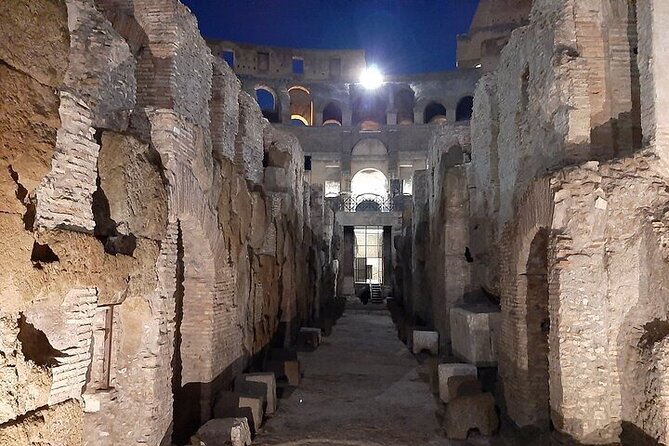
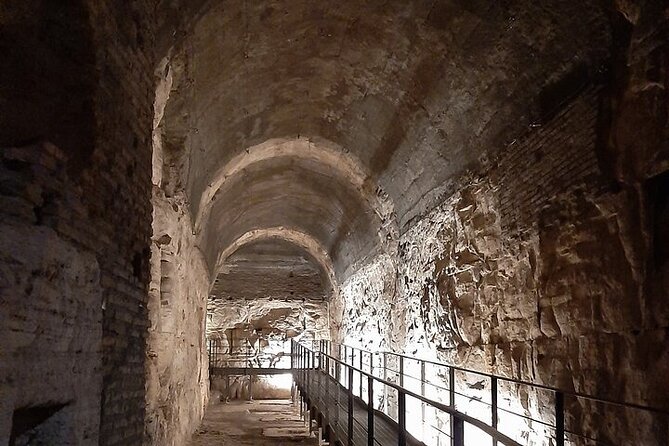
The underground section is the heart of the visit. Beneath the arena floor lies a network of corridors and chambers used to prepare people, animals, scenery, and equipment before they appeared in front of the crowd.
You can see spaces associated with gladiators waiting for their turn and animals held below the arena. Lions and tigers were among the dangerous creatures kept in this hidden working area. The remains of cages, wooden lifts, and trapdoor mechanisms help you picture the labor behind the spectacles above.
The underground is not a museum set with actors or a live reenactment. You are looking at architectural remains and listening to an explanation of how the arena operated. One person hoping to see a gladiator battle representation would not find one here. That is important: the tour offers access and interpretation, not a staged performance.
The atmosphere does much of the work. At night, the limited lighting and empty corridors make the underground feel more immediate. You may find yourself thinking less about the famous facade and more about the people who prepared the shows in cramped, hidden rooms.
The drawback is time. The entire tour is short, and the underground stop may feel rushed if your guide is trying to cover every section. Some people have felt ready to move on after only a few minutes below the arena, while others consider this the part that makes the cost worthwhile.
More underground Rome tours:
- Colosseum: Underground and Ancient Rome Tour
★ 4.7 · 12,691 reviews - Rome: Crypts and Catacombs Underground Tour with Transfers
★ 4.6 · 5,341 reviews - Expert Guided Tour of Colosseum Arena OR Underground, and Forum
★ 4.5 · 5,041 reviews - Rome: Colosseum Underground Small Group Guided Tour
★ 4.7 · 4,844 reviews
Stepping onto the arena floor through the Gate of Death
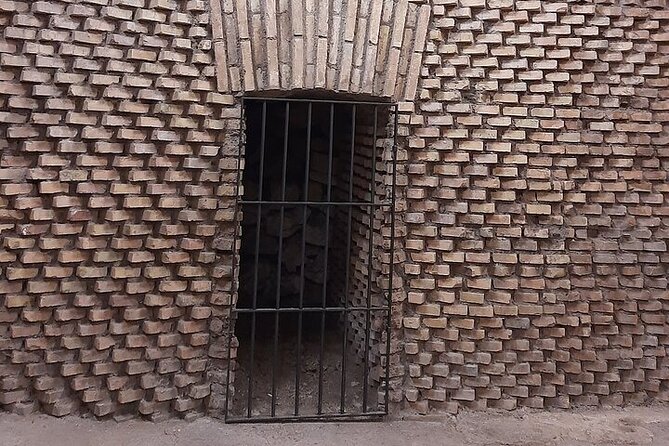
After the underground, you head up to the arena floor through the archway called the Gate of Death. The name reflects the grim role of this passage, where defeated combatants were removed from the arena.
Standing at floor level gives you a view that the grandstands cannot provide. You can look upward at the tiers where the audience sat and then back toward the underground openings and mechanisms below. The Colosseum becomes less like a grand ruin and more like a working machine built for public spectacle.
The moonlit setting adds to the moment, though the actual lighting depends on the evening conditions and the monument’s operating setup. You should expect a guided visit rather than unlimited time to wander around the arena floor.
Photography is one of the pleasures here. With fewer people in the way, you have a better chance of taking clear pictures of the arena and interior arches. Still, this is a shared group tour, not a private session, so there may be other groups nearby.
A short tour with a high price
The listed cost is $142.59 per person. That includes the official English-speaking guide, headset, taxes, reservation fee, and a Colosseum and arena ticket valued at €24 per person. Admission to Palatine Hill and the Roman Forum is also included for self-guided visits.
The price is high for a visit lasting about 1 hour and 15 minutes. Some descriptions from people who took the tour place the active experience closer to 45 minutes or one hour. That difference matters when you are comparing it with a longer daytime ticket or a full guided tour of ancient Rome.
You are not paying only for the standard entrance. You are paying for an evening time slot and access to the underground and arena floor, both of which change the experience. If those areas are a priority, the price can make sense. If you mainly want the exterior, grandstands, and basic history, a cheaper daytime option may offer better value.
The included Roman Forum and Palatine Hill admission improves the calculation, but the visit there is self-guided. You do not get the same evening guide for those sites, so allow separate time if you want to understand them in detail.
I would compare this tour with any alternative by checking three things: underground access, arena-floor access, and the exact duration. A standard ticket that does not include both restricted areas is not a direct substitute, but it may suit you better if your budget is tight.
Group size, guide quality, and language
The maximum group size is 25 people. That is not tiny, but it is far more manageable than a large daytime crowd. In practice, some groups have been around 10 to 20 people, while others have felt closer to the upper limit.
The guide can make or break a short tour. Strong guides explain not only what you are seeing, but why the underground mattered and how the arena’s machinery supported the public shows. Several people have enjoyed guides who were funny, clear, and passionate.
The experience is less successful when the guide speaks too quickly, has an accent that is difficult to follow, or gives a string of dry facts without much social and historical context. English is the only listed language, so you should be comfortable following a live English explanation through a headset.
I would not book this expecting a specialist seminar on every part of ancient Rome. You might hear useful basics about the arena, gladiators, animals, and lifts, but the depth depends on the guide and the time available. If you want detailed discussion of the nearby Ludus Magnus gladiator training school or surrounding facilities, check the guide’s planned coverage before booking.
Weather, timing, and what to bring
Night is often more comfortable than the hot Roman afternoon. One November visit was described as chilly outside but warmer once inside the Colosseum. Wear a layer you can add or remove, since you may wait outside before entering and then move through cooler underground spaces.
Choose practical shoes. The tour involves walking through different levels and historic surfaces, and the underground is not the place for footwear that makes you worry about every step.
You will need your phone for meeting details and possibly ticket delivery. Keep your confirmation messages available, but do not assume a ticket sent through WhatsApp replaces the need to arrive early. Ticket confusion has caused stress for some people, especially when the booked time and the time printed on the ticket did not appear to match.
The schedule can also change. In some cases, the operator has offered a different start time several days in advance, with the option to accept or cancel. In other cases, a change made the day before caused problems for people with fixed plans. Check your final time rather than relying only on the original booking screen.
Because the experience is non-refundable and cannot be changed after booking, confirm your Rome dates, arrival plans, and preferred time before paying.
Palatine Hill and the Roman Forum afterward
Your ticket includes admission to Palatine Hill and the Roman Forum, but these visits are self-guided. They are not simply extra rooms attached to the Colosseum. Together, they form the wider setting that helps explain how ancient Rome functioned.
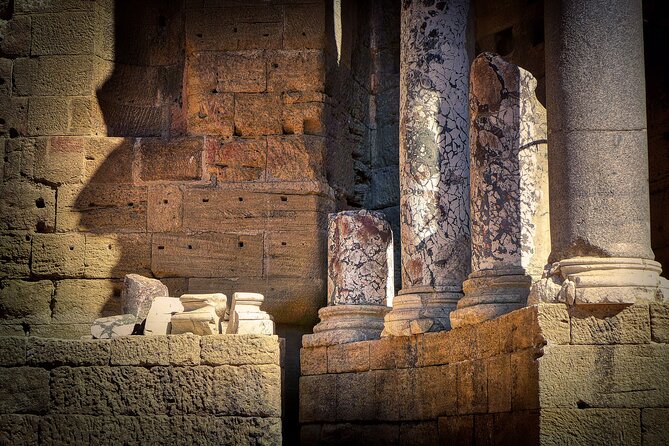
The Roman Forum contains the remains of political, religious, and civic spaces. Palatine Hill connects with Rome’s imperial power and gives you another way to understand the city’s ancient center. Without a guide, you will need to read the signs and make your own route.
Do not assume the 75-minute Colosseum visit includes a full tour of both sites. Treat the Forum and Palatine Hill as a separate sightseeing plan, and confirm opening arrangements for the date of your visit. If you want the most from them, schedule extra time rather than trying to squeeze them in immediately after a late night.
Who will get the most from this tour
I would recommend this experience to you if the underground is high on your Rome wish list and you prefer a calmer setting. It is also a good fit if you have already seen the Colosseum by day and want a fresh perspective.
The night setting suits photographers, couples, and anyone who finds large daytime crowds tiring. It can also work well in warm weather, when a late visit is more pleasant than standing in the sun.
I would hesitate if you are watching every euro, need a long and detailed history lesson, or have a difficult arrival schedule. The tour is too short for a broad study of ancient Rome, and the guide’s English delivery may not suit everyone.
Families can participate, since most people can take part, but the evening start and underground walking may be less appealing to very young children. No food or drinks are included, so plan those separately.
Should you book the Colosseum Night Tour?
Book it if you specifically want underground and arena-floor access at night. Those features, along with the cooler air, illuminated stone, and smaller group, give the visit a character that a regular daytime entry cannot fully match.
Skip it if your main goal is simply to enter the Colosseum cheaply or spend hours exploring at your own pace. At $142.59 per person, the tour asks you to pay a premium for restricted access and atmosphere during a short visit.
My practical advice is simple: confirm the start time, save the meeting instructions, arrive early, carry matching identification, and decide in advance whether the underground is worth the extra cost to you. If your answer is yes, this can be one of Rome’s more memorable evening outings. If not, spend your money on a longer guided visit or a standard ticket and enjoy the exterior after dark for free.
FAQ
How long does the Colosseum Night Tour last?
The stated duration is approximately 1 hour and 15 minutes. Some descriptions of completed visits have placed the active tour closer to 45 minutes or one hour, so you should expect a short experience rather than a full evening program.
What areas of the Colosseum are included?
The tour includes the main areas, the grandstands, the underground tunnels and chambers, and the arena floor. You also enter through the archway known as the Gate of Death.
Is the Roman Forum included?
Yes. Admission to Palatine Hill and the Roman Forum is included, but those areas are visited independently and are not part of the guided night walk.
What language is the tour offered in?
The tour is offered in English. Headsets are provided so you can hear the guide more clearly.
How many people can be in the group?
The maximum group size is 25 people. Actual group sizes can be smaller, with some visits described as having about 10 to 20 people.
Do I need to bring identification?
Yes. Each person must present a valid passport or ID document matching the name provided at booking for entry to the Colosseum and Roman Forum.
Can I cancel or change the booking?
No. The experience is non-refundable and cannot be changed for any reason. Check your date, time, arrival plans, and meeting instructions carefully before booking.
More Evening Experiences in Rome
- Rome: City Highlights Open-Top Bus Night Tour
★ 4.1 · 2,038 reviews - Rome: Paranormal Night Walking Tour & Secret Backstreets
★ 4.9 · 1,921 reviews - Vespa Sidecar Tour By Night with Pickup
★ 5.0 · 1,803 reviews - Rome by Night – Ebike Small Group Tour – Food and Wine (Option)
★ 5.0 · 1,275 reviews
Newest reviews from Rome
- ROME:Colosseum & Ancient Rome – private/small group TOUR★ 5.0 · 24 reviews
- Off the Beaten Track in Rome: Rione VI Parione Private Tour★ 5.0 · 24 reviews
- Cinematic Photoshoot in Rome★ 5.0 · 24 reviews
- Rome: Best of Colosseum and Roman Forum Small Group Guided Tour★ 4.5 · 24 reviews
- Vatican and Trionfale Market Tour with Wine and Food Tasting★ 5.0 · 24 reviews
- private tour: Vatican Museums, Sistine Chapel, St. Peter’s Basilica★ 4.5 · 24 reviews
- The Labyrinth of Rome between catacombs and ancient quarries★ 4.5 · 24 reviews
- Colosseum guided tour with Virtual Reality★ 5.0 · 24 reviews
Underground Rome Tours, compared.
Colosseum: Underground and Ancient Rome Tour
Read our review →
Crypts and Catacombs Underground Tour with Transfers
Read our review →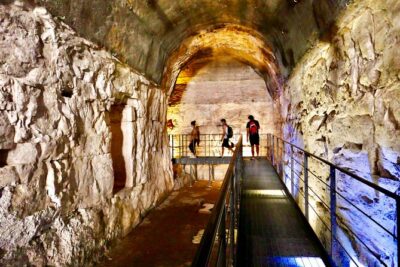
Expert Guided Tour of Colosseum Arena OR Underground, and Forum
Read our review →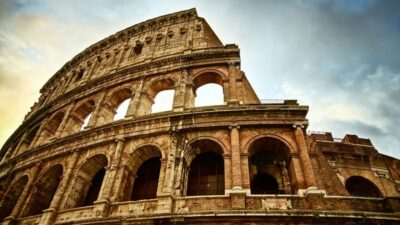
Colosseum Underground Small Group Guided Tour
Read our review →
St. Peter’s Basilica, Dome Climb, and Underground Tour
Read our review →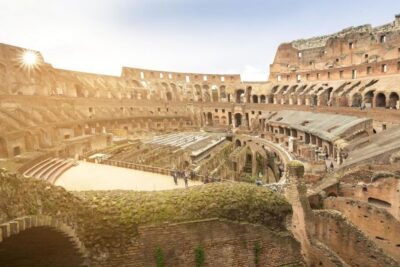
Colosseum Underground & Ancient Rome Guided Tour
Read our review →
Browse the lists this tour appears in