
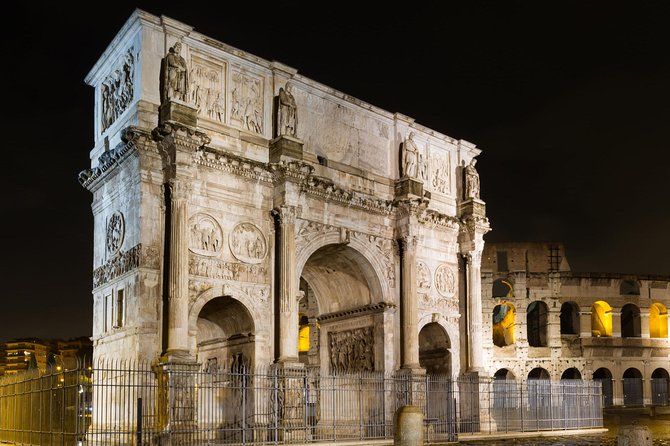
Reviewed · COLOSSEUM TOURS
Colosseum, Palatine Hill and Roman Forum Guided Tour
The best part of this tour is the way it links three ancient sites into one clear story. You move from the Colosseum’s staged violence and Roman engineering to Palatine Hill’s founding legends, then down into the Forum, where public life, religion, and politics once met. For a first visit, that structure can save you from wandering among impressive ruins without knowing what you are seeing.
I like the well-planned route and the use of headsets, which let you hear the guide even when the group is moving through crowded spaces. I also like the guide-led explanation of details many people miss, such as the arena trapdoors, animal cages, gladiator waiting rooms, the Sacred Way, and the Temple of Julius Caesar. The possible drawback is simple: this is a brisk walking tour over rough ground, with stairs and little time to sit.
- Three major Roman sites in about 2.5 hours: You cover the Colosseum, Palatine Hill, and Forum in one organized visit.
- Colosseum access includes the first and second levels: The standard experience does not include the underground or other restricted sections.
- Headsets and a radio system are included with guided options: You can keep listening while standing a short distance from the guide.
- The group can include up to 25 people: That is small enough for a workable tour, but not an intimate private visit.
- English group tours, private tours, and audio options are available: Check the exact product carefully before booking.
- Timed entry rules are strict: Arrive at the required meeting time, bring matching identification, and allow time for security.
In This Review
- Why this route works for a first visit
- Meeting at Piazza San Clemente
- Inside the Colosseum: an hour of spectacle and engineering
- Palatine Hill: Rome’s origin story and imperial views
- The Roman Forum: temples, triumphs, and public life
- Live guide or audio guide?
- Price and what you are actually paying for
- Practical advice before you book
- Who should choose this tour?
- Should you book the Colosseum, Palatine Hill and Roman Forum tour?
- FAQ
- How long does the tour last?
- Which sites are included?
- Is the live tour offered in English?
- Is an audio-guided option available?
- What do I need for the audio guide?
- Are headphones provided?
- Where does the group tour meet?
- Are the tickets valid for 24 hours?
- Do I need identification?
- Is the tour suitable for people with mobility problems?
Why this route works for a first visit
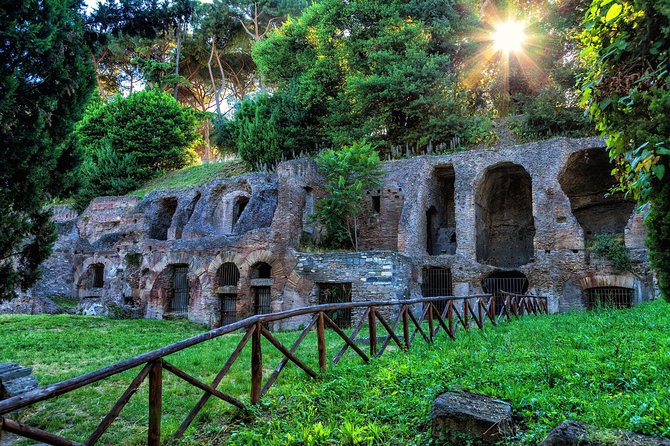
The Colosseum, Palatine Hill, and Roman Forum form one of Rome’s biggest archaeological areas. It is easy to lose your bearings here. Paths cross, ruins appear without much explanation, and the original buildings are often reduced to foundations, columns, and fragments.
A guide gives those stones a purpose. Instead of seeing a broken wall, you learn how it belonged to a temple, basilica, palace, or public road. The route also helps you use your limited time well. The tour lasts about two hours and thirty minutes, though access delays, weather, or site controls can make it shorter or longer. The stated range is at least two hours and no more than three.
The tour is offered in English as a group experience, with a maximum of 25 people. Private guided options are also available in the language selected at booking. There are audio-guided versions in English, Chinese, German, French, Italian, Portuguese, and Spanish, but those are different products. An audio option is not a live guided tour.
That distinction matters. Several poor experiences described a self-guided audio visit being mistaken for a guide-led tour. Before paying, read the option name carefully. If you want a person explaining the ruins and answering questions, choose the group guided or private guided option.
Meeting at Piazza San Clemente

For the group guided tour, the stated meeting point is at Piazza San Clemente, outside the entrance to the Basilica of San Clemente. Staff wait there with a Tour in the city sign. You must arrive 20 minutes before the scheduled departure.
The meeting point is near public transportation, but Rome’s streets and landmarks can still cause confusion. Give yourself extra time, especially if you are relying on a phone map. One group missed the tour after getting lost, and the guide could not hold the departure. The operator later explained that the same combined ticket covered the Colosseum, Forum, and Palatine Hill, but missing the live tour meant losing the main service you paid for.
There are restrooms at the basilica area, but there may not be a convenient place to sit while waiting. The walk toward the sites includes a downhill section, which can feel tiring before the tour even begins. Wear supportive shoes and avoid arriving with a heavy bag.
The information also refers to ticket collection and an agency close to the Colosseum, roughly 350 meters away. Instructions may arrive by email or WhatsApp, depending on the booking option. Read every message before leaving your hotel, and save the ticket details to your phone. If you choose a self-guided audio product, you need your own recent smartphone, the application, and the supplied QR codes. Headphones are recommended but not provided.
More ways to see the Colosseum:
- Rome: Colosseum, Palatine Hill and Roman Forum Guided Tour
★ 4.8 · 32,814 reviews - Rome: Guided Tour of Colosseum, Roman Forum & Palatine Hill
★ 4.7 · 27,897 reviews - Rome: Colosseum & Forum with Audio Guide App -Optional Arena
★ 4.2 · 24,770 reviews
Inside the Colosseum: an hour of spectacle and engineering
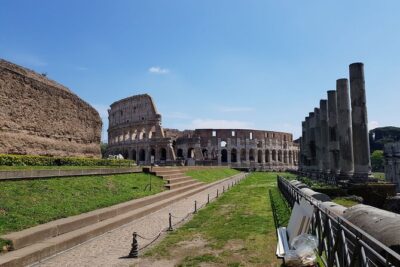
The Colosseum is the tour’s main event, and you spend about an hour here. The guided route covers the first and second levels and gives you views toward the arena floor and the internal structure.
Your guide explains how the amphitheater was built and how Roman engineers handled the movement of people, animals, equipment, and performers. The arena was not just a bowl for watching combat. Beneath and around it were passages, rooms, cages, lifts, and mechanisms used to stage public spectacles.
This is where the guide’s storytelling is most useful. You hear about gladiators waiting before their appearance, lions held in cages, trapdoors opening beneath the arena, executions, animal hunts, and even staged sea battles. The subject matter is violent, but it explains how the Colosseum functioned as a carefully managed public machine.
The guide also places the games in their political setting. Public spectacles helped emperors display wealth and power while giving a huge audience a shared event. The building itself was an engineering achievement, with multiple levels, controlled entrances, and systems designed to move large crowds.
A headset makes a real difference. At busy points, you may be standing several steps from the guide or gathered in a small corner to make room for another group. With the radio system, you can look at the architecture while still hearing the explanation.
Do not expect access to every part of the monument. The listed experience does not include the underground or other Colosseum sections not specifically named. If seeing the hypogeum or arena floor is essential to you, check for a full-access product instead of assuming that every Colosseum ticket includes it.
Security and capacity controls can slow entry. The site can accommodate up to 3,000 people at one time, and all visitors and bags are screened. A pre-booked ticket helps, but it does not guarantee that you will walk straight through without a wait.
Palatine Hill: Rome’s origin story and imperial views
After the Colosseum, the route continues across Palatine Hill for about 45 minutes. This section changes the mood. You leave the amphitheater’s crowds and enter a broad archaeological area tied to Rome’s earliest settlements and later imperial palaces.
Palatine Hill is traditionally linked with the founding of Rome. Your guide tells the story of Romulus and Remus, the abandoned brothers raised by a she-wolf who later fought over power. The legend is not a substitute for archaeology, but it helps explain why this hill became so important in Rome’s imagination.
The site includes remains associated with an older settlement dating to the ninth century BC. You also see the Hippodrome, an elliptical sunken garden connected with the Palace of Domitian. From the hill, the views toward the Circus Maximus and the Roman Forum help you understand the physical shape of ancient Rome.
I find this part valuable because it gives scale to the city. From above, the Forum is no longer a scatter of ruins. You can see how the valley connected important public spaces and how the hill later became a center of imperial power.
The drawback is the footing. Paths can be uneven, and the route has stairs. One visitor in her seventies estimated more than 10,000 steps for the broader day that included extra sightseeing, while another described the walk as manageable. The practical truth is somewhere between those views: the tour is not an athletic expedition, but it is demanding for anyone with knee, balance, or walking problems.
Bring water, particularly in hot weather. The site offers little shade in some areas, and rain can make stone paths slick. Weather may also change the order or details of the route.
The Roman Forum: temples, triumphs, and public life
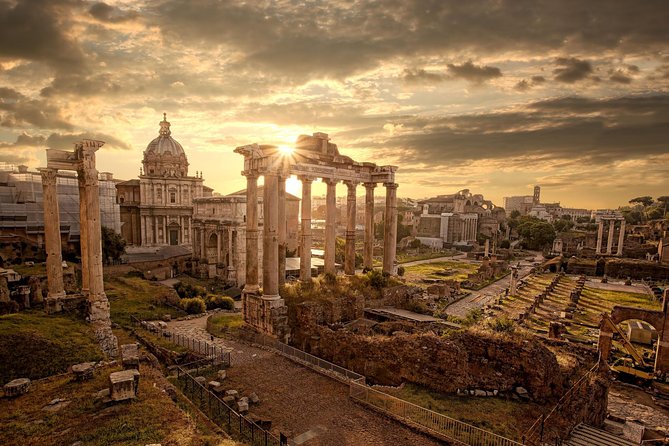
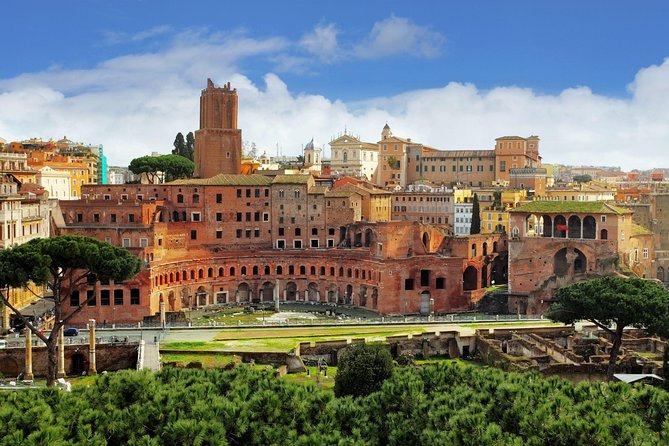
The final stop is the Roman Forum, explored for about 45 minutes. This was the city’s political, religious, and commercial center. Its ruins can be hard to read on your own because later damage, earthquakes, and centuries of exposure have left only pieces of the original buildings.
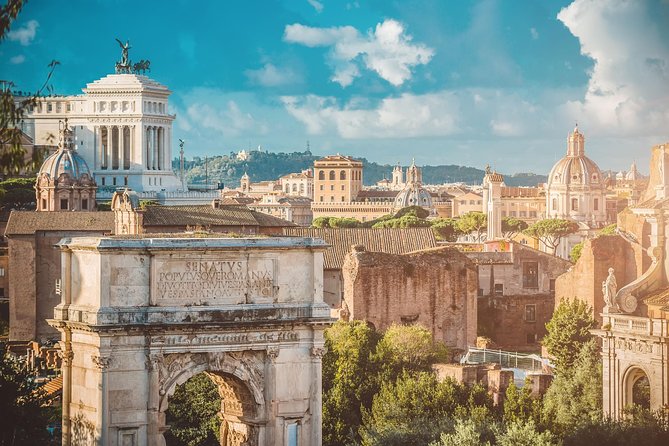
A guide helps you connect those pieces. The route highlights the Temple of Julius Caesar, the Arch of Titus, the House of the Vestal Virgins, the Senate House, and the Basilica of Maxentius. You also walk along the Sacred Way, the main ceremonial road used for triumphal processions.
The Arch of Titus is especially useful for understanding how Roman victories were turned into public memory. The Temple of Julius Caesar marks the place where the assassinated leader was honored after his death. The Senate House and basilica show that the Forum was not simply a religious site. It was a working center for government, law, business, ceremony, and public display.
Forty-five minutes is enough for an introduction, not a full study. You will see the principal landmarks and hear their basic stories, but you will not have time to inspect every column base or wander down every side path. If you are fascinated by Roman archaeology, plan to return independently. The Forum and Palatine Hill ticket is valid for 24 hours, even though Colosseum entry itself is tied to a scheduled time. Pay close attention to the exact ticket wording, since timed-entry rules caused confusion for some visitors.
The tour may finish near the Colosseum and Roman Forum, even though the route can end at a slightly different point depending on site conditions. Do not schedule a tight restaurant reservation immediately afterward.
More Roman Forum and Palatine Hill visits:
- Rome: Colosseum, Roman Forum and Palatine Hill Guided Tour
★ 4.5 · 23,903 reviews - Rome: Colosseum, Forum & Palatine Hill Tour & Optional Arena
★ 4.4 · 13,839 reviews - Rome: Colosseum, Palatine Hill & Roman Forum Guided Tour
★ 4.6 · 12,703 reviews - Rome: Colosseum Arena, Palatine Hill & Forum Guided Tour
★ 4.6 · 10,584 reviews
Live guide or audio guide?
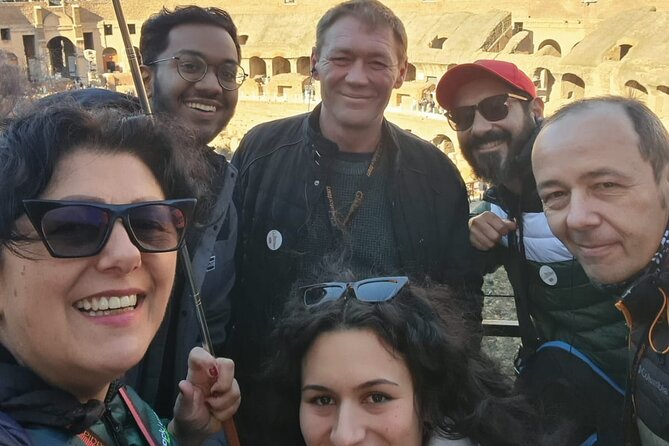
The live English group option is the strongest choice for most first-time visitors. You get a planned route, historical context, and the chance to ask questions. Guides have been praised for clear English, humor, useful photo spots, and the ability to find places where the whole group can hear and see.
Virginia is one guide whose name has received particular praise, but guide assignments can change. The important point is to book the live option if conversation and interpretation matter to you.
The audio-guided option gives you more freedom. You can pause, replay sections, and move at your own pace. That suits independent visitors who dislike group pacing. It also lets you spend longer at a favorite ruin or move quickly past one that interests you less.
The tradeoff is technology. You need a recent smartphone, produced in 2020 or later, and you must download the application and QR codes before entry. Your own headphones are recommended. Phone location data and maps may not work perfectly on every device, so do not depend on the app alone for navigation.
The product information states that mobile devices and headphones are not included with the audio option. That should be treated as a firm rule. If you want equipment supplied on site, choose a live tour with the included headset system rather than an app-based product.
Price and what you are actually paying for
At $55.51 per person, this is not the cheapest way into the Colosseum. The admission ticket is listed at €18, with a €2 reservation fee. The rest pays for the guide or audio service, booking arrangements, support, taxes, and related operating costs.
For the live guided option, I think the price can be fair, especially on a first visit. The Forum and Palatine Hill are not self-explanatory, and a good guide can turn a confusing collection of stones into a readable chapter of Roman life. Headsets also improve the experience in crowded areas.
The value is less convincing if you book an audio-only option and expect a live guide, supplied headphones, or a private experience. Last-minute tickets can also cost more than standard admission. Some flexible ticket products include benefits such as time-change flexibility, free cancellation up to 24 hours, or access when ordinary tickets have sold out, but those benefits vary by option. Do not assume the least expensive or most expensive choice includes the same services.
Group discounts are available, and children under 18 may qualify for reduced prices when they have valid identification. Child-ticket processing can cause a 20 to 30 minute variation in the activity, particularly when children are in the group.
Practical advice before you book

Arrive 20 minutes early. This is not a suggestion to ignore. Late entry can mean missing the guided departure or losing access to a timed Colosseum slot.
Bring a passport or identification document that matches the full name submitted during booking. Incorrect names or missing identification can prevent entry. Children must be accompanied by an adult.
Travel light. Backpacks, bulky bags, luggage, trolleys, bottles and glass containers, alcohol, and aerosols are forbidden inside the Colosseum. Security screening is compulsory.
Wear shoes with good grip. The Forum and Palatine Hill have uneven ancient paving, and some stairs are not built to modern dimensions. The tour is not suitable for wheelchair users or people with significant walking problems, and it is not recommended for anyone who cannot manage regular walking over rough surfaces.
Cancellation is free only when made at least seven full days before the start time. Changes are not accepted less than seven days before departure. Late arrival and late cancellation normally bring no refund.
The Colosseum administration can close the monument or parts of it for strikes, heavy rain, special events, or other reasons. If that happens, an alternative route and partial refund may be offered. Weather can also affect the order of the stops.
Who should choose this tour?
I would choose this tour if you are visiting ancient Rome for the first time, want a clear route, and prefer a guide to explain what you are seeing. It is especially useful for families and for anyone who would find the Forum and Palatine Hill overwhelming without a framework.
It also suits visitors with a tight schedule. In one organized block, you cover the city’s best-known amphitheater, its legendary founding hill, and its political center.
I would look elsewhere if you want the underground Colosseum, a slow archaeological study, a small private group, or a fully independent visit without a set meeting time. The audio option may suit you better than the group, but only if you are comfortable using your own phone and checking all QR codes in advance.
Should you book the Colosseum, Palatine Hill and Roman Forum tour?
Yes, choose the live English guided option if you want context, efficient sightseeing, and help making sense of a very large archaeological zone. The guides are the main value, and the headset system makes their explanations easier to follow.
Book well ahead when possible, read the exact option description, and arrive early with matching identification. If you understand the walking demands and select the correct format, this is a practical way to meet ancient Rome face to face without spending your whole day lost among the ruins.
FAQ
How long does the tour last?
The advertised duration is about two hours and thirty minutes. The actual visit can vary with entry procedures, weather, and other conditions, but it is stated to last at least two hours and no more than three.
Which sites are included?
All options include entry to the Colosseum, Palatine Hill, and Roman Forum. The guided route covers the Colosseum’s first and second levels, but not the underground or other areas not specifically listed.
Is the live tour offered in English?
Yes. The group guided option is offered in English. A private guided option is available in the language selected at booking.
Is an audio-guided option available?
Yes. Audio-guided versions are offered in English, Chinese, German, French, Italian, Portuguese, and Spanish. The audio option is self-guided and does not include a live guide.
What do I need for the audio guide?
You need a mobile phone, a recent-generation smartphone produced in 2020 or later, and the required application and QR codes. Bringing your own headphones is recommended.
Are headphones provided?
Headsets and a radio system are included with the guided options. Headphones are not provided with the self-guided audio option.
Where does the group tour meet?
The group guided tour meets at Piazza San Clemente, at the entrance to the Basilica of San Clemente. Staff wait with a Tour in the city sign, and you must arrive 20 minutes before departure.
Are the tickets valid for 24 hours?
The Palatine Hill and Roman Forum entry tickets are stated to be valid for 24 hours. Colosseum tickets are tied to a scheduled timed-entry slot, so you must arrive on time for that portion.
Do I need identification?
Yes. Each visitor must bring a valid passport or identification document matching the full name submitted during booking. Children under 18 need valid identification to receive applicable discounts.
Is the tour suitable for people with mobility problems?
No. The route includes considerable walking, stairs, and uneven ancient surfaces. It is not accessible for walker users and is not recommended for people with significant walking difficulties.
Newest reviews from Rome
- Rome: Vatican Museums & Sistine Chapel Skip-the-Line Ticket★ 4.4 · 148 reviews
- Shared Shuttle Transfer from Rome to Civitavecchia Port★ 5.0 · 148 reviews
- Skip the Line: Vatican and Sistine Chapel with Guided Tour★ 4.0 · 149 reviews
- Rome: Crypts & Catacombs After Hours Tour with Bone Chapel★ 4.6 · 149 reviews
- Ghosts Legends and Mysteries of Rome Walking Tour★ 5.0 · 149 reviews
- Tivoli: Villa Gregoriana Entrance Ticket★ 4.7 · 150 reviews
- Pizza and Tiramisu Cooking Class in Rome, Piazza Navona★ 5.0 · 150 reviews
- Rome: Borghese Gallery Skip-the-Line Entry and Guided Tour★ 4.7 · 150 reviews
Colosseum Tours, compared.
Colosseum, Palatine Hill and Roman Forum Guided Tour
Read our review →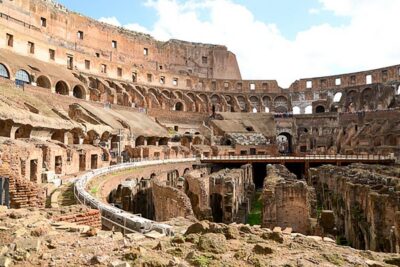
Guided Tour of Colosseum, Roman Forum & Palatine Hill
Read our review →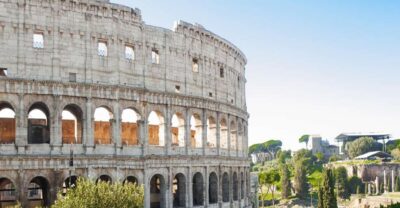
Colosseum & Forum with Audio Guide App -Optional Arena
Read our review →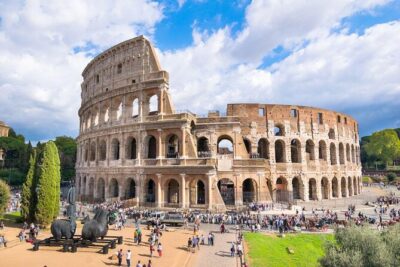
Colosseum, Roman Forum and Palatine Hill Guided Tour
Read our review →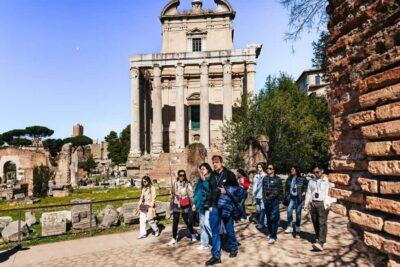
Colosseum, Forum & Palatine Hill Tour & Optional Arena
Read our review →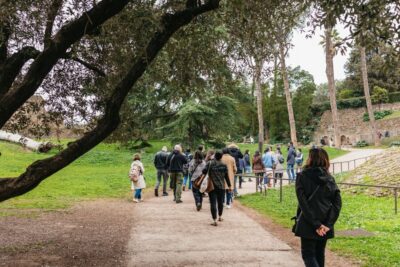
Colosseum, Palatine Hill & Roman Forum Guided Tour
Read our review →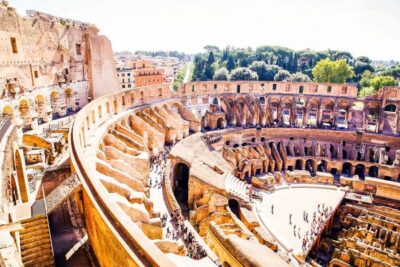
Colosseum: Underground and Ancient Rome Tour
Read our review →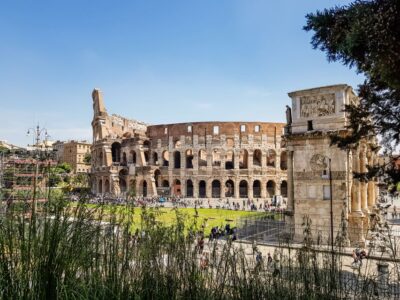
Colosseum Arena, Palatine Hill & Forum Guided Tour
Read our review →Browse the lists this tour appears in