
Reviewed · MUSEUMS
Da Vinci Museum: Discover a World of Genius in the Heart of Rome
Leonardo da Vinci’s genius comes alive through hands-on machines rather than glass cases alone. Inside Basilica Santa Maria del Popolo, this compact museum uses working models, films, drawings, and touchable displays to show how Leonardo’s ideas worked.
I like the museum’s central location, just five minutes from the Spanish Steps and close to Villa Borghese. I also like its family appeal: children can handle selected models while adults explore Leonardo’s art, anatomy, military designs, and engineering. The main drawback is size. You may finish in 30 minutes, though a careful visit with the audio guide can take close to two hours.
In This Review
- Key points to know
- What you actually see inside Rome’s Leonardo museum
- The setting inside Santa Maria del Popolo
- A practical look at the 1 to 2 hour visit
- The machines are the museum’s strongest feature
- Art, anatomy, and the Vitruvian Man
- How useful is the audio guide?
- Is the $14.38 admission good value?
- Who will enjoy this museum most?
- Tips for a smoother visit
- Should you book the Da Vinci Museum?
- FAQ
- Where is Museo Leonardo da Vinci located?
- How long does the museum visit take?
- What does the admission ticket include?
- How much does the audio guide cost?
- Is the experience offered in English?
- Is the museum suitable for children?
- Can I cancel for a refund?
Key points to know
- Working models from Leonardo’s codices: Test selected machines and see how his designs might have operated.
- Inside a famous Roman basilica: Combine the museum with Piazza del Popolo, Villa Borghese, and nearby Spanish Steps.
- A compact, self-guided visit: Plan on 1 to 2 hours, but allow less if you read only the main displays.
- Good for older children: Touch-friendly exhibits and short films add a useful science lesson to a Rome sightseeing day.
- Optional €3 audio guide: It supplies extra context, though English text is available on the exhibits.
- No original Leonardo paintings: The museum focuses on reproductions, anatomical studies, multimedia material, and reconstructed inventions.
What you actually see inside Rome’s Leonardo museum
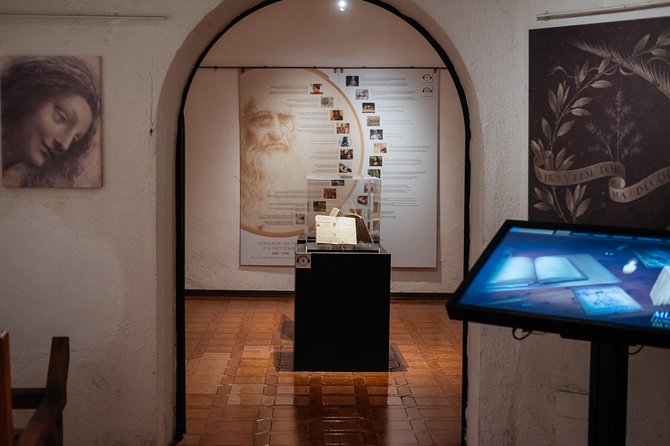
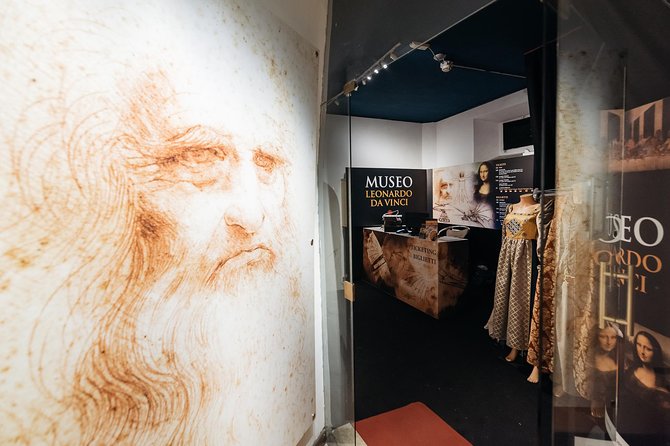
The Museo Leonardo da Vinci presents Leonardo as more than the painter of the Mona Lisa. The displays move across several sides of his work: inventor, artist, engineer, anatomist, architect, and student of the natural world.
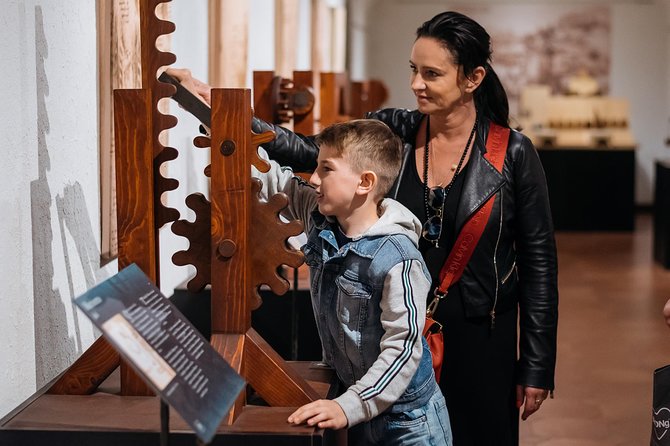
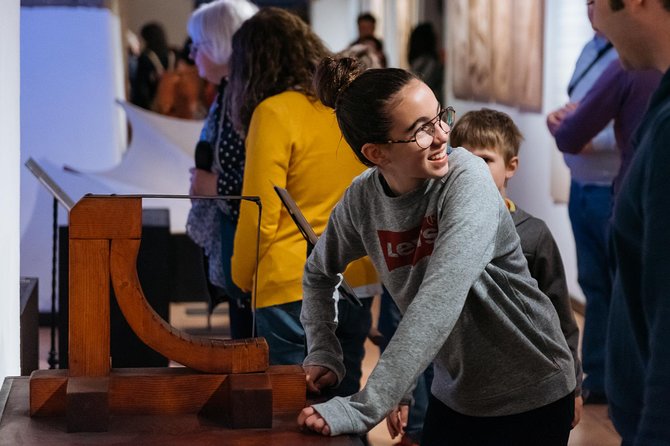
You see life-size and medium-scale reconstructions based on drawings in Leonardo’s codices. Italian artisans built these models to show the purpose behind his designs. Some are made for you to touch and operate, which changes the visit from a passive art display into a simple lesson in mechanics.
The museum also uses reproductions of famous works and studies. Expect material connected with The Last Supper, the Vitruvian Man, and Leonardo’s plans for the Sforza equestrian monument. Anatomical sketches show the care he took in studying the human body.
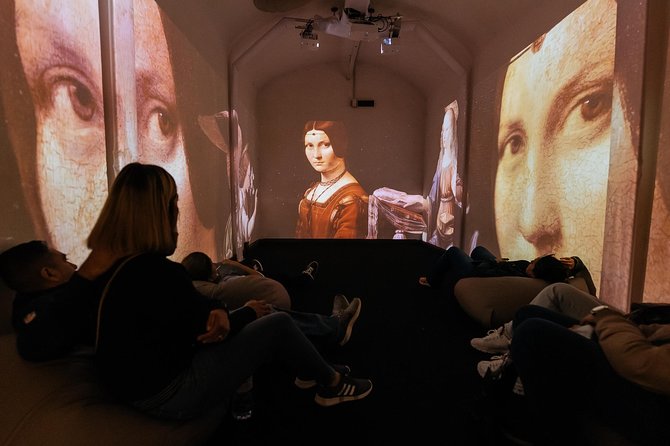
A few short films and multimedia animations add background to the objects. These are useful when a drawing alone feels hard to understand. They explain the story behind major projects and help connect Leonardo’s observations with the machines on display.
The museum is not built around a large collection of original paintings. That matters if you are looking for authentic Leonardo artwork. This is a place for understanding his ideas through copies, models, explanations, and reconstructions, not a substitute for seeing Leonardo originals in major art collections.
More museums and galleries in Rome:
- Vatican: Museums & Sistine Chapel Entrance Ticket
★ 4.5 · 144,003 reviews - Vatican Museums & Sistine Chapel Tour with Optional Basilica
★ 4.3 · 67,413 reviews - Vatican Museums, Sistine Chapel & St Peter’s Basilica Guided Tour
★ 4.5 · 39,149 reviews
The setting inside Santa Maria del Popolo
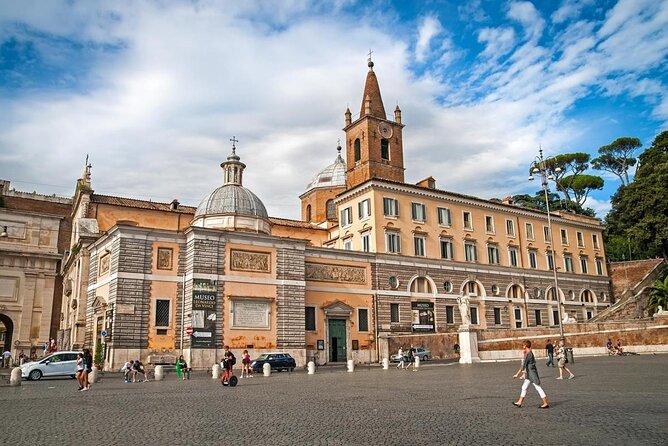
The museum sits inside Basilica Santa Maria del Popolo, at Piazza del Popolo. That setting gives the visit a useful Roman bonus. You are not heading to an isolated attraction on the edge of town. You can fit the museum into a walking route that includes the piazza, the Spanish Steps, and Villa Borghese.
The church itself is a major landmark, though its condition can vary during restoration work. One visit may offer a full look at the basilica, while renovation coverings may limit what you see. The museum admission is for Museo Leonardo da Vinci, so plan your time around the museum rather than assuming the ticket covers every church feature.
The location works especially well after a morning in the Spanish Steps area. Walk toward Piazza del Popolo, visit the museum, then continue across the piazza or up toward Villa Borghese. If you prefer a quieter outing, the museum can also work later in the day, followed by a walk around the square.
A practical look at the 1 to 2 hour visit
The experience is self-guided. You enter with your admission ticket and move through the exhibits at your own speed. There is no named guide leading a group, and the supplied information does not describe a scheduled tour or a fixed route.
That flexibility is helpful after a crowded day in Rome. You can spend several minutes on a machine that interests you, move quickly past a display that does not, or let children experiment with selected models. Couples and solo visitors can keep the pace brisk. Families may need closer to two hours if children want to test the interactive sections.
Some visitors finish in about 30 minutes. That is possible if you skim the text and focus on the main machines. I would allow at least an hour for a satisfying visit, and closer to two hours if you use the audio guide, watch the films, and read about Leonardo’s art and anatomy.
The exhibit order may not feel perfectly logical. The audio system may also fail to match the display you are standing beside. I suggest looking at the exhibit number or title before starting an audio segment, rather than assuming the device will always guide you in a smooth sequence.
The machines are the museum’s strongest feature
The reconstructed machines are the main reason to come. Leonardo filled his notebooks with ideas for bridges, weapons, flying devices, lifting systems, and other mechanical designs. Here, those flat drawings become objects you can inspect from different angles.
The models do not prove that every design worked exactly as Leonardo imagined. Their value is different. They let you see the basic principles behind the sketches: gears turning, levers moving, wings creating motion, or structures distributing weight.
The interactive parts are especially useful for children and anyone who learns by doing. You can manipulate selected inventions and get a physical sense of how the mechanisms function. Adults may find the models more interesting after reading the short explanations, since the labels connect each object to Leonardo’s studies.
The word interactive should be understood in a modest way. This is not a large technology center with dozens of elaborate stations. Some displays are hands-on, while others are models, reproductions, films, or touch screens. The experience gives you the idea behind many inventions, but it does not recreate a full Renaissance workshop.
Military designs receive notable attention. Leonardo’s studies of fortifications and weapons can surprise people who know him mainly as a painter. The displays show how his curiosity reached into warfare, architecture, transport, and practical engineering.
A completely different way to spend the day in Rome:
- Rome: Colosseum, Palatine Hill and Roman Forum Guided Tour
★ 4.8 · 32,814 reviews - Rome: Guided Tour of Colosseum, Roman Forum & Palatine Hill
★ 4.7 · 27,897 reviews - Rome: Colosseum & Forum with Audio Guide App -Optional Arena
★ 4.2 · 24,770 reviews - Rome: Colosseum, Roman Forum and Palatine Hill Guided Tour
★ 4.5 · 23,903 reviews
Art, anatomy, and the Vitruvian Man
The artistic material gives the machines a wider context. Leonardo did not separate art and science as sharply as modern museums often do. His study of proportion, movement, light, and the human body fed both his paintings and his technical drawings.
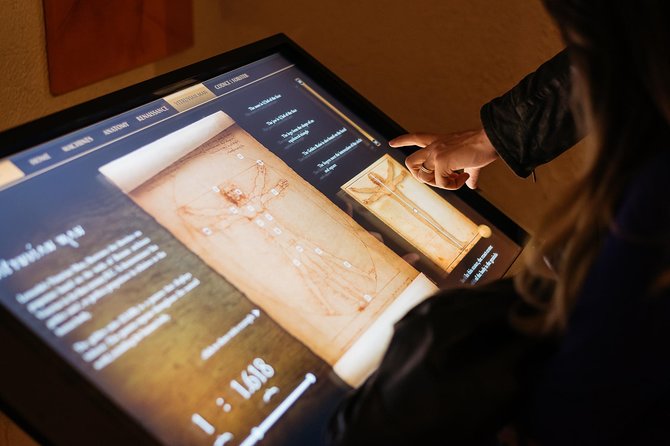
The Vitruvian Man is one of the most effective parts of the experience. It shows Leonardo’s interest in human proportion and geometry, while the surrounding material helps explain why the image became such a lasting symbol of Renaissance thought.
The anatomy displays are also memorable. Leonardo studied muscles, bones, and internal structures with an unusual level of care for his time. The reproductions and explanations help you see that his work was not simply artistic observation. He was trying to understand how the body was built and how it moved.
The museum also explores The Last Supper and Leonardo’s other major artistic projects through reproductions, studies, and multimedia material. Do not come expecting the quiet impact of standing before an original masterpiece. Instead, expect a guided look at the planning, research, and ideas behind famous works.
A small display includes a few actual notebook pages, according to the experience details presented at the museum. These are easy to overlook among the larger reconstructions, but they add a direct link to Leonardo’s working process.
How useful is the audio guide?
The optional audio guide costs about €3 per person. I consider it worthwhile if you want more than a quick look at the models. It adds information about Leonardo’s paintings, inventions, anatomy, and the stories behind major projects.
The guide is not essential for everyone. English explanations appear on the displays, and some visitors find that sufficient. If you like reading labels and moving independently, save the extra fee and use the written material.
There are two cautions. First, the handset can become tiring to hold during a longer visit. Bring or request headphones only if the museum offers them, since the supplied information does not confirm that headphones are included. Second, the audio order may not always line up neatly with the physical layout.
I would choose the audio guide for a first visit if I had 90 minutes or more. For a short stop between other sights, the labels and machines are enough.
Is the $14.38 admission good value?
At about $14.38 per person, the admission is reasonably priced for a central Rome attraction, especially if you enjoy science, inventions, or family activities. The ticket also saves you the trouble of arranging admission when you reach the museum.
The value depends on how you use it. If you rush through in 30 minutes, the cost feels less attractive. If you spend an hour or two with the machines, films, anatomy material, and audio guide, the price makes more sense.
The central location adds practical value. You can combine the museum with Piazza del Popolo and nearby sights instead of spending extra time crossing Rome for a single small collection. It also makes a good rainy-day stop, though you should not treat it as a major all-day museum.
There is no need to assume that prebooking will always save a long wait. At times, you may be able to walk in without a line and buy a ticket at the entrance. Still, a prebooked ticket gives you a set admission arrangement and may help you keep a busy sightseeing plan on track.
The experience is often booked about 23 days in advance. That suggests planning ahead during popular travel periods, but the museum’s small scale and reports of quiet visits mean you should not expect the crowd levels of Rome’s biggest attractions.
Who will enjoy this museum most?
I would recommend it most strongly to families with older children. The touchable models give children something to do, while the art and anatomy material offers enough substance for adults. It can spark questions about engineering, flight, architecture, and how people studied the body before modern tools.
It also suits adults who want a calm, short museum between major Roman sights. After a crowded day tour, a self-guided visit at your own pace can feel like a welcome change.
Art lovers should set their expectations carefully. If you want original Renaissance paintings, this is not the right stop. If you want to understand Leonardo’s range and see physical versions of his plans, it is more rewarding.
Visitors with very limited time in Rome may choose other priorities. The museum is small, and several people find the visit shorter than expected. If your schedule allows only one museum, you might prefer a larger collection with original works.
Tips for a smoother visit
Check the exact location before you set out. The museum is at Basilica Santa Maria del Popolo in Piazza del Popolo, and incorrect map directions can send you toward the wrong place.
Bring water. The interior can feel warm, especially during a longer visit. Also plan a restroom stop elsewhere, since restroom facilities are not available in or around the museum according to the practical information supplied by the experience.
Read the exhibit labels before using the audio guide. The layout can feel somewhat random, and the audio may not always correspond perfectly to the object in front of you.
Give children time at the machines, but do not expect every display to be touchable. The museum combines working models with reproductions, screens, films, and written explanations.
Plan your onward route before entering. Piazza del Popolo is right outside, and Villa Borghese and the Spanish Steps are nearby. That makes the museum easy to pair with a walk, lunch, shopping, or another central Rome stop.
Admission is available in English, and service animals are allowed. The museum is near public transportation, and most people can participate. The supplied booking information describes the activity as having a maximum of one traveler, which may refer to the booking arrangement rather than a normal group visit, so confirm the details if that matters to you.
Free cancellation is available if you cancel at least 24 hours before the local start time. Cancellations within 24 hours are not refunded, and changes in that final period are not accepted.
Should you book the Da Vinci Museum?
Book it if you want a short, central, hands-on museum that explains Leonardo through machines and ideas. It is a particularly good choice for families, curious adults, and anyone already planning time at Piazza del Popolo or the Spanish Steps.
Skip it if your Rome schedule is extremely tight or if original artwork is your main goal. The museum is compact, and its reproductions cannot replace Leonardo’s genuine paintings and manuscripts.
For most people, I would plan about 60 to 90 minutes, add the optional audio guide if you enjoy extra explanation, and follow the visit with a walk around Piazza del Popolo. At $14.38, it is a fair buy when you want an engaging break from churches, ruins, and long museum corridors.
FAQ
Where is Museo Leonardo da Vinci located?
The museum is inside Basilica Santa Maria del Popolo at Piazza del Popolo in Rome. It is about a five-minute walk from the Spanish Steps and Villa Borghese.
How long does the museum visit take?
The expected visit lasts about 1 to 2 hours. If you move quickly through the displays, you may finish in roughly 30 minutes.
What does the admission ticket include?
The ticket includes admission to Museo Leonardo da Vinci. It does not include the optional audio guide.
How much does the audio guide cost?
The audio guide is available to purchase for approximately €3 per person.
Is the experience offered in English?
Yes. The experience is offered in English, and English descriptions are available with the exhibits.
Is the museum suitable for children?
Yes. The museum includes selected hands-on displays, interactive machines, films, and touch screens. It is especially suitable for older children interested in art or science.
Can I cancel for a refund?
You can receive a full refund if you cancel at least 24 hours before the experience’s start time. Cancellations or changes made within 24 hours are not accepted for a refund.
Newest reviews from Rome
- Rome: Vatican Museums & Sistine Chapel Skip-the-Line Ticket★ 4.4 · 148 reviews
- Shared Shuttle Transfer from Rome to Civitavecchia Port★ 5.0 · 148 reviews
- Rome: Crypts & Catacombs After Hours Tour with Bone Chapel★ 4.6 · 149 reviews
- Ghosts Legends and Mysteries of Rome Walking Tour★ 5.0 · 149 reviews
- Skip the Line: Vatican and Sistine Chapel with Guided Tour★ 4.0 · 149 reviews
- Tivoli: Villa Gregoriana Entrance Ticket★ 4.7 · 150 reviews
- Pizza and Tiramisu Cooking Class in Rome, Piazza Navona★ 5.0 · 150 reviews
- Appian Way E-bike Tour with Gourmet Picnic and Catacombs★ 4.5 · 150 reviews
Museums, compared.
Vatican Museums & Sistine Chapel Tour with Optional Basilica
Read our review →
Vatican Museums, Sistine Chapel & St Peter’s Basilica Guided Tour
Read our review →
Vatican Museums, Sistine Chapel & Basilica Tour
Read our review →
Vatican Museums & Sistine Chapel Skip-the-Line Entry Ticket
Read our review →Vatican Museums, Sistine Chapel & Basilica Tour
Read our review →
Vatican Museums & Sistine Chapel Guided Tour
Read our review →
Vatican Museums & Sistine Chapel Skip-The-Line Ticket
Read our review →Browse the lists this tour appears in