Reviewed · COLOSSEUM TOURS
From Gladiators to Emperors: Colosseum & Ancient Rome Guided Tour
The Colosseum is the headline, but the real reward is seeing it with the Roman Forum and Palatine Hill in one well-planned morning or afternoon. In three hours, you move from gladiatorial spectacle to government, religion, imperial palaces, and the founding myths of Rome.
I like the included entry tickets and the fact that an official local guide handles the basic plan. I also like the headset, which should help you follow the commentary in a group of up to 20 people. The main concern is organization: finding the guide, matching names to tickets, and keeping the group together have caused serious problems for some customers.
In This Review
- Key points to know before booking
- Three ancient Roman worlds in one compact tour
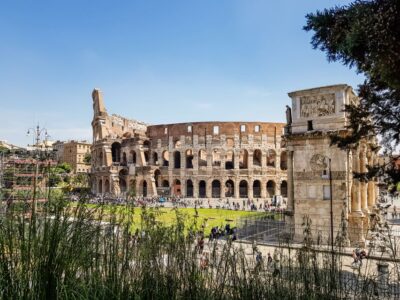
- Starting at the Arch of Constantine
- Entering the Colosseum, about one hour
- Walking through the Roman Forum, about 45 minutes
- Climbing Palatine Hill for views and imperial remains, about 45 minutes
- What the guide adds, and where the experience can slip
- Is $62.48 a fair price?
- Who should book this Rome tour?
- Should you book From Gladiators to Emperors?
- FAQ
- How long does the tour last?
- Which sites are included?
- Are entrance tickets included in the price?
- What language is the tour offered in?
- Where does the tour begin?
- Where does the tour end?
- What identification do I need?
- What is not included?
Key points to know before booking
- Three major ancient sites in three hours: The Colosseum, Roman Forum, and Palatine Hill are covered in one compact visit.
- Tickets and reservation fees are included: The advertised admission value is €18 per person, plus a €2 Colosseum reservation fee.
- English is the only listed tour language: Make sure that suits everyone in your group.
- Guides can add real value: Paola and Francesco are among the guides praised for clear explanations, good pacing, and strong stories.
- The meeting point matters: Begin at the Arch of Constantine in Piazza del Colosseo, and arrive with the correct voucher and identification.
- Names must match exactly: Every participant needs a valid passport or ID matching the name submitted at booking.
Three ancient Roman worlds in one compact tour
This experience is built for a first visit to Rome, especially if your time is short. Rather than working out separate tickets and routes for three large archaeological sites, you meet at the Arch of Constantine and follow a guide through the central ancient sights.
That convenience has real value in Rome. The Colosseum area can be crowded, entrances can be confusing, and the Forum covers a broad, uneven archaeological zone. A guide gives you a route and a story, instead of leaving you to identify every fallen column and half-buried wall on your own.
The group can contain up to 20 people. That is not a private tour, but it is small enough for a guide to use a headset and keep the commentary moving. The headset is especially useful inside the Colosseum, where stone walls, crowd noise, and distance can make ordinary conversation hard to follow.
The listed price is $62.48 per person. The ticket and reservation components are valued at €20 per person, so the rest pays for the guide, headset, coordination, and the convenience of a prearranged visit. I consider that reasonable if you want context and a smooth route. If you are happy reading signs and exploring independently, buying admission on your own may cost less.
More ways to see the Colosseum:
- Rome: Colosseum, Palatine Hill and Roman Forum Guided Tour
★ 4.8 · 32,814 reviews - Rome: Guided Tour of Colosseum, Roman Forum & Palatine Hill
★ 4.7 · 27,897 reviews - Rome: Colosseum & Forum with Audio Guide App -Optional Arena
★ 4.2 · 24,770 reviews
Starting at the Arch of Constantine
The meeting point is the Arch of Constantine, beside Piazza del Colosseo. This is a sensible location because it puts you directly in the ancient Roman zone, but do not treat it as a vague suggestion. The area around the Colosseum has several tour groups, ticket sellers, guides, and monuments competing for your attention.
Give yourself time to find the correct person. Some past customers had trouble locating the guide or reaching the operator by phone. That is not a minor nuisance when timed Colosseum entry is involved. Save your confirmation, check the meeting instructions before leaving, and look carefully for the group rather than assuming any person holding a sign is yours.
Bring the identification used at booking. The full names of all participants must appear on the voucher, and each person must show a valid passport or ID with a matching name. A mismatch can lead to denied entry to the Colosseum and Roman Forum, so this is one place where careful paperwork matters.
The activity returns to the meeting point at the end. Hotel pickup is not included, and food and drinks are not provided, so plan your route to and from Piazza del Colosseo separately.
Entering the Colosseum, about one hour
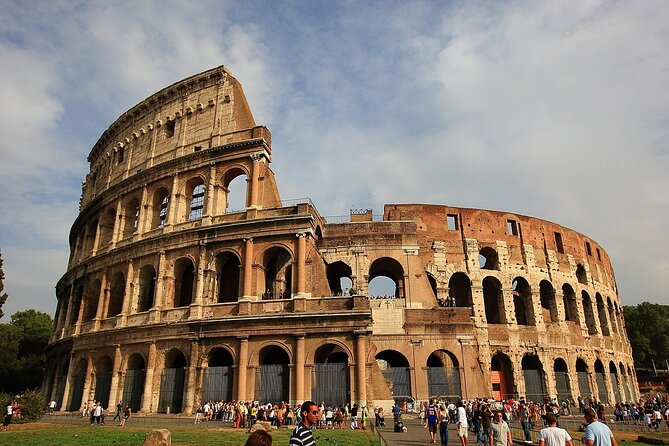
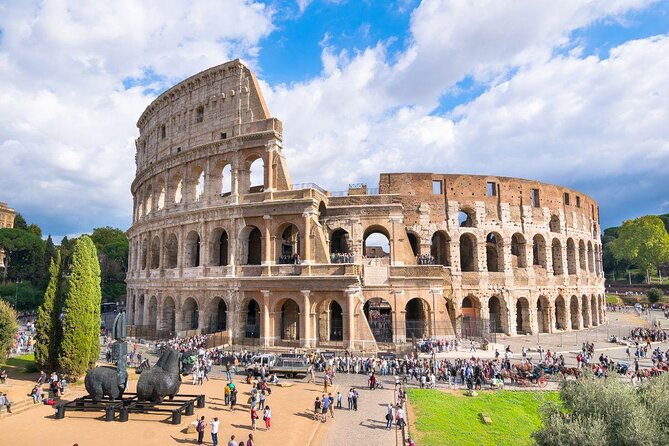
The Colosseum receives the largest share of attention, and rightly so. The oval amphitheater remains one of Rome’s most powerful sights, even after centuries of damage, rebuilding, and changing use. Its arches give you a sense of scale before the guide explains what happened inside them.
Expect about one hour here. The guide can place the arena within Roman public life and explain the roles of emperors, gladiators, and spectators. That human scale is important. Without it, the Colosseum can become a giant photo stop. With a good guide, the structure becomes a place of carefully managed spectacle, status, fear, and entertainment.
The included entry ticket removes one job from your hands, but it does not guarantee a completely wait-free arrival. The reservation fee helps secure a timed entrance, and the group still has to meet the site’s entry procedures. Headsets are supplied so you can listen while the group moves through the building.
This is also where the tour’s organization matters most. One past booking problem involved a participant receiving an incorrect ticket and being refused entry. In another case, a group was directed to the wrong meeting point after being handed to a separate service, then received an audio tour instead of the expected live English commentary. These situations appear to be exceptions rather than the basic design of the experience, but they are serious enough to justify checking every name and ticket before the tour starts.
Some guides have made this hour the strongest part of the experience. Paola was praised for keeping a group informed and moving during miserable rainy weather. Francesco was credited with adding useful details that a self-guided visit would not provide. Guides vary, of course, but those examples show what the live commentary can add when the handoff and audio equipment work properly.
Walking through the Roman Forum, about 45 minutes
After the Colosseum, the route continues into the Roman Forum. This was the center of political, religious, commercial, and social life in ancient Rome. It is not one single building. It is a spread of ruins where temples, government structures, basilicas, speech platforms, and triumphal monuments once crowded together.
Your guide can help you read the site as a working city. The Senate House, Temple of Saturn, Temple of Vesta, Basilica Julia, Rostra, and Arch of Septimius Severus each belonged to a different part of Roman public life. Elections, speeches, religious ceremonies, legal business, and celebrations all took place in this central zone.
Forty-five minutes is enough for a guided introduction, but it is not enough for every corner. The Forum rewards patience, and you may find yourself wishing for more time to study the ruins or ask questions. The tradeoff is that this tour keeps the three-site visit within roughly three hours, which suits a packed Rome schedule.
The ground can be uneven, and the Forum is exposed. The supplied information does not promise special accessibility arrangements, though most participants can take part and service animals are allowed. Wear practical shoes and be ready to walk between scattered remains rather than through a series of enclosed galleries.
The Forum can be difficult to understand alone because many buildings survive only as fragments. A guide’s explanation is particularly useful here. A column base or broken wall may look ordinary until you learn whether it belonged to a temple, basilica, or political space. This is where the tour can earn its fee more convincingly than at the Colosseum, whose shape is easier to recognize without help.
More Rome tours worth comparing
- Vatican Museums, Sistine Chapel & St Peter’s Basilica Guided Tour
★ 4.5 · 39,149 reviews - Rome: Colosseum, Roman Forum and Palatine Hill Guided Tour
★ 4.5 · 23,903 reviews - Rome: Colosseum, Palatine Hill & Roman Forum Guided Tour
★ 4.6 · 12,703 reviews - Rome: Vatican Museums & Sistine Chapel Guided Tour
★ 4.3 · 12,117 reviews
Climbing Palatine Hill for views and imperial remains, about 45 minutes
The final major stop is Palatine Hill, one of Rome’s Seven Hills. It rises above the Forum and offers views across the archaeological area and toward the Circus Maximus. The hill is also tied to the origin story of Rome: according to Roman mythology, Romulus founded the city here in 753 BCE.
The mythology is only part of the appeal. Archaeological remains include imperial palaces, temples, and houses from different periods. The House of Augustus and House of Livia are among the named sites connected with the hill, while the broader ruins show how Rome’s elite occupied this commanding position.
You have about 45 minutes here. That gives you time to hear the main story, see the views, and understand why the hill mattered to emperors. It does not allow a slow examination of every ruin, so keep your expectations realistic. This is a guided overview, not an archaeological research visit.
I like the way the itinerary ends here. The Colosseum shows public spectacle, the Forum shows civic life, and Palatine Hill shifts the focus to power and residence. Together, the three stops create a more complete picture of ancient Rome than the amphitheater alone.
What the guide adds, and where the experience can slip
A good live guide gives you sequence and meaning. Instead of memorizing disconnected dates, you can connect the Colosseum to Roman entertainment, the Forum to public affairs, and Palatine Hill to imperial authority. Several guides have been praised for clear delivery, good pacing, friendly manner, and answers to questions.
The headset is meant to support that experience. In a group of up to 20, it lets you look at the ruins while listening rather than crowding around the guide. Still, audio equipment is a weak point when it fails. A poor radio or headset can make an otherwise strong tour frustrating, especially for anyone standing at the back.
There have also been complaints about guides leaving a group waiting at a gate while returning for additional participants. Another issue involved a group being split because one person had a separate booking. If you are booking for friends or family, make one reservation whenever possible. If separate bookings are unavoidable, contact the provider before the day and make it clear that everyone must be placed in the same group.
The overall service record is mixed. The best version of this tour gives you an engaging, well-informed guide and a sensible route. The worst version involves unclear meeting instructions, ticket errors, or a substitution of audio commentary for the live tour you expected. That gap is the main reason I would not book this casually without checking the details.
Is $62.48 a fair price?
The answer depends on how you like to sightsee. The cost includes entry to all three sites, the Colosseum reservation fee, an official local guide, and a headset. You are paying not just for admission, but for time saved on planning and for an explanation of places that can be hard to interpret alone.
For a first-time visitor, the price is easier to justify. You get the essential ancient Roman sights in one three-hour block, and you can use the rest of your day for other parts of Rome. It is also a sensible choice if you do not want to coordinate a timed Colosseum ticket, Forum access, and a route up Palatine Hill.
For a repeat visitor or a confident independent explorer, the value is less certain. The tour spends only 45 minutes at the Forum and 45 minutes on Palatine Hill, so you may want longer at both. You also have limited control over the pace and the guide’s emphasis.
Tips, meals, drinks, and hotel pickup are not included. The tour is offered in English, and the cancellation terms are strict: a full refund requires cancellation at least 10 full days before the start time. Cancellations or changes inside that window are not refunded or accepted, except when the provider cancels for failing to reach the required minimum number of participants.
Who should book this Rome tour?
I would point first-time Rome visitors toward it, particularly those with only a few days in the city. The three-hour format covers the major ancient sites without asking you to build a complicated plan, and the guide can help the Forum and Palatine Hill make sense.
It also suits parents, couples, and small groups who want a shared introduction rather than a silent self-guided walk. Most people can participate, and service animals are allowed. The group limit of 20 keeps the scale manageable, though you should not expect the quiet, flexible pace of a private tour.
I would hesitate if you need absolute service reliability, have a tight schedule with no room for a delayed start, or prefer exploring at your own pace. I would also avoid booking separate tickets for members of the same party unless the provider confirms that the reservations will be joined.
Should you book From Gladiators to Emperors?
Book it if you want the Colosseum, Roman Forum, and Palatine Hill handled in one short visit, and if a live English guide is worth paying extra for. The strongest parts are the logical route, included admission, and the chance to hear useful stories from guides such as Paola or Francesco.
Before paying, double-check the meeting point, full names, passport details, and the exact voucher for every person. If the provider confirms those basics and you value interpretation over independence, this can be a practical Rome introduction. If you want a slower visit or have little tolerance for ticket and meeting-point problems, consider visiting independently or choosing a tour with a stronger service record.
FAQ
How long does the tour last?
The experience lasts approximately three hours. About one hour is allocated to the Colosseum, 45 minutes to the Roman Forum, and 45 minutes to Palatine Hill.
Which sites are included?
Admission is included to the Colosseum, Roman Forum, and Palatine Hill.
Are entrance tickets included in the price?
Yes. The cost includes the entrance ticket for all three sites, listed at €18 per person, plus a €2 per person Colosseum reservation fee.
What language is the tour offered in?
The tour is offered in English.
Where does the tour begin?
It begins at the Arch of Constantine in Piazza del Colosseo, 00184 Rome, Italy.
Where does the tour end?
The activity ends back at the meeting point.
What identification do I need?
Each person must show a valid passport or ID document matching the full name provided during booking. All travelers’ full names must appear on the voucher.
What is not included?
Tips, hotel pickup, food, and beverages are not included.
Newest reviews from Rome
- ROME:Colosseum & Ancient Rome – private/small group TOUR★ 5.0 · 24 reviews
- Off the Beaten Track in Rome: Rione VI Parione Private Tour★ 5.0 · 24 reviews
- Cinematic Photoshoot in Rome★ 5.0 · 24 reviews
- Rome: Best of Colosseum and Roman Forum Small Group Guided Tour★ 4.5 · 24 reviews
- The Labyrinth of Rome between catacombs and ancient quarries★ 4.5 · 24 reviews
- Vatican and Trionfale Market Tour with Wine and Food Tasting★ 5.0 · 24 reviews
- private tour: Vatican Museums, Sistine Chapel, St. Peter’s Basilica★ 4.5 · 24 reviews
- Colosseum guided tour with Virtual Reality★ 5.0 · 24 reviews
Colosseum Tours, compared.
Colosseum, Palatine Hill and Roman Forum Guided Tour
Read our review →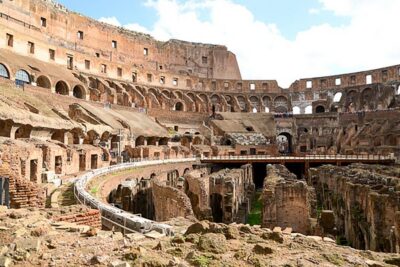
Guided Tour of Colosseum, Roman Forum & Palatine Hill
Read our review →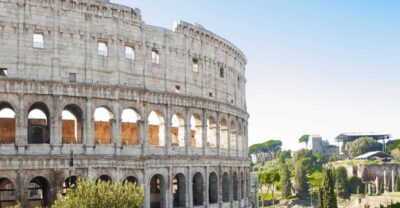
Colosseum & Forum with Audio Guide App -Optional Arena
Read our review →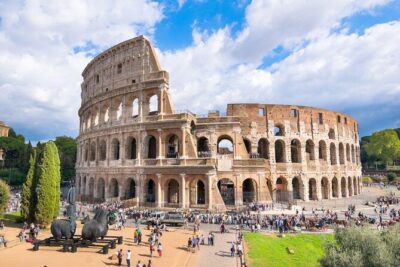
Colosseum, Roman Forum and Palatine Hill Guided Tour
Read our review →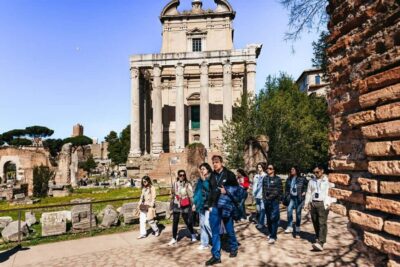
Colosseum, Forum & Palatine Hill Tour & Optional Arena
Read our review →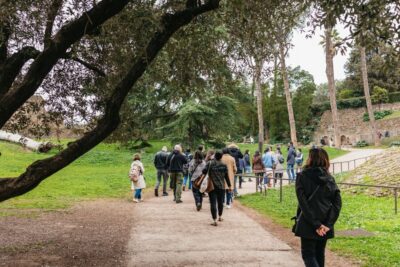
Colosseum, Palatine Hill & Roman Forum Guided Tour
Read our review →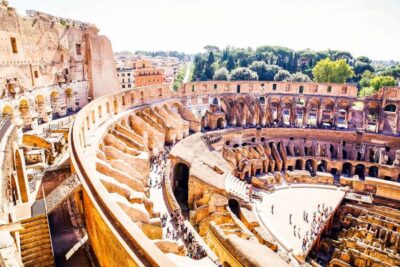
Colosseum: Underground and Ancient Rome Tour
Read our review →