
Reviewed · WALKING TOURS
Guided Walking Tour of Rome: Top Sights & Baroque Treasures
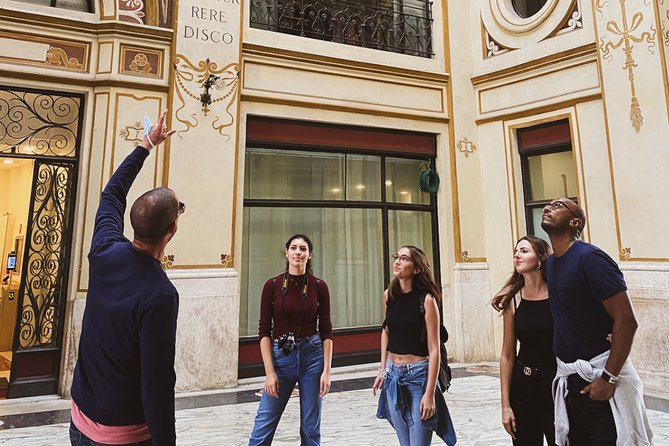
Rome’s best sights are packed into a surprisingly walkable patch of the historic center. In about two hours, this tour links the Trevi Fountain, Pantheon, and Piazza Navona with quieter streets, Baroque churches, grand palaces, and stories that help the city make sense.
I like two things right away. First, the route gives you a useful first look at central Rome without the price or time commitment of a full-day tour. Second, the stop inside St. Ignatius of Loyola Church adds a real surprise, especially when your guide explains how the ceiling fresco creates the illusion of architecture that is not really there.
The main consideration is pace. You cover a lot of ground, and the Pantheon is viewed from outside because admission is not included. The meeting point has also caused confusion for at least one booking, so check the final instructions carefully before setting out.
In This Review
- Key points to know before you book
- Why this route works as a first look at Rome
- Starting near Piazza d’Aracoeli and Palazzo Venezia
- Trevi Fountain: 20 minutes for Rome’s famous splash
- St. Ignatius of Loyola Church and its painted illusion
- The Pantheon: one of Rome’s great exteriors
- Bernini’s Four Rivers Fountain in Piazza Navona
- Piazza Navona: the natural finish
- What the guides add to the experience
- The real value at $30.25
- Timing, walking, and practical comfort
- Who should book this Rome walk
- Should you book it?
- FAQ
- How long does the walking tour last?
- What language is the tour offered in?
- What sights are included?
- Can I enter the Pantheon during the tour?
- Is the church visit included?
- How much does the tour cost?
- Where does the tour start?
- Where does the tour end?
- How large is the group?
- Can I cancel the booking?
Key points to know before you book
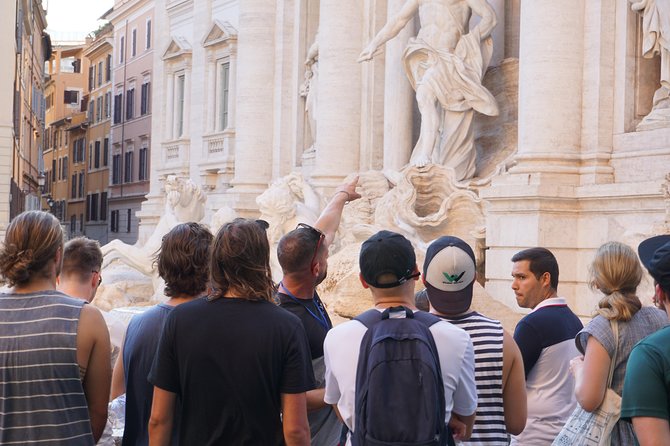
- Trevi Fountain is given a proper photo stop: You have about 20 minutes to admire the fountain and toss in a coin if you wish.
- The Pantheon is exterior only: The tour explains Hadrian’s remarkable building from the square, but entry costs extra.
- St. Ignatius Church is the artistic surprise: A short 5 to 10 minute visit reveals an elaborate ceiling and a famous clash between artists.
- The group is capped at 15 people: That is small enough for a guide to keep the group together in Rome’s crowded center.
- The route finishes in Piazza Navona: Your guide can point out restaurants, bars, and rooftops for after the walk.
- Several guides have earned praise for their style: Dan, Anna, Domenica, Paulina, Sila, Vlad, Sharon, and others are described as warm, funny, flexible, and strong on art and history.
Why this route works as a first look at Rome
This is a classic orientation walk. It does not try to cover the Colosseum, Roman Forum, Vatican Museums, and every major church in one breath. Instead, it stays in central Rome, where ancient Roman engineering, Renaissance politics, Baroque art, and modern Italian identity sit almost on top of one another.
That compact route matters. You can move from a fountain built for drama to a church built around optical illusion, then to the Pantheon, one of the ancient world’s great surviving buildings. The guide’s job is to connect those pieces rather than simply point at them.
The tour is offered in English and lasts about two hours. With a maximum of 15 people, it should feel more personal than a large city walk, though the narrow streets and heavy crowds can still make listening difficult. One guide, Domenica, handled this well by explaining a sight before reaching a noisy area, a smart habit in a city where traffic, tour groups, and fountain crowds can swallow a quiet voice.
I would book this for your first full day in Rome if you want to get your bearings fast. Several people used it as an introduction, then returned to the Pantheon, Trevi Fountain, or Piazza Navona later for a longer visit.
More walking tours in Rome:
- Rome: Trastevere & Campo de Fiori Street Food Walking Tour
★ 4.9 · 2,768 reviews - Rome: Paranormal Night Walking Tour & Secret Backstreets
★ 4.9 · 1,921 reviews - Rome by Night Walking Tour – Legends & Criminal Stories
★ 4.5 · 1,003 reviews
Starting near Piazza d’Aracoeli and Palazzo Venezia
The walk begins near Piazza d’Aracoeli on Via di San Venanzio. The exact meeting instructions deserve attention, since one person waited at the stated address after a last-minute change and could not find the group. Another group had a minor issue with the meeting point that the office solved by calling directly, but it is still wise to confirm the location and arrive early.
Early stops include Palazzo Venezia, seen from the outside. The building offers an unusual piece of Venetian architecture in Rome, and it helps show how powerful families and states left their mark on the city. You will not enter the palace on this tour, so think of this as a short architectural and historical introduction.
The route also touches on the king associated with the unification of Italy. That detail places modern Italy into the older Roman setting around you. You may also see the exterior of a huge palace complex described as covering 110,500 square metres and ranking among the world’s largest palaces by area. Since these early stops are exterior visits, the value comes from the guide’s explanation rather than an indoor tour.
Trevi Fountain: 20 minutes for Rome’s famous splash
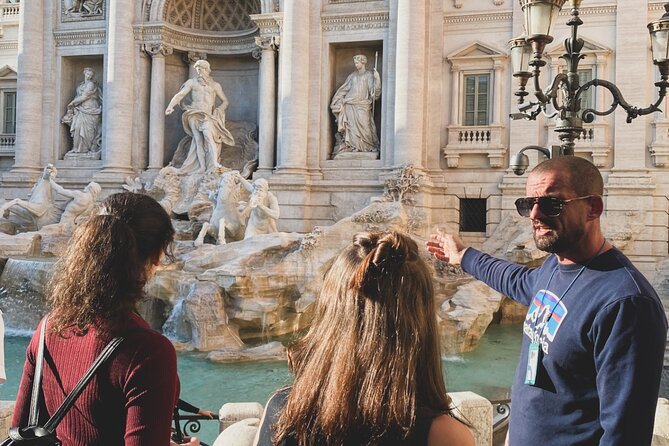
The Trevi Fountain gets the longest early photo stop, about 20 minutes. That is enough time to take in the theatrical composition, find a good angle, and take the traditional coin toss without feeling rushed.
The fountain is one of Rome’s busiest sights, so the group may need to stay organized. A good guide matters here. Sila was praised for helping people handle the crowds, and another guide, Sushi, was noted for using clear English and keeping everyone within hearing range.
The coin tradition is simple: toss one coin over your shoulder if you would like to return to Rome. The tour does not charge an admission fee for the fountain, which is an open public sight.
This stop is useful even if you plan to return later. Your guide can give you the main story and help you understand the fountain’s place in Rome’s water system and Baroque spectacle. You can then come back at a quieter time for your own photographs.
St. Ignatius of Loyola Church and its painted illusion
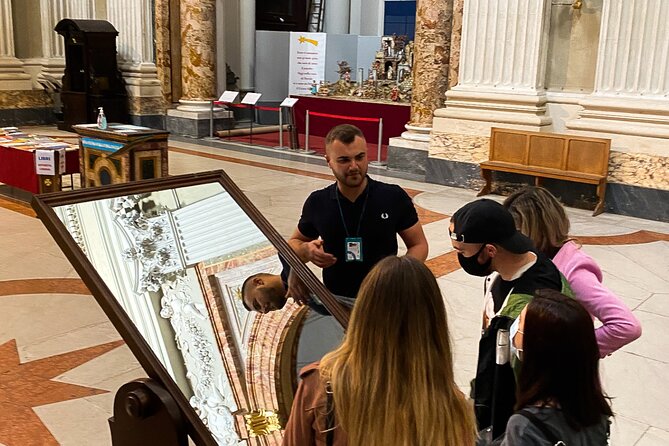
The church visit lasts only 5 to 10 minutes, but it may be the most memorable part of the walk. Rome has more than 900 churches, so a short interior stop needs to offer something special. St. Ignatius does.
The ceiling fresco is famous for making painted space seem to continue upward into a grand architectural structure. Your eyes are encouraged to read the flat ceiling as a three-dimensional scene. A guide with a strong interest in art history can make this more than a quick glance at a decorated church.
The church also carries an artist’s dispute into the story. The feud between artists helped shape the church’s beautiful interior, giving your guide a human story to tell alongside the art. That sort of detail is one reason I prefer a guided visit here. Without context, you might look up, take a photograph, and miss the rivalry and technical skill behind the illusion.
The stop is brief, so do not expect a long period for quiet reflection or detailed photography. Still, it breaks up the outdoor walking and adds a lesser-known artistic experience to a route built around famous monuments.
More Rome tours worth comparing
- Vatican Museums, Sistine Chapel & St Peter’s Basilica Guided Tour
★ 4.5 · 39,149 reviews - Rome: Colosseum, Palatine Hill and Roman Forum Guided Tour
★ 4.8 · 32,814 reviews - Rome: Guided Tour of Colosseum, Roman Forum & Palatine Hill
★ 4.7 · 27,897 reviews - Rome: Colosseum & Forum with Audio Guide App -Optional Arena
★ 4.2 · 24,770 reviews
The Pantheon: one of Rome’s great exteriors
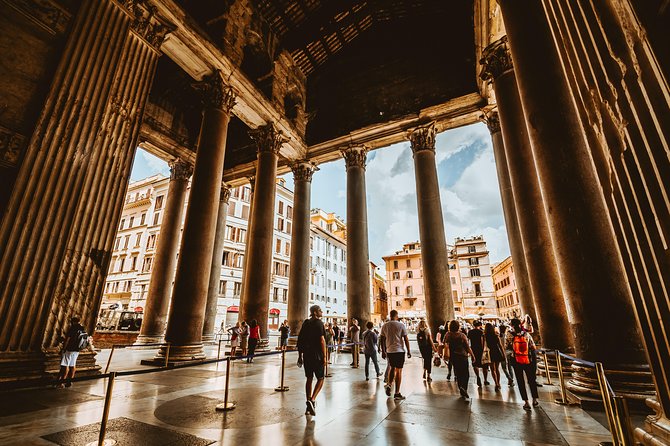
The Pantheon receives about 30 minutes, the longest scheduled stop. You see it from outside, and admission is not included. If you want to enter, you will need to arrange and pay for that separately.
Even from the square, the building is worth your time. It began as an architectural project of Emperor Hadrian and is still famous for its enormous unreinforced dome. That dome remains a puzzle and a source of admiration for architects, especially because of its scale and engineering.
This is where a good guide can turn a facade into a lesson. You will hear about the building’s ancient Roman purpose, its design, and the cultural world that produced it. Guides such as Anna, Pablo, and Vlad received praise for giving strong historical explanations without losing the personal and entertaining side of the walk.
The drawback is clear: you cannot count this tour as your Pantheon admission. If the interior is a priority, plan a separate visit. The exterior stop still gives you time to study the columns, enter the square’s atmosphere, and decide if you want to return.
Bernini’s Four Rivers Fountain in Piazza Navona
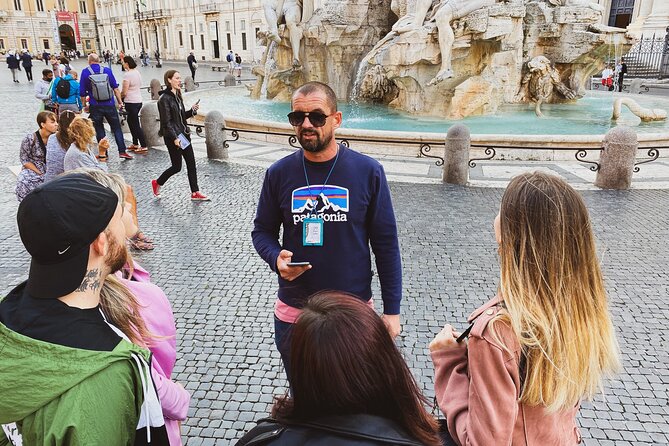
The Fontana dei Quattro Fiumi, or Fountain of the Four Rivers, is allotted about 10 minutes. It is the work of Gian Lorenzo Bernini, one of the central figures in Rome’s Baroque art.
This is a compact stop, but the fountain rewards close looking. Your guide can point out the figures, movement, and theatrical design that make the sculpture feel alive. The art is not presented as a quiet object. It is designed to command the center of the piazza.
The fountain also fits the tour’s larger theme. Rome’s Baroque rulers and artists used churches, squares, fountains, and palaces to project power and stir emotion. You see that idea in miniature here, then get a larger version in Piazza Navona itself.
The time may feel short if you want every figure explained in detail. Treat the guide’s talk as a useful introduction, then stay in the square after the tour if you want to look longer.
Piazza Navona: the natural finish
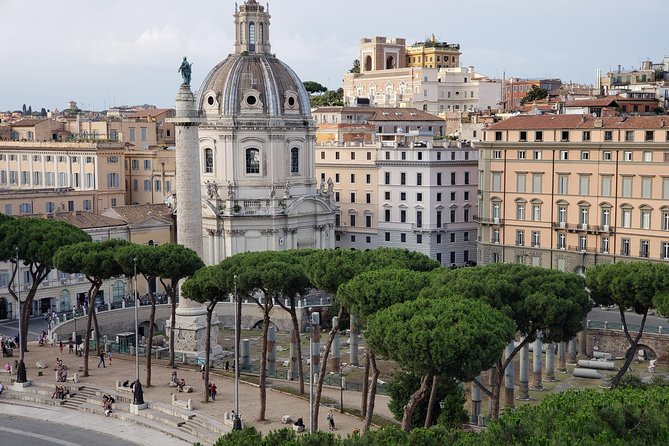
The tour ends in Piazza Navona, one of Rome’s grandest public squares. Its elongated shape follows the outline of an ancient stadium, while its churches, palaces, cafés, and fountains create the Baroque setting most people picture when they think of central Rome.
The Four Rivers Fountain is here, along with other elaborate fountains. This gives the final stop a strong visual payoff after the quieter church visit and the ancient Pantheon.
Piazza Navona is also a practical place to finish. The guide can suggest restaurants, bars, and rooftops, including places where you can sit with a view. That advice may be as useful as the formal sightseeing, especially if you are still deciding where to eat in Rome.
I would not expect every recommendation to suit every budget or taste. Use the suggestions as a starting point, then check menus and prices before sitting down. The square is attractive, but a prime view can affect the bill.
What the guides add to the experience
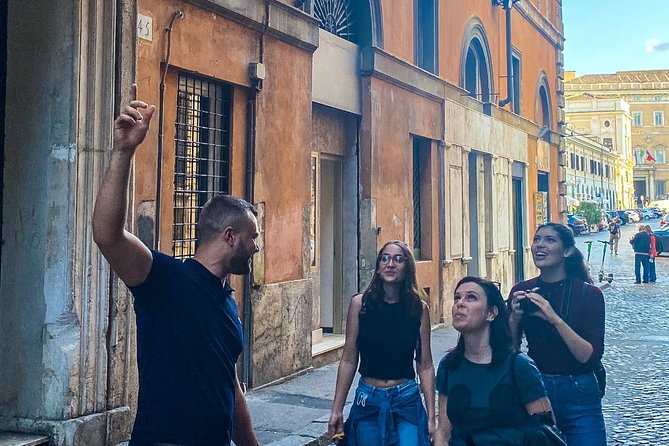
The guide is the main variable on any short walking tour, and the names attached to this experience show a strong pattern. Dan is repeatedly described as warm, enthusiastic, and passionate about Italian art, history, and culture. He also gave practical suggestions for places to eat and visit after the tour.
Anna handled a very small group with patience and answered many questions. Domenica was praised for humor, thoughtful timing, and a good amount of information without overload. Paulina worked well with a large family group and brought energy to the stories of Rome.
Other guides received similar praise. Sharon was described as approachable and funny, Pablo as friendly and strong on history, and Sila as especially good with art history and crowd movement. Vlad’s approach suited people who wanted more background behind famous monuments, while Éléonora was noted for clear storytelling and a sensible amount of historical detail.
Of course, guide quality can vary from one departure to another. Still, this experience seems built around storytelling rather than a simple march between photo stops. You should expect history, art, architecture, local tips, and occasional stories about rival artists or political figures.
The real value at $30.25
At $30.25 per person, this is priced as an affordable introduction rather than a full specialist tour. You are paying for two hours of a local guide, a small group, and a route through several major sights. There are no separate entrance fees for the fountain, church, or public squares.
The Pantheon is the important extra cost. Since the building is seen from outside, anyone who wants the interior must budget for a separate visit. That does not make the tour poor value, but it changes what you are buying.
I see the best value here in the time saved. A guide helps you connect several famous places in a city where it is easy to walk past an important building without knowing what you are seeing. The route also includes St. Ignatius Church and the smaller streets between the headline sights, giving you more than a basic fountain-to-fountain stroll.
Group discounts are available, and the group limit is 15. The experience is offered only in English, so it is best for you if you are comfortable listening to historical explanations while walking.
Timing, walking, and practical comfort
This is a walking tour, not a bus tour. You should be ready for steady movement through central Rome, with stops for photographs and short talks. One person summed it up simply: there is lots of walking, but also strong photo opportunities and a useful overview of the historic district.
Wear comfortable shoes. The tour lasts only about two hours, but Rome’s center can be crowded, noisy, and distracting. Stay close to the guide, especially around Trevi Fountain and the narrow streets.
Most people can take part, and service animals are allowed. The tour runs in most weather, but poor weather can lead to cancellation, with a different date or a full refund offered. Rain does not necessarily ruin the experience, since one person enjoyed the walk in wet conditions, but you should bring suitable clothing.
Free cancellation is available until 24 hours before the start time. Inside that 24-hour window, the payment is not refunded and changes are not accepted. The cut-off follows Rome’s local time.
Who should book this Rome walk
I would recommend it most strongly to first-time visitors who want the city’s main historic center explained in one sitting. It suits couples, families, and solo visitors who prefer a guide’s stories to reading several information panels on their own.
It also works for people who enjoy small details. The route includes famous places, but the church illusion, artist feud, Venetian architecture, political history, and local food suggestions give it extra texture.
You may want something else if you need interior access to the Pantheon, a slow photography walk, or a deep study of Baroque art. The short schedule means the tour must keep moving, and the Pantheon admission is not part of the price.
Should you book it?
Book this tour if you want an affordable, compact introduction to central Rome, especially near the start of your stay. The combination of Trevi Fountain, the Pantheon exterior, St. Ignatius Church, Bernini’s fountain, and Piazza Navona gives you a strong first map of the city.
Before paying, confirm the meeting point and remember that the Pantheon interior costs extra. If you are happy with a brisk walk and a guide who mixes major sights with art stories and practical tips, the $30.25 price is fair. If you want to linger inside every monument, choose a longer or more specialized tour instead.
FAQ
How long does the walking tour last?
The tour lasts approximately two hours.
What language is the tour offered in?
The tour is offered in English.
What sights are included?
The route includes Palazzo Venezia from the outside, the story of the king who unified Italy, an exterior view of a very large palace, Trevi Fountain, St. Ignatius of Loyola Church, the Pantheon exterior, the Four Rivers Fountain, and Piazza Navona.
Can I enter the Pantheon during the tour?
Pantheon admission is not included. The planned visit is an exterior stop, so you need to arrange separate entry if you want to go inside.
Is the church visit included?
Yes. The tour spends about 5 to 10 minutes inside the Church of St. Ignatius of Loyola, and admission is free.
How much does the tour cost?
The listed price is $30.25 per person. Group discounts are available.
Where does the tour start?
The meeting point is Piazza d’Aracoeli, Via di San Venanzio 8, 00186 Rome.
Where does the tour end?
The walk ends at Piazza Navona, where the guide can suggest restaurants, bars, and rooftops.
How large is the group?
The tour has a maximum of 15 participants.
Can I cancel the booking?
You can cancel for a full refund up to 24 hours before the experience begins. Cancellations or changes made within 24 hours are not refunded or accepted. If poor weather causes the tour to be canceled, you will be offered another date or a full refund.
Newest reviews from Rome
- Rome: Vatican Museums & Sistine Chapel Skip-the-Line Ticket★ 4.4 · 148 reviews
- Shared Shuttle Transfer from Rome to Civitavecchia Port★ 5.0 · 148 reviews
- Rome: Crypts & Catacombs After Hours Tour with Bone Chapel★ 4.6 · 149 reviews
- Ghosts Legends and Mysteries of Rome Walking Tour★ 5.0 · 149 reviews
- Skip the Line: Vatican and Sistine Chapel with Guided Tour★ 4.0 · 149 reviews
- Tivoli: Villa Gregoriana Entrance Ticket★ 4.7 · 150 reviews
- Pizza and Tiramisu Cooking Class in Rome, Piazza Navona★ 5.0 · 150 reviews
- Rome: Borghese Gallery Skip-the-Line Entry and Guided Tour★ 4.7 · 150 reviews
Walking Tours, compared.
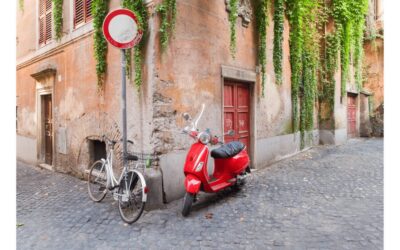
Trastevere & Campo de Fiori Street Food Walking Tour
Read our review →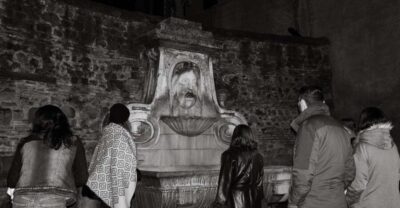
Paranormal Night Walking Tour & Secret Backstreets
Read our review →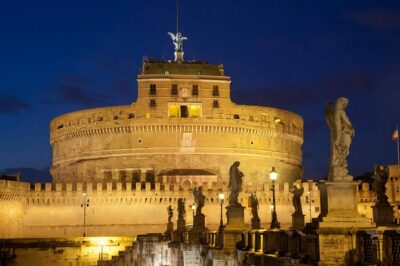
Rome by Night Walking Tour – Legends & Criminal Stories
Read our review →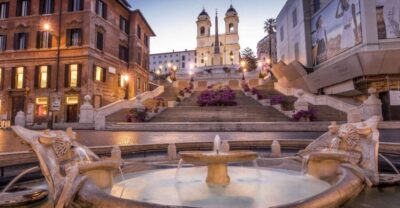
Guided City Center Evening Sightseeing Walking Tour
Read our review →
Best of Rome Walking Tour including Trevi Fountain
Read our review →

Forbidden History Walking Tour & Pub Crawl with Drinks
Read our review →
Guided Small Group Walking Tour of City Highlights
Read our review →Browse the lists this tour appears in