
Reviewed · CYCLING TOURS
Highlights of Rome Bike Tour (Including Jubilee Sights)
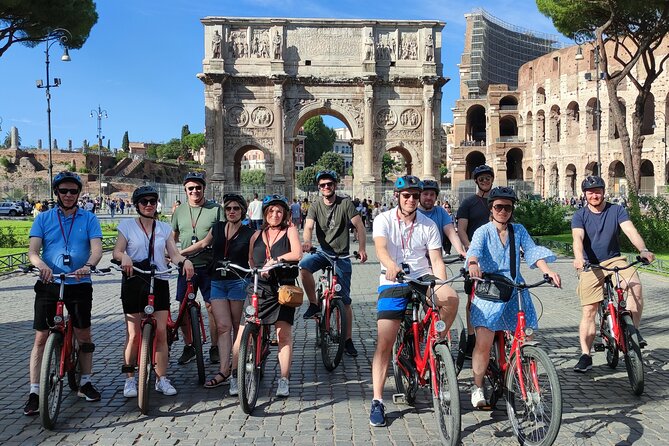
Rome reveals itself quickly from a bicycle. In about three hours, you move from the Jewish Ghetto to the Pantheon, Trevi Fountain, Imperial Forums, and Circus Maximus, with stops for stories and photos along the way. It is a smart first look at the city, especially if you want to cover ground without spending the day underground on public transport.
I especially like the small group of no more than 14 people and the choice of bikes, including electric bikes for an easier ride. The front pouch and rear rack also solve a basic Rome problem: where to put your water, phone, and small valuables. The main drawback is the traffic and uneven cobblestones. Afternoon crowds can be thick, and riding demands attention.
In This Review
- Key points at a glance
- Why a bicycle works so well for first-time Rome
- Starting in the Jewish Ghetto
- Campo de’ Fiori, Piazza Navona, and the Pantheon
- Churches, temples, and the Trevi Fountain
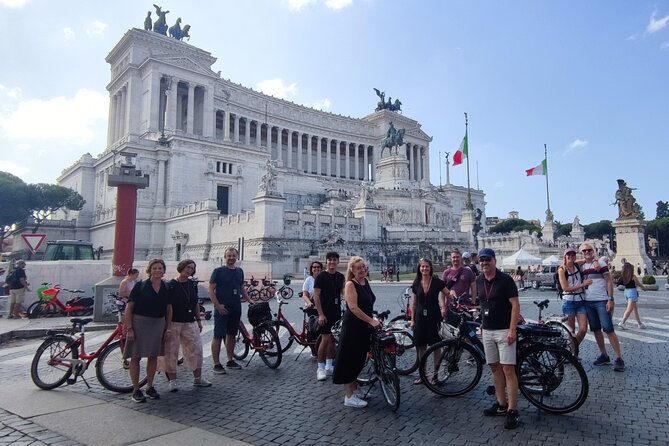
- Imperial Rome from Trajan’s Forum to Piazza Venezia
- The Arch of Constantine and Circus Maximus
- What the riding is really like
- Guides, group size, and the feel of the tour
- What is included for $54.44
- Who should book this Rome bike tour
- Should you book it?
- FAQ
- Where does the Rome bike tour start?
- Where does the tour end?
- How long does the tour last?
- How much does the tour cost?
- What is included in the tour?
- Are drinks included?
- How large is the group?
- Can children join the tour?
- Is the tour suitable for pregnant women?
Key points at a glance
- Rome’s major sights in one ride: See eleven important places, from the Jewish Ghetto and Campo de’ Fiori to the ancient forums and Circus Maximus.
- A useful first-day orientation: The route gives you a clear sense of where central Rome’s major districts and monuments fit together.
- Mostly easy, flat riding: The route is generally manageable, though cobblestones, crowds, and traffic require care.
- Standard or electric bike choice: You can match the bike to your comfort, fitness, and budget.
- Small-group format: The maximum group size is 14, allowing more contact with the guide than a large coach tour.
- Strong guide reputation: Guides including Daniele, Nico, Stefano, Elena, Marika, and Sarah have been praised for clear explanations, humor, safety, and useful Rome tips.
Why a bicycle works so well for first-time Rome
Rome’s center is compact on a map but tiring on foot. The Pantheon, Trevi Fountain, Piazza Navona, ancient forums, and Circus Maximus are not all next door to one another. A bicycle lets you link them in one outing, while still giving you time to stop, listen, and take pictures.
This is not a racing tour. The route is built around short rides and frequent stops. You may hear the guide explain a monument while riding, then pause for a longer talk at the next square or church. That rhythm gives you a broad introduction without turning the experience into a three-hour lecture.
I would book it early in your Rome stay. The tour helps you understand the city’s layout, then you can return later to the places that deserve more time. The Pantheon, for example, can be revisited for a proper interior visit, while the Trevi Fountain may be worth seeing again at a quieter hour.
The tour has a 4.9 rating from 239 ratings, with 97 percent recommending it. That matches the strongest pattern in the feedback: the guides tend to make the experience. Daniele has been praised for amusing comparisons and memorable stories, while Nico, Stefano, Elena, Marika, Matt, Arvin, and Sarah have each received warm notices for their presentation and care with the group.
More bike days around Rome:
- Rome EBike Tour: Appian Way, Catacombs & Roman Aqueducts
★ 5.0 · 1,766 reviews - Rome: Top Highlights & Hidden Gems Tour by Cannondale E-Bike
★ 4.9 · 1,760 reviews - Rome: Appian Way, Catacombs, & Roman Aqueducts E-bike Tour
★ 4.9 · 1,421 reviews
Starting in the Jewish Ghetto
The meeting point is at Via dei Delfini 35, in central Rome. Arrive 15 minutes before departure so there is time to get fitted to a bike and helmet without putting pressure on the group.
The first stop is the Antico Quartiere Ebraico, Rome’s Jewish Ghetto. Established in 1555 by order of Pope Paul IV, it is among the oldest Jewish quarters in the world. The short stop gives your guide a chance to explain the neighborhood’s religious, archaeological, and social importance before the route moves on.
This is a good opening because it sets up one of Rome’s recurring themes: the city is built in layers. Ancient structures, Renaissance streets, Baroque churches, and modern Rome often sit within a few minutes of one another.
The stop is brief, listed at about seven minutes, so think of it as an introduction rather than a full visit. If the neighborhood interests you, note it for a later walk and meal.
Campo de’ Fiori, Piazza Navona, and the Pantheon
The route then moves through Campo de’ Fiori, one of Rome’s best-known public squares. During the day, its market brings flowers, fruit, and vegetables into the center of the city. At night, its cafés and terraces change the mood entirely.
You have about ten minutes here, enough for a look around and a few photos. The square can be crowded, so keep your bike close and follow the guide’s instructions when crossing or stopping.
Next comes Piazza Navona, where the oval shape follows the outline of the ancient Stadium of Domitian. The stadium was built in AD 86 for athletics and horse racing, a reminder that today’s grand square began as a sports venue. The Baroque buildings and fountains make this one of Rome’s most striking urban spaces.
The stop is short, around seven minutes, and admission is not included. In practical terms, that means you see the square from the outside rather than joining a separate attraction visit.
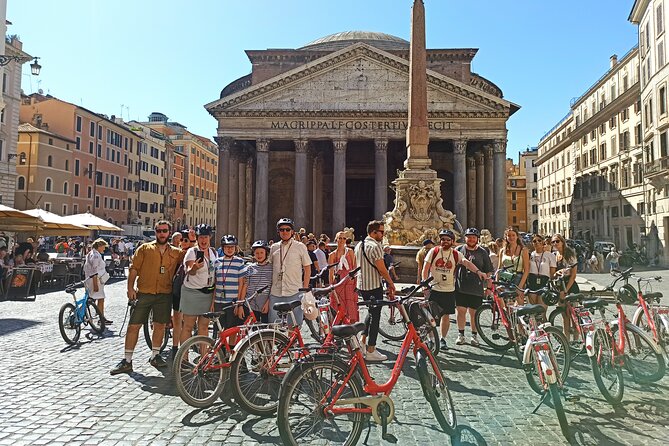
The Pantheon receives a longer stop of about 15 minutes. Marcus Vipsanius Agrippa commissioned the original temple in 27 BC, and the building’s geometry and huge dome have influenced architects for centuries. It is one of the best-preserved examples of Roman monumental architecture.
The tour does not include admission, and the itinerary does not promise an interior visit. You should treat this as a guided orientation to the building, with time to look and photograph it. If the Pantheon is high on your list, return independently for a longer visit.
Churches, temples, and the Trevi Fountain
At the Church of Sant’Ignazio di Loyola, the guide provides an outside explanation and time for pictures. This is a useful glimpse of Rome’s Baroque church architecture, though the stop is more visual than a full church tour.
The route also passes the Temple of Hadrian, with roughly five minutes for an explanation. Construction was probably commissioned by Emperor Hadrian and completed around AD 145 by Antoninus Pius. The temple was dedicated to the deified Hadrian, and its surviving columns are now part of the modern city scene.
This is one of the pleasures of cycling in Rome. You are not only visiting famous monuments with a ticket office and a formal entrance. You are also seeing major remains incorporated into ordinary streets and buildings.
The Trevi Fountain gets about seven minutes. It marks the terminal point of the Aqua Virgo, an ancient aqueduct that remains in use today, and it is the most famous of Rome’s fountains.
Seven minutes is enough to see the fountain and take pictures, but crowds can make the stop feel hurried. Keep your expectations realistic: this is a highlights ride, not a dedicated Trevi Fountain visit. If you want time to admire the sculptures or wait for a clear view, return later.
A completely different way to spend the day in Rome:
- Vatican: Museums & Sistine Chapel Entrance Ticket
★ 4.5 · 144,003 reviews - Vatican Museums & Sistine Chapel Tour with Optional Basilica
★ 4.3 · 67,413 reviews - Vatican Museums, Sistine Chapel & St Peter’s Basilica Guided Tour
★ 4.5 · 39,149 reviews - Rome: Colosseum, Palatine Hill and Roman Forum Guided Tour
★ 4.8 · 32,814 reviews
Imperial Rome from Trajan’s Forum to Piazza Venezia
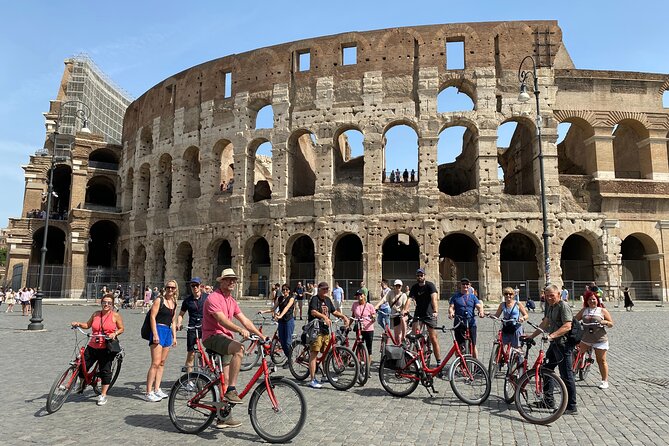
The ride continues to Trajan’s Forum and the Imperial Forums. The guide stops for about 15 minutes to explain the remains and their place in the story of ancient Rome.
This is one of the most valuable parts of the route because the forums can be hard to understand on your own. From street level, you see fragments, columns, walls, and excavated ground. A guide can help connect those pieces to the imperial building program and to the streets around them.
Piazza Venezia follows, with about five minutes for a view and explanation. The square lies between Via del Corso and Via dei Fori Imperiali, and its current appearance took shape during major nineteenth- and twentieth-century changes, including construction of the Monument to Vittorio Emanuele II.
The stop is quick, but the location helps connect modern Rome with the ancient city. You can look from the busy square toward the archaeological zone and see how later governments reshaped the center.
The Arch of Constantine and Circus Maximus
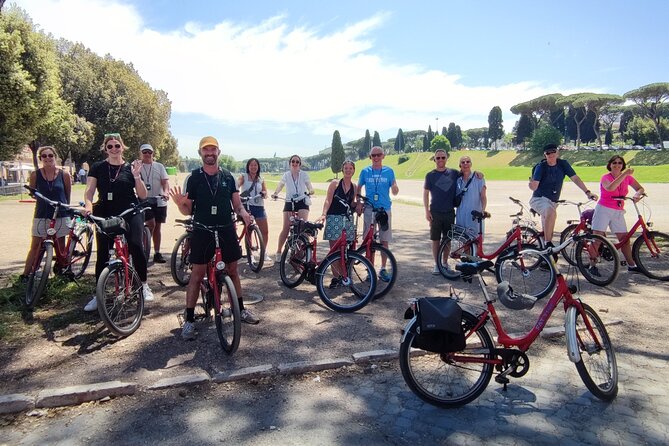
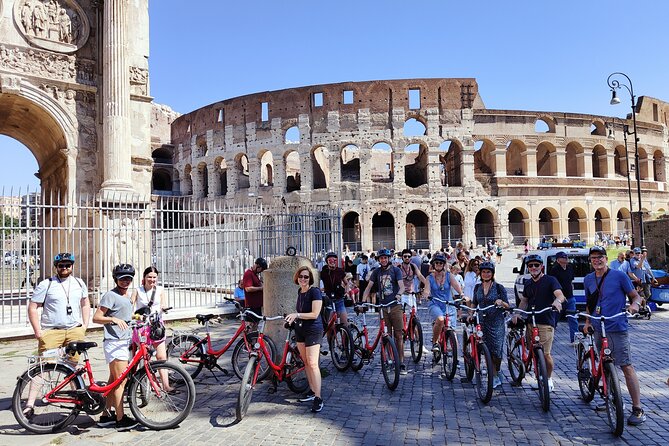
The Arch of Constantine is the next major stop. It was built to celebrate Constantine’s victory over Maxentius on October 28, AD 312. Located along the route of Roman triumphs, between the Circus Maximus and Arch of Titus, it is the largest surviving honorary arch in Rome.
The five-minute stop is short, but the monument works well as part of a moving overview. You get the basic political story, see the arch in its setting, and continue toward the final stop.
Circus Maximus closes the route. At about 600 meters long and 140 meters wide, it was the largest public entertainment building of antiquity and one of the largest ever built. Roman legend also links the site to the Rape of the Sabine Women, a story connected with the city’s earliest origins.
You have around eight minutes here. The Circus Maximus is now a broad open archaeological area rather than a complete arena, so the guide’s explanation matters. It helps you picture the scale of the chariot-racing venue and understand why this space mattered to Rome.
The tour then returns to the original meeting point.
What the riding is really like
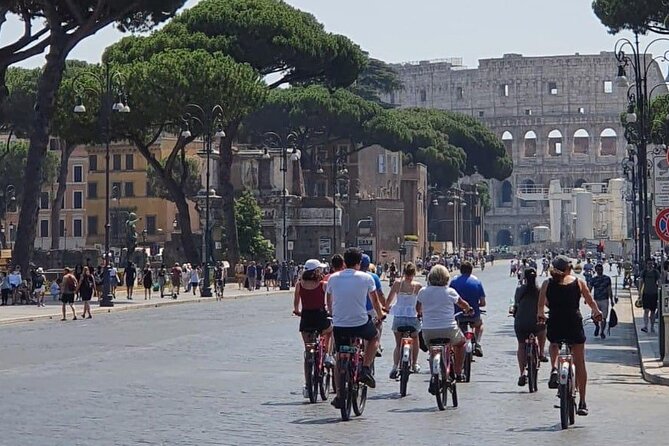
Rome is relatively flat along this route, and several people found the pedaling easy. You do not automatically need an electric bike, especially if you are comfortable on a bicycle and used to city riding.
Still, the electric option can be worthwhile for a relaxed experience. One rider specifically found it helpful on some harder sections, and it can make the ride feel less taxing in hot weather. The choice is useful for mixed groups where fitness levels differ.
The bigger issue is not hills. It is surface and traffic. Rome has cobbled streets, slick stones when wet, narrow passages, pedestrians, and unpredictable vehicles. You must be comfortable braking, steering around people, and riding as part of a group.
One evening group encountered especially difficult conditions with heavy crowds, a concert, and a fast-moving police car. A fall on slick cobblestones was also reported. That does not mean the tour is unsafe by definition, but it does show why timing matters. Morning departures are likely the better pick for calmer streets, and you should avoid assuming that a smooth park ride is what you are booking.
The guide’s position and pace matter greatly. The strongest guide feedback highlights people who kept the group together, stopped often, and made sure nobody was left behind. One guide helped a family member recover from heat and lack of food, then arranged for the rider to catch up with the group. That kind of practical attention is valuable in a city where conditions can change quickly.
Guides, group size, and the feel of the tour
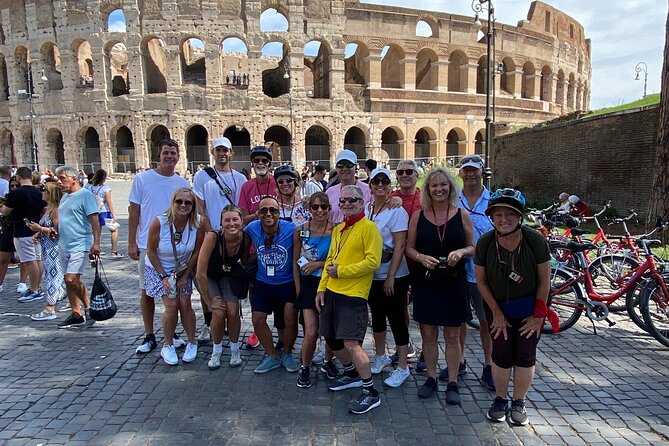
The maximum group size is 14, which is small enough for a personal feel but not the same as a private tour. You may ride with families, couples, and solo visitors at different speeds.
Guides named in the feedback include Daniele, Nico or Niko, Stefano, Elena, Marika, Matt, Arvin, and Sarah. The most praised qualities are humor, clear storytelling, route control, and safety awareness. Daniele has been noted for using memorable comparisons, including treating Roman history like seasons of a television series or layers of lasagna. That kind of framing can make dates and emperors easier to remember.
The guide generally talks at stops and may add comments while riding. A few people found it hard to hear through the headset when moving, especially amid city noise. Frequent pauses help, but you should not expect every word to be clear while pedaling.
The tour is strongest as an introduction. It gives you many names and landmarks, but it cannot provide the depth of a specialist walking tour at each site. One poor experience focused on a lack of detail, so guide quality can vary. If you want long lectures on ancient Rome, book a dedicated archaeological tour instead.
What is included for $54.44
At $54.44 per person, the price is fair for a three-hour guided outing that includes the bike, helmet, front pouch, and rear rack. You are paying for transport between major sights as well as the guide’s narration, not simply for bicycle hire.
The tour’s value is highest on a first visit. In one morning or afternoon, you can see enough of Rome to decide which places deserve a second look. It also saves you the effort of planning a route through busy streets and working out how to connect districts on foot.
The tradeoff is that admission to the Pantheon and Piazza Navona is not included, and drinks are not included. Bring water. A water bottle would be useful, especially in warm weather, and you should plan a drink before or after the ride rather than count on the tour providing one.
The duration is advertised as approximately three hours, though one account describes a four-hour outing. Allow some flexibility around the stated time, particularly if the group is large or stops take longer.
Who should book this Rome bike tour
I would recommend it to first-time visitors who want a broad view of central Rome before choosing where to spend more time. It also suits families with older children, provided the children have been riding for a while, can manage different surfaces, and are comfortable in a group.
Children under 18 must be accompanied by an adult. If you are booking for children, provide their heights so the correct bike size can be reserved. Children aged one and under are not recommended for this activity.
You should be confident riding in city conditions. Pregnant women are strongly discouraged from joining because of the cobbled streets. If you are unsure about balance, braking, or riding near traffic, a walking tour is the better choice.
Dress for the forecast. In sun, wear a hat and sunscreen. In winter, use warm layers, gloves, and a scarf. If rain is expected, bring waterproof clothing. The bike bag and rack help, but they do not replace sensible clothing.
Free cancellation is available if you cancel at least 24 hours before the start time. Changes or cancellations inside that window are not accepted for a refund. If the minimum number is not reached and the operator cancels, you are offered another date or experience, or a full refund.
Should you book it?
Book this tour if you want to see a lot of Rome quickly, enjoy learning through stories, and are comfortable handling a bike on cobbles and crowded streets. The combination of flat riding, major landmarks, small groups, and strong guide feedback makes it a useful first-day choice.
Choose a morning departure if possible. You will have a better chance of lighter crowds, and the ride should feel less stressful around the busiest monuments.
Skip it if you want long interior visits, detailed archaeology at every site, or a completely gentle ride away from traffic. For most first-time visitors who accept those limits, the tour offers a lot of Rome for the price and gives you a clear plan for the rest of your stay.
FAQ
Where does the Rome bike tour start?
The tour starts at Via dei Delfini 35, 00186 Roma RM, Italy.
Where does the tour end?
The activity ends back at the original meeting point.
How long does the tour last?
The advertised duration is approximately three hours.
How much does the tour cost?
The listed price is $54.44 per person.
What is included in the tour?
A local tour guide, bike rental, helmet, front bike pouch, and back rack are included.
Are drinks included?
No. Drinks are not included, so bring your own water.
How large is the group?
The tour has a maximum of 14 participants.
Can children join the tour?
Children are welcome if they have been riding for a while, can ride comfortably in a group, and can handle different surfaces. Anyone under 18 must be accompanied by an adult. Children aged one and under are not recommended.
Is the tour suitable for pregnant women?
Pregnant women are strongly discouraged from joining because the route includes cobbled streets.
Newest reviews from Rome
- Rome: Vatican Museums & Sistine Chapel Skip-the-Line Ticket★ 4.4 · 148 reviews
- Shared Shuttle Transfer from Rome to Civitavecchia Port★ 5.0 · 148 reviews
- Rome: Crypts & Catacombs After Hours Tour with Bone Chapel★ 4.6 · 149 reviews
- Ghosts Legends and Mysteries of Rome Walking Tour★ 5.0 · 149 reviews
- Skip the Line: Vatican and Sistine Chapel with Guided Tour★ 4.0 · 149 reviews
- Tivoli: Villa Gregoriana Entrance Ticket★ 4.7 · 150 reviews
- Pizza and Tiramisu Cooking Class in Rome, Piazza Navona★ 5.0 · 150 reviews
- Rome: Borghese Gallery Skip-the-Line Entry and Guided Tour★ 4.7 · 150 reviews
Cycling Tours, compared.

Rome EBike Tour: Appian Way, Catacombs & Roman Aqueducts
Read our review →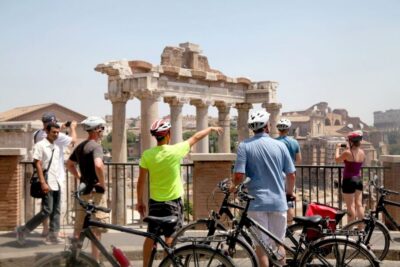
Top Highlights & Hidden Gems Tour by Cannondale E-Bike
Read our review →
Appian Way, Catacombs, & Roman Aqueducts E-bike Tour
Read our review →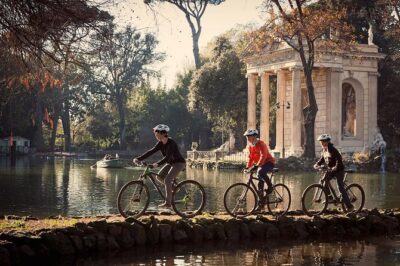
Rome City Small Group Bike Tour with quality Cannondale EBike
Read our review →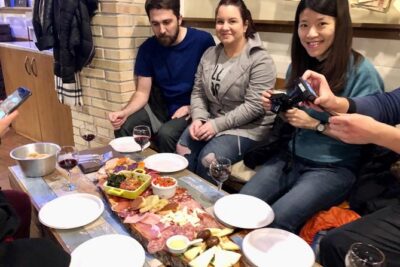
Rome by Night – Ebike Small Group Tour – Food and Wine (Option)
Read our review →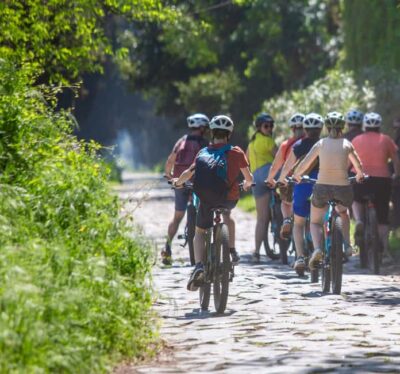
Appian Way E-bike Tour with Catacombs, Aqueducts & Food
Read our review →
Appian Way Aqueducts Bike Tour (Catacombs & Lunch Option)
Read our review →Browse the lists this tour appears in